
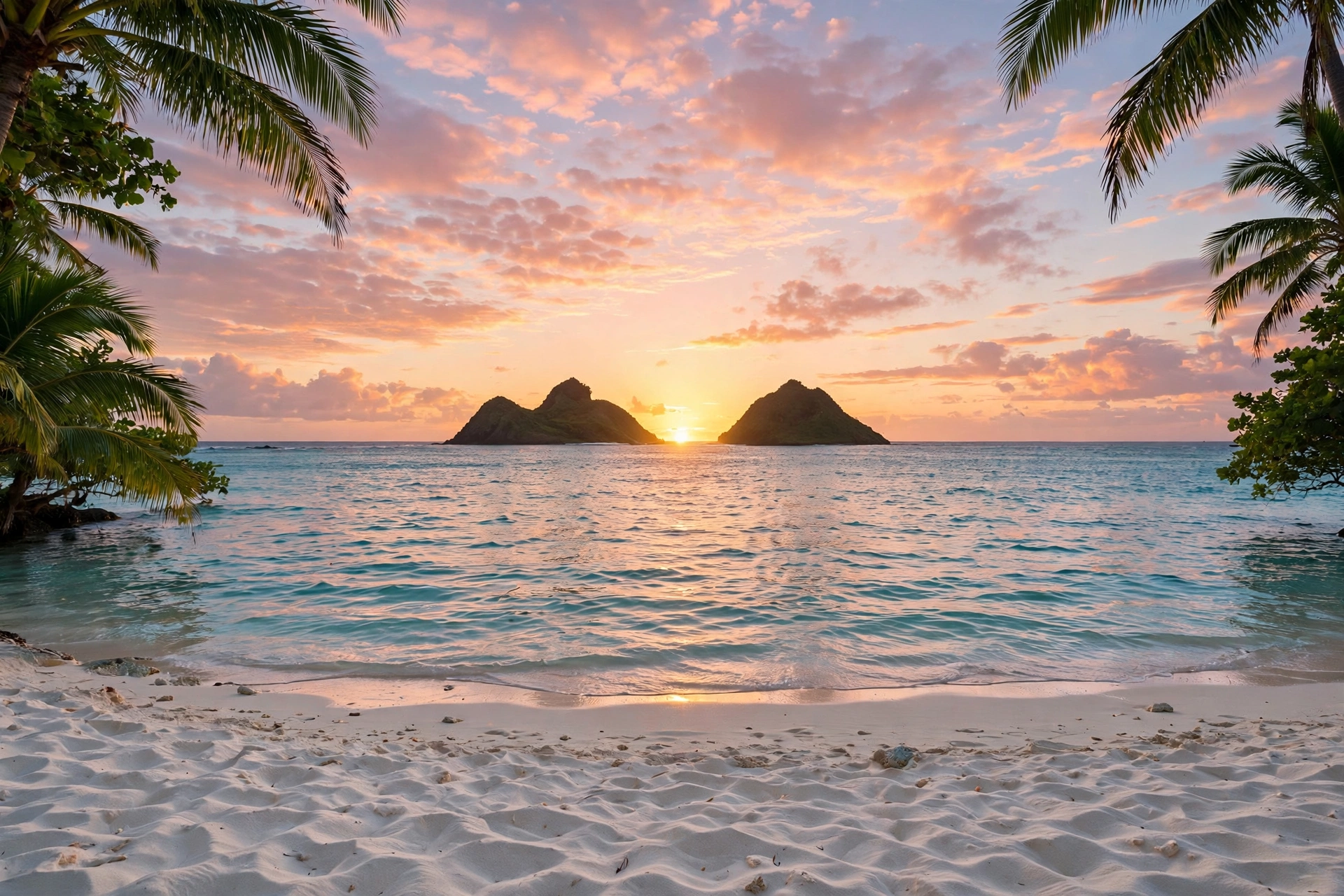
Lanikai Beach, Oahu

Some beaches announce themselves with parking lots, concession stands, and a line of tour buses. Lanikai does none of that. You find it the way locals do, by slipping down a narrow walkway between two houses in a quiet Kailua neighborhood, and then the street noise drops away and there it is, a half mile of white sand facing two small islands that look airlifted from a postcard.
The name means “heavenly sea” in Hawaiian, and for once the translation undersells nothing. On calm mornings the water turns a shade of turquoise that makes first-time visitors stop mid-step. Photographers call it one of the best sunrise spots on Oahu. Swimmers call it the prettiest half mile on the windward coast. Both are right, and both will tell you the same thing. Lanikai rewards the people who show up prepared, because this beach gives you nothing it does not have to. No restrooms. No lifeguards. No parking lot. What it gives you instead is the view.
This guide covers everything worth knowing before you go: where the beach accesses are, how parking actually works, what the sunrise is like, how to handle the Mokulua Islands offshore, and what to pack so the lack of facilities never becomes your problem.
Where Is Lanikai Beach and How to Get There
Lanikai sits in the Lanikai neighborhood of Kailua, on the windward coast of Oahu, about a 30 to 45 minute drive from Waikiki depending on traffic. The usual route is the Pali Highway (Route 61) through the Koolau mountains into Kailua town, then south on Kailua Road to Mokulua Drive, which loops through the Lanikai community along the water.
Here is the part that surprises first-timers. There is no beach entrance. Lanikai is a residential neighborhood first and a famous beach second, so you reach the sand through five signed public beach access walkways tucked between private homes along Mokulua Drive and Aalapapa Drive. They are easy to miss if you are driving. Go slow, watch for the small signs, and never cut through someone’s yard. Residents deal with thousands of visitors a year, and the walkways exist precisely so you do not have to trespass.
If you would rather skip the driving puzzle, TheBus runs routes into Kailua, and from Kailua town the beach is a walk or short bike ride away. Several shops in Kailua rent bikes, and the ride to Lanikai along the coast is half the fun on a clear morning.
Parking at Lanikai Beach: Read This Before You Drive Over
Parking is the single hardest part of visiting Lanikai, so let us be direct. There is no parking lot. Lanikai Beach is a public beach but not a beach park, which means none of the infrastructure you would expect. No lot, no meters, no attendant. What exists is limited street parking in a residential neighborhood with narrow, partly one-way streets, and the rules are strict.
Honolulu has been tightening things up. Under the city’s Lanikai Transportation Management Plan, no-parking zones with crosshatched markings have gone in along Mokulua Drive, with signed loading and unloading areas near each of the five beach accesses. The message is consistent. Park only where it is clearly legal, obey every posted sign, and expect a ticket or a tow if you improvise. Shoulders, sidewalks, and driveways are not parking spots.
The practical strategy is to arrive early. Before 8 or 9 in the morning, street spots are findable. By midday on a weekend, they are mostly gone. If the streets are full, the honest backup is Kailua Beach Park, roughly a mile north, which has a real parking lot plus restrooms and showers. Park there and walk or bike down to Lanikai. It is a pleasant 15 to 20 minute stroll along the water, and it removes the entire parking gamble.
Sunrise at Lanikai Beach
Lanikai faces almost due east, which is the whole trick. The sun climbs straight out of the Pacific, and on clear mornings it rises directly between the two Mokulua Islands, turning them into dark silhouettes against bands of orange and pink. It is the shot every photographer on Oahu wants, and it is why the beach has a devoted following of people who set alarms they would never set at home.
A few things make the sunrise here better than almost anywhere else on the island. The beach is quiet at dawn. The trade winds often have not picked up yet, so the water lies flat and mirrors the sky. And because the sun does the work, you do not need much else. A towel, a camera, and a jacket for the first twenty minutes, since mornings can feel cool before the light arrives.
Check the sky the night before. Windward Oahu makes its own weather, and a marine layer can mute the colors. Even on an overcast morning, though, the soft light on the white sand is worth the trip. Weekdays are calmer than weekends, and the earlier you arrive, the easier the parking puzzle becomes.
The Lanikai Pillbox Hike Above the Beach
If you want the postcard view looking down instead of out, the Kaiwa Ridge Trail climbs the hill behind Lanikai to two old military pillboxes with sweeping views over the beach, the Mokes, and the whole windward coast. It is short but steep, roughly a mile round trip, mostly exposed, with loose footing in places. Go early, bring water and shoes with grip, and expect company at the top. Sunrise from the pillboxes is spectacular, though it means hiking in the dark, so bring a headlamp and know the route.
A few honest notes. There are no restrooms or trash cans at the trailhead either, and parking on the surrounding streets is just as tight as at the beach. The ridge is fully exposed, so midday heat is real and there is no shade to hide in. Stay on the established trail, keep a safe distance from crumbling ledges, and pack out everything you carry up. The trailhead sits near the end of Kaelepulu Drive, a short walk from the southern beach accesses, which makes a dawn hike followed by a swim a classic Lanikai morning.
The Mokulua Islands (the Mokes)
Those two islands on the horizon are Na Mokulua, Hawaiian for “the two islands,” though everyone calls them the Mokes. They sit about three quarters of a mile offshore. The larger one on the left, as seen from the beach, is Moku Nui. The smaller is Moku Iki.
They are more than scenery. Both islets are a state seabird sanctuary, and the rules reflect it. Moku Iki is completely off limits to visitors. On Moku Nui, you may land on the beach and shoreline, but the interior is closed, and no pets are allowed anywhere. Hawaiian monk seals also haul out and pup on these islands, and state and federal law prohibits touching or harassing them. The state can temporarily close the islets when seals are pupping, so check conditions before paddling out.
Kayaking to Moku Nui is one of the classic Oahu adventures. The paddle from Lanikai takes most people 30 to 45 minutes each way in calm conditions, and the reward is a quiet beach with views back toward the Koolau mountains. Rent kayaks in Kailua town. Note that commercial kayak deliveries to Lanikai itself are restricted, so plan to launch from Kailua Beach Park. On the far side of Moku Nui, a natural saltwater pool called the Queen’s Bath draws confident swimmers. Go only in calm seas, wear reef-safe sunscreen, and bring everything out that you bring in.
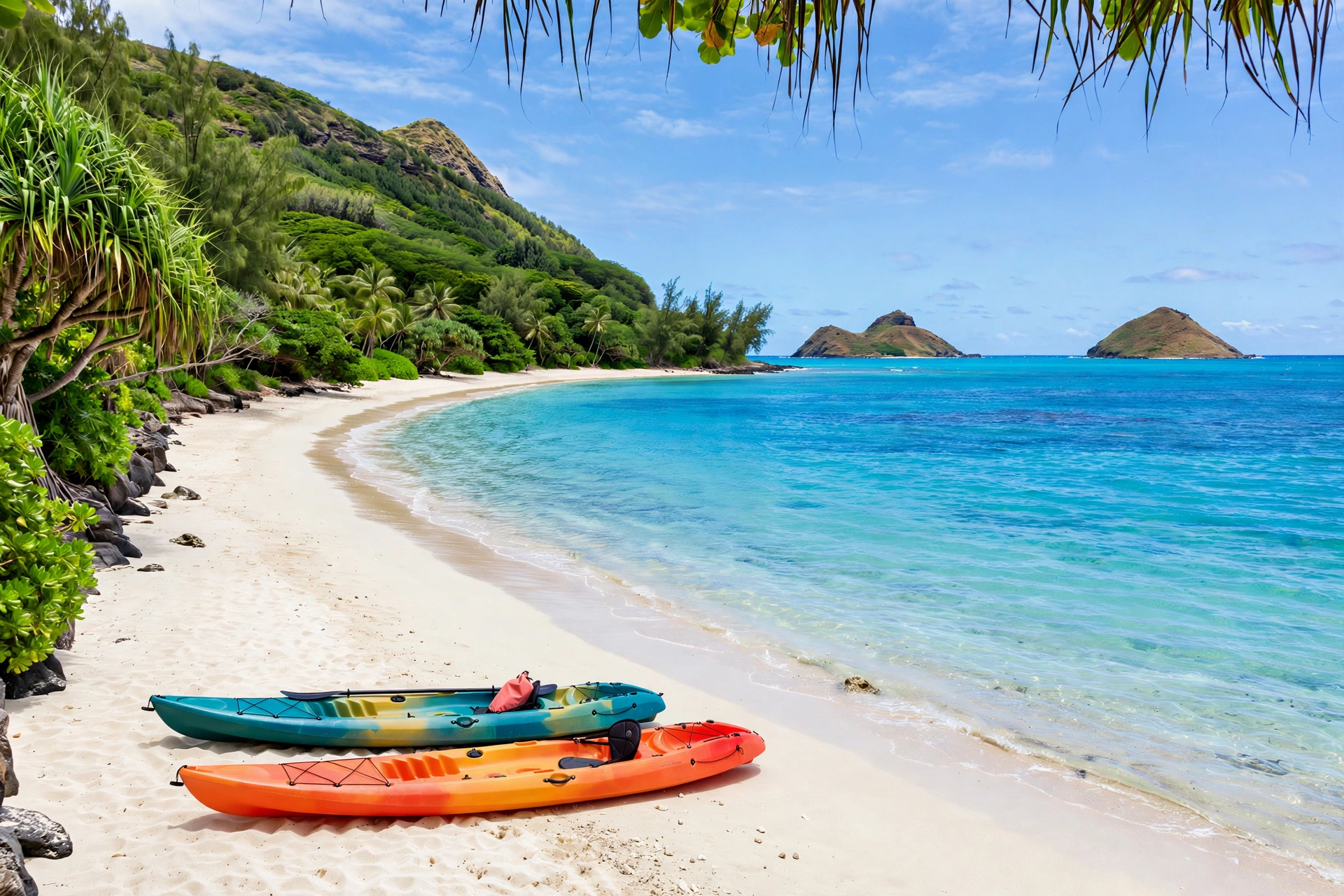
Watch: Kayaking From Lanikai to the Mokes
Swimming and Snorkeling Conditions
The swimming at Lanikai is genuinely excellent on calm days. The water is clear, the entry is sandy, and the shallows stay shallow a long way out, which makes it friendly for kids and relaxed floaters. On a glassy morning, you can see your feet in chest-deep water.
Snorkeling is good rather than great. There are rocky patches and coral heads scattered offshore that hold tropical fish, and green sea turtles cruise through regularly. The reef here is patchy, so do not expect the dense coral gardens of Hanauma Bay. Bring your own gear, since there are no rentals on the beach, and shuffle your feet rather than standing on coral.
One non-negotiable. There are no lifeguards at Lanikai. Swim within your ability, keep an eye on children at all times, and check the surf before you go in. Windward Oahu can turn choppy when the trades pick up in the afternoon, and winter swells occasionally wrap in. When in doubt, the morning is calmer than the afternoon, every time.
What Lanikai Beach Does Not Have
It is worth stating plainly, because every week someone arrives expecting a beach park. Lanikai has no restrooms, no outdoor showers, no lifeguards, no trash cans, no picnic tables, no drinking fountains, and no food or gear concessions. The nearest public restrooms and showers are at Kailua Beach Park, about a mile away.
Plan like a camper, not a resort guest. Use the restroom before you arrive. Bring more water than you think you need. Carry a bag for every scrap of trash, because there is nowhere to leave it. The beach stays beautiful precisely because visitors pack out what they pack in, and the residents notice who does not.
Lanikai Beach vs. Kailua Beach Park
The two beaches sit side by side and serve different trips. Lanikai is the scenery pick. Whiter sand, clearer water, the Mokes on the horizon, and the famous sunrise. Kailua Beach Park, just up the road, is the logistics pick. A big parking lot, restrooms, showers, picnic areas, lifeguards, and kayak and windsurf rentals. Kailua Beach is also Oahu’s wind sports capital, so expect kiteboarders and windsurfers riding the trades offshore.
The smart move for many visitors is to combine them. Catch sunrise at Lanikai, then move to Kailua Beach Park for the middle of the day when you want shade, facilities, and lunch options in Kailua town. Together they cover everything neither covers alone, and they are close enough that switching costs you nothing but a short walk. If you are comparing options, our rundown of the what not to miss on Oahu puts both in context with the rest of the island’s shoreline.
The Best Time to Visit Lanikai Beach
Mornings win. Arrive before 9 and you get easy parking, calm water, soft light, and the thinnest crowds. Weekdays beat weekends by a wide margin. On Saturdays and holidays, the beach fills early and the parking situation goes from tricky to hopeless.
Seasonally, summer (roughly May through September) brings the calmest, clearest water on the windward side. Winter can send surf wrapping around to windward shores, which makes for dramatic watching but choppier swimming. For the bigger picture on winter seasons, see our guide to the best places to visit on Oahu in winter.
Tides matter here more than at most beaches. At high tide, Lanikai’s already narrow strip of sand shrinks dramatically, and in spots the water reaches the vegetation line. Check a tide chart and aim for low to mid tide if you want room to spread out.
What to Bring to Lanikai Beach
Pack for a beach with no services. Plenty of drinking water and snacks or a full picnic, since there is nowhere to buy food. Reef-safe sunscreen, a hat, and a rash guard, because the sun reflects hard off white sand and water. A beach umbrella or shade tent, since natural shade is scarce. Snorkel gear if you want it, with no rentals on site. A dry bag for phones and keys. A trash bag, because you pack out everything. Water shoes can help on the rockier entries. And bring payment for Kailua town, where you will stop for shave ice on the way back. For more ideas across the islands, see how five Kauai beaches compare for swimming and facilities before you finalize your beach days.
Lanikai asks a little more of its visitors than most beaches. An early alarm, a parking plan, a packed bag, and enough respect for the neighborhood to use the marked walkways and keep the noise down. What it gives back is one of the prettiest stretches of sand in Hawaii, a sunrise worth crossing an ocean for, and water so clear it recalibrates what you expect from a beach. Show up prepared, leave nothing behind, and you will understand why the name means heavenly sea.


