
Lānaʻi Travel Guide
On This Page
Lānaʻi is the island most visitors skip, and that is exactly what makes it worth the trip. Known as the Pineapple Isle, it is the smallest inhabited island in the Hawaiian chain, home to roughly 3,000 residents and a pace of life that feels a generation removed from the resort corridors of Maui and Oʻahu. There are no traffic lights on Lānaʻi. The largest town, Lānaʻi City, sits on a cool central plateau at about 1,600 feet, surrounded by Cook pines planted a century ago to catch the island’s scarce moisture. Within a 20 minute drive of that quiet town you can stand on a white sand beach in a marine preserve, walk a ridgeline trail through native forest, and stare across a rust red rock garden that looks more like Mars than Hawaiʻi.
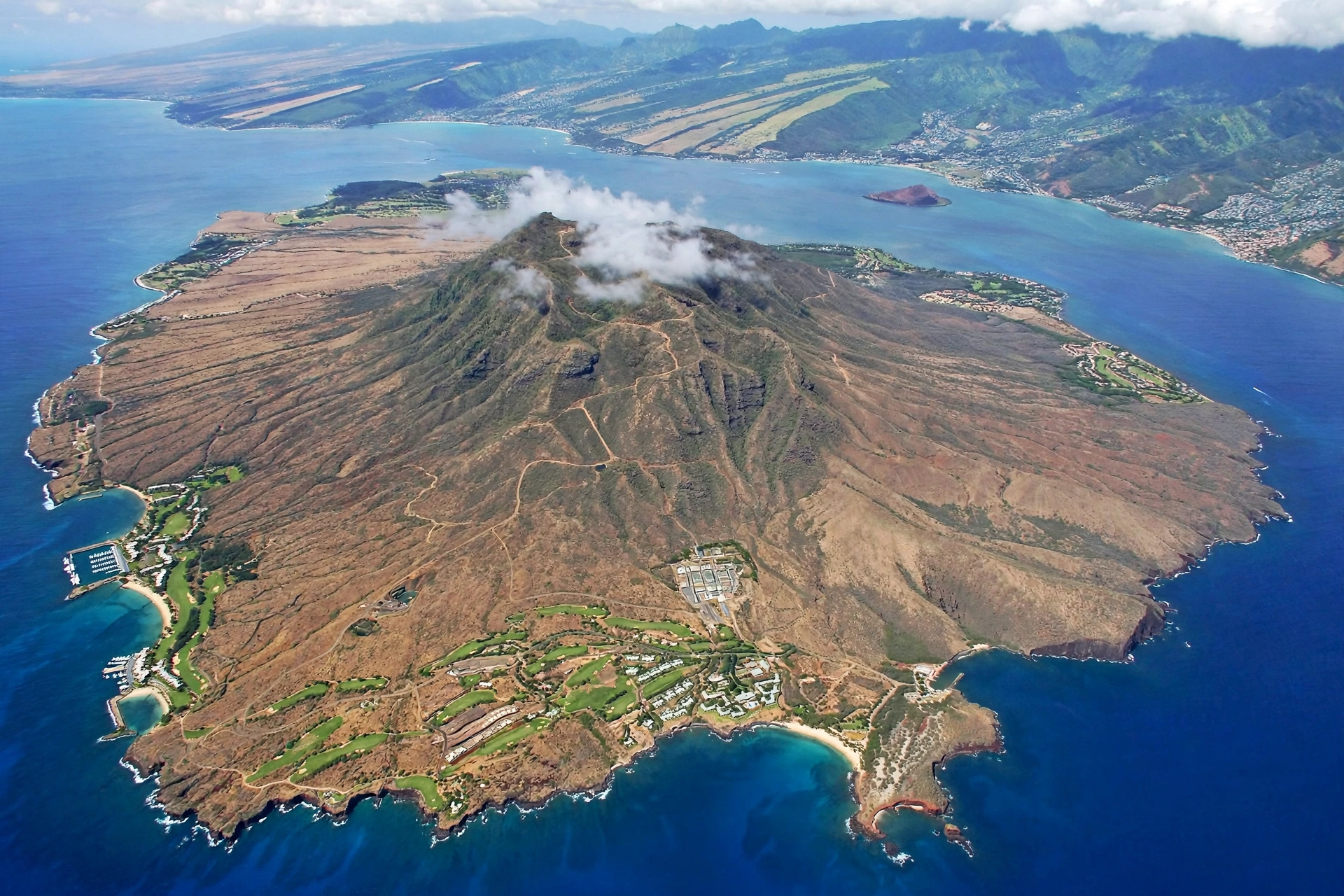
This guide covers everything you need to plan a visit: how to get here by air or ferry, where to stay, what to do, and how to travel respectfully on an island where visitors are noticed and remembered. If you only have one day, the day trip from Maui is one of the most rewarding in the state. If you can stay longer, Lānaʻi rewards slowness.
Lānaʻi at a Glance
Lānaʻi sits about nine miles off Maui’s west coast, separated by the ʻAuʻau Channel, a deep water passage famous for winter whale watching. The island is roughly 18 miles long and 13 miles wide, with about 140 square miles of land. Almost all of it is owned by one company. In 2012, Larry Ellison purchased approximately 98 percent of the island for a reported 300 million dollars, including the two Four Seasons resorts. The state retains the harbors, airport, and roads, and many residents hold their homes and lots privately, but the ownership reality shapes life here in ways visitors should understand: this is a company town in the truest sense, and the community is small enough that behavior gets remembered.
About 3,000 people live on Lānaʻi, most of them in Lānaʻi City, the plantation era town built by the Dole Company in the 1920s when pineapple made the island briefly famous. The island’s nickname, the Pineapple Isle, comes from that era, when Lānaʻi grew more pineapples than anywhere else on earth. The last harvest was in 1992, and the fields have mostly gone back to pasture and scrub, but the town’s grid of plantation cottages, the cook pines along the streets, and Dole Park at the town center still tell the story.
What makes Lānaʻi different from every other Hawaiian island is the absence of crowds and development pressure. There is one gas station of consequence, a handful of restaurants, two small grocery stores, and no big box anything. Cell coverage is spotty outside Lānaʻi City and Mānele. Most of the island’s 400 plus miles of roads are unpaved, and many of the best places require a four wheel drive vehicle or a sturdy pair of legs. That sounds like a warning, and in a practical sense it is one, but it is also the point. Lānaʻi is the island you choose when you want Hawaiʻi without the performance.
The island’s geography rewards exploration in every direction. The central highlands around Lānaʻihale catch passing clouds and hold the island’s only real forest, a mix of native species and the Cook pines planted by the ranching era to draw moisture from the air. The south coast, sheltered from the trade winds, holds the calm beaches and the marine preserve. The north and east coasts face the open ocean and the full force of winter swells, which is why they are wild, empty, and not for swimming. The west side, around Kaumālapaʻu, is ranch country, dry and open, with some of the island’s best sunset views. Understanding this layout, cool green center, calm south, wild north, helps you plan your days: beach mornings on the south shore, upland hikes when the clouds lift, and sunset drives to the west.
Getting to Lānaʻi
There are two ways to reach Lānaʻi: by air and by sea. Both are short, scenic, and limited in capacity, which means booking ahead matters, especially for the ferry.
By Air: Lānaʻi City Airport (LNY)
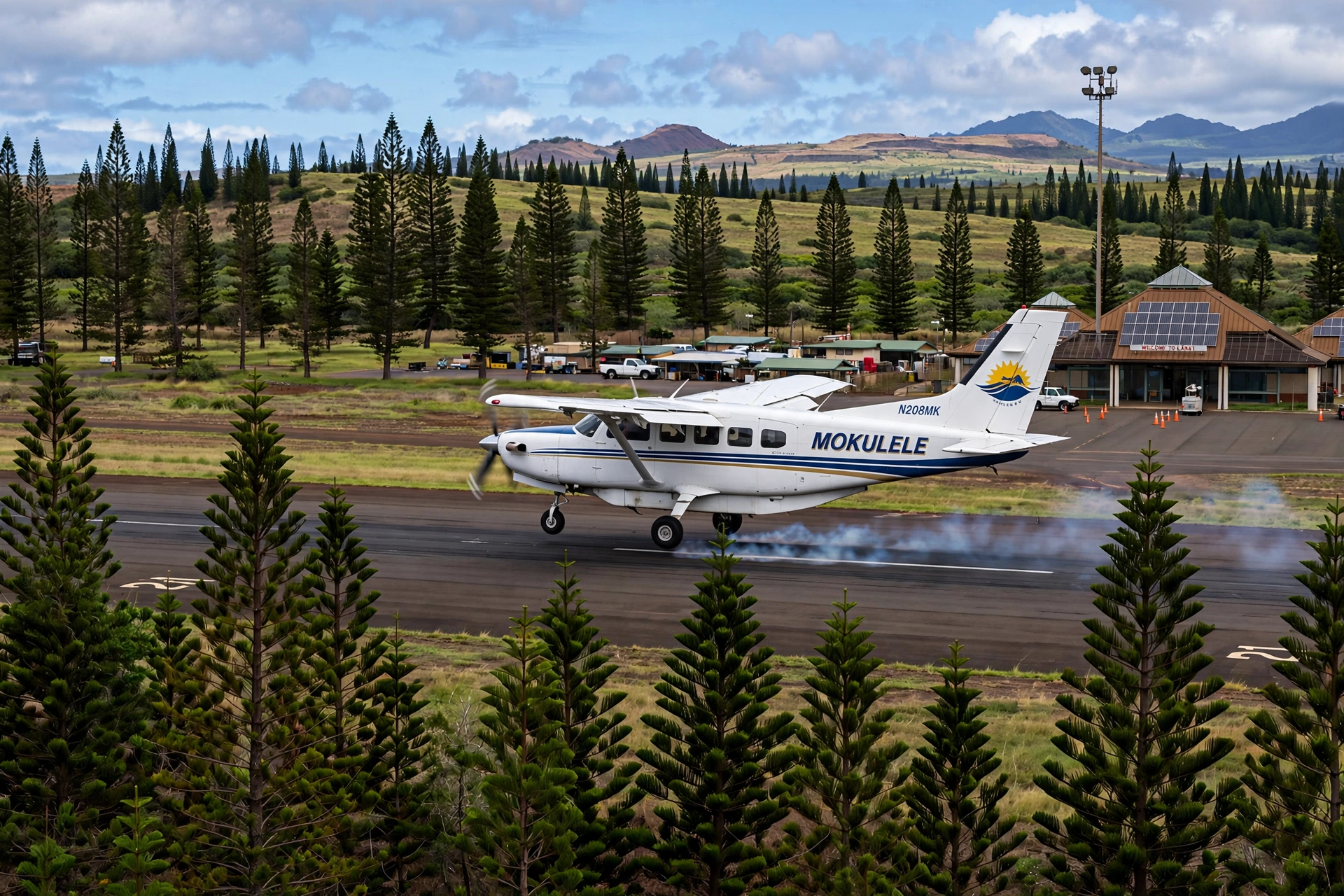
Lānaʻi City Airport, airport code LNY, is a small regional airport about three miles southwest of Lānaʻi City. Commuter airlines operate short flights from Honolulu (HNL) and Kahului (OGG) on Maui, typically 25 to 30 minutes in the air in small turboprop aircraft. Flights are frequent enough for day trips but thin enough that schedules shift, so confirm times close to your travel date. The airport has rental car counters and a small waiting area. Taxis and shuttles meet arriving flights, and some accommodations arrange pickups.
By Ferry: Māʻalaea to Mānele
The Expeditions passenger ferry runs between Māʻalaea Harbor on Maui and Mānele Harbor on Lānaʻi, a 22 mile crossing that takes about 45 minutes to just over an hour depending on conditions. As of recent schedules, the ferry makes three round trips daily, seven days a week. Since the 2023 Lahaina wildfires, service has operated from Māʻalaea rather than Lahaina Harbor, so double check the departure point when you book. The ferry is popular with both visitors and Lānaʻi residents commuting for work, medical appointments, and shopping, which means morning departures from Maui and evening returns can fill up. Book tickets in advance and arrive at the harbor with time to spare.
Note that there is no ferry between Lānaʻi and Molokaʻi, and no interisland passenger ferry from Oʻahu. All sea access to Lānaʻi runs through Maui.
Where to Stay
Lānaʻi has very few places to sleep, and that scarcity shapes every overnight decision. The island offers two luxury resorts at Mānele, a small hotel in Lānaʻi City, and a limited number of vacation rentals. There are no hostels, no campgrounds, and no budget chains.
Lānaʻi City
Lānaʻi City is the practical base. Staying in town puts you within walking distance of the island’s restaurants, grocery stores, the Lānaʻi Culture and Heritage Center, and Dole Park. The town’s small hotel and vacation rentals are far more affordable than the resorts, and the cool upland air makes for comfortable nights. From here, most trailheads and the Garden of the Gods are a straightforward drive. This is the right choice for travelers who want to explore the whole island and eat where locals eat.
Mānele and Hulopoʻe
The Mānele area on the south coast is home to the island’s two Four Seasons resorts, set above Hulopoʻe Bay. This is the luxury end of the spectrum: full service properties with pools, dining, and shuttle connections to Lānaʻi City and the ferry harbor. The setting is genuinely spectacular, with Sweetheart Rock just offshore and the marine preserve below. Day visitors can use parts of the beachfront, but the resorts themselves are guest only beyond public access areas.
The Day Trip Option
If you are based on Maui, the day trip is the most common way to see Lānaʻi and it works well. A typical day: take an early ferry, walk or shuttle to Hulopoʻe Beach for swimming and snorkeling, visit Sweetheart Rock, stop at the cat sanctuary, have lunch in Lānaʻi City, and catch a late afternoon ferry back. You will miss the Munro Trail and the Garden of the Gods, which need a vehicle and more time, but you will get a real taste of the island. Book ferry tickets and any ground transport well ahead.
Top Things to Do
Hulopoʻe Beach Park
Hulopoʻe Beach is the island’s best and most accessible beach, a crescent of white sand on the south coast fronting a Marine Life Conservation District. The swimming is excellent in calm conditions, the snorkeling is among the best shore snorkeling in the state, and spinner dolphins frequently rest in the bay during the day. The beach has restrooms, showers, picnic tables, and grills. Because it sits within a conservation district, fishing and collecting marine life are prohibited, and the reef here is notably healthy. In winter, surf can make the water rough, so check conditions.
Sweetheart Rock (Puʻupehe)
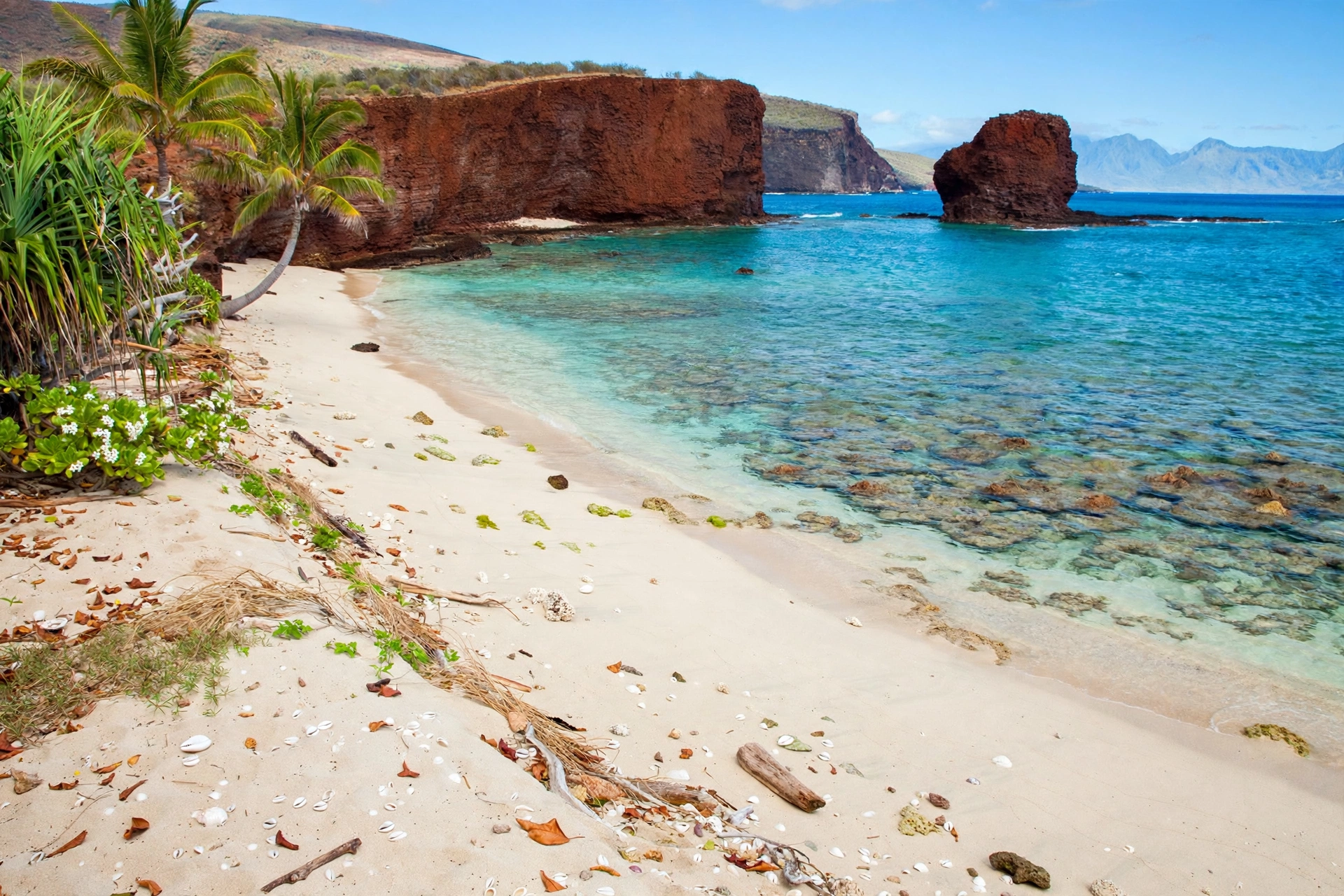
Just offshore from Hulopoʻe Beach, the sea stack known as Puʻupehe, or Sweetheart Rock, rises about 80 feet from the water. It carries one of Hawaiʻi’s most told legends: a warrior named Makakehau, heartbroken after the death of his wife Pehe, carried her body to the top of the rock and, unable to live without her, leapt into the sea. The site is culturally significant, so admire it from the beach or the short coastal trail. Do not attempt to climb it.
Shipwreck Beach (Kaiolohia)
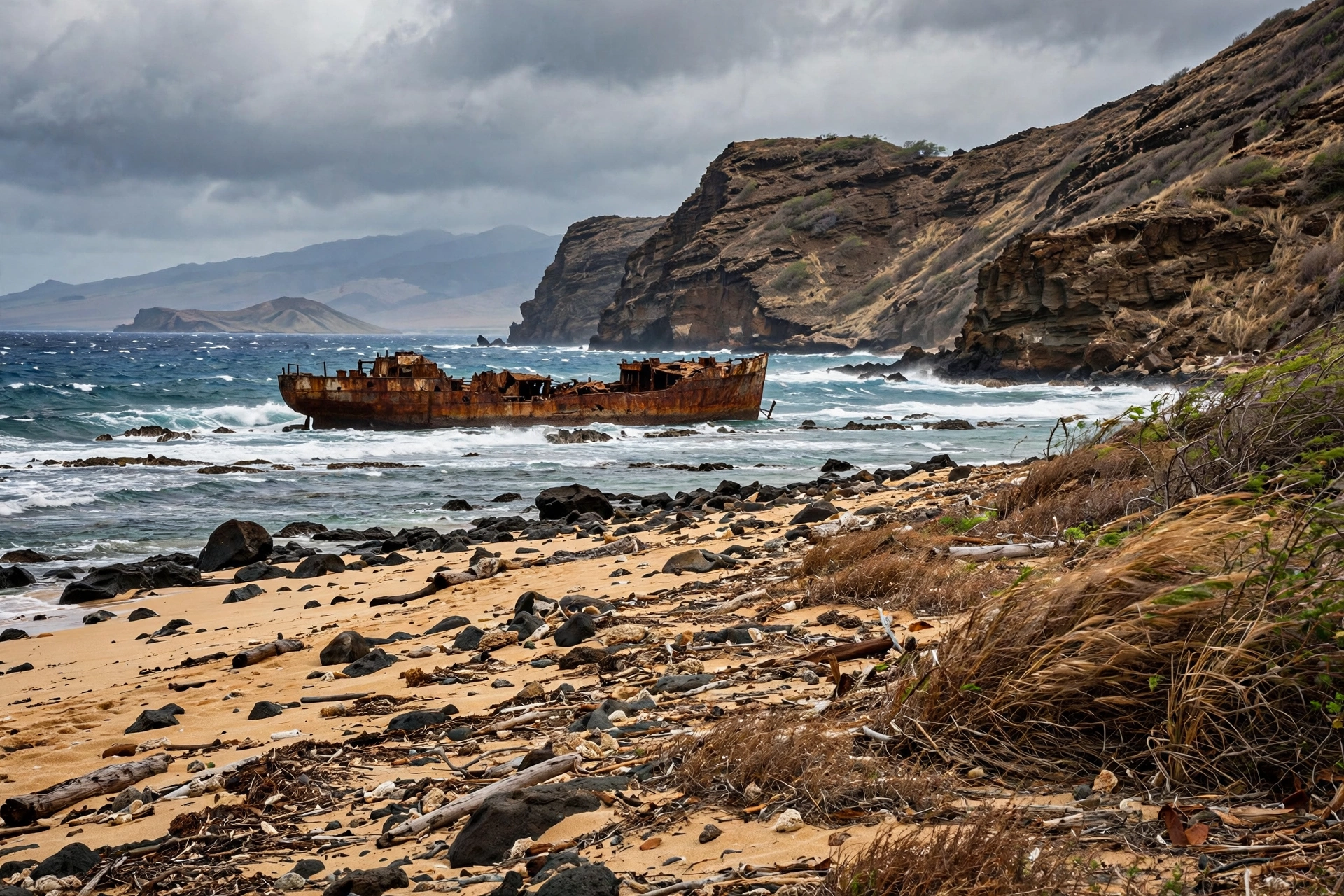
On the north shore, Kaiolohia, known as Shipwreck Beach, is an eight mile stretch of windswept sand named for the rusting hulk of a World War II era concrete ship, the YOGN 42, that sits just offshore. The beach is beautiful and almost always empty, but the water is rough and swimming is not safe. This is a place for walking, photography, and contemplating how wild the north shore is. The road here is unpaved, so a four wheel drive vehicle is needed.
Garden of the Gods (Keahiakawelo)
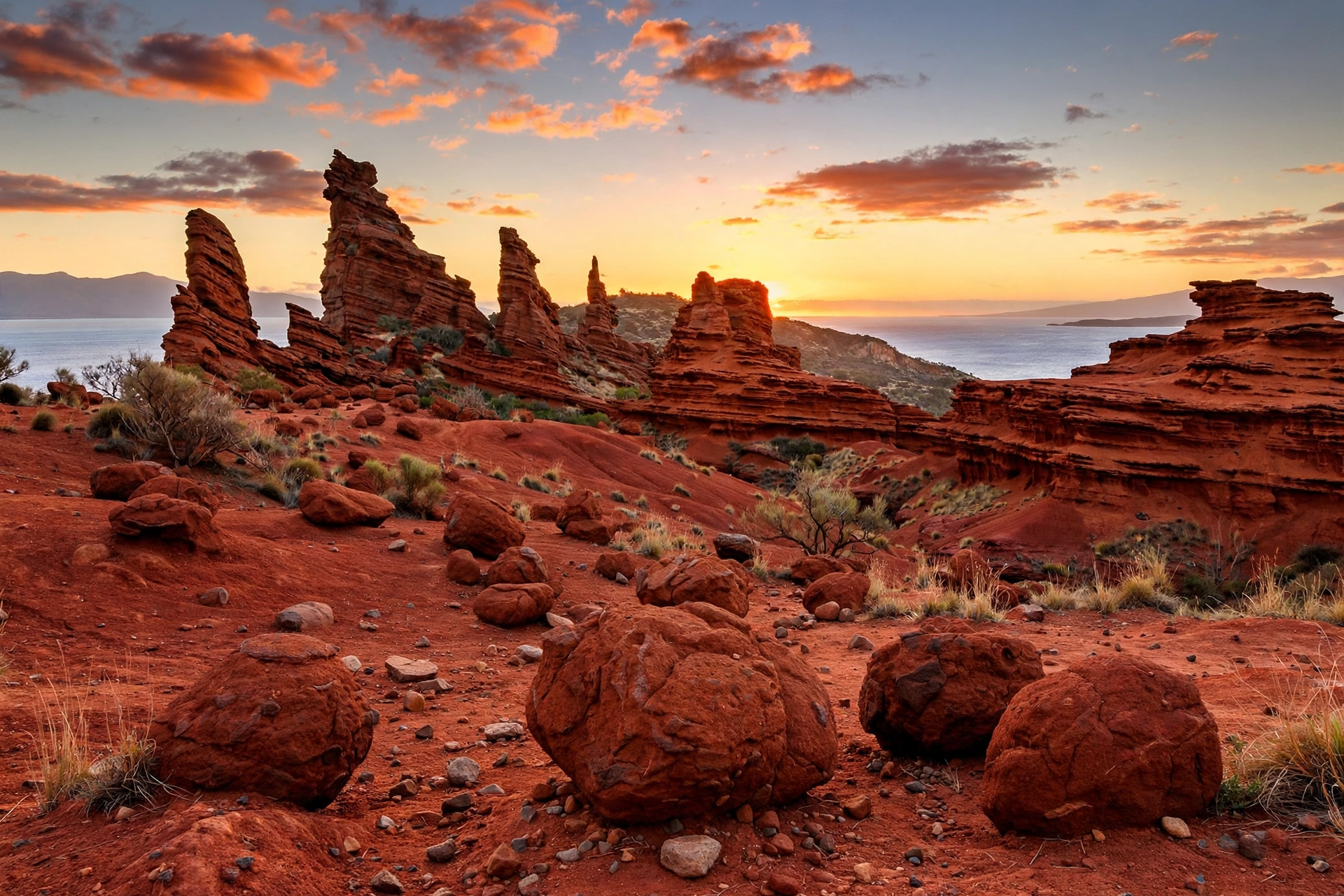
Keahiakawelo, the Garden of the Gods, is a rock garden on the island’s northwest side, about 45 minutes from Lānaʻi City over unpaved road. Wind sculpted boulders and rock towers in rust red, orange, and purple sit scattered across a barren plain, a landscape so strange it feels extraterrestrial. Hawaiian tradition holds that the barrenness resulted from a contest between priests of Lānaʻi and Molokaʻi, each challenged to keep a fire burning longer than the other. The Lānaʻi priest, Kawelo, burned every piece of vegetation to keep his fire alive. On clear days you can see Molokaʻi and Oʻahu from the higher ground. The site is most beautiful near sunset. A four wheel drive vehicle is required to get here, and removing or stacking rocks is kapu, forbidden.
Munro Trail
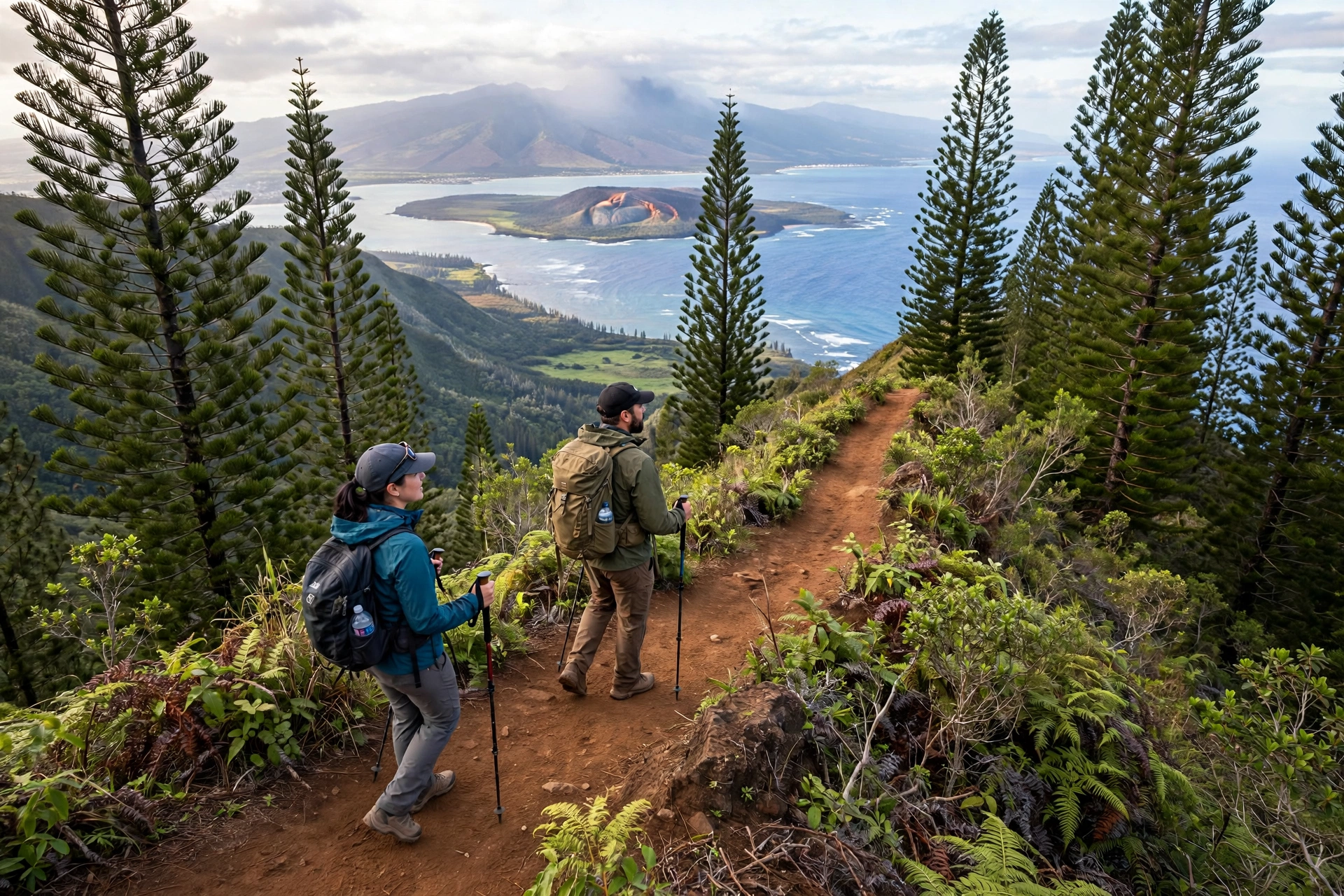
The Munro Trail runs about 13 miles along the spine of Lānaʻihale, the island’s highest point at 3,370 feet, through native forest that includes some of the last remaining stands of native Hawaiian plants on the island. On a clear morning the views stretch across the channels to Maui, Molokaʻi, Kahoʻolawe, and the Big Island. Most visitors hike or mountain bike a portion rather than the full length. The trailhead is accessible from Lānaʻi City, and conditions can be muddy after rain. Early morning is the best window: the clouds that often cap the summit by midday tend to be thinnest just after sunrise, and the bird activity, including the calls of native honeycreepers in the higher sections, is at its peak.
Kānepuʻu Preserve
Tucked into the island’s central plateau, the Kānepuʻu Preserve protects 590 acres of native dryland forest, one of the last intact examples of this ecosystem in Hawaiʻi. Dryland forests once covered large areas of the lowland islands, and almost all of them are gone. The preserve, managed by the Nature Conservancy, shelters rare native plants including the endangered ʻiliahi (Hawaiian sandalwood) and hosts guided walks where you can learn how this landscape functioned before cattle, deer, and pineapple changed it. Access is through organized visits, so check availability ahead of your trip.
Lānaʻi Culture and Heritage Center
Located in Lānaʻi City, the Lānaʻi Culture and Heritage Center is a small museum that preserves the island’s history, from ancient Hawaiian settlement through the ranching and pineapple eras to the present. It is the best single stop for understanding the island before you explore it, and the staff can answer questions about cultural sites and respectful access. Admission is free, though donations support the work.
Lānaʻi Cat Sanctuary
The Lānaʻi Cat Sanctuary, home to more than 700 rescued cats, is one of the island’s most visited attractions and a genuine conservation project. Founded to address the island’s feral cat population while protecting native birds, the sanctuary is a nonprofit that provides lifelong care in a large enclosed outdoor facility near Lānaʻi City. Visitors are welcome daily, typically from 9 in the morning to 3 in the afternoon, and there is no admission fee. It is a short drive from the airport, which makes it an easy first or last stop.
Beaches and Hikes Overview
Lānaʻi’s beaches fall into two categories: the calm, swimmable south shore and the wild, look but don’t swim north and east shores. Hulopoʻe is the only beach with facilities and reliably safe swimming. Mānele Bay’s smaller coves offer good snorkeling. Polihua Beach on the northwest coast is a long, beautiful stretch of sand reached by rough road, but the surf is dangerous. Lōpā and Naha on the east side are remote and rarely visited. The honest rule: swim at Hulopoʻe, admire everywhere else.
Hiking on Lānaʻi is underrated. Beyond the Munro Trail, the Kānepuʻu Preserve, managed by the Nature Conservancy, protects one of Hawaiʻi’s last native dryland forests, with guided access. The Koloiki Ridge Trail offers ocean views with less commitment than the full Munro. Coastal walks around Hulopoʻe and the fishpond at Lōpā reward slow walkers. Trails here are not crowded, not signed like national parks, and sometimes muddy, so bring water, sun protection, and offline maps.
A note on the island’s beach count: Lānaʻi has no long resort lined coastlines and only a handful of beaches with real sand. That scarcity is part of the charm. When you walk Shipwreck Beach or stand on the cliffs above Naha, you are often the only person there, a solitude that is nearly impossible to find on the larger islands. The tradeoff is self reliance. There are no lifeguards at any Lānaʻi beach, no beach concessions outside the resort area, and no shade at most locations. Bring everything you need, pack out everything you bring, and let the ocean’s mood, not your itinerary, decide whether you swim.
Culture and History
People have lived on Lānaʻi for at least 800 years, and the island’s ancient sites deserve more attention than they get. Kaunolū, on the southwest coast, was once a thriving fishing village and the favorite retreat of Kamehameha the Great, who reportedly fished here often. The site includes Halulu Heiau, one of the island’s most important temples, house platforms, and the famous Kahekili’s Leap, a 60 foot cliff where warriors once proved their courage by diving into the sea. Reaching Kaunolū requires a rough four wheel drive road, and the site should be treated with the respect due a sacred place: stay on paths, do not move stones, and keep voices low.
The Luahiwa petroglyph field near the Garden of the Gods contains rock carvings whose meanings are still studied. Like all Hawaiian cultural sites, these are not backdrops for photos. They are the island’s memory.
The modern island was shaped by two industries. Cattle ranching came first in the 1800s, then pineapple. In 1922, James Dole bought the island and built Lānaʻi City as a plantation town, importing workers from the Philippines, Japan, Korea, China, and Portugal. At its peak, the Dole plantation on Lānaʻi was the largest pineapple plantation in the world, and the island’s population topped 5,000. When the last pineapple harvest ended in 1992, the island pivoted to tourism, with the Mānele resorts opening in the years that followed. The 2012 purchase by Larry Ellison began another chapter, with investments in the town, the resorts, and infrastructure that continue to reshape daily life.
One detail worth knowing: Lānaʻi’s plantation history is still visible in the town’s architecture and in its food. The plantation cottages of Lānaʻi City, many still occupied by the descendants of plantation workers, follow a grid laid out a century ago. The island’s small restaurants serve plate lunches and dishes that trace directly to the plantation camps, Filipino, Japanese, Korean, and Portuguese flavors folded into local cooking. Eating in Lānaʻi City is not just convenient. It is a continuation of the island’s story.
Practicalities
Lānaʻi is not a place to wing it. Dining options are limited to a handful of restaurants in Lānaʻi City and the resort restaurants at Mānele, plus a few casual spots. Grocery shopping means two small stores in town, so if you are staying in a rental, stock up on arrival. There is one gas station in Lānaʻi City; fill up before heading to the Garden of the Gods, Shipwreck Beach, or Kaunolū, and remember that most of those roads are unpaved and require four wheel drive.
Rental cars are available at the airport and in Lānaʻi City, including four wheel drive vehicles, but the fleet is small and sells out. Book well in advance. Standard rental agreements on the island generally permit the unpaved roads to the main sights, unlike on some other islands, but confirm the terms before you drive. Cell service drops out across much of the island, so download offline maps. Medical facilities are limited to a small hospital in Lānaʻi City; serious emergencies require air transport to Oʻahu or Maui. Bring any prescriptions and a basic first aid kit.
A few more practical notes that first time visitors appreciate. Sundays are quiet: some businesses in Lānaʻi City close or keep short hours, so plan groceries and fuel accordingly. Cash is useful but cards are widely accepted. There are no ATMs outside Lānaʻi City and Mānele. Sunscreen sold and used on the island should be reef safe, without oxybenzone and octinoxate, to comply with Hawaiʻi’s sunscreen law and to protect the marine preserve at Hulopoʻe. And because everything on Lānaʻi runs on island time in the best sense, build slack into your schedule. The ferry will not wait, but almost everything else can.
Best Time to Visit
Lānaʻi is a year round destination, with the usual Hawaiian pattern: drier and warmer from April through October, wetter and cooler from November through March. Winter brings the humpback whales to the ʻAuʻau Channel, visible from shore and spectacular from the ferry, and it also brings bigger surf to the north and east shores. Summer offers the calmest ocean conditions for snorkeling at Hulopoʻe. Lānaʻi City’s elevation keeps it cooler than the coasts in every season, so bring a light layer even in summer. The island never gets crowded, so there is no bad month for avoiding crowds, only tradeoffs between whale season, ocean calm, and rain. If your trip centers on the beach and snorkeling, aim for the summer months. If it centers on whales and dramatic skies, winter is unmatched.
Lānaʻi Travel Guide FAQ
Is Lānaʻi worth visiting?
Yes, if you value quiet, uncrowded places. Lānaʻi offers excellent snorkeling at Hulopoʻe, strange and beautiful landscapes at the Garden of the Gods, real Hawaiian history at Kaunolū, and a small town atmosphere you will not find on the larger islands. It is not the island for nightlife, shopping, or big resort scenes. Travelers who loved the idea of old Hawaiʻi, slow mornings, empty beaches, and locals who nod hello, tend to call Lānaʻi their favorite island.
Can you do Lānaʻi as a day trip from Maui?
Yes, and most visitors do. The ferry from Māʻalaea to Mānele takes under an hour, with three round trips daily. A day trip comfortably covers Hulopoʻe Beach, Sweetheart Rock, the cat sanctuary, and lunch in Lānaʻi City. Staying overnight adds the Munro Trail, the Garden of the Gods at sunset, and a much deeper sense of the island.
How do you get around Lānaʻi?
A rental car is strongly recommended, and a four wheel drive vehicle is needed for the Garden of the Gods, Shipwreck Beach, Polihua Beach, and Kaunolū. The rental fleet is small, so book early. Taxis and a shuttle connect the ferry harbor, the airport, and Lānaʻi City, which is enough for a beach focused day trip.
Do you need four wheel drive on Lānaʻi?
For the island’s signature back road sights, yes. Keahiakawelo, Kaiolohia, Polihua, and Kaunolū all require unpaved roads that a standard sedan should not attempt. For Hulopoʻe Beach, Sweetheart Rock, Lānaʻi City, and the cat sanctuary, a regular car is fine.
What is the best beach on Lānaʻi?
Hulopoʻe Beach, without contest. It has the best swimming, the best snorkeling, facilities, and a marine preserve protecting the reef. Other beaches are beautiful to look at but have dangerous surf or no safe entry.
Who owns Lānaʻi?
Approximately 98 percent of the island is owned by Pulama Lanai, the company of Larry Ellison, who purchased it in 2012. The state owns the harbors, airport, and public roads, and many residents own their homes. The ownership shapes development and daily life, which is worth understanding as a visitor.
Is there good snorkeling on Lānaʻi?
Yes. Hulopoʻe Bay sits within a Marine Life Conservation District, and the snorkeling off the beach is excellent, with healthy coral, reef fish, and frequent turtle and dolphin sightings. Mornings usually bring the calmest water.
How many days do you need on Lānaʻi?
One full day covers the highlights from Maui. Two to three days let you hike the Munro Trail, visit the Garden of the Gods and Shipwreck Beach, explore Kaunolū, and experience the island after the day trippers leave, which is when Lānaʻi is at its best.
Related Guides
Continue exploring the islands with these guides:
- Hawaiʻi Map: The Complete Island Guide
- Molokaʻi Travel Guide
- Maui Beaches Guide
- Hawaiʻi Beaches: Complete Guide
A Final Note
Lānaʻi does not try to impress you, and that is its rarest quality in modern Hawaiʻi. The island asks for a little effort, a rental car booked ahead, a willingness to drive dirt roads, patience with limited dining, and in return it offers something the bigger islands cannot: the feeling of having a Hawaiian island mostly to yourself. Go for the snorkeling and the strange red rocks, but stay, even for an extra day, for the quiet. It is the quiet you will remember.