
Maui holds the tallest waterfalls in the Hawaiian Islands, the most famous roadside cascades, and some of the most photographed jungle trails in the Pacific. From the 400-foot Waimoku Falls at the end of the Pīpīwai Trail to the roadside plunge of Wailua Falls near Hāna, the island’s waterfalls concentrate along the wet windward slopes of Haleakalā and the West Maui Mountains. This guide covers the falls worth your time, how to reach each one safely, and what to know before you go.
On this page
Maui Waterfalls at a Glance
Maui’s waterfalls exist because of a simple geographic equation: tall volcanic mountains plus the moisture-laden northeast trade winds. As the trades strike the windward slopes of Haleakalā and the West Maui Mountains, they are forced upward, cool, and release their moisture as rain. The result is that east Maui and the upper West Maui valleys receive some of the heaviest rainfall in Hawaiʻi, feeding hundreds of streams that carve their way to the sea. Where those streams meet a cliff, a waterfall is born.
The island’s two great volcanic masses shape everything about its waterfalls. Haleakalā, the massive shield volcano that forms east Maui, rises to 10,023 feet and catches the trades across a broad windward face. Its slopes hold the densest concentration of accessible waterfalls, most of them strung along the Hāna Highway corridor and inside Haleakalā National Park’s Kīpahulu District. The West Maui Mountains, older and more deeply eroded, hide the island’s tallest falls in sheer amphitheater valleys like Honokōhau, where cliffs rise more than 1,000 feet. These West Maui falls are spectacular but largely inaccessible except by air, which is why the island’s famous waterfalls are overwhelmingly an east Maui story.
Flow varies dramatically with the seasons and even with the hour. Maui’s waterfalls run fullest during the wet season, roughly November through March, when Kona storms and winter fronts drench the windward slopes. In the drier summer months, many of the smaller roadside falls thin to a trickle or disappear entirely, while the great falls like Waimoku keep flowing year round because they drain large, high-elevation watersheds. A waterfall photographed at its thundering best in January may be a damp stain on the cliff by August, so timing matters as much as location.
Access on Maui ranges from effortless to essentially impossible. Wailua Falls pours beside the Hāna Highway where you can see it from your car. Waimoku Falls requires a four-mile round-trip hike through bamboo forest. Honokōhau Falls, at 1,100 feet the tallest waterfall on Maui, can only be seen from a helicopter. Between those extremes sit falls reached by short farm trails, stream scrambles, and roadside pullouts, each with its own rules, risks, and rewards. Understanding which falls are truly accessible, and which demand caution or a permit, is the difference between a great day and a dangerous one.
One cultural note deserves attention before you set out. In Hawaiian tradition, waterfalls are wai, fresh water, and fresh water was among the most sacred resources in old Hawaiʻi. Many falls and the pools beneath them carry stories, and some are associated with Hawaiian deities or revered ancestors. Treat every waterfall site with the quiet respect you would bring to a place of worship: stay on marked trails, do not carve names into rocks or trees, pack out everything you pack in, and never take rocks or plants. The falls were here long before visitors arrived, and respectful behavior keeps them welcoming for everyone who follows.
The Top Waterfalls on Maui
Not every cascade on Maui deserves a detour, and some famous names hide disappointing realities. The falls below are the ones that consistently reward the effort, organized from the most essential to the most specialized. Distances and details reflect conditions on public trails and roads; always check current park guidance before you go.
Waimoku Falls: The Great Finale of the Pīpīwai Trail
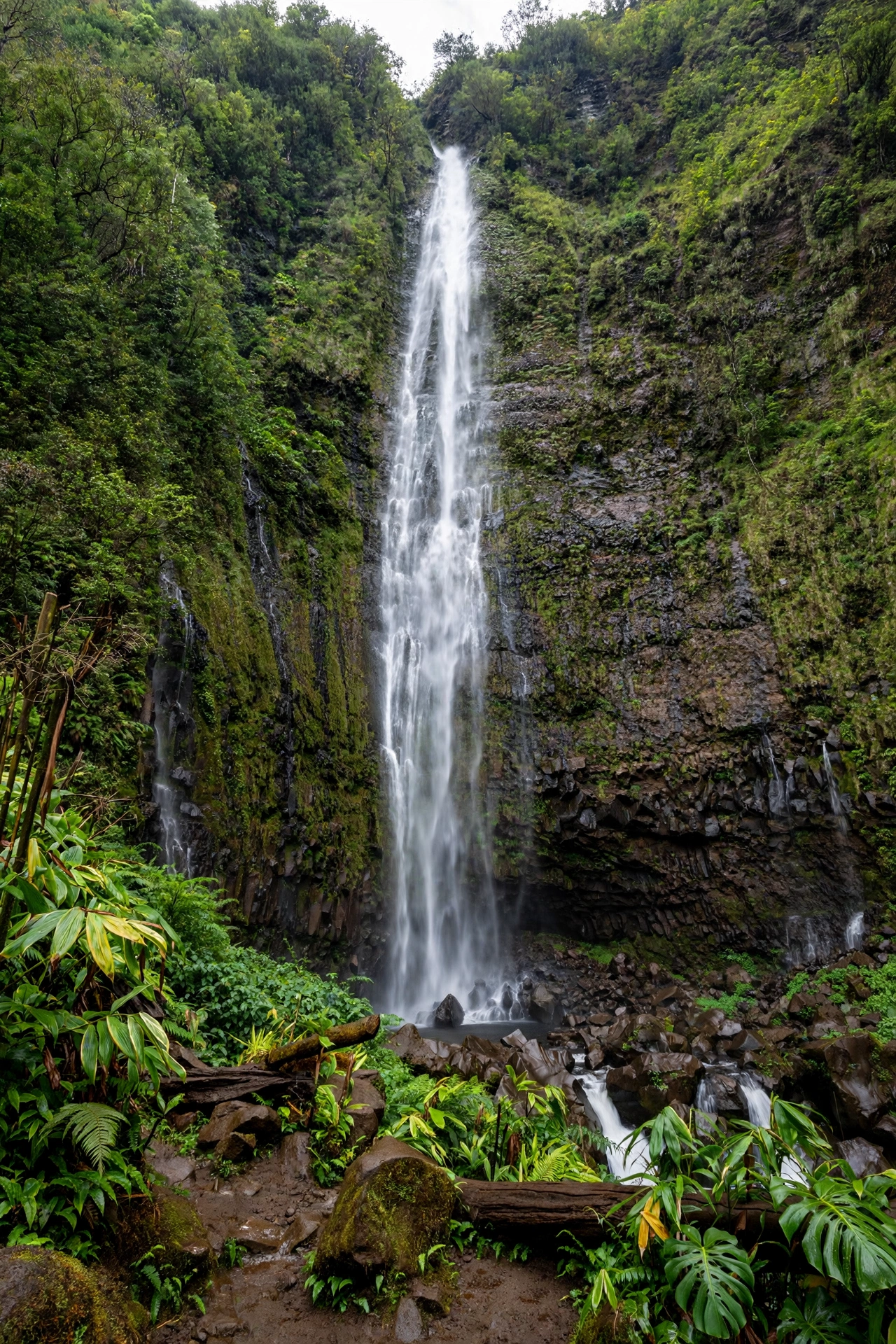
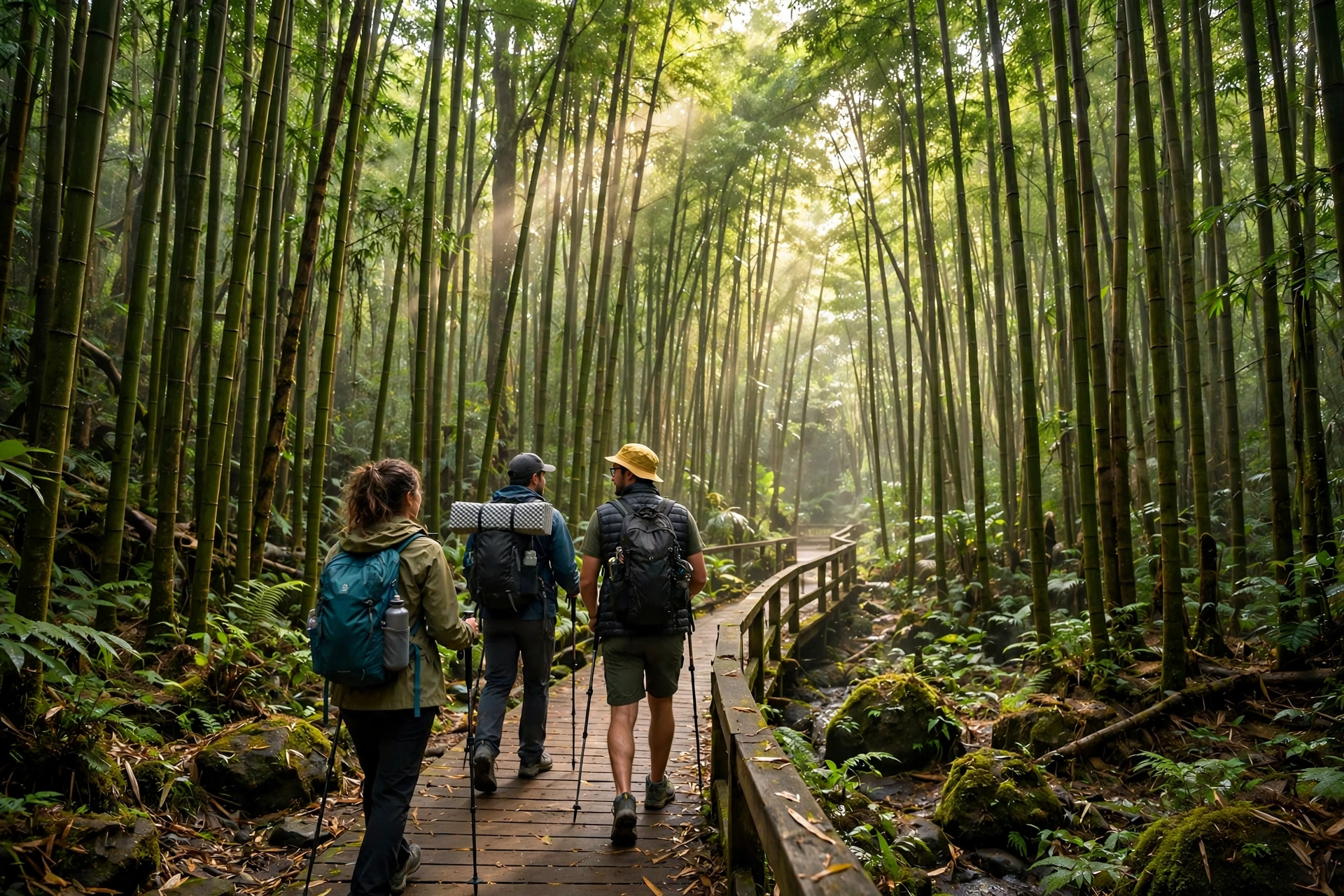
Waimoku Falls is the waterfall that justifies the entire journey to the far side of Maui. Dropping 400 feet down a sheer wall of dark lava rock, it stands at the end of the Pīpīwai Trail in the Kīpahulu District of Haleakalā National Park, past Hāna at the end of the Hāna Highway. The falls are the reward for a two-mile hike (four miles round trip) that passes through some of the finest scenery on the island, including the famous bamboo forest and the 200-foot Makahiku Falls overlook at the half-mile mark.
What makes Waimoku special is not just its height but its setting. The trail’s final stretch crosses a boulder-strewn streambed and emerges into a natural amphitheater where the falls pour from a narrow cleft high above. The cliff face is streaked with mineral stains in bands of rust, ochre, and green, and on windy days the upper falls blow sideways into mist. A viewing area at the base keeps visitors back from the rockfall zone, and that boundary deserves respect: the cliff sheds rocks regularly, and the posted warning signs are there because people have been hurt. Admire the falls from the designated area and no farther.
Reaching Waimoku requires park entry to Haleakalā National Park’s Kīpahulu District and the better part of a day. The drive from central Maui takes two to four hours each way depending on Hāna Highway traffic, the hike itself takes two to three hours, and you will want time at the falls. Plan this as a full-day commitment, bring more water than you think you need, and start early enough to finish the trail in daylight.
Wailua Falls: The Roadside Classic
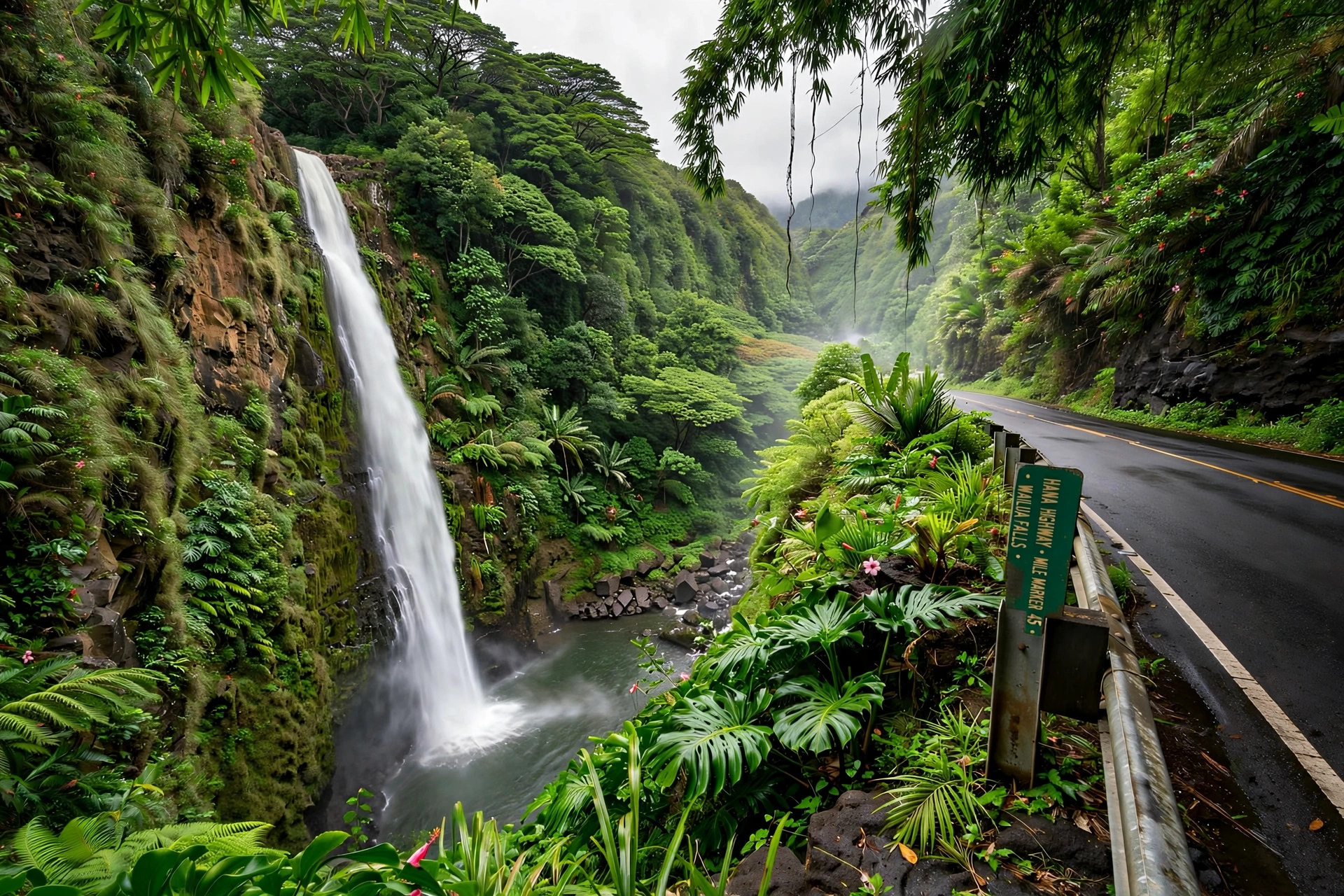
If Waimoku is the falls you earn, Wailua Falls is the falls you are given. Plunging about 80 feet into a deep pool, it pours beside the Hāna Highway near mile marker 45, just past Hāna, where a small parking area and a short walk bring you to one of the most photographed waterfalls in Hawaiʻi. No hiking boots required, no trail to navigate, no admission beyond the drive you were already making.
Wailua’s fame comes with crowds. Tour buses and rental cars stack up at the small lot through the middle of the day, and the viewing area can feel more like a scenic overlook than a wilderness experience. Arrive early in the morning or late in the afternoon for thinner crowds and better light. The falls flow most impressively after rain, which in this corner of Maui is frequent, and the pool below is deep and inviting. Exercise the standard caution about swimming beneath any waterfall: falling rocks and sudden flow changes are real hazards, and there are no lifeguards here.
A pair of falls often confused with this one sits near Līhuʻe on Kauaʻi, which shares the name. On Maui, when locals say Wailua Falls, they mean the roadside cascade past Hāna, and it pairs naturally with a visit to the Kīpahulu District or the pools of ʻOheʻo Gulch nearby.
Twin Falls (Waikamoi): The Easy First Stop
Twin Falls, on the Waikamoi stream near mile marker 2 of the Hāna Highway, is the first waterfall most visitors encounter, and its accessibility makes it an ideal warm-up. A farm and fruit stand operate at the trailhead, and a maintained trail leads a short distance to the lower falls and swimming area. The setting is lovely, a green bowl of tropical vegetation with falls dropping into a clear pool, and the short walk suits families and casual visitors.
The upper falls require more effort and involve stream crossings that can be slippery and hazardous after rain. The property is privately operated, so expect a parking fee and follow the posted rules about where visitors may and may not go. Because it sits so close to the start of the Hāna Highway, Twin Falls works best as an early stop before the road gets busy, or as a consolation prize on a day when weather closes the farther falls.
Honokōhau Falls: The Tallest, Seen Only From the Air
At roughly 1,100 feet, Honokōhau Falls is the tallest waterfall on Maui and one of the tallest in the state, pouring in a long white ribbon down the sheer green walls of Honokōhau Valley in the West Maui Mountains. It gained worldwide fame as the opening shot of a certain dinosaur film, and it remains essentially unreachable on foot. The valley is remote, trail-less, and bounded by private and conservation land, so the only practical way to see the falls is from a helicopter tour.
Include Honokōhau here for honesty’s sake: it is magnificent, it is real, and you cannot hike to it. If a helicopter flight is in your plans, request a route that includes the West Maui valleys. If not, admire it in photographs and spend your ground time on the falls you can actually reach. No viewpoint, trail, or road on Maui offers a glimpse of Honokōhau, and anyone promising otherwise is mistaken.
Makahiku Falls: The Pīpīwai Trail’s First Reward
About half a mile up the Pīpīwai Trail, before the bamboo forest and well before Waimoku, the trail reaches an overlook for Makahiku Falls, a 200-foot cascade pouring into a deep gorge. Many hikers treat it as a preview of the main event, but Makahiku deserves attention in its own right: the overlook frames the falls against the gorge’s green walls, and the viewing platform is one of the trail’s best rest stops.
The pool at the base of Makahiku is closed to swimming, and the closure is strictly enforced for good reason. The gorge is a rockfall zone, and the falls themselves are deceptively powerful. Enjoy Makahiku from the overlook, take your photographs, and save your swimming for the safer pools elsewhere on the island.
Upper Waikani Falls (Three Bears): The Roadside Trio
Near mile marker 19 on the Hāna Highway, three parallel cascades pour down a mossy cliff face in a formation locals call the Three Bears: Papa, Mama, and Baby Bear, named for their relative sizes. Upper Waikani Falls is a pure roadside attraction, visible from a small bridge and pullout area, and on a wet day the three falls run side by side in a display that rivals any single cascade on the road.
Parking here is extremely limited, and the bridge area can be chaotic when several cars stop at once. Pull fully off the road, be quick and courteous, and never climb the cliff face or wade into the stream above the falls. The rocks are slick, the drop is real, and the view from the road is the entire point.
Alelele Falls: The Quiet One Past Hāna
Past Hāna, where the Hāna Highway becomes the Piʻilani Highway and the crowds thin dramatically, a short trail leads to Alelele Falls, a slender cascade in a peaceful valley setting. Alelele sees a fraction of the visitors that crowd the roadside falls, and its appeal is serenity rather than spectacle. The hike is short but can be muddy, and the trailhead is unsigned enough that many drivers pass it unknowingly.
This is a falls for travelers who have already done the Hāna Highway’s greatest hits and want something quieter. Bring bug spray, wear shoes you don’t mind muddying, and check recent trail reports, since the path can become overgrown between maintenance visits.
Nāʻiliʻili-haele (Bamboo Forest): Beauty With Serious Caveats
The waterfalls along the Nāʻiliʻili-haele stream, reached via an unsigned trail near mile marker 6.5 on the Hāna Highway and commonly called the Bamboo Forest, are genuinely beautiful. A series of small cascades and pools stair-steps through a grove of towering bamboo, and photographs of the scene have inspired countless detours. The reality of visiting, however, demands a frank discussion.
The trail crosses private property and sections of it are technically trespassing, a fact that has generated long-standing tension between landowners and visitors. The stream crossings are treacherous when water is high, flash floods have swept hikers downstream, and rescues here are common enough that local authorities regularly warn visitors away. If you go, never go alone, never go after rain, tell someone your plans, and turn back at the first sign of rising water. Better still, consider whether the Pīpīwai Trail’s bamboo forest, which is legal, maintained, and patrolled, satisfies the same craving with none of the risk.
ʻOheʻo Gulch (Seven Sacred Pools): Manage Your Expectations
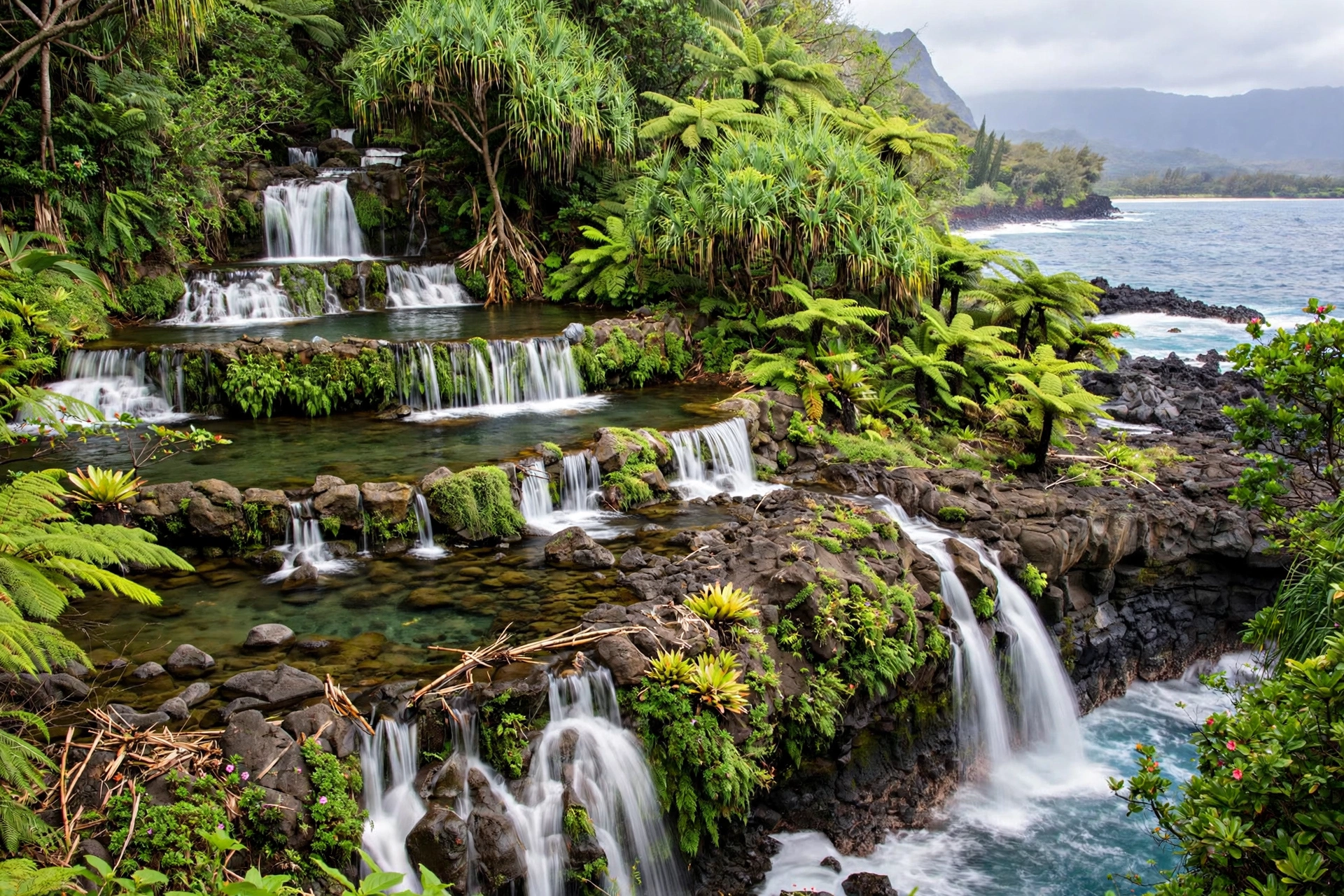
The tiered pools and small cascades of ʻOheʻo Gulch, in the Kīpahulu District of Haleakalā National Park, are marketed under the romantic name Seven Sacred Pools, though the name is a modern invention and the pools number more than seven. The setting is undeniably lovely: a series of basalt pools stepping down toward the ocean, each fed by small falls, surrounded by lush valley walls.
The critical fact is that swimming in the pools has been prohibited by the National Park Service due to the danger of flash floods and falling rocks, and the closure should be treated as permanent regardless of what older guidebooks or social media posts suggest. Visitors have died here, most recently in flood events that arrived with no warning from storms miles upstream. Walk the short Kūloa Point Trail for the views, photograph the pools from the designated overlooks, and do not enter the water. Check current NPS guidance at the Kīpahulu visitor center, but plan on looking, not swimming.
Waterfall Safety on Maui
Maui’s waterfalls are beautiful and genuinely dangerous, and the danger deserves more than a passing mention. Every year, visitors are injured or killed at Hawaiian waterfalls, almost always for preventable reasons. The falls themselves are not the enemy; complacency around water, weather, and terrain is. Read this section as carefully as the waterfall descriptions.
Flash Floods Are the Number One Danger
More visitors die in Hawaiian streams from flash floods than from any other waterfall-related cause. The mechanism is simple and unforgiving: heavy rain falls on the mountain slopes miles upstream, where you cannot see it and where the sky above you may be perfectly blue. The runoff funnels into narrow stream channels and arrives as a wall of brown water, sometimes in minutes, sweeping away everything in the streambed.
The defense is equally simple. Check the National Weather Service Honolulu forecast before any waterfall hike, and cancel or turn back if flash flood watches or warnings cover the area. Never enter a narrow gorge or stream channel when rain is falling anywhere on the mountain above you. If water that was clear turns brown, if you hear a roar upstream, or if the stream level starts rising, get to high ground immediately and do not try to outrun the water downstream. The pools of ʻOheʻo Gulch and the stream crossings at Nāʻiliʻili-haele have both produced fatalities from exactly this scenario.
Slippery Rocks and Falling Rocks
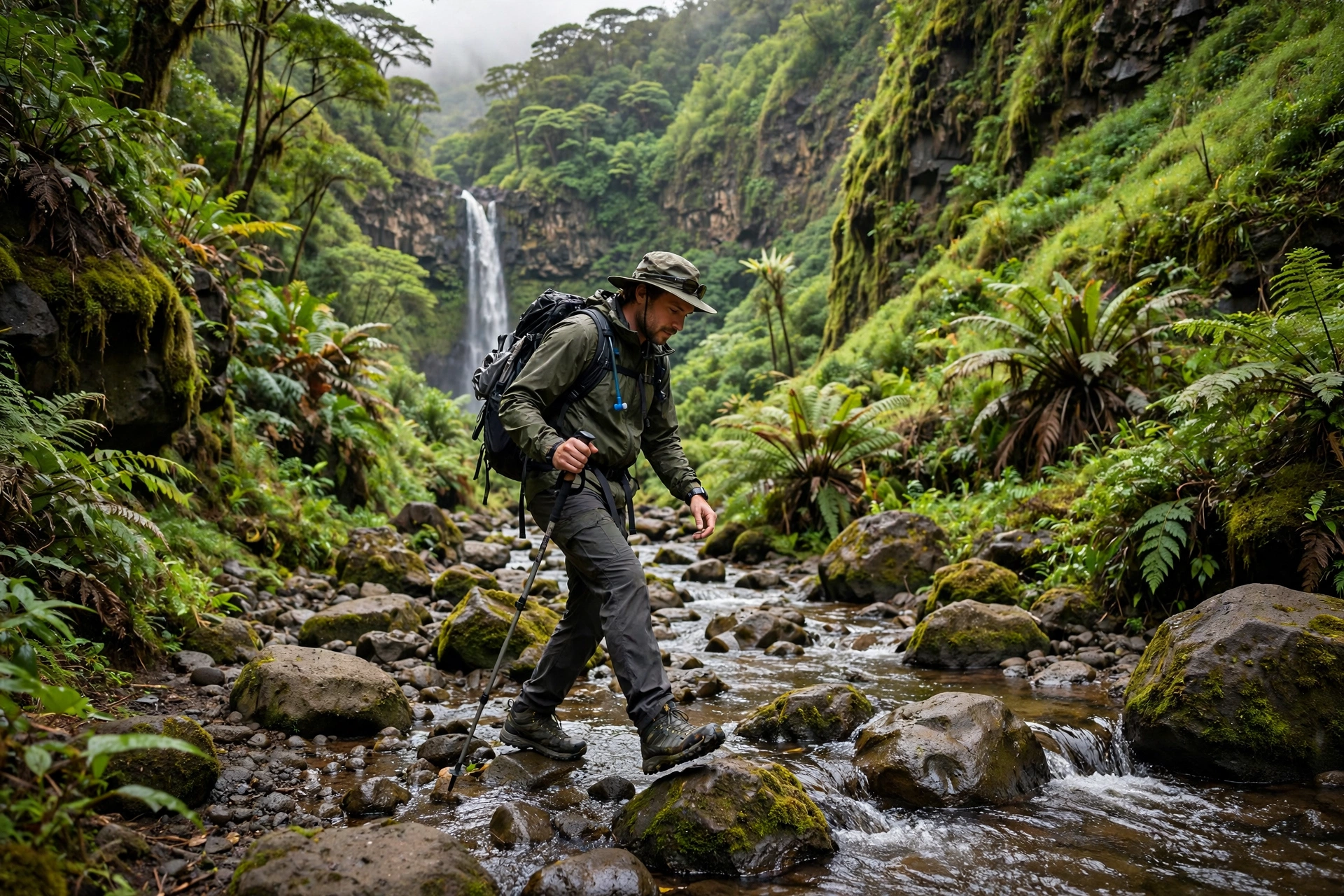
Basalt slicked with algae and moss is among the most slippery surfaces in nature, and it lines nearly every waterfall approach on Maui. Proper footwear with real tread is non-negotiable; rubber slippers and smooth-soled fashion sneakers are an injury waiting to happen. Test every foothold before committing your weight, use your hands on rock faces, and assume that any wet rock near a falls will not hold you.
Falling rocks are the quieter hazard. Waterfalls undercut their cliffs continuously, and the Pīpīwai Trail’s final amphitheater, the gorge below Makahiku Falls, and the pools of ʻOheʻo Gulch are all documented rockfall zones. This is why viewing areas and closures exist: they mark the distance at which the risk becomes unacceptable. Do not duck under railings or ignore closure signs for a better photograph. No image is worth the weight of a falling boulder.
Leptospirosis and Water Quality
Hawaiʻi’s freshwater streams can carry Leptospira bacteria, shed in the urine of rats, pigs, and other mammals, which cause the disease leptospirosis in humans. Infection enters through cuts, scrapes, or mucous membranes, and while most cases are mild, severe cases can cause kidney and liver damage. The Hawaiʻi Department of Health advises against swimming in freshwater streams and advises covering open wounds, avoiding swallowing stream water, and showering after freshwater exposure.
This is practical rather than alarmist guidance. Millions of stream exposures happen without illness, but the risk is real enough that you should factor it into decisions about swimming in waterfall pools. Do not swim with open cuts. Keep your head above water where possible. If you develop flu-like symptoms with muscle aches in the weeks after freshwater exposure, tell your doctor about the exposure so leptospirosis can be considered.
Private Property and Trespassing
A meaningful share of Maui’s waterfall trouble involves land access. Several popular falls and swimming spots sit on or require crossing private land, and Hawaiʻi landowners have grown increasingly assertive about trespassers as social media has multiplied visitation. Nāʻiliʻili-haele is the best-known example, but it is not the only one. Trespassing on private land in Hawaiʻi can result in fines and arrest, and just as importantly, it poisons the relationship between visitors and the communities that host them.
The rule is straightforward: if a trail is not clearly public, signed, and maintained, do not assume you are welcome. Stay on marked trails, respect every posted sign, close gates behind you, and never move barriers or ignore closures. The legal, maintained trails on Maui, led by the Pīpīwai Trail, offer more waterfall beauty than most visitors can absorb in a week. There is no reason to trespass.
Before every waterfall hike, run this checklist: Check the NWS Honolulu forecast and cancel on flash flood watches. Tell someone your plan and expected return. Bring more water than you think you need plus a rain jacket. Wear shoes with real tread, not slippers. Pack a charged phone but do not rely on cell service in valleys. Start early enough to finish in daylight. And know that turning back is always the right call when conditions change.
Hiking to Maui’s Waterfalls
Maui’s waterfall hikes range from a roadside stroll to a genuine backcountry commitment, and matching the hike to your ability is the most important planning decision you will make. The table below compares the principal waterfall hikes at a glance.
| Waterfall / Trail | Distance (round trip) | Difficulty | Access notes |
|---|---|---|---|
| Wailua Falls | 0.1 miles | Easy | Roadside near mile marker 45; no hiking required |
| Twin Falls (lower) | 0.5 miles | Easy | Private farm; parking fee; maintained trail |
| Upper Waikani (Three Bears) | Roadside | Easy | View from bridge pullout near mile marker 19 |
| Alelele Falls | 0.5 miles | Easy to moderate | Short unsigned trail past Hāna; can be muddy |
| Pīpīwai Trail (Waimoku Falls) | 4 miles | Moderate | Haleakalā National Park entry fee; allow 2 to 3 hours |
| Nāʻiliʻili-haele | 2 miles | Moderate to difficult | Private land issues; stream crossings; high risk |
| ʻOheʻo Gulch | 0.5 miles | Easy | Kūloa Point Trail; swimming prohibited |
The Pīpīwai Trail in Detail
The Pīpīwai Trail is Maui’s signature waterfall hike and the only trail on the island that delivers a major waterfall as its payoff. The trailhead sits in the Kīpahulu District of Haleakalā National Park, at the end of the Hāna Highway, and the trail climbs gently through pasture, rainforest, and a remarkable bamboo forest before reaching the Makahiku Falls overlook at the half-mile point and Waimoku Falls at two miles. Elevation gain is modest at around 650 feet, but the trail surface varies from boardwalk to mud to boulder fields, and the stream crossings near the top can be impassable after heavy rain.
No advance reservation is required for the trail itself, but you do need to pay the Haleakalā National Park entry fee, and the Kīpahulu District has limited parking that fills by mid-morning. Rangers staff the small visitor center and can advise on current trail conditions, which is worth doing since washouts and closures happen. The park’s entry fee covers both the Kīpahulu District and the summit district for three days, so a waterfall day pairs naturally with a sunrise or sunset trip to the Haleakalā summit on another day.
What to bring: at least two liters of water per person, rain gear regardless of the forecast, sturdy hiking shoes, snacks, sun protection for the exposed lower sections, and a dry bag for electronics. What to leave behind: expectations of solitude at midday, any plan that has you starting after noon, and the idea that the bamboo forest photographs itself. The famous bamboo shots need still air and soft light, which means early morning.
Permits, Fees, and Practicalities
Waterfall access on Maui involves a patchwork of jurisdictions. Haleakalā National Park charges an entry fee and enforces its rules with rangers. Twin Falls operates on private land with its own parking fee and hours. Roadside falls like Wailua and Upper Waikani are free but offer only roadside parking. State park and forest reserve trails fall under the Department of Land and Natural Resources, whose Na Ala Hele trail program publishes current trail conditions and closures worth checking before you set out.
One nearby reservation deserves a mention because it confuses many visitors: Waiʻānapanapa State Park, home to the famous black sand beach near Hāna, requires advance reservations for entry and parking. The reservation covers the park, not any waterfall, but since many waterfall itineraries pass the park, it is worth knowing. For a deeper look at Maui’s trails beyond waterfalls, see our Maui hikes guide.
Best Time to See Maui Waterfalls
Waterfall season on Maui runs opposite to beach season, which is worth internalizing. The falls flow fullest during the wet season, roughly November through March, when winter storms and Kona winds drench the windward slopes. This is when Wailua Falls thunders, when the Three Bears run three abreast, and when even minor roadside cascades put on a show. It is also when flash flood risk peaks, trails turn to mud, and the Hāna Highway demands its most careful driving.
The dry season, roughly May through September, brings safer hiking and calmer roads but thinner falls. The great watershed-fed cascades like Waimoku keep flowing respectably year round, while smaller falls may dwindle to a trickle. For many visitors, the shoulder months of April and October offer the best compromise: decent flow from lingering wet-season moisture, lower flood risk, and thinner crowds than the winter holidays.
Within any day, morning is the best time for waterfall visits. Overnight rain often swells the falls, the light is soft for photography, parking is available, and you finish hiking before the afternoon clouds build over the mountains. Afternoon visits are still worthwhile, but build in a margin: mountain weather moves fast, and a clear morning can become a rainy afternoon with little warning. After any heavy rain, give streams a day to settle before attempting crossings, and treat brown, fast-moving water as a hard stop.
Photography Tips
Maui’s waterfalls reward photographers who understand a few basics. The classic silky-water long exposure needs a tripod or a stable rock, a shutter speed of a fraction of a second or longer, and ideally a neutral density filter to cut the bright tropical light. Overcast days, common on the windward side, are actually ideal: the clouds act as a giant softbox, eliminating the harsh shadows that plague waterfall shots in direct sun.
A polarizing filter is the single most useful accessory. It cuts glare on wet rocks and foliage, deepens the greens of the rainforest, and can make the water itself more transparent in pool shots. Protect your gear relentlessly: waterfall spray drifts farther than you expect, and a simple rain sleeve or even a plastic bag saves lenses. Bring a microfiber cloth and use it constantly.
For composition, resist the urge to center every falls. Include foreground elements like ferns, rocks, or the bamboo stalks of the Pīpīwai Trail to give scale, and remember that vertical panoramas suit tall falls like Waimoku better than a single wide frame. Drones are prohibited in Haleakalā National Park and restricted in many other waterfall areas; check current FAA and park rules before flying anywhere on Maui. And never step backward off a trail or over a barrier while framing a shot. The falls will still be there tomorrow only if you are.
Frequently Asked Questions
What is the most impressive waterfall on Maui?
Waimoku Falls, at 400 feet at the end of the Pīpīwai Trail, is the most impressive waterfall you can actually visit. Honokōhau Falls is taller at roughly 1,100 feet but can only be seen from a helicopter. For roadside viewing, Wailua Falls near Hāna is the classic choice.
Can you swim at Maui waterfalls?
Some pools are swimmable and some are not, and the distinction matters. Swimming is prohibited at ʻOheʻo Gulch and at the base of Makahiku Falls, and it is dangerous at Waimoku Falls due to rockfall. Twin Falls’ lower pool is a popular swimming spot. Everywhere, check current postings, never swim alone, and stay out of brown or fast-moving water.
Do you need a reservation to see Maui waterfalls?
No reservation is needed for the Pīpīwai Trail or the roadside falls, but Haleakalā National Park charges an entry fee. Waiʻānapanapa State Park near Hāna requires advance reservations, which matters if your waterfall day includes the black sand beach. Twin Falls charges a parking fee on its private land.
What is the tallest waterfall on Maui?
Honokōhau Falls, at approximately 1,100 feet in the West Maui Mountains, is the tallest waterfall on Maui. It is visible only from the air. The tallest waterfall reachable on foot is Waimoku Falls at 400 feet.
Are the Seven Sacred Pools open for swimming?
No. The National Park Service has closed the pools of ʻOheʻo Gulch to swimming because of flash flood and rockfall danger. Treat the closure as permanent and enjoy the pools from the designated overlooks and the Kūloa Point Trail.
Is the Road to Hāna worth it just for waterfalls?
Waterfalls are one of the best reasons to drive the Hāna Highway, but they are not the only reason. The road also delivers the black sand beach at Waiʻānapanapa, the Kīpahulu District, coastal viewpoints, and Hāna town itself. If waterfalls are your sole interest, the Pīpīwai Trail and Wailua Falls alone justify the drive. See our Road to Hāna map guide for the full route.
What should I wear hiking to waterfalls on Maui?
Sturdy hiking shoes or trail runners with real tread, quick-dry clothing, and a rain jacket regardless of the forecast. Avoid cotton, which stays cold and heavy when wet. Bring a swimsuit and towel if you plan to swim where it is permitted, plus a dry bag for your phone and valuables.
Are Maui waterfalls dangerous?
They can be. Flash floods are the leading cause of waterfall fatalities in Hawaiʻi, followed by falls on slippery rocks and falling rocks near cliff faces. Leptospirosis is a real if uncommon risk in freshwater. All of these risks are manageable with preparation: check forecasts, wear proper footwear, stay on marked trails, respect closures, and turn back when conditions change.
Related Guides
- Maui Hikes: every major trail on the island, including full Pīpīwai Trail details
- Road to Hāna Map: Complete Reference Map and Area Guide: the full driving route with mile-by-mile stops
- Maui Map: Complete Reference Map and Area Guide: island regions, towns, and driving routes
- Maui Beaches: pair a waterfall morning with a beach afternoon
- Maui Towns: where to base yourself for waterfall days
- Hawaiʻi Hikes: Complete Guide: waterfall and ridge trails across all islands
- Oʻahu Waterfalls: the neighboring island’s cascades compared
Reading the Island Through Its Waterfalls
Maui’s waterfalls trace the island’s plumbing from cloud to sea, and following them teaches you how the island works. The trades pile rain onto the windward slopes, the streams gather it, and the falls release it in white threads down cliffs that took a million years to form. A waterfall day on Maui is really a weather lesson, a geology lesson, and a history lesson wearing a rain jacket, and it leaves most visitors with a deeper sense of the island than any beach afternoon can provide. Go early, go prepared, respect the water, and let the falls show you the Maui that exists beyond the shoreline.