
On This Page
The airport on Maui is Kahului Airport (OGG), located in the town of Kahului on the island’s central isthmus. It is the island’s only major commercial airport and the main gateway for nearly every visitor arriving by air. This guide answers exactly where the airport is, how it sits in relation to Maui’s resort areas and towns, and how to get from the terminal to wherever you are staying. Whether this is a first visit or a return trip, knowing the airport’s position on the island makes every transfer and day trip easier to plan.
For a terminal layout and facility reference, see the companion Maui Airport Map page. This page is the locator guide: where OGG sits on the island and what that means for your trip.
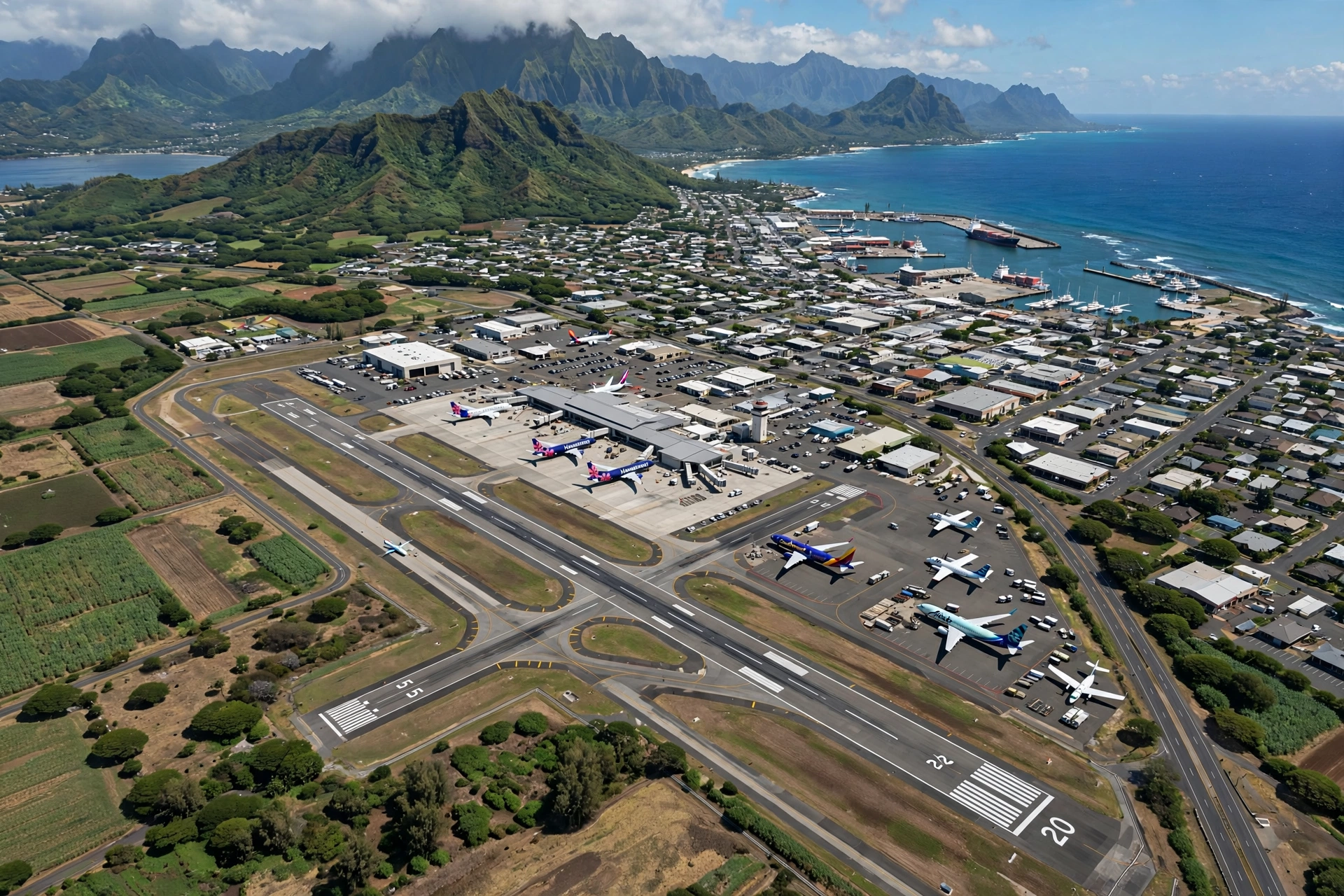
Kahului Airport (OGG) Location
Kahului Airport sits at 1 Keolani Place, Kahului, HI 96732, on the north side of the town of Kahului in central Maui. It is operated by the Hawaiʻi Department of Transportation, and its official information is published at airports.hawaii.gov.
Geographically, the airport occupies the northern edge of the flat isthmus that connects Maui’s two volcanic masses: the West Maui Mountains to the west and Haleakalā to the east. This central position is the reason Kahului became the island’s commercial hub. From the airport, every major region of Maui is reachable by highway: West Maui to the west, South Maui to the south, Upcountry on the slopes of Haleakalā to the southeast, and the Road to Hāna corridor along the north shore to the east.
The airport’s position is practical rather than scenic. Kahului is a working town of stores, warehouses, the harbor, and county offices, not a resort district. Travelers landing at OGG will find the terminal surrounded by commercial buildings and cane fields giving way to open land, with the green ridges of the West Maui Mountains rising to the west and the long, gentle slope of Haleakalā dominating the view to the southeast. The ocean is close on both the north and south sides of the isthmus, though it is not visible from the terminal itself.
OGG is the second busiest airport in Hawaiʻi, serving roughly 8 million passengers a year. Nonstop routes connect Maui with cities across the U.S. mainland and Canada, along with short interisland flights to Honolulu, Kona, Līhuʻe, and Hilo. There is no other commercial airport on Maui that handles mainland flights. Two smaller airfields exist on the island: Kapalua Airport (JHM) in West Maui, which handles limited commuter service, and Hāna Airport (HNM) on the remote east end, served by small commuter planes. Nearly all visitors will arrive through Kahului.
Because the airport sits in the island’s center, the choice of where to stay on Maui determines the drive that follows landing. A guest heading to Wailea faces a short, easy drive south. A guest heading to Kāʻanapali faces a longer drive west around the coastline. Understanding this geography before booking a hotel helps set realistic expectations for arrival day and for daily driving throughout the trip.
A Brief History of Kahului Airport
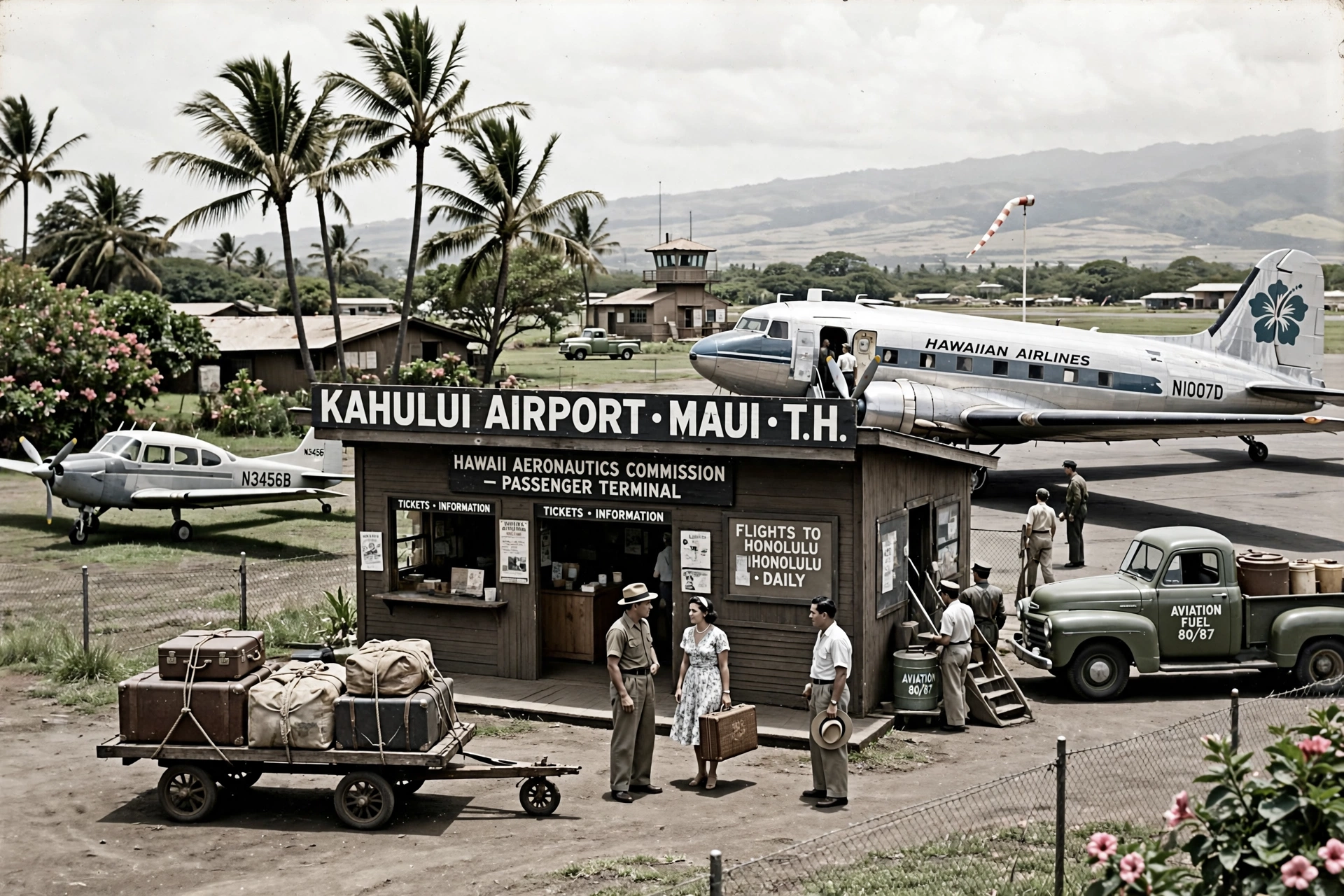
Kahului Airport was not originally built for civilian travel. During World War II, the U.S. Navy constructed Naval Air Station Kahului on roughly 1,340 acres of leased sugar cane land beginning in 1942, using the field for carrier aircraft training. After the war, the Territory of Hawaiʻi negotiated the conversion of the base into a civilian airport to replace the inadequate airfield at Puʻunēnē, several miles to the south.
The first passenger terminal was assembled from surplus military materials, and full commercial airline service began in June 1952, consolidating all of Maui’s scheduled flights at Kahului. The airport code OGG honors Captain Jimmy Hogg, an early Hawaiʻi aviator, which is why the code does not match the Kahului name. Through the 1960s and beyond, the terminal and runways were steadily expanded, and scheduled mainland service arrived in the early 1980s, transforming OGG from an interisland field into the transpacific gateway it is today.
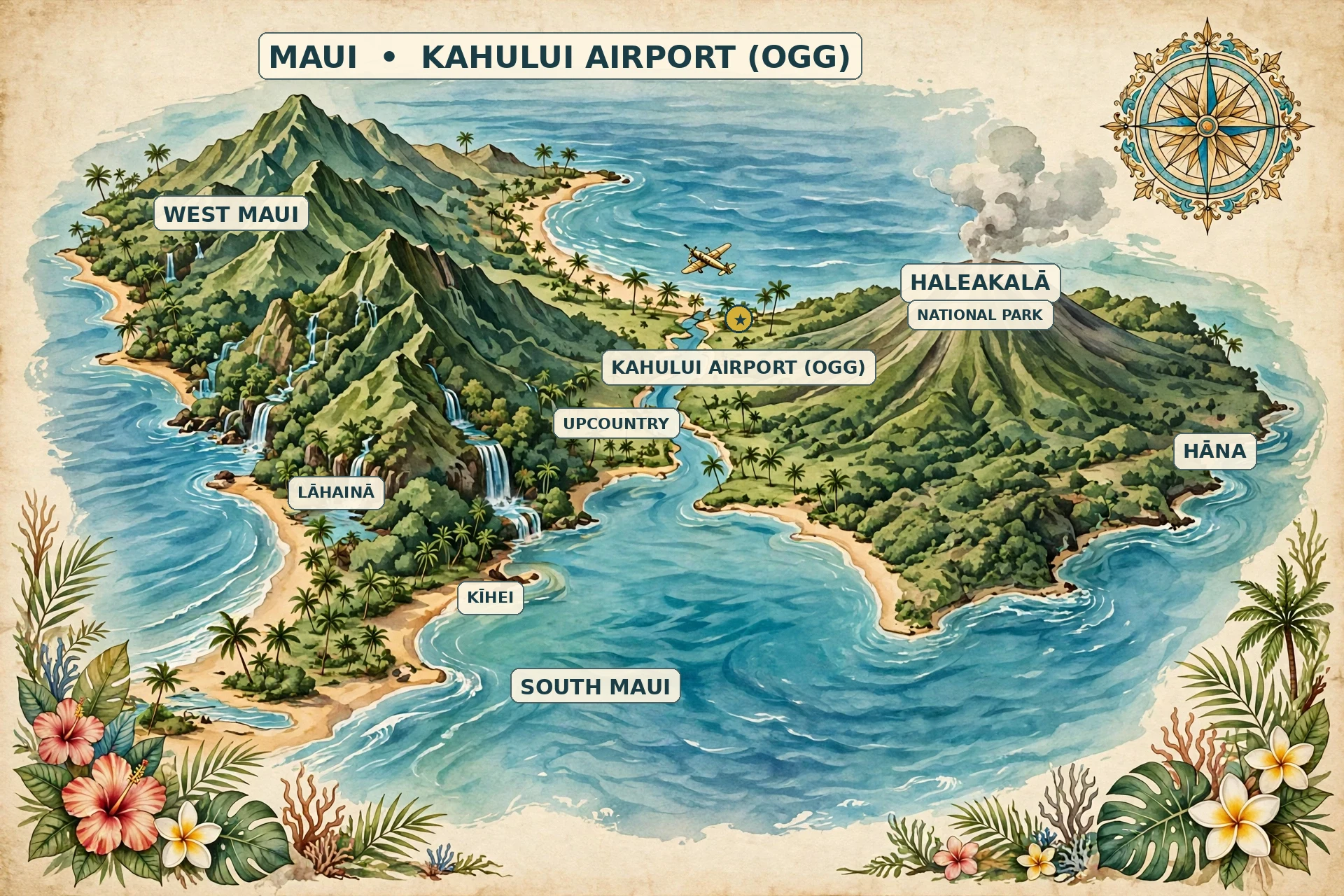
Airport Location and Orientation
Maui’s shape is often described as two circles joined by a valley, and Kahului Airport sits squarely in that valley. From this central point, the island’s regions fan out in every direction:
- West Maui (west): Lahaina, Kāʻanapali, Nāpili, and Kapalua lie along the western coast, reached via Honoapiʻilani Highway (Route 30). This is the longest of the main resort drives from the airport.
- South Maui (south): Kīhei, Wailea, and Mākena sit on the southwestern coast, reached via Mokulele Highway (Route 311) and Piʻilani Highway (Route 31). This is the shortest resort drive from the airport.
- Central Maui (immediate): Wailuku, the county seat, is just west of the airport, and the ʻĪao Valley is a short drive beyond it.
- Upcountry (southeast): Pukalani, Makawao, and Kula climb the western slopes of Haleakalā, reached via Haleakalā Highway (Route 37).
- North Shore and East Maui (east): Pāʻia, Haʻikū, and the Hāna Highway (Route 360) begin just east of Kahului, leading along the north shore to Hāna and Kīpahulu.
There is only one airport road system to learn. Exiting OGG, drivers reach Keolani Place and the airport loop, which connects to Dairy Road and Hāna Highway on the north side and to Puʻunēnē Avenue toward the south. From these arterials, every regional highway is a few minutes away. Signage is clear, and the routes to the resort areas are well marked.
One orientation detail matters for flight days: the sun and trade winds. Morning departures from OGG often climb out over the central valley with views of both Haleakalā and the West Maui Mountains. Afternoon arrivals fly over the isthmus with the ocean visible on both sides. The airport’s open air terminal design, typical of Hawaiʻi airports, means passengers walk partly outdoors between areas, so the island’s weather is felt immediately on arrival.
The runway itself tells a story about the island’s weather. The main runway is aligned northeast to southwest, straight into the prevailing trade winds that blow across the central valley. This alignment is why landings at OGG often feel steady even on breezy days, and why the approach path brings aircraft low over the cane fields and suburbs of Kahului before touchdown.
Getting To and From the Airport
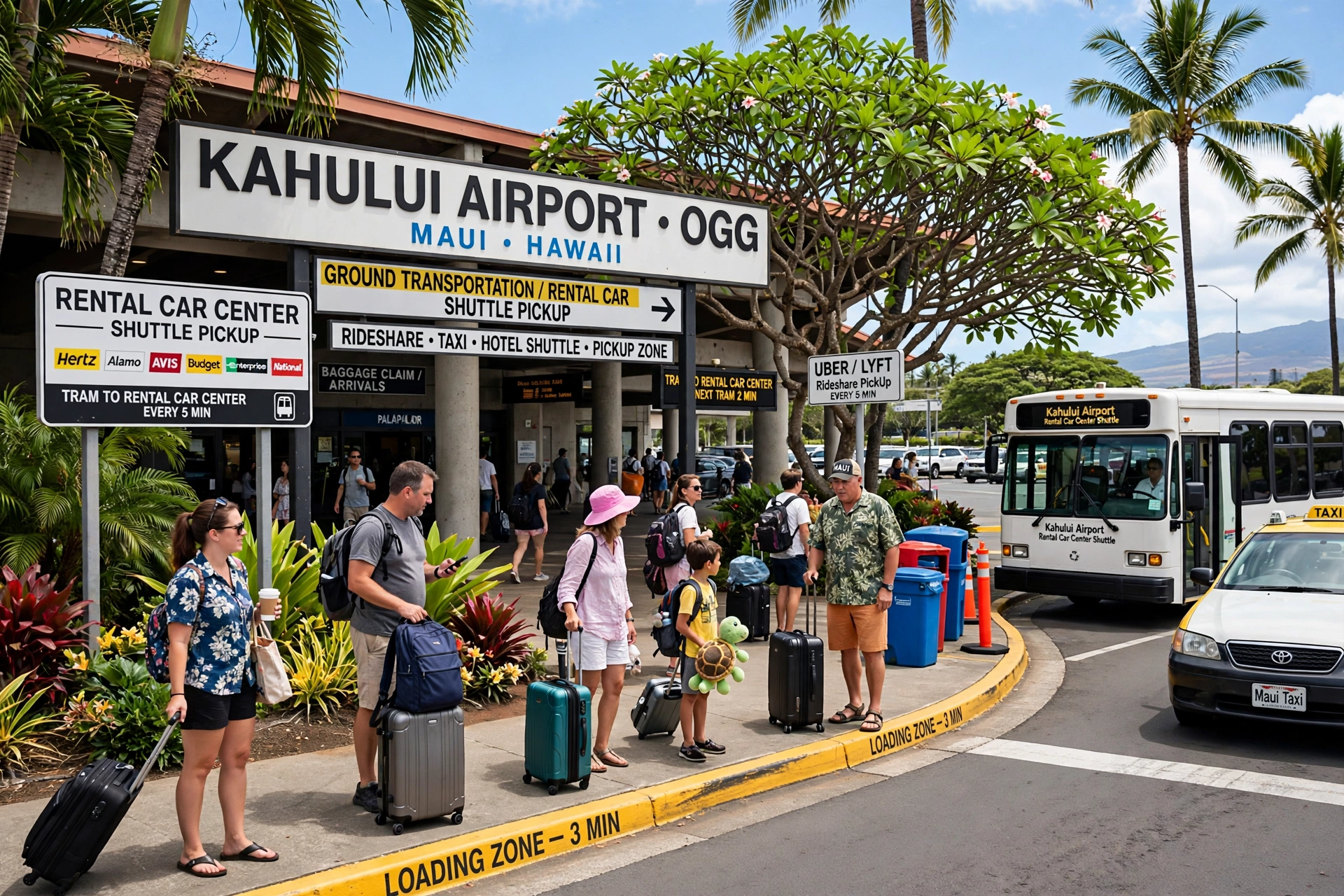
Most visitors rent a car, because Maui’s attractions are spread across the island and public transit is limited. The following are the main ways to travel between Kahului Airport and the island’s towns and resorts.
Rental Cars
Rental car counters for the major agencies are located in the terminal area, with vehicles parked in adjacent lots. OGG is one of the busiest rental car markets in the state, and vehicles can sell out during peak holiday periods, so reserving ahead is standard practice. All rental companies remain open until travelers from the last flight of the day have collected their vehicles.
Taxis
Taxis queue at designated curbside areas outside the terminal. Fares from the airport are metered. A ride to Wailea typically runs in the $50 to $60 range, while a ride to Kāʻanapali runs roughly $95 to $120, before tip. Travelers heading to resort areas often find a prearranged shuttle comparable in price to a taxi for a single passenger but cheaper per person for groups.
Rideshares
Rideshare services operate at OGG from designated pickup zones. Prices vary with demand, and surge pricing during peak arrival banks can make rideshares as expensive as taxis. Travelers should confirm the pickup zone location in their app, since the airport’s pickup areas are numbered and spread along the curb.
Shared Shuttles
Shared shuttle vans run between the airport and the major resort districts of West and South Maui. These are booked in advance and charge per person, which makes them economical for solo travelers and couples but often more expensive than a taxi for families. Private transfers are also available for a flat rate.
Public Bus
The County of Maui’s Maui Bus serves Kahului Airport from a designated pickup zone (Zone 3). Routes connect the airport with the Queen Kaʻahumanu Center transit hub in Kahului, where passengers transfer to routes serving Lahaina, Kīhei, Upcountry, and Haʻikū. Fares are low, around $2 per ride, but the trip is slow: reaching Kāʻanapali by bus takes about three hours with transfers, compared with 45 minutes by car. The bus is a budget option, not a convenience option. Schedules are published by Maui County and change periodically, so travelers should check current timetables before relying on them.
Driving Times From the Airport
Drive times below are fair weather estimates without heavy traffic. Maui’s two lane highways can slow considerably during morning and afternoon rush periods around Kahului and Wailuku, and the Hāna Highway is slow by design. Add buffer time on departure day.
| Destination | Approx. Distance | Approx. Drive Time |
|---|---|---|
| Wailuku | 3 miles | 10 to 15 minutes |
| Pāʻia | 8 miles | 15 to 20 minutes |
| Kīhei (North Kīhei) | 15 miles | 25 to 35 minutes |
| Makawao (Upcountry) | 13 miles | 25 to 35 minutes |
| Wailea | 18 miles | 30 to 40 minutes |
| Māʻalaea | 16 miles | 25 to 35 minutes |
| Lahaina | 26 miles | 45 to 55 minutes |
| Kāʻanapali | 29 miles | 45 to 60 minutes |
| Kapalua | 36 miles | 60 to 75 minutes |
| Hāna (town) | 52 miles | 2 to 3 hours |
The two resort drives deserve a closer look. The southbound drive to Wailea is straightforward: south on Puʻunēnē Avenue and Mokulele Highway, then onto Piʻilani Highway through Kīhei and into Wailea. It is mostly multi lane highway and an easy first drive after landing.
The westbound drive to Kāʻanapali and Lahaina follows Honoapiʻilani Highway along the coast past Māʻalaea and Olowalu. It is scenic but mostly two lanes, and it can back up during rush hours. Travelers who land in the late afternoon should expect the slowest version of this drive.
The eastbound drive to Hāna is a different category entirely. The Hāna Highway’s 600 plus curves and one lane bridges make it a half day journey each way, which is why most visitors treat it as a full day trip or an overnight stay rather than a simple transfer. See the Road to Hāna Map guide for the full route breakdown.
Airport Facilities and Travel Tips
OGG is a single terminal complex with open air walkways, a design common across Hawaiʻi airports. Passengers check in at the main ticket lobbies, clear TSA screening, and wait in gate areas that are partly open to the tropical air. The terminal holds the usual mix of restaurants, shops, and newsstands, along with visitor information desks staffed for arriving travelers.
Agricultural Inspection
Hawaiʻi’s most distinctive airport procedure is the pre departure agricultural inspection for flights leaving the state. All checked and carry on baggage bound for the U.S. mainland or international destinations passes through USDA inspection stations before check in. Fresh fruits, vegetables, plants, and flowers are restricted, with limited exceptions for inspected and certified items such as pineapples and coconuts. Travelers should allow extra time for this step and pack any questionable items where they are easy to declare. This inspection applies to departures from OGG, not arrivals.
Parking
Short term and long term parking lots sit within walking distance of the terminal. Rates are set by the state and are modest compared with mainland airports. Travelers leaving a car during a trip should note that the lots are open air, so vehicles sit in the Maui sun. The cell phone waiting lot near baggage claim remains the best option for drivers meeting an arriving flight.
Arrival Tips
- Interisland arrivals are quick: small terminal, short walk, bags arrive fast.
- Mainland arrivals take longer at baggage claim during wide body arrival banks. Rental car counters can have lines at midday.
- Cell phone waiting lot: drivers picking up arriving passengers can wait free in the designated lot near baggage claim rather than circling.
- Sun protection: the walkways between terminal areas are uncovered. Sunscreen and a hat help during midday transfers.
Departure Tips
- Arrive 2 to 3 hours before mainland departures, longer during holiday peaks. The combination of agricultural inspection, check in, and TSA can stack up.
- Interisland flights need less buffer, but 90 minutes is a safe minimum.
- Food options past security are adequate but not extensive. Travelers with specific needs may prefer to eat before the checkpoint.
- Hawaiian gifts purchased after the agricultural inspection, such as sealed food items from terminal shops, travel without issue.
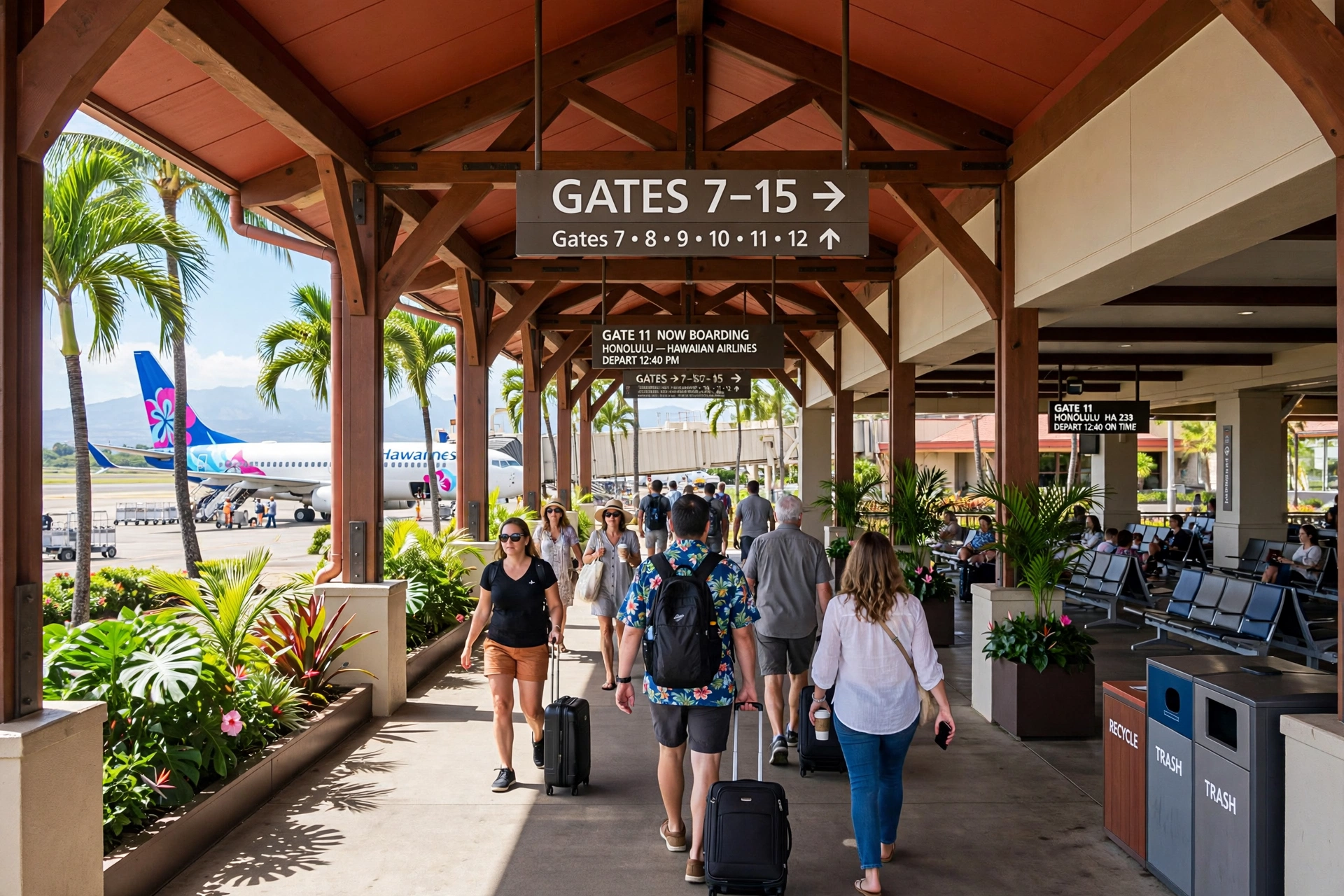
Interisland Travel From OGG
Kahului Airport is a major interisland hub. Hawaiian Airlines and Southwest Airlines operate frequent daily flights between OGG and Honolulu (HNL), Kona (KOA), Līhuʻe (LIH), and Hilo (ITO). Flight times run 25 to 45 minutes depending on the route, and fares are often modest when booked ahead.
For travelers combining islands, OGG’s central role makes Maui an easy midpoint: fly into Maui, hop to Kauaʻi or the Big Island, and return through Honolulu, or any similar open jaw pattern. Interisland flights depart from the commuter and main gate areas of the same terminal complex, so connections are simple.
The east end of Maui has its own air link. Southern Airways Express operates small commuter flights between Kahului (OGG) and Hāna Airport (HNM), a flight of about 25 minutes that replaces the long Hāna Highway drive. Service runs a limited daily schedule. Kapalua Airport (JHM) in West Maui has historically handled commuter flights as well, though schedules there have varied over the years. Travelers interested in these short hops should check current schedules directly, since commuter service changes more often than mainline service.
Matching Your Hotel to the Airport Drive
Because OGG sits in the island’s center, the airport drive is a genuine factor in choosing where to stay. Travelers who want the shortest possible transfer after a long flight tend to choose South Maui: Kīhei and Wailea are 25 to 40 minutes away on easy highway. Those drawn to West Maui’s beaches accept a 45 to 60 minute drive along the scenic but slower Honoapiʻilani Highway.
Upcountry visitors trade beach proximity for cooler air and mountain views, with Makawao about half an hour from the terminal. Hāna is the outlier: the two to three hour drive each way makes it a deliberate choice, usually as part of a split stay or a dedicated east Maui leg of the trip. There is no wrong answer, but matching the hotel to your tolerance for driving shapes the first and last days of the vacation.
One more practical note: departure day traffic around Kahului and Wailuku peaks in the morning and late afternoon. Travelers staying in West Maui with a morning flight should leave earlier than the drive time table suggests, since the two lane coastal highway offers few alternate routes.
Frequently Asked Questions
Where is the airport on Maui?
The airport is Kahului Airport (OGG), at 1 Keolani Place in the town of Kahului, on Maui’s central isthmus between the West Maui Mountains and Haleakalā. It is the island’s only major commercial airport.
What is Maui’s airport code?
OGG. The code honors Captain Jimmy Hogg, a former Hawaiian Airlines pilot, which is why it does not match the Kahului name.
How far is the airport from Kāʻanapali?
About 29 miles, or 45 to 60 minutes by car via Honoapiʻilani Highway, depending on traffic.
How far is the airport from Wailea?
About 18 miles, or 30 to 40 minutes by car via Mokulele Highway and Piʻilani Highway.
Is there public transportation from Kahului Airport?
Yes. The Maui Bus serves the airport from a designated pickup zone, with connections through Kahului to Lahaina, Kīhei, Upcountry, and Haʻikū. The fare is low but trips are slow, with transfers required for most destinations.
Do I need a rental car on Maui?
For most visitors, yes. Maui’s beaches, Haleakalā, the Road to Hāna, and Upcountry are spread across the island, and a rental car is the practical way to reach them. Travelers staying entirely within one resort area can manage with shuttles and tours, but they will miss much of the island. Even visitors who plan to relax at the resort usually find a car useful for at least part of the stay, since grocery runs, restaurant variety, and the island’s signature drives all require one.
What is the agricultural inspection at the airport?
It is a USDA inspection of baggage leaving Hawaiʻi for the mainland or abroad, designed to keep island pests and diseases from spreading. All departing bags pass through it before check in. Fresh produce is restricted, with exceptions for inspected items.
Are there other airports on Maui?
Kapalua Airport (JHM) in West Maui and Hāna Airport (HNM) on the east end handle small commuter planes. Neither handles mainland flights. Nearly all visitors arrive through Kahului (OGG).
Related Guides
- Maui Airport Map: terminal layout and facility reference for OGG
- Maui Map: the complete island reference with regions and routes
- Maui Towns: where to base yourself, town by town
- Maui Weather: microclimates by region and month
- Road to Hāna Map: the full east Maui driving route
- Maui Beaches: the island’s best beaches by coast
Reading Arrival Day the Smart Way
Kahului Airport’s central location is the single most useful fact for planning a Maui trip. Because OGG sits in the middle of the island rather than beside any one resort, the drive after landing is part of the vacation, not an afterthought. Travelers who match their hotel to their priorities, Wailea for the shortest transfer, Kāʻanapali for the west side beaches, Upcountry for the cool slopes, Hāna for the far edge, start the trip with expectations set correctly. The airport itself is simple to navigate: one terminal, clear highways in every direction, and the whole island within about an hour except the road to Hāna. Knowing where OGG is on the map turns arrival day from a question mark into a plan.