
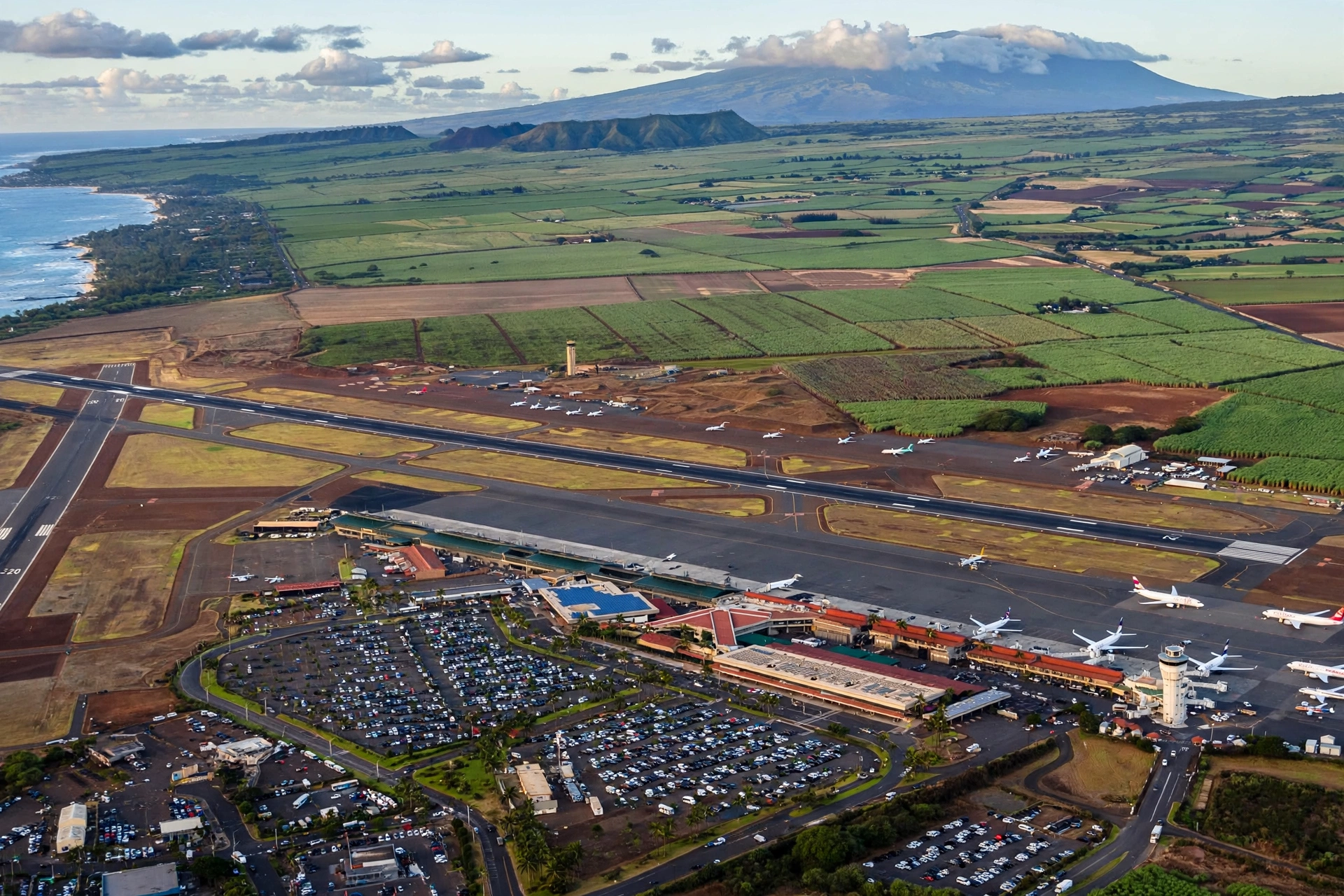
Kahului Airport (OGG) is the front door to Maui. Nearly every visitor to the Valley Isle passes through this compact, open-air airport in central Maui, and knowing its layout before you land makes the arrival noticeably smoother. This guide maps the entire airport: the terminal floors, gate areas, baggage claim, the rental car tram, ground transportation options, parking, and how inter-island connections work. Whether this is your first trip to Maui or your fifteenth, a clear picture of OGG saves time and removes the small frictions that can sour the start of a vacation.
On This Page
Kahului Airport (OGG) Overview
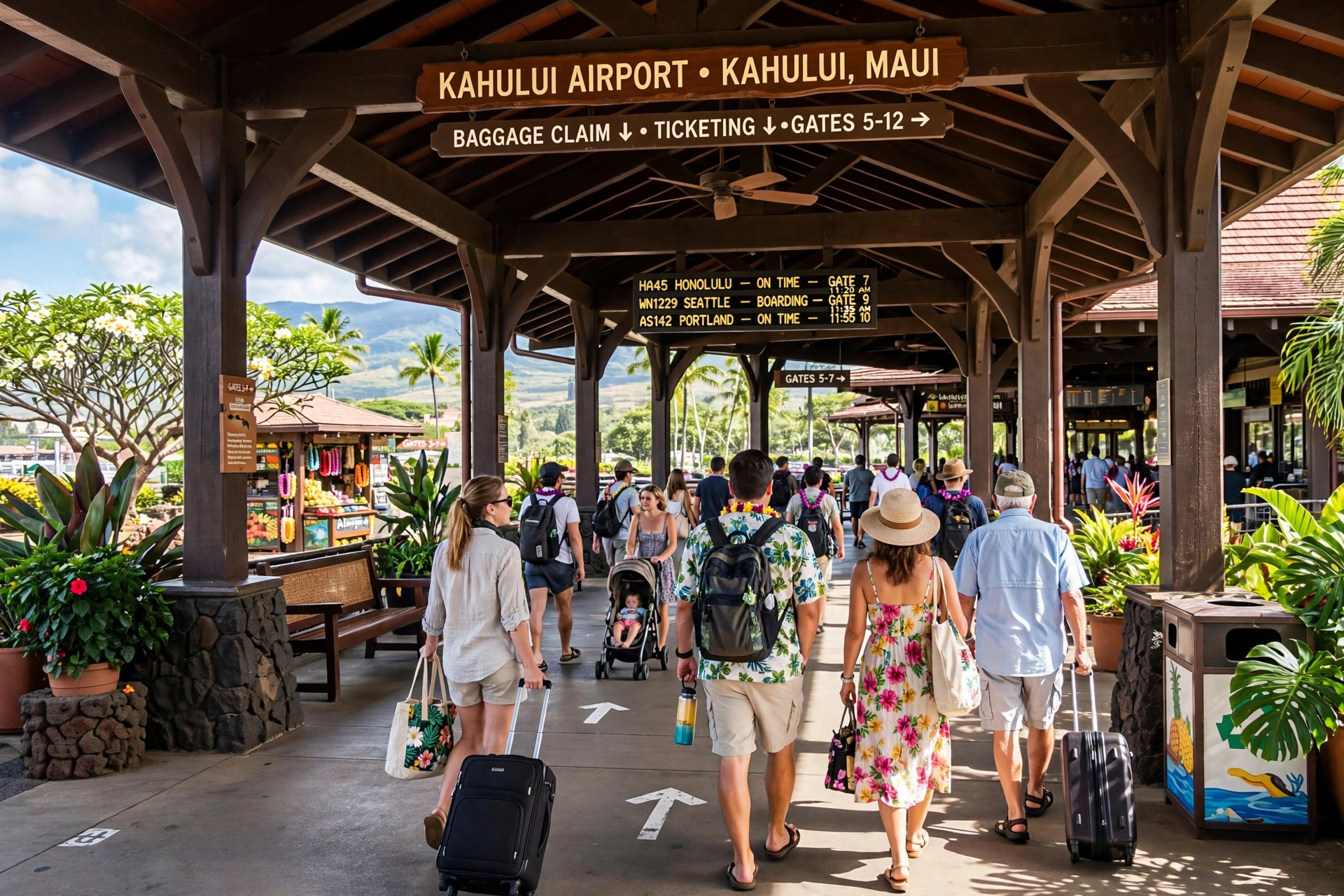
Kahului Airport sits three miles east of the town of Kahului in central Maui, at 1 Keolani Place, on the flat isthmus between Maui’s two volcanic masses. Its position is no accident: central Maui is the island’s geographic crossroads, roughly equidistant from the resort coasts of West and South Maui, the Upcountry slopes of Haleakalā, and the Road to Hāna on the east side. From OGG, the drive to Kāʻanapali takes about 45 minutes, to Wailea about 30 minutes, and to the summit of Haleakalā about 90 minutes. That centrality is what makes Kahului the island’s only airport with scheduled mainland service.
The airport code OGG has one of the more charming origin stories in American aviation. It honors Bertram J. Hogg, a longtime Hawaiian Airlines pilot and executive whose name was attached to the airport in the 1950s. The code stuck through the airport’s growth from a small inter-island field into the facility it is today. The current terminal building opened in October 1990 and has been expanded in phases since, but the airport retains the low-slung, open-air character typical of Hawaiian airports. Trade winds move through covered walkways, gardens fill the central atrium, and the whole building feels more like a tropical pavilion than a mainland hub.
Scale matters when reading any airport map, and OGG is refreshingly manageable. The main terminal is a single building with two public levels, and the longest walk, from the farthest gate to baggage claim, takes about ten minutes at a normal pace. Roughly seven million passengers passed through in 2023, making OGG the second busiest airport in Hawaiʻi after Honolulu. Despite that volume, the layout is linear and easy to read: gates upstairs, arrivals and ticketing downstairs, rental cars across the street via tram. There is also a small, separate commuter terminal north of the main building along the airport ring road, used by regional carriers operating small aircraft to Molokaʻi, Lānaʻi, and other short hops.
The airport occupies about 1,391 acres and operates two runways, designated 2/20 and 5/23. The main runway, 2/20, is just under 7,000 feet long, which is sufficient for the narrow-body jets that dominate service here, including Boeing 737s and Airbus A320-family aircraft, as well as wide-bodies such as the Boeing 767 and 777 that some carriers deploy on mainland routes. Because the runway is shorter than those at major mainland hubs, long-haul aircraft sometimes operate with weight restrictions, a detail that occasionally affects fuel stops on the longest routes but is invisible to most passengers.
Airlines serving OGG include Hawaiian Airlines, Southwest Airlines, Alaska Airlines, American Airlines, Delta Air Lines, and United Airlines, plus regional operators such as Mokulele Airlines and Southern Airways Express for inter-island and commuter flying. Nonstop mainland gateways span the western United States, including Los Angeles, San Francisco, Seattle, Portland, San Diego, Phoenix, Las Vegas, Denver, and several others, along with seasonal service from farther east. Inter-island flying is dominated by Hawaiian Airlines and Southwest, with departures to Honolulu, Kona, Līhuʻe, and Hilo running many times daily.
Airport Map: Terminals, Gates & Services
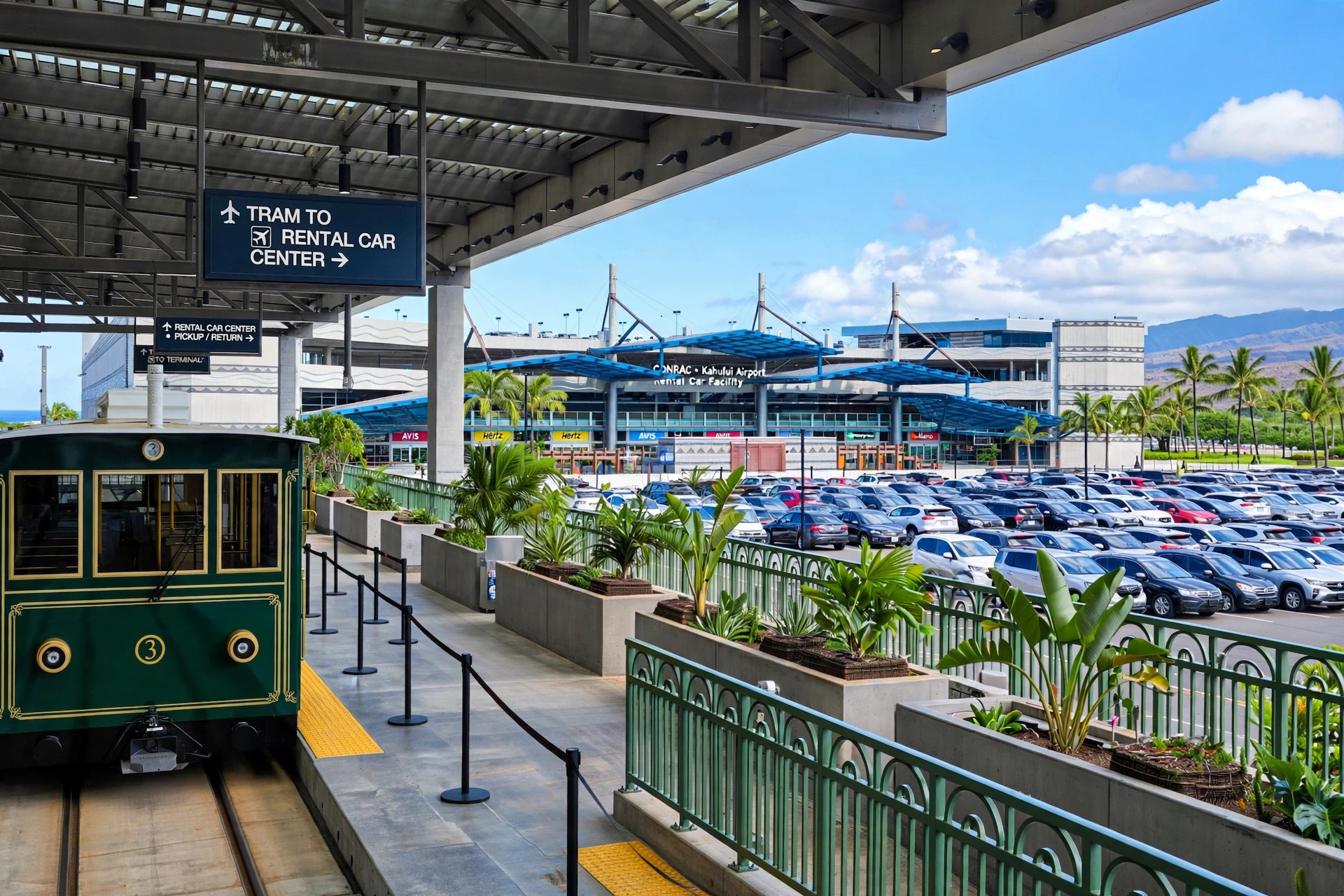
The main terminal at OGG is organized around a simple vertical split that first-time visitors should learn before they arrive. The ground level handles everything at the start and end of a trip: airline ticketing counters, the USDA agricultural inspection station for departing passengers, and baggage claim. The second level is the departures level, where the gates and their hold rooms sit. Two TSA security checkpoints connect the levels: one just past the ticketing counters and another near the baggage claim area. From the checkpoints, escalators and stairs lead up to a central atrium and the gate concourses.
The Gate Areas: North and South
The departures level is divided into two gate areas, north and south, arranged along a central spine. The south area holds Gates 1 through 16, and the north area holds Gates 17 through 39. Gates with odd numbers are equipped with jet bridges, while even-numbered gates are primarily emergency exits with stairs to the ramp, so your boarding pass will almost always show an odd number. The two areas are connected by open-air walkways, and moving between them takes only a few minutes.
Gate assignments follow a rough logic worth knowing. Inter-island flights, which use smaller aircraft such as the Boeing 717, typically depart from Gates 9, 11, 13, 15, 17, 19, and 21. Flights to the U.S. mainland and Canada, which use larger aircraft, depart from Gates 1, 5, 7, 23, 27, 29, 33, 35, and 39. If you are connecting from a mainland arrival to an inter-island departure, expect a short walk between gate areas rather than a terminal change. Signage throughout the departures level is clear, and the whole gate area is compact enough that even a tight connection is manageable if your inbound flight is on time.
Between flights, the departures level offers the standard set of traveler services in an open-air Hawaiian setting. Concession stands and small restaurants cluster near the central atrium, and there are shops selling snacks, books, souvenirs, and last-minute necessities. Free Wi-Fi is available throughout the terminal. Seating in the gate hold rooms is a mix of standard airport chairs and open-air lanai-style areas where the trade winds do the air conditioning. The central garden courtyard in the atrium is the terminal’s signature space and a pleasant place to wait out a delay.
Ground Level: Ticketing, Agriculture Inspection & Baggage Claim
The ground level is where every arrival ends and every departure begins. On arrival, follow the signs from your gate down the escalators to the baggage claim hall at the north end of the building. The claim area is a large, breezy, partially open-air hall with numbered carousels, typically six, and overhead displays showing which flight’s bags are on which belt. Oversized items such as surfboards, golf clubs, and strollers are usually delivered at a designated oversized area near the far end of the carousels or through marked double doors, so check the signs rather than waiting at a standard belt for a board bag.
One fixture unique to Hawaiʻi airports sits in the arrival flow: the agricultural amnesty bins. The State of Hawaiʻi strictly controls the movement of plants, fruits, and certain animal products to protect the islands’ agriculture and native ecosystems. If you accidentally carried restricted items, the amnesty bins near baggage claim are the place to surrender them without penalty. The bins are clearly marked and worth a glance even if you think you brought nothing, since items like fresh fruit from an in-flight snack can qualify.
For departures, the ground level’s southern end holds the airline ticketing counters, where you check in and drop bags. Just past ticketing, all passengers bound for the U.S. mainland pass through the USDA pre-departure agricultural inspection. This is a federal requirement, not an airline policy: every bag, including carry-ons, is screened for prohibited plant and animal materials before you proceed to the TSA checkpoint. The inspection usually adds only a few minutes, but during the morning bank of mainland departures the line can grow, so build it into your timing. After inspection, you clear TSA and ride the escalators up to the departures level and your gate.
The Visitor Information Program booth in the baggage claim area deserves a mention for first-time visitors. Staffed by local volunteers and tourism professionals, the booth hands out island maps, answers questions about driving routes, and can help orient you before you leave the terminal. It costs nothing and takes two minutes, and for travelers who skipped advance planning it can be the most valuable stop in the airport.
The Commuter Terminal
North of the main terminal, along the airport ring road, stands the small commuter terminal, a single-story building serving regional airlines, air taxis, and helicopter operators. Mokulele Airlines flights to Molokaʻi and Lānaʻi, along with charter and helicopter tour departures, typically use this facility. It offers only basic amenities, which is fine because dwell times are short. Ground access is by car, taxi, or shuttle along the ring road; the walk from the main terminal is not practical with luggage. If your itinerary includes a commuter flight, confirm which terminal your carrier uses before you arrive, since the two buildings are separate operations.
Getting To and From the Airport
Ground transportation at OGG is concentrated in a compact zone directly in front of the terminal, which keeps the arrival sequence simple: claim bags, walk out the front doors, and choose your mode. Nearly all visitors rent a car, and the airport is built around that reality, but taxis, rideshares, shuttles, and the public bus all have defined pickup points.
Rental Cars: The Tram and the Consolidated Facility
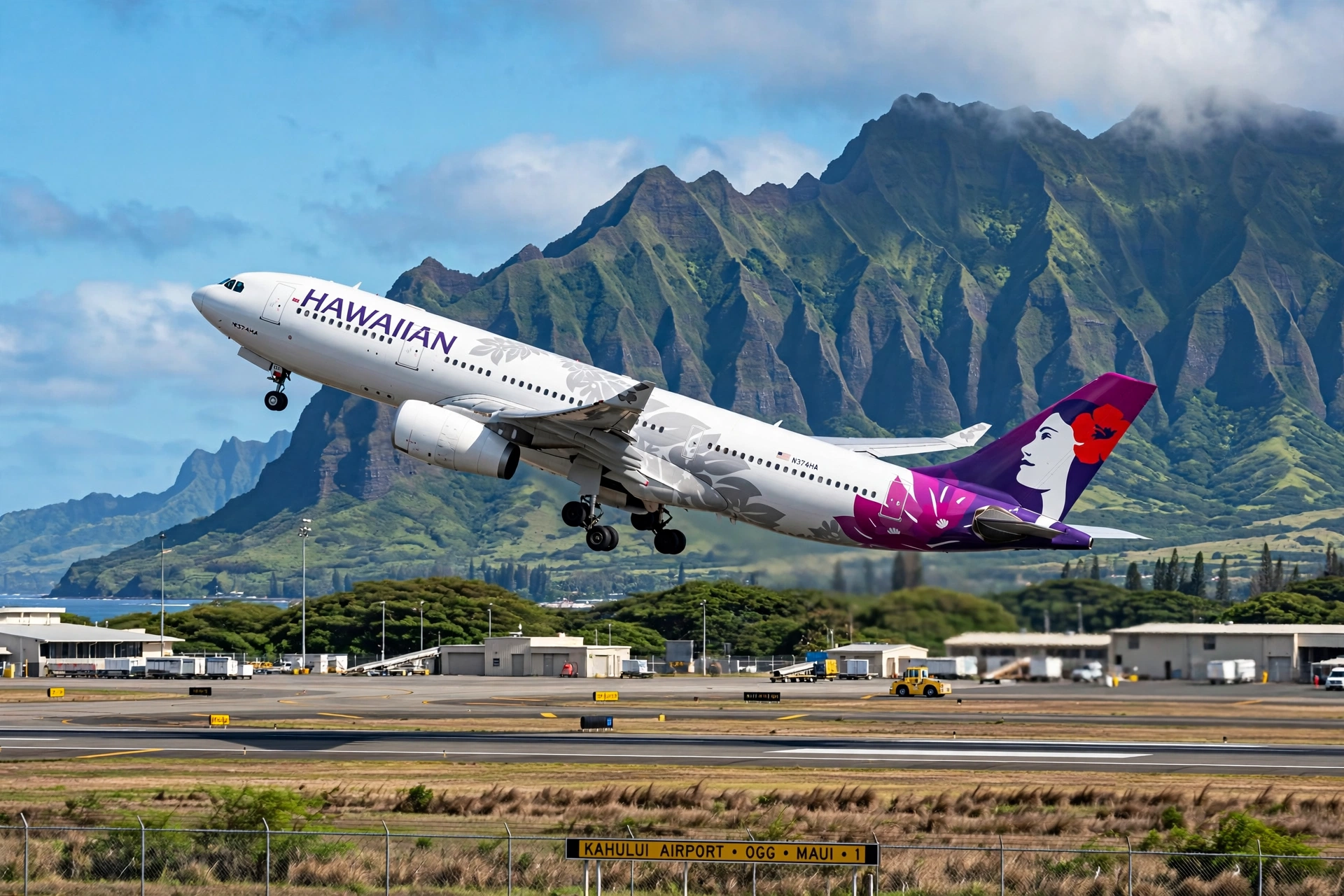
The single most important thing to know about renting a car at OGG is that the rental counters are not in the terminal. All major rental agencies operate from the consolidated rental car facility, known as the CONRAC, a large building across the street from the terminal. The two are connected by the Kahului Airport Tram, an electric people-mover that opened in May 2019 along with the $340 million facility. The tram ride takes about four minutes; the walk takes roughly ten.
To reach it, exit baggage claim and follow the overhead signs for the rental car tram. The tram station sits just across the terminal roadway, reached by marked crosswalks. Trams run frequently throughout the day, and the ride is free. At the rental facility, each agency has its own counter area on the ground floor, with the vehicle pickup and return garage integrated into the same structure. The building’s design nods to Maui’s plantation era, with waterfalls and native landscaping at the entrance, but functionally it works like any large consolidated facility: one building, all brands, clear signage.
On return day, drive to the rental car facility, not the terminal. Follow the airport signs for rental car return as you approach on the airport access road; the facility has its own entrance and fuel stations are available nearby on Dairy Road and Puʻunēnē Avenue if you need to top off before returning. After dropping the car, ride the tram back to the terminal and walk in for ticketing and inspection. Budget at least 30 to 45 minutes for the return-and-tram sequence during busy morning periods, on top of the standard two-hour domestic arrival recommendation.
Book rental cars well in advance, especially for winter holidays, spring break, and summer. Maui’s rental fleet is finite and demand routinely exceeds supply in peak periods, when prices spike and vehicle classes sell out. Joining an agency’s free loyalty program often unlocks express pickup that skips the counter line entirely. And inspect the vehicle before leaving the garage: note any existing damage with the agency and photograph it, since the bright Hawaiian sun makes small dents easy to miss until return day.
Taxis, Rideshares, and Shuttles
Taxis queue at the designated taxi stand on the terminal roadway, directly outside baggage claim. Fares from OGG are metered, and the ride to Kāʻanapali typically runs 30 to 45 minutes depending on traffic, while Wailea is about 25 to 35 minutes. Rideshare pickups for Uber and Lyft happen at a marked zone on the first floor between baggage claim and the rental car tram station; follow the signs for the TNC pickup area rather than waiting at the curb. Availability is generally good during daytime arrival banks but can thin out late at night, so travelers on the last flights of the evening should have a backup plan.
Hotel and resort shuttles load along the same front roadway in marked shuttle bays. If your hotel offers an airport shuttle, confirm the pickup procedure before you fly: some require advance reservations, and drivers typically hold a sign with the property name near the shuttle bays. Private transfer and tour operators also stage in this zone. The whole curbside operation is compact, so even if you walk to the wrong bay, the right one is a minute away.
Maui Bus
The Maui Bus public transit system serves the airport with two routes. Route 35, the Haiku Islander, connects the airport with Pāʻia and Haiku on the north shore. Route 40, the Upcountry Islander, connects the airport with Pukalani, Makawao, and Hāliʻimaile. Buses stop at marked stops on the airport roadways. Fares are a few dollars per ride, making the bus the cheapest way off the airport, but service is infrequent compared with mainland transit and luggage space is limited. The bus works well for light-traveling visitors staying in Pāʻia or Upcountry; for resort areas, a rental car or pre-arranged transfer is far more practical.
Parking at OGG
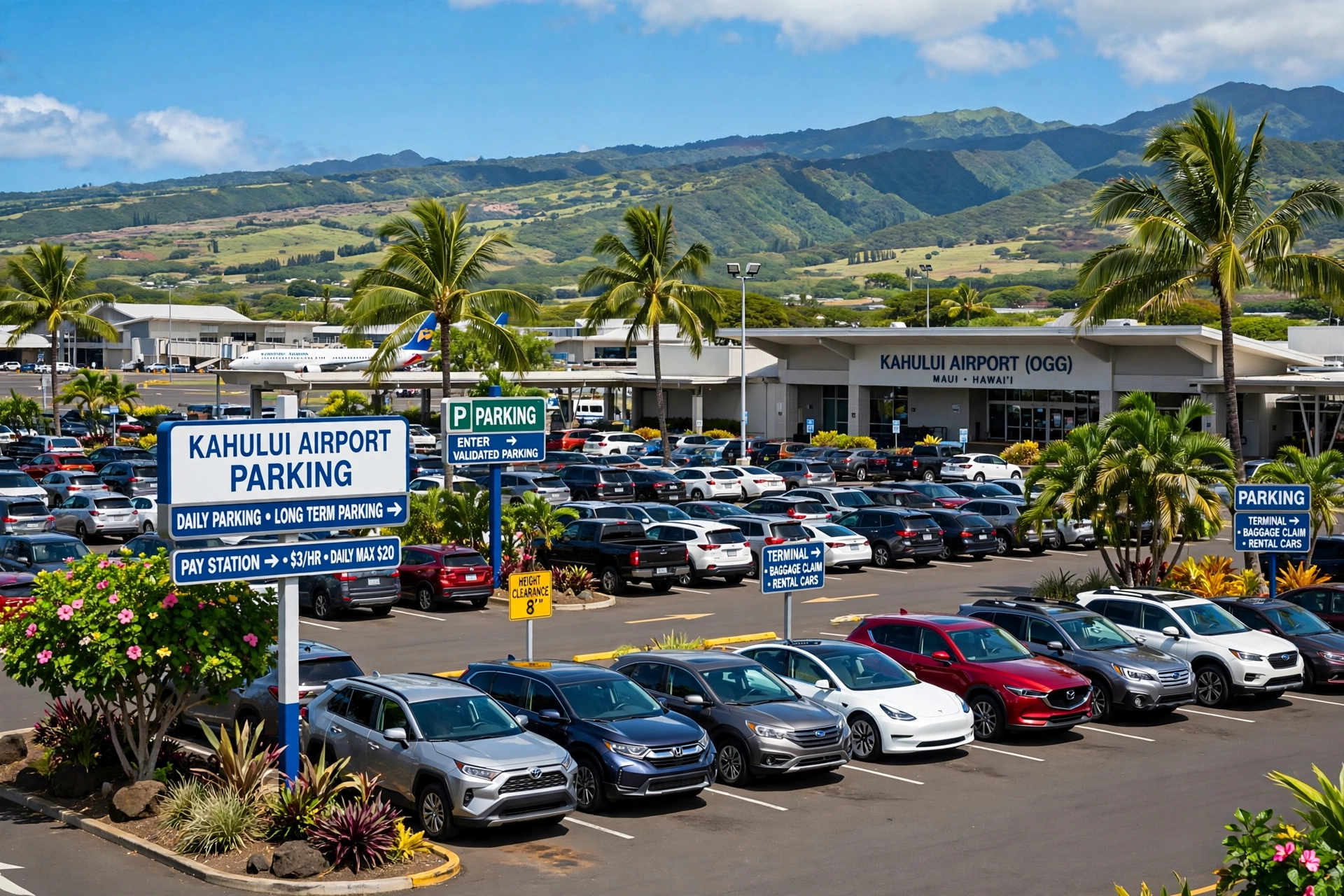
Short-term and long-term parking at OGG is handled in surface lots within walking distance of the terminal. Short-term parking sits closest to the building and is priced for pickups, drop-offs, and brief stays. Long-term lots are a slightly longer walk and are priced for multi-day trips, which matters for inter-island travelers who fly out of OGG and leave a car for several days. Rates are set by the Hawaiʻi Department of Transportation and adjust periodically, so check the airport’s official parking page before your trip for current daily maximums. Payment is by credit card at exit kiosks in most lots.
For pickups, the cell phone waiting lot is the move. Rather than circling the terminal roadway, which airport staff actively discourage, drivers wait in the free waiting lot until the arriving party calls from the curb, then drive the short distance to the pickup zone. The system keeps the terminal front clear and costs the driver nothing. For drop-offs, the departures curb on the upper roadway is for active unloading only; do not leave a vehicle unattended there.
Travelers leaving a car during an inter-island side trip should note that the long-term lots are uncovered, and a car sitting for several days in the Kahului sun will be an oven on return. A windshield sunshade left in the car is cheap insurance. Remove all valuables and anything that looks like it might contain them; airport lots are generally safe, but the standard precautions apply everywhere.
Inter-Island Connections
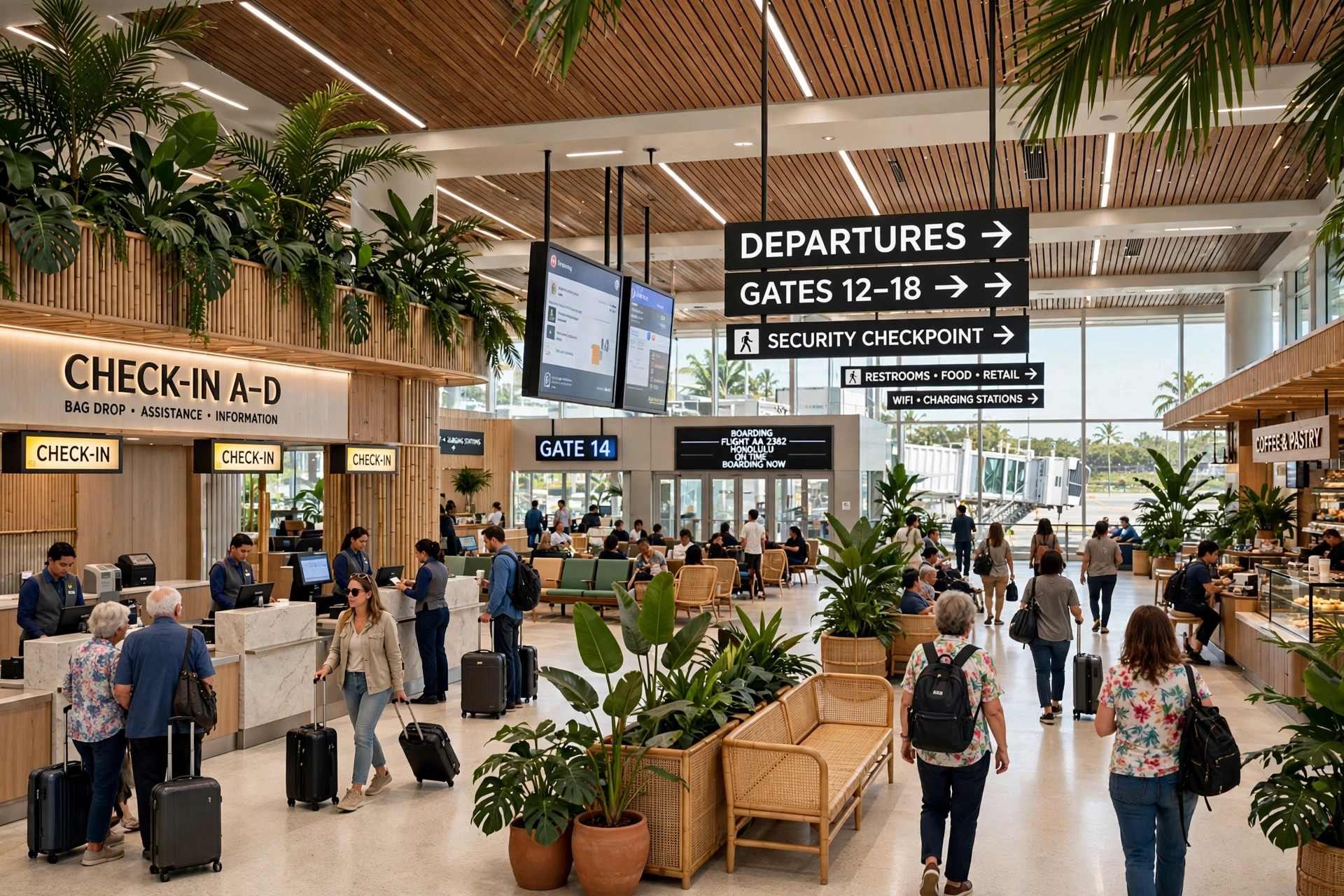
OGG functions as Maui’s inter-island hub, and connecting through it is straightforward because everything happens in the same terminal. Hawaiian Airlines and Southwest Airlines operate frequent daily service between Kahului and Honolulu (HNL), Kona (KOA), Līhuʻe (LIH), and Hilo (ITO), with Honolulu seeing the densest schedule, often with departures every 30 to 60 minutes during the day. Flight time to Honolulu is about 30 to 40 minutes; to Kona, roughly 40 to 50 minutes.
The connection sequence depends on where you start. If you arrive at OGG on a mainland flight and connect to an inter-island departure on the same ticket, you do not need to recheck bags through to the final island in most cases, but you will change gate areas: mainland flights arrive at the overseas gates, inter-island flights depart from the inter-island gates listed earlier. Follow the signs, stay airside, and allow at least 60 to 90 minutes between flights to absorb the walk and any inbound delay. If your inter-island leg is on a separate ticket, you must claim your bags, walk to the ticketing counters, recheck, and clear security again, which calls for a minimum two-hour layover.
Security and agricultural rules differ by direction. Flying between Hawaiian islands, there is no USDA agricultural inspection; that requirement applies only to flights departing Hawaiʻi for the U.S. mainland. Standard TSA screening applies on all departures. Inter-island aircraft are smaller, and overhead bin space fills quickly, so pack medications, valuables, and anything you need in flight in a personal item that fits under the seat. Hawaiian’s inter-island fleet has historically been Boeing 717s, workhorses purpose-built for short hops, while Southwest uses 737s; both board and deplane quickly, but the 717’s smaller bins reward compact packing.
For travelers island-hopping with a rental car, remember that rental contracts are island-specific. You cannot take a Maui rental car to another island, and you will need a separate reservation on each island you drive. Returning the Maui car to the CONRAC before an inter-island flight and picking up a new car at the destination airport is the standard routine. Allow extra time on return day for the tram ride back to the terminal.
Tips for Arriving and Departing

Arrival timing at OGG follows island rhythms. Midday and early afternoon bring the bank of mainland arrivals, when baggage claim and the rental car tram are at their busiest. If your flight lands in that window, expect 15 to 25 minutes for bags and a possible short wait for the tram. Early morning and late evening arrivals move faster. The Visitor Information booth in baggage claim is worth a stop if you want a paper map or have questions about the drive ahead.
Before leaving the airport, do three things. First, confirm your lodging’s check-in time and the drive time from OGG; arriving in Kāʻanapali at noon with a 4 PM check-in means planning a lunch stop, and the towns of Pāʻia, Kahului, and Wailuku all work well for that. Second, if you need groceries, the Kahului area has the island’s major supermarkets minutes from the airport, and stocking up before driving to a resort area saves a second trip. Third, set your navigation before you leave the rental garage; cell service is fine at the airport, but having the route loaded avoids fumbling in an unfamiliar car.
On departure day, the official guidance is to arrive two hours before a mainland flight and 90 minutes before an inter-island flight, and at OGG those buffers are realistic rather than padded. The sequence is ticketing, USDA agricultural inspection for mainland-bound bags, TSA screening, then the escalator ride to the gates. The agricultural inspection and security lines both swell during the morning departure bank, roughly 9 AM to 1 PM, when most mainland flights leave. An extra 30 minutes during that window is cheap insurance.
Food and shopping airside are adequate but not extensive, so eat before security if you want a real meal; landside options near ticketing and in the central area are better stocked. After security, grab water and snacks for the flight, since the open-air gate areas are pleasant but the concessions thin out toward the far gates. And keep a layer handy: the terminal’s breezy design is comfortable on the ground, but aircraft cabins on the long mainland leg run cold.
One final note for departures: the lei you were given on arrival cannot fly to the mainland in your carry-on if it contains certain fresh plant materials, and the agricultural inspectors will ask. The standard advice from the Hawaiʻi Department of Agriculture is to leave fresh lei with hotel staff, take a photo, and buy a silk or kukui nut lei for the trip home. It is a small detail, but it is the kind of detail that holds up a line when a traveler learns it at the inspection station.
Frequently Asked Questions
What is the airport code for Maui’s main airport?
OGG. It stands for Kahului Airport, named for pioneer aviator Bertram J. Hogg. All commercial mainland flights to Maui use OGG.
How early should I arrive at OGG for a mainland flight?
Two hours before departure. That covers ticketing, the USDA agricultural inspection required for all mainland-bound baggage, TSA screening, and the walk to your gate. During the busy morning departure bank, consider two and a half hours.
How do I get to the rental cars at Kahului Airport?
Follow the signs from baggage claim to the rental car tram station across the terminal roadway. The free electric tram reaches the consolidated rental car facility in about four minutes. All major agencies are in that one building.
Is there an agricultural inspection when leaving Maui?
Yes, for flights to the U.S. mainland. Every checked and carry-on bag passes USDA inspection for prohibited plant and animal materials before you clear TSA. There is no agricultural inspection on inter-island flights within Hawaiʻi.
Can I walk between the main terminal and the commuter terminal?
Not practically with luggage. The commuter terminal is a separate small building north along the airport ring road. Use a car, taxi, or shuttle to transfer between the two.
Does OGG have international flights?
Scheduled international service at OGG has historically been limited, with Canadian routes operating seasonally. The airport’s traffic is overwhelmingly domestic: mainland U.S. and inter-island. Check current schedules for the latest international options.
Where do I pick up an Uber or Lyft at Kahului Airport?
At the marked rideshare pickup zone on the first floor, between baggage claim and the rental car tram station. Follow the overhead signs for the TNC pickup area after collecting your bags.
Is there Wi-Fi at Kahului Airport?
Yes. Free Wi-Fi is available throughout the main terminal, including the gate hold rooms and the central atrium.
Related Guides

Once you have the airport mapped, these guides cover what comes next:
- Maui Map, the island’s regions, driving routes, and how to choose a home base
- Maui Beaches, the complete guide to the island’s best shoreline
- Maui Weather, seasons, microclimates, and the best time to visit
- Maui Hikes, trails from easy coastal walks to Haleakalā
- Road to Hana Map, mile-by-mile stops along the famous highway
- Hawaii Map, the full archipelago overview for multi-island trips
- Hawaii Packing List Generator, build a custom packing list for your trip
- Hawaii Trip Cost Calculator, estimate your Maui trip budget
Navigating OGG Like a Local
Kahului Airport rewards the prepared traveler. The building is small enough to learn in a single pass, but its open-air layout, split levels, and separate rental car facility each hide one small surprise for the unprepared: the escalator ride between baggage claim and gates, the USDA inspection before mainland departures, the tram across the street to the rental cars. None of them is difficult once you know the sequence, and together they form a rhythm that regular Maui visitors move through without thinking. Arrive with the map in your head, give yourself the recommended time buffers, and OGG becomes what it should be: a brief, breezy threshold between the journey and the island.