Why do whales come to hawaii

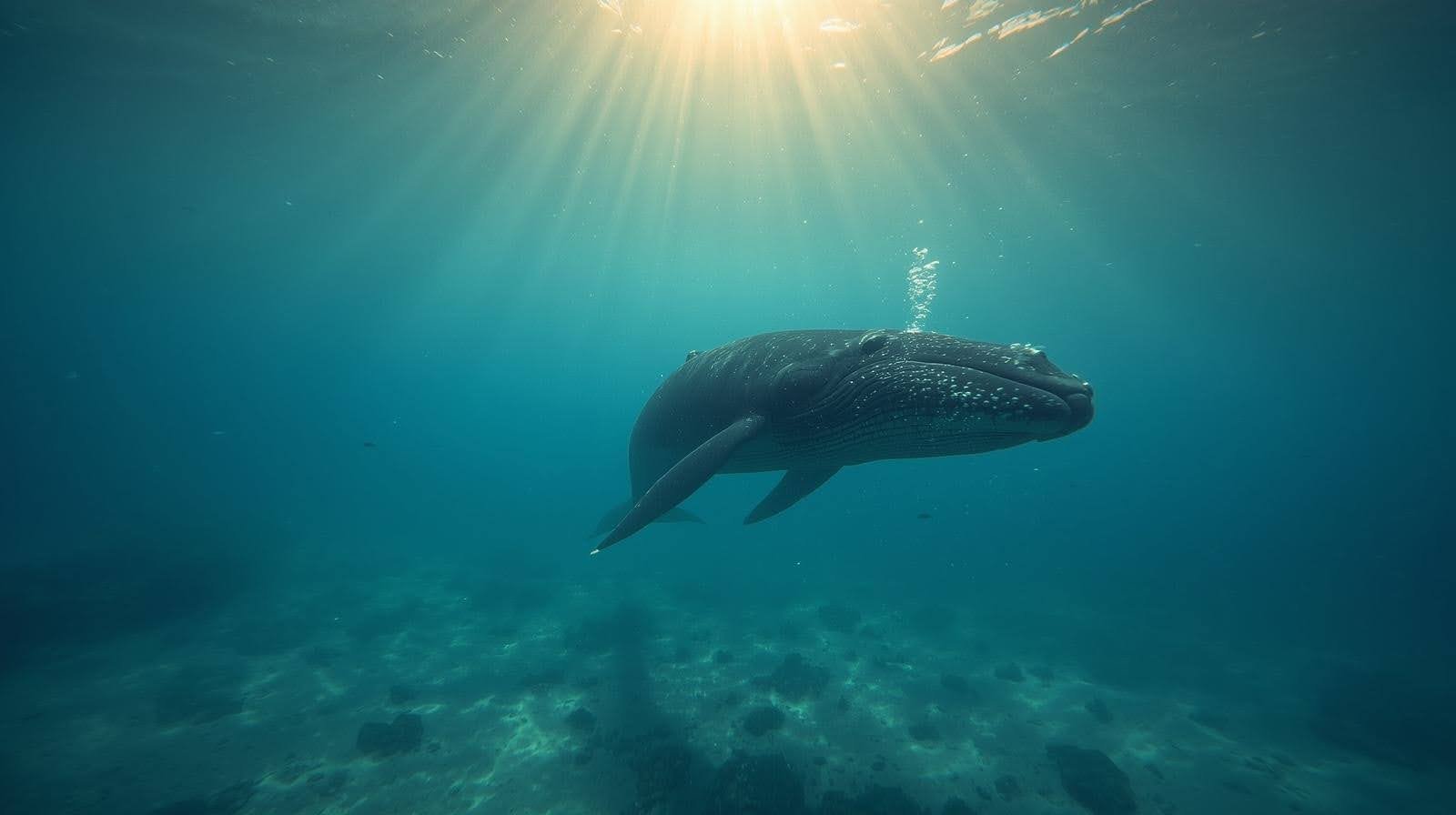
Thousands of people travel across the vast Pacific Ocean each year to visit the Hawaiian Islands. There are a number of majestic humpback whales that are eagerly awaited by the public. These gentle giants are known to make one of the longest migrations of any mammal. They leave their cold feeding grounds in Alaska and head to Hawaii’s welcoming, warm waters. Many travelers and locals wonder why whales visit Hawaii.
The answer is a fascinating story of survival, instinct, and old customs. Hawaii isn’t just a vacation spot for humpback whales; it’s a very important place for their species to live on. Knowing why these amazing animals make this yearly journey helps us appreciate them more and shows how important the Hawaiian marine ecosystem is. This guide looks at the main reasons why humpback whales migrate to Hawaii. It also gives you a better idea of how they behave and the best ways to see this natural wonder without being rude.
Waters that are warm and safe for giving birth
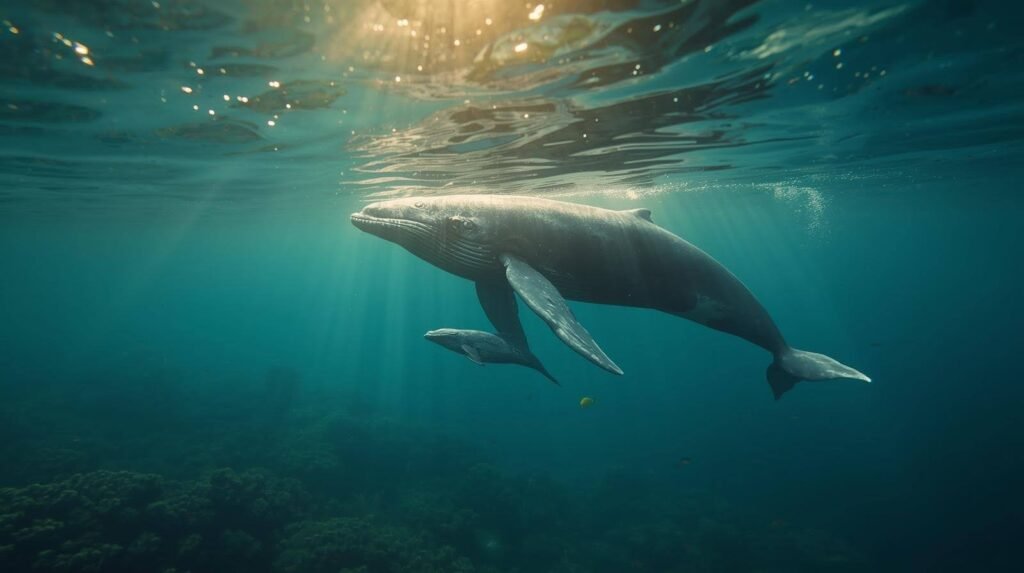
One of the most interesting reasons humpback whales come to Hawaii is to have babies. After being pregnant for about 11 months, female dolphins look for warm, calm, and shallow waters to give birth to their calves.
How Important Warmth Is
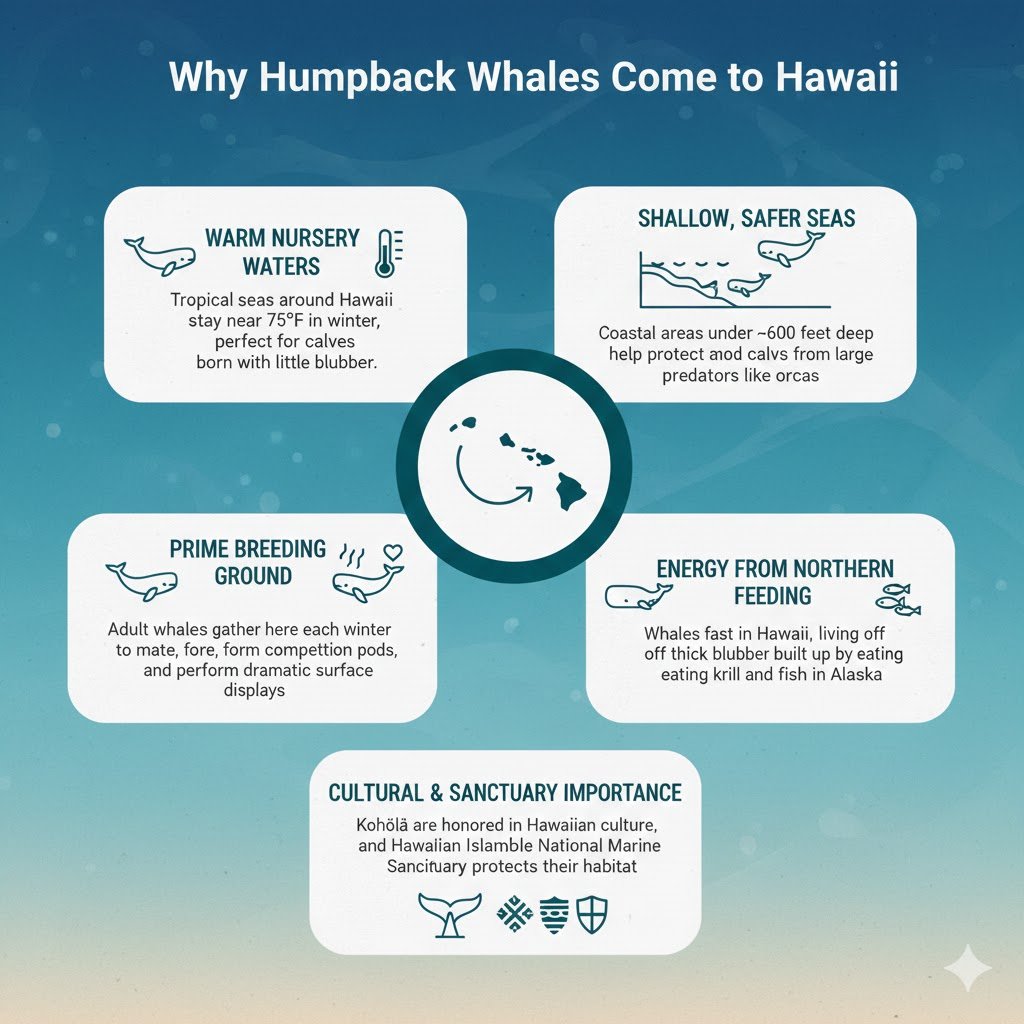
Newborn humpback whales, or calves, are born with only a thin layer of blubber. This makes them weak against the cold weather in Alaska where they eat. The waters around the Hawaiian Islands are warm all year round, with an average temperature of 75°F (24°C) in the winter. This makes them a great place for babies to grow up. The calves can save important energy that they would have used to stay warm by staying warm instead of growing and developing.
A Safe Place from Predators
The shallow coastal waters around islands like Maui, Molokai, and Lanai also provide a lot of protection. These places, which are usually less than 600 feet deep, keep some of the ocean’s biggest predators, like orcas (killer whales) and big sharks, from getting in. Orcas are not common in Hawaii, but they do show up from time to time. The shallow, clear water makes it harder for predators to sneak up on their prey, which gives mother whales a safer place to nurse and teach their young important survival skills before the long trip back north.
A Place to Breed and Mate
Hawaii is not only a nursery, but it is also the main breeding ground for the North Pacific humpback whale population. The same waters that keep newborns safe are also where some of the most dramatic and complicated mating rituals in the animal kingdom take place.
The Dynamics of Whale Mating
When do humpback whales go to Hawaii to have babies? January to March is the best time to see whales in Hawaii. This is also when they are most active in breeding. You can see amazing surface behaviors during this time. Males engage in fierce competition to win the attention of females. They form “competition pods,” where a group of males will chase a single female and show off their strength and speed in amazing ways.
These actions include:
- Breaching means jumping almost all the way out of the water and then crashing back down.
- Lobtailing, or tail-slapping, is when they hit the water with their tails hard.
- Pectoral Fin Slapping: Rolling over onto their side or back and hitting their long fins.
These displays help females choose their mates carefully. After mating, the female will start her journey back to Alaska’s nutrient-rich waters to eat and build up energy for the next 11 months. Then she will return to Hawaii to give birth.
A Surprising Lack of Food
One of the most interesting things about the humpback whale migration to Hawaii is that they come here to fast. The waters around Hawaii are great for calving and breeding, but they don’t have enough of the specific foods that humpback whales need.
Baleen whales like humpbacks eat mostly krill, plankton, and small fish. The polar regions have a lot of these foods in their cold, nutrient-rich waters, but the tropical Pacific does not. An adult humpback can eat up to 3,000 pounds of food a day while they are in Alaska for months. This helps them build up thick layers of blubber. This fat is what they use for energy during their migration and while they’re in Hawaii. In short, they spend their whole “vacation” in Hawaii fasting and putting all their energy into breeding and raising their young.
Cultural and Environmental Importance
The relationship between Hawaii and humpback whales, which are called kohōlā in Hawaiian, is an important part of the culture and history of the area. The kohōlā are seen as ʻaumākua in Hawaiian culture. They are family guardians or gods who take the form of animals. They are revered figures that show up in old creation chants like the Kumulipo.
Keeping the Gentle Giants Safe
Commercial whaling almost wiped out the humpback whale population, bringing them to the edge of extinction. Their numbers have come back in a big way because of international protections put in place in the 1960s and the creation of marine sanctuaries.
The Hawaiian Islands Humpback Whale National Marine Sanctuary, co-managed by the National Oceanic and Atmospheric Administration (NOAA) and the State of Hawaii, plays a critical role in protecting these whales. The sanctuary covers more than 1,400 square miles of prime whale habitat and has rules in place to keep people from bothering the animals.
How to Watch Whales in Hawaii in a Safe Way
From November to May, you can watch whales in Hawaii. The best months to do this are January, February, and March. There are many ways to see these beautiful animals in a respectful way if you want to.
Best Viewing Spots
You can see whales from the shores of all the Hawaiian islands, but some places are better than others. The Auʻau Channel, which is between Maui, Molokai, and Lanai, is one of the most popular places to see whales. The North Shore of Kauai and the Kohala Coast of the Big Island are also great places to visit.
Ethical Whale Watching Practices
It is very important to follow ethical rules when watching humpback whales to keep them safe and healthy.
- Stay Away: Federal law says that people and boats must stay at least 100 yards away from humpback whales.
- Pick Tour Operators You Can Trust: Book tours with companies that put education first and follow all rules for viewing. A good operator will never chase or bother the whales.
- Pay attention to your guide: Expert guides can help you understand what you are seeing without bothering the whales by giving you useful information about their behavior.
Start your whale watching adventure
One of the most amazing things that happen in nature is the yearly migration of humpback whales to Hawaii. The warm, safe waters that welcome newborn calves and the dramatic displays of males fighting for a mate are just two examples of how instinct and this unique marine environment are so important to their journey. We can better understand our role in protecting whales for future generations if we know why they come to Hawaii.
Want to see the magic of the kohōlā for yourself? Hawaii Guide Hub offers guided tours that are respectful of wildlife and will stay with you forever. Book with us to learn from experienced professionals and see these gentle giants in their natural habitat.