Five Kauai Beaches Compared: Swimming Conditions, Facilities and Access

Water-quality notice — checked October 6, 2026: Kauai County’s October 3 notice advised against swimming and other recreational ocean activities because of an island-wide brown-water advisory. Check current Kauai beach alerts and follow officials’ directions. This general planning guide is not a live conditions report.
Poipu, Hanalei, Lydgate, ʻAnini and Tunnels offer different coastal settings. Choosing between them starts with current conditions, swimming ability and access—not a ranking that labels an ocean beach safe for everyone. A reef, shallow pool or summer travel date cannot remove the risks of waves, currents and poor water quality.
This comparison explains what distinguishes the five locations and when a shore visit may make more sense than entering the water. For a broader itinerary, see our Kauai planning guide.
1. Poipu Beach Park: South Shore Facilities and Wildlife
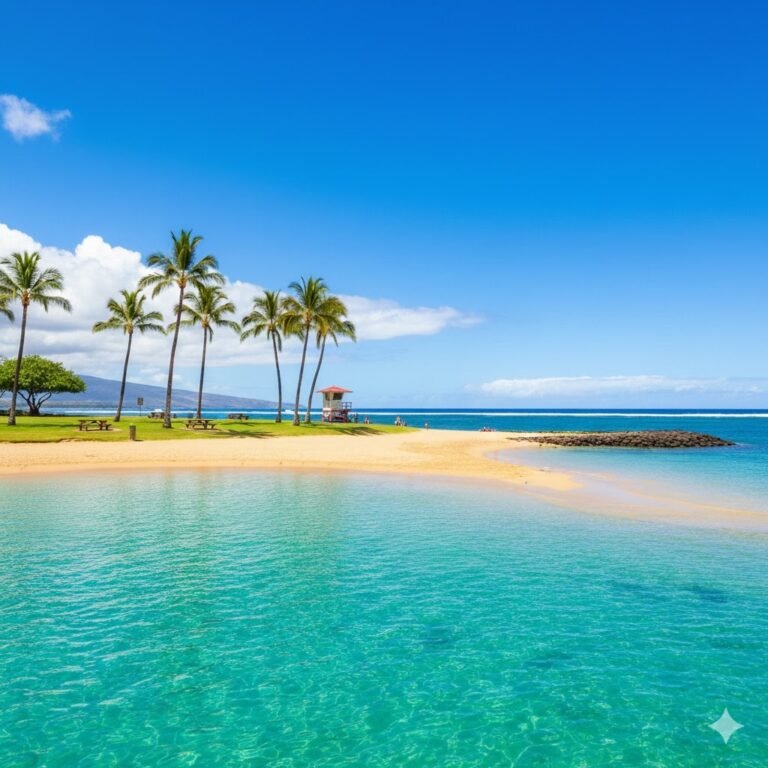
Poipu is a practical place to consider when you want a beach park with restrooms, showers, picnic facilities and lifeguards. The official visitor guide lists those facilities, but parking availability and conditions vary. Arrive prepared to choose another activity if the park is crowded or the ocean is unsuitable.
Do not divide the beach into a permanently safe children’s side and a more adventurous adult side. Sand, water depth, waves and currents change. Ask the lifeguard where, if anywhere, conditions match your group’s ability. South-facing beaches can receive significant surf; Poipu is not protected from rough water throughout the year.
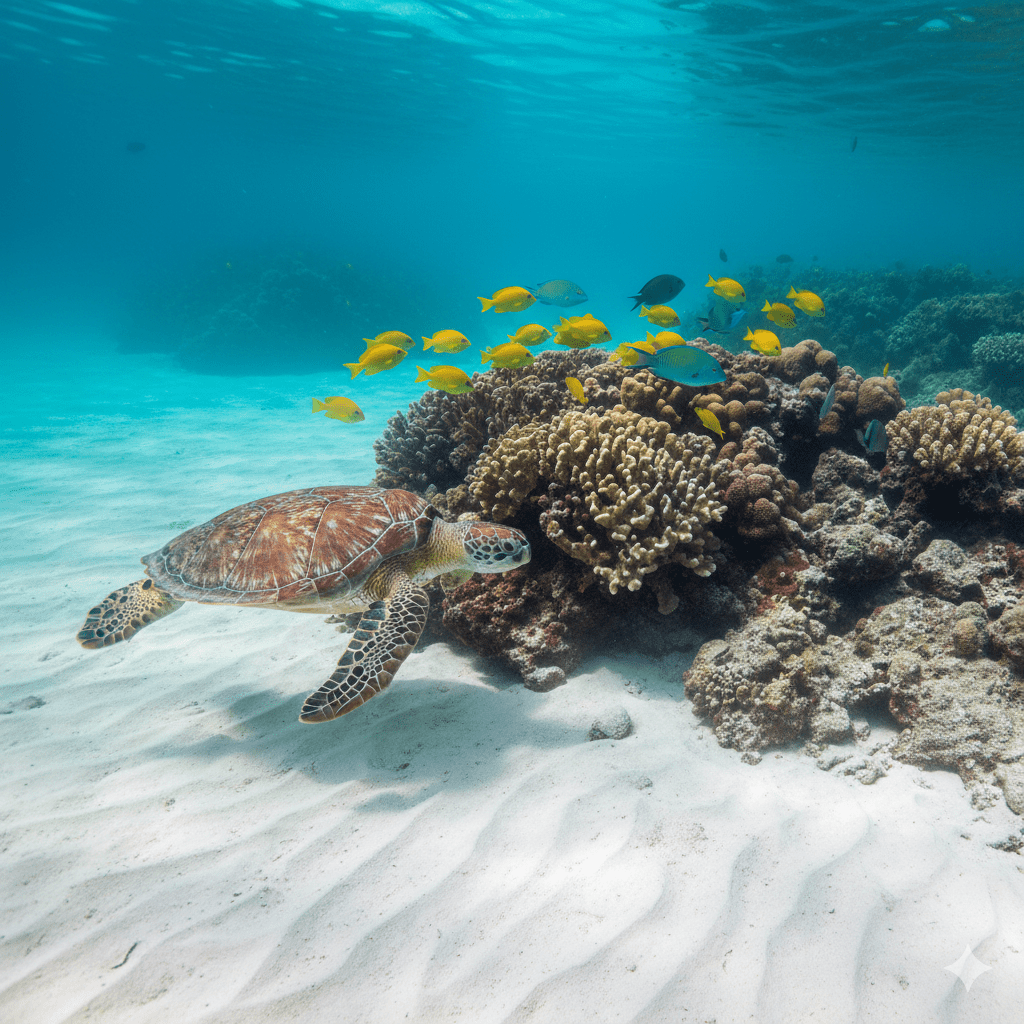
For a land visit, leave resting wildlife plenty of space and stay outside protective barriers. Do not move toward turtles or seals for photographs or block their route to the water. Our Poipu area guide covers nearby places and planning.
2. Hanalei Bay: Mountain Views With Strong Seasonal Differences
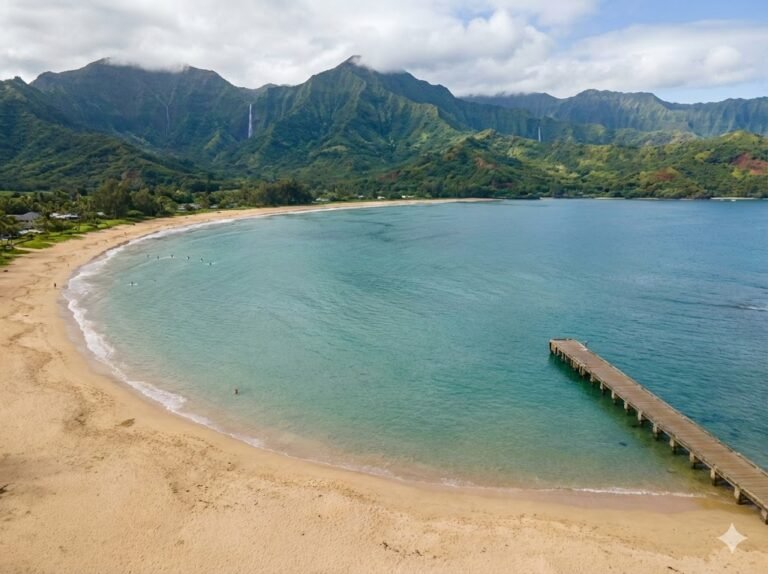
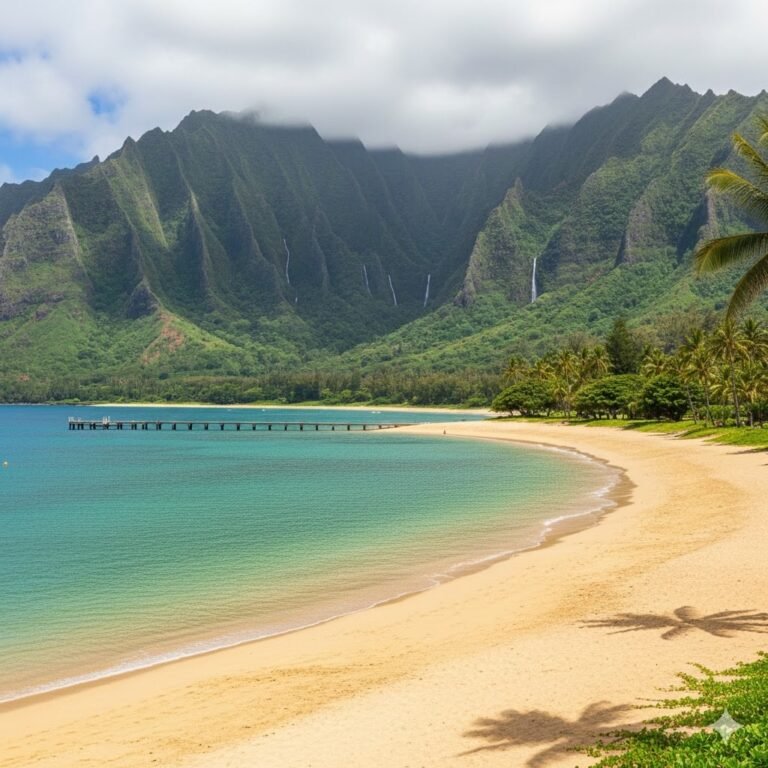
Hanalei’s broad bay and mountain backdrop make it an appealing North Shore stop even when swimming is not part of the day. Conditions vary across the bay. A calm-looking patch, the presence of surfers or proximity to the pier is not evidence that the water suits inexperienced swimmers.
The North Shore often has smaller surf in summer and powerful swell in winter, but no fixed month guarantees calm water. Avoid entering during high surf or a water-quality advisory. Do not use pier jumping, swimming around pilings or entering near the river mouth as default activities.
The state lifeguard directory lists Pavilion and Pinetrees towers at Hanalei Bay. Choose an area with a lifeguard present and ask for advice. Read our Hanalei Beach guide for more orientation.
3. Lydgate Beach Park: Enclosed Ocean Pools and Land Facilities
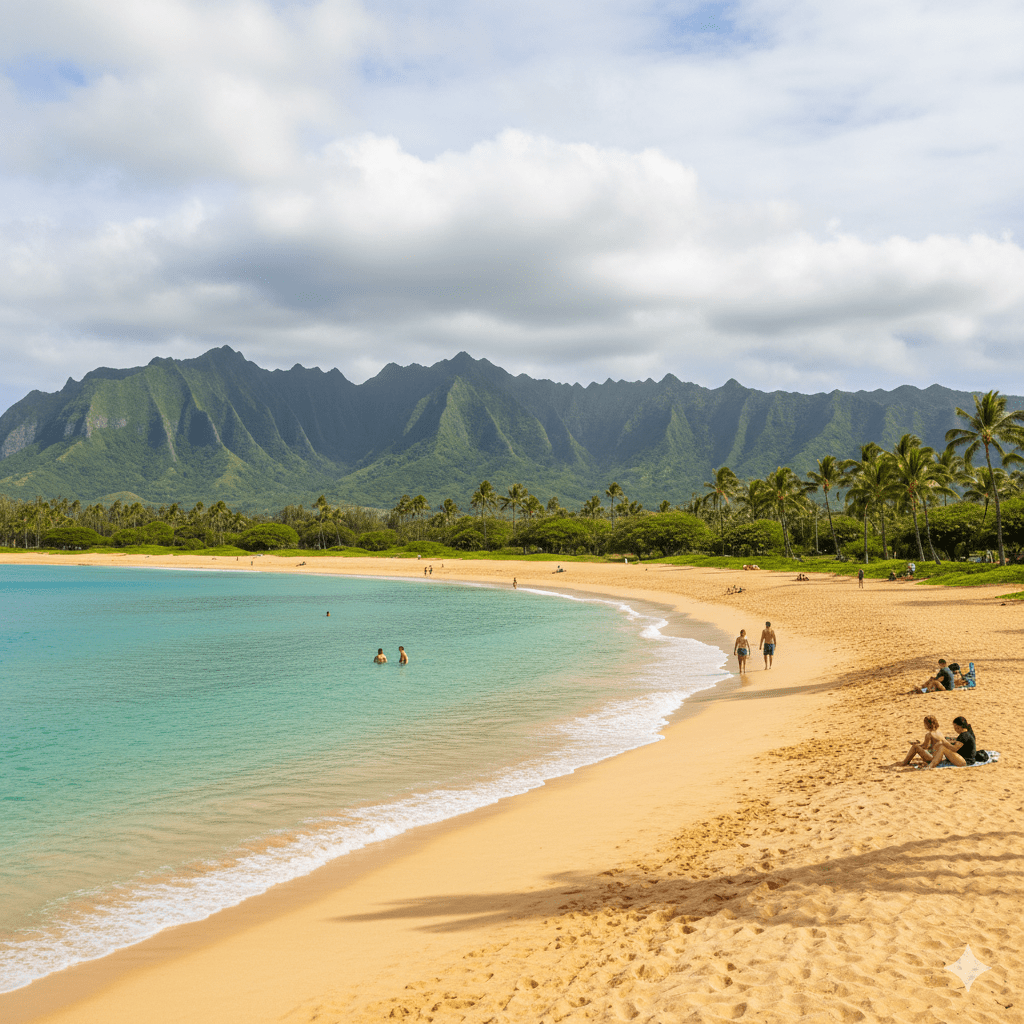
Lydgate, on the East Side near the Wailua River, has two boulder-enclosed ocean pools known as Morgan’s Ponds. One is larger and deeper; the other is smaller and shallower. The barriers reduce exposure to the open ocean, but they do not make the pools a risk-free swimming environment or filter out pollution.
The official Lydgate guide identifies lifeguards, restrooms, picnic areas and the nearby Kamalani Playground. These facilities can make it easier to plan a beach-and-park outing. Check whether each facility is open before relying on it, especially after severe weather.
Children still need close, continuous adult supervision. A shallow area is not a substitute for swimming ability, and a flotation toy is not lifesaving equipment. Ask the lifeguard about pool conditions, debris and water-quality concerns. The beach outside the enclosed pools should not be assumed to offer the same shelter.
If step-free access is essential, confirm the current route from parking to the facilities you need. A paved path in a park does not establish wheelchair access to the sand or water, and storm damage can change available routes.
4. ʻAnini Beach: A Reef Does Not Guarantee Safe Water
ʻAnini is a North Shore beach backed by an extensive reef. The official Kauai beach overview notes facilities and the absence of lifeguards. That difference matters when comparing it with Poipu or Lydgate.
A sheltered appearance can hide strong water movement. Do not treat a reef channel as a convenient route offshore or move farther out because the water looks shallow. Wind, surf and changing conditions can make swimming or paddling unsuitable. For inexperienced ocean swimmers, choose a lifeguarded location after getting local safety advice.
A shore picnic or quiet view may be a better fit than a water activity. Use authorized access and legal parking, respect nearby homes and avoid crossing private property. Do not assume that a beach with windsurfers is also a suitable swimming area or a place to learn wind sports without instruction.
5. Tunnels Beach: Scenic North Shore Coast With Access Limits
Tunnels, also known as Makua, is associated with reef snorkeling, but it should not be presented as an easy underwater playground. Visibility is variable, offshore channels can carry strong currents, and winter surf can make water entry extremely hazardous. Do not enter underwater caves or tunnels on the strength of a travel description.
Plan access carefully in the Hāʻena area. Use designated public access and obey parking restrictions; do not follow informal directions through residential property. Hāʻena Beach Park and Hāʻena State Park are different places. State-park entry arrangements do not establish permission to park or enter somewhere else.
Check State Parks notices and county updates before driving to the area. Storm closures may affect roads and nearby destinations. If access or conditions are uncertain, keep the outing on land elsewhere rather than searching for an unofficial way in.
How to Choose on the Day
First check alerts: Review beach conditions, the National Weather Service marine forecast and water-quality information. Avoid brown, cloudy or murky water, especially after heavy rain. Clear-looking water alone does not establish that an advisory has ended.
Then talk to a lifeguard: The state directory lists the Poipu, Hanalei and Lydgate towers discussed here with scheduled daily coverage of 8 a.m. to 6 p.m. Confirm that a lifeguard is actually present. A published schedule does not override a closure or mean every part of a long beach is supervised.
Match the activity to the group: Keep children closely supervised, swim with a buddy and stay within your ability. Do not enter because other visitors are in the water. If unsure, stay out. For an emergency, call 911; do not jump in after someone and create a second emergency.
Leave room to change plans: Bring drinking water, sun protection and a land-based alternative. Stay off coral and wave-washed rocks, pack out rubbish and follow wildlife-viewing guidance. Our Kauai winter guide explains why seasonal flexibility matters.
Which Beach Fits Your Visit?
Poipu and Lydgate are worth comparing for park facilities and lifeguarded areas. Hanalei is a strong choice for scenery, subject to North Shore conditions. ʻAnini and Tunnels require particular care with unguarded water, reef conditions and access. None is a promise of safe swimming, and a successful beach day can mean enjoying an open, suitable stretch of shore without going into the ocean.