Encountering Hawaii’s Iconic Marine Species: A Guide for Snorkelers and Divers

Hawaii’s bright blue waters are more than just a pretty view; they are full of amazing marine life. For snorkelers and divers, seeing this underwater world is one of the best parts of any trip to the islands. Every time you go under the water, you can connect with nature in a deep way, whether it’s the graceful movements of sea turtles or the playful dance of tropical fish.
This guide will introduce you to some of the most iconic marine species you can encounter in Hawaii. We’ll talk about how to tell these amazing animals apart, where you’re most likely to see them, and how to do it safely. Understanding this ecosystem will not only enhance your snorkeling and diving adventures but also equip you with the knowledge to protect it for years to come.
The Hawaiian Green Sea Turtle (Honu) is a gentle giant.
The Hawaiian Green Sea Turtle, or honu, is one of Hawaii’s most loved and important animals. It’s an unforgettable experience to see one glide through the water or lie on a sunny beach.
Finding the Honu
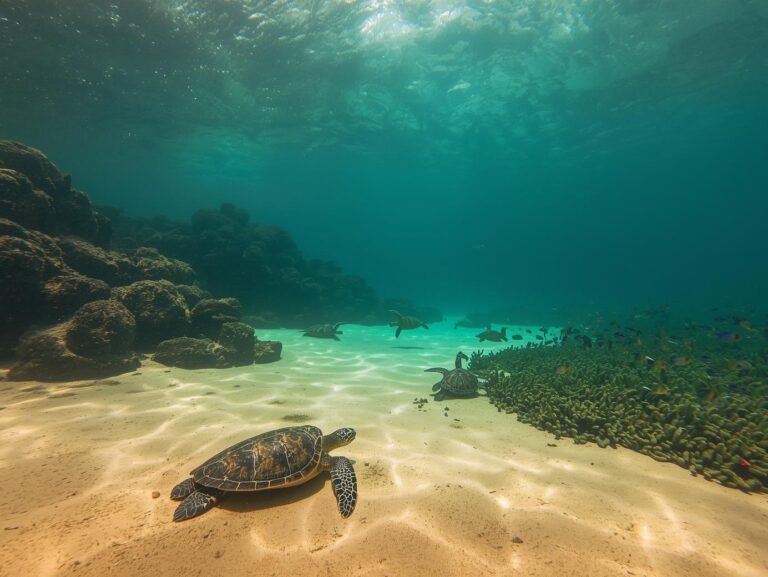
The smooth, heart-shaped shells of honu are easy to spot. They can be olive green to dark brown. Their name is misleading; the fat in their bodies, not their shells, gives them their color. Adults can weigh more than 300 pounds and live for 60 to 70 years. These gentle vegetarians mostly eat algae, which they scrape off rocks with their sharp beaks.
Where to Look for Honu
Honu can be found all over the Hawaiian Islands, but they are most common in shallow coastal waters, coral reefs, and protected bays. They are creatures of habit and often go back to the same places to eat and sleep.
- On the south shore of Maui, between Nahuna Point and Black Sand Beach, there is a place called “Turtle Town” that is famous for having a lot of turtles. Another great place is Maluaka Beach.
- People often call Laniakea Beach on Oahu’s North Shore “Turtle Beach” because it’s so well-known for turtles on the sand. You can also see them swimming in Hanauma Bay, which is another protected area.
- Kahaluʻu Beach Park on the Big Island (Kona) is a great place to snorkel with honu because it’s easy to get to.
- Kauai: Poipu Beach Park on the south shore is a reliable place to see turtles both in the water and resting on the beach.
Viewing responsibly: The Endangered Species Act protects honu. You can’t touch, chase, or bother them. Always keep at least 10 feet (3 meters) between you and them. For more on respectful encounters, see our guide to green sea turtle conservation and snorkeling etiquette. Stay still and let the turtle go by if it comes near you. When they are basking on the beach, give them even more space, as they are there to rest and conserve energy.
The Manta Rays (Hāhālua) are the Majestic Dancers.
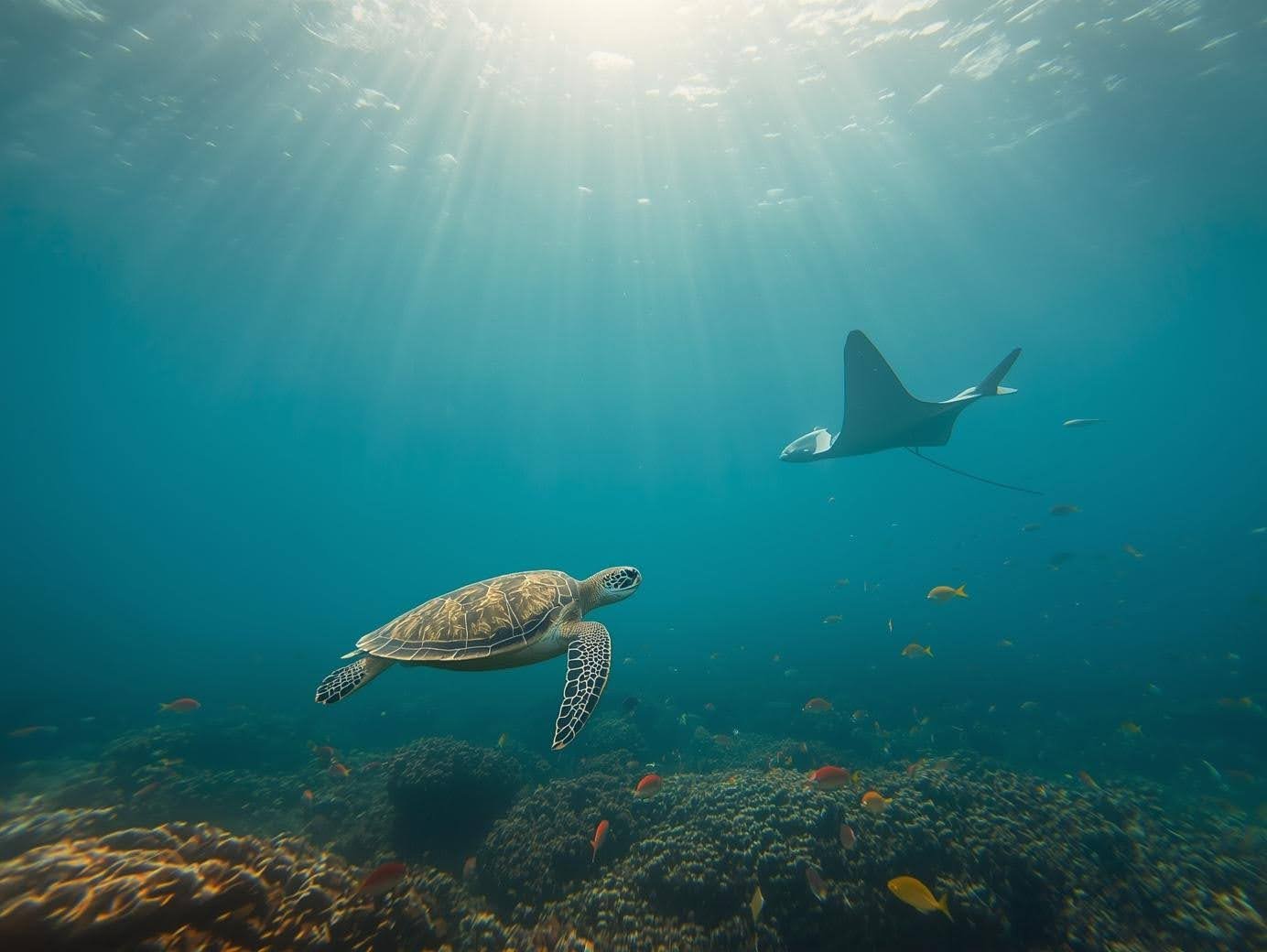
Seeing a manta ray is an amazing experience. These beautiful animals, which are called hāhālua in Hawaiian, move through the water with a grace that is like a dance that everyone who sees it is mesmerized by.
Identifying Manta Rays
Manta rays are among the biggest rays in the world. The giant oceanic species can span more than 20 feet, though the reef mantas typically seen in Hawaii are smaller. They filter feed by using their big mouths and cephalic fins to pull plankton and small fish out of the water. Manta rays are not dangerous to people because they don’t have a tail barb like stingrays do. Researchers can tell one manta from another by looking at the unique pattern of spots on its underside.
Where to Look for Manta Rays
The Big Island of Hawaii is famous around the world for its night dives and snorkels with manta rays. The bright lights used on these tours attract plankton, which in turn draws in the mantas to feed.
- Kona, on the Big Island: The two most well-known places are “Manta Village,” which is close to the Kona International Airport, and “Manta Heaven,” which is in Keauhou Bay. Night tours here give you a very good chance of getting up close to these giants.
Watching Responsibly
Pick tour companies that have strict rules for how to safely interact with manta rays. These rules are in place to protect the mantas and their habitat. One of the most important things to do is not touch the mantas.
- Staying in the designated light area.
- Keeping your hands and feet to yourself and avoiding sudden movements.
- These rules make sure the mantas feel safe and keep coming back to these places.
The Guardians of the Reef: Hawaiian Monk Seals (ʻĪlio-holo-i-ka-uaua)
The Hawaiian Monk Seal, which means “dog that runs in rough water,” is one of the most endangered marine mammals on the planet. There are only about 1,600 of them, so seeing one is a rare and special treat.
Finding Monk Seals
These seals have shiny, gray coats and big, dark eyes. Their ear flaps are absent on the outside, which makes them “earless” seals. Adults can be as long as 7 feet and weigh between 400 and 600 pounds. They spend about a third of their time on land, where they rest, shed their skin, and give birth on sandy beaches and in sea caves.
Where to Look for Monk Seals
There are monk seals all over the Hawaiian Islands, but most of them live in the Northwestern Hawaiian Islands, which are hard to get to. However, a growing number now live around the main Hawaiian Islands. You may spot them resting on beaches on any island, so keep an eye out.
Watching Responsibly
Both state and federal laws protect monk seals because they are endangered. Giving them a lot of space is very important.
- Maintain a distance of at least 50 feet (15 meters).
- If you see a mother with a pup, the recommended distance increases to 150 feet (45 meters).
- Do not try to feed them or get in between a seal and the ocean.
- Use binoculars or a zoom lens to get a better look, and keep your voice down.
Call the NOAA Marine Wildlife Hotline at (888) 256-9840 if you see a seal that looks like it’s in trouble or is being bothered.
Tropical Fish of Hawaii: The Colorful Residents
Hawaiian reefs are bursting with a kaleidoscope of tropical fish, many of which are endemic, meaning they are found nowhere else on Earth. Learning to identify a few of these species can make your snorkeling experience even more rewarding.
Hawaiian Fish You Should Know
- The official state fish of Hawaii is the humuhumunukunukuāpuaʻa, which is almost as long as the fish itself! It has an angular body, a bright blue upper lip, and a yellow “V” shape on its tail.
- Kihikihi (Moorish Idol): This fish is very pretty. It has a body that looks like a disc and bold black and white vertical bands. It also has a bright yellow patch near its tail.
- Lauwiliwili (Yellow Tang): These bright yellow fish are often seen in large schools, creating a brilliant flash of color as they move across the reef.
- Uhuhalalā (Parrotfish): You might hear a parrotfish before you see it because it makes a distinct crunching sound when it scrapes algae off coral with its beak-like teeth. They are all very bright colors.
- Kākū (Barracuda): The Great Barracuda, or kākū, is a long, silver fish with a scary set of sharp teeth. They look scary, but they usually aren’t aggressive toward people unless they are provoked.
- Moray eels, which are long, snake-like fish, are often seen peeking out from holes in the reef. The yellow margin and snowflake moray are two of the most common patterns. Stay a safe distance away from them because they can bite hard.
The best places to snorkel to find fish
- Oahu: Hanauma Bay Nature Preserve and Sharks Cove on the North Shore have calm, clear waters full of fish.
- Honolua Bay and the Molokini Crater in Maui are protected marine reserves with amazing visibility and a wide range of marine life.
- Kealakekua Bay on the Big Island is famous for its dense fish populations. It is home to the Captain Cook Monument. Kahaluʻu Beach Park in Kona is also famous for its dense fish populations.
The Apex Predators: Manō (Sharks)
In Hawaiian culture, sharks, or manō, are seen as ʻaumākua, or family guardians. They are important for the health of the ocean ecosystem. Most snorkelers don’t see sharks very often, but it’s still a good idea to know what kinds you might see.
Sharks that are common
- The whitetip reef shark is the most common shark that divers and snorkelers see in Hawaii. The white tips on their dorsal and tail fins make them easy to tell apart from other sharks. They aren’t usually aggressive, and during the day, you can often find them resting in caves or under ledges.
- Sandbar Shark: You can often see them in bays and coastal waters, especially on Oahu. They are bigger than whitetips, but they are also thought to be non-aggressive.
- Tiger Shark: While less common to see, tiger sharks are present in Hawaiian waters. They are big predators, so you should be careful and respectful around them.
Safety with Sharks
The risk of a shark attack in Hawaii is extremely low. However, you can reduce the risk even further by following these safety tips:
- Don’t swim at dawn, dusk, or night when sharks are most active.
- Don’t swim in water that is cloudy or dirty.
- Don’t swim by yourself.
- Don’t swim near the mouths of rivers, especially after a lot of rain.
- Stay calm, keep eye contact, and swim away slowly and calmly if you see a shark.
Make a plan for your underwater adventure
Going into Hawaii’s marine world is an amazing trip that helps you feel more connected to the islands. You help protect this fragile paradise by learning about the famous animals and being a responsible viewer.
Every snorkel or dive in Hawaii is a chance to see these remarkable animals going about their daily lives. Learn to recognize the species in this guide, give wildlife plenty of space, and take only photographs. The more respectfully we observe honu, hāhālua, monk seals, reef fish, and manō, the healthier these encounters stay for the animals and for everyone who comes after us. To understand the habitats these species depend on, read our guide to Hawaii’s marine ecosystems and coral reefs.