Striped Marlin in Hawaiʻi: Nairagi, the Finest Eating Marlin

On a Hawaiʻi fish market counter, the name to look for is nairagi. That is the market name for striped marlin, the smaller, sleeker marlin of Hawaiian waters, and the one many chefs quietly consider the finest eating marlin of all. Its flesh can be pale pink or a deep orange red, it slices cleanly for sashimi, and it grills like a steak from the sea. Yet most visitors walk straight past it, unsure what it is, how it differs from the famous blue marlin, or whether choosing it is a responsible decision.
This is the complete guide to striped marlin in Hawaiʻi: how to identify the fish, where it lives, when it appears in Hawaiian waters, what it tastes like, how it is served raw and cooked, how it compares with blue marlin and spearfish, and what the current science says about the health of its population. Everything about nairagi is on this one page.
Striped Marlin at a Glance
| Hawaiʻi market name | Nairagi |
| Hawaiian name | Aʻu, the name applied to marlins generally |
| Scientific name | Kajikia audax, also listed as Tetrapturus audax |
| Typical Hawaiʻi size | 40 to 100 pounds, rarely over 130 pounds locally |
| Maximum size | Up to about 12 feet and more than 450 pounds (NOAA Fisheries) |
| Peak Hawaiʻi season | Heaviest landings November through June |
| Flesh | Firm, mild, light pink to orange red |
| Best known for | Sashimi, poke, grilling, and smoked preparations |
| How caught in Hawaiʻi | All line caught, mostly by the Hawaiʻi longline fleet |
How to Identify a Striped Marlin
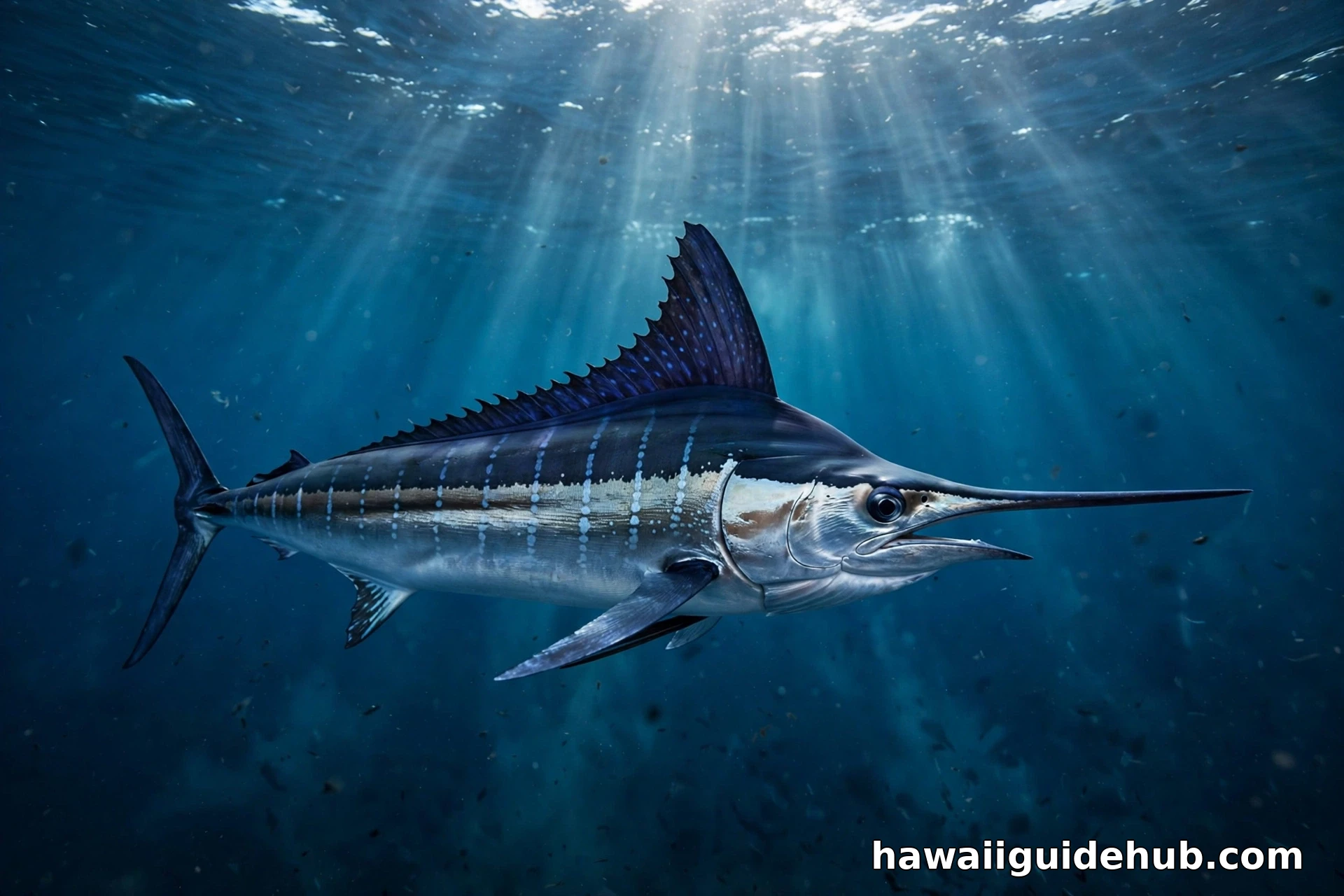
NOAA Fisheries describes striped marlin as large oceanic fish with long, round bills, small teeth, and a tall dorsal fin. The body is dark blue black on top and fades to silvery white underneath. The feature that gives the fish its name is a set of rows of blue stripes along the sides, made up of smaller round dots or narrow bands, which can brighten noticeably when the fish is excited or feeding. Hawaiʻi Seafood, the industry council that documents local commercial species, adds the details buyers and anglers use at the dock: striped marlin has the slenderest bill of all billfish, the most visible stripes, a high and pointed dorsal fin, and a more compressed, flattened body shape than its relatives.
Size is the quickest separator in Hawaiʻi. Fish caught around the Hawaiian Islands usually run between 40 and 100 pounds and are rarely over 130 pounds, according to Hawaiʻi Seafood. Pacific blue marlin, called kajiki, grow far larger, regularly into the hundreds of pounds. Shortbill spearfish, called hebi, run smaller still, with a noticeably shorter bill. If you see a whole marlin at a harbor or a market and it is a modest, streamlined fish with vivid striping and a tall front dorsal, you are almost certainly looking at nairagi.
Where Striped Marlin Live and When They Reach Hawaiʻi
Striped marlin live throughout the tropical and subtropical waters of the Pacific and Indian Oceans. NOAA Fisheries notes that they prefer water temperatures of about 68 to 77 degrees Fahrenheit and spend most of their time, about 86 percent in telemetry studies, in the surface layer above the thermocline. They are opportunistic feeders on fish such as mackerel, sardines, and anchovies, and they also eat squid. Spawning occurs in the central Pacific and off central Mexico, and large pelagic sharks and toothed whales are their main natural predators as adults.
Around Hawaiʻi, the fish is strongly seasonal. Hawaiʻi Seafood records the heaviest landings of nairagi from November through June, when cooler surface water suits the species. The Western Pacific Regional Fishery Management Council describes the same seasonal pattern and notes that striped marlin make regular seasonal migrations, moving toward the equator in winter and away from it in summer. All striped marlin in the Hawaiʻi market are line caught. Most of the commercial catch comes from longline boats fishing the open ocean, while a smaller share is taken closer to shore by slow trolling with live bait or lures at certain times of year. That is why menus and market counters feature nairagi heavily in winter and spring and only sporadically in late summer.
What Striped Marlin Tastes Like
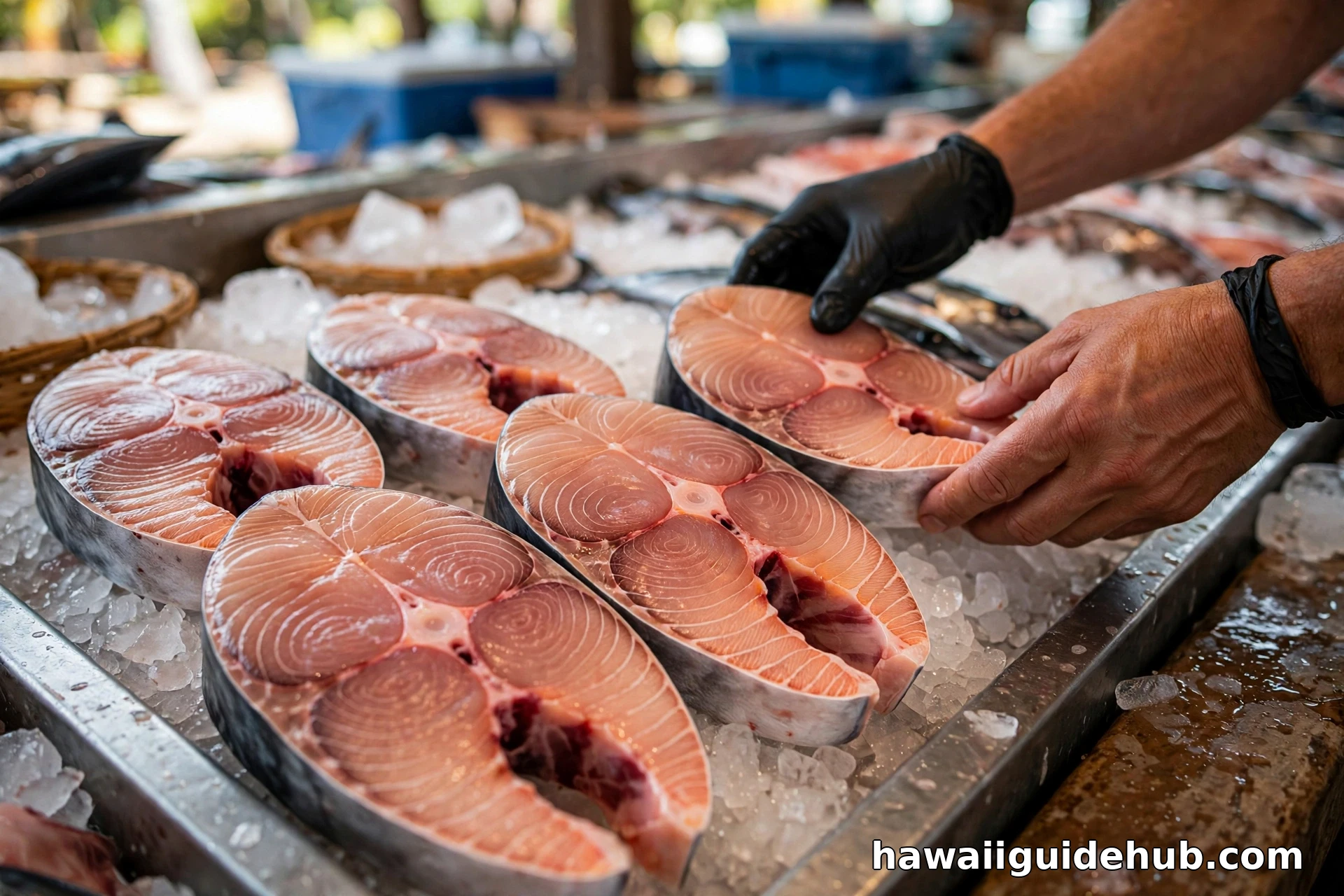
Hawaiʻi Seafood rates nairagi texture as firm and flavor as mild, and calls it the finest eating of all marlin species because of its tender flesh. The flesh color varies from fish to fish, from light pink to orange red. Fish with orange red flesh are particularly desired for the sashimi market, while pink to light colored fish are bought for upscale restaurants. In raw preparations the flavor is clean and delicate, closer to a rich white fish than to the strong, oily character people expect from dark fleshed species. Cooked, it stays moist if it is not overdone, flakes in thick layers, and takes marinades and smoke well.
Compared with its relatives, nairagi is the delicate option. Blue marlin kajiki is also firm and mild, but its loins run larger and its texture a touch coarser, and much of the local kajiki catch goes into poke, smoked fish, and cooked dishes. Hebi, the shortbill spearfish, is even milder and paler. Ahi, the yellowfin and bigeye tunas, are richer and redder. If a menu offers a raw fish tasting and nairagi is on it, it is usually the bite that surprises people most, because few expect a marlin to eat like premium sashimi. Anglers who want broader context on local species can read our guide for deep sea fishing in Ko Olina, Oahu, which covers the offshore fishery these species come from.
How Nairagi Is Served in Hawaiʻi
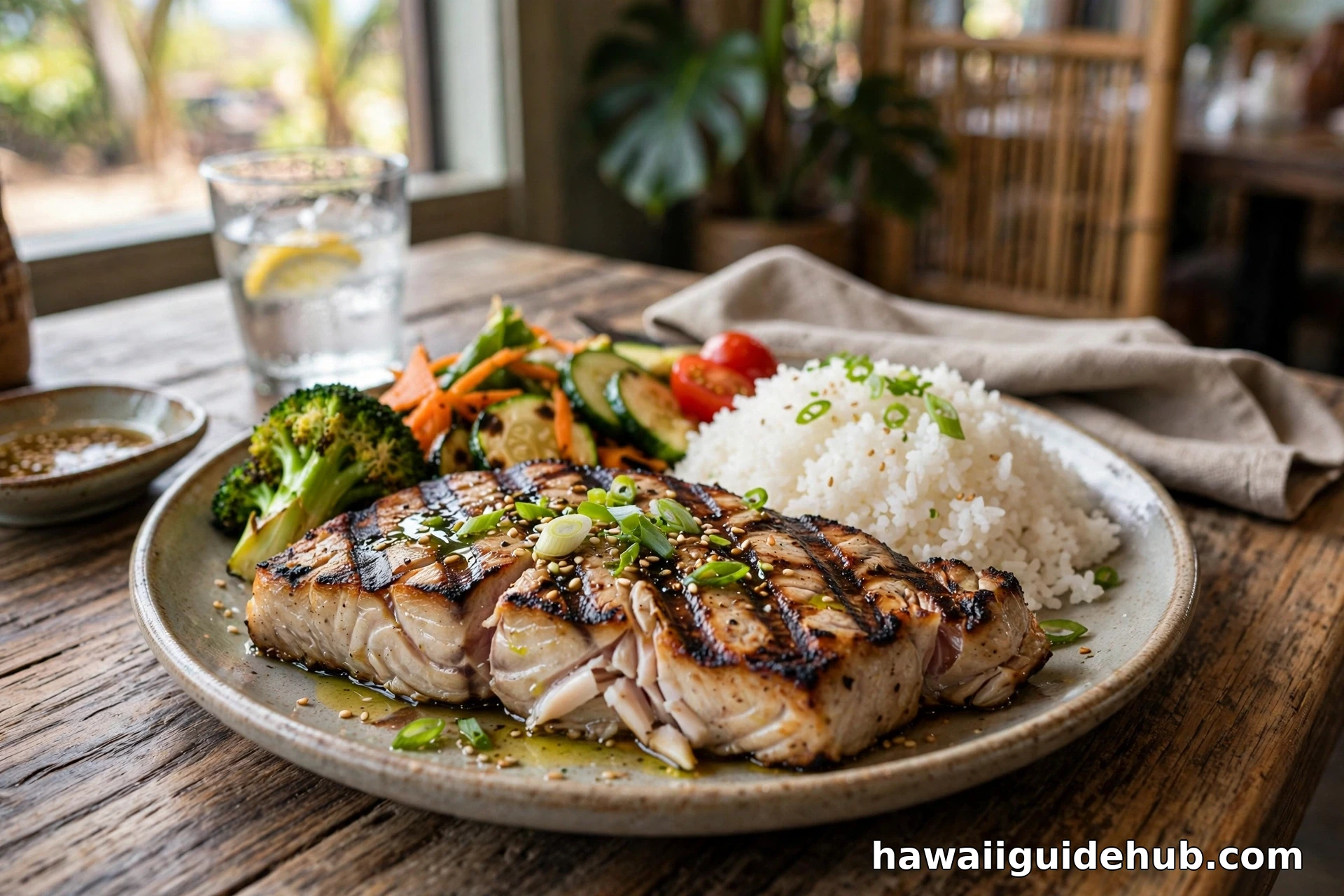
Raw service is where nairagi built its reputation. Hawaiʻi Seafood lists sashimi, sushi, poke, and ceviche among its suggested raw preparations, alongside broiling, grilling, sauteing, smoking, and tempura. In poke, nairagi’s firm flesh holds its cube shape in the sauce instead of breaking down, which is why some poke counters treat it as a premium option when the boats bring it in. Smoked nairagi is a local specialty in its own right: the firm, moderately fatty flesh takes smoke evenly and slices into rich strips sold at markets and farmers markets across the islands.
At home, treat nairagi like a fish steak. Grill thick cuts over high heat for a few minutes per side until the center is just opaque, or sear sashimi grade pieces and serve them rare in the middle. Because the meat is lean compared with fatty tuna, overcooking is the one real mistake: dry nairagi loses the tenderness that makes it special. A simple marinade of soy sauce, ginger, and sesame oil, or a macadamia nut crust, both suit its mild flavor. Visitors comparing Hawaiʻi’s raw fish dishes can place nairagi in context with our guide to somen salad and other local plates, since poke counters and plate lunch spots often sit side by side in the same food courts.
The Sustainability Question, Answered Honestly
Any honest guide to striped marlin has to cover the population science, because it is more complicated than a simple good or bad label. NOAA Fisheries recognizes stocks of striped marlin in the Pacific, and for the Central Western Pacific stock that includes Hawaiʻi, the 2023 stock assessment concluded the stock is not overfished and is rebuilding, but is still subject to overfishing. That is better news than the 2019 assessment, which had found the stock overfished: the 2023 work estimated spawning stock biomass in its terminal year had increased by nearly 73 percent compared with the earlier assessment’s terminal year. Because the status changed, NOAA Fisheries withdrew a proposed rule in 2024 that would have set catch and retention limits under the legal authority that applies to overfished stocks, while stating that the fish remains subject to overfishing and that domestic catch limits would be revisited under another authority.
What does that mean at the table? Hawaiʻi nairagi comes from a regulated, line caught fishery with logbooks, observers, and vessel monitoring in the longline fleet, and it cannot legally be exported as billfish to the United States mainland under the Billfish Conservation Act, which is one reason nairagi is a fish you mostly encounter in Hawaiʻi itself. Eating it occasionally, from Hawaiʻi’s managed fishery, is a different decision from eating imported billfish of unknown origin. Travelers who care about ocean choices can also read about encountering Hawaii’s iconic marine species responsibly in the water.
Where Visitors Encounter Striped Marlin
Visitors meet nairagi in three places. The first is the menu: winter and spring menus at Hawaiʻi seafood restaurants list it as a catch of the day, raw or grilled, and poke shops feature it when supply allows. The second is the market: Honolulu’s fish auction and retail fish markets sell whole fish and loins, and the orange fleshed fish command attention at the counter. The third is the harbor. Kona, on Hawaiʻi Island, has the largest charter vessel fishery in the state according to the Western Pacific Regional Fishery Management Council, and striped marlin are part of its winter catch, even though summer headlines there belong to big blue marlin. Seeing a nairagi brought to the dock, stripes still vivid, explains the name better than any photograph. More on that coast is in our guide to things to do in Kona.
Buying Nairagi: What to Look For
At a fish counter, fresh nairagi should smell like clean ocean, never strongly fishy, and the flesh should look moist and translucent rather than dry or gaping. Both the pale pink and the orange red fish are good: color reflects the individual fish and its diet, not a simple quality grade, although the orange fish are prized for raw service. Ask when the fish came in and whether it is local longline catch, since Hawaiʻi nairagi is a seasonal product and winter fish will usually be fresher than anything flown in. Buy sashimi grade fish only from counters that handle it for raw use, keep it cold on the ride home, and plan to eat raw preparations the same day. Cooked preparations are more forgiving and make an excellent second day use for a larger loin.
Video: Deep Sea Fishing in Hawaiian Waters
This offshore fishing footage shows the open ocean fishery off Oʻahu where Hawaiʻi’s billfish and tuna are caught by line.
Frequently Asked Questions
What is nairagi?
Nairagi is the Hawaiʻi market name for striped marlin. The Hawaiian name aʻu applies to marlins generally, and the Japanese name is makijiki. When you see nairagi on a Hawaiʻi menu or at a fish counter, you are looking at striped marlin, usually caught by line in Hawaiian waters.
What does striped marlin taste like?
Firm and mild, with tender flesh that ranges from light pink to orange red. It is considered the finest eating marlin, excellent raw as sashimi or poke and equally good grilled, broiled, or smoked. Its delicacy surprises people who expect marlin to be strong flavored.
When is striped marlin season in Hawaiʻi?
The heaviest landings run from November through June, when cooler Pacific surface water suits the species. You can find nairagi outside those months, but winter and spring are when menus and markets feature it most reliably.
How big do striped marlin get?
NOAA Fisheries records a maximum of about 12 feet and more than 450 pounds, but Hawaiʻi fish are much smaller on average, usually 40 to 100 pounds and rarely over 130 pounds. They are the mid sized marlin of local waters, far smaller than big Pacific blue marlin.
Is striped marlin sustainable to eat?
The picture is improving but not settled. The 2023 assessment for the Central Western Pacific stock found it not overfished and rebuilding, though still subject to overfishing. Hawaiʻi’s supply is line caught in a regulated fishery, and billfish cannot be exported to the United States mainland, so Hawaiʻi nairagi is a local, monitored choice best enjoyed occasionally rather than daily.
Striped marlin earns its place in Hawaiʻi’s food culture quietly. It does not have the fame of ahi or the trophy status of a giant blue marlin, but at the market counter and on the sashimi plate it may be the best fish in the case: a seasonal, line caught, tender fleshed marlin that tastes like the cold, clean North Pacific water it migrates through each winter. Order it when you see nairagi on the menu in season, and you will understand why local chefs reach for it first.