Kona Coffee: The World’s Most Famous Hawaiian Coffee

Kona coffee is the most famous coffee in America and one of the most imitated foods on earth. Grown on a narrow strip of volcanic coastline on the Big Island, hand-picked on small family farms, and prized for a smoothness no other coffee quite matches, true Kona commands premium prices. It also attracts counterfeiters, misleading labels, and endless confusion. This is the deep guide to the real thing.
This is the single complete guide to Kona coffee. It covers the Kona coffee belt, why this specific coastline grows legendary beans, how Kona coffee is made from cherry to cup, the official grading system, the blend-labeling controversy and the lawsuits behind it, peaberry, visiting farms, and buying the real thing. If you have been searching for anything about Kona coffee, the answers are all here on this one page.
Kona Coffee at a Glance
| What it is | Coffee grown in the Kona district on the Big Island’s western slopes |
| The belt | About 30 miles long, 2 miles wide, on the slopes of Hualalai and Mauna Loa |
| Elevation | Roughly 800 to 2,500 feet above sea level |
| Farms | Over 600 small farms, most family-run |
| Harvest | Hand-picked, typically August through January |
| Flavor | Smooth, low acidity, nutty and chocolatey with a rich body |
| Top grade | Hawaii Extra Fancy |
| Rarest form | Peaberry, from a natural single-bean mutation |
| Label rule | Only “100% Kona Coffee” is pure; blends may contain as little as 10% Kona |
| Annual festival | Kona Coffee Cultural Festival, each November |
The Kona Coffee Belt: Where It Grows
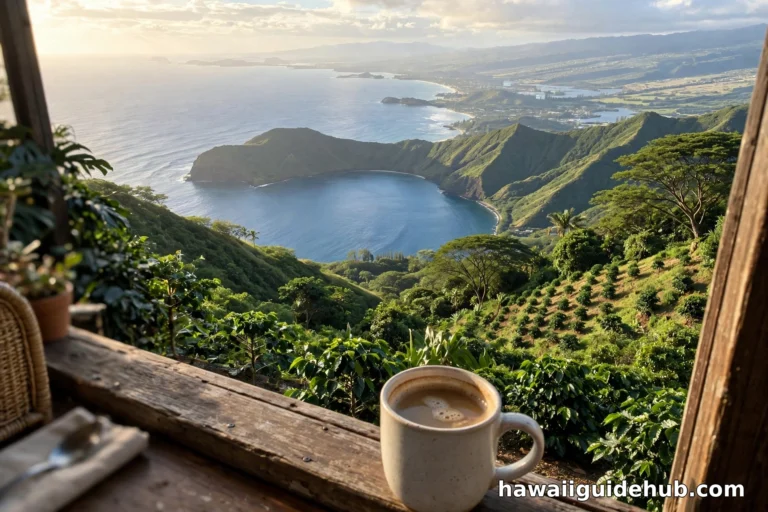
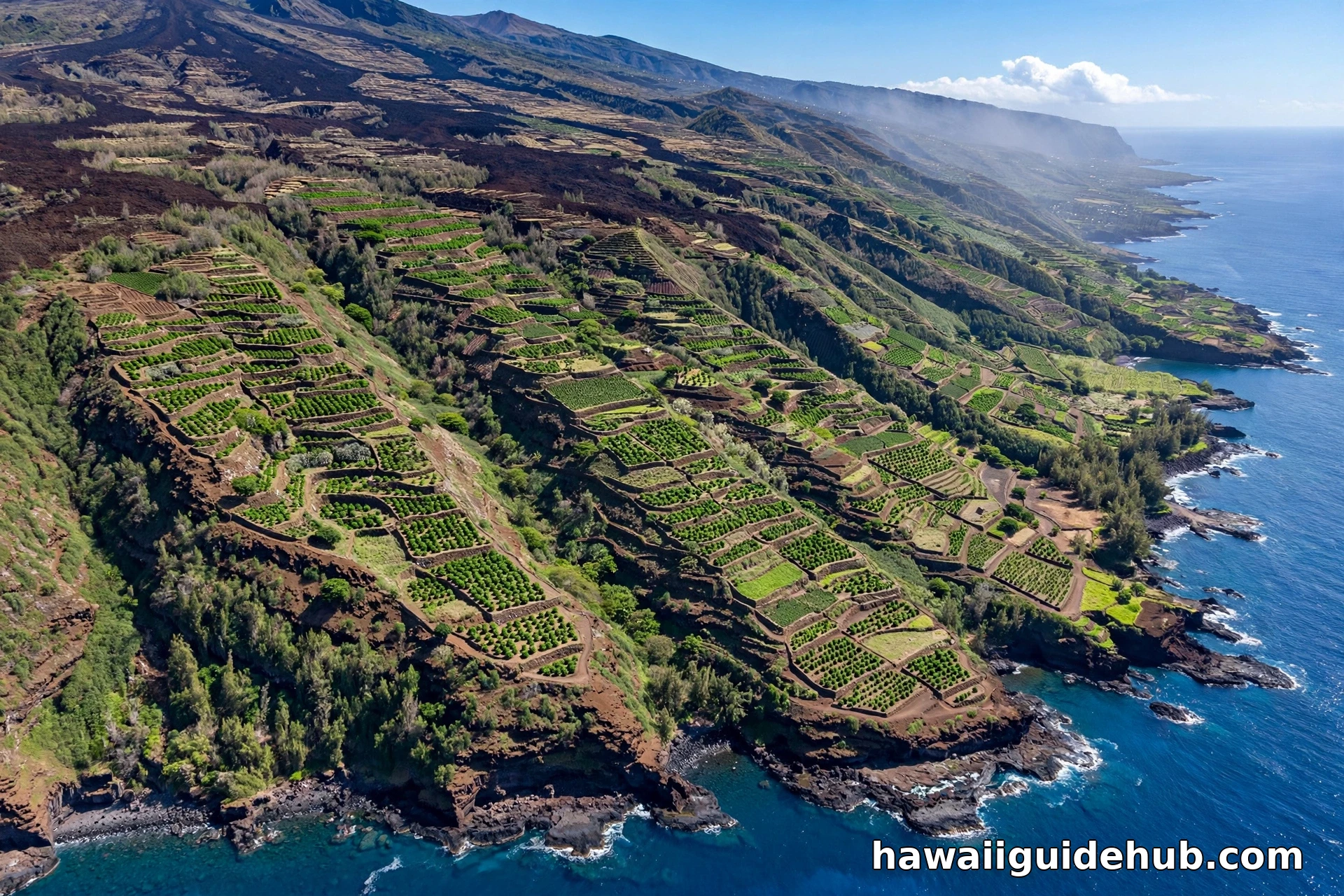
Kona coffee grows in one of the most specific terroirs in the coffee world: a strip of land roughly 30 miles long and only about 2 miles wide, draped across the western slopes of Hualalai and Mauna Loa volcanoes between about 800 and 2,500 feet of elevation. To the west, the Pacific. Above, the volcanoes. Within that ribbon, more than 600 farms grow coffee, and the vast majority are small, family operations of just a few acres.
The district’s boundaries matter legally. Only coffee grown within the Kona district can be called Kona coffee under Hawaii’s labeling laws. That geographic restriction, combined with the tiny growing area, is the fundamental reason Kona is rare and expensive. There is simply not much of it. A University of Hawaii study once estimated that far more “Kona coffee” is sold each year than the district actually produces, which tells you everything about the labeling problem.
Why This Strip of Coast Grows Legendary Coffee
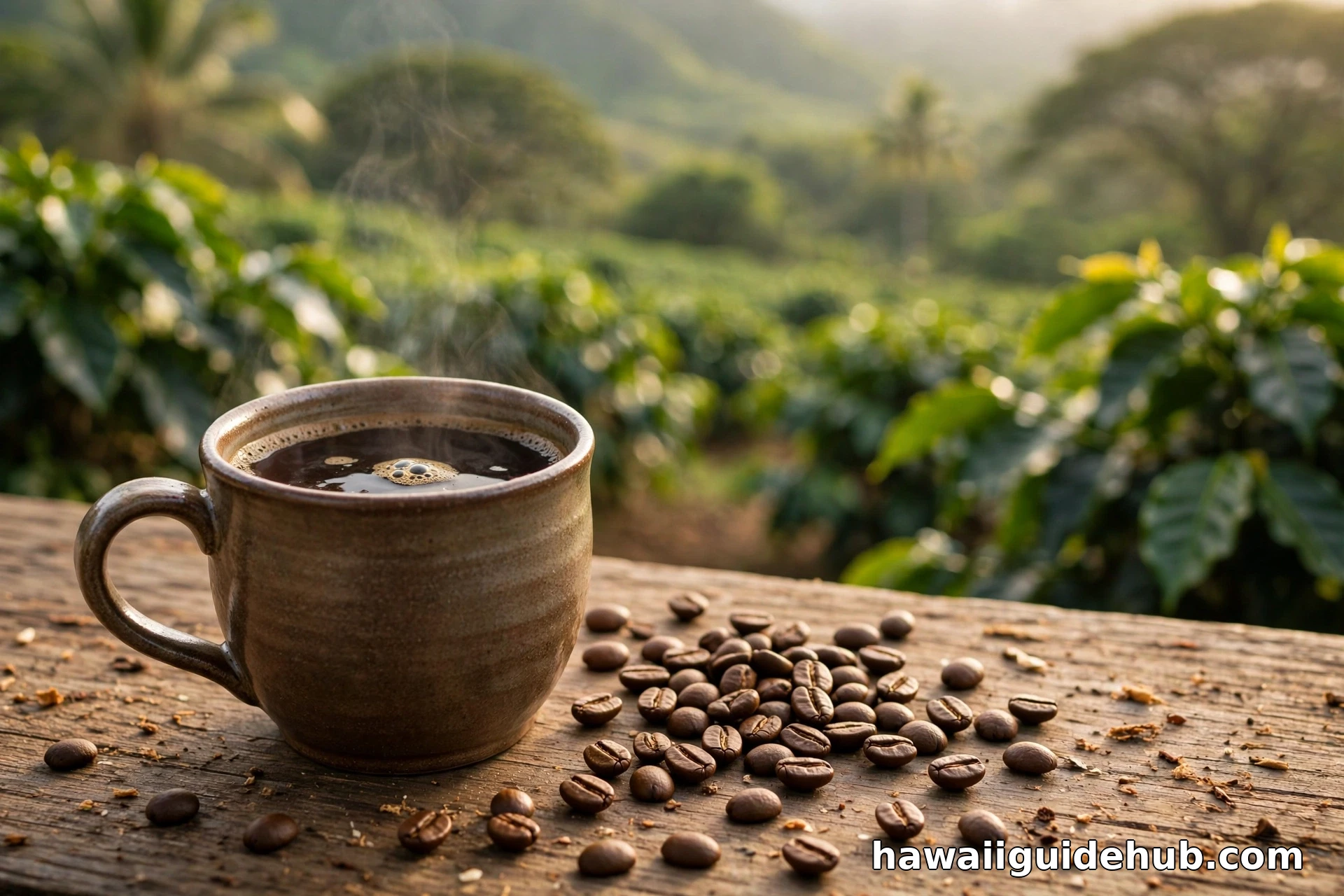
Kona’s weather reads like a coffee grower’s wish list. Mornings bring bright sun that drives photosynthesis. By afternoon, clouds roll in off the ocean and shade the trees, preventing heat stress. Light afternoon showers water the plants almost daily during the growing season. Nights are mild, rarely threatening the frost that kills coffee at altitude elsewhere. The volcanic soil, porous and mineral-rich, drains the frequent rain so roots never sit wet.
The elevation band does the rest. Between 800 and 2,500 feet, temperatures stay in coffee’s sweet spot, warm enough for growth, cool enough for slow cherry ripening. Slow ripening builds sugars and complexity in the bean. That is the physical basis of Kona’s famous smoothness: low acidity and rounded body are what this climate produces naturally, not what roasters engineer afterward.
From Cherry to Cup: How Kona Coffee Is Made
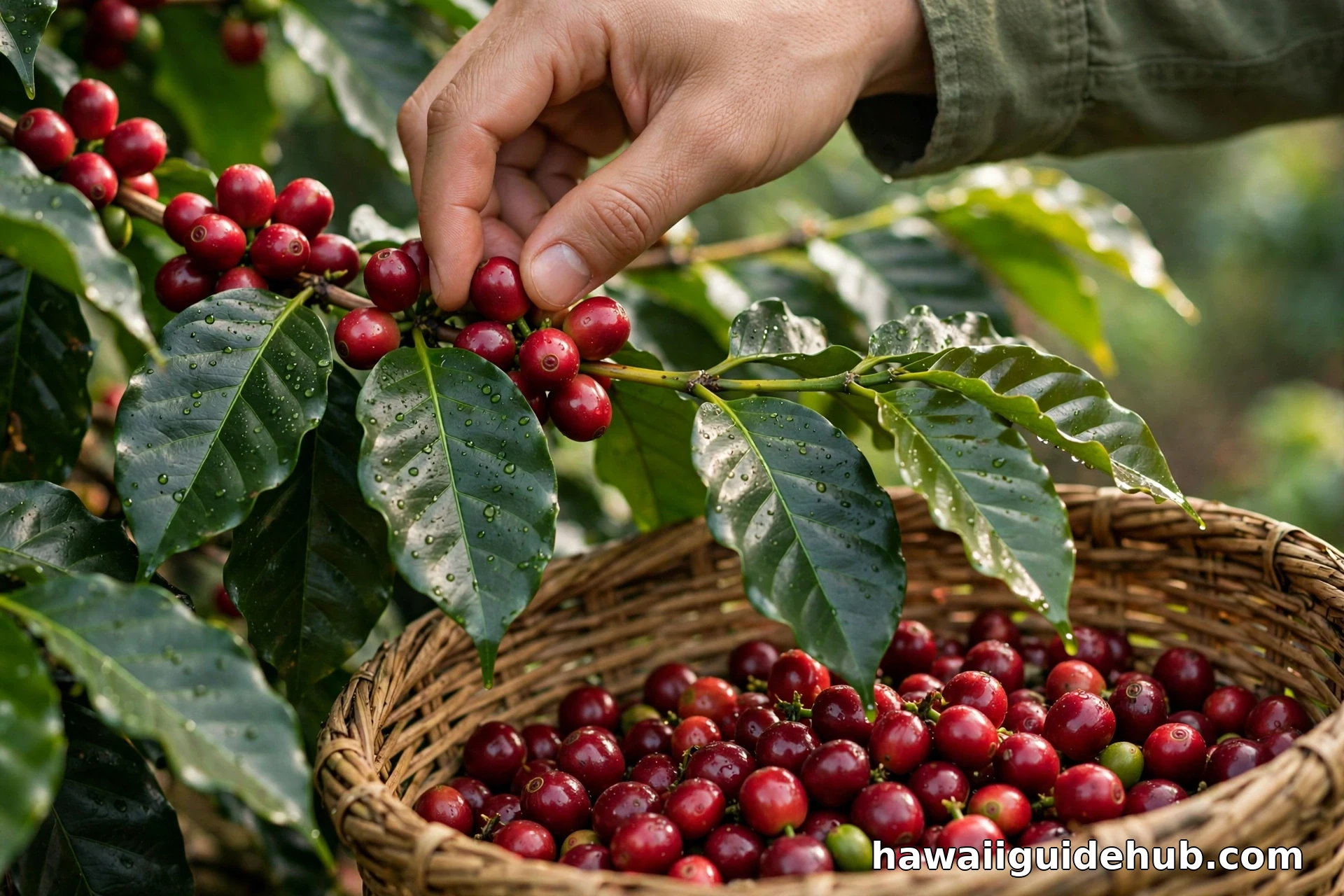
Kona coffee is hand-picked, and that single fact shapes everything. Because cherries on a branch ripen at different rates, pickers pass through the rows multiple times per season, selecting only ripe red cherries each time. It is slow, skilled, expensive work, and it is why Kona cannot compete on price with machine-harvested commodity coffee. The harvest typically runs from August into January.
After picking, the traditional Kona process is the washed method. Cherries are pulped the same day to remove the fruit, then fermented overnight to loosen the remaining mucilage, washed clean in mountain water, and sun-dried on raised decks called hoshidana until the moisture is right. The dried beans are hulled, graded by size and quality, and roasted, often to order by small farms. Every step is visible on a good farm tour, which is why the tours are so compelling.
Kona Coffee Grades: What the Labels Really Mean
Hawaii’s Department of Agriculture grades Kona coffee by bean size, uniformity, and defect count. The grades are a quality signal, but they do not tell the whole story. Here is how to read them like an insider.
| Grade | What it signals | What it does not tell you |
| Extra Fancy | Largest, most uniform beans; fewest defects; the top grade | Nothing about the farm, the roast, or freshness |
| Fancy | Slightly smaller beans; still excellent quality | Can taste identical to Extra Fancy in the cup |
| Number 1 | Good commercial grade; solid everyday Kona | Often the best value for daily drinking |
| Select / Prime | Smaller beans; more defects allowed | Fine for blends and flavored coffees |
| Peaberry | Round single beans from a natural mutation; graded separately | Rarity, not automatic superiority, though many love it |
The insider’s take: grade measures bean appearance, not cup magic. A well-grown, freshly roasted Number 1 from a great farm will beat a stale Extra Fancy every time. Buy the grade for the occasion, Extra Fancy for gifts, Number 1 for the daily cup, but always buy fresh and buy from a named farm.
The Price of Fame: Blends, Lawsuits, and Label Reading
Kona’s fame made it a target. For decades, big roasters have sold “Kona blends” containing the legal minimum of 10% Kona coffee padded with cheap imported beans, with the word “blend” in small type. Shoppers paid premium prices for bags that were 90% not Kona. Farmers watched their name diluted on supermarket shelves while receiving none of the premium.
The pushback was dramatic. In 2019, Kona coffee farmers filed a class action lawsuit against major American retailers, including Walmart, Costco, Amazon, Safeway, and Kroger, over brands allegedly marketed as Kona coffee. The case settled in 2021 for more than 13.1 million dollars benefiting Kona farmers. It was one of the largest food-origin fraud cases in American history, and it put the industry on notice.
The law is still catching up. Hawaii requires origin and percentage disclosure on the front label, and from July 1, 2027, coffees using Hawaii regional names must contain at least 51% Hawaii-grown beans. Your defense remains the label: demand “100% Kona Coffee” in plain language, check any blend’s percentage, and distrust “Kona roast” or “Kona style,” which may contain no Kona at all.
Peaberry: Kona’s Rare Treasure
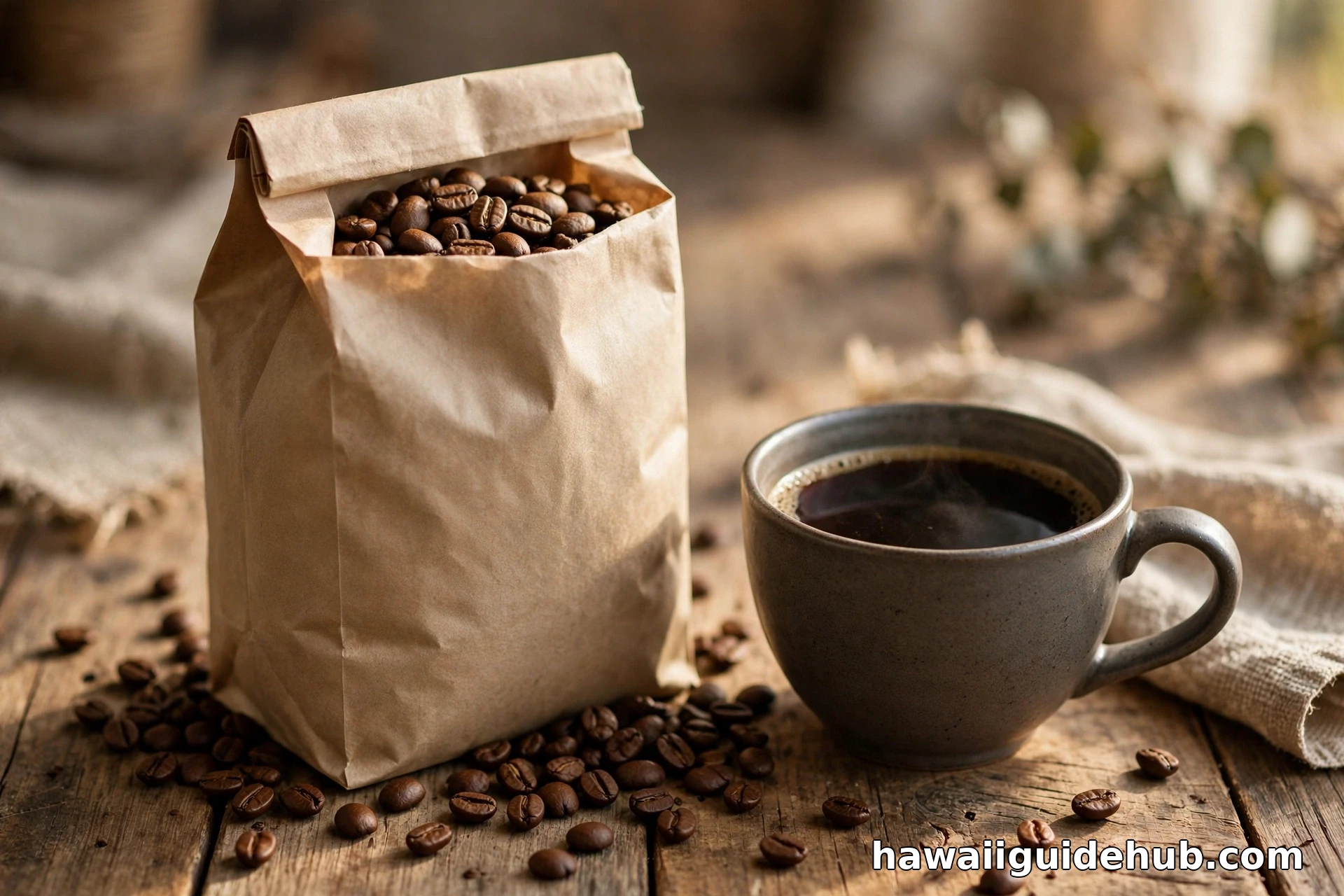
Peaberry deserves its own mention because it confuses buyers. Normally a coffee cherry contains two flat-sided beans. In about 5% of cherries, a natural mutation produces a single round bean instead: the peaberry. These are separated during grading and sold on their own. Roasters love peaberry because the round beans roast more evenly; drinkers love it for a concentrated, lively cup.
Kona peaberry is among the rarest and priciest Hawaiian coffees. It is worth trying at a farm tasting, where you can compare it side by side with the farm’s standard offering. Whether it is “better” is personal, but it is unquestionably distinctive, and a bag of 100% Kona peaberry is a memorable gift for a serious coffee drinker.
Visiting Kona Coffee Farms
The Kona coffee belt is one of the Big Island’s great visitor experiences. Dozens of farms offer tours, from free walkthroughs to in-depth guided experiences with full tastings. You will walk the rows, see the pulping and drying, learn the grades, and taste the difference roast levels make. Many tours end at a farm store where the coffee is roasted on site.
Time your visit for harvest season, roughly August through January, to see picking in action. The Kona Coffee Cultural Festival each November is the peak celebration, with farm events, cuppings, and competitions across the district. Book popular tours ahead in winter high season. For planning the rest of your Kona stay, see our guides to things to do in Kona and the Big Island.
Buying Real Kona Coffee
The rules are simple. Buy from a named farm, preferably one you visited. Insist on “100% Kona Coffee” on the label. Choose whole bean with a roast date, and grind before brewing. For gifts, Extra Fancy or peaberry in a sealed valve bag impresses. For your own mornings, a fresh Number 1 or Fancy from a good farm is the smart money.
Expect to pay real money. Hand-picked coffee from small farms on expensive Hawaiian land cannot be cheap, and a low price is itself a warning sign. The premium supports the farming families who kept Kona coffee alive through every boom and bust. For the full island coffee picture, see our guide to must-try local flavors in Hawaii.
The Families Behind the Beans
Kona coffee is a Japanese immigrant story as much as an agricultural one. In the early twentieth century, Japanese workers left the sugar plantations to lease small plots in Kona, planting coffee on land the big plantations did not want. They built the district’s small-farm culture cherry by cherry, and their descendants still farm many of the same hillsides. The annual Kona Coffee Cultural Festival honors this heritage alongside the harvest, with events celebrating the district’s multicultural farming history.
That heritage is visible in the landscape. Kona’s farms are not plantations but patchworks: small lots divided by old stone walls, macadamia trees shading coffee rows, family homes beside the drying decks. When you buy from a Kona farm, you are usually buying from a family, often one that has worked the same slope for three or four generations. The premium price is, in large part, the cost of keeping that way of farming alive.
Brewing Kona Coffee at Home
Kona’s smoothness rewards a gentle hand. Use water just off the boil and a medium grind, and favor pour-over or drip over aggressive methods. A medium roast preserves the origin character that makes Kona distinctive; dark roasts bury it under roast flavor, which wastes the premium you paid. Grind just before brewing, store beans airtight away from light, and use them within a few weeks of the roast date. Brewed with care, a cup of real Kona needs nothing added: no cream, no sugar, just the smooth, nutty, low-acid cup that made it famous.
Video: Touring a Kona Coffee Farm
Go behind the scenes at a 100% Kona coffee estate: hand-picking, mountain-water washing, sun-drying, and tasting.
Frequently Asked Questions
Where is Kona coffee grown?
In the Kona district on the Big Island of Hawaii, on a roughly 30-mile-long, 2-mile-wide belt on the slopes of Hualalai and Mauna Loa, between about 800 and 2,500 feet elevation. Only coffee from this district can legally be called Kona coffee.
How can you tell if Kona coffee is real?
Look for the words “100% Kona Coffee” prominently on the label. Avoid “Kona blend” unless you have checked the percentage, and avoid “Kona roast” or “Kona style,” which may contain no Kona coffee at all.
Why is Kona coffee so expensive?
It is hand-picked on more than 600 small farms in a tiny growing district with high labor and land costs. Limited supply plus global demand sets the price.
What is the best grade of Kona coffee?
Extra Fancy is the top grade by bean size and uniformity. But freshness, farm quality, and roast matter more in the cup than grade alone. Peaberry is the rarest specialty form.
When is the Kona coffee harvest?
Typically August through January, peaking in the fall. The Kona Coffee Cultural Festival in November celebrates the harvest each year.
Is Kona coffee worth the price?
For the real 100% article, most coffee lovers say yes: the smoothness and low acidity are distinctive. The key is making sure you are actually buying 100% Kona, not a blend trading on the name.
Kona coffee earned its fame one hand-picked cherry at a time, on a strip of volcanic coastline unlike anywhere else on earth. Taste it at the farm, buy the real thing, and you will understand why, after two centuries, the world still cannot get enough of it.