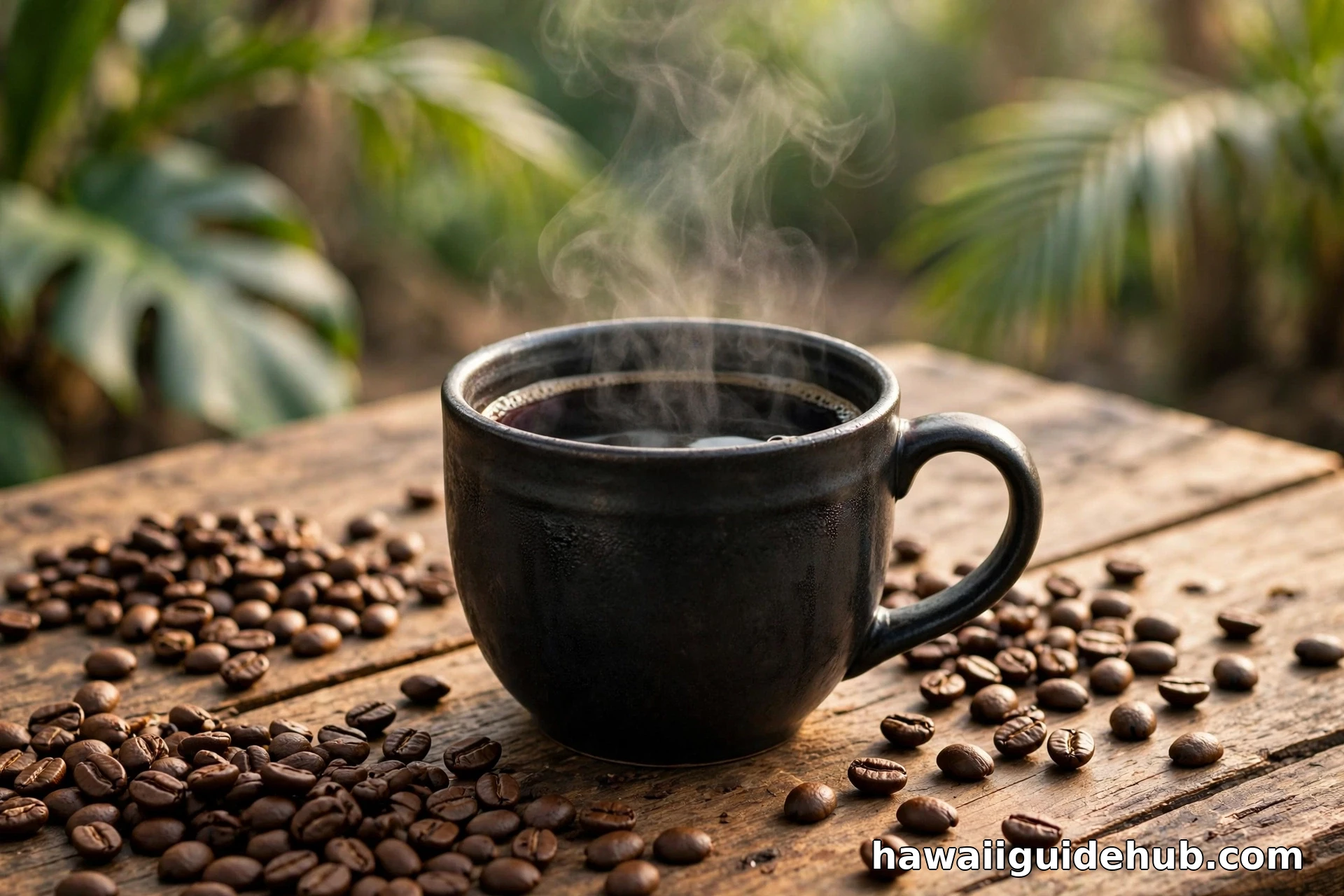
Hawaiian Coffee: The Complete Guide to the Islands’ Beans

Hawaii is the only state in America that grows coffee, and it grows some of the most celebrated coffee in the world. From the volcanic slopes of Kona to the vast estate fields of Kauai, the islands produce beans with a character no other American soil can give. Yet buying Hawaiian coffee is full of traps, from misleading “blend” labels to souvenir-shop markups. This guide tells you what is real, what it tastes like, and how to experience it right.
This is the single complete guide to Hawaiian coffee. It covers why Hawaii grows great coffee, the history of coffee in the islands, the growing regions island by island, what the coffee tastes like, how to read labels honestly, visiting coffee farms, buying tips, and brewing at home. If you have been searching for anything about Hawaiian coffee, the answers are all here on this one page.
Hawaiian Coffee at a Glance
| Distinction | The only coffee grown commercially in the United States |
| First planted | 1813, by Don Francisco de Paula Marin on Oahu |
| Most famous region | Kona, on the Big Island’s western slopes |
| Other regions | Kaʻu (Big Island), Maui, Kauai, Molokai, Oahu |
| Largest farm | Kauai Coffee, the largest coffee farm in the United States |
| Growing edge | Volcanic soil, morning sun, afternoon cloud cover and showers |
| Label rule | “100% Kona” means pure; “Kona blend” can legally contain as little as 10% Kona |
| Law change | From July 1, 2027, regional-name coffees must contain at least 51% Hawaii-grown beans |
| Best experience | A farm tour with tasting, especially in Kona during harvest season |
Why Hawaii Grows Great Coffee
Coffee is a picky plant. It wants altitude without frost, sun without scorching, rain without waterlogging, and soil with character. Hawaii delivers all of it. The islands sit in the tropics but rise thousands of feet, creating stacked microclimates. Volcanic soils, young and mineral-rich, drain well and feed the plants distinctive nutrition. Trade winds bring morning sunshine and afternoon clouds, the classic Kona pattern, which lets cherries ripen slowly and develop complex sugars.
That geography is also why Hawaii stands alone in America. No other state has the tropical highland climate coffee demands. Puerto Rico grows coffee too, but as a territory, not a state, so Hawaii keeps the “only state” distinction. The result is a small but prestigious industry: Hawaii produces a tiny fraction of the world’s coffee, but its name recognition far exceeds its volume, and its quality justifies the reputation.
A Short History of Coffee in Hawaii
Coffee arrived in Hawaii in 1813, when Don Francisco de Paula Marin, a Spanish advisor to Kamehameha I, planted the first coffee on Oahu. It was an experiment, not an industry. The real beginning came in 1828, when the missionary Samuel Ruggles planted coffee in Kona on the Big Island, on the slopes that would become legendary. The Kona district’s combination of volcanic soil, elevation, and weather proved ideal, and small farms spread along the coast.
The industry grew in fits through the nineteenth century, competing with sugar for land and labor. Japanese immigrant farmers became central to Kona coffee, working small family plots and hand-picking cherries, a tradition of smallholder farming that survives in Kona today, where hundreds of small farms dot the hillsides. On Kauai, coffee took a different path: large-scale estate farming on former sugar land, culminating in the Kauai Coffee estate, the largest coffee farm in the country. Through booms, busts, hurricanes, and a famous fraud scandal in the 1990s, Hawaiian coffee endured on quality and reputation.
Hawaii’s Coffee Regions, Island by Island
Kona gets the fame, but every major island grows coffee, and each region has a distinct personality. Here is how an expert would sort them.
| Region | What it is known for | Taste profile | Good to know |
| Kona (Big Island) | The world-famous origin; hundreds of small family farms on volcanic slopes | Smooth, low acidity, nutty and chocolatey with a rich body | Most expensive; watch for blend labeling tricks |
| Kaʻu (Big Island) | The rising star; award-winning coffees from the southern district | Bright, fruity, complex; often beats Kona in competitions | Excellent value for the quality |
| Kauai | Estate-grown on the largest coffee farm in the US | Clean, mild, smooth; approachable and consistent | Great visitor center and tours near Kalaheo |
| Maui | Smaller production on the Valley Isle’s slopes | Balanced and sweet, with island character | Often found in local shops rather than exported |
| Molokai | Small, distinctive production | Full-bodied and earthy | Rare outside the islands; a find when you see it |
| Oahu | Where it all started; small modern farms | Varies by farm and elevation | Look for North Shore and Waialua estate coffees |
What Hawaiian Coffee Tastes Like
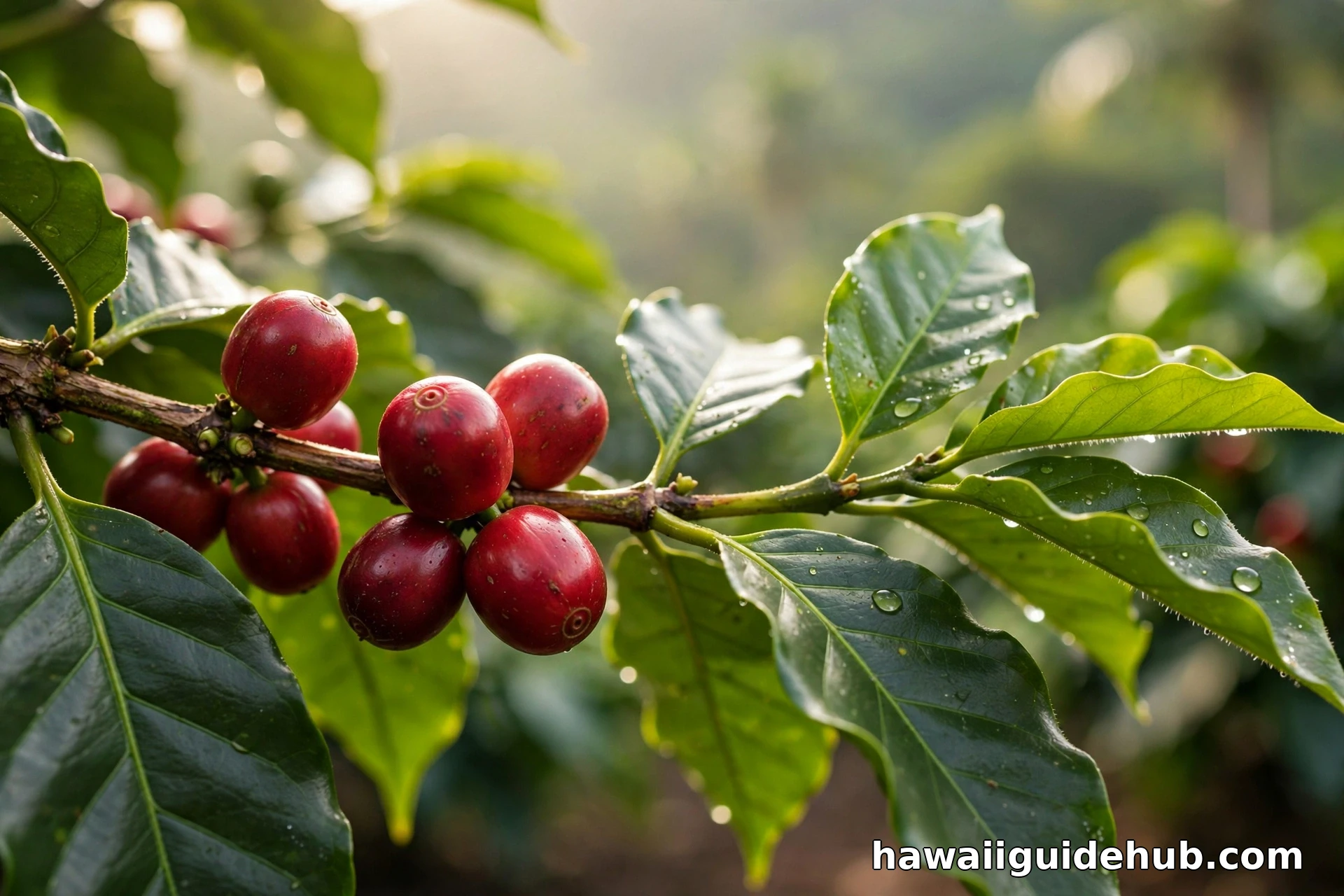
Generalizing across regions is risky, but Hawaiian coffees share a family resemblance: smoothness. The slow ripening forced by the island climate produces beans with gentle acidity and rounded body. Kona is the archetype, famously smooth with low acidity, notes of nuts and chocolate, and a clean finish that made it a favorite of coffee connoisseurs worldwide. It is the coffee people mean when they say Hawaiian coffee tastes “mellow and smooth.”
Kaʻu, from the Big Island’s southern slopes, tends brighter and fruitier, and it has been winning blind-tasting competitions against Kona for years, a fact Kona loyalists accept with varying grace. Kauai’s estate coffee is the easy drinker of the family: clean, mild, and consistent. Maui and Molokai offerings vary more by producer, which is part of their charm. The common thread is drinkability. Hawaiian coffee rarely assaults the palate. It seduces it.
The Label Trap: 100% vs. Blends
This is the most important section of this guide. Because Kona coffee is rare and expensive, many retailers sell “Kona blends.” Under long-standing Hawaii law, a blend can legally contain as little as 10% Kona coffee, with the other 90% cheaper imported beans, as long as the label states the percentage. The word “blend” often appears in small type while “KONA” shouts from the front. Similar games are played with “Kona roast” and “Kona style,” which may contain no Kona coffee at all.
The rules are tightening. Hawaii already requires the front label to state the origin and weight percentage of the beans inside. And from July 1, 2027, roasted, instant, and ready-to-drink coffees using Hawaii regional names must contain at least 51% Hawaii-grown coffee. Until and after that date, the buyer’s defense is the same: read the label. Look for “100% Kona Coffee” or “100% Hawaii-grown” stated plainly. If the bag says “blend,” check the small print for the actual percentage before paying a premium.
Visiting Coffee Farms in Hawaii
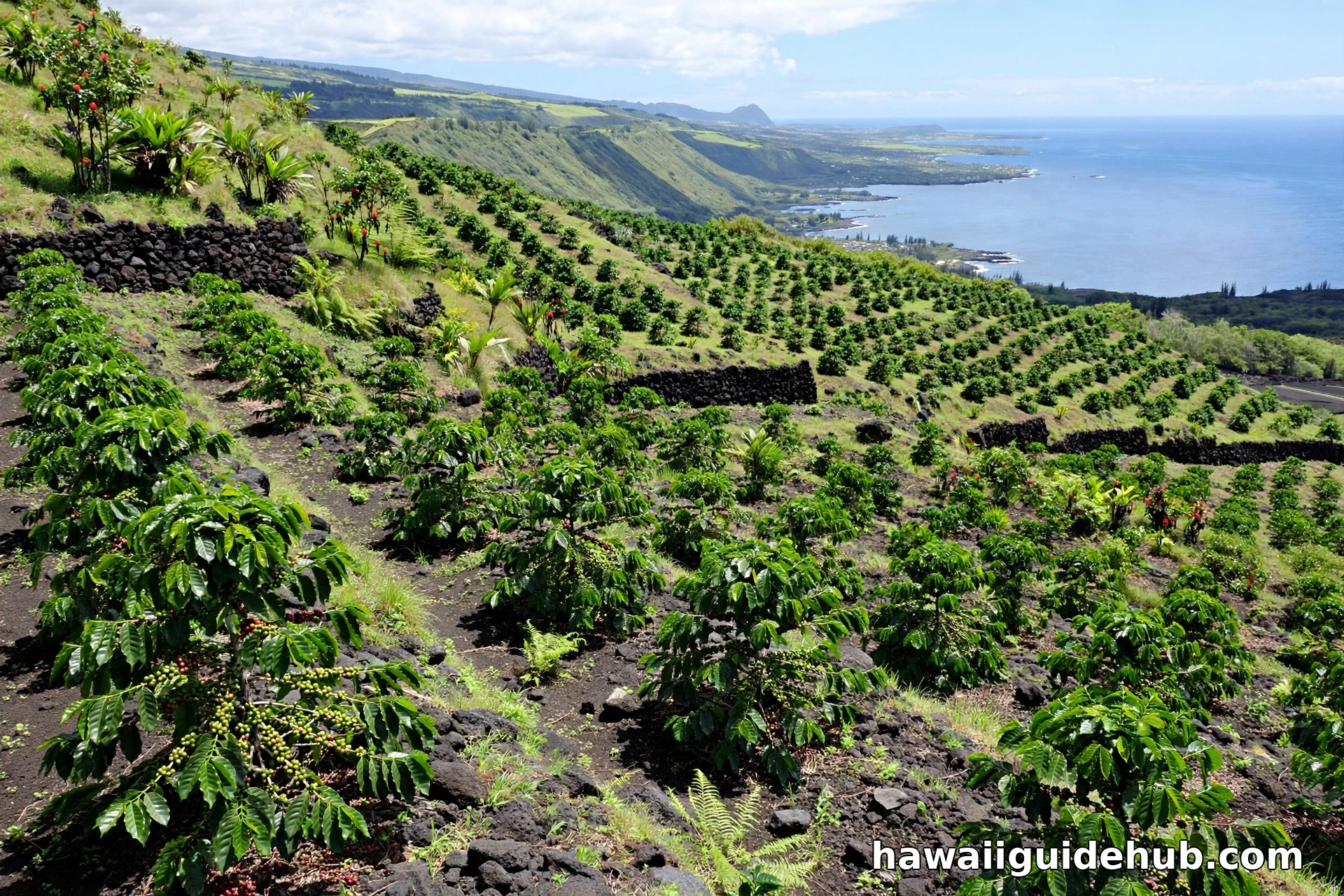
A coffee farm tour is one of the best food experiences in Hawaii. Kona’s farms, many of them small and family-run, offer walking tours that run from cherry to cup: the trees, the picking, the wet processing, the sun drying, the roasting, and finally the tasting. You will learn to taste the difference between roasts, understand what “peaberry” means, and probably buy more coffee than you planned.
Kauai Coffee’s visitor center offers a different scale: the vast estate, self-guided walks, and generous tastings. Farm tours elsewhere in the islands are smaller and more personal. Go during harvest season, roughly fall through early winter in Kona, and you may see picking in action. Book ahead in high season, wear walking shoes, and go easy on the samples unless you enjoy being very awake. For Big Island trip planning, see our guides to things to do in Kona and the Big Island.
Buying Hawaiian Coffee: What to Look For
Buy from the farm when you can. Farm-direct coffee is fresher, the money supports the growers, and you can taste before you commit. At stores, read every label as described above. Whole bean stays fresh longer than ground, and a roast date beats a “best by” date every time. Hawaiian coffee is sold in grades, with “Extra Fancy” at the top for Kona, reflecting bean size and quality.
For souvenirs, small bags from specific farms beat big gift-shop blends. A half-pound of estate coffee from a farm you visited carries a story no airport “Kona blend” can match. And remember the price signal: real 100% Kona is expensive because it is hand-picked on small farms. If the price seems too good, read the label twice.
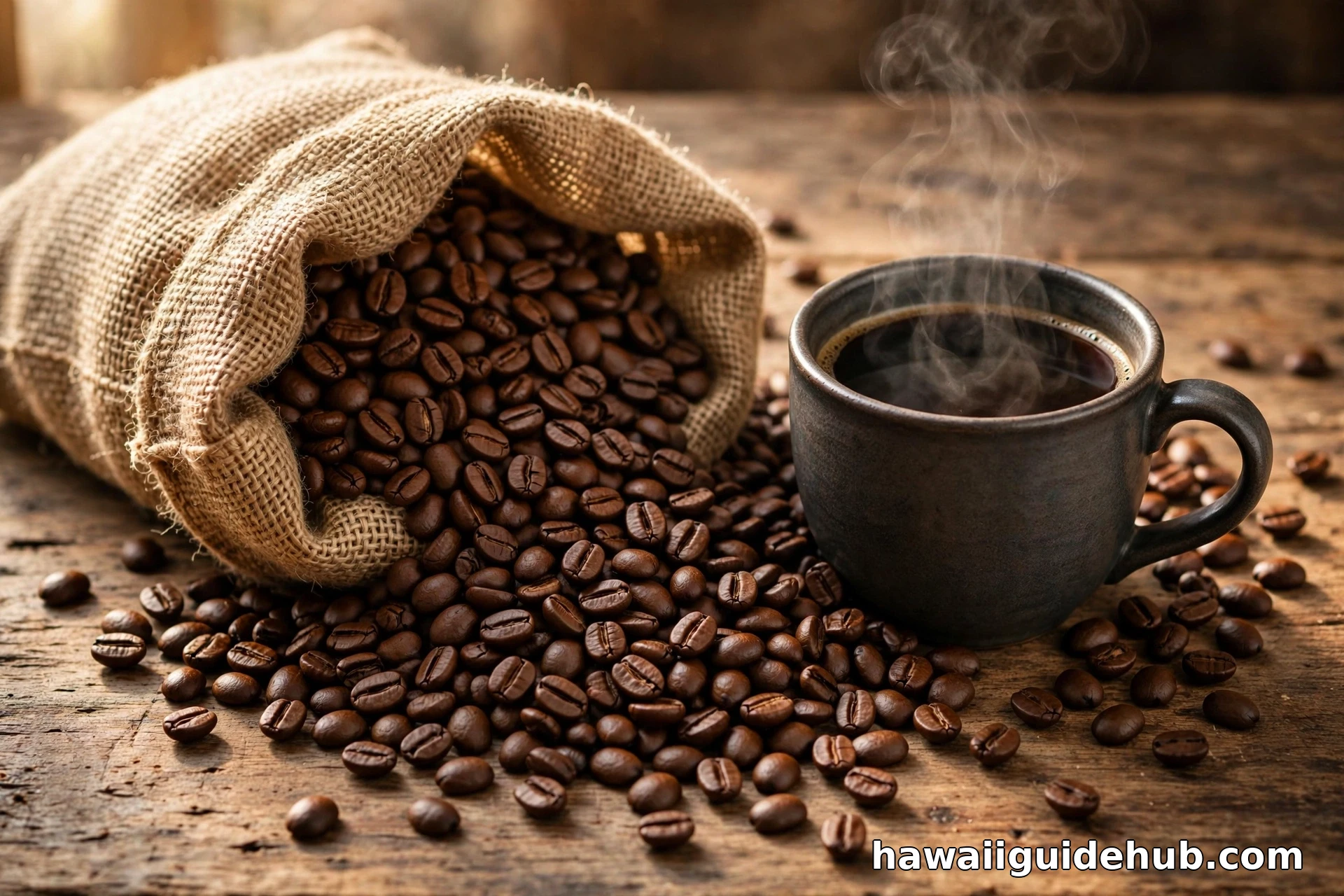
Brewing Hawaiian Coffee at Home
Hawaiian coffee’s smoothness rewards gentle brewing. A pour-over or drip preparation lets the low acidity and nutty notes show clearly. Use water just off the boil, a medium grind, and a ratio around one to two tablespoons per six ounces of water, adjusting to taste. Because the coffee is naturally mellow, it needs no dark roast to taste rich; medium roasts preserve the origin character best.
Store beans in an airtight container away from light and heat, and grind just before brewing. Hawaiian coffee’s delicate aromatics fade faster than its body, so freshness matters more than with bolder coffees. Brewed carefully, a cup of real Kona is a quiet luxury: smooth, sweet, and unmistakably of its place.
The Kona Coffee Cultural Festival
Each November, Kona celebrates its harvest with the Kona Coffee Cultural Festival, a multi-day event that has run for over fifty years. Farm tours, cupping competitions, art, music, and food fill the schedule, and the festival’s coffee competition crowns the year’s best Kona brews. For coffee lovers, timing a Big Island trip around the festival is the deepest possible immersion in Hawaii’s coffee culture. Even outside festival dates, many participating farms welcome visitors year round.
Video: Inside a Kona Coffee Farm
Tour Greenwell Farms on the Kona coast: the trees, the processing, the tasting, and the stories behind the beans.
Frequently Asked Questions
Is Hawaii the only state that grows coffee?
Yes. Hawaii is the only US state with the tropical highland climate coffee needs for commercial production. Coffee is also grown in Puerto Rico, which is a US territory rather than a state.
What is the difference between Kona coffee and a Kona blend?
Authentic Kona coffee is labeled “100% Kona Coffee” and contains only beans grown in the Kona district. A “Kona blend” can legally contain as little as 10% Kona coffee mixed with cheaper imported beans. From July 1, 2027, regional-name coffees must contain at least 51% Hawaii-grown beans.
Why is Kona coffee so expensive?
It is hand-picked on small family farms on steep volcanic slopes, where labor costs are high and yields are limited. The combination of small scale, hand labor, and global demand sets the price.
When is coffee harvest season in Hawaii?
In Kona, harvest typically runs from around August through January, peaking in the fall. Timing varies by region, elevation, and weather in a given year.
What does Kona coffee taste like?
Smooth and mellow, with low acidity, a medium body, and notes of nuts, chocolate, and sometimes fruit or florals, depending on the farm and roast.
Where can you tour a coffee farm in Hawaii?
Kona on the Big Island has the most farms offering tours, many of them small and family-run. Kauai Coffee has a large visitor center with tastings. Smaller tours exist on Maui, Oahu, and Molokai.
What is Kona peaberry coffee?
Peaberry is a natural mutation where a coffee cherry produces a single round bean instead of the usual two flat beans. It happens in a small percentage of any harvest. Roasters prize peaberry for its concentrated flavor and even roast, and 100% Kona peaberry commands some of the highest prices in Hawaiian coffee. If you see it on a farm tour tasting menu, try it.
Hawaiian coffee is a small miracle of geography: the only coffee America grows, raised on volcanic slopes by farmers who pick every cherry by hand. Drink it at the farm, read the label at the store, and bring home the real thing. Your mornings will thank you for years to come.