
Understanding Humpback Whale Behaviour: What to Expect During Your Hawaii Adventure

Every year, the warm, protected waters of Hawaii become the setting for one of nature’s most amazing shows. Thousands of humpback whales travel from Alaska’s cold feeding grounds to the Hawaiian Islands to mate, give birth, and care for their young. Seeing these gentle giants is an experience you’ll never forget. Knowing how they act in complicated ways can make your whale watching trip even more special.
This guide will take you on a journey through the interesting world of how humpback whales act. You’ll find out what their acrobatic breaches mean, why they sing haunting songs, and how they talk to and interact with each other in different ways. By the end, you’ll not only be able to tell the difference between different whale behaviors, but you’ll also be able to appreciate how social these amazing marine mammals are. Get ready to learn more and have a Hawaiian whale encounter that you’ll remember for the rest of your life.
The Great Migration: A Long Trip to Paradise
An amazing journey starts the story of Hawaii’s humpback whales. These whales go on one of the longest migrations of any mammal on Earth every fall. They travel about 3,000 miles from the North Pacific’s nutrient-rich waters, mostly Alaska, to the Hawaiian Islands. They don’t eat during the six to eight weeks it takes to make this trip.
Why go on such a hard trip? The answer is the warm, calm waters around Hawaii that don’t have many predators. These conditions are ideal for giving birth to and nursing their newborn calves, which lack the thick layer of blubber needed to survive in the cold Alaskan seas. Hawaii is like a huge, natural nursery for the North Pacific humpback whale population. They usually come in November and stay until April or May, which is the best time to see whales.
Decoding Humpback Behaviors: What You Might See
On your whale watching tour, you’ll probably see a lot of amazing things. Every action, from the smallest splash to the biggest leap, is a way of talking or has a specific goal. These are some of the most common things humpback whales do and what they mean.
The Breach: A Spectacular Leap
The breach is probably the most popular thing to see when whale watching. This is when a humpback whale pushes its huge body, which can weigh up to 40 tons, almost completely out of the water before falling back down with a huge splash.
Why do whales breach?
There are a few different ideas that scientists have about what this strong behavior means:
- Talking: A breach makes a loud noise that can be heard for miles above and below the water’s surface. This could be a way for whales to let other whales know they are there, tell them where they are, or show who is in charge.
- Play or Fun: Humpbacks might breach just for fun, like a lot of other smart animals. Calves breach more often than adults, which could mean that they are doing it to have fun and build their muscles.
- Getting rid of parasites: The forceful impact of landing could help dislodge barnacles and whale lice that attach to their skin.
- Take a good look around: Whales may be able to see better above the water when they jump into the air.
Humpback whales can breach at different times. On some days, you might see several breaches in a short period, while on others, you might not see any. It often depends on how the whales in the area get along with each other.
The Tail Slap (Lobtailing)
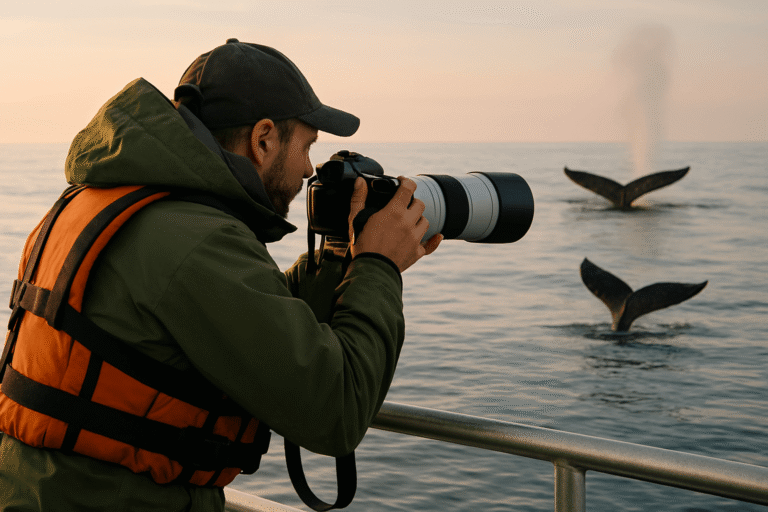
Lobtailing is when a whale lifts its powerful tail, or flukes, out of the water and slaps it forcefully against the surface. This makes a loud, sharp noise that can be heard from a long way away underwater. People think that tail slapping is a way for whales to talk to each other, just like breaching. It can be a warning to other whales or boats to stay away, a way to show aggression, or a way to scare fish into a tight ball so they can be fed more easily (though humpbacks don’t feed in Hawaii).
The Slap of the Pectoral Fin
The pectoral fins (side fins) of humpback whales are the longest of any animal, reaching up to 15 feet in length. They will often lie on their side or back and repeatedly slap one or both of these massive fins on the water’s surface. Some people call this behavior a “pec slap,” and it makes a unique sound. It is thought to be another way for whales to communicate without speaking, and it is used to get the attention of other whales.
The Spyhop: A Strange Look
Have you ever thought about whether a whale is as interested in you as you are in it? The spyhop makes it seem like they are. During a spyhop, a whale positions itself vertically in the water and slowly rises, exposing its head and eyes above the surface. People think they do this so they can see better what’s going on above the water, like boats and people. It’s a calm, controlled movement that is truly magical to see
The Head Lunge
When a whale does a head lunge, it throws the front part of its body forward and out of the water, usually with its mouth open. This is typically seen in competitive groups of males vying for the attention of a female. It’s a display of strength and dominance, meant to intimidate rivals. .
The Peduncle Throw
This is another powerful and aggressive display where a whale throws the back part of its body, from the dorsal fin to the tail (the peduncle), out of the water in a sideways motion. The peduncle throw, like the head lunge, is something that happens a lot when males are competing with each other.

Humpback Social Life: Mating and Giving Birth
Humpbacks’ complicated social rituals, especially those related to mating, mostly happen in the waters around Hawaii..
Groups that compete
A “competitive group” or “heat run” is common during the breeding season. This means that a group of males is chasing after one female. These groups can move quickly and be very chaotic. For example, men might do head lunges and peduncle throws to try to get the best spot next to the woman. The male leading this charge is known as the “primary escort.”
The Song of the Humpback
One of the most enchanting aspects of humpback whale behavior is their song. Only the males sing, and their songs can last for more than 20 minutes and be repeated for hours. They are long, complicated, and haunting. Scientists think these songs have something to do with mating, either to get females’ attention or to show other males who’s boss.
The songs have a structure, with themes and phrases that repeat, and they change over time. All males in a given population sing the same song, but the song changes from one breeding season to the next. You might even be able to hear their songs through a hydrophone, which is a microphone that works underwater, on your whale watching trip!
A Mother’s Love: Baby Cows in Hawaii
After being pregnant for about 11 months, female humpbacks give birth to one calf. Newborn calves are about 10-15 feet long and weigh around one ton. They need their mothers’ milk, which is very high in fat (about 40–60%), to help them grow quickly and build up a thick layer of blubber. A mother and calf swimming close together is a common sight, with the mother guiding her young to safety. A third whale, a male “escort,” may sometimes join the pair. This is probably to protect them from predators or other males who want to mate with the female.

Common Questions About How Whales Act
Why do whales go to the beach?
This is a sad and complicated question. It’s important to know the difference between humpback whales in Hawaii and other types of whales, because the reasons can be different. Humpback whales rarely beach themselves. When whales beach themselves, it’s usually toothed whales like pilot whales or dolphins.
Some things that could cause whales to strand are:
- Illness or Injury: Sick or hurt whales may get lost and wash up on shore.
- Navigational Errors: Whales may get lost because they don’t know how to navigate complicated coastlines or because of Earth’s magnetic fields.
- Loud Underwater Noises: Some scientists think that loud noises made by people, like military sonar, can make it hard for whales to find their way, making them swim into shallow water.
- Social Cohesion: If a dominant member of a highly social species leaves, the rest of the group may follow
You probably won’t see this kind of behavior on a whale watching tour because tour companies and the government work hard to keep both whales and people safe.
Do whales breach just for fun?
It’s hard to say for sure what a whale’s intentions are, but many experts think that some breaches, especially those done by calves, are a form of play. Playing is something that smart mammals do a lot of, and it helps young animals learn how to do things and get better at them. So, when you see a whale leaping through the air, it might just be having a good time.
Your Whale Watching Adventure Awaits
Understanding the “what” and “why” behind humpback whale behavior transforms a whale watching trip from a simple sightseeing excursion into a profound connection with the natural world. Each splash and spout tells a story about the life, struggles, and triumphs of these gentle giants.
Are you ready to see these amazing behaviors for yourself? We at Hawaii Guide Hub are experts at making whale watching trips that you’ll never forget. Our guides are very knowledgeable about marine life and are great at finding the best places to see humpbacks in their natural habitat. We put responsible and respectful wildlife viewing first so that these amazing animals can be safe for future generations.
Make a reservation with us today and get ready to be amazed by the amazing world of humpback whales..
Book your adventure with us today and prepare to be amazed by the spectacular world of humpback whales.