
The Influence of Native Hawaiian Spirituality on Modern Practices

beautiful beaches and stunning natural scenery. But there is a deep, complex, and vibrant culture beneath this surface, shaped in a big way by ancient spiritual beliefs that still have an effect on modern life. The spirit of aloha is based on a spiritual worldview that values respect, connection, and balance among all living things. It is much more than just a greeting.
This post looks at the rich tapestry of Native Hawaiian spirituality and how its core beliefs have stayed the same over the years. We will talk about how traditional beliefs are not just things from the past, but things that people do every day that affect everything from how people in Hawaii interact with each other and protect the environment to their own sense of identity. Learning about these traditions will help you appreciate the islands and the wisdom of the people who lived there first.
The Foundations of Native Hawaiian Spirituality
To comprehend contemporary Hawaiian existence, it is essential to first understand the principles of its traditional belief system. Native Hawaiian spirituality is based on a deep, two-way relationship between people (kānaka), nature (ʻāina), and the divine (akua). It is both animistic and polytheistic. This way of looking at the world isn’t separate from life; it’s part of the fabric of life itself.
The Divine Realm of Akua and ʻAumākua
There are hundreds of gods and goddesses (akua) in the traditional Hawaiian pantheon. Each one is in charge of a different part of the natural world and human life. The four main gods are some of the most important:
- Kū: The god of war, politics, and things that men do.
- Lono is the god of farming, fertility, peace, and music.
- Kāne is the god of life, creation, sunlight, and fresh water.
- Known as the god of the ocean and the underworld, Kanaloa is often associated with Kāne.
In addition to these important gods, Hawaiian spirituality includes the idea of ʻaumākua, which are ancestral spirits that protect families. These spirits often manifest as animals like sharks (manō), owls (pueo), or sea turtles (honu). In return for honoring their ʻaumākua, families would get protection, advice, and even warnings from these spirits. Believing in ʻaumākua strengthens the sacred link between generations past, present, and future, which is an important part of Hawaiian culture and history.

Mana: The Power of the Spirit
Mana is a spiritual energy or life force that flows through everything in the universe. It is very important to Native Hawaiian religion. Mana can be found in people, places, and objects. People could gain or lose mana based on their actions, family history, and how well they followed kapu. People thought that high-ranking chiefs (aliʻi) had a lot of mana, which gave them the power to lead. Heiau (temples) were sacred places where mana was concentrated and important rituals were held. This spiritual power was not just an abstract idea; it was a tangible force that dictated social order and personal conduct.
A Sacred Law: The Kapu System
The kapu system was a complicated set of religious rules and restrictions that controlled every part of daily life. It told people what they could eat, where they could go, and how they should talk to each other. It was kapu for men and women to eat together, and some foods were only for chiefs or certain genders. While the kapu system was officially abolished in 1819, its underlying principles of respect (hoʻihi) and proper conduct continue to influence social etiquette and cultural practices in Hawaii. The idea of keeping things in balance and showing respect for holy places is still a strong value.
Do people still follow Hawaiian religion today?
People often ask if the Native Hawaiian religion is still practiced. The answer is a resounding yes, though its form has evolved. Christian missionaries came to the area in the 1820s, which led to many people converting and stopping their traditional practices. However, the core beliefs never went away. There is a strong cultural renaissance going on right now that has brought many of these old traditions back to life.
Christianity is still the most important religion in Hawaii, along with Buddhism and a mix of traditional beliefs. However, many Native Hawaiians practice a syncretic faith that combines Christian teachings with traditional spiritual values. Others have completely gone back to their ancestors’ ways, taking part in ceremonies at rebuilt heiau and paying respect to the akua and ʻaumākua. A small number of people only follow the Native Hawaiian religion, but it has a huge impact on the culture as a whole.
The New Life of Old Ways
The Hawaiian Renaissance, which started in the 1970s, made people more interested in all parts of Native Hawaiian culture and beliefs. This movement has been very important for keeping spiritual practices alive that were about to die out.
Hula: More Than Just a Dance
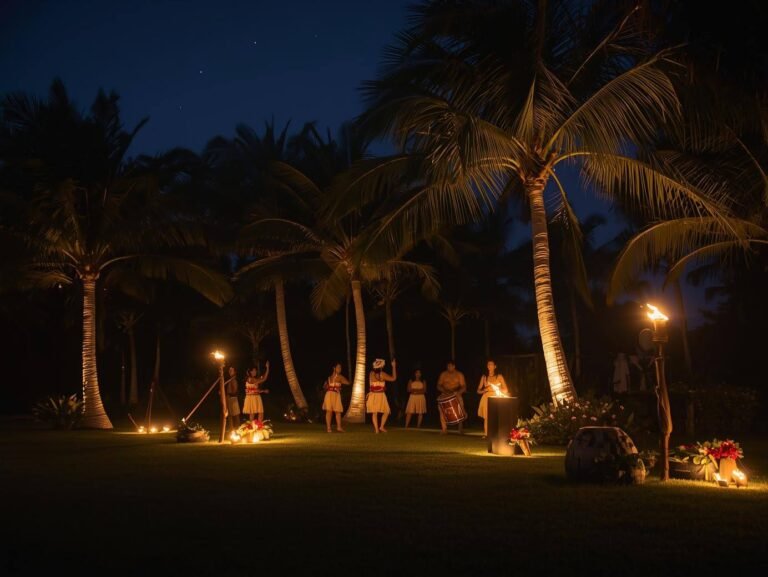
Hula is perhaps the most visible expression of Hawaiian spirituality. Far from being mere entertainment, traditional hula (hula kahiko) is a sacred art form that tells stories of creation, mythology, and history. Every movement, chant (oli), and piece of adornment has a deep spiritual meaning. A master teacher (kumu hula) teaches hula schools, or hālau hula, and passes down knowledge from one generation to the next. Hula is a way for practitioners to worship, connect with the gods and ancestors, and show off their cultural identity.
Lāʻau Lapaʻau: The Return of Traditional Healing
Lāʻau lapaʻau is the traditional Hawaiian way of healing that uses native plants and spiritual rituals. Families of healers (kahuna lāʻau lapaʻau) have passed down this knowledge for hundreds of years. After being suppressed for decades, it is now experiencing a significant revival.
Modern doctors are trying to combine these old healing methods with modern medicine. They emphasize a holistic approach to health, treating the mind, body, and spirit as an interconnected whole. This practice is rooted in the belief that true wellness comes from living in balance (pono) with oneself, the community, and the natural world. The renewed interest in lāʻau lapaʻau reflects a growing desire for more natural and culturally-grounded approaches to healthcare.
The Mālama Honua Movement and Wayfinding
Polynesians of old were expert navigators who crossed the huge Pacific Ocean using only the stars, winds, and ocean currents. The Polynesian Voyaging Society and the famous canoe Hōkūleʻa brought back this wayfinding practice that was almost lost.
The Hōkūleʻa’s journey around the world, called Mālama Honua (“to care for our Island Earth”), was a deep spiritual and cultural experience. It demonstrated the incredible knowledge of the ancestors and spread a message of global sustainability rooted in Hawaiian values. The success of Mālama Honua has inspired a new generation to learn how to find their way, which they see as a way to deal with the problems of the modern world with wisdom and foresight.

Aloha ʻĀina: Taking care of the environment as a spiritual duty
One of the most powerful ways Native Hawaiian culture and traditions influence modern life is through the concept of aloha ʻāina—love and care for the land. Hawaiians don’t see the land as something to own or use for profit; they see it as an ancestor. The Kumulipo, a chant about creation, tells the story of how the taro plant (kalo), which is the main food of the Hawaiian people, grew from the first-born son of the sky father and earth mother. The second son made people, so the land is like our older brother.
Because of this family connection, it is a sacred duty to take care of the land as if it were a family member. Today, this principle is the driving force behind many environmental movements in Hawaii.
- Keeping Mauna Kea safe: The ongoing efforts to keep the Thirty Meter Telescope from being built on Mauna Kea are based on deep spiritual beliefs. A lot of Native Hawaiians see the mountain as a sacred piko (navel) that connects the land to the heavens and is where the gods live. The people who protect Mauna Kea are not just fighting a construction project; they are also doing their spiritual duty to protect a sacred ancestor.
- Bringing Back Traditional Farming: Community groups all over the islands are working to bring back old loʻi kalo (taro patches) and loko iʻa (traditional fishponds). These projects are about more than just making sure there is enough food; they are also about reconnecting with the land, bringing back cultural traditions, and making communities stronger.
- Advocacy for Water Rights: The Hawaiian belief that fresh water (wai) is the physical form of the god Kāne has led to legal and social fights over water rights. The phrase “waiwai,” meaning wealth, literally translates to “water-water,” signifying that access to abundant, clean water is the ultimate measure of prosperity.
Making a plan to understand
Hawaii’s spiritual traditions give us a strong model for living in a way that is more connected and lasts longer. They remind us that we are part of a bigger ecosystem and that it is our sacred duty to take care of the world around us. These ideas are not things of the past; they are still very much alive in Hawaii today, shaping who it is and where it is going.
If you’re a visitor to the islands or a resident looking to connect more deeply with this place, learning about Native Hawaiian culture and history will make your experience so much better. If you’re ready to explore the sacred landscapes and vibrant culture of Hawaii in a respectful and authentic way, let Hawaii Guide Hub help you plan your journey. We specialize in making experiences that honor the islands’ traditions and help you connect with the true spirit of aloha.