The Environmental Impact of Dolphin Swimming Tours in Oahu: Balancing Adventure and Conservation

Dolphins live in Oahu’s turquoise waters. They are some of the smartest and most interesting animals on Earth. For a lot of people who come here, getting to see these animals up close is a dream come true. A dolphin swim tour in Oahu often tops the list of must do activities. But while we look for these unforgettable experiences, we need to think about our impact on the environment. How can we make sure that dolphins in Oahu are safe for future generations while still enjoying their magic?
This guide looks at how dolphin tours affect the environment and gives you tips on how to make smart choices. You’ll find out what makes a tour ethical, how the different dolphin programs are different, and how your choices can help protect the ocean. By understanding the bigger picture, you can create a travel memory that is both thrilling and respectful, contributing positively to the beautiful ecosystem of Hawaii.
The Appeal of Dolphins in Oahu
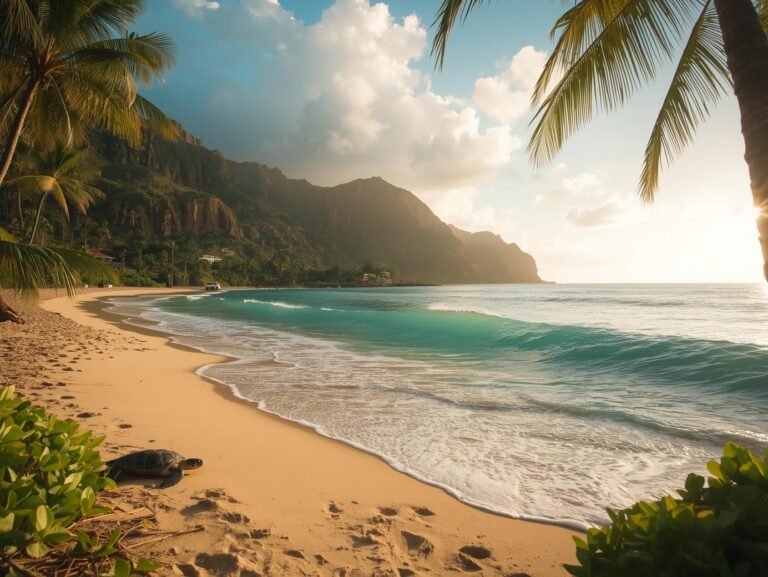
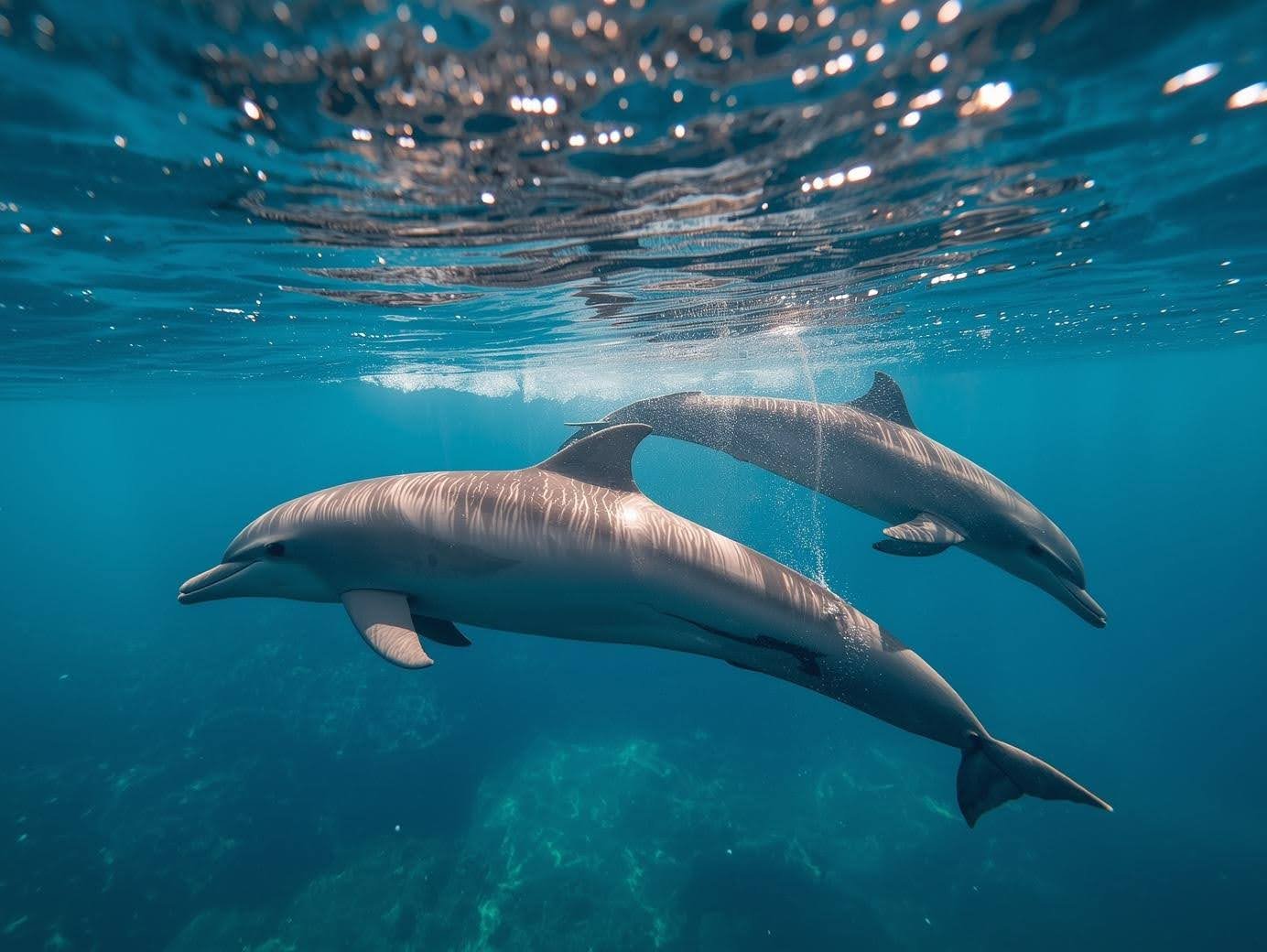
Oahu is a unique habitat for several dolphin species, most notably the playful spinner dolphins. These animals are known for their acrobatic jumps and spins, which they do a lot while they rest and hang out in shallow, sandy-bottomed bays during the day. Because of this predictable behaviour, they are a popular tourist attraction, especially for things like swimming with dolphins in Waikiki and other coastal areas.
It’s normal to want to connect with these wild animals. Dolphins are very social, smart, and playful, which makes them interesting to us. But this popularity has led to a lot of tour companies, and not all of them care about the animals’ well-being. The problem is how to deal with people’s need for social interaction without interfering with the dolphins’ natural life cycles.
Getting to Know the Dolphin’s Daily Life
To understand why responsible tourism is important, you need to know what the spinner dolphins, Oahu’s most famous animals, do every day.
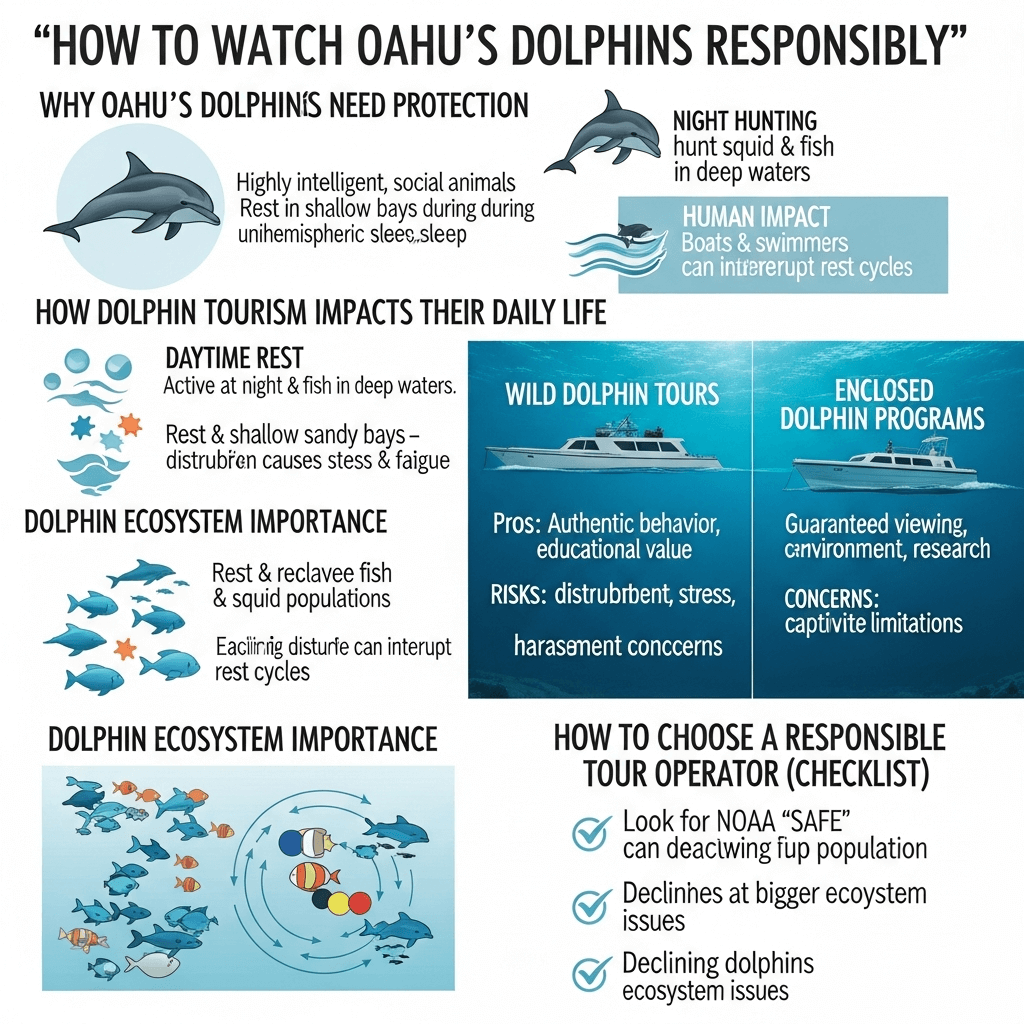
- Hunters at Night: Spinner dolphins go deep into the ocean at night to hunt for fish, squid and prawns. This is when they are most active and spend a lot of energy looking for food.
- Resting during the day: They go back to sheltered, shallow bays during the day to rest, hang out with other dolphins, and take care of their young. Dolphins don’t sleep like people do. Instead, they practise unihemispheric sleep, which means that one half of their brain stays awake to watch for predators and control breathing. This makes them very easy to disturb.
When tour boats and swimmers keep getting too close to dolphins that are resting, it messes up this important time for them to heal. Being on the lookout for people all the time and avoiding them can cause stress, tiredness, and lower hunting success at night. This is a primary concern for marine biologists and conservationists and a key dolphin impact from unregulated tourism..
The Two Sides of Dolphin Tourism: Wild vs. Enclosed Encounters
When looking for a dolphin swim on Oahu, you’ll find two main types of activities: tours that take you to see dolphins in their natural habitat in the open ocean and encounters in closed facilities, which are often called “the dolphin program.” Each has its own moral issues and effects.
Wild Dolphin Tours in Oahu
These tours take you out on the water in search of groups of wild dolphins. What happens during the experience is completely up to the dolphins and how they act.
Possible Benefits:
- Authenticity: Seeing dolphins in the wild is the best way to see how they really act.
- Educational Value: Good guides take this chance to teach guests about dolphin biology, behaviour, and the threats to their conservation.
Possible Drawbacks and Effects on Dolphins:
- Interference: The main danger is that dolphins will be disturbed while they are resting. Boats that get too close, make too much noise, or tell people to swim can cause a lot of stress.
- Harassment: Chasing dolphins or rounding them up to get a better look is against the law under the Marine Mammal Protection Act.
- Safety Risks: The open ocean is a dangerous place for both people and animals..
Dolphin Programs in Enclosed Spaces
Guests can interact with dolphins in a controlled setting, like a lagoon or big pool, through these programs. The dolphins in these places were either born there or were rescued and are not able to be released back into the wild.
Possible Benefits:
- Guaranteed Interaction: These programs offer predictable, close-up encounters, which is a major draw for many visitors.
- Research & Education: Some facilities help with scientific research on dolphin health, intelligence, and behaviour. They can also give organised educational talks.
Possible Problems and Effects on Dolphins:
- Concerns about ethics: There is a lot of ethical debate about the practice of keeping very smart, diverse animals in captivity. Critics argue that enclosures cannot meet the complex physical and social needs of dolphins.
- Source of Animals: The history of capturing wild dolphins for public display has caused significant controversy. While many facilities now rely on captive breeding, the ethical questions remain.
- Commercialization: These programs are businesses, and making money may sometimes come before the well-being of the animals.
Ultimately, the choice between these experiences is a personal one. However, if you opt for a wild dolphin tour, choosing a responsible operator is paramount.
The Ecological Ripple Effect: How the Death of Dolphins Affects the Ecosystem
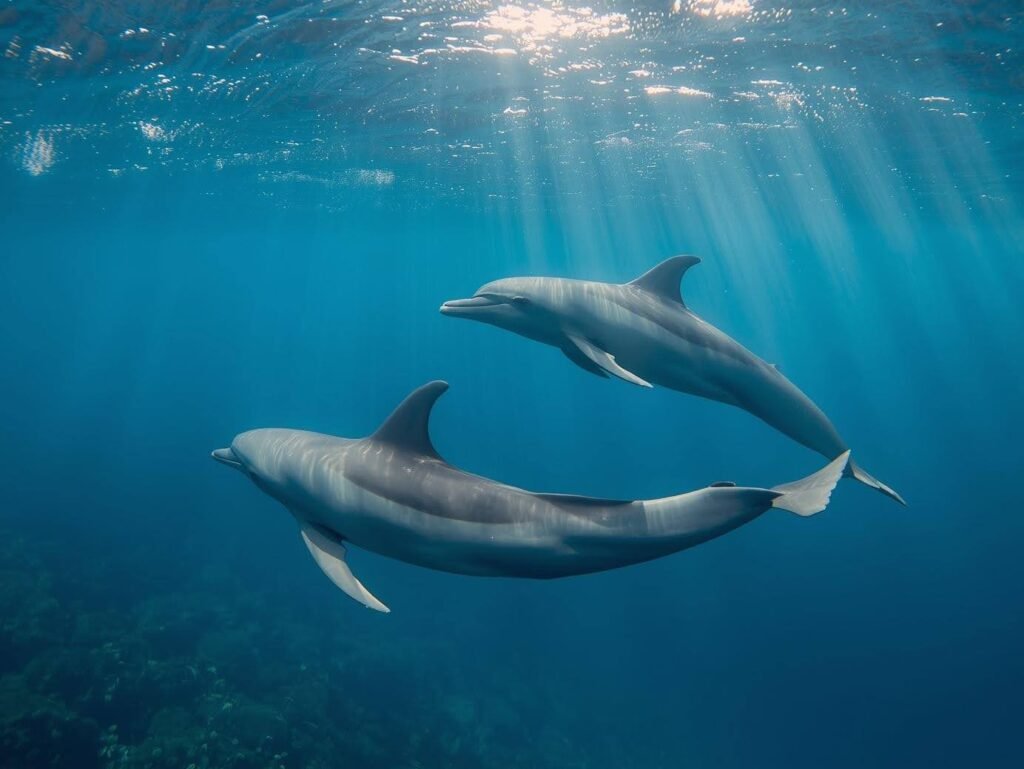
Even though spinner dolphins in Hawaii are not in danger of going extinct right now, understanding how dolphin extinction affects an ecosystem shows why it is so important to protect them. Dolphins are top or near top predators, and they are very important for keeping the marine environment healthy and in balance.
They help keep the number of fish and squid down by eating them. If dolphins died out, these species would become too many, which could kill off smaller organisms and mess up the whole food web. This chain reaction can make an ecosystem less strong and less diverse.
Also, dolphins are thought to be “indicator species.” The health and number of fish in the ocean give us a good idea of how healthy the ocean is as a whole. When dolphin populations go down, it usually means that there are bigger environmental problems, like pollution, overfishing, or habitat loss. To protect dolphins, you have to protect the whole ocean ecosystem they live in.
How to Pick an Oahu Dolphin Swim Tour That Is Safe
The tour operator you choose will have a direct effect on dolphins. Supporting businesses that put conservation first helps protect these animals and encourages a tourism model that lasts. Here’s a checklist to help you make an informed decision:
1. Check for “SAFE” Certification
The National Oceanic and Atmospheric Administration (NOAA) and the Dolphin SMART program created the “SAFE” (Sustainable and Friendly Encounters) program to honour tour operators who are dedicated to responsible wildlife viewing. These businesses choose to follow rules that are stricter than what is required to lessen their impact. One of the most important things to do
- stay at least 50 yards away from spinner dolphins.
- Limiting viewing time.
- Not circling, chasing, or trapping the animals.
- Not suggesting that people swim with wild dolphins.
2. Put education first
A great tour isn’t just a boat ride. Choose an operator whose guides are knowledgeable marine naturalists. They should take the time to teach you about dolphin biology and behaviour.
- The dolphins’ sleep cycle is very important.
- The laws that protect marine mammals.
- Hawaii’s larger marine ecosystem.
- A tour that focusses on learning shows a stronger commitment to
conservation than one that just gives you a quick thrill.
3. Ask the Right Questions
Don’t be afraid to call the company and ask them specific questions
- before you book. For example, “What is your policy on getting close to dolphins?”
- “Is it possible to swim with wild dolphins or do you encourage people to do so?” No, according to federal rules, is the right answer.
- “Do your guides know about marine biology or conservation?”
- “Do you participate in any conservation initiatives?”
The transparency and quality of their answers will tell you a lot about their ethics. If an operator is vague or dismissive about these issues, that’s a red flag.
4. Watch How They Act on the Water
If you’re already on a tour, pay attention to what the captain does. An operator who is responsible will:
- When you see dolphins, slow down a lot.
- Never go straight at the pod; always go to the side.
- If the animals swim away, don’t chase them.
- Instead of getting as close as possible, use the time to teach the passengers.
If you see a tour operator bothering marine life, you can call the NOAA Fisheries Enforcement Hotline.
What Will Happen to Dolphin Encounters in Hawaii in the Future
Laws are changing to better protect Hawaii’s dolphins. NOAA put a rule in place in 2021 that says you can’t swim with or get within 50 yards of Hawaiian spinner dolphins. This rule is very important for letting these animals get the rest they need and keeping people from bothering them.
Tourism that is responsible is a partnership. Visitors help protect Oahu’s marine life by supporting businesses that follow these rules and promote conservation. Your travel choices send a powerful message to the industry: ethical and sustainable practices are not just good for the dolphins—they’re good for business..
Your adventure is waiting for you.
Seeing dolphins in Oahu can be one of the best things about your trip to Hawaii. You can help protect these amazing animals by carefully choosing your tour.
At Hawaii Guide Hub, we are committed to connecting travelers with experiences that are both breathtaking and responsible. We work with tour companies that care about protecting the ocean and seeing animals in a way that is good for them. We can help you plan a dolphin encounter that you’ll always remember and feel good about. Book with us to see the dolphins in Oahu the right way.