Lānaʻi for Seniors: The Complete Guide

Lānaʻi may be Hawaii’s best island for travelers who have earned the right to slow down. There are no crowds to fight, no traffic to navigate, and no packed schedules to keep. Instead you get a calm bay with gentle swimming, a walkable plantation town, scenic drives through otherworldly landscapes, and some of the darkest night skies in the islands. For seniors, Lānaʻi is less a checklist of attractions and more a change of pace.
This is the single complete guide to Lānaʻi for seniors. It covers whether the island suits older travelers, health and medical basics, getting there, where to stay, the best low key activities, getting around, realistic costs, and answers to the questions senior visitors ask most. Everything about visiting Lānaʻi in your 60s, 70s, and beyond is right here on this one page.
Lānaʻi for Seniors at a Glance
| Factor | The detail | The senior-traveler note |
|---|---|---|
| Pace | Very slow; no traffic lights, no crowds, no nightlife | The appeal, not a drawback |
| Medical care | Lānaʻi Community Hospital (24 beds); bring all prescriptions | Bring all prescriptions; facilities are limited |
| Getting around | Rental Jeep, local shuttles, or hotel shuttles | You won’t need a car every day |
| Calmest beach | Hulopoʻe Bay, with gentle entry and shade trees | The easy-access swim spot |
| Getting there | Expeditions ferry from Māʻalaea, Maui, or flights to Lānaʻi Airport | Two easy ways in |
| Ideal trip length | Three to five relaxed days | Long enough to unwind |
| Island size | About 140 square miles, the sixth largest Hawaiian Island | Small enough to truly unwind |
| Population | About 3,367 residents (2020 census) | You’ll learn names quickly |
Is Lānaʻi Good for Seniors
For many older travelers, Lānaʻi is close to ideal. The island removes the stresses that make big island vacations tiring: no freeways, no parking battles, no jostling crowds at viewpoints. Days here run on a simple rhythm of beach mornings, town lunches, scenic drives, and early nights under remarkable stars. If your idea of a good vacation is unhurried rather than action packed, Lānaʻi will suit you.
Be honest about the trade offs, though. Lānaʻi is remote, with one small hospital and limited medical specialists. The famous backcountry sights require bumpy dirt roads, and some trails run near cliff edges. Seniors with serious mobility limits or complex medical needs should weigh those realities and may prefer basing on Maui with Lānaʻi as a day trip. For reasonably mobile seniors, the island is a joy.
It also helps to know what Lānaʻi is not. There is no nightlife to speak of, restaurant choices are few, and you will not find the shopping districts, luaus, or large scale attractions of the bigger islands. Evenings are quiet, which most senior visitors count as a feature rather than a flaw. If you want every dinner to be a new restaurant and every day a new excursion, Oʻahu or Maui will serve you better. If you want to read on a beach, take a morning stroll through a plantation town, and be in bed by nine under a sky full of stars, you have found your island.
Health and Medical Basics
Lānaʻi Community Hospital in Lānaʻi City has 24 beds and handles emergencies, but anything specialized means a trip to Maui or Oʻahu. Bring every prescription plus extras, keep a list of your medications and conditions in your wallet, and consider travel insurance that covers medical evacuation. Pharmacies on the island are limited, so do not count on refilling anything locally.
Day to day, the main health concerns are sun, heat, and the ocean. The sun is strong even on cloudy days, so wear a hat, reapply sunscreen, and rest in the shade during midday. Drink more water than you think you need, especially on drives and walks. At Hulopoʻe Beach there is no lifeguard on duty, so swim only in calm conditions and within your abilities.
A few more precautions pay off. If you use a cane or walker, bring it; the island’s shops and restaurants are small and not always step free. Keep your phone charged and your hotel’s number saved, since you may need a ride on short notice. And pace your first day gently: many visitors underestimate how tiring travel day is, and Lānaʻi rewards those who arrive rested.
Getting to Lānaʻi
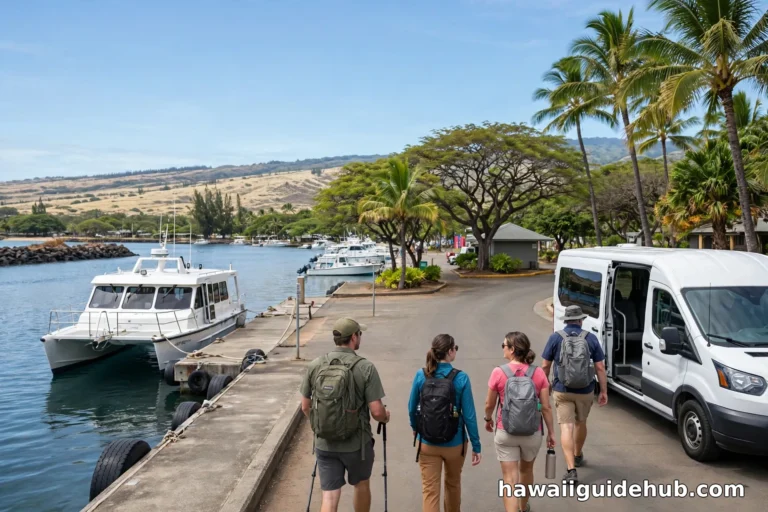
The Expeditions passenger ferry from Māʻalaea Harbor on Maui is the most scenic way to arrive. The crossing takes about 45 to 60 minutes across the ʻAuʻau Channel, with three daily departures each way: 6:30 a.m., 11 a.m., and 3:30 p.m. from Maui, returning at 8:30 a.m., 1 p.m., and 5:30 p.m. One way adult fares run about $62 to $66. Boarding involves stairs and a sometimes lively gangway, so if you have mobility concerns, arrive early and ask the crew for assistance; they help passengers every day. If you are prone to motion sickness, choose a morning sailing, when the channel is usually calmest, and take medication beforehand.
Flying is the easier option for many seniors. Short interisland flights serve Lānaʻi Airport (LNY) from Honolulu and Kahului, skipping the boat entirely. If this is your first trip to the islands, our guide on whether you need a passport to fly to Hawaii covers what to bring.

Where to Stay
Lānaʻi City is the most practical base for senior travelers. Its small hotel, bed and breakfasts, and vacation rentals sit within easy walking distance of restaurants, shops, and Dole Park, and the town’s cool highland air at about 1,644 feet makes for comfortable sleep. Vacation rentals with a kitchen are worth considering, since dining out for every meal adds up on an island with few restaurants. Travelers who want to wake up to the ocean choose lodging near Mānele Bay, close to Hulopoʻe Beach, and accept a quieter setting with fewer dining options.
When booking, ask about stairs, walk in showers, and ground floor rooms if mobility is a concern; the island’s smaller properties vary widely, and photos do not always show every step. A quick phone call before booking answers more than any listing. Book well ahead for winter months, when demand peaks and the island fills with fellow snowbirds. For the best rates, look at spring and fall, as our guide to the cheapest time of year to visit Hawaii explains.
The Best Things to Do for Seniors on Lānaʻi
Relax at Hulopoʻe Bay
Hulopoʻe Bay is the island’s gift to travelers who want the beach without the effort. The entry is gentle, the water inside the marine conservation district is calm and clear, and the beach park offers shade trees, picnic tables, restrooms, and showers. Bring a chair, a book, and lunch, and let the day drift by. Go in the morning for the calmest water and the easiest parking.
Stroll Lānaʻi City and Dole Park
Lānaʻi City is made for slow wandering. The streets around Dole Park are flat and shaded, lined with historic plantation era cottages, small galleries, and shops. The Lānaʻi Culture and Heritage Center explains the island’s pineapple plantation past, and the town’s restaurants serve unhurried lunches. It is the rare Hawaiian town where a morning stroll still feels like the main event.

Visit the Lānaʻi Cat Sanctuary
The Lānaʻi Cat Sanctuary delights visitors of every age, and seniors are no exception. The 3.5 acre nonprofit shelters more than 700 rescued cats while protecting the island’s endangered native birds. Admission is free, donations are welcome, and it is open daily from 9 a.m. to 3 p.m. at 1 Kaupili Road. The grounds are easy walking, and morning visits catch the cats at their most sociable.
Take the Scenic Drives
You do not need to hike to see Lānaʻi’s wild side. A rented Jeep opens up the dirt roads to Keahiakawelo, the Garden of the Gods, where wind sculpted rock towers glow red and orange at dusk, and to Kaiolohia, or Shipwreck Beach, with its rusting World War II era tanker on the reef and views across to Molokaʻi. Ride as a passenger if you prefer, bring water and snacks, and skip these roads after heavy rain, when the red dirt turns slick. The drives are bumpy, so travelers with back problems should weigh that honestly. An easier alternative is the paved road up to the island’s highlands, where Cook pine forests and island views come with no dirt at all.
Walk to the Puʻupehe Overlook
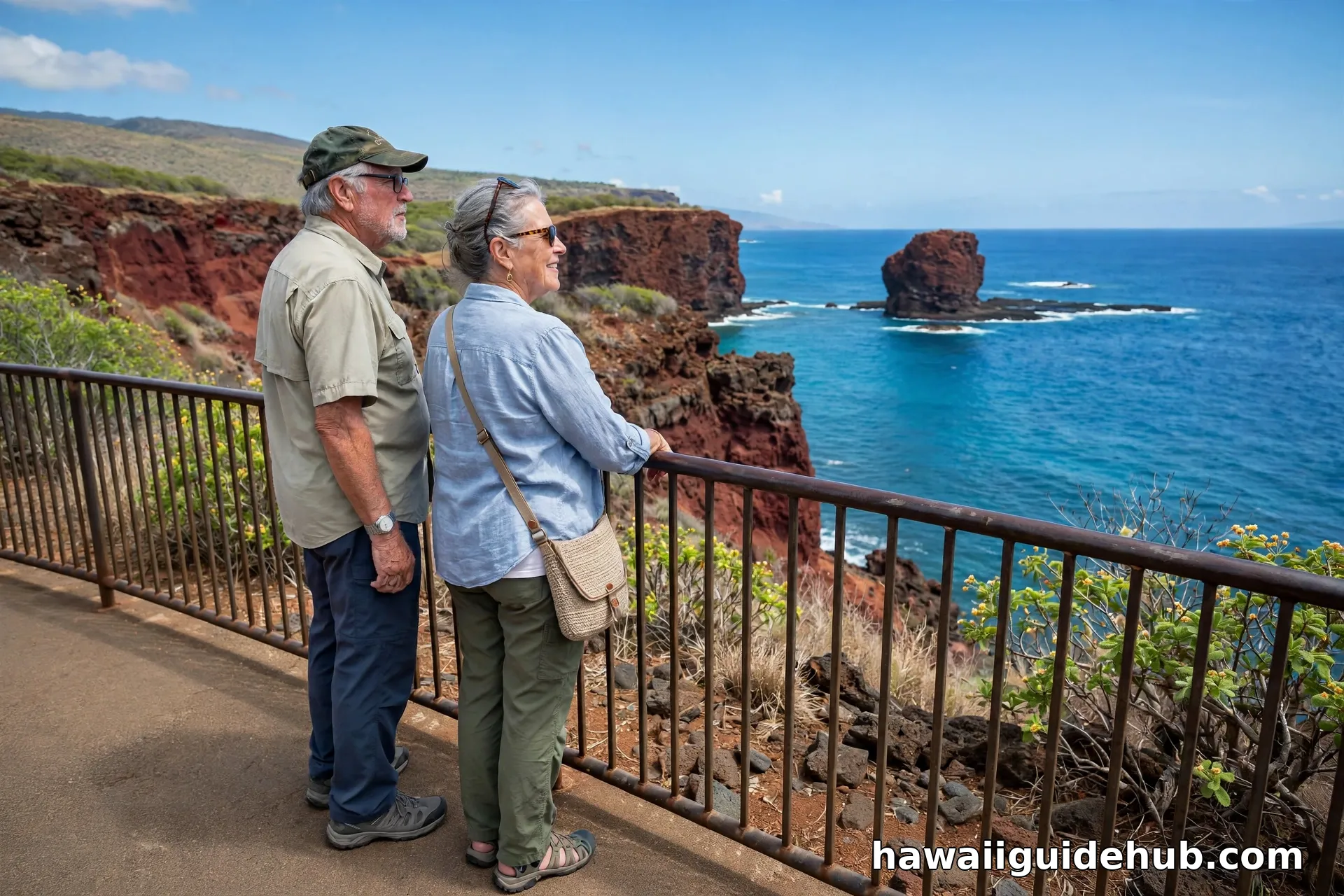
The short coastal trail from Hulopoʻe Beach to the Puʻupehe overlook is the island’s most rewarding easy walk. The sea stack known as Sweetheart Rock rises dramatically offshore, tied to a local legend your guide or a quick read can share. The path is short and scenic, though it runs near cliff edges in places, so wear sturdy shoes and keep a respectful distance from the edge.
Watch for Whales in Winter
From December through April, humpback whales fill the ʻAuʻau Channel, and Lānaʻi offers some of Hawaii’s easiest whale watching: often from the ferry itself, or from the shore at Hulopoʻe and the island’s south facing lookouts. No boat tour required. Our complete guide to humpback whale migration in Hawaii covers the season, and our Hawaii weather in December guide helps you plan a winter trip.
Getting Around Lānaʻi
A rental Jeep gives you the whole island, but it is not mandatory. Local shuttles and taxis connect Mānele Harbor, Lānaʻi City, and Hulopoʻe Beach, and many hotels run their own shuttles, which is enough for a beach and town focused trip. There are no rideshare apps on Lānaʻi, so arrange transportation before you arrive and save your driver’s number. If you rent, book the Jeep ahead and confirm the pickup point; some companies deliver to the harbor.
Practical Tips for Senior Travelers
Pace yourself across days rather than hours: one good outing a day with rest in between beats a packed schedule. Mornings are the sweet spot for activities, with calmer seas, cooler air, and softer light. Pack reef safe sunscreen, a hat, comfortable walking shoes with grip, and a light jacket; Lānaʻi City’s highland evenings can feel cool. Lānaʻi City’s stores cover the basics at island prices, so bring specialty items from home, and carry some cash alongside your cards.
Video: A Relaxed Look at Lānaʻi
Travel and Leisure’s tour of the Sensei Lānaʻi resort shows the island’s quiet luxury side, from the highlands to the coast.
Lānaʻi for Seniors FAQs
Is Lānaʻi senior friendly?
Yes, for reasonably mobile seniors. The island’s slow pace, low crowds, calm main beach, and flat walkable town suit older travelers well. The main caveats are the remote location with limited medical care and the bumpy dirt roads to the backcountry sights, which are optional.
How many days should seniors spend on Lānaʻi?
Three to five relaxed days is ideal: enough for the beach, the town, a scenic drive or two, and genuine rest. One day works as a ferry day trip from Maui but feels rushed. Longer stays suit travelers who simply want quiet.
Is the ferry to Lānaʻi hard for older travelers?
Most seniors manage fine. Boarding involves stairs and the gangway can move with the swell, so arrive early and ask the crew for a hand; they assist passengers daily. Choose a morning sailing for the calmest water and take motion sickness medication beforehand if you are sensitive.
Can you visit Lānaʻi with limited mobility?
Partially. Hulopoʻe Beach, Dole Park, the cat sanctuary, and scenic viewpoints are accessible without strenuous walking, and shuttles cover the main routes. The backcountry sights and ridge trails are not suitable for wheelchairs or anyone unsteady on their feet. Call your hotel ahead to discuss your specific needs.
Lānaʻi for seniors is proof that the best Hawaiian island is not always the busiest one. Come for the calm, stay for the quiet, and let the island’s gentle pace remind you what vacations are for.