
Kāʻanapali Beach is a three-mile ribbon of golden sand on Maui’s west coast, framed by the West Maui Mountains on one side and the open Pacific on the other. It anchors Hawaiʻi’s first planned resort destination and pairs wide, swimmable shoreline with a famous snorkeling point, a beloved beachwalk, and one of the island’s most photographed sunset rituals. This guide maps the beach from end to end so you know where to swim, snorkel, park, and watch the sun go down.
On This Page
Kāʻanapali Beach Overview
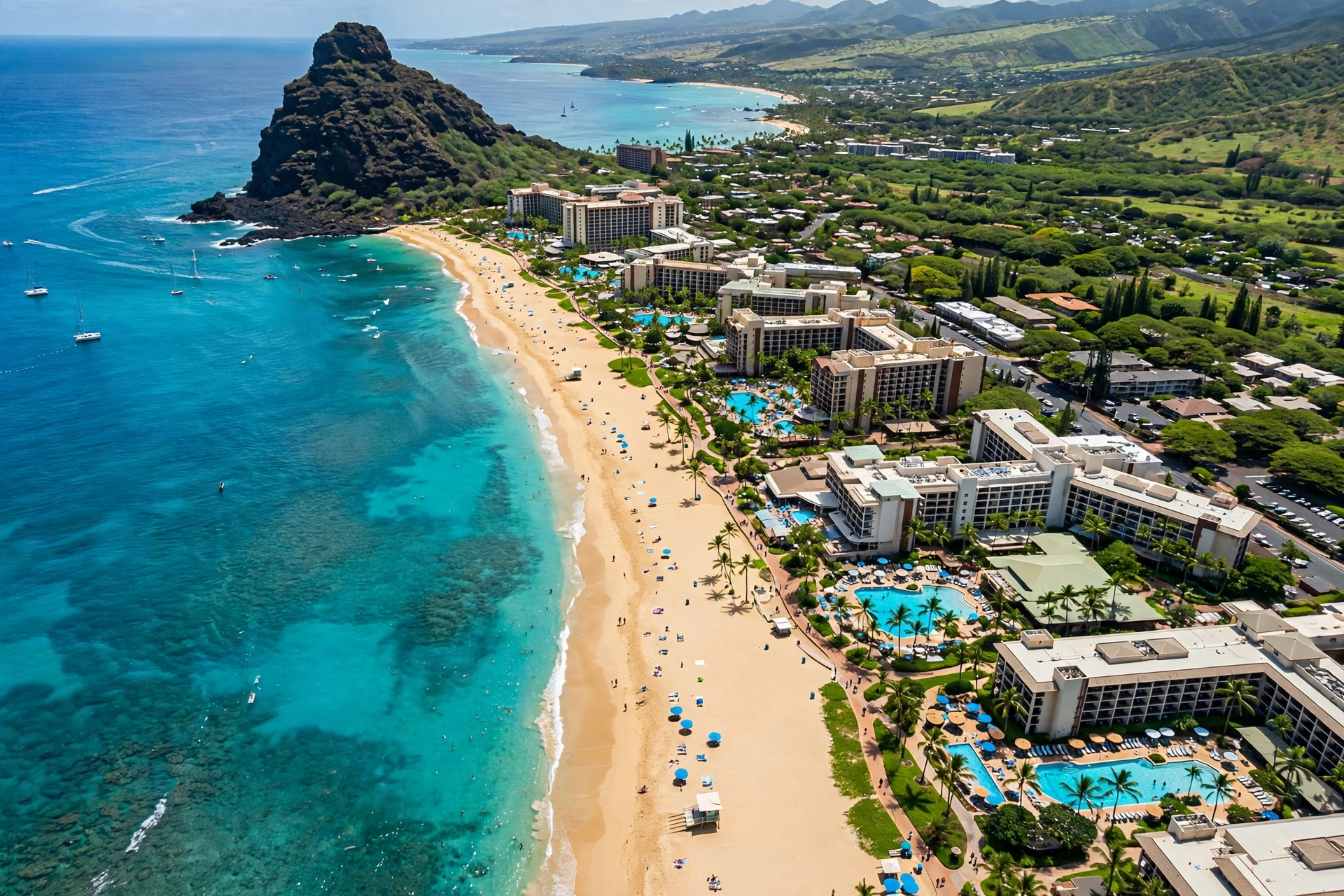
Kāʻanapali Beach runs along Maui’s west shore about three miles north of Lahaina, from Hanakaʻōʻō Point in the south to Puʻu Kekaʻa, known as Black Rock, in the north. The beach is roughly three miles long, with fine golden sand that slopes gently into water known for its clarity. Because it faces west and sits in the lee of the island, Kāʻanapali is typically calmer than Maui’s north-facing shores, and its sunsets are among the most celebrated in Hawaiʻi.
Kāʻanapali holds a place in Hawaiian tourism history as the state’s first master-planned resort destination, developed in the 1960s with hotels, golf courses, shops, and a beachwalk designed around the beach itself. In 2003, Kāʻanapali was named America’s Best Beach by Dr. Stephen Leatherman, the coastal scientist known as Dr. Beach, who rates beaches on fifty criteria including sand quality, water cleanliness, safety, and scenery. More recently, TripAdvisor’s 2023 Travelers’ Choice Awards ranked Kāʻanapali Beach first among beaches in the United States and tenth in the world.
The beach works well for a wide range of visitors. Families like the central sections for their gentle entry and lifeguard presence. Snorkelers head for the reefs at either end. Runners and walkers use the beachwalk that runs the length of the resort. Sunset watchers gather near Black Rock for the nightly cliff diving ceremony, a tradition that honors the legend of a Maui chief who leapt from the rock to prove his bravery. Knowing how the beach is laid out helps you pick the right section for your day.
One more thing shapes how visitors experience Kāʻanapali: it was designed from the start to put the beach at the center. When developers planned Hawaiʻi’s first resort destination here in the 1960s, the shoreline itself was treated as the main attraction, with hotels set back behind the sand and a public beachwalk linking everything together. That design choice is why Kāʻanapali still feels walkable and beach-centered decades later, unlike resort areas where buildings crowd the waterline. The result is a beach that serves resort guests and day visitors alike, with public access protected along the full length of the sand.
Map: Beach Layout South to North
Reading Kāʻanapali from south to north gives you a clear mental map of what each stretch offers.
The south end: Hanakaʻōʻō Point and Canoe Beach. The southern tip of Kāʻanapali Beach is known as Hanakaʻōʻō, or Canoe Beach, a reference to the outrigger canoes that launch from here. This is where the sandy stretch meets a rocky point. Hanakaʻōʻō Beach Park sits just inland and provides one of the easier public parking options for the south end of the beach.
The central beach. The long middle section, fronting the major hotels, is the widest and most consistently sandy part of Kāʻanapali. Entry into the water is gradual here, making it the most popular swimming area. The beachwalk runs directly behind this section, so food, restrooms, and shops are never far. Whalers Village sits near the middle of the beach, making this section convenient for combining beach time with lunch or shopping.
The north end: Black Rock (Puʻu Kekaʻa). The beach narrows toward its northern end and terminates at Puʻu Kekaʻa, a black lava-rock headland jutting into the sea. The point is named for its dark stone, a contrast to the golden sand on either side. The Sheraton Maui Resort and Spa sits beside Black Rock, and the famous cliff diving ceremony takes place from the rock at sunset. The reefs around Black Rock hold the beach’s best shore snorkeling.
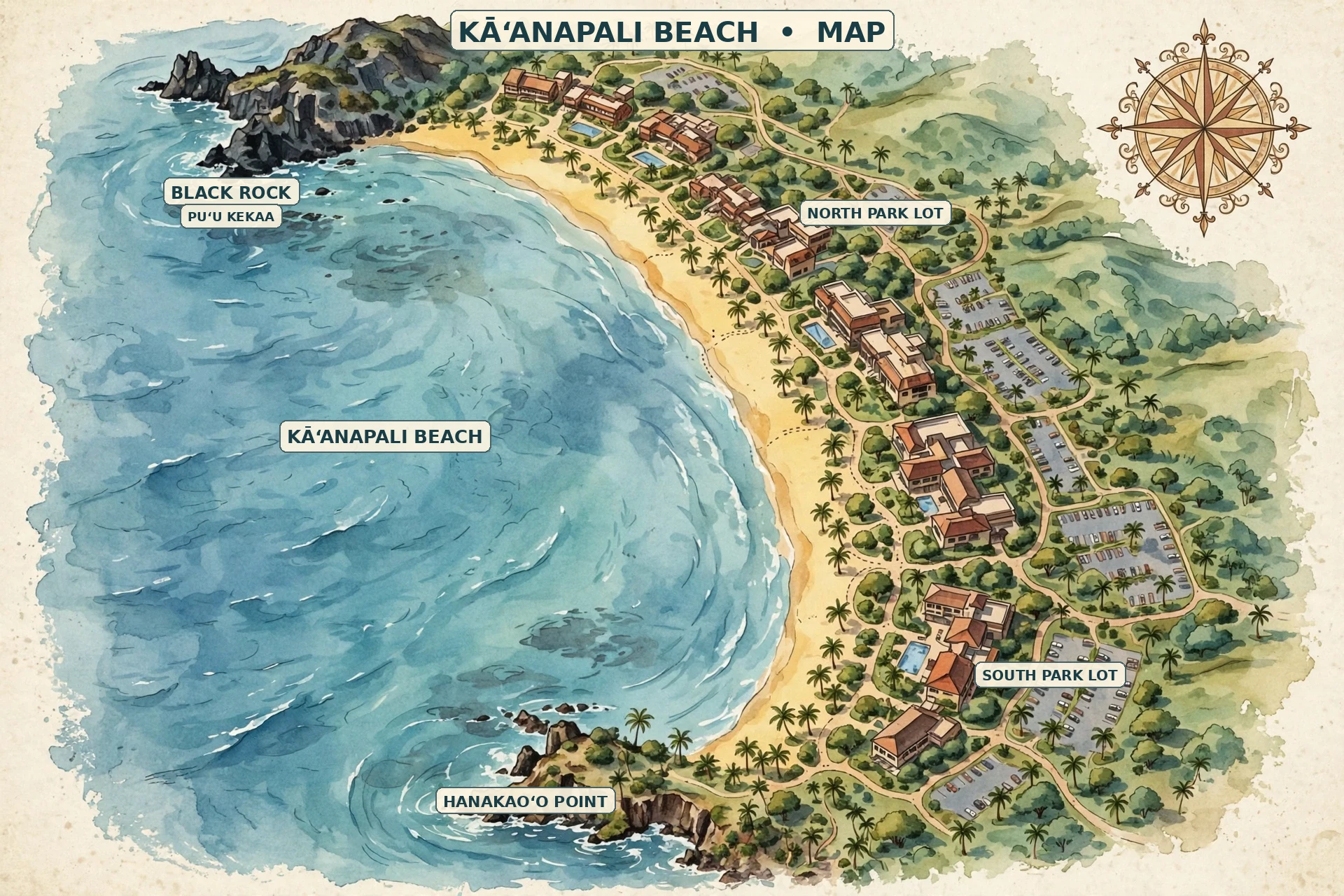
Beyond Black Rock, the coastline continues north toward Honokōwai and Nāpili, but the sandy beach effectively ends at the point. Public access points are scattered along the beachwalk, and a few are marked with blue shoreline-access signs. Keep these landmarks in mind as you read the section details below.
Beach Sections in Detail
Hanakaʻōʻō Point and Canoe Beach (South End)
The south end of Kāʻanapali is anchored by Hanakaʻōʻō Point, where a pocket of reef meets the sand. This end of the beach is known for outrigger canoe activity, and you will often see canoes launching through the surf or crews practicing offshore. Hanakaʻōʻō Beach Park, across from the point, offers restrooms, showers, and picnic tables, plus one of the more reliable public parking lots on the beach. The water here is fine for swimming on calm days, though the shoreline can be rockier than the central beach. From Hanakaʻōʻō Point, you can watch parasail boats operating offshore and get a long view up the full length of Kāʻanapali toward Black Rock. Because the south end sits slightly apart from the main hotel row, it tends to be a little quieter than the central sections, and it is a good fallback when parking near the middle of the beach is full. The point itself is a small rocky headland, so stay on the sand for entry rather than picking your way over the rocks, and watch for canoe crews who have the right of way at the launch.
The Central Beach
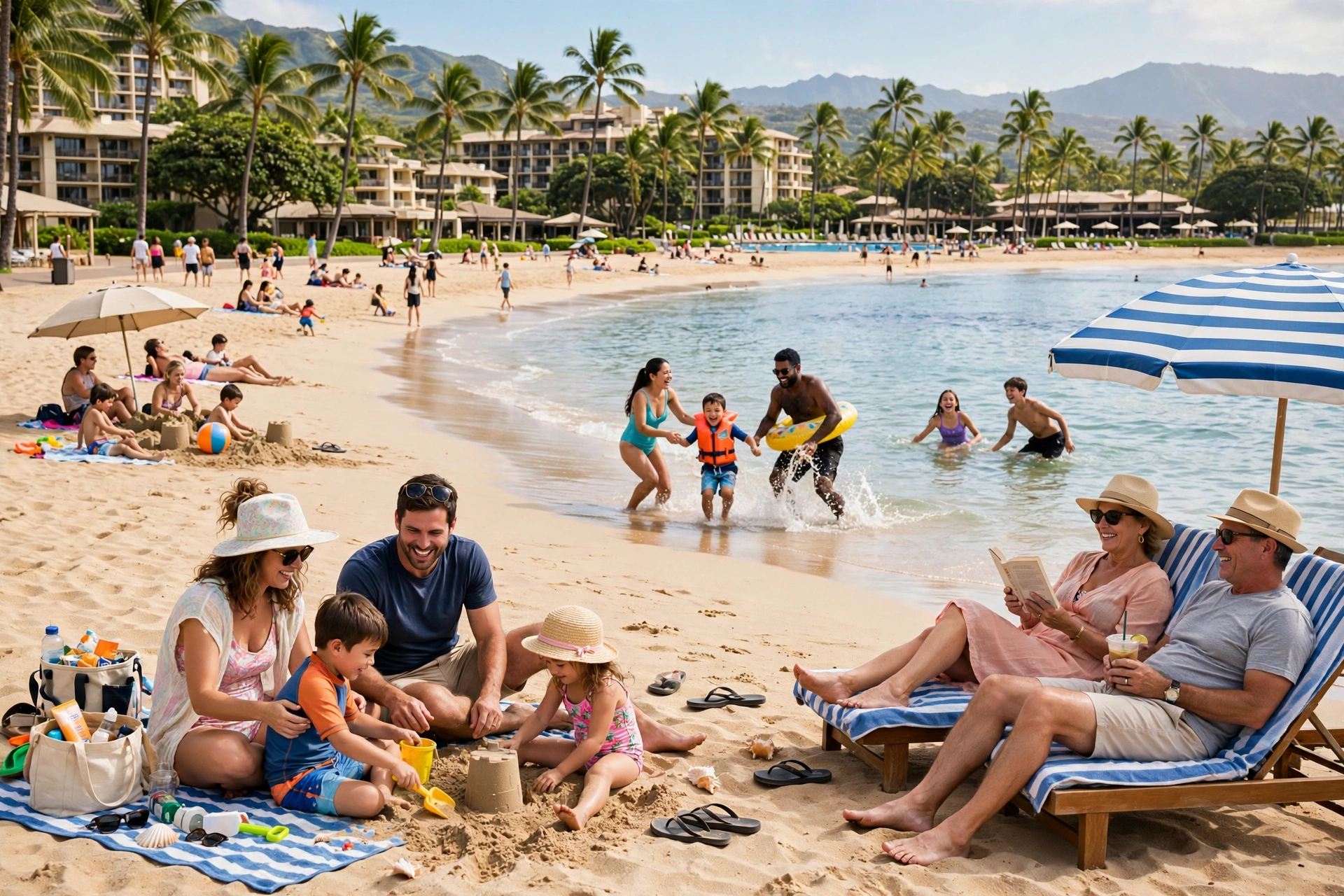
The central mile of Kāʻanapali is the beach most visitors picture: broad golden sand, gentle slope into turquoise water, and palm-fringed lawns rising behind it to the resort buildings. This is the easiest section for swimming because the bottom stays sandy well out from shore and waves are typically small outside of winter swells. Lifeguard stands serve this section, and it is the natural choice for families and first-time ocean swimmers. The beachwalk parallels the sand here, so you can step off the beach for lunch or a restroom break and return within minutes. In the morning, the light is soft and the water is usually calmest, which is why early arrivals find the central beach at its best.
Whalers Village Area
Near the middle of the beach, Whalers Village is an open-air shopping and dining complex set just behind the sand. Its position makes the surrounding beach sections convenient for visitors who want to alternate between the water and a meal. The beach in front of Whalers Village is wide and sandy, with good swimming conditions comparable to the central sections. A public beach access path runs through the area, and the beachwalk passes directly in front. This is also a useful reference point for parking, as nearby public lots serve this part of the beach. If you are spending a full day, this section makes the easiest base: swim in the morning, walk to lunch without moving your car, and return to the sand for the afternoon.
The North End and Puʻu Kekaʻa (Black Rock)
The north end of the beach narrows as it approaches Puʻu Kekaʻa, the dark lava-rock headland that gives this section its nickname. The point rises from the water at the beach’s northern terminus, and it is a landmark you can spot from nearly anywhere along the sand. Old Hawaiian belief holds that Puʻu Kekaʻa was a leaping place for souls passing into the next world, and a well-known legend tells of a Maui chief who dove from the cliff to demonstrate his courage. Today, the nightly cliff diving ceremony at sunset keeps that history alive, with a diver lighting torches along the cliff path before making the leap.
The snorkeling reefs wrap around both sides of Black Rock, making this end of the beach the best choice for underwater exploring. The beach itself at the north end is narrower than the central sections, and the entry can be rockier, but the payoff is immediate access to clear water and abundant reef life. The Sheraton Maui Resort and Spa sits beside the point, and a public access path reaches the beach and Black Rock area.
Snorkeling at Black Rock
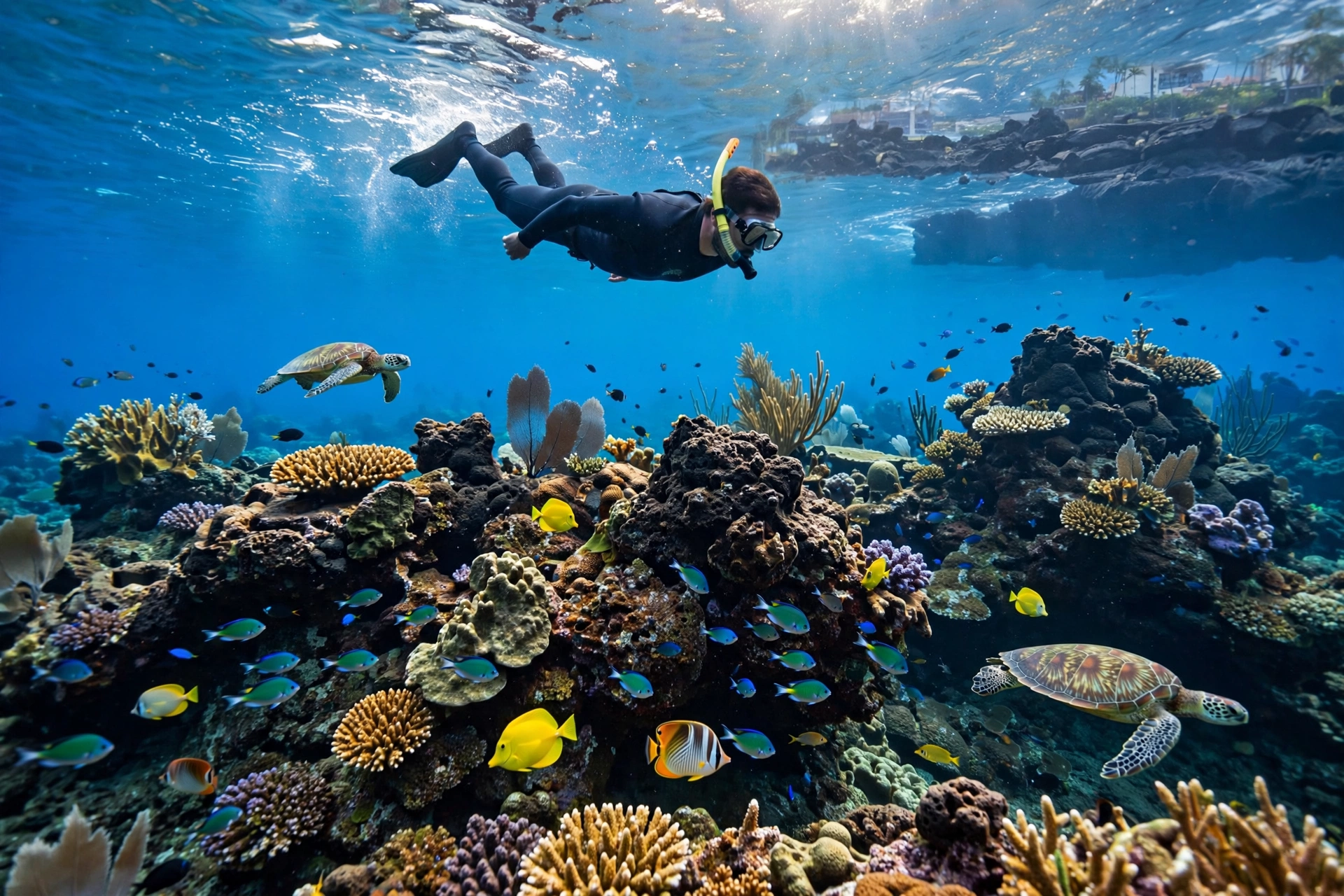
Black Rock is one of Maui’s most popular shore snorkeling spots, and the reasons are simple: easy entry from the beach, a healthy fringing reef close to shore, and frequent sea turtle sightings. The reef wraps around the point on both the south and north sides, with coral heads, lava formations, and sandy channels that hold schools of tropical fish.
Go in the morning for the calmest conditions and best visibility. Trade winds typically build through the afternoon, which can stir up the water and reduce clarity. Enter from the sandy beach on either side of the point rather than from the rocks themselves, and swim out around the point only if you are a confident swimmer comfortable with some current. Stay outside the area directly beneath the cliff diving spot when a ceremony is underway.
Common sightings include green sea turtles, which rest and feed along the reef, along with parrotfish, tangs, butterflyfish, and the occasional eagle ray. Watch for the state fish, the humuhumunukunukuāpuaʻa, among the reef crevices. As with all snorkeling in Hawaiʻi, keep a respectful distance from turtles, never touch coral, and use reef-safe sunscreen to protect the reef you came to see.
A few practical notes make a Black Rock snorkel better. Visibility is best before about 10 a.m., when the water is still glassy and fewer swimmers have stirred up the sand. The north side of the point can hold slightly clearer water but also more current, so check both sides from the beach before committing. During winter swells, waves can break over the outer reef and make entry and exit tricky; if the water looks rough at the point, enjoy the beach and save snorkeling for a calmer day or a sheltered spot like the central beach shallows. Rinse your gear and dry it out of the sun afterward, since salt and UV shorten the life of masks and fins.
The Kāʻanapali Beachwalk
The Kāʻanapali Beachwalk is a paved pedestrian path that runs roughly three miles along the coast, connecting the resort properties, Whalers Village, and the beach from the Hyatt Regency area in the south to the Sheraton at Black Rock in the north. It functions as the resort’s main street, and it is one of the best free activities in West Maui.
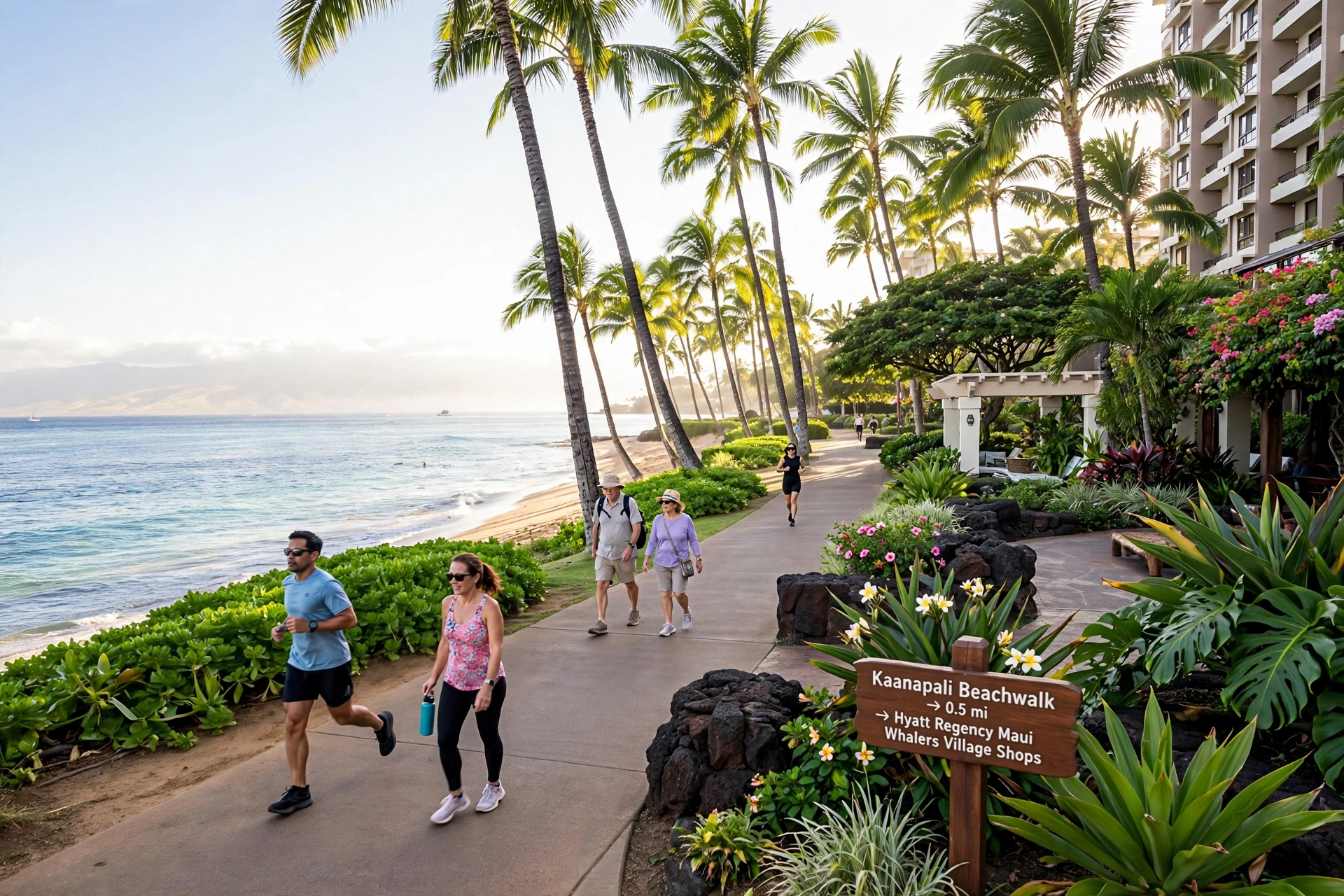
The path is wide, flat, and well maintained, suitable for strollers and wheelchairs. Along the way you pass manicured resort gardens, ocean overlooks, public art, and beach access points. Whalers Village sits near the middle and makes a natural turnaround point for a shorter stroll. Walking the full length one way takes about an hour at a relaxed pace, and sunrise is the quietest time, with the path largely to early joggers and resort staff. In the evening, the beachwalk becomes a promenade for sunset watchers heading toward Black Rock.
The beachwalk is also practical, not just scenic. It connects every major beach access point, the shops and restaurants at Whalers Village, and the resort lobbies, so you can leave your car in one place and handle lunch, restrooms, and gear without driving. Look for the small pocket parks and shaded benches along the route; they make good rest stops on hot afternoons. If you are running, the full out-and-back is about six miles, and water fountains are available at several points along the path.
Parts of the beachwalk have needed repairs over the years as erosion and heavy surf have damaged sections near the shoreline, so occasional detours or construction are possible. Check conditions locally if you plan a long walk, and stay on the marked path where repairs are underway.
Nearby: Whalers Village and the Resort Area
Whalers Village is the retail and dining heart of Kāʻanapali, set directly behind the beach near the middle of the sand. The open-air complex holds shops, galleries, and restaurants, and its oceanfront lawn hosts free hula performances and live Hawaiian music on select evenings. A small whaling museum inside documents the whaling history of Lahaina and Maui, a reminder that the waters offshore were once hunting grounds for whaling ships. Check the posted event schedule when you arrive, since performance nights draw a friendly crowd to the lawn at sunset.
The resort area around Kāʻanapali includes a range of hotels and condominiums set back from the beach behind the beachwalk, plus two championship golf courses inland. Everything in the immediate beach zone is connected by the beachwalk, so visitors staying in the area can reach the sand, shops, and restaurants without a car. For beachgoers staying elsewhere, Whalers Village is a useful landmark for meeting points, lunch breaks, and restroom access during a beach day.
Parking and Beach Access
Parking is the main practical challenge at Kāʻanapali, because the beach fronts private resort property and public lots are limited. Plan ahead and arrive early, especially on weekends and holidays.
- Hanakaʻōʻō Beach Park lot: serves the south end of the beach, with restrooms, showers, and picnic tables. This is the most straightforward public parking option.
- Public beach access lots: small marked lots and roadside access points are scattered along the beach, including near Whalers Village and the north end by Black Rock. These fill early.
- Street parking: limited in the surrounding neighborhood; observe posted signs carefully, as many areas are restricted or permit-only.
- Maui Bus: public bus routes serve the Kāʻanapali area with stops near the resorts and Whalers Village, a useful option if you are staying elsewhere on the west side.
Resort parking lots are generally reserved for guests, though some offer paid public parking. Check posted rates before entering. Once parked, blue shoreline-access signs mark the public paths to the beach. All beaches in Hawaiʻi are public up to the high-water mark, so once you reach the sand you are free to walk the full three miles regardless of where you entered.
A final planning tip: pair your parking strategy with your plan for the day. If snorkeling at Black Rock is the priority, aim for the north-end access and arrive before 9 a.m. If the day is mostly about swimming and a beachwalk stroll, the central or Whalers Village access points work well and put lunch within walking distance. And if you are staying in Lahaina or elsewhere on the west side, the Maui Bus removes the parking question entirely and drops you within a short walk of the sand.
Frequently Asked Questions
Where is Kāʻanapali Beach located?
Kāʻanapali Beach is on Maui’s west coast, about three miles north of Lahaina. The three-mile beach runs from Hanakaʻōʻō Point in the south to Puʻu Kekaʻa, or Black Rock, in the north, fronted by the Kāʻanapali resort area.
What is Black Rock at Kāʻanapali Beach?
Black Rock, or Puʻu Kekaʻa, is a black lava-rock headland at the northern end of Kāʻanapali Beach. It is known for the nightly sunset cliff diving ceremony, for excellent shore snorkeling around its reef, and for its place in Hawaiian legend as a leaping point.
When is the cliff diving ceremony at Black Rock?
The ceremony takes place at sunset each evening. A diver lights torches along the cliff path and then leaps from Black Rock into the ocean, honoring the legend of a Maui chief’s leap of faith. Arrive early for a good viewing spot, as the area gets crowded.
Is Kāʻanapali Beach good for swimming?
Yes. The central sections have a wide sandy bottom, gentle slope, and typically small waves, making Kāʻanapali one of Maui’s most swimmer-friendly beaches. Conditions are usually calmest in the morning. Winter swells can bring larger surf, so check ocean conditions before entering.
Can beginners snorkel at Black Rock?
The reefs around Black Rock are accessible from the beach, but beginners should stick to the calmer south side of the point, go in the morning, and stay within their comfort zone. Snorkel with a buddy, and consider a flotation device if you are not a strong swimmer.
How long is the Kāʻanapali Beachwalk?
The paved beachwalk runs roughly three miles along the coast, from the south end of the resort area to the Sheraton at Black Rock. It is flat, wide, and suitable for walkers, joggers, strollers, and wheelchairs.
Is there public parking at Kāʻanapali Beach?
Public parking is limited. The Hanakaʻōʻō Beach Park lot at the south end is the most reliable option, and small public access lots are scattered along the beach. Arrive early, especially on weekends, or consider the Maui Bus. If lots are full, street parking in the surrounding neighborhood is limited and often restricted, so read every sign before leaving your car.
What is Whalers Village?
Whalers Village is an open-air shopping and dining complex set behind the middle of Kāʻanapali Beach. It holds shops, restaurants, and a small whaling museum, and its oceanfront lawn hosts free hula and music performances on select evenings.
Related Guides
- Maui Beaches: The Complete Guide: every major Maui beach by region and activity
- Maui Map: island-wide reference map with regions, towns, and driving routes
- Hawaii Snorkeling: the best snorkeling spots across the islands
- Hawaii Beaches: the statewide beaches hub
- Maui Hikes: twenty trails across the island
Reading Kāʻanapali from Hanakaʻōʻō Point to Black Rock turns three miles of sand into a map you can use: the south end for canoes and easy parking, the central beach for swimming, Whalers Village for a midday break, and Black Rock for snorkeling and the sunset ceremony. Walk the beachwalk once to learn the layout, then return to the section that fits your day and the conditions of the morning.