Exploring the Rich Tapestry of Hawaiian Traditions: A Deep Dive into Hula, Chanting, and Storytelling

When you think of Hawaii, you might picture beautiful beaches and tall volcanoes. But the culture that goes with the beautiful scenery is full of history, spirit, and deep artistic expression. Hawaii’s traditions are what make it truly special. They are old ways of doing things that have been passed down through the years and tell the story of its people, their gods, and their strong ties to the land.
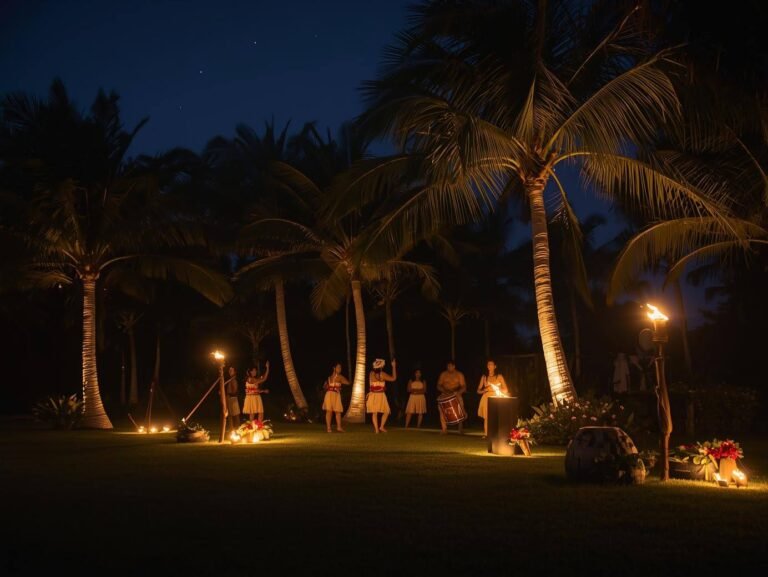
This guide looks at the rich tapestry of Hawaiian traditions, with a focus on three main pillars: hula, the sacred dance; oli, the powerful chants; and the art of telling stories. These shows aren’t just for tourists; they are real, living, breathing expressions of what it means to be Hawaiian. You can better appreciate the islands and the strong culture that continues to thrive by learning more about them. We will look at how these arts keep history alive, express feelings, and keep a strong connection to the past.
Hula: The Hawaiian People’s Heartbeat
Hula is not just a dance. Hula is a Hawaiian word that means “dance.” It is a physical expression of language, history, and spirituality. Every movement, from the way the hips sway to the way the hand moves, tells a story about creation, mythology, historical events, and the beauty of nature.
The hula is what makes the Hawaiian people tick. It is a language of the body that tells complicated stories and shows strong feelings. When you watch a hula performance, you see a story unfold. The dancer becomes a vessel for the ancestors, gods, and the spirit of the land (ʻāina).
The Two Styles of Hula: Kahiko and ʻAuana
There are two main styles of hula, each of which shows a different time in Hawaiian history and culture.
Hula Kahiko (Old Hula)
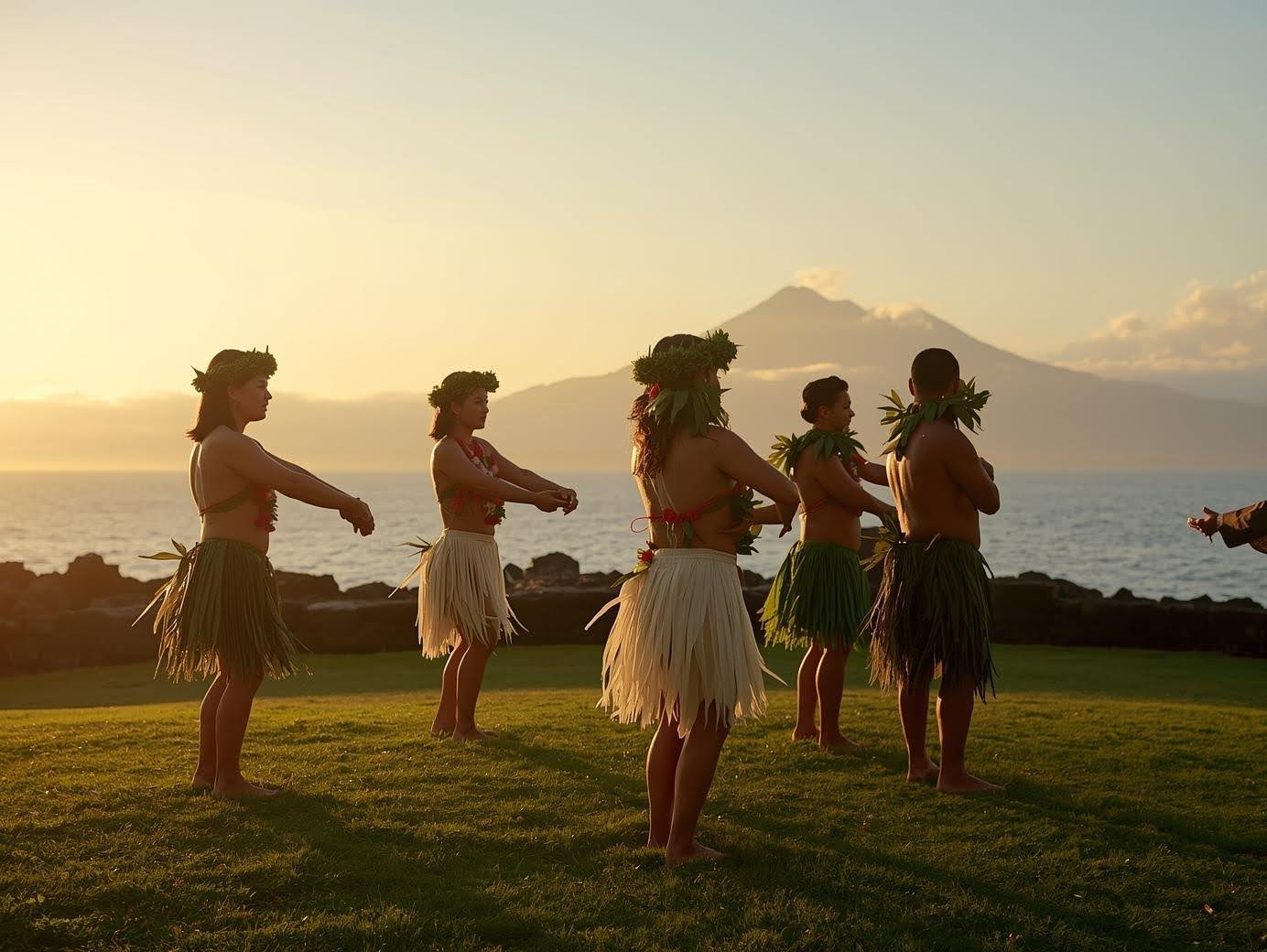
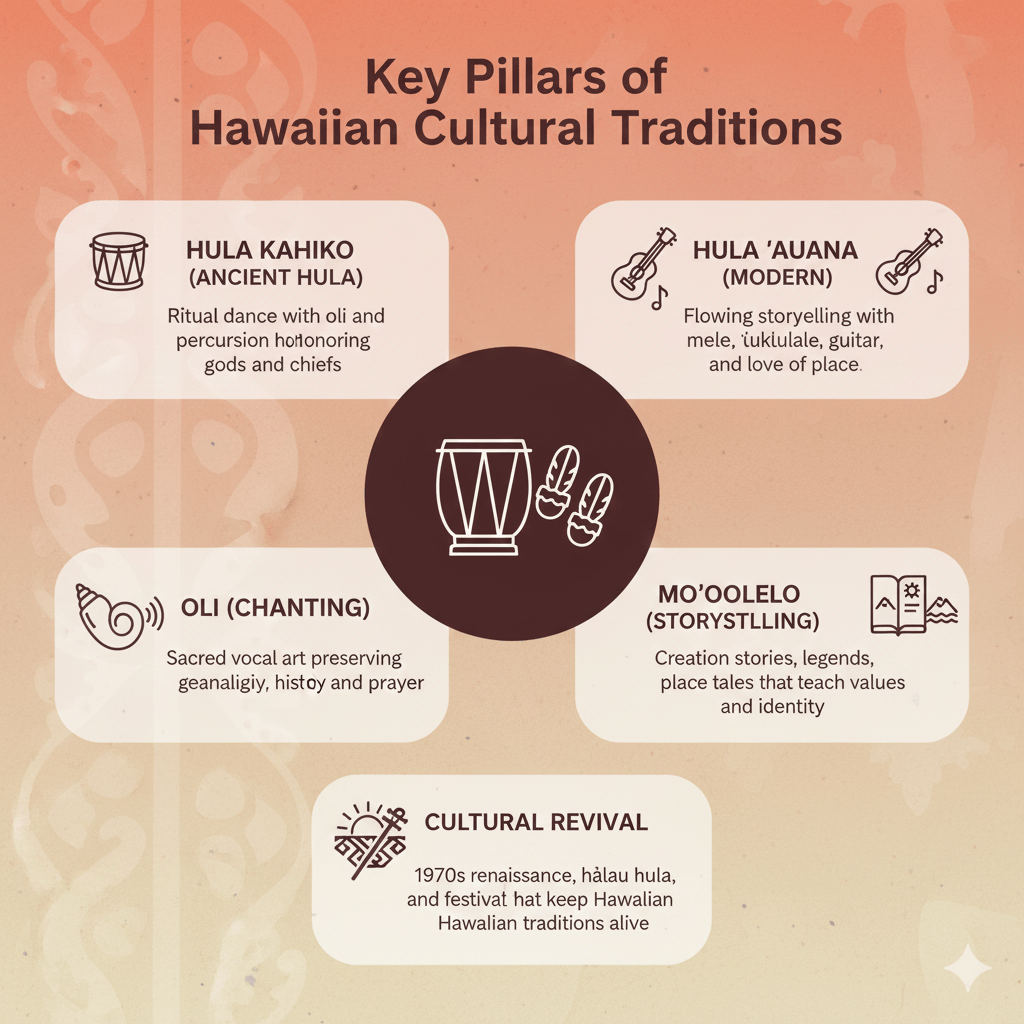
Hula Kahiko is the old-fashioned way of dancing before Western contact. It is very ritualistic and is done to honor the gods and the chiefs (aliʻi).
- Movements: The movements in Hula Kahiko are strong, grounded, and exact. Dancers often stay low to the ground with their knees bent. The goal is to tell a story or say a prayer clearly and with a spiritual purpose. Hand gestures are symbolic, representing elements like the ocean waves, a blooming flower, or a journey across the mountains.
- Accompaniment: Kahiko is accompanied by oli (chanting) and percussion instruments made from things found in nature. The primary instrument is the ipu heke, a double gourd drum that provides a resonant, grounding rhythm. Pūʻili (split bamboo rattles) and ʻulīʻulī (feathered gourd rattles) are two other types of instruments. Traditional Hula Kahiko doesn’t have any melodic instruments like the ukulele or guitar.
- Clothing: Women wear traditional clothes like the pāʻū (a skirt made of kapa, or bark cloth) and men wear a malo (loincloth). People choose native plants like maile vines and ferns to make adornments (lei) because they have spiritual meaning (mana).
Hula ʻAuana (New Hula)
Hula ʻAuana changed when Western culture came to Hawaii. It has more modern themes, melodic instruments, and a different way of moving.
- Movements: The movements in Hula ʻAuana are usually softer, more flowing, and more graceful. It still tells stories, but love, personal experiences, and beautiful places are often the main ideas. The style is more expressive and individualistic compared to the rigid structure of Kahiko.
- Accompaniment: ʻAuana is accompanied by song (mele) and melodic instruments that were brought to Hawaii by foreign sailors and missionaries, like the ukulele, guitar, and steel guitar. The songs have melodies and harmonies that are more like Western music, which makes them sound more lyrical and flowing.
- Attire: The attire for ʻAuana is what many visitors associate with hula today. Women often wear long, flowing dresses like the holokū, and men might wear pants and aloha shirts. The flowers that make up the lei are often fragrant, like plumeria or orchid.
Oli: The Voice of Old Hawaii
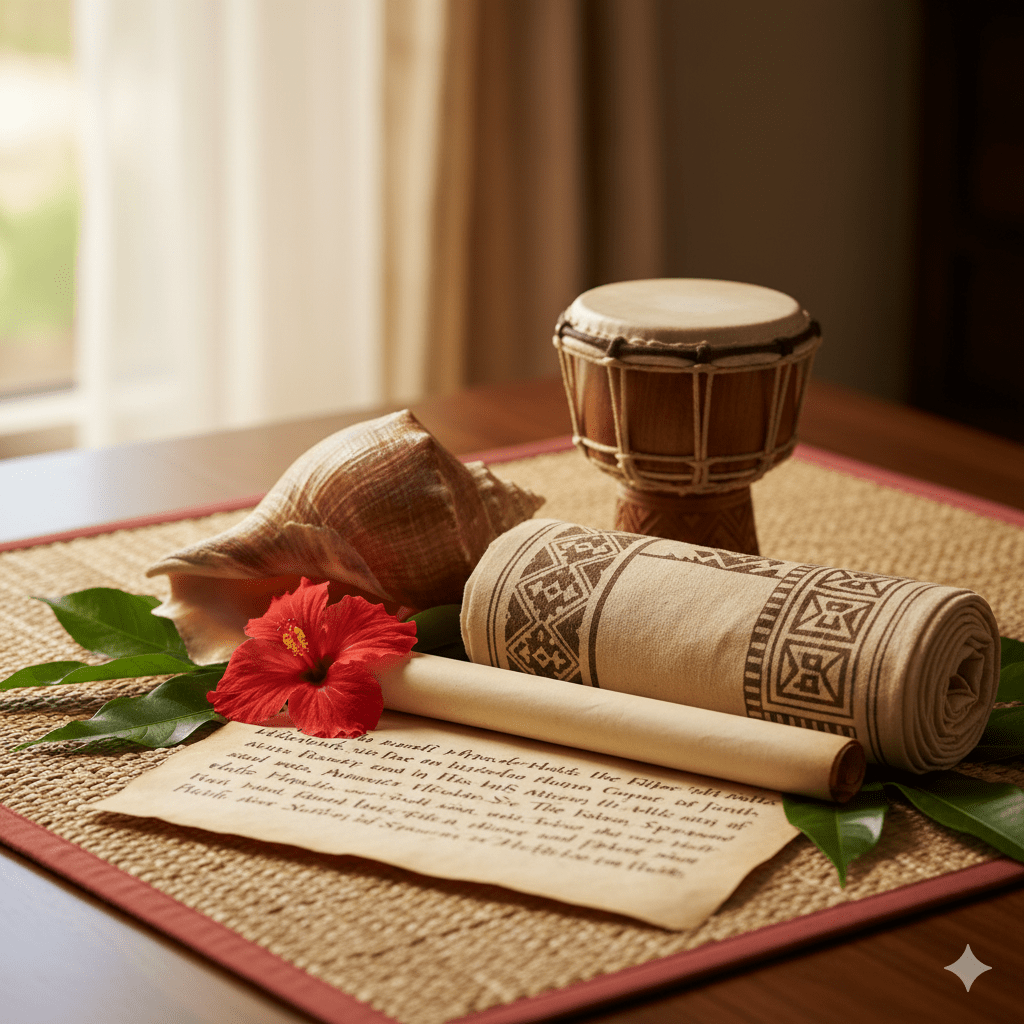
Before Hawaii had a written language, people used oli, or chants, to pass on and remember history and knowledge. Oli is the rhythmic and poetic base of Hawaiian culture. It is a sacred vocal art form that is used for prayer, ceremonies, storytelling, and keeping track of family trees. The language is what gives Hula Kahiko its strength and meaning.
An oli is more than just a song. It is a very organized way of singing that doesn’t use music. The chanter (ʻoliʻoli) uses certain vocal techniques, inflections, and tones to show how the chant makes them feel and what it means. The sound can be very deep and resonant, like a vibration that you can feel as well as hear.
The Significance and Function of Chanting
Oli served many critical functions in traditional Hawaiian society:
- Preserving Genealogies (Moʻokūʻauhau): The lineage of chiefs and families was meticulously recorded in chants. Reciting a genealogy was a way to prove your worth and pay respect to your ancestors.
- Recording History and Myths: Chanting kept alive epic stories about gods like Pele (the goddess of volcanoes) and Maui (the demigod), as well as the movements of the Polynesian people.
- Chants were an important part of all major life events, such as births, deaths, battles, and religious ceremonies. People would chant to ask to enter a forest, bless a new canoe, or pray for a good harvest.
- Oli was the main way to talk to the gods. It was a form of prayer, a way to show reverence, and a method to invoke divine power and protection.
Oli often uses very poetic language that has kaona, or hidden meanings. A chant describing the rain falling on a mountain might also be a metaphor for a chief’s love for his people. Oli is a rich and deep art form that is hard to fully appreciate without a deep understanding of Hawaiian language and culture.
Storytelling: The Threads That Make Up Culture
Storytelling is the thread that runs through all of Hawaiian culture. Hula tells stories with movement, and oli tells them with words. These stories, or moʻolelo, are more than just entertainment; they are the educational, moral, and spiritual textbooks of the Hawaiian people.
Moʻolelo encompass a vast range of narratives, including:
- Creation Stories: Stories that tell how the islands, the gods, and people came to be.
- Legends of the Gods and Goddesses: Stories about Pele, Maui, Kane, Lono, and other deities who shaped the world and interacted with mortals.
- Histories of Chiefs and Warriors: Stories about great leaders, epic battles, and important political events.
- Tales of Place (Wahi Pana): Stories that explain the names and significance of specific locations, linking the people to their land in an intimate way.
Moʻolelo teaches cultural values, strengthens social norms, and builds a sense of group identity. The stories teach respect for elders, the importance of family (ʻohana), and the sacred duty to care for the land (mālama ʻāina).
The Resilience and Revival of Hawaiian Traditions
For a period in the 19th and early 20th centuries, these sacred arts were suppressed. After the Hawaiian monarchy was overthrown and the Hawaiian language was banned in schools, hula and oli went underground.
But the spirit of these customs could not be killed. A cultural revival swept through the islands in the 1970s. A new generation began to take back their heritage, thanks to passionate cultural practitioners. Hula masters (kumu hula) who had kept the old knowledge secret started to teach again. The Hawaiian language came back to life, and people were proud of being Hawaiian again.
Hula, chanting, and telling stories are all still going strong today. There are hula schools (hālau hula) all over Hawaii and the world. The Merrie Monarch Festival and other big events honor the best hula dancers and artists. These customs show how strong the Hawaiian people are and how dedicated they are to keeping their culture alive.
Plan your cultural trip with us
Hawaii’s traditions take you on a journey through a world of deep beauty and meaning. It turns a regular vacation into a deep cultural experience that lets you connect with the islands on a deeper level. Seeing a traditional hula dance or hearing an old chant is a once-in-a-lifetime experience that shows you the real Hawaii. We at Hawaii Guide Hub think that to really enjoy the islands, you need to know about their culture. Our experts can help you find real cultural experiences, like going to a local festival or visiting important historical sites. We can help you plan a trip that honors and celebrates the many different Hawaiian traditions.