Explain how pollution affects marine life

The ocean often seems limitless and strong, like a huge blue space that can take anything we throw at it. But this view hides a weak reality. Every day, our oceans are polluted by a huge amount of things, including tiny plastic fibers, chemicals that can’t be seen, and loud noises from below the surface. Marine pollution is when harmful substances and energy get into the ocean from places like factories, farms, and people. The effects on marine life are terrible, endangering whole ecosystems from the surface of the water to the deepest parts.cr
This guide talks about how pollution affects marine life and looks at the different types of pollution and how they affect ocean creatures in different ways. The first step in protecting the rich biodiversity that depends on healthy oceans is to understand how big this problem is. We will talk about what causes marine pollution, how it affects animals from whales to corals, and what we can all do to help fix the problem. We need to act now because our oceans’ health is directly linked to our own.
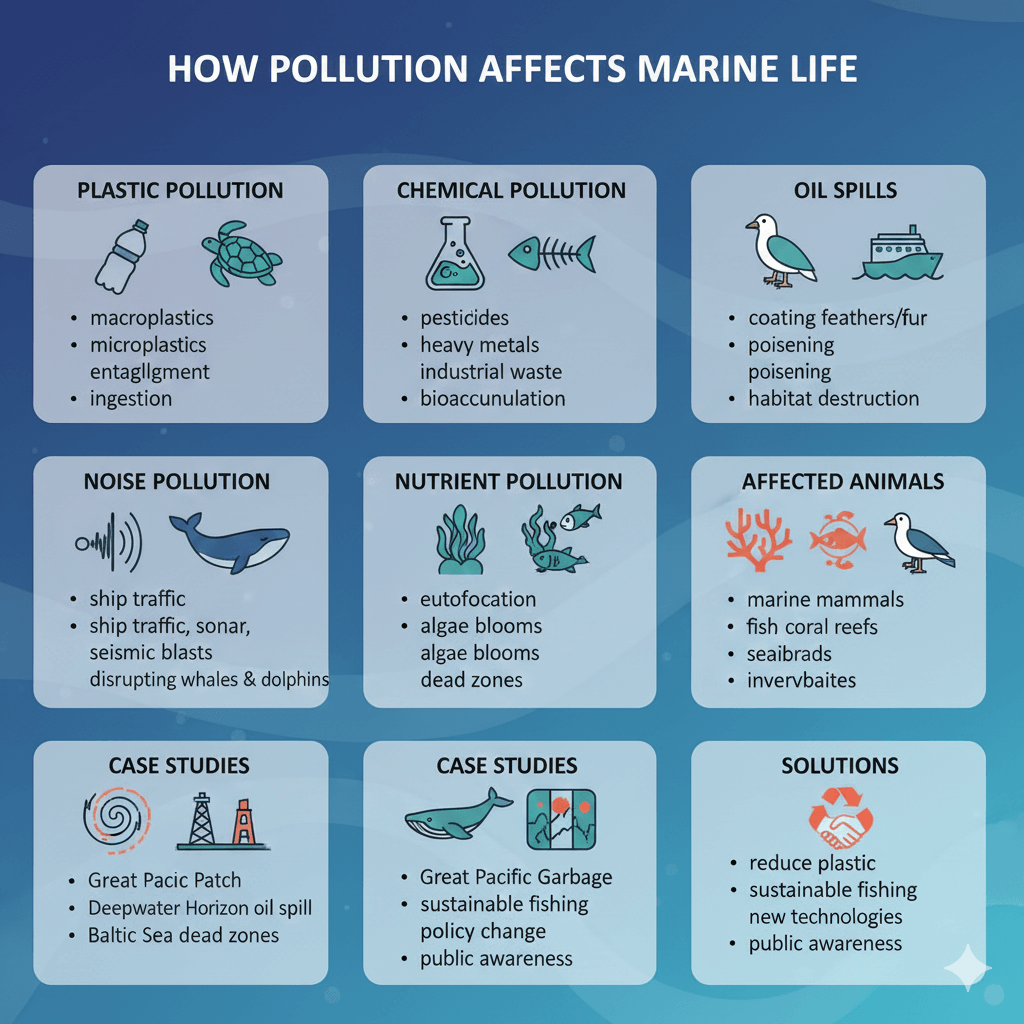
Different Types of Pollution in the Ocean
Marine pollution is not just one problem; it’s a complicated web of different pollutants, each with its own harmful effects. To get the whole picture of the problem, you need to know about all of these different threats.
Pollution from Plastic
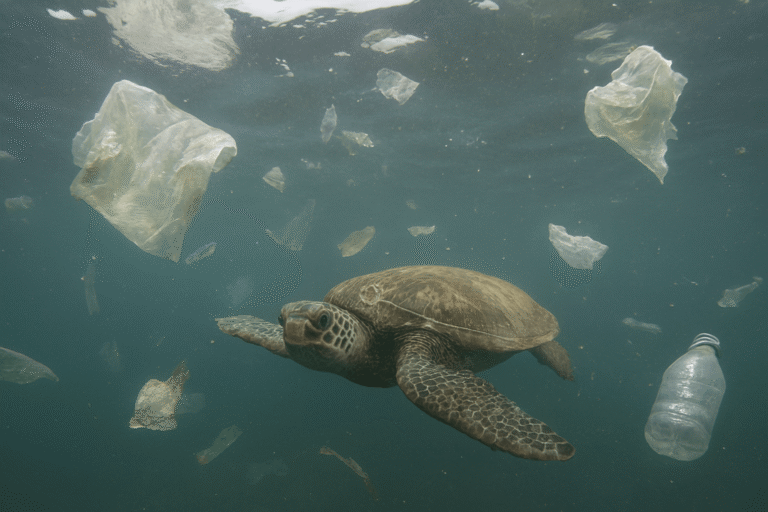
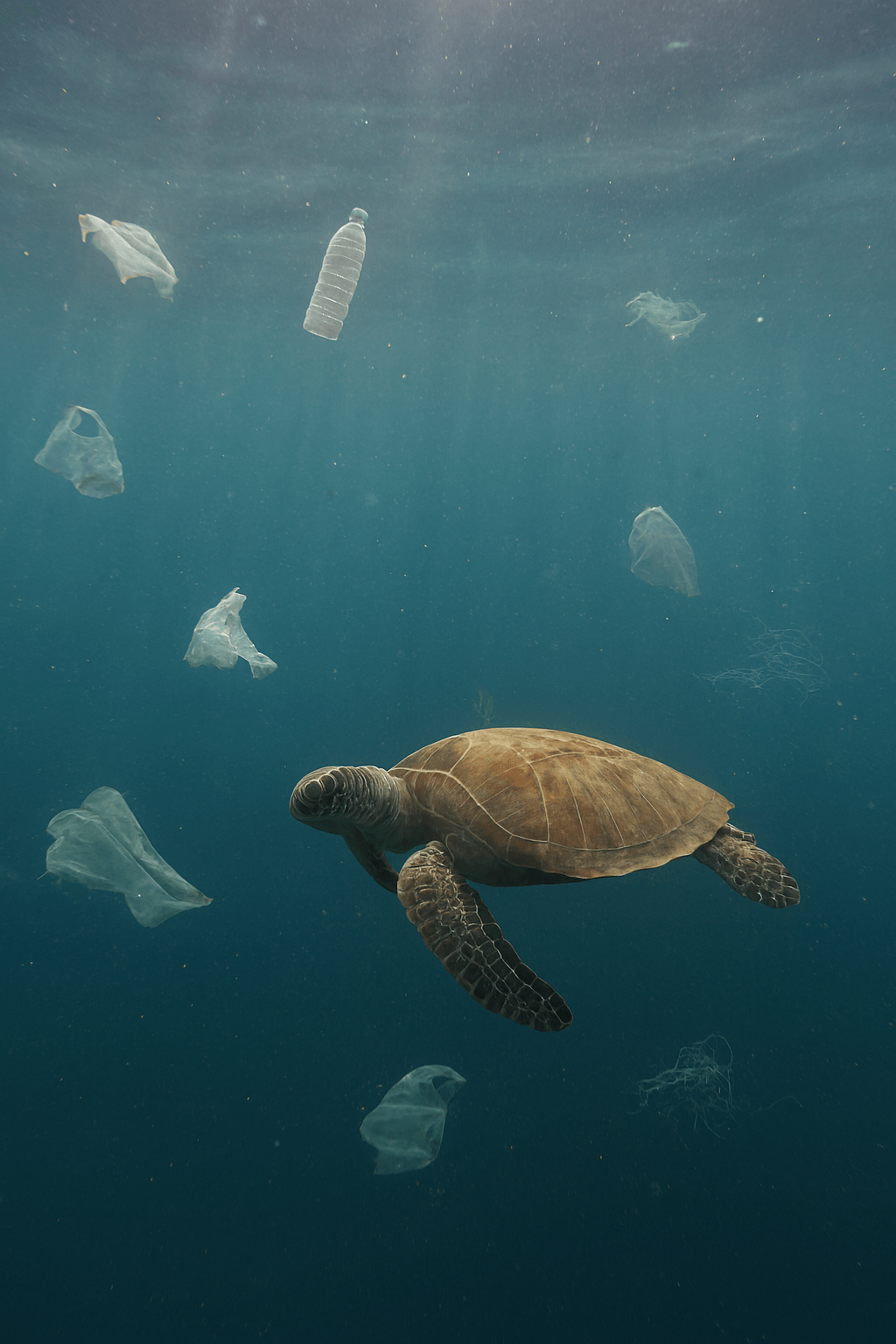
Plastic waste is one of the most obvious types of marine pollution, and it has become a global problem. There are two main types of it:
- Macroplastics: These are big plastic things like bags, bottles, fishing nets, and food containers. Animals often think these things are food or get stuck in them, which can hurt them, drown them, or starve them.
- Microplastics: Are small pieces of plastic that are less than five millimeters across. They come from breaking down bigger plastics or are made for use in cosmetics and industry. Microplastics are very small, so many marine animals, from plankton to whales, can easily eat them. This adds toxins to the food chain.
Pollution from chemicals
Chemical pollutants come from factories, farms, and cities and get into the ocean without anyone seeing them. Some of the main reasons are:
- Pesticides and Herbicides: These chemicals get into rivers and eventually the sea when they run off of farms. They can mess up the reproductive and nervous systems of marine animals.
- Heavy Metals: Industrial processes release mercury, lead, and cadmium into waterways. These toxins accumulate in the tissues of marine life, a process known as bioaccumulation, becoming more concentrated as they move up the food chain.
- Waste from factories and drugs: A toxic chemical soup made up of everything from waste from factories to old medicines can make marine species sick, change their DNA, and kill them.
Oil Spills
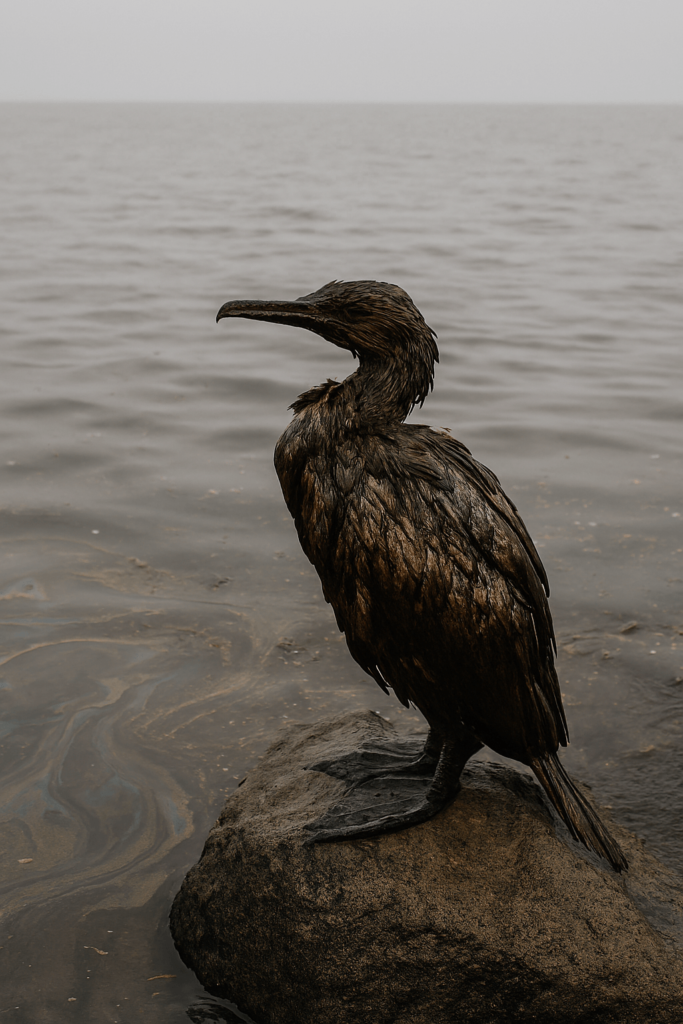
Big oil spills, usually from tankers or offshore drilling rigs, are disasters for the environment that have both short- and long-term effects. The thick oil coats the feathers of seabirds and the fur of marine mammals, making it hard for them to stay warm and causing them to get hypothermia. Oil that is eaten is poisonous and can cause serious damage inside the body. Oil can stay in the ocean for decades, even after the visible slick is gone. It can pollute sediment and hurt animals that live on the ocean floor.
Pollution from noise
The ocean is not a quiet place. But human activities have made the noise levels so high that they bother marine life. The main sources are:
- Shipping: The constant low-frequency hum from commercial ships travels vast distances, interfering with the communication of whales and dolphins that rely on sound for navigation, hunting, and mating.
- Sonar: High-intensity sonar used by the military and scientists can hurt your hearing, make you lose your sense of direction, and even cause marine mammals to strand in large numbers.
- Seismic Surveys: The loud airgun blasts used to find oil and gas can change how fish and invertebrates act and have a big effect on marine mammals
Pollution of nutrients
Nutrient pollution, which mostly comes from agricultural fertilizer and sewage runoff, adds too much nitrogen and phosphorus to coastal waters. This causes a process called eutrophication, which makes huge algae blooms happen. When these algae die and decompose, they consume vast amounts of oxygen, creating “dead zones”—areas where oxygen levels are too low to support most marine life.
The Effects on Marine Ecosystems All Over the World
Different types of pollution have effects that go all the way up and down the marine food web, breaking up whole ecosystems and putting the biodiversity that keeps them alive at risk.
Effects on Marine Mammals
Pollution has a big effect on marine mammals like whales, dolphins, seals, and manatees.
- Entanglement stuck in old fishing gear, called “ghost nets,” is one of the main causes of injury and death.
- Ingestion plastic waste that looks like food can cause blockages in the body and starvation.
- Hearing damage Noise pollution harms their hearing, which makes it harder for them to talk to each other, find mates, and find food, all of which are important for survival.
- Chemical contaminants up in their blubber, which hurts their immune and reproductive systems.
Effects on Fish Populations
Fish are a big part of marine ecosystems, and pollution can hurt them a lot.
- Bioaccumulation Heavy metals and other toxins can build up in fish tissues, which is bad for the fish and the people and other animals that eat them.
- Habitat destruction Pollution from nutrients and oil spills destroys the reefs, mangroves, and seagrass beds that fish need to spawn and hide in.
- Endocrine disruption Endocrine disruption from chemical pollutants can alter fish development and reduce their reproductive success.
Coral reefs are affected
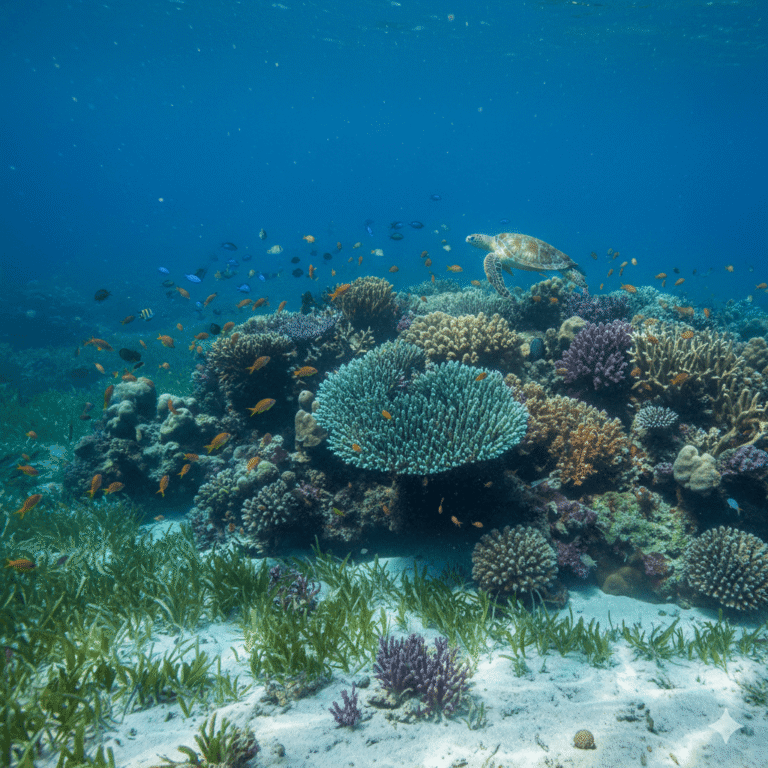
Coral reefs are often called “rainforests of the sea.” They are very different ecosystems that are very sensitive to changes in the environment.
- Coral bleaching happens when sea temperatures rise, which is made worse by climate change (which is linked to air pollution). This makes corals get rid of the algae that live in their tissues, which makes them white.
- Ocean acidification,which happens when the ocean absorbs too much carbon dioxide from the air, makes it hard for corals to build their calcium carbonate skeletons.
- Sediment and nutrient runoff can cover corals and help algae grow, which competes with corals for light and space.
How it affects seabirds
Seabirds are the first to be affected by pollution in the ocean, and it has terrible effects.
- Plastic ingestion Many seabirds have stomachs full of plastic debris because they eat it all the time. This doesn’t leave any room for real food, which can cause malnutrition and starvation.
- Oil contamination When oil spills happen, it gets into their feathers and makes them lose their waterproofing, which means they can’t fly or keep their body temperature in check.
- Chemical pollution hurts their ability to reproduce, which makes their eggshells thinner and causes problems with the chicks’ growth..
Effects on Marine Invertebrates
Invertebrates, like small krill and big squid, are at the bottom of many marine food webs and can be harmed by pollution.
- Shellfish and crustaceans are filter feeders, which means they take in a lot of toxins and microplastics from the water.
- Ocean acidification directly threatens organisms with calcium carbonate shells, such as oysters, clams, and snails, hindering their growth and survival.
Case Studies: A Closer Look at the Damage
To fully understand the problem, let’s look at some specific examples of how pollution has hurt marine environments.
The Great Pacific Garbage Patch
This huge pile of plastic and other marine debris is the most famous of the five places in the world’s oceans where plastic collects. It is not a solid island of trash; instead, it is a soup of microplastics and bigger pieces of trash spread over an area twice the size of Texas. It is a clear visual representation of the world’s plastic pollution problem. It traps and harms marine life and keeps breaking down into smaller, more harmful microplastics.
The Oil Spill on the Deepwater Horizon
In 2010, the Deepwater Horizon oil rig explosion released an estimated 210 million gallons of oil into the Gulf of Mexico, making it the largest marine oil spill in history. The effects on the environment were terrible, killing a lot of dolphins, sea turtles,and seabirds. The spill decimated fish populations and contaminated deep-sea coral communities. Even years later, the area’s ecosystems are still recovering, and fisheries and wildlife are still affected.
Baltic Sea Dead Zones
The Baltic Sea has some of the biggest dead zones in the world. They were caused by years of nutrient runoff from farms and cities nearby. These huge areas don’t have enough oxygen to support fish, crustaceans, or other marine life, so they turn into underwater deserts. This has had a terrible effect on the fishing industry and the overall biodiversity in the area.
How We Can Stop Marine Pollution: Solutions
There is a huge problem, but it can be solved. Marine pollution can be stopped by a mix of personal actions, changes in policy, and new technologies. Here’s how marine pollution can be prevented and how we can overcome this problem.
Reduce, Reuse, and Recycle
The best way to fight plastic pollution is to use less single-use plastics. Small changes, like using reusable shopping bags, coffee cups, and water bottles, can make a big difference. To keep plastic out of the ocean, it’s also important to recycle and throw away trash properly
Practices that are good for the environment
Helping to promote sustainable fishing practices can help cut down on the amount of fishing gear that is left in the ocean. Selecting seafood from well-managed, sustainable fisheries can aid in the preservation of marine habitats and the mitigation of bycatch. Supporting organic farming can also help keep pesticides and fertilizers out of waterways.
Policy and Regulation
To stop pollution at its source, we need strong government policies and international agreements. This includes banning certain single-use plastics, implementing stricter regulations on industrial discharge, and investing in advanced wastewater treatment. To deal with problems that cross borders, like plastic and chemical pollution in the ocean, countries need to work together.
New Technologies
New technologies look like they could help clean up pollution that’s already there and keep it from happening again. Some new ideas are better ways to filter wastewater, biodegradable alternatives to plastic, and robots that can pick up plastic trash from rivers and oceans.
Teaching and raising awareness in the public
One of the best tools we have is education. We can get people to work together by making them aware of how marine pollution affects them. You can make a difference by supporting groups that work to protect our oceans, cleaning up beaches, and teaching your friends and family.
An Ocean That Is Healthier Is Coming
The evidence is clear: pollution is inflicting severe and lasting damage on marine life and the ecosystems they depend on. The ocean is home to everything from tiny plankton to huge whales. The plastic choking our seas, the chemicals poisoning our waters, and the noise drowning out marine communication are all symptoms of a global problem that demands an urgent global response. It’s not just an environmental issue to protect our oceans; it’s also about keeping our planet healthy and our own future safe.
If you want to see the beauty of marine life up close and help protect it, think about going on an eco-friendly trip. We at Hawaii Guide Hub are dedicated to responsible tourism that protects and respects Hawaii’s amazing marine ecosystems. Book a tour with us to see the colorful coral reefs and swim with amazing sea creatures. You’ll also learn how you can help protect them. Let’s all work together to make sure our oceans stay a source of wonder and life for many years to come.