Major Cities in Hawaii: Towns, Population & Where to Stay

Hawaii has exactly one real city, and it is not even technically a city. The major cities in Hawaii are really a list of towns, because Hawaii is the only U.S. state where the Census Bureau recognizes zero incorporated places. Every “city” in Hawaii, from Honolulu to Hilo, is officially a census-designated place. This guide covers the major cities and towns in Hawaii by island: what each one is like, how big it is, and which ones matter for your trip.
Hawaii’s “Cities”: The One Quirk You Must Know
Per the U.S. Census Bureau, Hawaii is the only state with no incorporated places at all. Honolulu operates as a combined city-county government, the City and County of Honolulu, covering all of Oʻahu, but for statistical purposes the Census treats Urban Honolulu as a census-designated place of about 351,000 people per the 2020 Census. The metro area, the whole of Oʻahu, holds about 1,016,000 people, roughly 70 percent of the state’s population. So when travel guides say “cities in Hawaii,” they mean the largest CDPs, the population centers that function as towns.
The Major Cities and Towns in Hawaii, Ranked
| City / Town | Island | Population (2020 Census) | Why visitors go |
| Honolulu (Urban Honolulu) | Oʻahu | 350,964 | Capital, Waikīkī, Pearl Harbor, food scene |
| East Honolulu | Oʻahu | 50,922 | Hawaiʻi Kai, Hanauma Bay area |
| Pearl City | Oʻahu | 45,295 | Suburb, not a visitor base |
| Hilo | Hawaiʻi Island | 44,186 | Volcano gateway, waterfalls, local life |
| Waipahu | Oʻahu | 43,485 | Suburb, not a visitor base |
| Kailua | Oʻahu | 40,514 | Beach town, Lanikai, day trips |
| Kāneʻohe | Oʻahu | 37,430 | Windward base, Kāneʻohe Bay |
| Kahului | Maui | 28,219 | Airport town, shopping, services |
| Kīhei | Maui | 21,423 | Condos, beaches, budget Maui |
| Kapolei | Oʻahu | 21,411 | “Second city,” Ko Olina resorts |
| Kailua-Kona | Hawaiʻi Island | 19,713 | Sun, coffee, snorkeling hub |
| Wailuku | Maui | 17,697 | County seat, ʻĪao Valley |
| Lahaina | Maui | 12,702 | Historic whaling town (rebuilding) |
| Kapaʻa | Kauaʻi | 11,652 | East-side base, shops, beaches |
| Līhuʻe | Kauaʻi | 8,004 | Airport town, county seat |
The table tells the real story: outside Honolulu, Hawaii’s “cities” are towns of under 50,000 people, and several of the biggest names on the list, Pearl City, Waipahu, Mililani, are suburbs nobody visits. The towns that matter to travelers are a short list: Honolulu, Hilo, Kailua-Kona, Kahului, Kīhei, Līhuʻe, Kapaʻa, Lahaina, and Kailua.
Honolulu: The Only True City
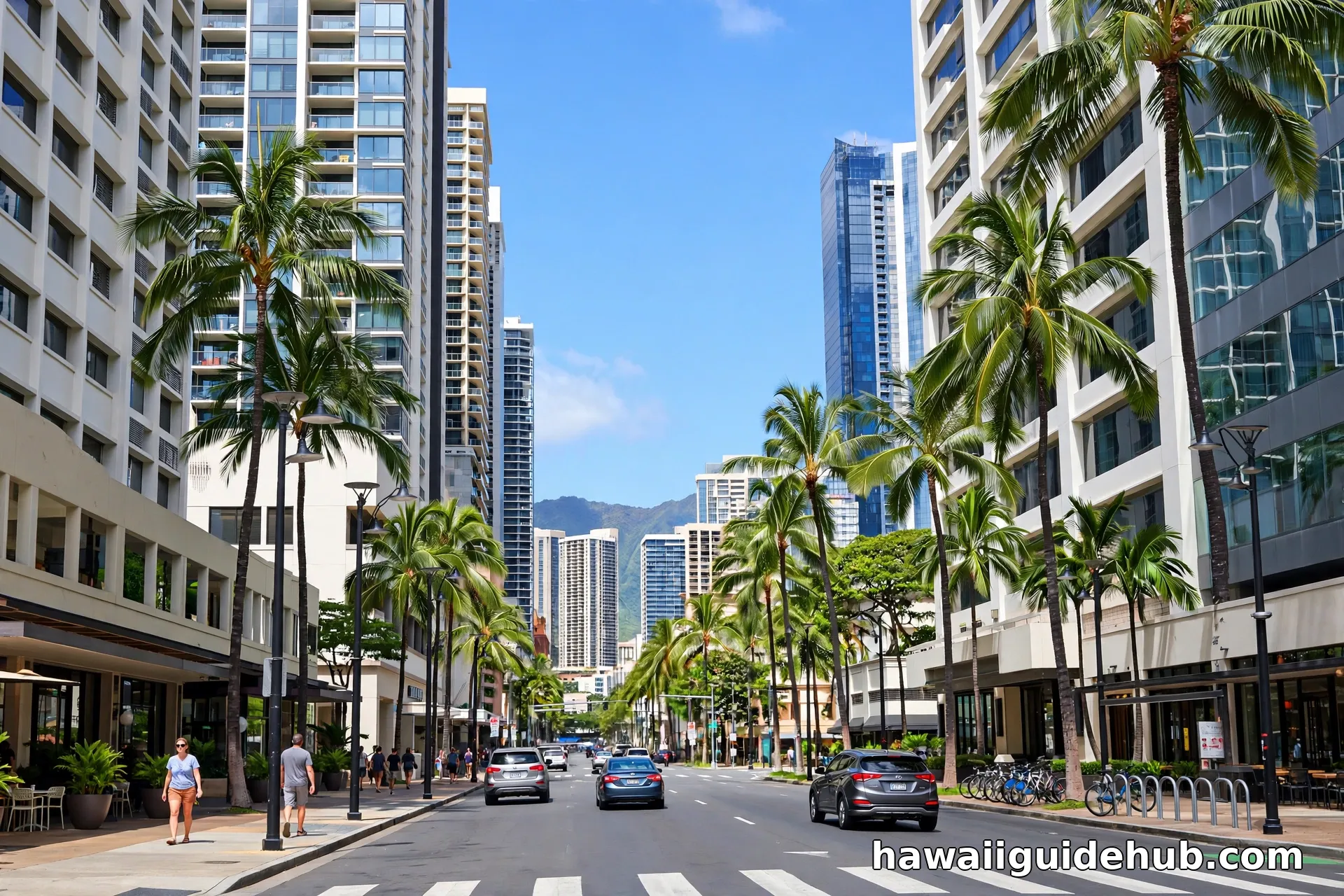
Honolulu is the state capital, the economic center, and home to roughly seven in ten Hawaii residents. It has the things no other Hawaiian town has: a real downtown skyline, a major university, the state’s best hospitals, the best restaurants, museums like the Bishop Museum and ʻIolani Palace, and the only public transit system worth using. Waikīkī, its famous beach neighborhood, packs more hotel rooms than the rest of the state combined. For first-timers, Honolulu is the default base: the most to do, the easiest logistics, the cheapest prices. See what not to miss on Oʻahu.
Hilo: The Big Island’s Rainy Capital
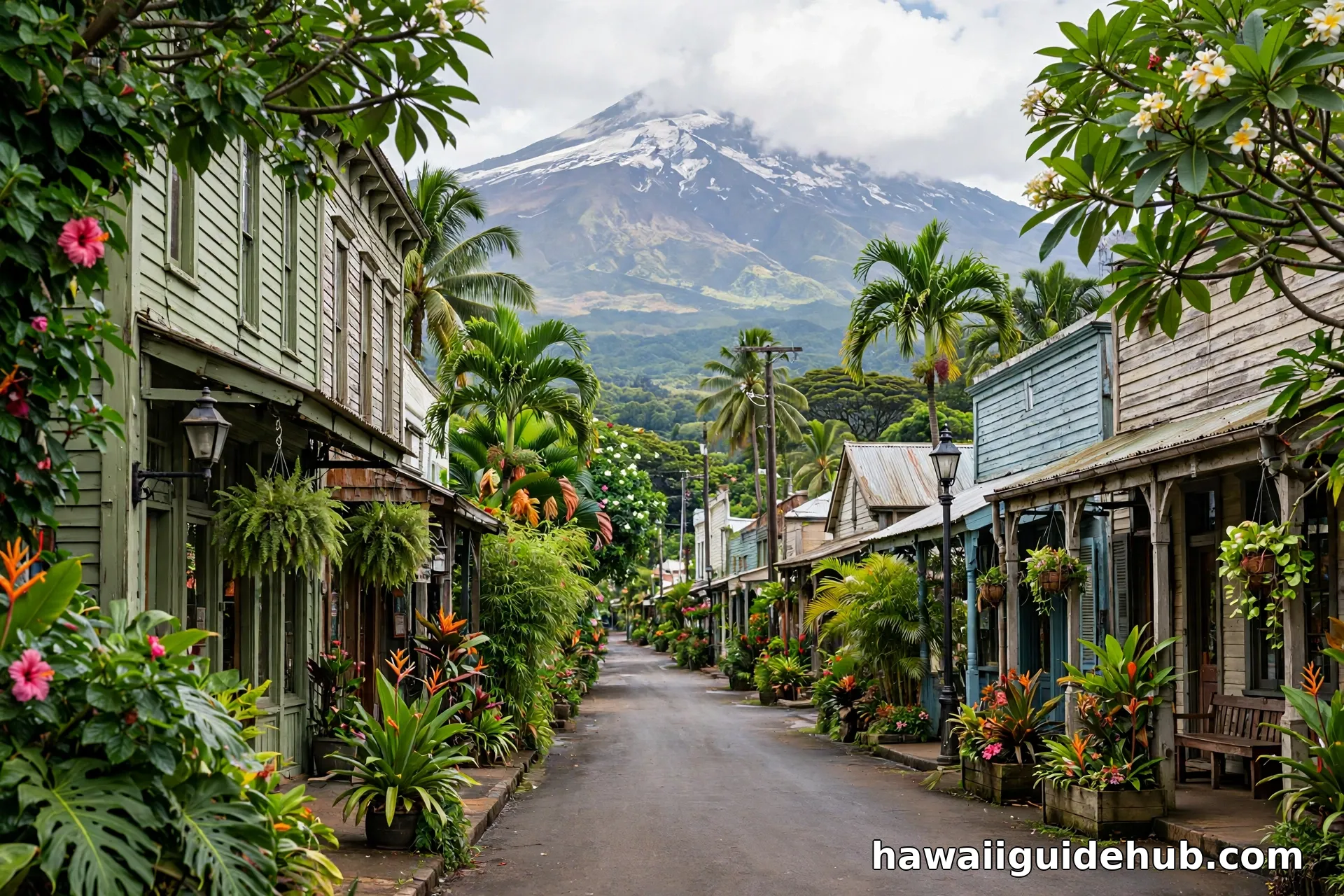
Hilo, population 44,186 per the 2020 Census, is the largest town on the island of Hawaiʻi and the second-largest population center in the state. It sits on the wet east side, famously one of the rainiest towns in America, which is exactly why it is so green: waterfalls, botanical gardens, and the gateway to Hawaiʻi Volcanoes National Park. Hilo is a working town, not a resort: historic storefronts, the Hilo Farmers Market, local plate-lunch counters. It is cheaper and more local than Kona, and the right base for volcano trips.
Kailua-Kona: The Sunny Side
Kailua-Kona, about 19,700 people, is the Big Island’s visitor hub: dry, sunny, and built around Aliʻi Drive’s shops, restaurants, and oceanfront. It is the base for Kona coffee country, manta ray night snorkeling, and deep-sea fishing. Smaller than Hilo but far more tourist-oriented, Kona is where most Big Island visitors actually stay. See things to do in Kona.
Maui’s Towns: Kahului, Kīhei, Wailuku, Lahaina
Maui has no dominant city; its towns split the jobs. Kahului (28,219) is the airport and commercial town, where you land and buy groceries. Wailuku (17,697) is the old county seat with the ʻĪao Valley. Kīhei (21,423) is the condo-and-beach strip where budget-conscious visitors stay. Lahaina (12,702) was the historic whaling capital and art town before the 2023 fire destroyed much of it; it is rebuilding and parts remain closed to visitors. Check current status before planning around it.
Kauaʻi’s Towns: Līhuʻe and Kapaʻa
Līhuʻe (8,004) is Kauaʻi’s airport town and county seat, practical rather than pretty. Kapaʻa (11,652) is the island’s largest town and a genuine visitor base: beach parks, shops, restaurants, and a central east-side location. Most Kauaʻi visitors stay in Poʻipu or Princeville rather than in town; see the Poʻipu guide and things to do in Hanalei.
Oʻahu’s Towns Beyond Honolulu: Kailua, Kāneʻohe, Kapolei
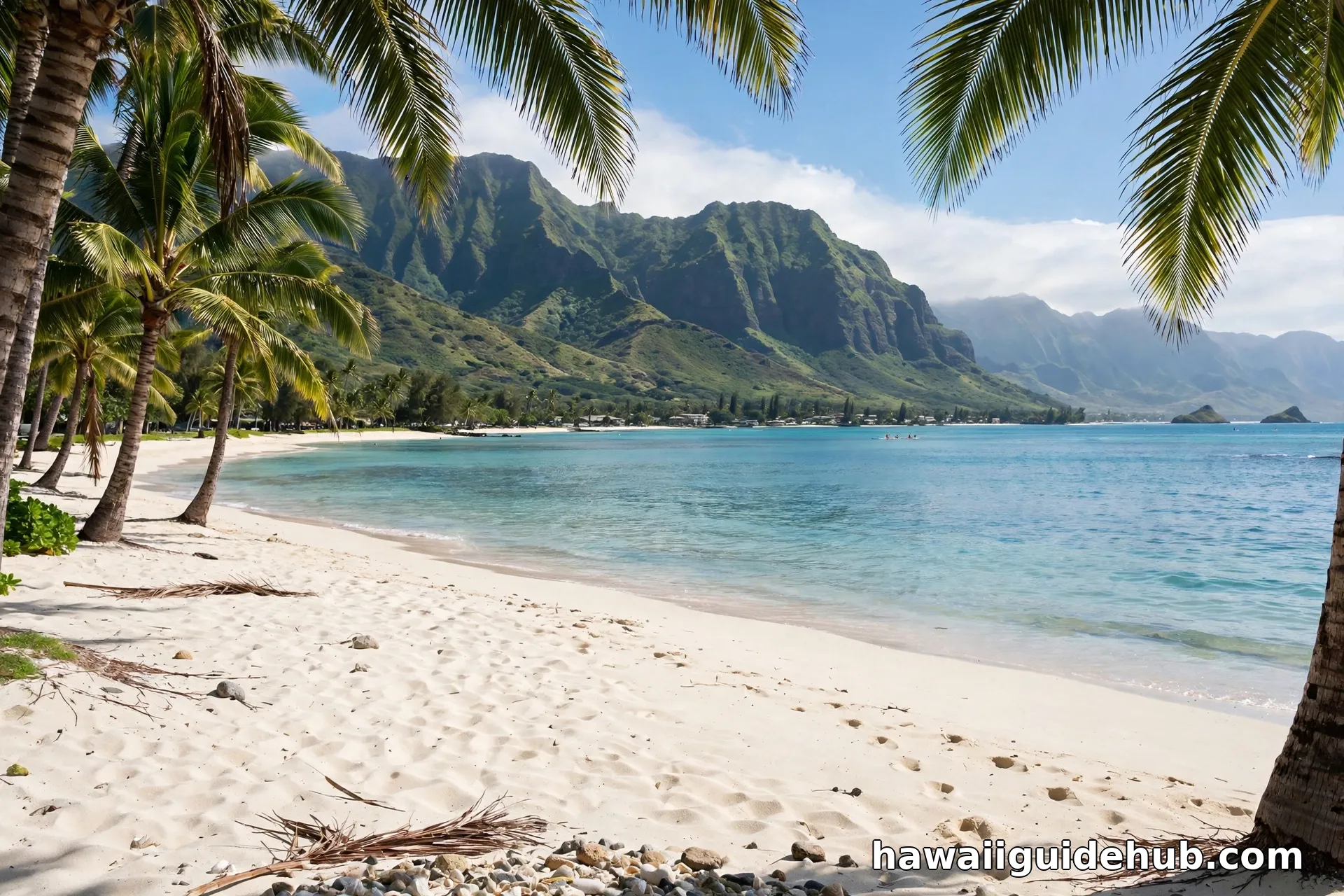
Kailua (40,514) is the town visitors love most on Oʻahu after Honolulu: a beach town with Lanikai and Kailua beaches, a walkable center, and the Koʻolau mountains as a backdrop. Kāneʻohe (37,430) anchors the windward side with Kāneʻohe Bay. Kapolei (21,411) is the planned “second city” of the west side, near the Ko Olina resorts. None of these are incorporated cities; all are CDPs within the City and County of Honolulu.
Why Hawaii Has No Incorporated Cities
The quirk has a history. When Hawaii’s county system was created in 1905, the territory organized just a handful of counties covering whole islands or groups of islands, and never developed the mainland pattern of incorporated municipalities with their own mayors and city councils. The City and County of Honolulu, consolidated in 1905, governs all of Oʻahu as one unit. The other counties, Hawaiʻi, Maui, and Kauaʻi, govern their islands directly. There was simply never a need to incorporate a town as a separate legal city, so none ever was. Honolulu was incorporated as a city in 1907 under territorial law, but the Census Bureau does not recognize it for statistical purposes, which is why every official list calls it a CDP.
Honolulu’s Neighborhoods: Where to Actually Stay
Honolulu is not one place. Waikīkī is the tourist district: dense, walkable, beachfront, with hotels at every price and the highest energy. Downtown and Chinatown are the business and arts districts, with historic buildings, galleries, and the best restaurants the locals actually eat at. Ala Moana and Kakaʻako are the modern edge: shopping, condos, craft breweries. Diamond Head and Kāhala are the upscale residential end. Mānoa is the university valley, green and rainy. Picking the wrong Honolulu neighborhood is the difference between a beach vacation and a business trip, so choose by what you want to walk to.
Small Towns Worth a Stop
Beyond the population centers, Hawaii’s small towns are where the trips get memorable. Haleʻiwa on Oʻahu’s North Shore is the surf town: shave ice, shrimp trucks, galleries, and a slow pace. Hanalei on Kauaʻi’s north shore is the prettiest town in the state, a handful of blocks under green mountains. Pāʻia on Maui is the old plantation town turned windsurf and boutique stop on the Road to Hāna. Makawao, also on Maui, is paniolo (cowboy) country with art galleries. Waimea on the Big Island is ranch town at 2,700 feet, cool and green, home of Parker Ranch. Volcano Village near the national park is a misty artists’ enclave in the rainforest. None of these crack the population top 30, and all of them are worth half a day.
Matching a Town to Your Trip
The practical rule: stay where the logistics are easiest for what you want to do. First-timer wanting variety: Honolulu. Volcano trip: Hilo. Beach and sun on the Big Island: Kailua-Kona. Budget Maui: Kīhei. Maui resort splurge: the Kāʻanapali or Wailea areas, not a town at all. Kauaʻi: Kapaʻa for centrality, Poʻipu for sun. Surfers: Haleʻiwa. Quiet and local: any small town, but rent a car and accept the drive. The “cities” list is short because Hawaii is not a city place; it is a town-and-beach place, and the sooner you plan like that, the better the trip.
County Seats and Capitals
Hawaii has five counties, and four real county seats. Honolulu is both the state capital and the seat of the City and County of Honolulu. Hilo is the county seat of Hawaiʻi County, Wailuku of Maui County, and Līhuʻe of Kauaʻi County. The fifth county, Kalawao on Molokaʻi, is the old leprosy settlement, now a national historical park administered by the state health department; it has almost no residents and no functioning county government. For travelers, the county seats matter because they are where the historic downtowns, courthouses, and oldest neighborhoods tend to be: downtown Hilo, Wailuku town, and Līhuʻe’s Rice Street all reward a walk.
What the Population Rankings Hide
The raw ranking misleads in two ways. First, Oʻahu dominates it: the top seven names are all on Oʻahu, because two-thirds of the state lives there. Second, several top names are not places at all in any meaningful sense. East Honolulu is a statistical slice of suburban Honolulu. ʻEwa Gentry, Mililani Mauka, and Ocean Pointe are master-planned subdivisions. Nobody plans a vacation around them, and no local would name them as a town. The honest list of Hawaiian urban places a traveler should know is much shorter than the census list: Honolulu, Hilo, Kailua, Kāneʻohe, Kahului, Kīhei, Kapolei, Kailua-Kona, Wailuku, Lahaina, Kapaʻa, Līhuʻe, and the small towns. Memorize those thirteen and you know Hawaii’s urban geography.
Video: Top 10 Best Places to Live in Hawaii
A tour of Hawaii’s top towns and communities, useful for comparing where to base a trip.
Frequently Asked Questions About Cities in Hawaii
What is the biggest city in Hawaii?
Honolulu, by an enormous margin. Urban Honolulu has about 351,000 people per the 2020 Census, and the metro area covering all of Oʻahu has about 1,016,000.
Does Hawaii have any real cities?
Technically, no. Hawaii is the only U.S. state where the Census Bureau recognizes zero incorporated places. Honolulu operates as a combined city-county government, but statistically it is a census-designated place.
What is the second biggest city in Hawaii?
Hilo on the Big Island, with 44,186 people per the 2020 Census. Note that East Honolulu, Pearl City, and Waipahu on Oʻahu are larger but are Honolulu suburbs, not independent towns.
What are the main towns on the Big Island?
Hilo on the east side and Kailua-Kona on the west side, plus Waimea, Waikoloa Village, and Pāhoa. Hilo is bigger; Kona gets more visitors.
What are the main towns on Maui?
Kahului (airport and shopping), Wailuku (county seat), Kīhei (beaches and condos), and Lahaina (historic town, rebuilding after the 2023 fire).
What are the main towns on Kauaʻi?
Līhuʻe (airport and county seat) and Kapaʻa (largest town). Visitors usually stay in Poʻipu or Princeville rather than in town.
Is Honolulu the only city in Hawaii?
Effectively yes. It is the only place with a city government, a downtown skyline, and a population over 100,000. Every other population center in the state is a town or suburb under 51,000 people.
What is the capital of Hawaii?
Honolulu, on the island of Oʻahu. It has been the capital since the days of the Hawaiian Kingdom; ʻIolani Palace, the former royal residence, still stands downtown.
Hawaii’s major cities are really a short list of towns led by one giant. Honolulu is the city; Hilo, Kona, Kahului, Kīhei, Līhuʻe, and Kapaʻa are the towns that matter for travelers. Everything else is a suburb, a beach community, or a place you drive through. Plan around the short list and you will always be where the food, the services, and the life are. And when someone asks why Hawaii has no real cities, you will know the answer: it never needed them. One city, a handful of real towns, and a hundred small communities strung along the coasts: that is urban Hawaii in a nutshell, and it is more than enough.