Hawaiian Place Names: Meanings, Pronunciation and Stories Behind Them

Every place name in Hawaiʻi is a small story. Waikīkī means spouting water, a memory of the springs and fishponds that existed long before the hotels. Haleakalā means house of the sun, tied to the legend of the demigod Māui. Nā Pali simply means the cliffs, which is exactly what they are. Once you learn to read them, the names become a second map of the islands, one that tells you what the land looked like, who lived there, and what happened there. This is the single complete guide to Hawaiian place names: what the famous ones mean, how the names are built, how to pronounce them, who keeps them correct, and the stories they carry.
This page is the canonical home for everything about Hawaiian place names. It covers the meanings of the names visitors meet every day, the common word parts that unlock hundreds of names, the difference between traditional names and modern ones, the state board that standardizes spellings, pronunciation rules, and respectful visitor etiquette. If you have been searching for anything about the meanings or pronunciation of Hawaiian place names, the answers are all here on this one page.
Hawaiian Place Names at a Glance
| The building blocks | Wai (water), kai (sea), mauna (mountain), hale (house), pali (cliff) |
| The key concept | Wahi pana: storied, celebrated places whose names carry history |
| How to say them | Every vowel is sounded; ʻokina is a glottal stop; W sounds like V after i or e |
| Who sets the spelling | The Hawaiʻi Board on Geographic Names, with ʻokina and kahakō |
| The reference book | Place Names of Hawaiʻi by Pukui, Elbert, and Mookini |
| Watch out for | Modern development names, debated meanings, and duplicate names on different islands |
Why Hawaiian Place Names Matter
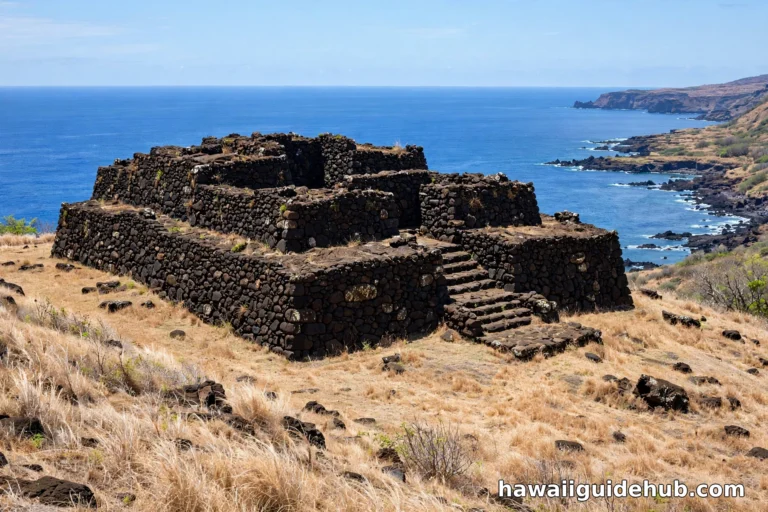
In Hawaiian tradition, a place name is never just a label. Hawaiians speak of wahi pana, storied places, locations made significant by the events, legends, and people attached to them. The island names themselves were remembered in creation chants from ancient times, and the names of far-flung atolls in the Papahānaumokuākea chain, like Manawai and Holoikauaua, preserve descriptions of the birds, seals, and waters found there. To know the name is to know something true about the place.
This is why Hawaiians take correct names seriously. A misspelled or mispronounced name is not a small error. It breaks the link between the word and the place it describes. When the state puts the wrong diacritics on a highway sign, or a visitor calls a sacred valley by a made-up resort name, something real is lost. Learning the names, even a few of them, is one of the most respectful things a visitor can do.
How to Read a Hawaiian Place Name
Most Hawaiian place names are built from a small set of common words, and learning them unlocks hundreds of names at once. Wai means water, so Wailua (two waters), Waimea (reddish water), and Waiʻanae (mullet water) all describe water. Kai means sea, giving us Kailua (two seas). Mauna means mountain, as in Mauna Kea (white mountain) and Mauna Loa (long mountain). Hale means house, as in Haleakalā (house of the sun). Puʻu means hill, pali means cliff, lani means sky or royal, nui means big, iki means small, and nani means beautiful. String them together and names start reading like sentences.
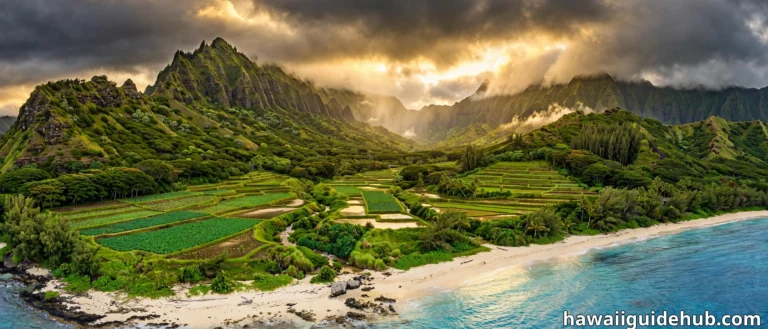
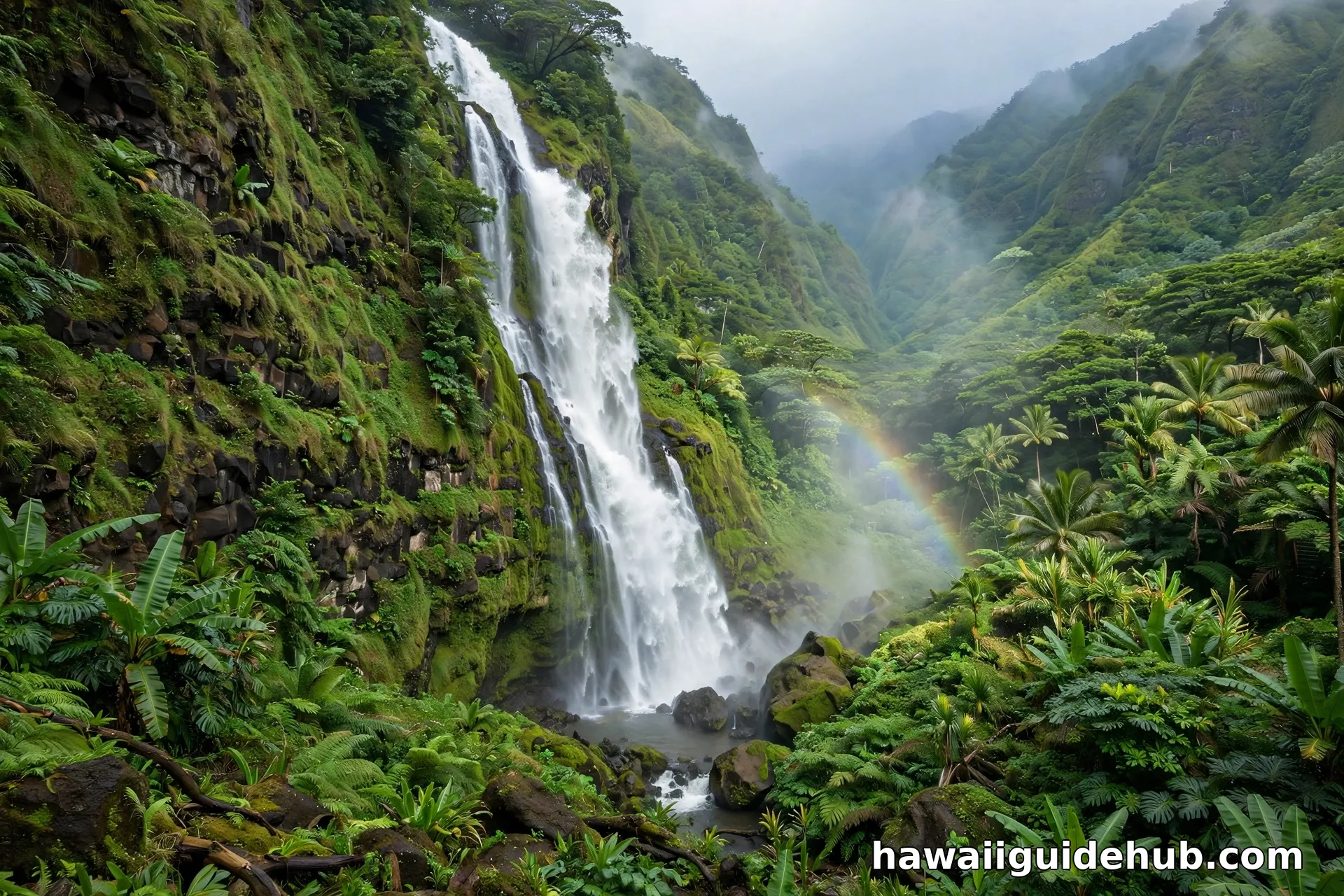
Water names are everywhere because water was everything. The ahupuaʻa, the traditional land divisions that ran from mountain to sea, were organized around streams, and the names recorded where the water was, what it looked like, and who had rights to it. A valley waterfall like Mānoa Falls sits in Mānoa Valley, whose name means vast or deep, a fair description of one of the great amphitheater valleys of Oʻahu.
Famous Place Names and What They Mean
Here are the names almost every visitor meets, with the meanings recorded in the standard references. A few carry notes, because not every meaning is as settled as the guidebooks pretend.
| Waikīkī (Oʻahu) | Spouting water, for the springs that once fed the area |
| Honolulu (Oʻahu) | Sheltered bay |
| Lēʻahi (Oʻahu) | Brow of the tuna; the crater English speakers call Diamond Head |
| Haleakalā (Maui) | House of the sun |
| Mauna Kea (Hawaiʻi Island) | White mountain, for its winter snowcap |
| Kailua (Oʻahu) | Two seas, for its two lagoons |
| Lahaina (Maui) | Cruel or merciless sun, for its hot, dry climate |
| Hāna (Maui) | Work or craft |
| Kāneʻohe (Oʻahu) | Bamboo husband, from an old legend |
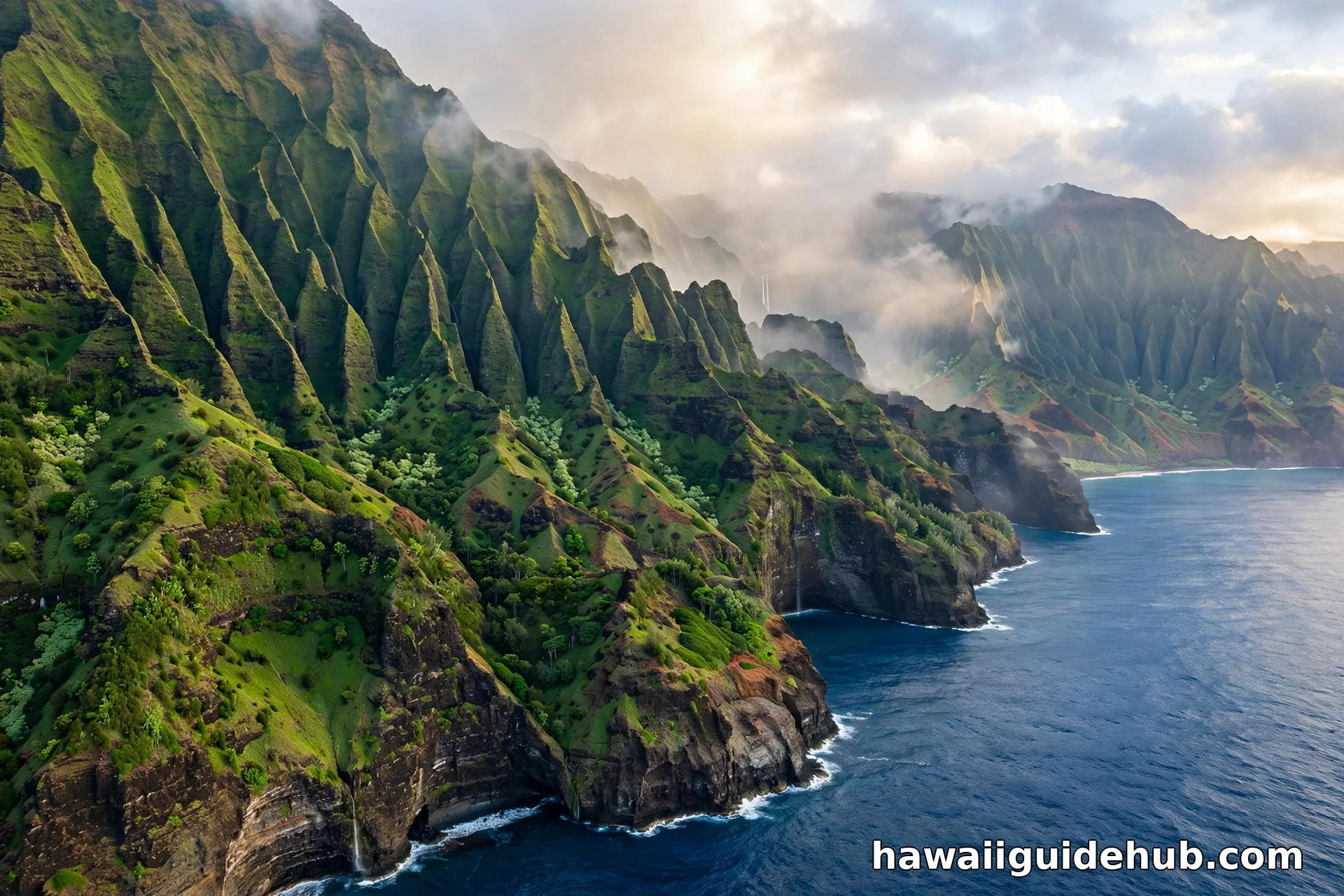
| Nā Pali (Kauaʻi) | The cliffs |
| Wailua (Kauaʻi) | Two waters |
| Waimea (multiple islands) | Reddish water |
| Hanalei (Kauaʻi) | Crescent bay; see our guide to Hanalei |
| Kona (Hawaiʻi Island) | Leeward, the dry side of the island |
Names That Tell Stories
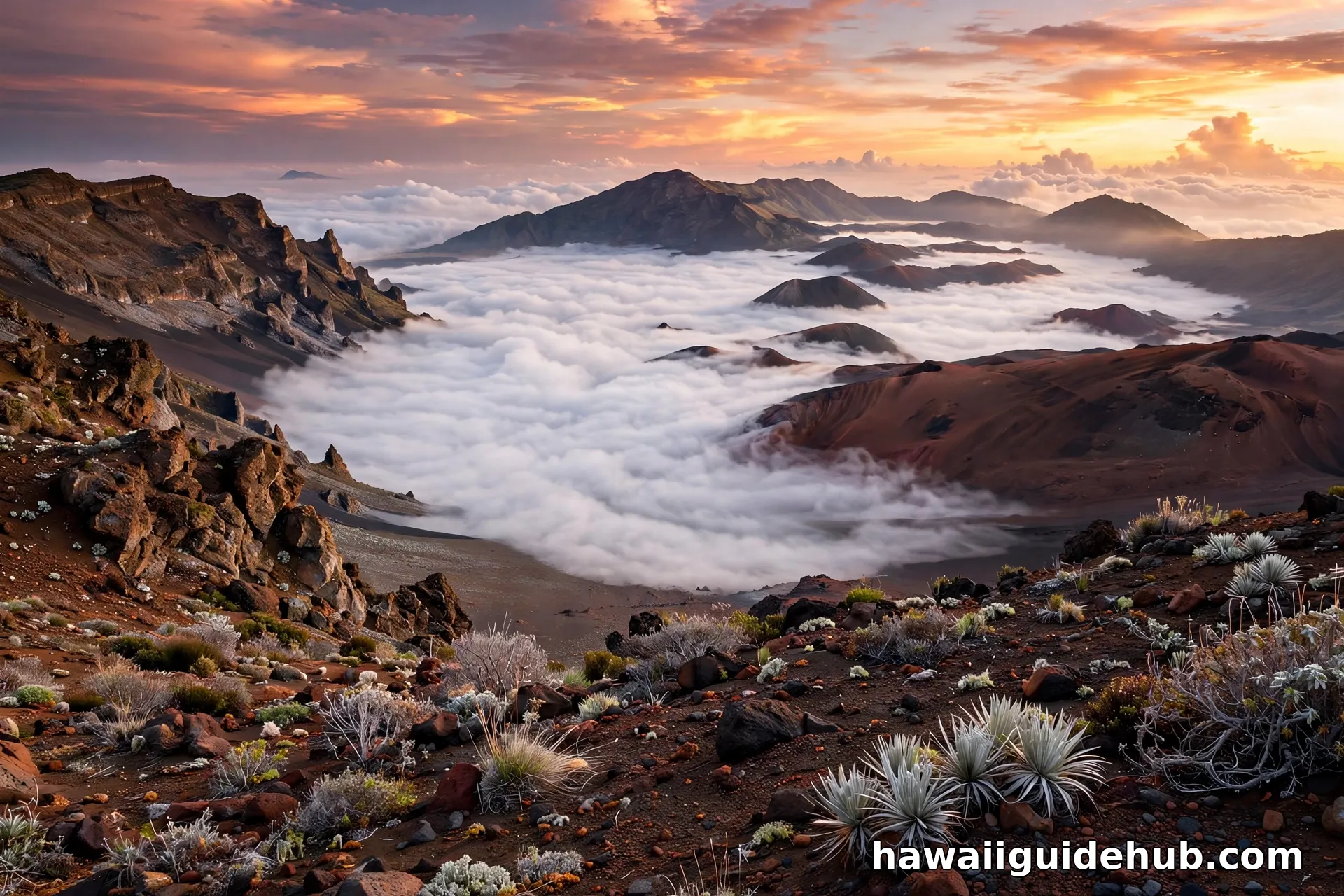
Some names carry full legends. Haleakalā, the great shield volcano of Maui, is the house of the sun because legend says the demigod Māui lassoed the sun from its summit to slow its journey across the sky and lengthen the day. Standing at the summit at dawn, above a sea of clouds, the name feels less like poetry and more like a field report. Our guide to Haleakalā at sunset covers the practical side of visiting the mountain whose name you now understand.
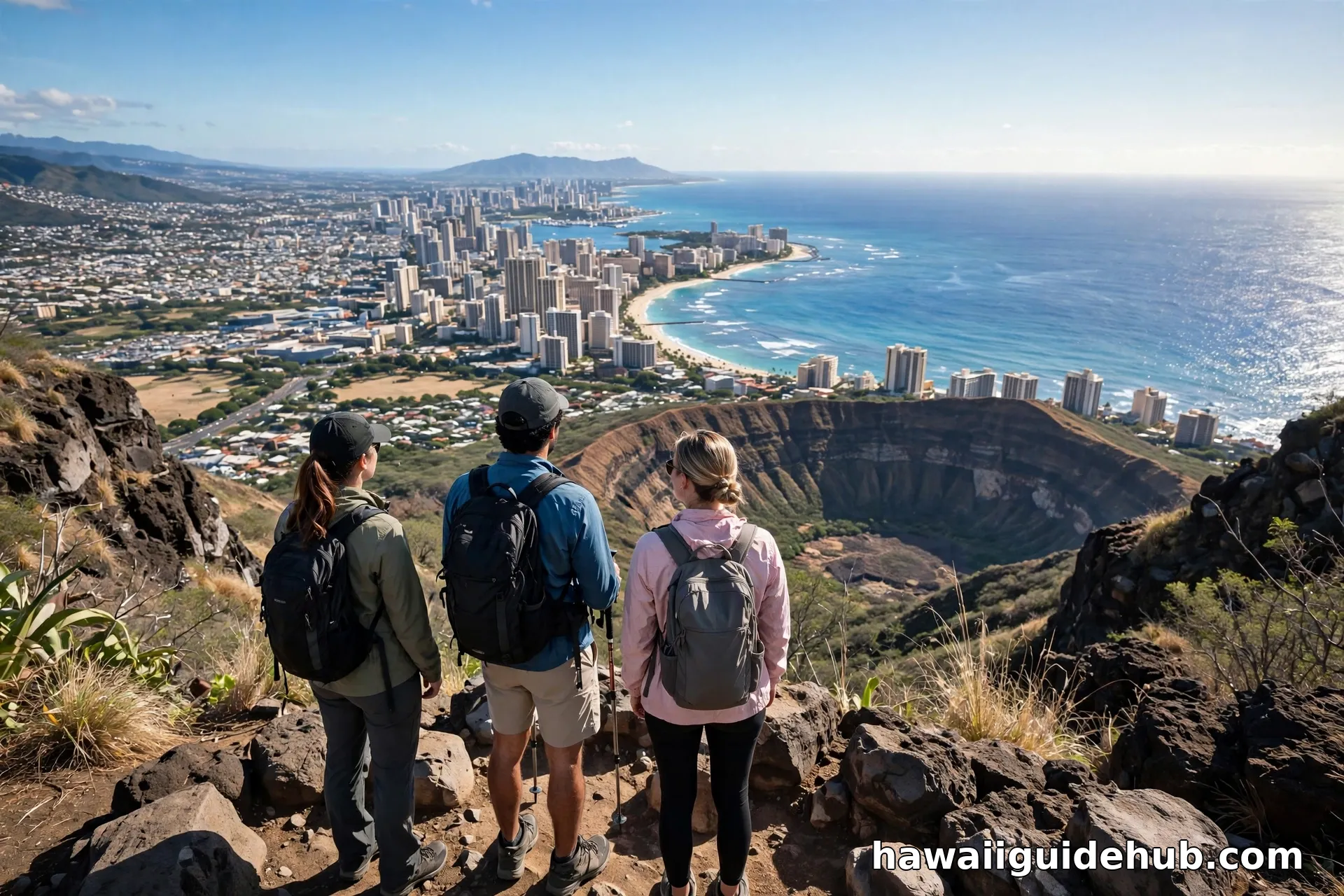
Lēʻahi means the brow of the tuna, because the crater’s profile resembles the sloping forehead of the fish. The English name, Diamond Head, came from nineteenth-century sailors who mistook the calcite crystals glittering in the crater walls for diamonds. Both names stuck, and both tell you something: one about the shape of the land, the other about the newcomers who renamed it.
Kāneʻohe, the windward Oʻahu town, means bamboo husband, from a legend about a local woman who compared her husband unfavorably with the bamboo. Hanauma Bay means curved bay, a plain description of its horseshoe shape. These names reward curiosity. Behind almost every one is either a sharp observation of the land or a story someone thought worth keeping.
The Board That Guards the Names
Official spellings in Hawaiʻi are not left to chance. The Hawaiʻi Board on Geographic Names, a state board, is responsible for designating the official names and spellings of geographic features across the islands. In the late 1990s, when the U.S. Geological Survey began updating its maps of Hawaiʻi and adding diacritical marks, the board took on a massive project: reviewing each of the more than ten thousand names on the federal maps and in the Geographic Names Information System, and adding the ʻokina and kahakō where the evidence supports them.
The board’s policy is careful. It adds diacritical marks only where there is solid evidence for them. Where the evidence is thin, the name is left without marks until further research is done. The primary reference is Place Names of Hawaiʻi by Mary Kawena Pukui, Samuel Elbert, and Esther Mookini, the landmark dictionary of Hawaiian place names, and the board completed a formal style guide for Hawaiian geographic names in 2015. Members of the public can even propose new names: when a 2018 lava flow feature on Hawaiʻi Island needed a name, the community process produced Ahuʻailāʻau, which the board adopted over the placeholder Fissure 8.
This work connects directly to the islands’ history. Many names were mangled in the nineteenth and twentieth centuries when surveyors, mapmakers, and developers wrote down what they thought they heard, dropping the ʻokina and kahakō entirely. Restoring the correct spellings is part of the same cultural recovery traced in our guide to Hawaiʻi’s history before statehood: putting the language back where it belongs, one sign at a time.
Traditional Names Versus Modern Names
Not every name on a Hawaiʻi map is ancient. Many beach and neighborhood names visitors know best were coined by developers in the twentieth century. Lanikai, often translated as heavenly sea, is a 1920s subdivision name. Its traditional name is Kaʻōhao. The state highway department is now surveying Maui street signs with community input to restore correct Hawaiian spellings, consulting the Ulukau Hawaiian place names database and native speaker communities. Publications like Hawaiʻi Business Magazine have committed to using traditional names first, with the familiar nickname in brackets.
Some traditional names survive mainly in local use. The beach most visitors call Sandy Beach is Awāwamalu. Sunset Beach is Paumalū. The City of Refuge on Hawaiʻi Island is Puʻuhonua O Hōnaunau, and Rainbow Falls near Hilo is Waiānuenue, rainbow water. Using the traditional name when you know it is a small sign of respect, and it often teaches you something the English nickname never could.
Three Misconceptions About Hawaiian Place Names
First, not every popular meaning is settled. Oʻahu is widely said to mean the gathering place, but the great place-name references note that no meaning was recorded in the early scholarship, and the gathering place interpretation appears to date only to the 1920s. It may be right, or it may be a later invention. A confident translation in a guidebook is not always the final word.
Second, duplicate names are common. Waikoloa on Hawaiʻi Island and Waikōloa on Oʻahu are different places with different spellings, distinguished only by a kahakō. Kailua exists on more than one island. Always check which island a name belongs to before you navigate to it.
Third, the ʻokina and kahakō are not decoration. Leaving them out can change the meaning entirely or make a name unpronounceable to a Hawaiian speaker. Haleakala without the final kahakō is simply misspelled. When you write the names, copy the marks. Your phone keyboard can do it, and the effort is noticed.
How to Pronounce Hawaiian Place Names
Hawaiian pronunciation is blessedly consistent. There are only thirteen sounds, and each letter is always pronounced the same way. The five vowels are a as in father, e as in met, i as in see, o as in oh, and u as in cool. Sound out every vowel, even when several come in a row: Kailua is kah-ee-loo-ah, four syllables, not two. The ʻokina is a full consonant, a glottal stop like the catch in the middle of uh-oh. The kahakō, the macron, simply holds the vowel longer. And W is pronounced like V when it follows i or e, which is why Hawaiʻi is ha-vai-ee, not ha-wai-ee.
Stress usually falls in predictable places, but the practical rule for visitors is simpler: say every vowel, pause lightly at each ʻokina, and hold the kahakō vowels a beat longer. You will be closer than ninety percent of visitors. Do not anglicize the names into English rhythms. Kaa-na-pa-lee with flat English vowels is not Kaʻanapali, and locals hear the difference immediately.
Visiting with respect: learn the names of the places you actually go, and say them as correctly as you can. Use the traditional name when you know it, keep the ʻokina and kahakō when you write them, and never use a sacred place name as a joke or a brand. If a local corrects your pronunciation, take it as a gift. It means they think you are worth teaching.
Frequently Asked Questions
What does Waikīkī mean?
Waikīkī means spouting water. The name remembers the freshwater springs, streams, and fishponds that covered the area long before it became a beach resort district. The wai, water, in the name is the giveaway: this was wetland, not just beach.
What does Haleakalā mean?
Haleakalā means house of the sun. According to legend, the demigod Māui stood at the summit and lassoed the sun to slow its passage across the sky. Note the kahakō over the final a: without it, the name is misspelled.
Why do some Hawaiian place names have apostrophes?
That mark is the ʻokina, and it is not an apostrophe. It is a consonant representing a glottal stop, the catch in your throat between the syllables of uh-oh. It changes meanings, so Hawaiʻi with the ʻokina and Hawaii without it are technically different words. Always include it.
What is the traditional name for Diamond Head?
Lēʻahi, which means the brow of the tuna, describing the crater’s profile. Diamond Head was named by nineteenth-century sailors who mistook calcite crystals in the crater for diamonds. Both names are in common use today.
Who decides the official spelling of a Hawaiian place name?
The Hawaiʻi Board on Geographic Names, a state board. It reviews the names on federal maps, adds ʻokina and kahakō only where the evidence supports them, and follows the reference Place Names of Hawaiʻi by Pukui, Elbert, and Mookini along with community and elder input.
Is it Lanikai or Kaʻōhao?
Both, but they are different kinds of names. Kaʻōhao is the traditional Hawaiian name. Lanikai, often translated as heavenly sea, is a name coined by developers in the 1920s. Knowing both tells you the history of the place in a single glance.
Hawaiian place names are the islands introducing themselves. Each one carries a description of the land, a fragment of legend, or a memory of the people who named it, and the state is still working, name by name, to spell them correctly. Learn the building blocks, say every vowel, keep the ʻokina and kahakō, and the map of Hawaiʻi will start reading like a story. That is exactly what it was meant to be.