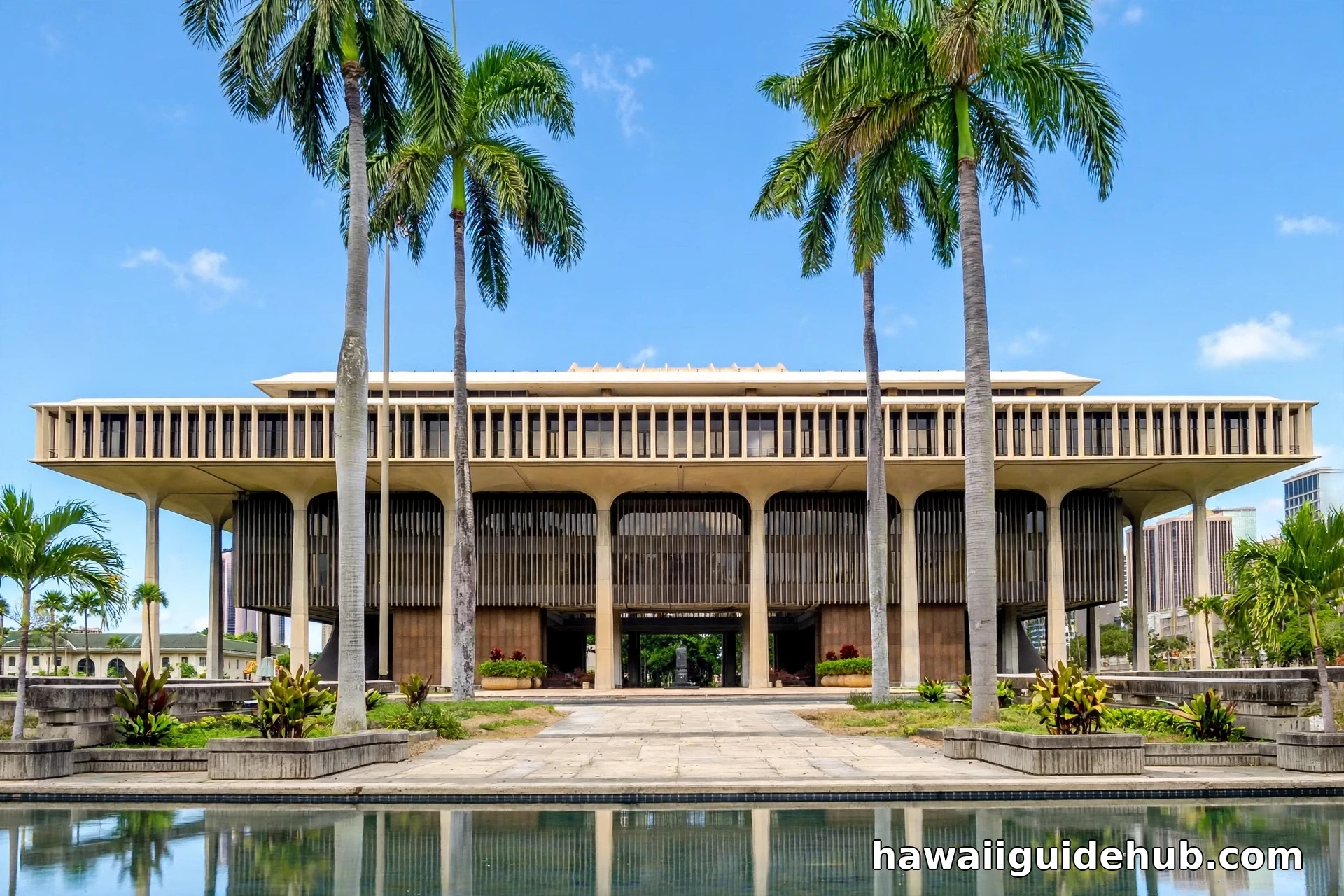
Hawaii Statehood: How the Islands Became the 50th State

On August 21, 1959, President Dwight D. Eisenhower signed a proclamation admitting Hawaiʻi to the Union as the 50th state. The moment closed a journey that had begun 61 years earlier, when the islands were annexed as a territory in 1898, and it made Hawaiʻi the only U.S. state that was once a recognized independent kingdom, the only one made up entirely of islands, and the only one south of the Tropic of Cancer.
This is the single complete guide to Hawaii statehood history. It covers why statehood took six decades, the Hawaii Admission Act of 1959, the plebiscite in which 94 percent of voters said yes, the exact timeline of 1959, what changed in the islands after admission, and how statehood is remembered and debated in Hawaiʻi today.
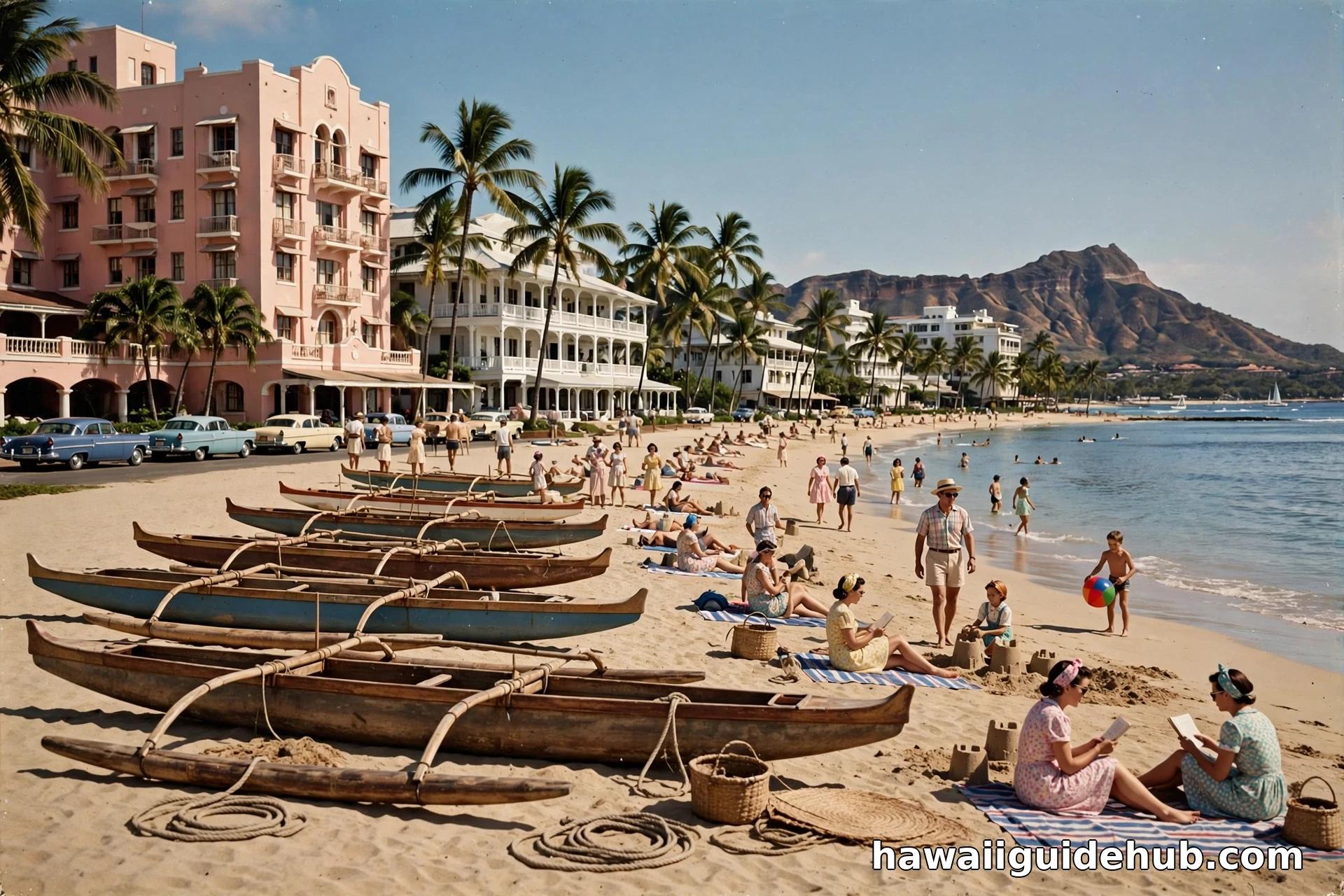
Hawaii Statehood at a Glance
| From territory to 50th state: the turning points | What happened | Why it mattered |
|---|---|---|
| March 18, 1959 | The Hawaii Admission Act signed (enabling law) | Congress said yes; the president signed |
| June 27, 1959 | Plebiscite: 132,773 yes to 7,971 no (94 percent) | One of the most lopsided votes in US history |
| August 21, 1959 | Hawaiʻi admitted as the 50th state | The date the islands joined the Union |
| 1898 to 1959 | 61 years as a territory | Two generations waited for statehood |
| First governor | William F. Quinn | First to hold the new office |
| First congressional delegation | Senators Hiram Fong and Oren Long, Representative Daniel Inouye | Hawaiʻi’s first voices in Washington |
| State holiday | Statehood Day (Admission Day), third Friday in August | The state still celebrates the date |
What Statehood Meant for Hawaiʻi
Statehood admitted Hawaiʻi to the Union “on an equal footing with the other states,” in the words of Eisenhower’s proclamation. That phrase carried real weight. As a territory, Hawaiʻi had a nonvoting delegate in Congress and a governor appointed by the president. As a state, it gained two U.S. senators, voting representation in the House, votes in the Electoral College, and the right to elect its own governor. The 1950 state constitution, ratified by Hawaiʻi’s voters years earlier, took effect the day statehood was proclaimed.
The Admission Act also settled the islands’ boundaries and land questions. It defined the new state’s borders, transferred most of the former crown and government lands to the state (to be held in trust, with revenues dedicated to public purposes including the betterment of Native Hawaiians), and reserved certain parcels, mostly military installations, to the federal government. These land provisions, and the trust they created, remain central to Hawaiian politics today.
Why Statehood Took 61 Years
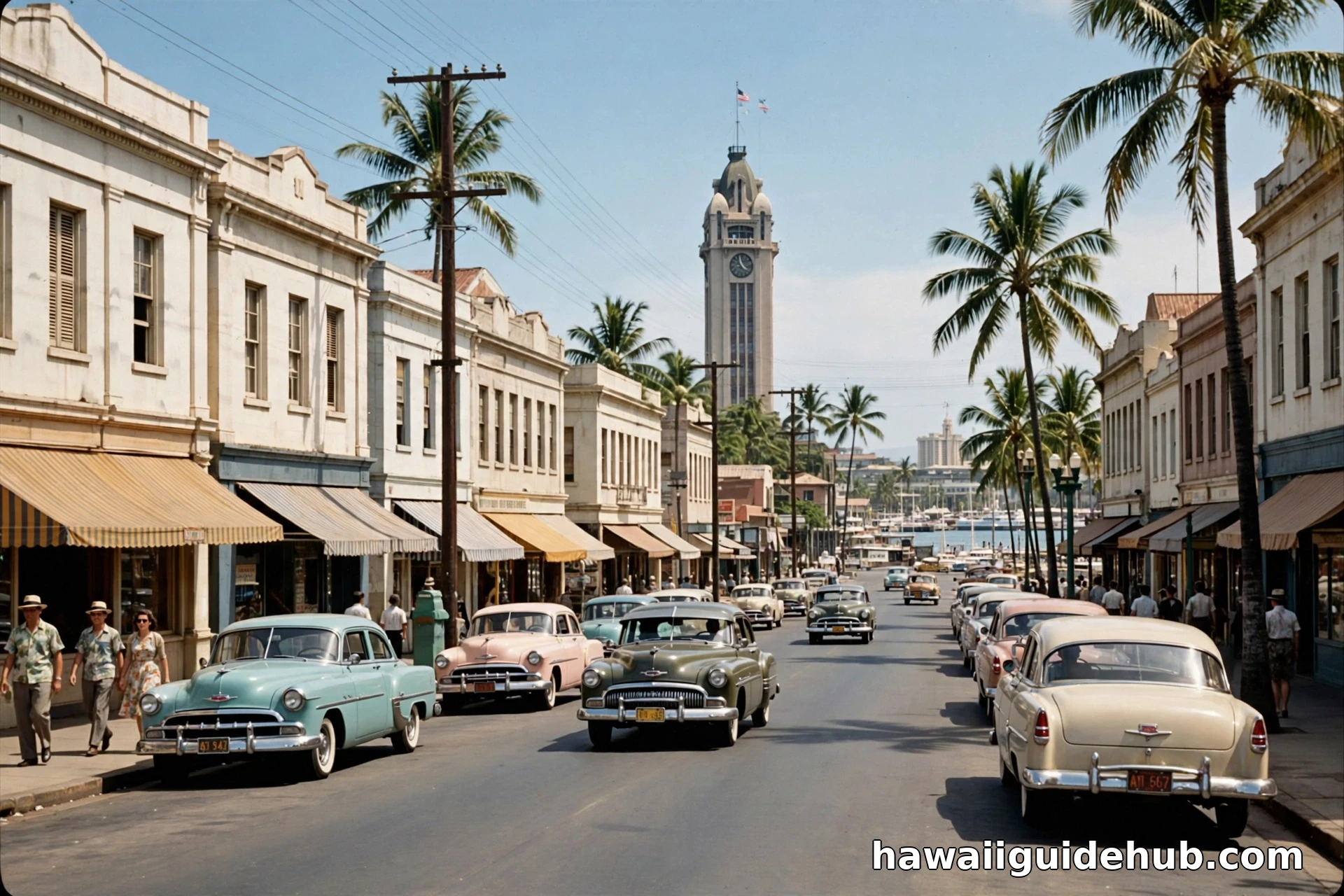
The first statehood bill was introduced in Congress in 1919, just two decades after annexation. It went nowhere, and for decades the obstacles were political rather than practical. In Washington, Southern senators opposed admitting a territory whose population was majority Asian American and Native Hawaiian, fearing two new senators who would vote for civil rights. The powerful sugar and pineapple companies, the so-called Big Five, were content with territorial status, which gave them tariff benefits without federal labor and tax rules. And many in Congress simply saw the islands as too distant, too different, and too strategically sensitive to become a state.
World War II changed the equation. After the attack on Pearl Harbor on December 7, 1941, Hawaiʻi lived under martial law for nearly three years, the only part of the United States ever placed under full military rule. More than 100,000 Hawaiʻi residents served in the armed forces, including the famed 442nd Regimental Combat Team and 100th Infantry Battalion, Japanese American units that became among the most decorated in U.S. military history. The argument that Hawaiʻi’s people had not earned full citizenship collapsed. Veterans returned home demanding the vote, the labor movement broke the plantations’ political grip, and by the 1950s statehood had broad support in the islands.
The final breakthrough was a political deal. Alaska, admitted as the 49th state in 1958, was expected to lean Republican, while Hawaiʻi was expected to lean Democratic. Party leaders agreed to move both: Alaska first, then Hawaiʻi. When the Alaska Statehood Act passed, the path cleared, and Hawaiʻi’s bill moved through Congress in the spring of 1959.
The Hawaii Admission Act of 1959
The bill moved with remarkable speed once the logjam broke. The Senate passed it on March 11, 1959, by 76 votes to 15. The House followed on March 12 by 323 to 8. President Eisenhower, who had publicly supported Hawaiian statehood for years, signed it into law on March 18, 1959. But the act did not admit Hawaiʻi by itself. It offered statehood on conditions, and Hawaiʻi’s people had to accept them in a plebiscite before the president could issue the final proclamation.
The conditions were laid out as three propositions. The first asked the central question: “Shall Hawaii immediately be admitted to the Union as a state?” The second asked voters to accept the state’s boundaries as defined in the act and to relinquish claims to land and sea outside them. The third asked voters to accept the act’s remaining provisions, including the federal reservation of certain lands and the terms for property transferred to the new state. All three had to pass.
The Plebiscite: June 27, 1959
On June 27, 1959, Hawaiʻi’s voters went to the polls in one of the most lopsided votes in American history. On Proposition 1, the statehood question, 140,744 ballots were cast: 132,773 voted yes and 7,971 voted no. That is 94 percent in favor, a margin that remains one of the strongest endorsements any state has ever given its own admission. The other two propositions passed by similar margins.
A general election followed on July 28, 1959, choosing the officers the new state would need: a governor, a congressional delegation, and a state legislature. Republican William F. Quinn, the territory’s last appointed governor, won election as the state’s first elected governor. Voters chose Republican Hiram L. Fong and Democrat Oren E. Long as the first U.S. senators and Democrat Daniel K. Inouye, a decorated veteran of the 442nd who had lost his right arm in Italy, as the first U.S. representative. On August 24, 1959, three days after admission, the three congressmen took their oaths in Washington.
August 21, 1959: The 50th State
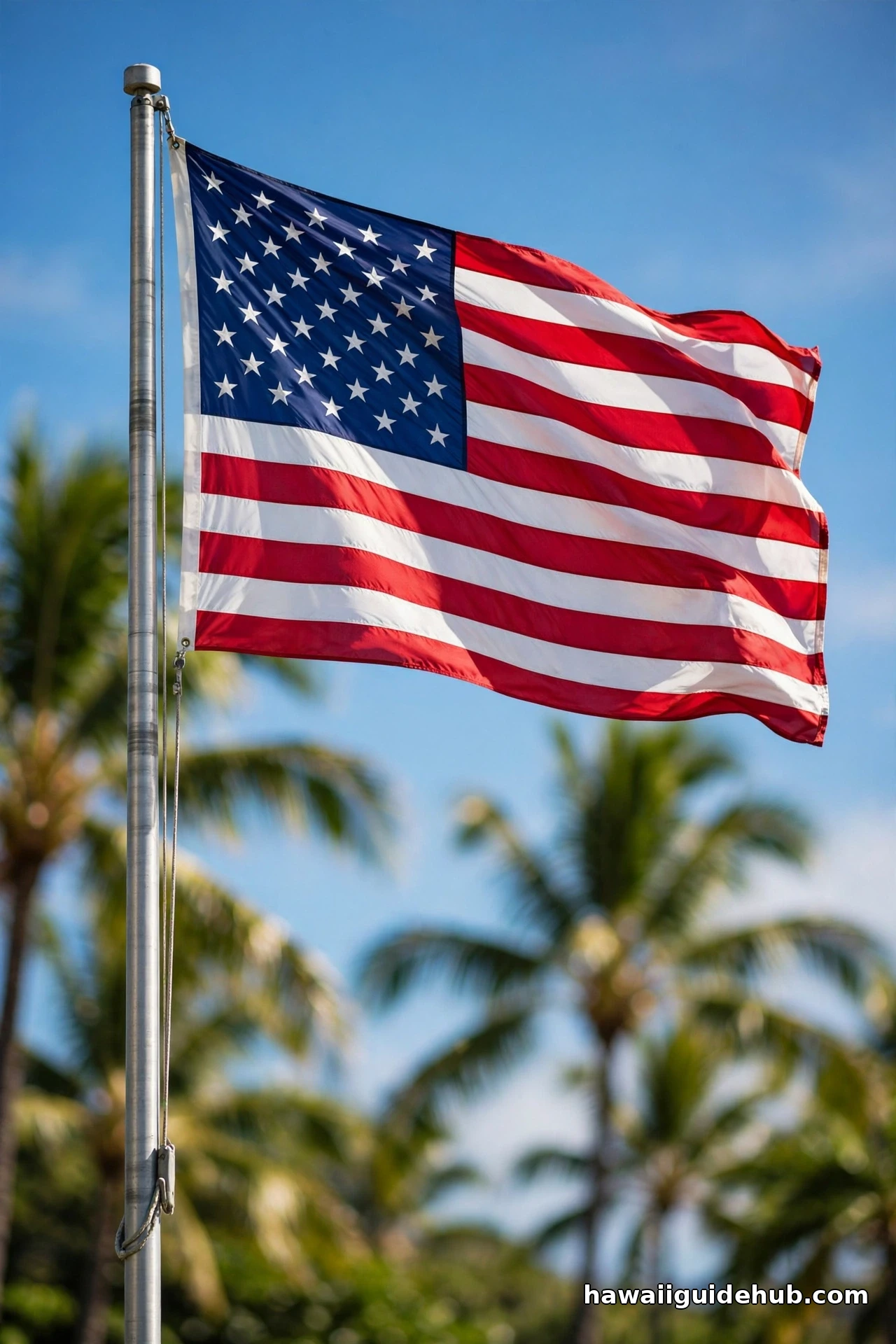
President Eisenhower signed the proclamation of admission on August 21, 1959, declaring that Hawaiʻi’s admission into the Union on an equal footing with the other states was “now accomplished.” Celebrations erupted across the islands: parades, fireworks, and the raising of the new 50-star American flag. Hawaiʻi’s own flag, Ka Hae Hawaiʻi, the flag of the former kingdom, became the state flag, one of the few state flags with a direct royal lineage. The 50-star American flag was raised over the islands that same day, and Hawaiʻi has flown both flags side by side ever since.
The checklist below lays out every major step on the six-decade road from territory to statehood, from the first bill in 1919 to the proclamation of 1959.
What Changed After Statehood
Statehood transformed the islands’ economy almost immediately. Within days of admission, jet airliners began regular service between the mainland and Honolulu, cutting travel time and fares. Tourism, already growing, exploded: visitor numbers climbed through the 1960s as hotels rose along Waikīkī and new resorts spread to the neighbor islands. The old plantation economy of sugar and pineapple began its long decline, replaced by tourism, the military, and construction as the pillars of the state’s economy.
Politically, the new state quickly made its mark. Daniel Inouye would serve in the Senate for nearly fifty years, becoming one of the most powerful figures in Washington. Hiram Fong, the son of Chinese immigrants who had worked his way through Harvard Law School, was the first Asian American U.S. senator. Hawaiʻi’s congressional delegation, far from the marginal role skeptics had predicted, became a fixture of national politics, and the state’s early presidential votes reflected its diverse, Democratic-leaning electorate.
Culturally, the statehood decades brought a Hawaiian renaissance. The 1970s saw a revival of the Hawaiian language, hula, voyaging, and traditional navigation, symbolized by the 1976 voyage of the Hōkūleʻa canoe from Hawaiʻi to Tahiti using only traditional wayfinding. Hawaiian was recognized as an official state language alongside English, immersion schools opened, and a new generation of Native Hawaiians reclaimed cultural practices that the territorial era had pushed to the margins. Statehood had made Hawaiʻi American; the renaissance insisted it remain Hawaiian too.
Statehood Day: The Third Friday in August
Hawaiʻi marks its admission each year on Statehood Day, officially called Admission Day, observed on the third Friday in August. State government offices close, and the day is marked with ceremonies and cultural events celebrating the union of Hawaiʻi and the United States. For many residents it is a point of pride: the day the islands took their equal place in the nation. For others, particularly in the Native Hawaiian sovereignty movement, it is a complicated anniversary, a reminder that statehood followed the 1893 overthrow and the 1898 annexation without ever resolving the underlying questions about the kingdom’s end.
That tension is part of the honest history. In 1993, Congress passed the Apology Resolution acknowledging the U.S. role in the overthrow of the Hawaiian Kingdom, and the sovereignty movement continues to argue that the kingdom was never lawfully extinguished. Visitors who want to understand modern Hawaiʻi should know both stories: the pride of statehood and the unresolved grief of the kingdom’s fall. The map below shows six of the eight main islands that together became the 50th state.
Common Misconceptions About Hawaii Statehood
A few myths persist. The first is that Hawaiʻi became a state right after annexation. In fact, 61 years passed between the Newlands Resolution of 1898 and the proclamation of 1959. The second is that statehood was uncontroversial in the islands. It was broadly popular by 1959, but the 7,971 no votes, and the sovereignty movement that followed, show it was never unanimous. The third is that Alaska and Hawaiʻi were admitted together. Alaska came first, in 1958, as part of the political pairing that made Hawaiʻi’s admission possible. The fourth is that the 50-star flag was designed for Hawaiʻi. The 50-star design was adopted for the new state, but the flag itself belongs to the whole nation, while Hawaiʻi kept its own historic state flag.
Watch: Hawaii Becomes the 50th State
Frequently Asked Questions
When did Hawaii become a state?
August 21, 1959, when President Dwight D. Eisenhower signed the proclamation admitting Hawaiʻi as the 50th state. The Hawaii Admission Act had been signed on March 18, 1959, and voters approved statehood in a plebiscite on June 27, 1959.
What number state is Hawaii?
The 50th. Alaska was admitted as the 49th state in 1958, and no state has been admitted since, so Hawaiʻi remains the most recent addition to the Union.
How did Hawaii vote on statehood?
In the June 27, 1959 plebiscite, 132,773 voted yes and 7,971 voted no on Proposition 1, about 94 percent in favor. Voters also approved the propositions on state boundaries and the Admission Act’s other provisions.
Why did it take so long for Hawaii to become a state?
Racial politics in Congress (Southern senators opposed a majority nonwhite state), the power of the plantation companies under territorial rule, strategic concerns about the Pacific, and simple distance all played a role. World War II service, the labor movement, and the Alaska statehood pairing finally broke the deadlock in the 1950s.
Who was Hawaii’s first governor?
William F. Quinn, elected in July 1959 and the last federally appointed territorial governor before that. The first congressional delegation was Senators Hiram Fong and Oren Long and Representative Daniel Inouye.
Is there a Hawaii Statehood Day holiday?
Yes. Statehood Day, officially Admission Day, is observed on the third Friday in August each year. State offices close, and the day is marked with celebrations of Hawaiʻi’s place in the Union.
Hawaii statehood in 1959 was the final step in a transformation that began with the kingdom’s overthrow in 1893 and annexation in 1898. The 94 percent vote, the Admission Act, and the August 21 proclamation gave the islands full membership in the American republic, and the decades since have made Hawaiʻi one of the most culturally distinctive states in the nation. Understanding how long and how hard the road was is the best way to appreciate what the 50th star represents.