Box Jellyfish Season in Hawaii: Moon Calendar, Beaches and Sting Treatment

Box jellyfish season in Hawaii is not really a season at all. These small, nearly transparent stingers arrive on Oahu’s south-facing beaches like clockwork, eight to twelve days after every full moon, twelve months a year. If you have been searching for anything about box jellyfish season in Hawaii, this is the one complete guide you need: when they arrive, which beaches they hit, how to check the official calendar before you swim, and the evidence-based way to treat a sting if one finds you.
Hawaii’s box jellyfish are famous among marine biologists for their predictability. University of Hawaii researchers tracked arrivals at Waikiki Beach for fourteen years and confirmed what lifeguards had long observed: month after month, year after year, the jellyfish come ashore on the same lunar schedule, apparently to reproduce. No other place in the world has such a reliable box jellyfish calendar, which means visitors who know the pattern can plan around it completely.
Box Jellyfish at a Glance
| THE PATTERN | |
| When they arrive | 8 to 12 days after each full moon, every month of the year |
| The peak days | Usually days 9, 10, and 11 after the full moon |
| Where they gather | South-facing Oʻahu beaches: Waikīkī, Ala Moana, Hanauma Bay; occasionally Ko Olina and Kailua-Kona |
| IF YOU ARE STUNG | |
| First aid | Douse with vinegar, pluck tentacles with tweezers, immerse in 113 F hot water |
| Do NOT | Do not rinse with seawater or fresh water, do not scrape, do not apply ice |
| Get help when | See a lifeguard; call 911 for breathing difficulty, muscle cramps, or severe pain |
| BEFORE YOU SWIM | |
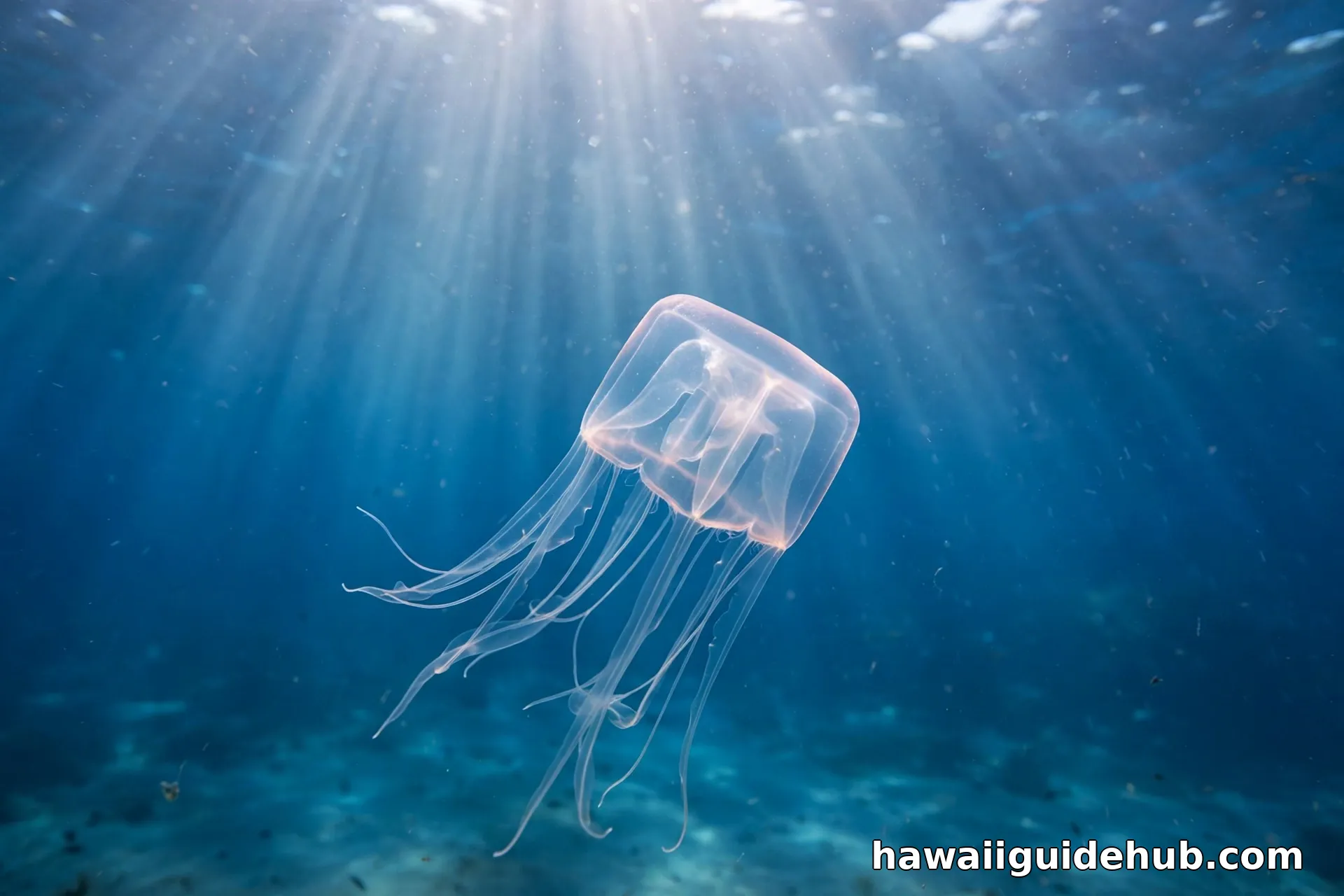
| The species | Alatina alata (Hawaiian box jelly); bell 1 to 3 inches, tentacles up to 2 feet long |
| The official calendar | Waikīkī Aquarium box jellyfish calendar (check before swimming) |
Why Box Jellyfish Follow the Moon
The Hawaiian box jellyfish, Alatina alata, spends most of its life in deep offshore water. Once a month, in the days following the full moon, mature jellyfish ride the tides toward shore to spawn. The Waikiki Aquarium has tracked these arrivals for decades, and a fourteen-year University of Hawaii study confirmed the rhythm: in a 400-meter stretch of Waikiki Beach, an average of 396 jellyfish arrived each lunar month, with counts ranging from just 5 to as many as 2,365 in a single event.
Because the schedule is lunar, not seasonal, there is no safe month and no dangerous month. Box jellyfish arrive in January and July alike, always eight to twelve days after the full moon. The practical upshot for travelers is simple: whenever your trip falls, check the moon. If your beach days land on days 9, 10, or 11 after the last full moon, south shore swimming needs a second thought.

The Box Jellyfish Calendar: How to Check Before You Swim
The single most useful tool is the box jellyfish calendar published by the Waikiki Aquarium. It marks the expected influx days for every month of the year based on the lunar cycle. Before any south shore beach day, open the calendar and check where your dates fall. If you are within the 8 to 12 day window after the full moon, plan accordingly.
Lifeguards post box jellyfish warning signs at guarded beaches when the influx arrives, and the city’s Ocean Safety Division issues advisories through the peak days. Hanauma Bay has closed to swimmers during heavy influxes. But signs go up only at lifeguarded beaches, and an unguarded cove can hold jellyfish with no warning posted. The calendar, plus a quick question to any lifeguard about current conditions, is your reliable combination. Many longtime residents simply switch to windward or north shore beaches during influx weeks, since the box jellies concentrate on the south shore.
Which Beaches Are Affected
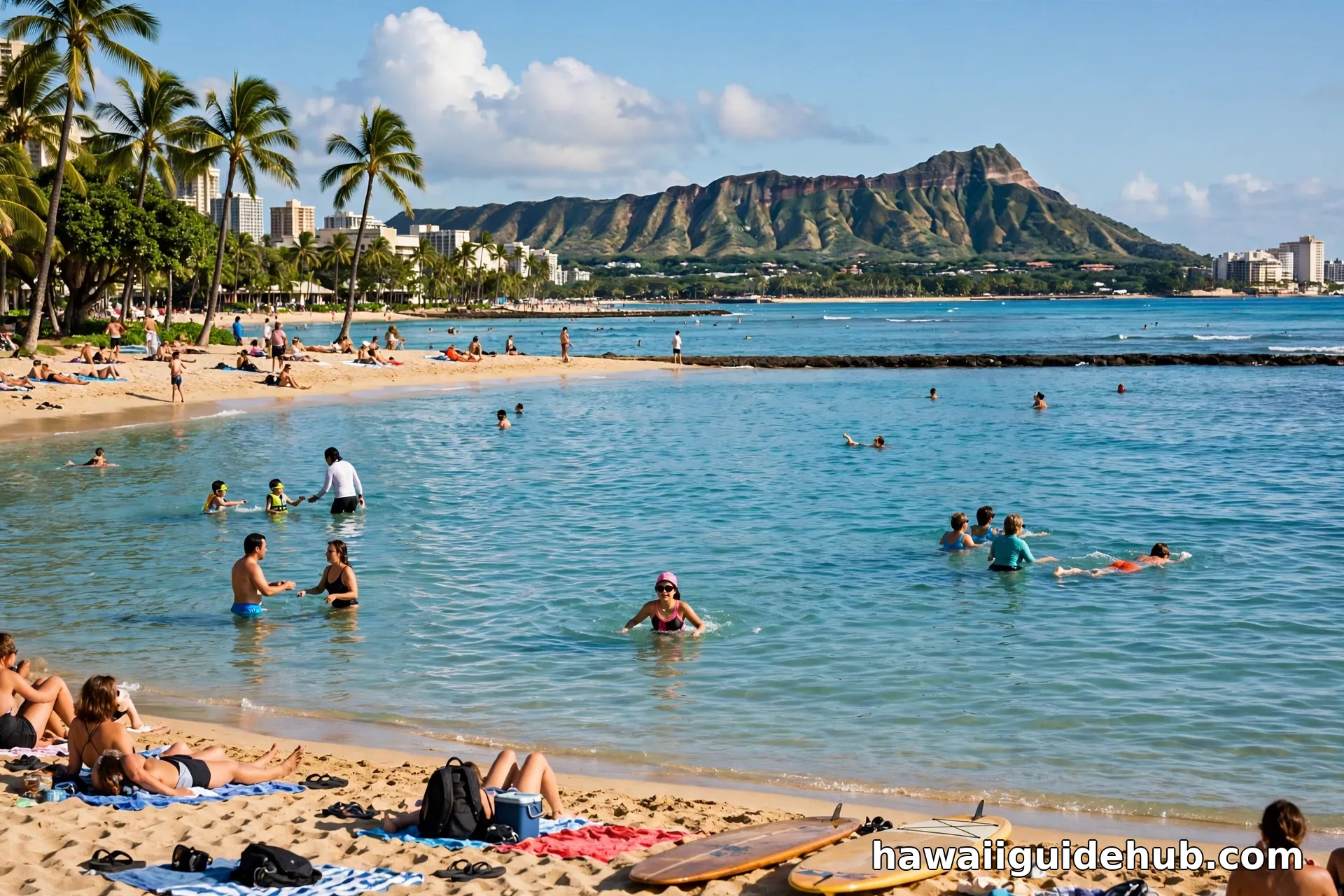
Box jellyfish hit Oahu’s south-facing shores hardest. Waikiki is the epicenter, which is unfortunate given that it is also the island’s most visited beach. Ala Moana Beach Park and Hanauma Bay see regular influxes as well. Ko Olina on the southwest coast occasionally reports them. The same calm, leeward currents that make the south shore perfect for swimming also carry the jellyfish gently to the sand.
Other islands are affected far less often. The Big Island’s Kailua-Kona coast sees a few sightings each year. Maui and Kauai are usually spared, though Poipu and Salt Pond on Kauai have had occasional influxes. If you are island hopping during a peak window, the neighbor islands’ south shores are still worth a check, but your odds of an encounter drop sharply outside Oahu.
What a Box Jellyfish Sting Feels Like
A box jellyfish sting is immediately, unmistakably painful. Victims describe a sharp burning sensation, like a hot wire laid across the skin. Long, stringy red welts rise where the tentacles touched, and the pain can throb for hours. Each tentacle carries about 5,000 stinging cells, and only a tiny fraction of them fire on first contact, which is why how you handle the sting in the first minutes matters so much.
Most stings, while miserable, are not life threatening. But severe stings can cause muscle cramps, nausea, difficulty breathing, and in rare cases dangerous reactions. Anyone who has trouble breathing, feels faint, or has pain spreading beyond the sting site needs emergency medical care immediately. Children, with their smaller body mass, deserve extra caution and faster escalation to professional care.
How to Treat a Box Jellyfish Sting: What Science Says
For years, beach advice about jellyfish stings was a mess of folk remedies, and some of the most repeated tips actually make stings worse. Researchers at the University of Hawaii’s Pacific Cnidaria Research Laboratory tested the common treatments against live Hawaiian box jelly tentacles using human tissue models, and the results were clear enough to rewrite the guidance.
Step 1: Douse with vinegar
Flood the sting with white vinegar and keep it wet. Vinegar irreversibly stops the stinging cells from firing, which prevents the huge reserve of unfired cells on the tentacle from injecting more venom. This is the single most important step. Waikiki lifeguard towers carry vinegar for exactly this reason.
Step 2: Pluck, do not scrape
Remove tentacles by plucking them off with tweezers or a gloved hand. Do not scrape them with a credit card or rub with sand, because dragging the tentacle across skin fires more stinging cells. Do not rinse with seawater or fresh water first; moving water and fresh water both trigger more cells to fire.
Step 3: Apply heat, not ice
Immerse the sting in hot water at about 113 degrees Fahrenheit, or apply a hot pack, for up to 45 minutes. Heat breaks down the venom, which is highly heat sensitive, and consistently outperforms ice in studies. Ice is not just unhelpful for Hawaiian box jelly stings; the research found it more than doubled the venom’s damaging activity. Use an unaffected limb to test the water temperature so you do not scald the sting.
After first aid, see a lifeguard. They treat stings every month and will tell you whether you need more care. Call 911 for any breathing difficulty, chest tightness, spreading pain, or sting to the face. Note that this vinegar and heat protocol is specific to box jellyfish. If a lifeguard identifies the culprit as a Portuguese man o war instead, follow their instructions for that species.
How to Avoid Box Jellyfish Entirely
Avoidance is easy once you know the pattern, and it beats even the best first aid. Check the Waikiki Aquarium box jellyfish calendar when you plan your beach days. During the 8 to 12 day post full moon window, choose windward, east, or north shore beaches instead of the south shore. On Oahu, that means Kailua, Lanikai, or the North Shore rather than Waikiki. Always swim at lifeguarded beaches and read the posted warning signs; they exist because the lifeguards are seeing jellyfish in the water that day.
Scan the waterline before getting in. Box jellyfish often wash onto the sand, and seeing them on the beach tells you they are in the water too. If you spot the small transparent cubes with long tentacles on the sand, pick a different beach or a different day. For families planning swim days, our guide to Kauai beaches for swimming conditions and the best island for first time visitors can help you pick calmer, lower risk swimming spots, and guided snorkel experiences in Kona run with professionals who monitor conditions for you.
Box Jellyfish and Kids: Extra Care for Families
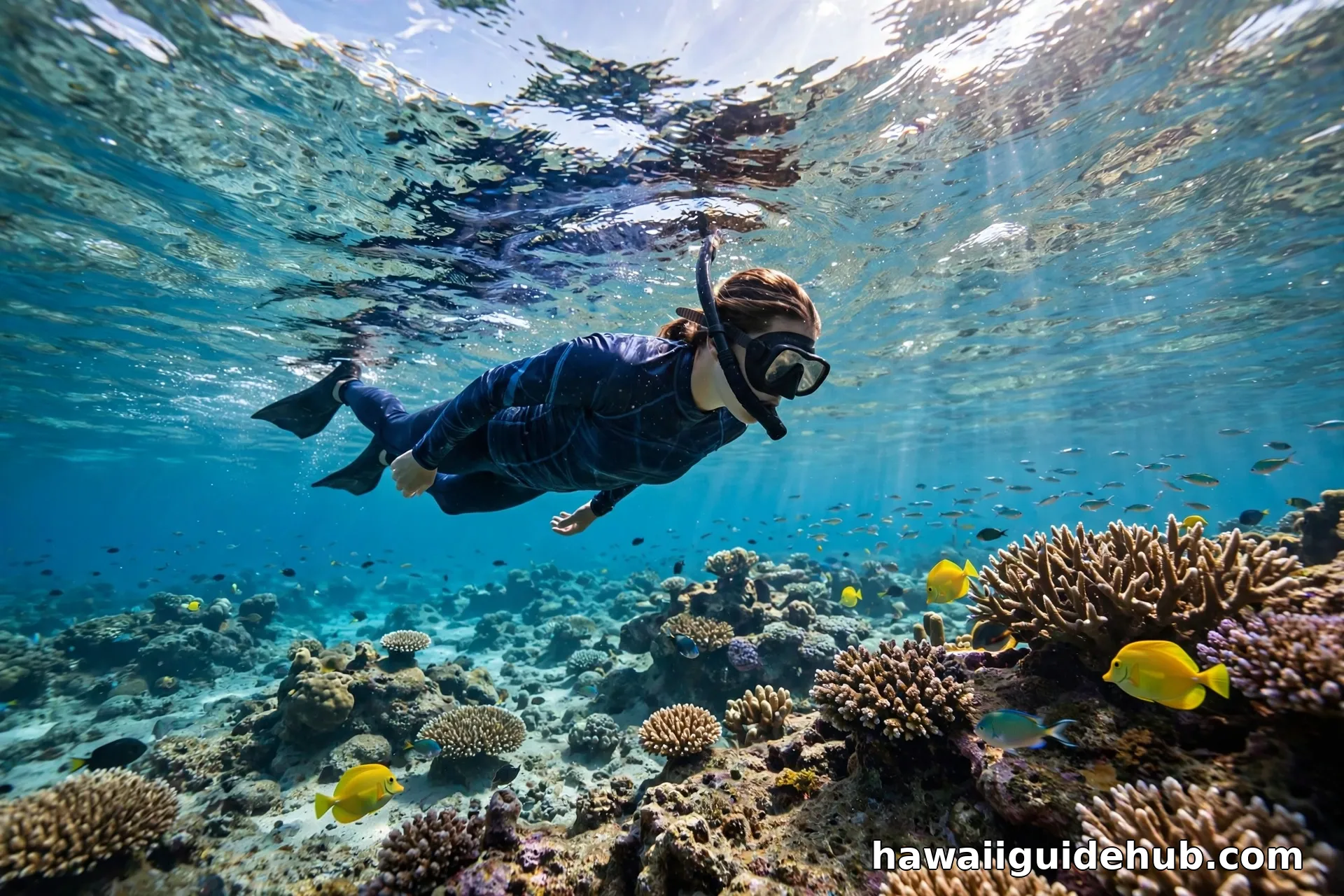
Children are more vulnerable to box jellyfish stings because the same amount of venom acts on a smaller body. If you are traveling with kids during an influx window, the safest move is simply to choose a different shore for swimming days. Full body swim suits, rash guards, or dive skins give real protection, since the tentacles cannot sting through fabric, and many parents dress kids in them for south shore swimming during jellyfish weeks.
Teach kids what to do before you go to the beach: if something stings them in the water, they should get out calmly, tell an adult immediately, and not rub the spot. Knowing the plan in advance keeps a scary moment from becoming a panicked one. Keep the number for poison control and the local urgent care clinic saved in your phone, just in case.
Video: Box Jellyfish Research at the University of Hawaii
University of Hawaii researchers explain their breakthrough work on box jellyfish venom and sting treatment.
Frequently Asked Questions
When is box jellyfish season in Hawaii?
There is no single season. Box jellyfish arrive on Oahu’s south-facing beaches 8 to 12 days after every full moon, all twelve months of the year. Peak days are usually 9, 10, and 11 days after the full moon. Check the Waikiki Aquarium box jellyfish calendar for exact dates.
Which Hawaii beaches have box jellyfish?
Waikiki, Ala Moana, and Hanauma Bay on Oahu’s south shore are the main hotspots, with occasional influxes at Ko Olina. Kailua-Kona on the Big Island sees a few sightings per year. Maui and Kauai are rarely affected. Windward and north shore beaches on Oahu are generally safe from box jellyfish.
What should you put on a box jellyfish sting?
White vinegar first, to stop unfired stinging cells, then hot water at about 113 degrees Fahrenheit for up to 45 minutes. Pluck tentacles with tweezers rather than scraping. Do not use seawater, fresh water, or ice, which University of Hawaii research found can worsen the sting.
Can box jellyfish stings be deadly?
Hawaiian box jellyfish stings are usually painful but not life threatening. However, severe stings can cause breathing difficulty and dangerous reactions, especially in children or people with allergies. Seek emergency care immediately for any breathing trouble, chest tightness, or spreading symptoms.
Should you still swim at Waikiki during box jellyfish days?
It is safer to choose another beach during the influx window. If you do swim at Waikiki on those days, stay at a lifeguarded section, read the warning signs, ask the lifeguard about current conditions, and consider a full body swim suit for protection.
Do box jellyfish sting through swim suits?
Tentacles cannot sting through fabric. A full body lycra suit, dive skin, or even a regular swim shirt and leggings provides real protection, which is why many swimmers wear them during jellyfish weeks.
Box jellyfish are one of the few ocean hazards in Hawaii you can predict with a calendar, and that makes them one of the easiest to avoid. Check the moon, check the Waikiki Aquarium calendar, pick your beach accordingly, and keep vinegar and heat in mind as the right first aid. Do that, and the monthly visit of Alatina alata becomes a curiosity of marine biology rather than a threat to your vacation. For more on planning safe ocean days, see our guide to things to do in Kona and our Hanalei Beach guide for calmer north shore swimming on Kauai.