Hanalei Bay: Kauaʻi’s Two-Mile Crescent of Sand

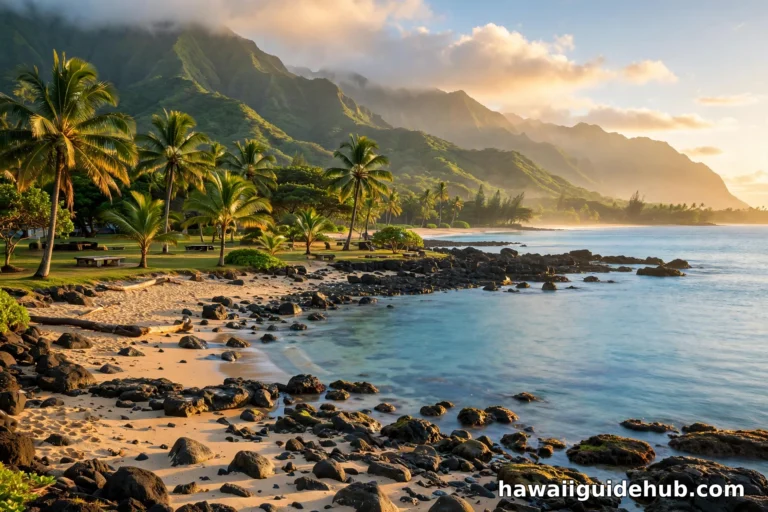
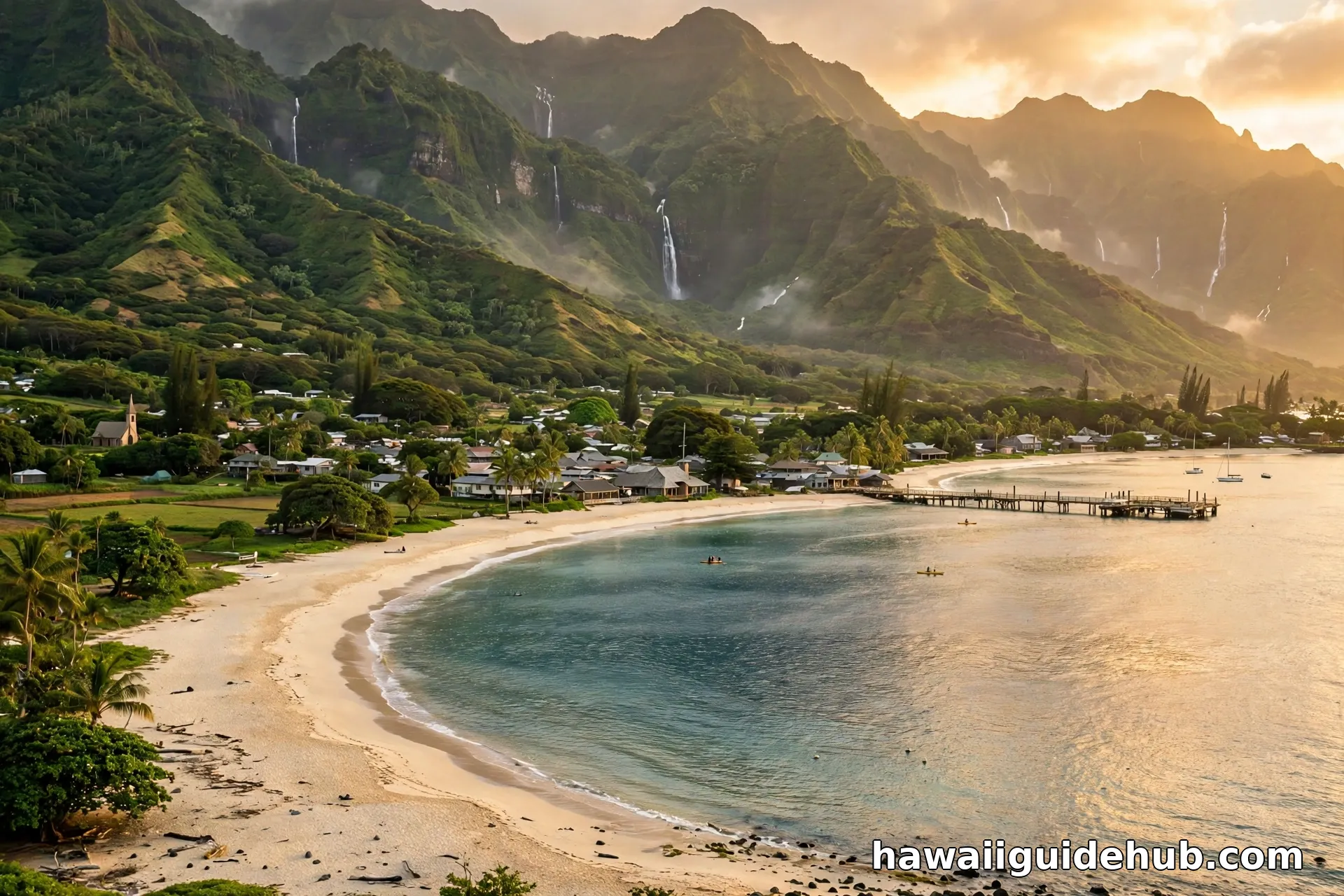
Few beaches in Hawaiʻi look the way Hanalei Bay does. A two mile crescent of white sand curves around the largest bay on Kauaʻi’s north shore, with emerald mountains rising straight behind the town and waterfalls threading down the cliffs after rain. It is a working beach town bay, not a resort beach: fishermen on a historic pier, kids jumping off it at sunset, beginner surfers in the gentle summer waves, and serious winter surf when the north swells arrive.
This is the complete guide to Hanalei Bay. It covers the bay’s three main beach areas, the story of the historic Hanalei Pier, how ocean conditions flip between summer and winter, where to park, when lifeguards are on duty, paddling the Hanalei River, and the best time to visit. If you have been searching for anything about hanalei bay, the answers are all on this one page.
Hanalei Bay at a Glance
| The good news | The watch-out |
|---|---|
| About 2 miles of white sand in a crescent bay on Kauaʻi’s north shore, fronting Hanalei town | The historic Hanalei Pier is on the National Register of Historic Places; respect it as a landmark, not a diving platform |
| Summer ocean is calm and gentle, good for swimming and beginner surf | Winter brings powerful north swells, for experienced surfers only |
| Lifeguards on duty at Hanalei Pavilion Beach Park | Only at the Pavilion; the rest of the two-mile bay is on you |
| Restrooms, showers, and picnic tables at the county beach parks | Free lots fill up; arrive early, especially on weekends |
| Best conditions May through September | Winter is a different ocean; check the surf report before you swim |
Where Hanalei Bay Is
Hanalei Bay sits on Kauaʻi’s north shore, fronting the small town of Hanalei about 30 to 40 minutes north of Līhuʻe, depending on traffic. You reach it on Kūhiō Highway (Route 56), which becomes Route 560 past Princeville, winding down into the Hanalei Valley past the famous valley overlook with its taro fields and mountain backdrop. The last stretch into town crosses one lane bridges, so drive slowly and yield to local traffic.
The bay itself is a near perfect crescent, roughly two miles from the Hanalei River mouth on the east end to the point on the west. Behind it the mountains climb straight up, and the whole scene, bay, town, river, and cliffs, is what makes Hanalei one of the most photographed places on Kauaʻi. There is no resort fronting the bay, which is a big part of its charm. What you find instead are county beach parks, vacation rentals, and a town that still feels like a town.
The Bay’s Three Beach Areas
The two miles of sand are not all the same. Locals think of the bay in three sections, each with its own feel, and knowing which is which saves you from setting up in the wrong spot.
Hanalei Pier and Black Pot Beach Park
The east end of the bay belongs to the pier. Black Pot Beach Park sits at the base of the Hanalei Pier where the Hanalei River meets the bay, a grassy county park with restrooms, showers, picnic tables, and a parking lot. The name comes from a large black iron pot once used here to cook the catch from community hukilau fishing, when everyone pitched in to pull the nets.
This end has some of the calmest water in the bay and is where most surf schools set up, so it is the natural first stop for beginners. The trade-off is the river: after heavy rain the water near the mouth turns brown with runoff and can carry currents. Do not swim in brown water. On weekends the park fills with local families tailgating along the beach, which tells you everything about how beloved this spot is.
Hanalei Pavilion (the Middle)
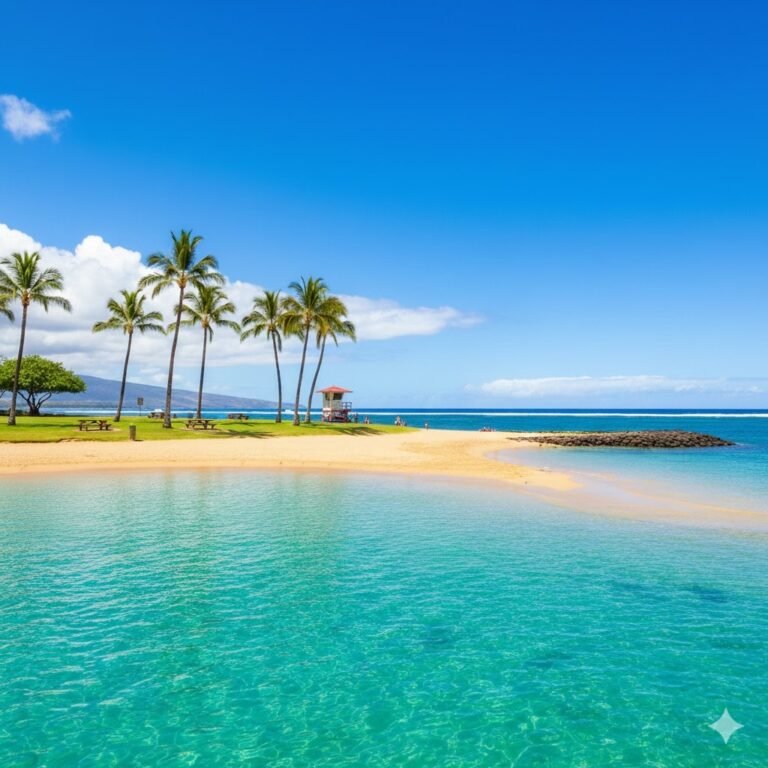
The middle of the bay is the social center: Hanalei Pavilion Beach Park, with the biggest parking area, volleyball courts, and lifeguard towers. This is where most visitors set up for the day, and where the crowds are thickest. The swimming here is generally good in summer, and the pavilion area is the safest bet for families because of the lifeguards.
Waiʻoli Beach Park (Pine Trees)
The west end is Waiʻoli Beach Park, known locally as Pine Trees for the tall ironwood trees lining the sand. It is quieter, shadier, and a favorite for picnics, with restrooms and a more local feel. The surf picks up between the pavilion and Pine Trees, and rip currents can form here, so check with the lifeguards before swimming, especially in winter.
The Historic Hanalei Pier
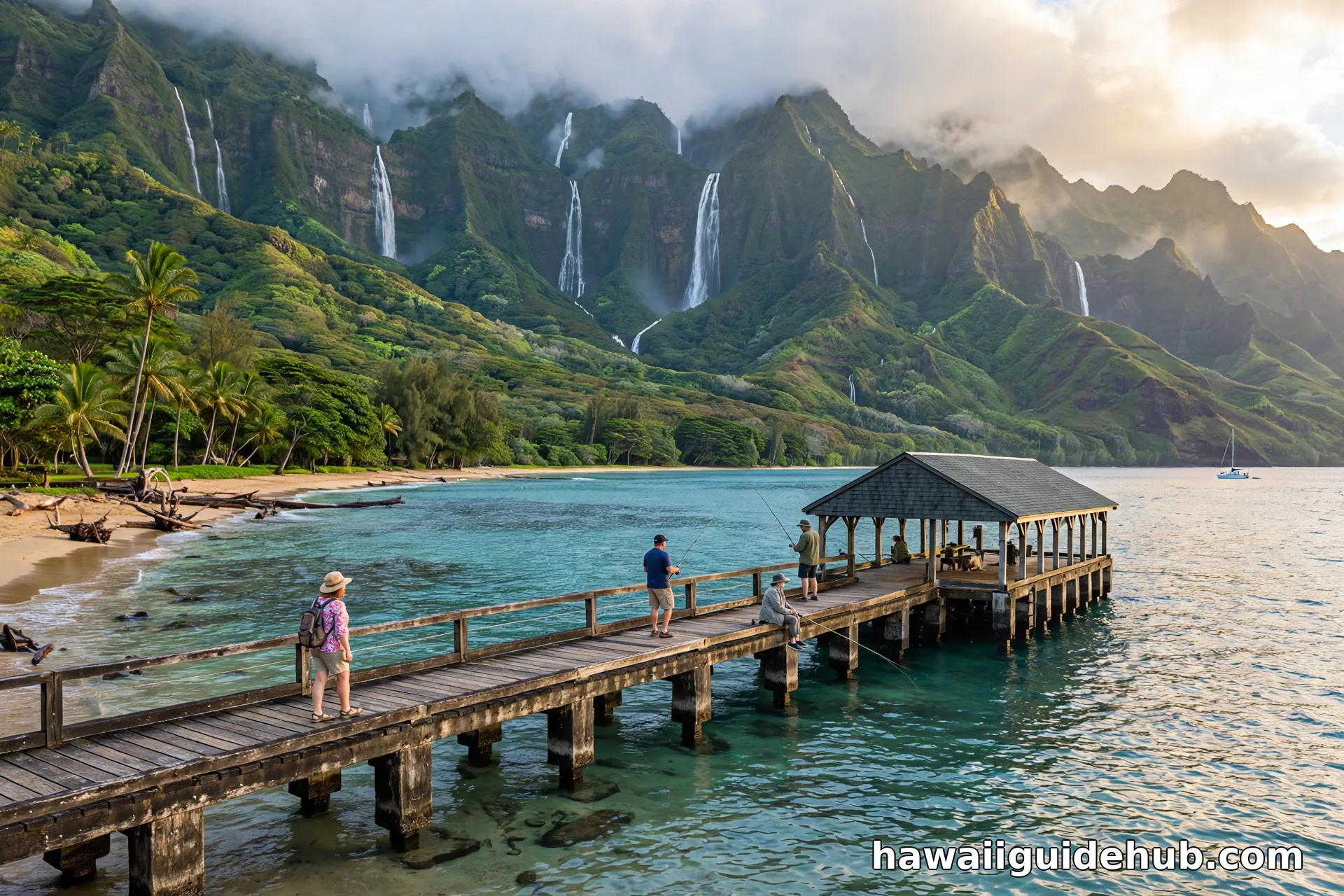
The pier is the icon of the bay, and its history runs deeper than most visitors guess. A wooden pier stood here before 1892, built for Kauaʻi’s rice trade: milled rice came down the Hanalei River on flat bottom boats, was loaded onto rail tracks on the pier, and was shuttled out to steamers bound for Honolulu. The pier was lengthened to 340 feet in 1912 and given a concrete deck in 1922, and it served shipping until 1933.
Since then it has been a community gathering place for fishing, jumping, and sunset watching. Hollywood found it too: the pier was a filming location for the 1954 film Beachhead and the 1957 classic South Pacific. It was placed on the National Register of Historic Places in September 1979. Hurricane Iniki heavily damaged it in 1992, and the beloved canopy at the end was restored in 2012 and 2013 through a community “Save the Pier” effort led by the Hanalei Rotary Club.
Today you can walk the full length of the pier, fish from it, or just stand at the end and take in the best panoramic view on the north shore. Kids still jump from it into the bay near the river mouth in summer, and at sunset it is one of the great free shows on Kauaʻi.
Swimming and Surfing: Two Seasons, Two Bays
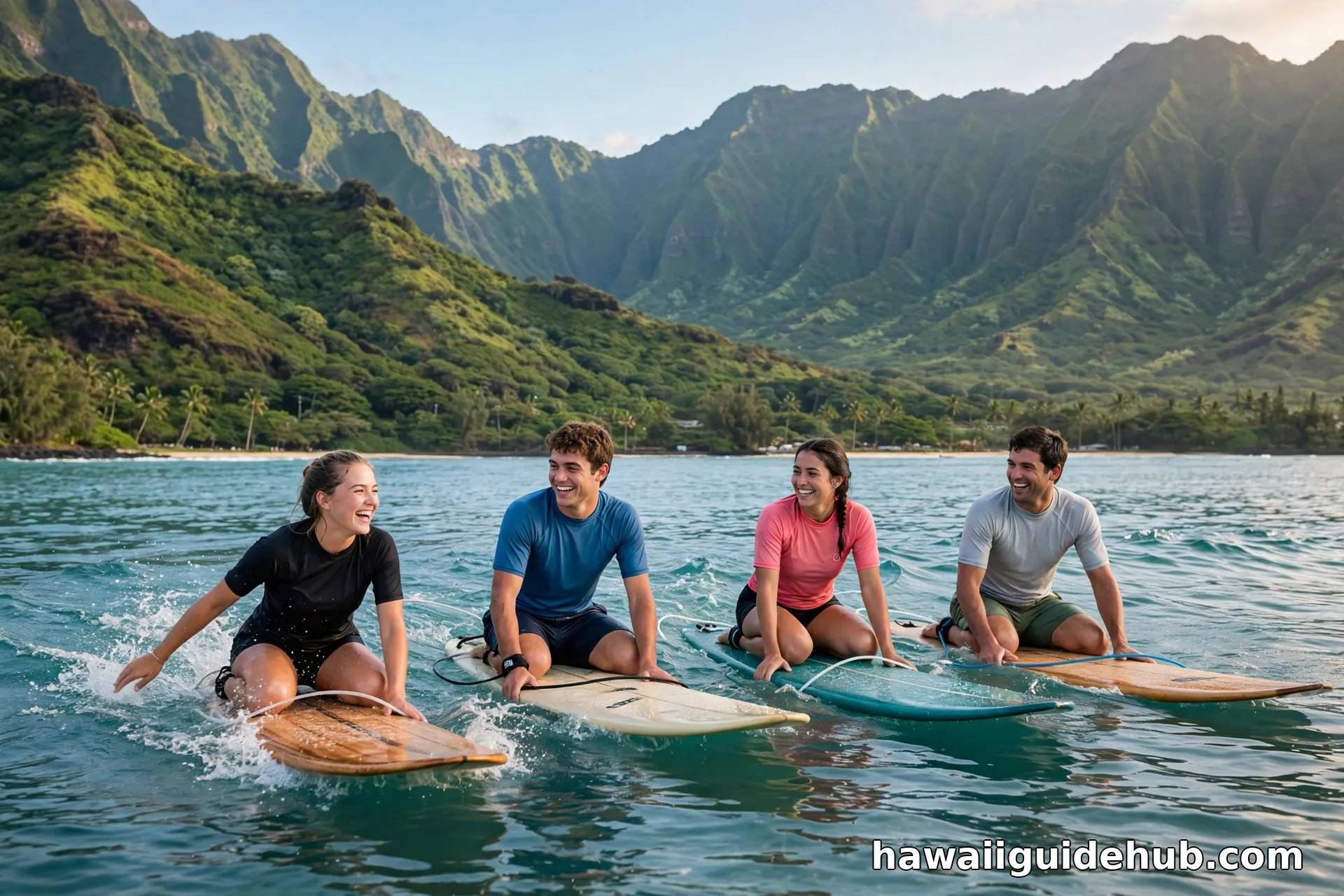
Hanalei Bay has a split personality, and the season you visit decides which one you meet. From roughly May through September, the bay is calm and gentle. This is swimming season and beginner surf season: the waves are small, the water is warm, and the surf schools near Black Pot do steady business teaching first timers. If you have always wanted to try surfing, a summer morning at Hanalei is one of the friendliest places in Hawaiʻi to do it.
From roughly October through March, north Pacific swells light the bay up. Winter surf at Hanalei can be powerful and is strictly for experienced surfers. Rip currents form, shore break gets heavy, and the same beach that was a playground in July demands real respect in January. Even strong swimmers should check the surf forecast and talk to the lifeguards before getting in during winter.
Year round rules apply too. Never swim in brown water near the river mouth after rain. Stay near the lifeguarded area at the pavilion if you are unsure of conditions. And remember that Kauaʻi’s north shore ocean is seasonal: calm does not mean risk free, and winter does not mean unswimmable on every single day, but the odds shift hard with the seasons.
Paddling the Hanalei River
The Hanalei River, which meets the bay at Black Pot, is one of Kauaʻi’s best flat water paddles. Kayaks and stand up paddleboards glide upriver past taro fields and through the Hanalei National Wildlife Refuge, where native waterbirds work the wetlands. It is calm, scenic, and completely different from the ocean side of the day.
Rentals are available in Hanalei town, and many visitors paddle in the morning when the water is glassiest, then hit the beach in the afternoon. Stay to the edges of the river channel, give wildlife space, and remember that the river mouth area is where the brown water warnings apply after rain.
Best Time to Visit Hanalei Bay
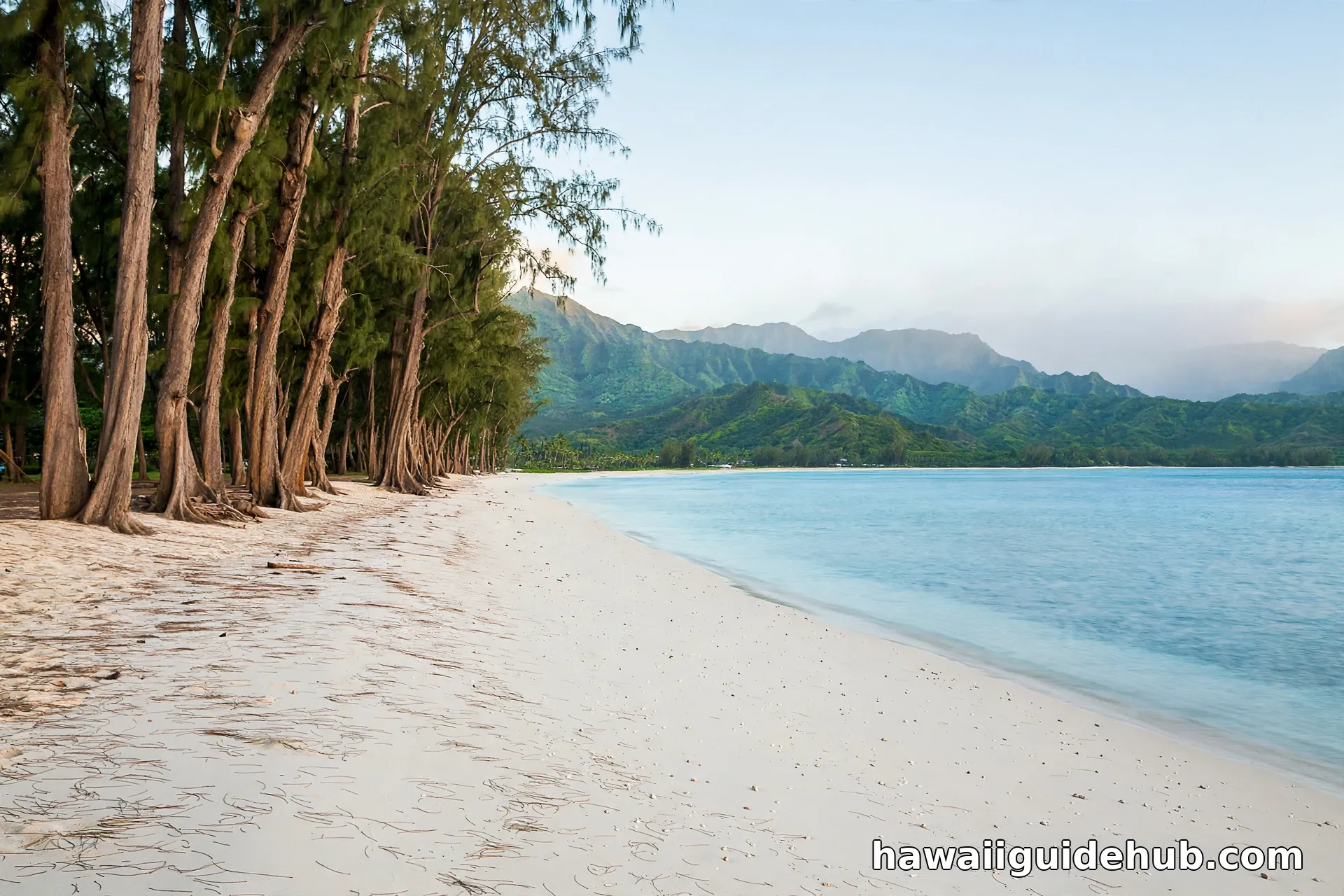
For beach weather, May through September is the sweet spot: the calmest ocean, the warmest water (peaking around 80 to 81°F in late summer), and the driest months. November brings the most rain, averaging around 10 inches, and winter brings the big surf. That said, Hanalei is lush because it rains, and passing showers happen year round. Mornings are typically the calmest and clearest part of the day.
Surfers flip the calendar: winter is their season, when the north swells arrive. If you are planning a winter trip around surf, watch the forecasts and be flexible, since the best swells come in pulses. For a broader look at island weather, see our guide to what time of year it rains in Hawaii.
Parking, Facilities, and Practical Tips
| Beach park | Parking and facilities | Pick it if |
|---|---|---|
| Black Pot Beach Park | Lot at the end of Weke Road by the pier, plus beach parking. Restrooms, showers, picnic tables. | You want the pier views and a smaller scene |
| Hanalei Pavilion | Largest lot, mid bay. Lifeguards, restrooms, showers, volleyball courts. | You want lifeguards and the easiest parking |
| Waiʻoli Beach Park | Lots off Ahea Road, Amaama Road, and Anae Road. Restrooms, picnic tables. | You want it quieter, away from the pier crowd |
| Cost | All parking is free. | Arrive before 10 AM on weekends and holidays |
| Food | No concessions on the sand. | Stock up in Hanalei town before you set up |
| Shade | Limited except at Pine Trees. | Bring an umbrella or tent |
One local custom to respect: weekend tailgating at Black Pot is a community tradition. Give families their space, keep music low, and pack out everything you pack in. The bay stays beautiful because people treat it like their backyard, because for many of them, it is.
Video: Exploring Hanalei and the Bay
Paddleboard the Hanalei River, walk the pier, and see the town and bay the way visitors experience them, in this video tour of Hanalei.
Beyond the Bay: Hanalei Town and the North Shore
Hanalei town, a five minute drive from the sand, is worth half a day on its own: historic buildings, local shops, food trucks, and the green Waiʻoli Huiʻia Church. For ideas on filling your time, our guide to the best things to do in Hanalei covers the town and nearby sights.
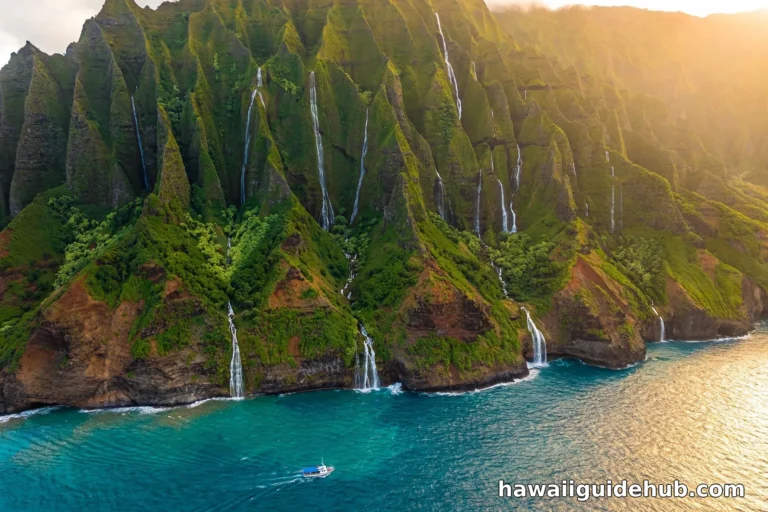
The north shore keeps going in both directions. West past the bay, the road winds toward Hāʻena and the Nā Pali Coast trailheads, with Tunnels Beach (Makua) offering the island’s famous snorkeling in summer. East, Princeville sits on the bluffs above the bay with its own shops and golf. For the bigger picture, our ultimate guide to things to do on Kauaʻi and our roundup of the top beaches on Kauaʻi for swimming will help you plan the rest of the island.
Frequently Asked Questions
Can you swim at Hanalei Bay?
Yes, and in summer it is one of the best swimming beaches on Kauaʻi’s north shore. In winter, powerful north swells can make swimming dangerous, so check conditions and stay near the lifeguards at Hanalei Pavilion. Never swim in brown water near the river mouth after rain.
Is Hanalei Bay good for beginner surfers?
In summer, yes. The small, gentle waves near Black Pot Beach Park are ideal for first timers, and several surf schools operate there. In winter the surf is for experienced surfers only.
Are there lifeguards at Hanalei Bay?
Lifeguards staff towers at Hanalei Pavilion Beach Park in the middle of the bay. Swim near them, especially if you are unsure about currents or surf.
Is parking free at Hanalei Bay?
Yes. The county beach parks have free lots, and there is street parking near the beach accesses. Lots fill up on weekends and holidays, so arrive before 10 AM.
What is the story of the Hanalei Pier?
The pier dates to before 1892, when it served Kauaʻi’s rice trade, and was extended to 340 feet in 1912. It appeared in the films Beachhead (1954) and South Pacific (1957), was listed on the National Register of Historic Places in 1979, was damaged by Hurricane Iniki in 1992, and had its canopy restored by the community in 2012 and 2013.
When is the best time to visit Hanalei Bay?
May through September for calm swimming water and the driest weather. Surfers prefer October through March for the north swells. Mornings are calmest year round.
Can you kayak at Hanalei Bay?
The Hanalei River at the east end of the bay is excellent for kayaking and stand up paddleboarding, with calm water winding past taro fields and the wildlife refuge. Rentals are available in Hanalei town.
Hanalei Bay is the rare beach that works for almost everyone, as long as you match your plans to the season. Come in summer for gentle water, beginner surf, and long calm evenings on the sand. Come in winter to watch serious surfers take on the north swells, or to paddle the river while the mountains steam after rain. Walk the old pier at sunset either way, and you will understand why this crescent of sand has starred in movies and postcards for generations.