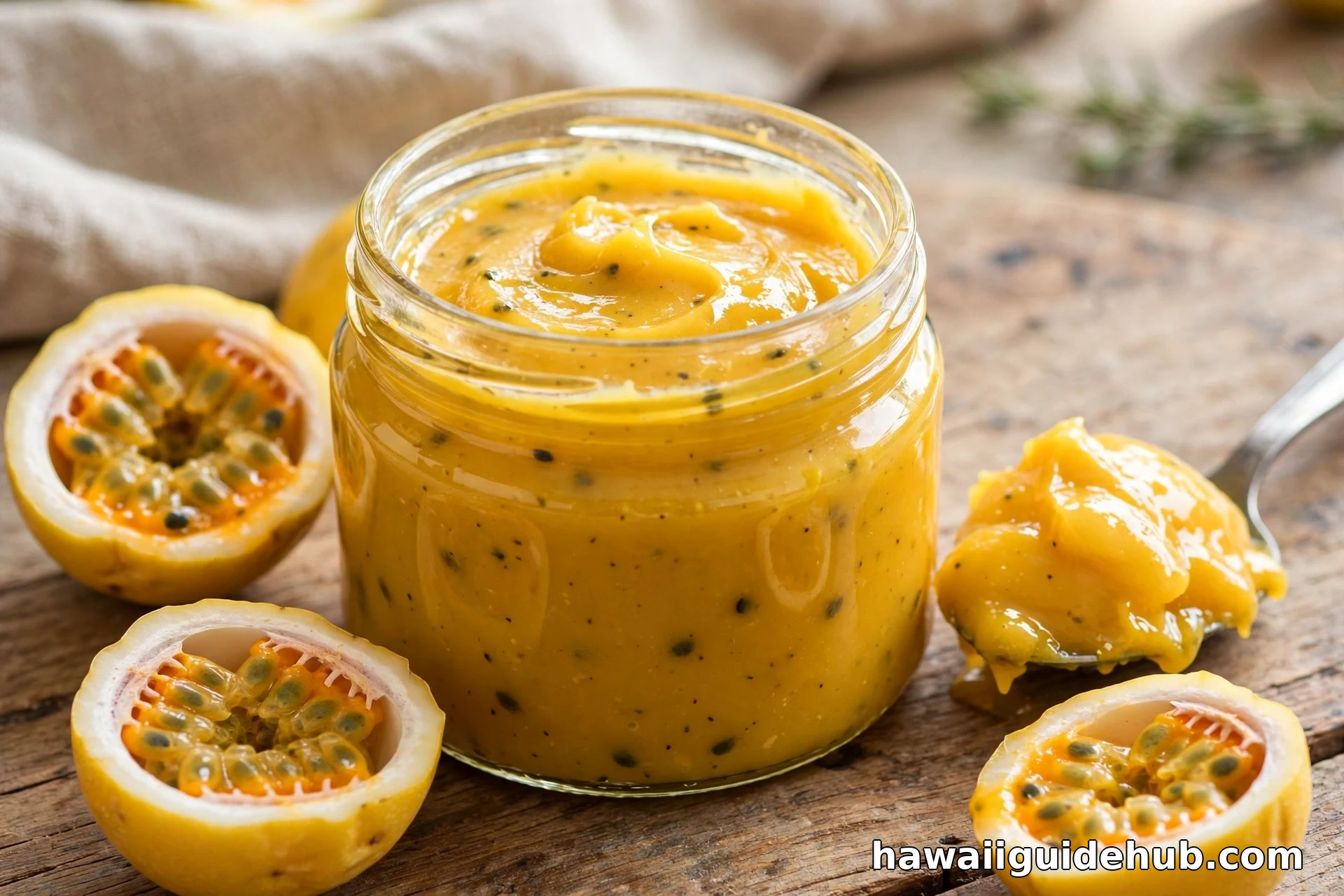
What Is Lilikoi Butter?

Open a jar of lilikoi butter and the whole kitchen smells like a Hawaiian summer. It is golden, glossy, and spoonable, with a tropical tang that sits somewhere between lemon curd and passion fruit jam. Locals spread it on morning toast, swirl it into yogurt, and sandwich it between cake layers. Visitors taste it once at a farmers market and spend the rest of the trip hunting down jars to take home.
So what is lilikoi butter, exactly? It is a fruit curd made from the juice of lilikoi, the Hawaiian name for passion fruit, cooked gently with sugar, egg yolks, and butter until thick and silky. This guide covers what it tastes like, the best lilikoi butter recipe to make at home, all the ways to use it, and where to find it across the islands.
Lilikoi Butter at a Glance
| Question | Short answer | Why it matters |
|---|---|---|
| What is it? | A fruit curd of lilikoi (passion fruit) juice, sugar, egg yolks, and butter | Think lemon curd, gone tropical |
| What does it taste like? | Bright, tangy-sweet, with a passion fruit perfume | The flavor that converts lemon curd loyalists |
| Texture? | Thick, glossy, and spoonable, like lemon curd or custard | Spreads, dollops, and fills without running |
| How long to make? | About 20 minutes, plus chilling time | A weeknight project with a weekend payoff |
| Skill level? | Easy, with one pot and a whisk | If you can stir, you can make it |
| How to store it? | Refrigerate one to two weeks, or freeze for months | Make a double batch without fear |
| Where to find it? | Farmers markets, specialty food shops, and gift stores across Hawaii | Taste it before you commit to making it |
What Is Lilikoi Butter?
Lilikoi butter is Hawaii’s answer to lemon curd. It is made by cooking fresh lilikoi juice with sugar and egg yolks over gentle heat until the mixture thickens, then whisking in cold butter for richness and shine. The result is a smooth, golden spread that tastes intensely of passion fruit: tart, fragrant, and just sweet enough.
Despite the name, there is no churning or dairy culturing involved. The word butter here refers to the texture, rich and spreadable, the same way apple butter or lemon curd earned their names. If you have ever made lemon curd, you already know the method. Lilikoi butter follows the same steps with lilikoi juice standing in for the lemon.
In Hawaii, lilikoi butter shows up everywhere once you start looking. It fills thumbprint cookies at bake sales, tops cheesecake at island restaurants, and lines the shelves of gift shops in small glass jars tied with raffia. For many visitors, it becomes the taste they associate with the islands, right up there with fresh Hawaiian fruit eaten straight from the farmers market.
What Is Lilikoi?
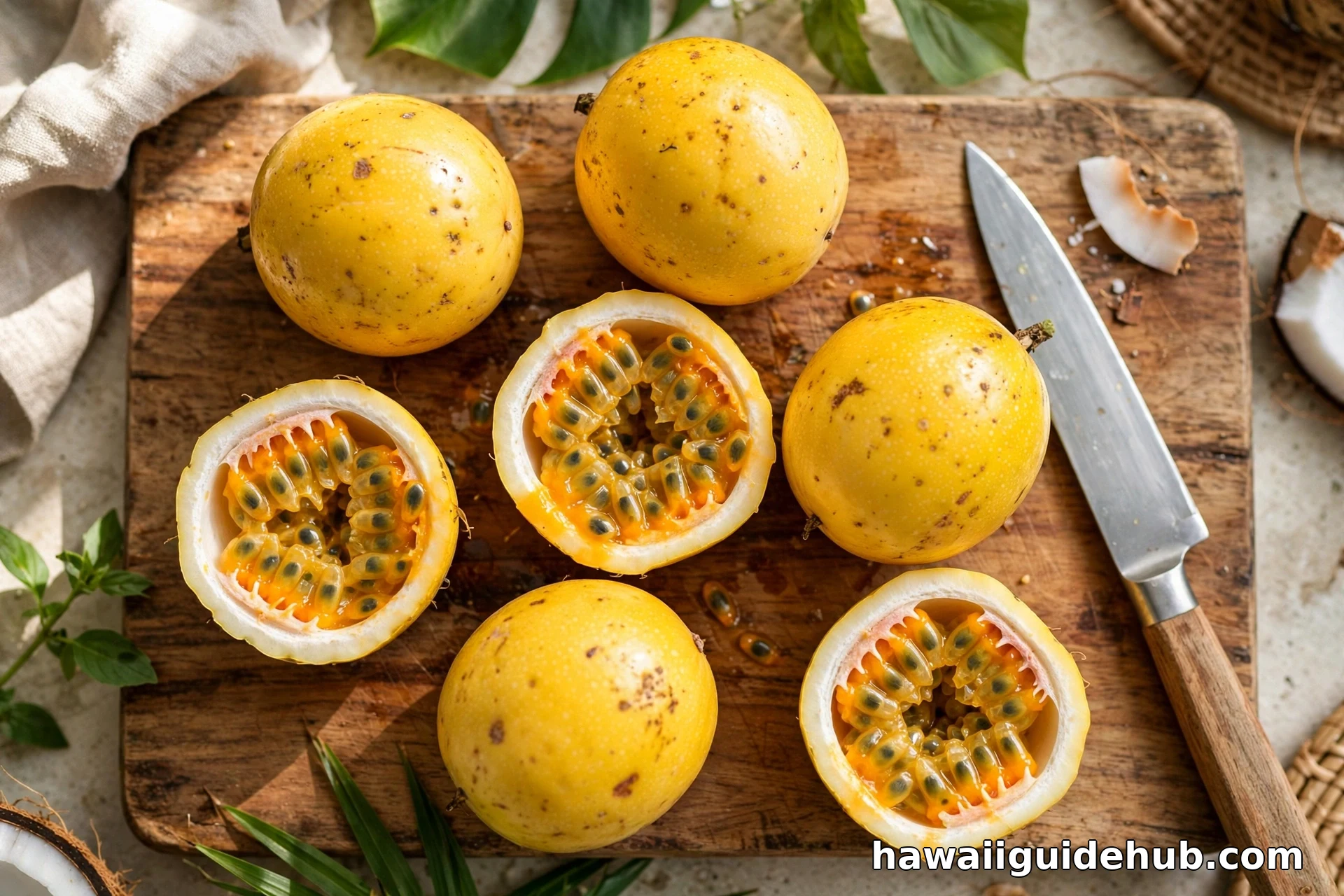
Lilikoi is the Hawaiian name for passion fruit, the round fruit of the vine Passiflora edulis. Cut one open and you will find a shell full of orange pulp studded with black seeds, intensely aromatic and mouth-puckeringly tart. The pulp is eaten fresh with a spoon, squeezed for juice, and turned into syrups, jellies, and of course, lilikoi butter.
Passion fruit was introduced to Hawaii in 1880 and took to the islands immediately. By 1930 it was growing wild on all the main islands, and today it climbs fences and trellises in backyards across the state. Two main types grow in Hawaii: the yellow lilikoi, which is tropical and the more common of the two, and the purple lilikoi, which prefers the cooler air of higher elevations. Both make excellent juice, though the yellow type is the one you will most often find at markets.
A ripe lilikoi tells you it is ready. The skin wrinkles and may feel light for its size, and the fruit gives off a strong sweet perfume. Smooth, shiny lilikoi are usually underripe and sharply sour. For lilikoi butter, you want fully ripe fruit, heavy with juice, because the flavor of the finished curd comes almost entirely from the juice.
What Does Lilikoi Butter Taste Like?
Imagine lemon curd that spent its childhood in the tropics. Lilikoi butter has the same buttery richness and silky set, but the flavor is pure passion fruit: floral, tangy, and bright, with a perfume that fills the room when you open the jar. It is sweeter than plain lilikoi juice and rounder than lemon curd, with none of the sharp bite of citrus.
The balance is what makes it special. Good lilikoi butter should make your mouth water first and then settle into sweetness, never the other way around. If it tastes flat, it needs more juice. If it tastes sharp, it needs a spoonful more sugar. Homemade batches let you tune that balance exactly to your taste, which is half the fun of making it yourself.
Lilikoi Butter Ingredients
You need only five ingredients, and the method is forgiving. The lilikoi juice does all the heavy lifting, so use the best fruit you can find. Bottled passion fruit juice works when fresh lilikoi are out of season, but fresh juice gives a brighter, more perfumed result.
| Ingredient | Amount | Notes |
|---|---|---|
| Fresh lilikoi juice | 1/2 cup | From 8 to 10 ripe lilikoi, strained |
| Granulated sugar | 1/2 cup | Adjust to taste |
| Egg yolks | 4 large | Room temperature blends more smoothly |
| Unsalted butter | 6 tablespoons | Cold, cut into cubes |
| Salt | 1 pinch | Sharpens the flavor |
The Best Lilikoi Butter Recipe: Step by Step
This recipe makes about one and a half cups, enough to fill a small jar with some left over for immediate tasting. The active work takes around 20 minutes. A heavy saucepan and a whisk are the only equipment that matters.
Step 1: Juice the Lilikoi
Halve the ripe lilikoi and scoop the pulp into a bowl. Press it through a fine mesh strainer with the back of a spoon, working the juice out and leaving the seeds behind. You need half a cup of juice. If you are short, top it up with a splash of water rather than stretching the recipe with extra sugar.
Step 2: Whisk Yolks and Sugar
In a heavy saucepan off the heat, whisk the egg yolks and sugar together until pale and slightly thickened, about a minute. Whisk in the lilikoi juice and the pinch of salt until smooth. Starting off the heat keeps the yolks from scrambling when they meet the warm pan.
Step 3: Cook Low and Slow
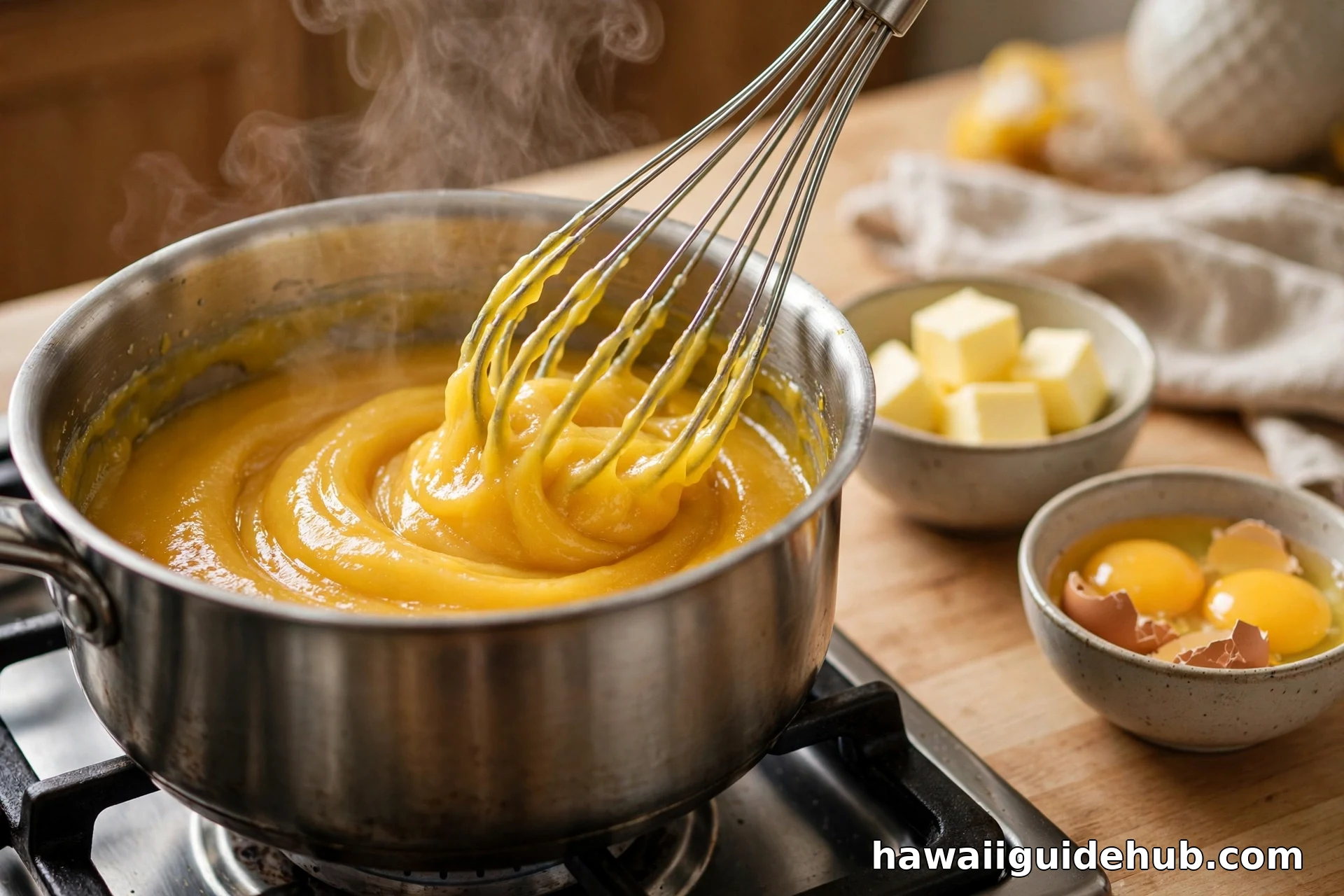
Set the pan over low heat and cook, whisking constantly, until the mixture thickens enough to coat the back of a spoon, about 8 to 12 minutes. Do not let it boil. Gentle heat is the whole secret: too hot and the eggs curdle, too cool and it never sets. The curd is ready when a finger drawn across the coated spoon leaves a clean line.
Step 4: Whisk in the Butter and Chill
Take the pan off the heat and whisk in the cold butter cubes a few at a time until melted and glossy. For an extra silky finish, strain the curd through the mesh strainer into a clean jar to catch any bits of cooked egg. Press plastic wrap directly onto the surface to prevent a skin from forming, and refrigerate until cold. The butter will firm up as it chills.
Tips for the Best Lilikoi Butter
A few small habits separate silky lilikoi butter from a grainy disappointment. First, keep the heat low and never stop whisking. Egg yolks set fast, and constant motion is what keeps the curd smooth. Second, use a heavy pan. Thin pans develop hot spots that scramble the edges while the center is still liquid.
Third, strain twice if you want it perfect: once for the juice, once for the finished curd. Fourth, taste before you jar it. Warm curd tastes less sweet than cold curd, so aim for a touch more tartness than you think you want. Finally, press wrap onto the surface before chilling. The skin that forms on uncovered curd is harmless but ruins the silkiness.
Lilikoi butter keeps in the refrigerator for one to two weeks. For longer storage, freeze it in small jars or ice cube trays, then thaw in the fridge overnight. It also makes a wonderful gift: pour it warm into small sterilized jars, tie on a label, and you have the most popular souvenir on the island.
Lilikoi Butter Uses
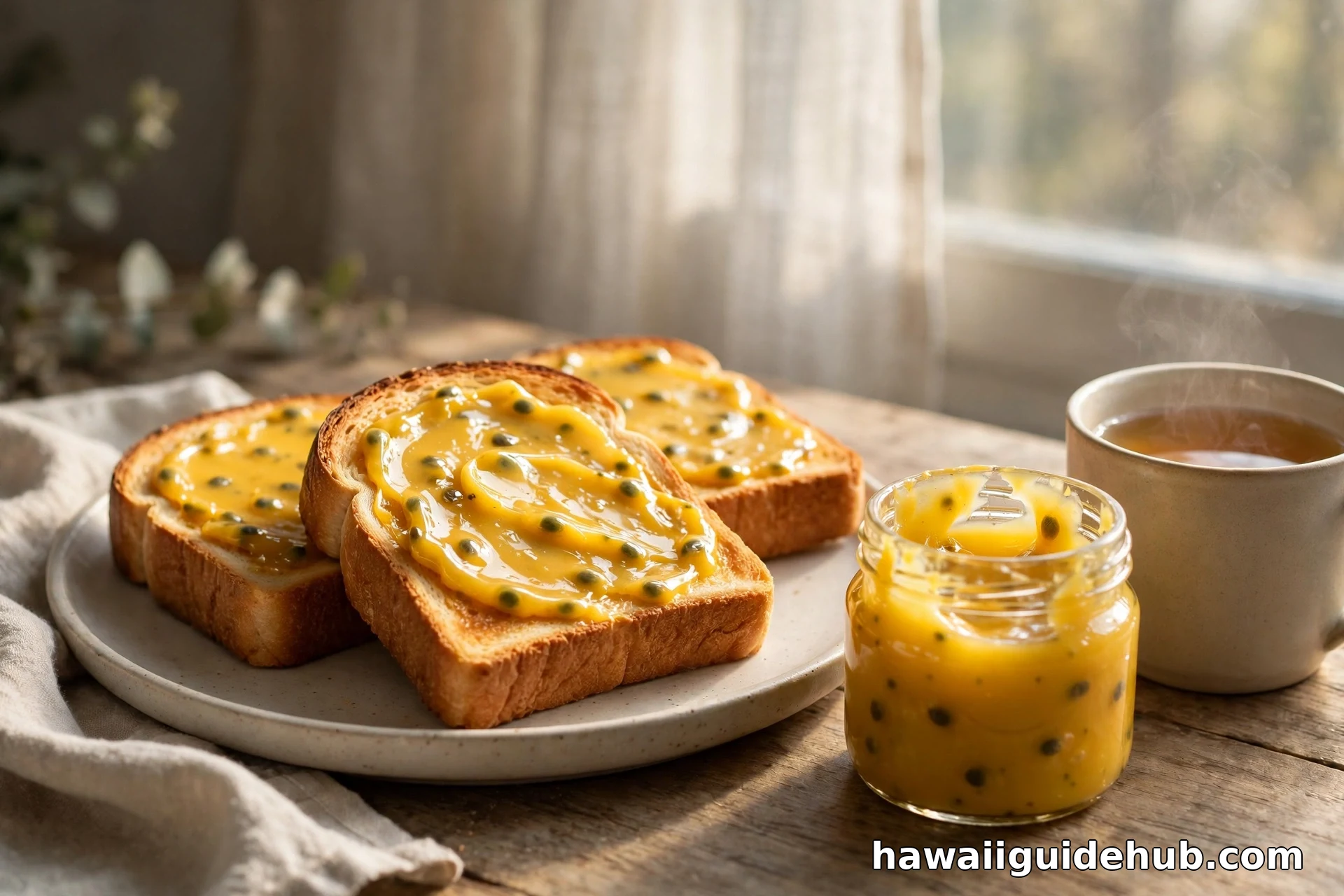
Once you have a jar in the fridge, you will find excuses to use it. The classic is also the simplest: spread thickly on warm toast or a fresh-baked scone, where the butter melts slightly into the crumb. From there, work your way up.
Swirl it into plain yogurt or oatmeal for a tropical breakfast. Spoon it over pancakes or waffles instead of syrup. Layer it between cake rounds, pipe it into thumbprint cookies, or spread it over a cheesecake before serving. It makes a bright filling for malasadas, the Portuguese-Hawaiian fried doughnuts, and a beautiful glaze for fresh malasadas dusted with sugar. A spoonful over vanilla ice cream needs no further improvement.
Bakers use it the way they use lemon curd: as a tart filling, a cake layer, or a bar cookie topping. A thin layer under fresh fruit on a tart shell keeps the fruit from weeping and adds a tangy backbone. Whisked with a little heavy cream, it becomes a fast fool or mousse. The only wrong way to use lilikoi butter is to let the jar sit unopened.
Where to Find Lilikoi Butter in Hawaii
If you would rather buy than make, Hawaii makes it easy. Farmers markets across the islands sell small-batch lilikoi butter made by local producers, often right next to the fresh lilikoi it came from. Specialty food shops and gift stores stock it in the local foods section, and many bakeries sell their own jars at the counter.
One standout stop is Aunty Lilikoi in Waimea on Kauai, a family-run passion fruit company making butters, jellies, syrups, and mustards since 1990. Their factory store offers tastings, so you can try the butter before committing to a jar, and they ship, which solves the souvenir problem. It pairs well with a day exploring the best of Kauai, since Waimea sits at the gateway to the canyon.
When buying, look for a short ingredient list: lilikoi, sugar, eggs, butter. That is the whole recipe, and jars with long lists of stabilizers and flavorings are a lesser product. Keep purchased jars refrigerated after opening, just like the homemade kind, and check the date if you are buying from a market stall.
Watch: Making Lilikoi Butter
Seeing the curd come together helps more than any written description. This video walks through the whole process, from juicing the fruit to the final glossy jar:
Lilikoi Butter FAQs
What is lilikoi butter made of?
Lilikoi butter is a fruit curd made from fresh lilikoi (passion fruit) juice, sugar, egg yolks, and butter. The juice and yolks are cooked gently until thick, then butter is whisked in for richness. That is the entire ingredient list.
Is lilikoi the same as passion fruit?
Yes. Lilikoi is the Hawaiian name for passion fruit, the fruit of the vine Passiflora edulis. Hawaii grows mostly the yellow type, which is tropical and tart, along with the purple type at higher elevations.
How long does homemade lilikoi butter last?
Refrigerated in a sealed jar, homemade lilikoi butter keeps for one to two weeks. For longer storage, freeze it for several months and thaw overnight in the refrigerator. Always use a clean spoon to keep the jar fresh.
Can I use bottled passion fruit juice?
Yes, bottled passion fruit juice works when fresh lilikoi are unavailable. Choose a juice without added sugar if you can, and taste as you go, since bottled juice varies in tartness. Fresh juice gives the brightest flavor, but bottled still makes a very good curd.
Why did my lilikoi butter curdle?
Curdling means the heat was too high or the whisking stopped. Egg yolks scramble above a gentle simmer, so keep the burner low and whisk constantly. If it splits, strain it immediately; straining rescues mildly curdled curd most of the time.
What is the difference between lilikoi butter and lilikoi jam?
Lilikoi butter is a curd enriched with egg yolks and butter, giving it a creamy, custard-like texture. Lilikoi jam is fruit cooked with sugar until set, with no eggs or butter, so it is clearer, firmer, and more intensely fruity. Both are delicious; they are simply different preserves.
Lilikoi butter is one of those foods that explains Hawaii in a single spoonful: a fruit that arrived from far away, adopted completely, and turned into something the islands now claim as their own. Whether you whisk up a jar in your own kitchen or bring one home from a Kauai factory store, it carries the same bright, unmistakable flavor. For more island tastes worth seeking out, browse our guide to must-try local dishes in Hawaii.