Hawaiian Chicken Katsu: The Crispy Plate Lunch Classic and How to Make It

If you have ever stood in line at a plate lunch counter in Honolulu, you have seen it: a row of golden cutlets under the heat lamps, each one shatteringly crisp, sliced into neat ribbons and fanned over rice. That is chicken katsu, and in Hawaiʻi it is not a side dish or a novelty. It is a pillar of the local plate lunch, as essential as the two scoops of rice and the scoop of mac salad beside it. This guide covers what makes Hawaiian chicken katsu its own thing, where it came from, how to make it at home with a proper homemade katsu sauce, and where to find the real plate lunch version in the islands.
What Hawaiian Chicken Katsu Actually Is
At its simplest, chicken katsu is a boneless chicken cutlet, breaded in panko and fried until golden. The word katsu is short for katsuretsu, the Japanese rendering of the English word cutlet. In Hawaiʻi, the dish almost always means boneless, skinless chicken thighs, pounded to an even thickness, dredged in flour, dipped in beaten egg, pressed into panko, and fried until the crust is deep gold and audibly crisp.
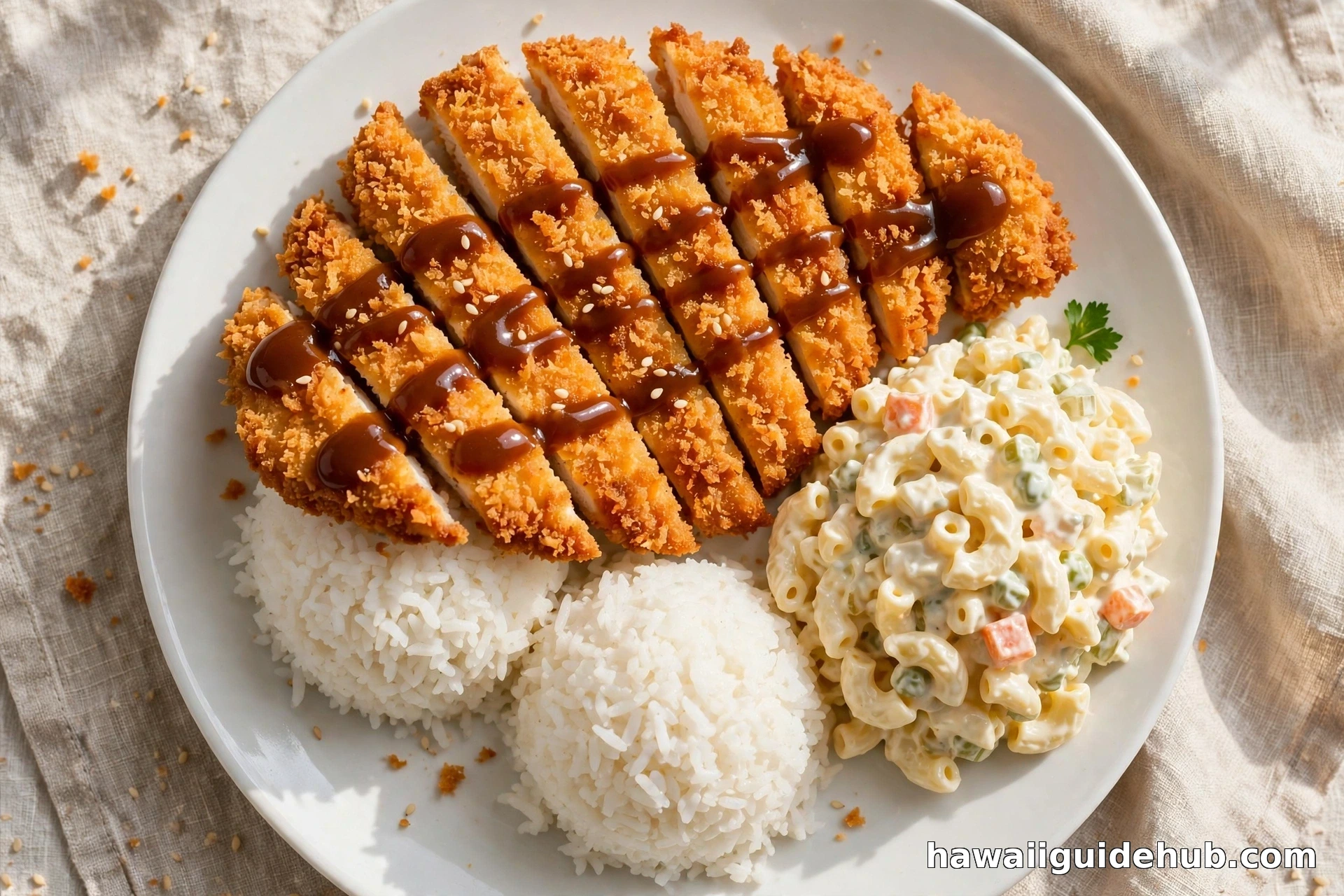
What makes it Hawaiian is the context. In Japan, katsu is typically served with shredded cabbage and miso soup. In Hawaiʻi, chicken katsu is served as a plate lunch: sliced across the grain into strips, laid over two scoops of steamed white rice, with a scoop of macaroni salad on the side and a generous drizzle of brown katsu sauce over the top. It is hearty, affordable, and deeply comforting, which is why it is one of the most ordered items at plate lunch counters across the state.
The chicken itself matters. Island cooks overwhelmingly prefer thighs over breasts. Thighs stay juicy under the fryer’s high heat, taste better, and forgive a minute or two of overcooking.
From Yōshoku to the Plantation Fields
Chicken katsu was born in Japan, not Hawaiʻi. Breaded fried cutlets developed in Japan during the countryʼs modernization in the late 19th century, when Japanese cooks began adapting European dishes into a category called yōshoku, or Western-influenced Japanese cuisine. Early versions were not necessarily the pork cutlets most people picture today. Over time, pork tonkatsu became enormously popular, and chicken katsu emerged as another variation on the same breaded cutlet theme: thin meat, flour, egg, panko, hot oil.
The dish crossed the Pacific with the Japanese immigrants who came to Hawaiʻi to work the sugar and pineapple plantations. By the early 1900s, Japanese laborers were the largest plantation workforce in the islands, and they brought their foodways with them. Workers carried lunches in bento boxes, and by the 1930s lunch wagons were catering to laborers, serving food on compartmentalized paper plates. That is where the name plate lunch comes from.
Chicken katsu fit the plate lunch perfectly. It was cheap to make in volume, it held well on a steam table, and the crunchy cutlet paired beautifully with soft rice and creamy mac salad. By the time the plantation era wound down in the mid 20th century, the plate lunch had become a staple of local food culture, and chicken katsu had earned its permanent spot on the menu. Today you will find it everywhere: at L&L Hawaiian Barbecue, at Zippyʼs, in 7-Eleven bento boxes, at food trucks, and at countless potlucks. It has been thoroughly adopted into Hawaiʻiʼs local food identity, even though its roots are Japanese.
The Plate Lunch Formula
To understand Hawaiian chicken katsu, you need to understand the plate it comes on. The classic formula is strict: one protein (in this case, chicken katsu), two scoops of white rice, and one scoop of macaroni salad. The rice is usually medium grain, sticky enough to clump. The mac salad is creamy, made with very soft elbow macaroni, mayonnaise, and a little grated carrot and celery. The katsu is sliced into strips and arranged over or beside the rice, and then the whole plate gets a crosshatch of katsu sauce.
The combination works because of contrast. The hot, crunchy cutlet against cool, creamy mac salad. The savory fried chicken against plain steamed rice that soaks up the sauce. Nothing on the plate is fancy, and that is the point. Plate lunch is working peopleʼs food, engineered for satisfaction per dollar, and chicken katsu might be its finest expression. If you want to explore more of these local classics, our guide to must-try local dishes in Hawaii walks through the full lineup.
What Is Katsu Sauce?
Katsu sauce, often sold as tonkatsu sauce, is a thick, sweet-savory brown sauce that is the traditional accompaniment for breaded cutlets. It is a Japanese style sauce with a fruit and vegetable base, and its flavor lands somewhere between Worcestershire sauce and ketchup: tangy, a little sweet, deeply savory. The most famous bottled brand is Bull-Dog, which you will find in any Hawaiʻi grocery store, but plenty of local cooks make their own.
A homemade katsu sauce is simple and worth the five minutes. The base is ketchup and Worcestershire sauce, sharpened with shoyu, a little mirin or brown sugar for sweetness, and small amounts of garlic and ginger for depth. Whisked together and left to sit for a few minutes, it tastes remarkably close to the bottled kind, with a fresher edge. The recipe below includes a full homemade version with exact measurements.
One note: some spots drizzle the sauce over the katsu, others hand you a cup. Sauce on top seasons every bite; on the side keeps the crust crunchier.
Hawaiian Chicken Katsu Recipe
This recipe makes the classic plate lunch style chicken katsu: juicy thighs, an extra crisp panko crust, and a homemade katsu sauce. It serves four as a plate lunch.
Ingredients
For the chicken:
2 pounds boneless, skinless chicken thighs (6 to 8 thighs)
1 teaspoon salt
1/2 teaspoon black pepper
3/4 cup all purpose flour
2 large eggs, beaten with 1 tablespoon water
2 cups panko breadcrumbs
3 cups neutral oil for frying (vegetable, canola, or peanut)
For the homemade katsu sauce:
1/2 cup ketchup
2 tablespoons Worcestershire sauce
2 tablespoons shoyu (soy sauce)
1 tablespoon mirin
1 tablespoon brown sugar
1/2 teaspoon ground ginger
1 small clove garlic, minced fine
For the plate lunch:
Cooked medium grain white rice
Macaroni salad (store bought is fine)
Shredded green cabbage (optional, for a Japanese style bed under the katsu)
Instructions
1. Prep the chicken. Pat the thighs dry with paper towels. If any thigh is much thicker on one end, butterfly the thick part: lay the thigh flat, make a shallow horizontal cut into the thick area, and open it like a book so the thickness is even. Season both sides with salt and pepper.
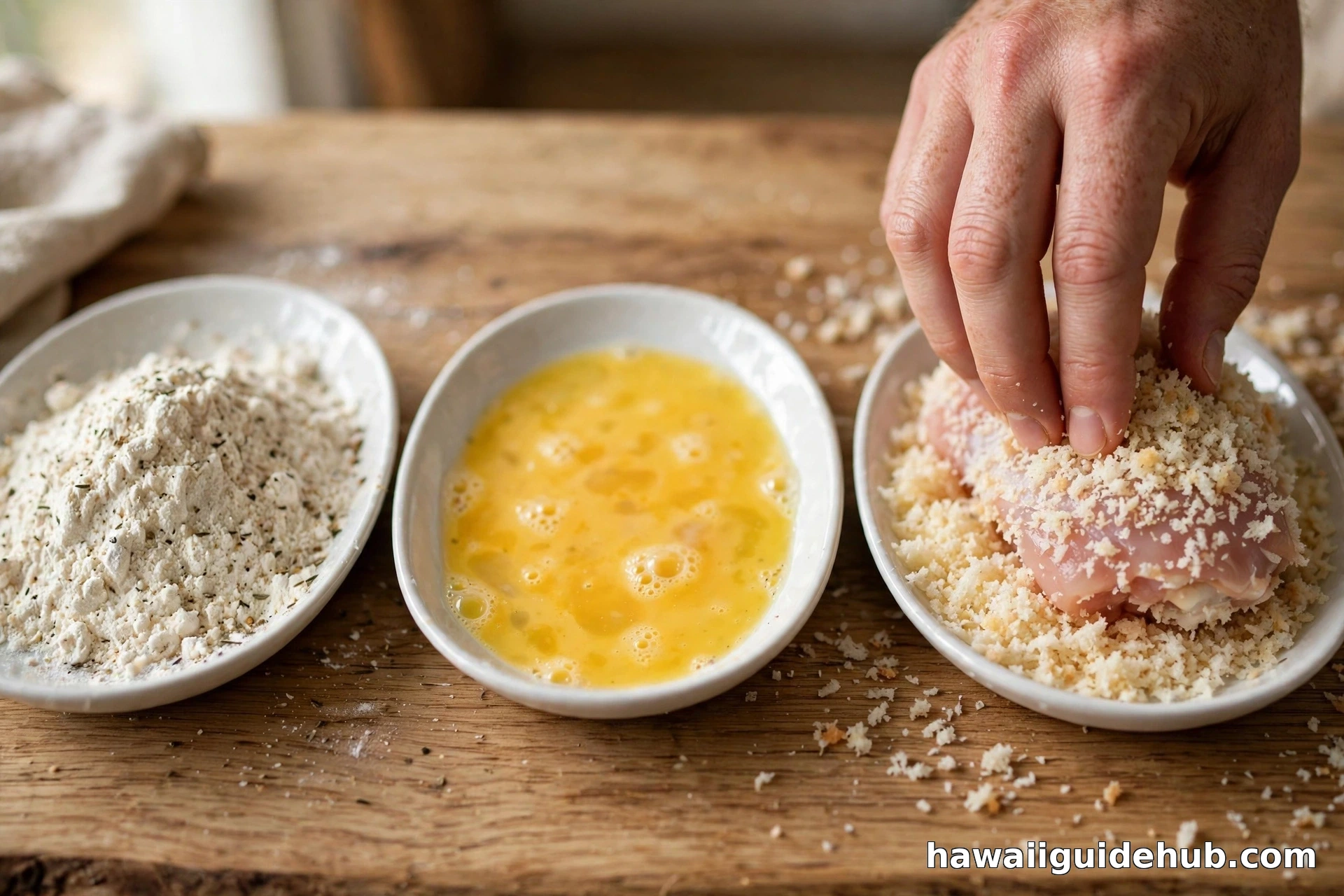
2. Set up the breading station. Put the flour in a shallow dish. Put the beaten eggs in a second shallow dish. Put the panko in a third. Line up the dishes in that order next to the stove, with an empty plate or wire rack at the end for the breaded cutlets.
3. Bread the chicken. Working one thigh at a time, dredge it in flour and shake off the excess. Dip it in the beaten egg, letting the excess drip off. Press it firmly into the panko, coating both sides. Set aside on the plate. Repeat with the remaining thighs.
4. Make the katsu sauce. While the breaded chicken rests, whisk all the sauce ingredients in a small bowl until the sugar dissolves. Taste and adjust: more Worcestershire for tang, more brown sugar for sweetness, a splash more shoyu for salt. Set aside.
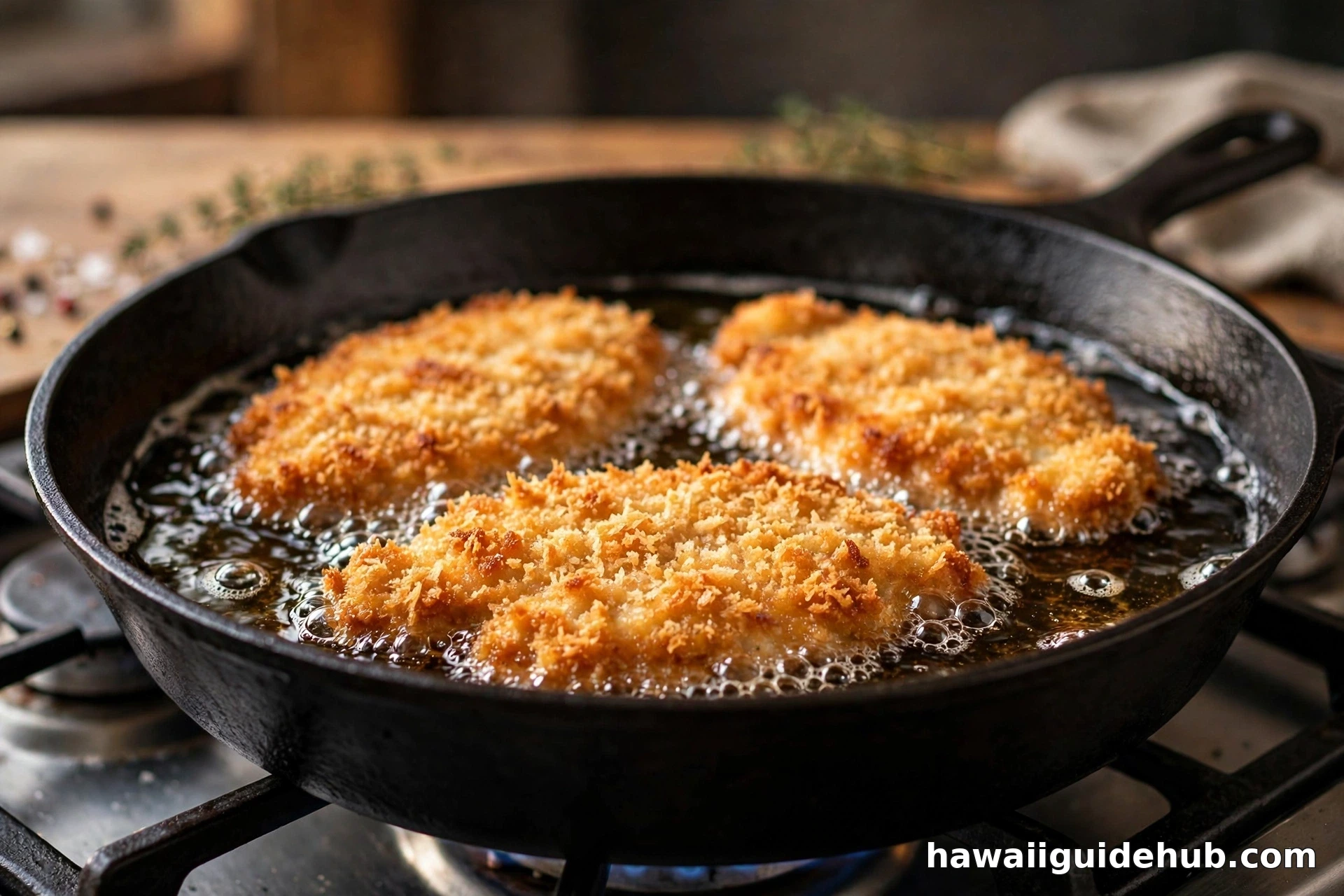
5. Heat the oil. Pour the oil into a large, heavy skillet or Dutch oven to a depth of about 1/2 inch. Heat over medium heat to 350 F. If you do not have a thermometer, drop in a few panko crumbs: they should sizzle vigorously and turn golden in about 30 seconds. If they brown instantly, the oil is too hot; if they sit quietly, it needs more time.
6. Fry the katsu. Lay 2 or 3 thighs in the hot oil, being careful not to crowd the pan. Fry for 4 to 5 minutes per side, until deep golden brown and the internal temperature reaches 165 F. Transfer to a wire rack set over a sheet pan (not paper towels, which trap steam and soften the crust). Let rest for 3 minutes. Repeat with the remaining thighs, letting the oil come back to temperature between batches. Skim out any burnt panko bits between batches so they do not bitter the oil.
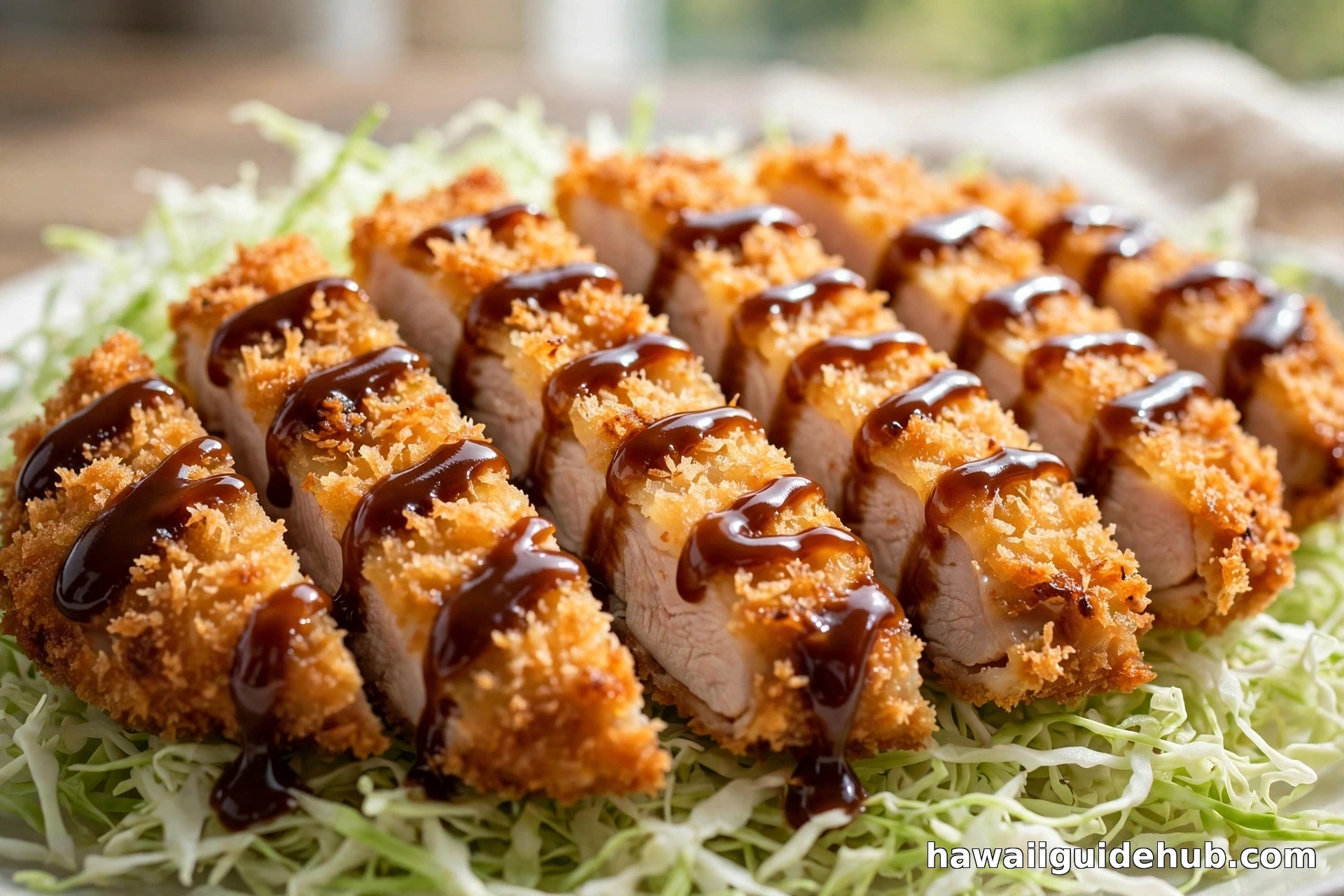
7. Slice and serve. Slice each cutlet across the grain into 3/4 inch strips. Arrange over two scoops of rice with a scoop of mac salad on a plate lunch plate, drizzle with katsu sauce, and serve immediately while the crust is at its crispiest.
Tips for the Crispiest Katsu
The difference between good katsu and great katsu is crust management. A few details matter more than the recipe itself.
Keep the chicken dry before breading. Moisture is the enemy of adhesion. Pat the thighs thoroughly dry, and make sure the flour coat is complete but thin.
Press the panko on firmly. Do not just roll the chicken through the crumbs. Press down with your palm so the panko embeds in the egg layer. The crumbs that stick are the crust; the ones that fall off in the pan become burnt debris.
Do not crowd the pan. Adding too many cutlets at once drops the oil temperature, and the breading absorbs oil instead of crisping in it. Two or three thighs at a time in a 12 inch skillet is the right pace.
Rest on a rack, not paper. Paper towels trap steam underneath the cutlet and the bottom crust goes soggy within a minute. A wire rack keeps all sides crisp while the juices redistribute.
Slice just before serving. An unsliced cutlet holds its heat and crunch longer. Slice it, plate it, sauce it, and get it to the table.
Thighs vs. Breasts: Which to Use
Thighs are the traditional and better choice for Hawaiian style katsu. They have more fat and connective tissue, which means they stay juicy through frying and remain tender even if slightly overcooked.
Breasts work if that is what you have, but they need more care. Butterfly them to an even 1/2 inch thickness, do not cook past 165 F, and consider brining for 30 minutes in salted water before breading. Even then, they will not be as forgiving as thighs.
Where to Find Chicken Katsu in Hawaiʻi
If you would rather buy it than fry it, you are in luck: chicken katsu might be the easiest plate lunch to find in the islands.
L&L Hawaiian Barbecue is the name most visitors know. The Honolulu born chain built its reputation on plate lunches, and chicken katsu remains one of its best sellers. Zippyʼs, the beloved local diner chain, serves chicken katsu in its bento boxes and as a plate lunch, and its version has a loyal local following.
Beyond the big names, chicken katsu shows up at okazuya (Japanese delis), food trucks, farmers market stalls, and even 7-Eleven, where it is sold in bento boxes for a quick lunch. It is also a potluck staple: a tray of sliced katsu with a bottle of Bull-Dog sauce is one of the most welcome things you can bring to a Hawaiʻi gathering. Like malasadas at a bakery or huli huli chicken at a fundraiser, katsu is woven into the social fabric of eating in the islands.
Variations Worth Trying
Once you have the basic cutlet down, the katsu becomes a platform.
Katsu curry is the most popular variation: sliced chicken katsu laid over rice and smothered in Japanese curry. The combination of crunchy cutlet and thick, savory curry is one of the great comfort food pairings, and it is a menu staple at local Japanese restaurants and curry houses.
Katsu don (katsudon) takes the cutlet in a different direction: the fried cutlet is simmered briefly with egg and onion in a sweet dashi shoyu broth and served over rice in a bowl. It is softer than plate lunch katsu, almost custardy, and deeply satisfying.
The katsu sandwich is the dark horse. A sliced cutlet tucked into soft white bread with shredded cabbage and a smear of katsu sauce makes an outstanding sandwich, and it travels well for beach days. Some local shops sell them ready made in the cold case next to the musubi.
Frequently Asked Questions
Is chicken katsu Japanese or Hawaiian?
It is Japanese in origin and Hawaiian by adoption. The breaded cutlet technique comes from Japanʼs yōshoku tradition, brought to the islands by Japanese immigrants during the plantation era. In Hawaiʻi it was folded into the plate lunch and became a local staple. Dishes like lomi lomi salmon have a similar story of cultural blending.
What is the difference between chicken katsu and tonkatsu?
Only the meat. Tonkatsu is made with pork (ton means pork in Japanese), while chicken katsu, also called tori katsu, is made with chicken. Both use the same panko breading and frying technique, and both are served with the same style of katsu sauce.
Can I bake or air fry chicken katsu instead of deep frying?
You can, with trade offs. An air fryer at 400 F for about 12 to 14 minutes, flipping once and misting with oil, gives a respectable crust with far less oil. Baking on a rack at 425 F works too. Neither quite matches the shattering crunch of shallow frying, but both are good weeknight options.
How do I keep katsu crispy for a potluck?
Transport the cutlets whole and unsliced on a wire rack set in a sheet pan, uncovered or very loosely tented. Slice just before serving and keep the sauce in a separate container. Sliced katsu steams itself soft within 20 minutes; whole cutlets hold their crunch far longer.
What oil is best for frying katsu?
Any neutral oil with a high smoke point: vegetable, canola, or peanut oil all work well. Peanut oil gives a slightly richer flavor. Avoid olive oil, which smokes at frying temperatures and adds a flavor that fights the katsu sauce.
See It Made: Hawaiian Style Chicken Katsu
Chicken katsu endures in Hawaiʻi because it delivers exactly what it promises: a juicy cutlet, a crust you can hear, rice and mac salad to round it out, and a sauce that ties the plate together. It came from Japan, grew up in the plantation camps and lunch wagons, and earned its place as one of the defining foods of the islands.