Ironwood Beach Maui: Kapalua’s Quiet White Sand Cove and Coastal Trail

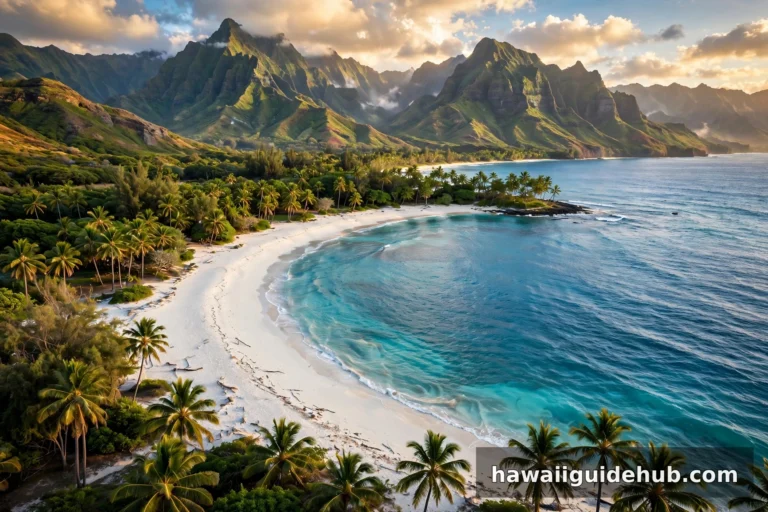
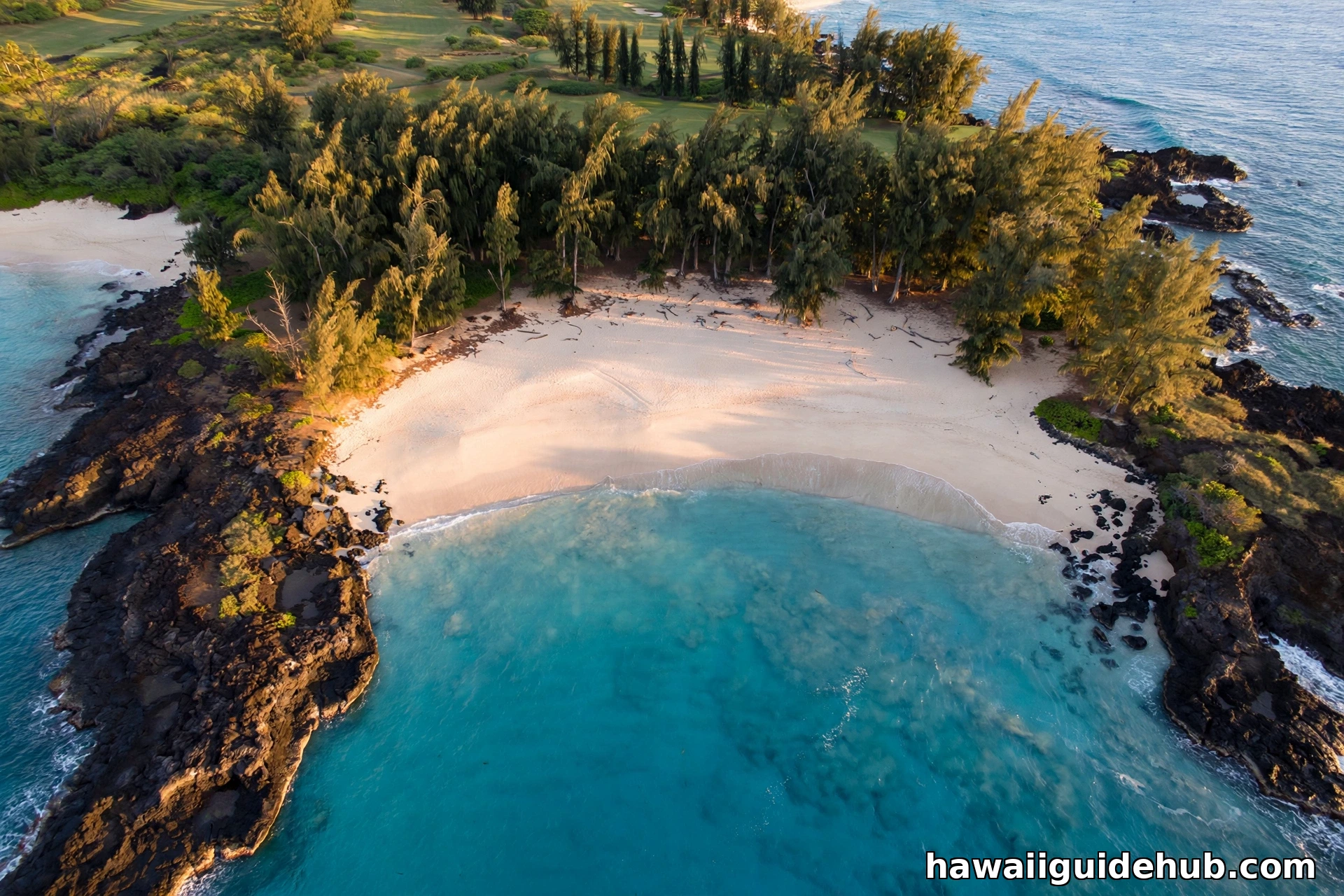
Tucked between two gated neighborhoods on Maui’s northwest coast, Ironwood Beach is the kind of place most visitors drive right past without knowing it exists. There is no big sign on the highway, no resort fronting the sand, and no crowd fighting for towel space. What you find instead is a quarter-mile crescent of white sand framed by whispering ironwood trees, with dark lava rock at both ends and the open Pacific rolling in. Locals know it as Oneloa Beach, which means “long sand” in Hawaiian, and it remains one of the last genuinely quiet beaches in the Kapalua area.
This guide covers everything you need to know before you go: where the beach is, how to get there, what the swimming and snorkeling are really like, the story behind the ironwood trees, and how to combine your visit with the Kapalua Coastal Trail. It is the single complete resource for this beach, so bookmark it and leave the guesswork behind.
Where Ironwood Beach Is
Ironwood Beach sits in Kapalua, on the northwest coast of Maui, roughly 15 minutes north of Lahaina town. It lies along the Kapalua Coastal Trail, almost exactly at the trail’s midpoint between Kapalua Bay to the south and D.T. Fleming Beach to the north. The beach backs up to the Plantation Course at Kapalua, one of the island’s most famous golf courses, and the Ritz-Carlton Kapalua sits on the bluff just to the north.
The beach’s Hawaiian name is Oneloa, and it is worth knowing because some maps and signs use that name instead. “Oneloa” is a common beach name across Hawaii, and there is even another Oneloa in Wailea on Maui’s south shore, so make sure your navigation is pointed at the Kapalua one with a Lahaina-area address. If you are exploring reasons to visit Maui, this quiet corner of the island deserves a spot on your list.
Why It Is Called Ironwood Beach
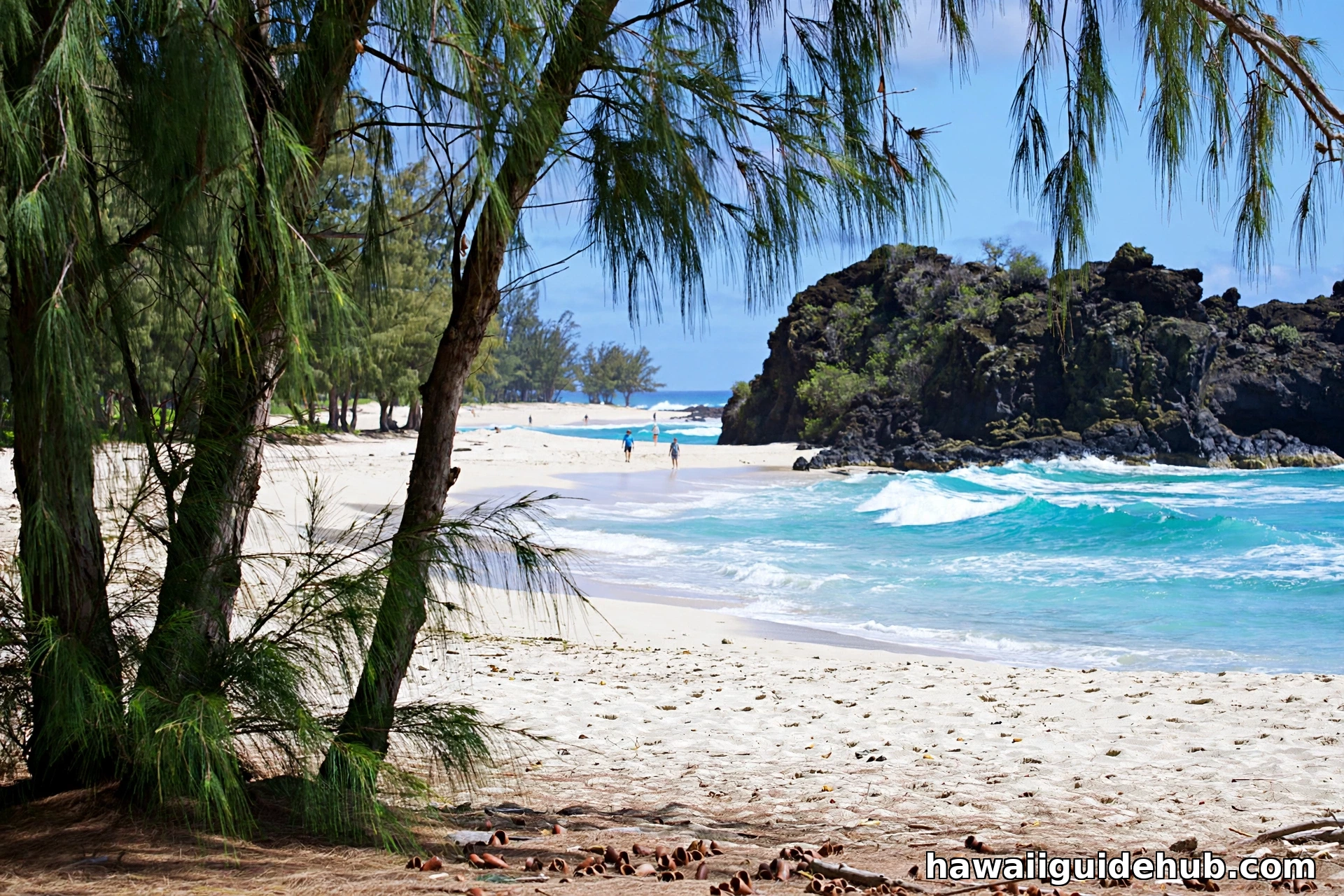
The nickname comes from the tall ironwood trees that grow along the back of the beach. Ironwoods are not native to Hawaii. They were introduced from Australia and the Pacific, and they earned their name from their remarkably dense, heavy wood. Their long, drooping needle-like branchlets look soft from a distance, but the trees are tough enough to thrive in salty coastal wind.
At Ironwood Beach, the trees form a dark green wall behind the sand that gives the whole place its moody, secluded character. They also do something practical: on a breezy day, the ironwoods break the wind and create pockets of calm along the upper beach. The whispering sound their branchlets make in the trade winds is one of those small island details you remember long after the trip.
The Beach Itself
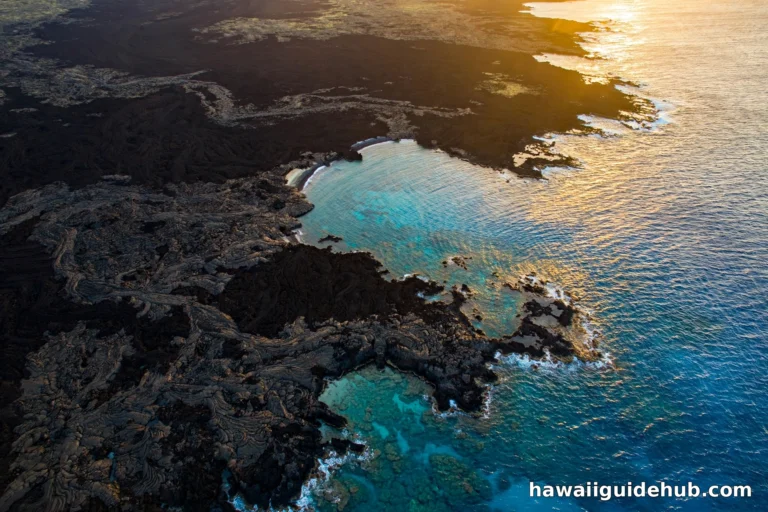
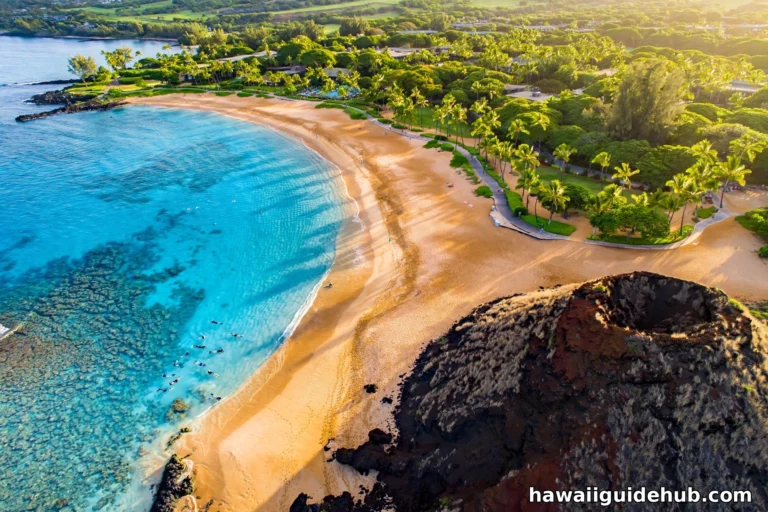
Ironwood Beach is about a quarter of a mile of white sand, wider and longer than neighboring Kapalua Bay but far less developed. The sand is soft and clean, sloping gently into water that shifts from pale turquoise near shore to deep blue farther out. Lava rock headlands close off both ends of the beach, which gives it a tucked-away feeling even though the golf course sits just inland.
Because there is no resort directly on the sand and no commercial activity at the beach itself, the atmosphere stays low key. On a typical weekday morning you might share the beach with a handful of walkers, a couple of snorkelers, and maybe a wedding photographer working with a couple at the far end. It is a favorite for elopements precisely because it photographs like a private cove. If you are a first-time visitor to Maui, the contrast between this beach and the busy resort strips is striking.
Swimming: Know the Shore Break
Here is the honest truth about swimming at Ironwood Beach: the shore break can be strong. Waves often dump directly onto the sand rather than rolling in gently, and that makes the water entry tricky, especially for kids and less confident swimmers. The beach faces roughly north and west, so it picks up winter swells that can turn the whole shoreline into a churning washing machine.
That does not mean you cannot swim here. On calm summer mornings, the water can be glassy and inviting, and plenty of people swim without incident. The key is to read the ocean before you get in. If the waves are pounding the sand and you can hear the break from the parking lot, treat it as a look-but-don’t-swim day. When in doubt, nearby Kapalua Bay offers a far more protected swimming spot just a short walk south on the coastal trail.
Snorkeling at Ironwood Beach
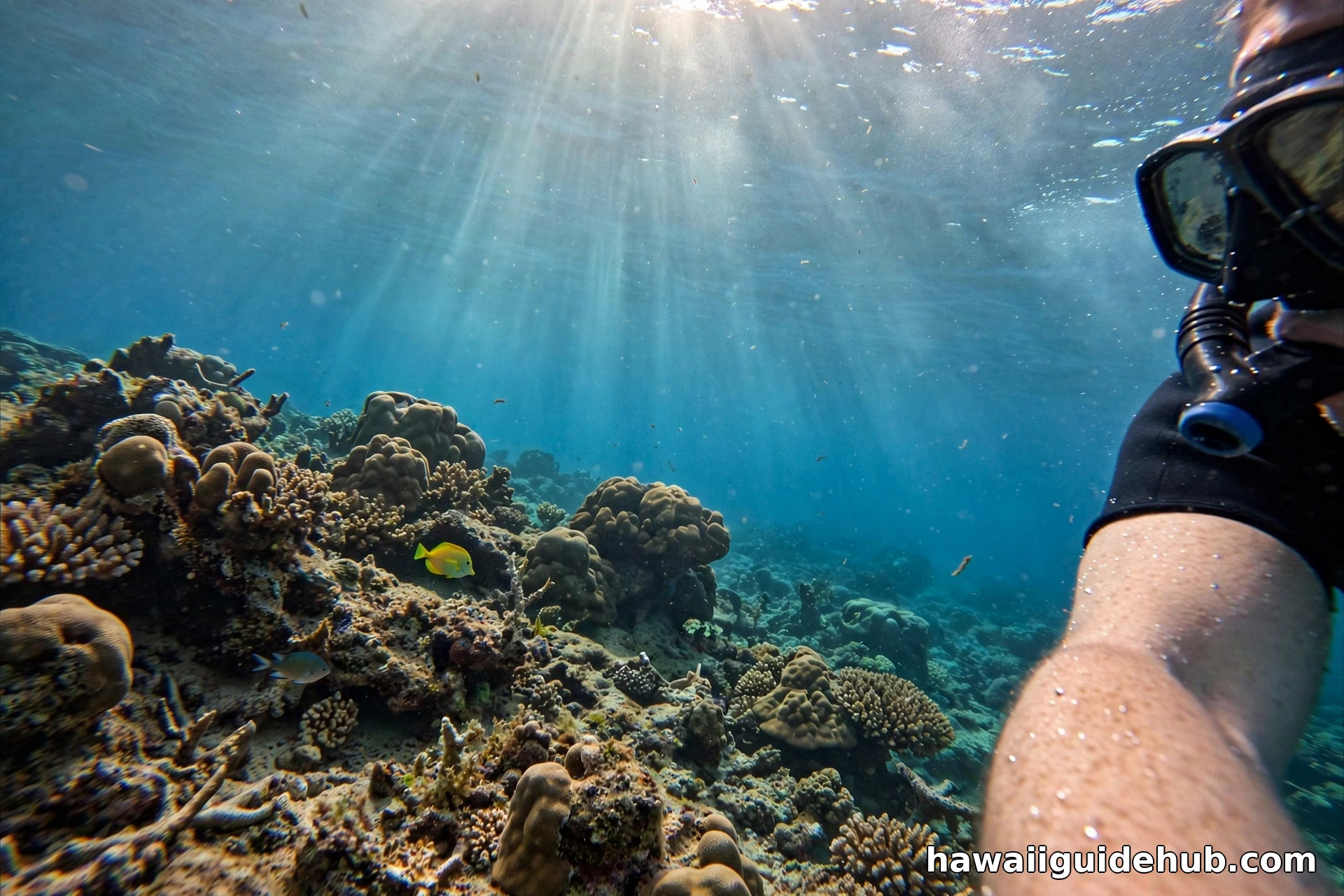
Snorkeling here is a fair-weather activity. When the ocean is calm, usually in the summer months, the rocky points at both ends of the beach hold coral and reef fish, and green sea turtles are regular visitors. The sandy middle of the beach is the easiest entry point, and the water clarity on a calm day is excellent.
When the surf is up, skip it. The exposed orientation means visibility drops fast and currents pick up, and there is no lifeguard to back you up. A good rule of thumb: if the shore break looks intimidating from the sand, it will feel worse with a mask on. For dependable snorkeling conditions, check the surf forecast the morning of your visit and aim for the early hours when the wind is lightest. If the water is rough, the tide pools at nearby Hawea Point are fun to look at, but do not swim in them. The waves there are genuinely dangerous.
The Kapalua Coastal Trail
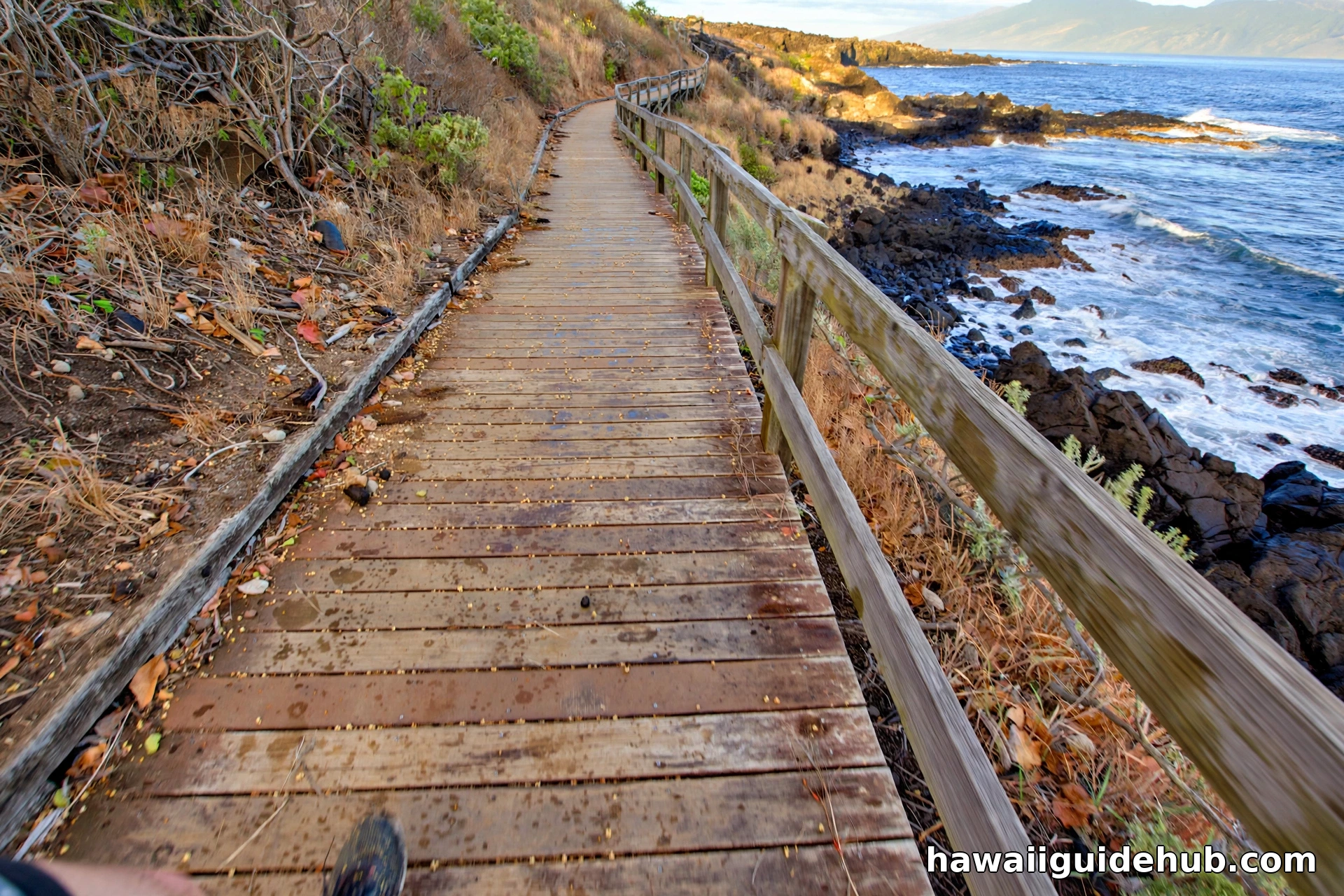
One of the best things about Ironwood Beach is that it sits on the Kapalua Coastal Trail, a roughly two-mile walking path that runs along the shoreline from Kapalua Bay in the south to D.T. Fleming Beach in the north. The trail is mostly flat, partly boardwalk and partly dirt path, and it is one of the prettiest easy walks on Maui.
Walking the trail turns a beach visit into a half-day outing. Heading south from Ironwood Beach, you pass Hawea Point with its tide pools and views across to Molokai, then Namalu Bay, a rocky cove popular with cliff jumpers, before reaching Kapalua Bay. Heading north, the trail climbs past the Ritz-Carlton to Dragon’s Teeth, the jagged lava rock formation at Makaluapuna Point, and continues to D.T. Fleming Beach. The whole walk takes about an hour each way at a strolling pace, and Ironwood Beach makes a perfect rest stop in the middle.
Stay on the marked trail, especially around Hawea Point. That area is a nesting and breeding habitat for the wedge-tailed shearwater, an endangered seabird, and wandering off the path damages the habitat. For more ideas on outdoor adventures in Hawaii, from hiking to snorkeling, this trail is a gentle place to start.
Dragon’s Teeth and the Labyrinth
Just north of Ironwood Beach, a short walk up the coastal trail, sits one of Kapalua’s strangest landmarks: Dragon’s Teeth. These are sharp, upward-jutting lava rock formations at Makaluapuna Point that really do look like a dragon’s jaw frozen mid-snarl. They formed when lava met the sea and cooled into spiky shapes, and they are worth the detour.
Near Dragon’s Teeth you will also find the Kapalua Labyrinth, a small stone maze set in an open field. It takes only a few minutes to walk, and it is a peaceful spot with big ocean views. Both are free to visit and easy to combine with a beach day. Go at low tide and in calm seas for the safest footing on the lava rock, and wear shoes with grip. The rock is sharp.
Parking and Getting There
Parking is the trickiest part of visiting Ironwood Beach. There is a small lot above the beach with only about a dozen stalls, and it fills up fast on nice days. The lot now uses scan-to-pay parking at roughly $29 for the day, which has been a sore point for longtime visitors who remember when it was free. Arrive early in the morning for the best chance at a spot.
If the main lot is full, there is additional parking at the east end of Ironwood Lane near the Dragon’s Teeth trail access, a short walk away. From the lot, you reach the beach via a set of stairs down to the boardwalk that runs above the sand, then a second set of stairs from the boardwalk to the beach itself. The walk down takes only a couple of minutes, but note that there is no elevator-style accessible route to the sand.
Facilities: What Is and Is Not Here
Set your expectations before you arrive. Ironwood Beach has no lifeguard, no restrooms, and no food or drink vendors. There are showers at the beach entrance for rinsing off sand, which is a nice touch, but plan to use the restroom before you come. The nearest facilities are at the surrounding resorts and at D.T. Fleming Beach Park to the north.
There is also essentially no natural shade on the sand itself. The ironwood trees stand behind the beach, not over it, so bring an umbrella or a pop-up shade if you plan to stay through midday. Pack out everything you bring in, because there are no trash cans on the sand either.
Best Time to Visit
Summer, roughly May through September, brings the calmest ocean conditions and the best snorkeling at Ironwood Beach. Mornings are almost always calmer than afternoons, when the trade winds pick up. Winter brings bigger surf, dramatic wave watching, and humpback whales breaching offshore from December through March, but swimming and snorkeling are often off the table.
For photography, the north-facing orientation means both sunrise and sunset can be spectacular here. Early morning is the sweet spot for a quiet beach walk, calm water, and soft light on the ironwood trees. If you are planning a wider island itinerary, our Oahu island guide and things to do on Kauai round out a multi-island trip.
Safety Tips
Ironwood Beach is beautiful, but it demands the same ocean respect as any exposed Hawaiian shoreline. Never turn your back on the water, especially near the rocky points. Keep children close to shore and within arm’s reach when waves are present. Do not swim alone, and do not swim here at all when the surf is high.
Give sea turtles plenty of space. Hawaiian green sea turtles are protected by federal law, and you should stay at least 10 feet away and never touch or chase them. Use reef-safe sunscreen to protect the coral, and avoid standing on the reef. If you are stung, scratched by coral, or caught in a current, stay calm and signal for help. There is no lifeguard, so your best safety tool is good judgment before you enter the water.
What to Bring
Pack like you are visiting a beach with no services, because you are. Bring reef-safe sunscreen, an umbrella or shade tent, plenty of drinking water, snacks, and a dry bag for your phone and keys. Water shoes help on the rocky entry points and the lava around Dragon’s Teeth. If you plan to snorkel, bring your own gear, since there are no rentals at the beach. A small first aid kit is smart for a beach this far from services.
See Ironwood Beach on Video
A Quiet Corner Worth the Effort
Ironwood Beach will never be the easiest beach on Maui to visit, and that is exactly the point. The small lot, the stairs, the lack of facilities, and the moody shore break keep the crowds away, leaving a stretch of sand that still feels like a discovery. Come on a calm summer morning, walk the coastal trail in both directions, and you will understand why the people who know this beach guard its quiet so carefully. It is Kapalua at its most natural, and it is worth every bit of the effort to get there.