Mauna Kea: Hawaii’s Tallest Mountain, from Sacred Summit to Stargazing Paradise

There is a place in Hawaii where you can watch the sun rise above a sea of clouds, touch snow at noon, and see more stars in one night than most people see in a lifetime. It sits in the middle of a tropical island, yet it feels like another planet. This is Mauna Kea, the Big Island’s great white mountain, and it is unlike anywhere else in the United States.
Maunakea, as it is properly written as one word, rises from the heart of the Island of Hawaiʻi. It is the highest peak in the state, a dormant volcano with a summit that sits above 40 percent of Earth’s atmosphere. On a clear winter morning, it wears a cap of snow. On a clear night, its dark skies reveal the Milky Way in stunning detail. It is also one of the most sacred places in Hawaiian culture, a mountain that demands respect from every visitor who makes the climb.
This guide covers everything you need to know before you go: how tall the mountain really is, the rules of the summit road, what happens at the visitor center, how to stay safe at altitude, and why this mountain matters so much to the people of Hawaiʻi.
How Tall Is Mauna Kea?
Mauna Kea stands 13,803 feet (4,207 meters) above sea level, making it the highest point in all of Hawaii. That figure comes from the U.S. Geological Survey, and it is the number the Maunakea Rangers use in their official road and safety announcements.
But the sea level number only tells part of the story. Mauna Kea is a shield volcano that began forming on the ocean floor about a million years ago. It extends roughly 19,700 feet below the surface of the Pacific. Measured from its true base on the deep ocean floor to its summit, the mountain stands nearly 33,500 feet tall. That makes it taller than Mount Everest (29,029 feet) when both are measured from base to peak. Everest reaches higher into the sky, but Mauna Kea is the bigger mountain.
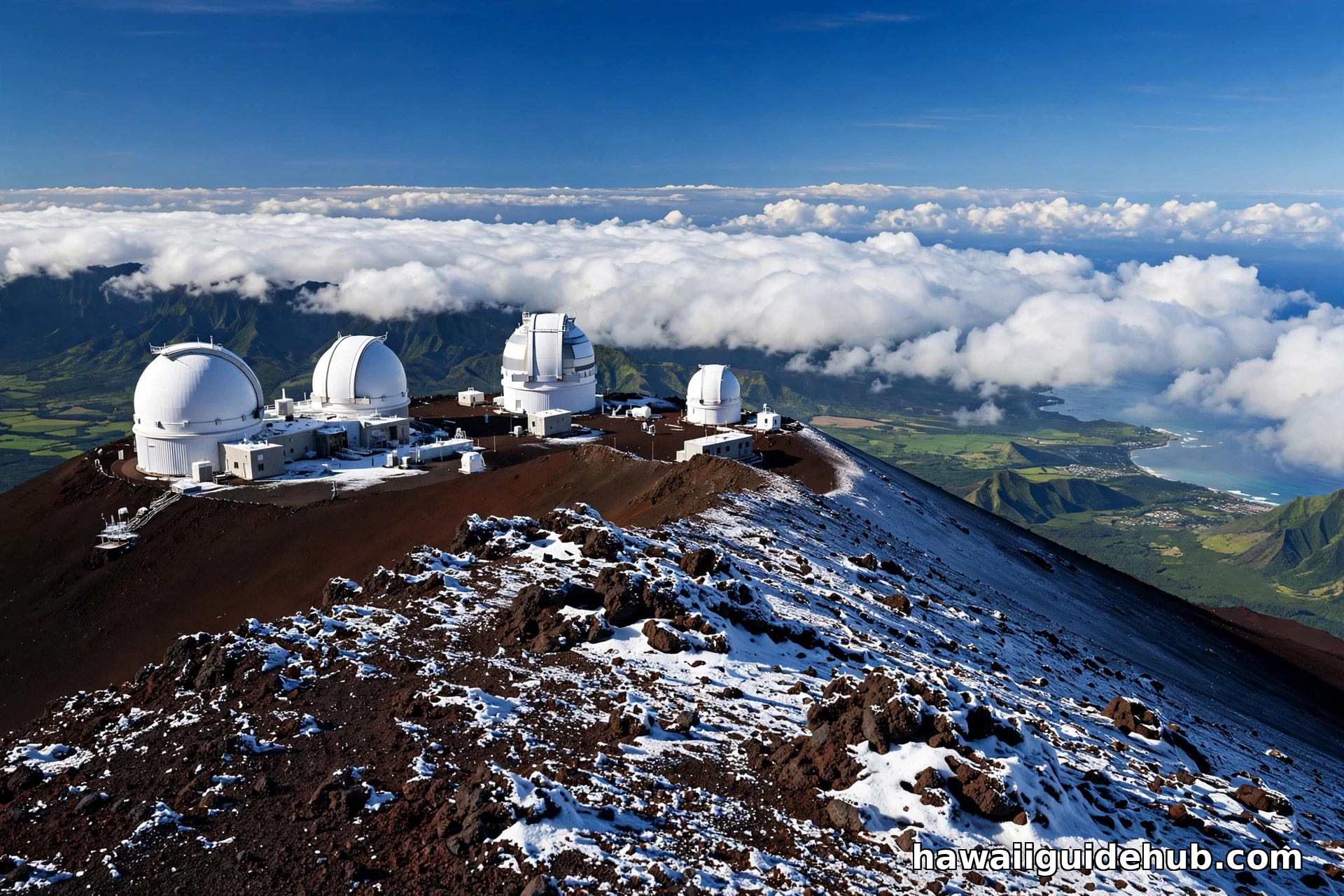
The name Maunakea means “white mountain” in Hawaiian, a reference to the snow that dusts the summit several times each winter. Seeing a snowcapped peak rise above tropical beaches is one of the strangest and most beautiful sights in all of Hawaii.
A Sacred Mountain
Long before the first telescope was built on its summit, Mauna Kea belonged to the gods. In Hawaiian tradition, it is one of the most sacred places in the islands. It is said to be the home of Poliʻahu, the goddess of snow, and the summit region is considered the piko, or umbilical cord, connecting the island to the heavens.
In ancient times, only high-ranking chiefs and religious leaders made the journey to the top. Ordinary people were not permitted. The summit cinder cone, Puʻu Wēkiu, holds burials and shrines, and a sign at the top asks visitors not to walk on it. The rangers repeat the request in their road updates: the summit is a sacred cultural area, so do not hike on or around the peak, disturb it, or leave items there.
This is not just history. The mountain is at the center of an ongoing and deeply felt debate about the Thirty Meter Telescope, a proposed observatory that many Native Hawaiians oppose. You do not need to take a side to visit respectfully, but you should understand that you are stepping onto ground that many people hold sacred. Keep your voice low, stay on the roads and trails, and treat the summit with the quiet respect it deserves.
Getting There: The Road to the Sky
Mauna Kea sits in the middle of the Big Island, reachable from both the Kona and Hilo sides. Take the Daniel K. Inouye Highway, also called Saddle Road or Highway 200, which runs between the two. The Mauna Kea Access Road turnoff is at mile marker 28.
From Hilo, the drive to the turnoff takes about 45 minutes. From the Kona coast resorts, plan on 90 minutes to two hours. The access road climbs about six miles of paved, well-maintained road to the Visitor Information Station at 9,200 feet. Any car can handle this stretch.
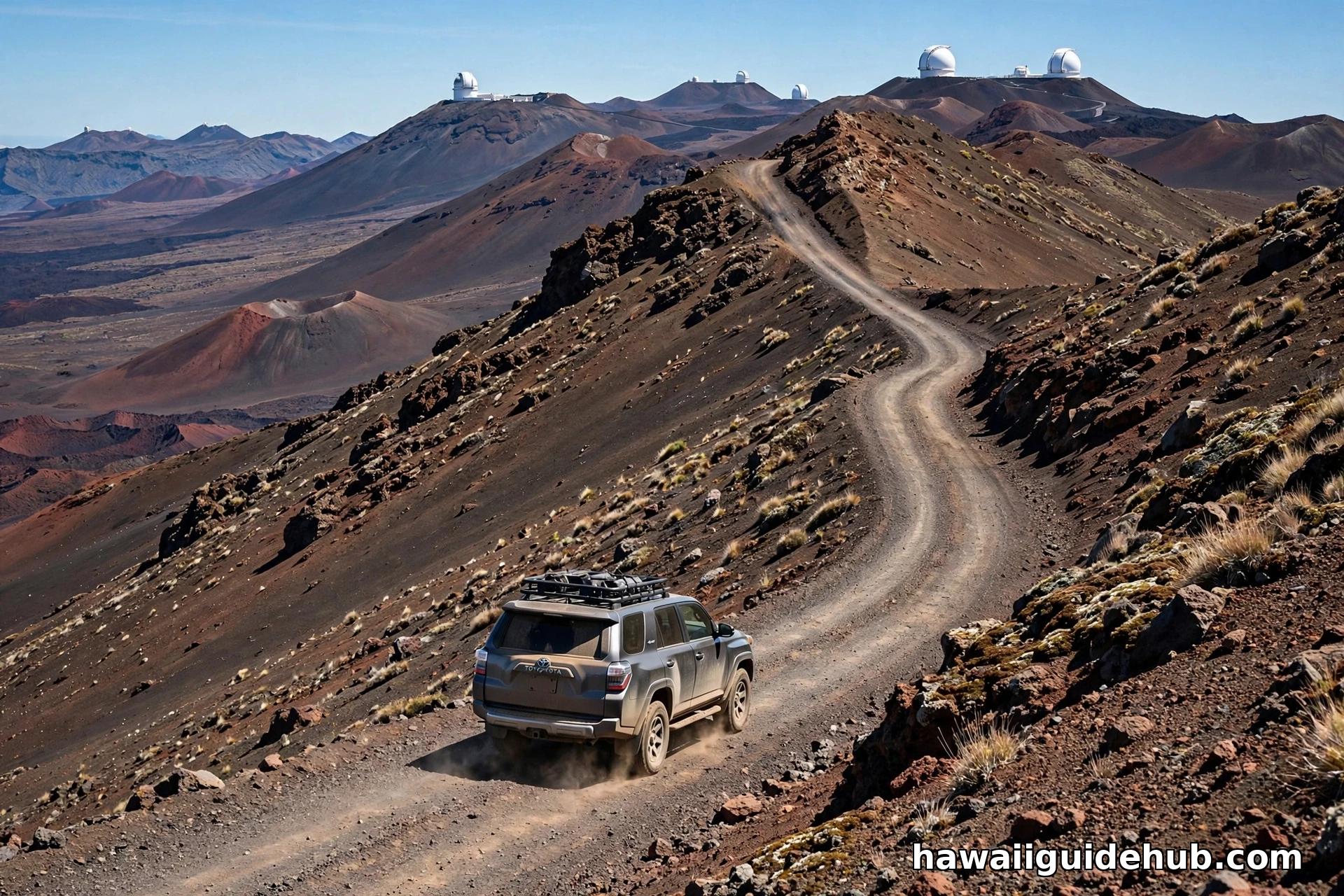
Beyond the visitor station, the rules change completely. The summit road climbs another stretch of steep grades, and several miles are unpaved gravel. This is where most visitors turn back, and for good reason. The requirements are strict and they are enforced.
The Visitor Information Station
The Maunakea Visitor Information Station, also called the Onizuka Center for International Astronomy, sits at 9,200 feet on the access road. It is open daily from 9:00 AM to 9:00 PM. Inside you will find educational exhibits about the mountain’s geology, ecology, and cultural significance, plus restrooms and a gift shop.
The station serves two purposes. First, it is an acclimatization stop. The rangers and the University of Hawaiʻi at Hilo recommend spending at least 30 minutes here before driving higher. Going from sea level to nearly 14,000 feet in a couple of hours is a shock to the body, and this pause helps. Second, it is the decision point. If you feel a headache, nausea, or shortness of breath at 9,200 feet, you will feel worse at the summit. The honest advice is to turn around and enjoy the stargazing from the visitor center instead.
If you are coming for sunset, the rangers advise arriving at least 1.5 to 2 hours before sunset. This gives you time to acclimate, check conditions, and drive up with daylight to spare. There are no restrooms at the summit, so use the facilities here.
Driving to the Summit: The 4WD Rules
To drive past the visitor station to the summit, your vehicle must be a true 4WD with low range. This is not a suggestion. Maunakea Rangers screen vehicles at the station, and they turn back anything without 4WD. They also check that the vehicle is free of mud and plant matter that could spread invasive species, and that you have at least half a tank of fuel. A full tank is better. There is no fuel on the mountain.
The summit access road is open from 30 minutes before sunrise until 30 minutes after sunset. No visitors may remain at the summit after dark. Groups of 10 or more need a special use permit. Off-road driving, off-trail hiking, drones, pets, alcohol, and smoking are all prohibited.
One more warning that matters: check your rental car agreement before you go. Most rental companies on the Big Island explicitly prohibit driving their vehicles to the Mauna Kea summit, even their 4WD and SUV models. If you damage the vehicle on the summit road, you can be liable for the full repair cost.
The number one driving safety issue on the mountain is hot brakes. The descent is long and steep, and riding the brakes will overheat them. Learn how to use your vehicle’s 4WD low range and engine braking before you arrive. Shift into low gears on the way down, keep your headlights on, and pull over to let the brakes cool if they start to fade.
Stargazing on Mauna Kea
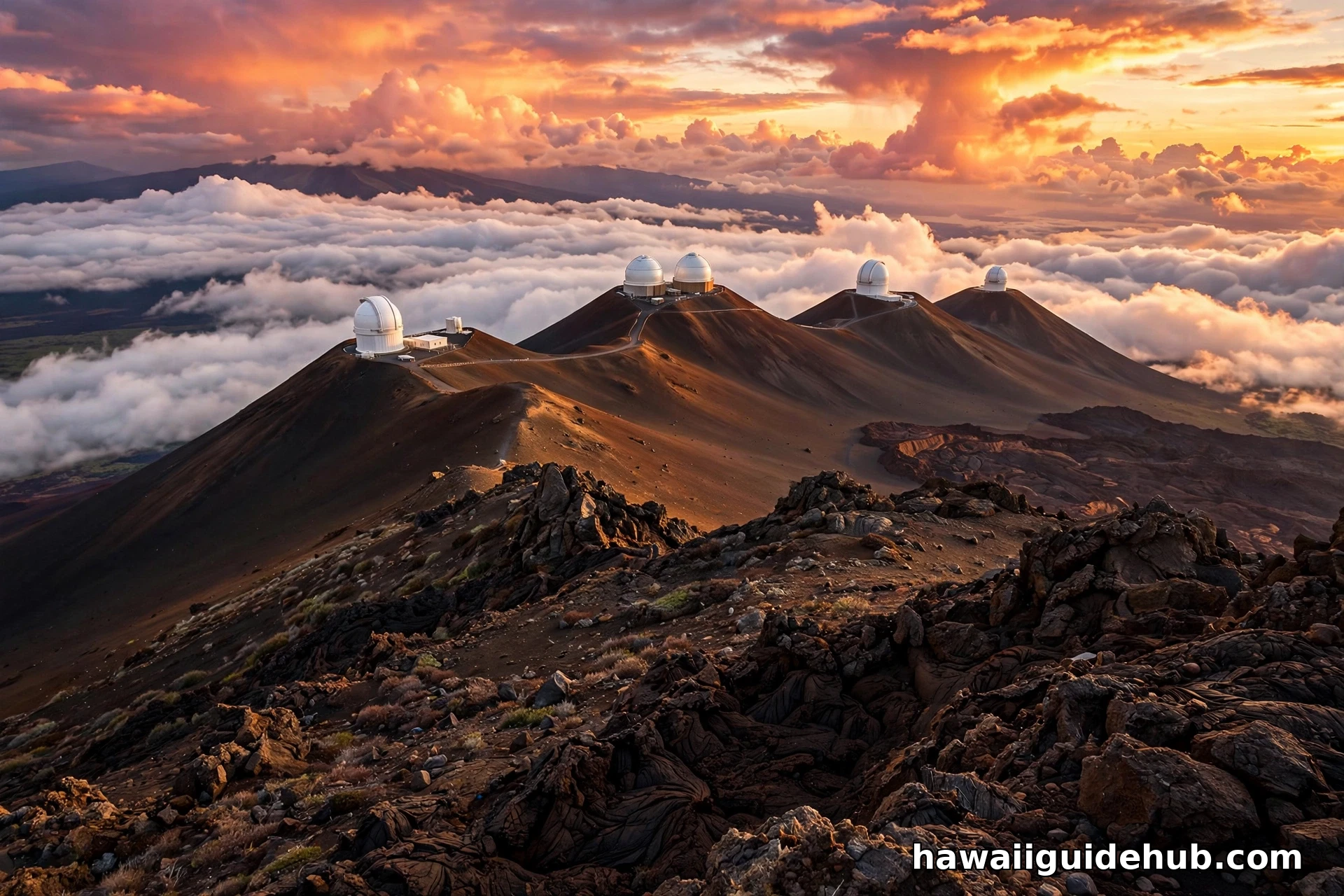
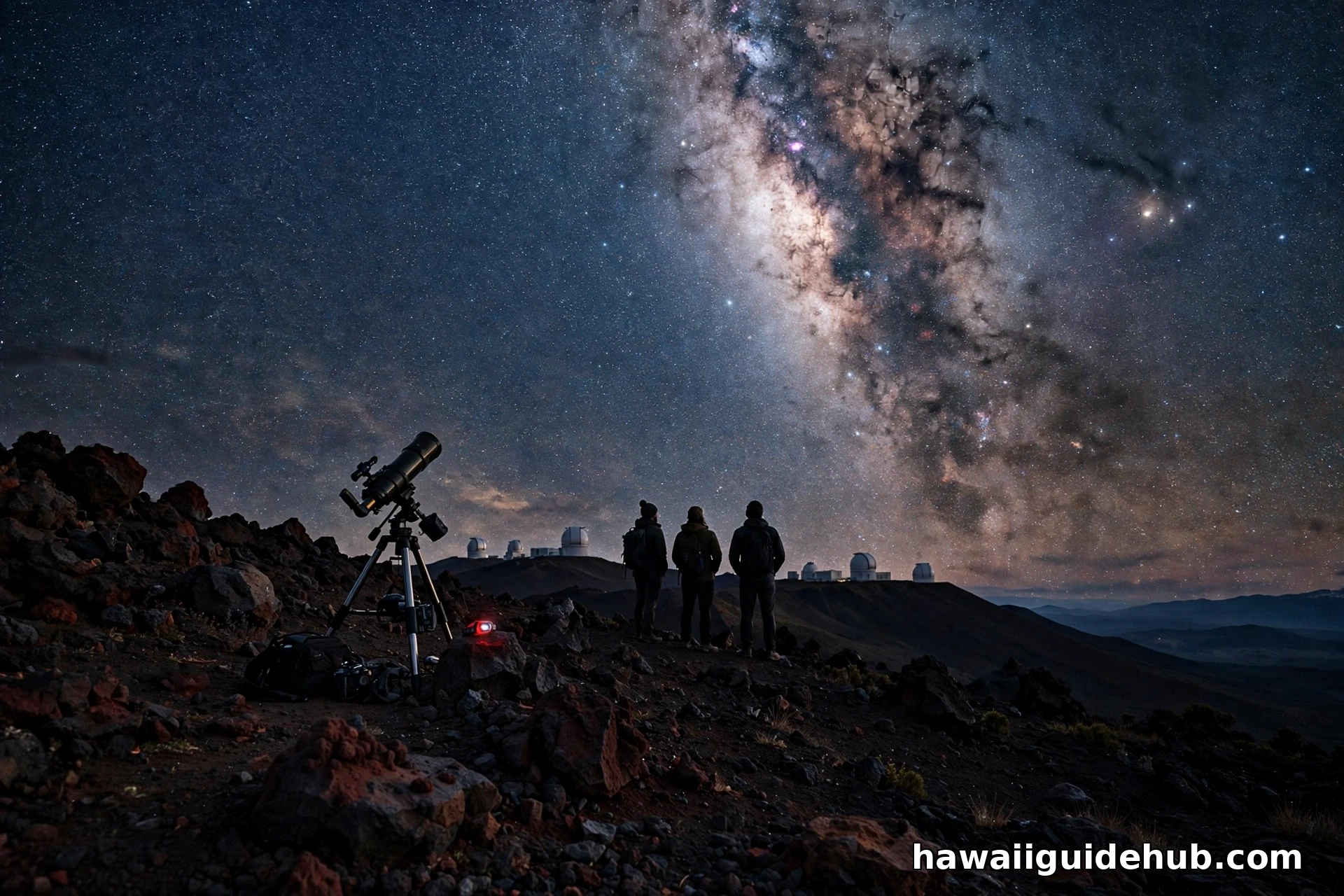
The summit of Mauna Kea hosts one of the greatest concentrations of astronomical observatories on Earth: 13 advanced telescopes from 11 countries. The reason is simple. The air above 13,000 feet is exceptionally clear, dry, and stable, with minimal light pollution. The summit sits above the inversion layer, which traps clouds and moisture below. On most nights, the sky is among the darkest and clearest anywhere on the planet.
Visitors cannot tour the observatory interiors, but you do not need a telescope the size of a building to have an unforgettable night. The stargazing programs at the Visitor Information Station set up telescopes after dark, and the Milky Way from 9,200 feet is spectacular on its own. Bring warm layers, because temperatures drop fast after sunset, and give your eyes time to adjust to the dark.
Sunrise and Sunset Above the Clouds
Few experiences in Hawaii rival watching the sun rise or set from the summit of Mauna Kea. At dawn, the horizon ignites in deep orange and pink, and long shadows stretch across the volcanic cinder cones. At sunset, the sky melts through gold and violet before the stars take over. On many days, a solid layer of clouds sits thousands of feet below, and you feel as though you are standing on an island in the sky.
Sunset is the more popular choice, partly because the access road opens only 30 minutes before sunrise, which makes a dawn trip a tight squeeze. Either way, arrive early, dress far more warmly than you think you need to, and remember that you must leave the summit within 30 minutes after sunset. Plan your descent while you still have light.
Hiking the Mountain
For experienced hikers, the Humuʻula Trail runs from the Visitor Information Station to the summit. It is about 6 miles one way, climbing nearly 4,800 feet over rough volcanic terrain, scree, and old lava flows. The round trip takes most hikers 7 hours or more. There is no water on the trail, the weather can change in minutes, and the altitude makes every step harder than it looks. This is a serious undertaking, not a casual stroll.
A gentler option is the short trail to Lake Waiau, one of the highest alpine lakes in the United States at around 13,020 feet. The lake is considered sacred in Hawaiian tradition. The hike is short but the altitude still demands respect. Take it slow, bring water, and turn back if you feel unwell.
Whichever trail you choose, acclimate at the visitor center first, carry more water than you expect to need, wear sun protection, and dress in layers. The sun is intense at this elevation, and the temperature can swing wildly between midday and late afternoon.
Snow in Hawaii
Yes, it snows in Hawaii, and Mauna Kea is where it happens. Winter storms can drop up to two feet of snow on the summit in January and February, and lighter dustings occur several times each winter. The contrast of white snow against black lava and the tropical island far below is surreal.
Snow also means closures. The rangers close the summit road whenever there is ice or snow on the road surface, and they also close it for sustained winds over 55 mph or gusts over 65 mph. Always check the current road status before driving up. Winter visitors should be ready for the possibility that the summit is simply off limits on the day they planned to go.
Altitude Safety: What You Must Know
At 13,803 feet, the summit of Mauna Kea has roughly 40 percent less oxygen than sea level. Acute mountain sickness is a real risk, and it does not care how fit you are. Headache, nausea, dizziness, and shortness of breath are the classic symptoms. The only cure is to descend.
The rangers are direct about who should not go to the summit. It is unsafe for children under 13, for anyone who is pregnant, for people with heart or respiratory conditions, and for anyone who has gone SCUBA diving within the previous 24 hours. The rapid pressure change in reverse can be dangerous.
Even healthy adults should take precautions. Spend at least 30 minutes at the visitor center. Drink water and avoid alcohol. Do not overexert yourself at the summit. If symptoms appear, do not push through them. Go down. The mountain will still be there tomorrow.
The Observatories
The summit ridge holds 13 telescopes operated by institutions from 11 countries, including the twin Keck telescopes, Subaru, Gemini North, and the Canada-France-Hawaii Telescope. Together they form one of the most productive astronomical sites in the world, responsible for discoveries ranging from distant galaxies to planets around other stars.
Public access to the observatory buildings is restricted, so set your expectations accordingly. You will see the domes from the outside, which is impressive enough against the stark volcanic landscape. The science happening inside them is a reminder of why this mountain was chosen: nowhere else combines this altitude, this dryness, and this darkness so close to the equator.
What to Bring
Packing for Mauna Kea is nothing like packing for the beach. Temperatures at the summit sit below freezing even in summer, and the wind chill can be brutal after sunset. Bring a warm jacket, hat, gloves, and long pants no matter what month you visit. Sturdy closed-toe shoes are essential on the rocky terrain.
Bring water and snacks, sunglasses for the intense high-altitude sun, and a small backpack to carry it all. Download offline maps before you leave, because cell service is unreliable on the mountain. Fill your fuel tank. And bring patience: the road, the altitude, and the weather all demand that you slow down.
See Mauna Kea on Video
Planning Your Visit Around the Big Island
Mauna Kea pairs naturally with the rest of the island’s high country. Many visitors combine it with the things to do on the Big Island, from the volcanoes of Hawaiʻi Volcanoes National Park to the coffee farms of Kona. If you love outdoor adventures in Hawaii, the mountain’s trails and dark skies are a highlight that stands apart from anything at sea level.
Visitors splitting time between islands often pair the Big Island with its neighbors. Our Oahu island guide and reasons to visit Maui can help you plan the rest of your trip once you have stood on top of Hawaii.
A Mountain Like No Other
Mauna Kea is a place of superlatives: the tallest sea mountain on Earth, the snowiest spot in Hawaii, the darkest sky in the Pacific, and one of the most sacred summits in Polynesia. It is also a place that asks something of you. It asks you to drive carefully, to breathe slowly, to dress warmly, and to walk quietly on ground that others hold holy.
Give it that respect, and it gives back one of the great experiences in American travel: a sunset above the clouds, a night under impossible stars, and the strange, wonderful feeling of standing on top of Hawaii with snow at your feet and the tropics far below.