Laulau: Hawaii’s Traditional Steamed Dish

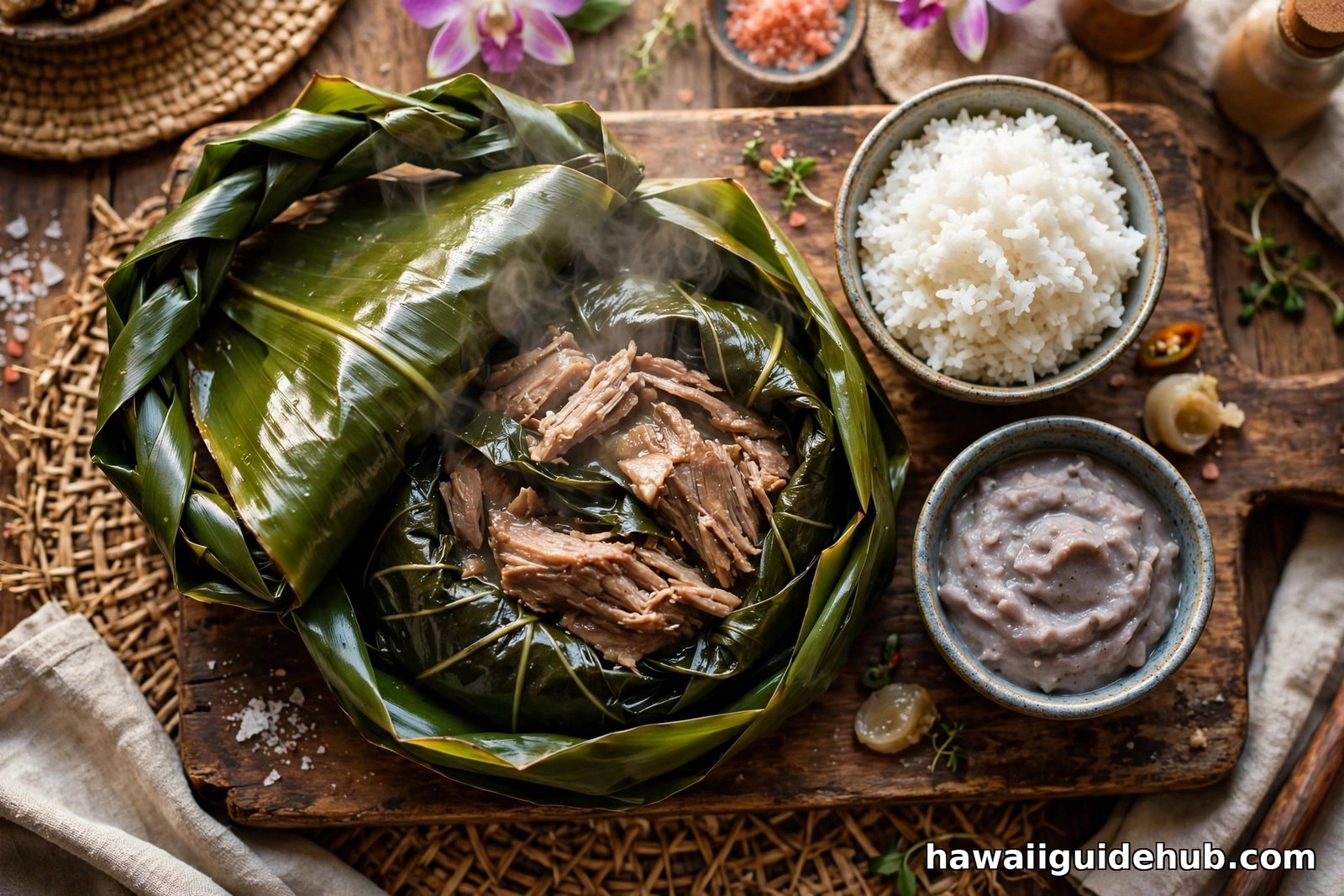
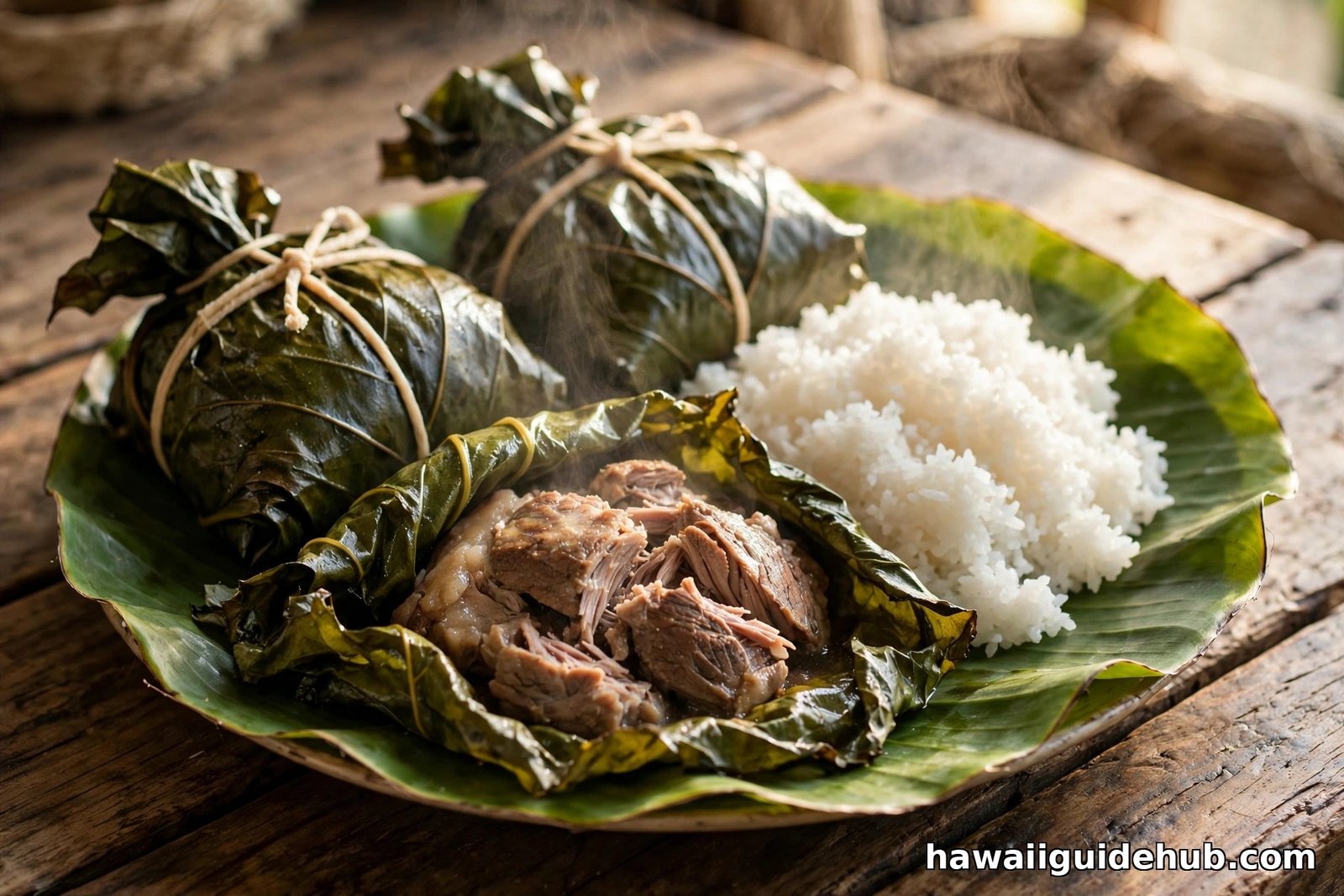
Unwrap a laulau and you understand something about Hawaii before you take a single bite. The outer ti leaves peel back to release a rush of steam, and inside sits a dark green bundle of taro leaves that have cooked down to something between spinach and silk. Buried in those leaves: pork so tender it barely holds together, and salted fish that seasons every bite. It looks humble. It tastes like centuries.
Laulau (sometimes written lau lau) is one of the few truly traditional Hawaiian dishes that has survived more or less intact from the days of the early Polynesian settlers to the modern plate lunch counter. It shows up at luaus, family parties, fundraisers, and beach potlucks, usually alongside poi, kalua pig, and lomi salmon. If you want to eat the way Hawaii actually eats, start with our guide to must-try local dishes in Hawaii.
What Is Laulau?
At its simplest, laulau is meat and fish steamed inside leaves. Pork shoulder or pork butt is the classic filling, joined by a piece of salted butterfish (sablefish, also called black cod) or salted salmon that acts as seasoning. The filling gets wrapped in layers of taro leaves, known in Hawaiian as lūʻau, and then the whole bundle is wrapped again in ti leaves and tied shut. The bundles steam for hours until the pork surrenders and the taro leaves melt into savory greens.
The name itself tells you what matters. Laulau translates roughly to “leaf leaf,” a nod to the two layers of leaves that define the dish. The inner taro leaves are eaten and are arguably the best part. The outer ti leaves are not eaten; they are the wrapper, the cooking vessel, and the serving package all in one. When you buy laulau at a Hawaiian restaurant or a fundraiser, it arrives as a neat green packet. You peel, you steam, you eat.
Unlike many Hawaiian dishes that picked up outside influences over the years, laulau kept its traditional form. There is no coconut milk in Hawaiian laulau, no onions, no garlic, no spice blends. Salt, pork, fish, leaves, steam. That restraint is the point. Every flavor in the bundle comes from the ingredients themselves and the long, slow cooking.
Where Laulau Comes From
To understand laulau, you have to start with the canoe. When Polynesian voyagers settled Hawaiʻi roughly a thousand years ago, they brought the plants and animals they needed to survive the voyage and build a new food system. Taro, or kalo, was among the most important of these canoe crops, and it became the foundation of the Hawaiian diet. The corm was pounded into poi. The leaves became lūʻau. Nothing was wasted.
The imu, the underground earth oven, was the centerpiece of Hawaiian cooking for centuries. Food wrapped in ti leaves and buried with hot stones cooked slowly in its own steam, the same principle behind laulau. Wrapping food in leaves was practical long before it was traditional: leaves kept food clean and held in moisture as it cooked.
Over generations, the dish settled into the form recognized today. Pork became the standard filling after pigs arrived with later voyagers and then Europeans. Salted butterfish joined as a seasoning that added depth the pork alone could not provide. The ti leaf wrapper, the long steaming, the pairing with poi or rice: all of it hardened into custom. By the 1800s, laulau was already a fixture at the feasts that would eventually be called luaus.
The dish matters enough that Hawaiʻi lawmakers have pushed to give it official recognition, with bills proposing an annual Laulau Day to celebrate the farmers, chefs, and families who keep the tradition alive. Few dishes carry that kind of weight.
What Goes Into a Traditional Laulau
A proper laulau has five essential components, and each one earns its place.
Pork
Pork butt or pork shoulder is the standard, cut into generous chunks with the fat left on. The fat is not a flaw; it bastes the meat and the leaves during the long steam and keeps everything succulent. Some recipes use pork belly for extra richness, and chicken thighs are a common variation, but pork butt is the benchmark. The meat gets seasoned simply with Hawaiian sea salt, sometimes with a splash of shoyu.
Salted Fish
Butterfish, the local name for sablefish or black cod, is the traditional choice, added in smaller pieces as a seasoning rather than a main filling. Salted salmon works the same way, permeating the pork and leaves during steaming, which is why the dish needs so little added salt. If your butterfish is very salty, soaking it in cold water for a few hours before wrapping tames it.
Taro (Lūʻau) Leaves
These are the leaves you eat. Fresh taro leaves get washed, de-stemmed, and layered around the filling, usually five or six leaves per bundle. During steaming they collapse into a dark, tender green with a flavor somewhere between spinach and collard greens, only richer. One important note: taro leaves contain calcium oxalate crystals, which irritate the mouth and throat if the leaves are undercooked. They must be steamed until fully soft and dark green. More on that below.
Ti Leaves
Known as lāʻī in Hawaiian, ti leaves form the outer wrapper. They are long, glossy, and sturdy enough to hold the bundle together through hours of steam. As the laulau cooks, the ti leaves lend a faint sweetness to the contents and keep moisture locked in. You do not eat them. Peel them back and dig into what is inside. Preparing them means stripping out the stiff center rib so the leaf folds without cracking.
Hawaiian Salt
Alaea salt, the reddish Hawaiian sea salt, is the traditional seasoning. It goes on the pork before wrapping, and that is usually all the seasoning the bundle needs, since the salted fish contributes the rest. Regular sea salt works, but the mineral character of Hawaiian salt is part of the authentic flavor.
Laulau vs. Kalua Pig: What Is the Difference?
Visitors often meet these two dishes on the same plate, and they share DNA. Both come from the imu tradition, both center on pork, and both taste of smoke and patience. But they are different dishes made in different ways.
Kalua pig is a whole pig, or a large cut, cooked in the imu itself: seasoned, wrapped in ti and banana leaves, buried with hot stones, and left for most of a day. The result is shredded, smoky pork. Laulau is the individual serving version of the same idea. Instead of one big roast, the pork is portioned into bundles with fish and taro leaves, each one its own little earth oven. The taro leaves are the big difference. Kalua pig has no greens; laulau is as much about the leaves as the meat.
At a Hawaiian plate lunch or a luau, you will often get both, and that is the ideal way to try them. The kalua pig brings the smoke. The laulau brings the savory greens and the seasoned broth that collects in the leaves. Together with poi or rice and a scoop of lomi salmon, they make the classic combination that defines the cuisine.
How Laulau Is Made, Step by Step
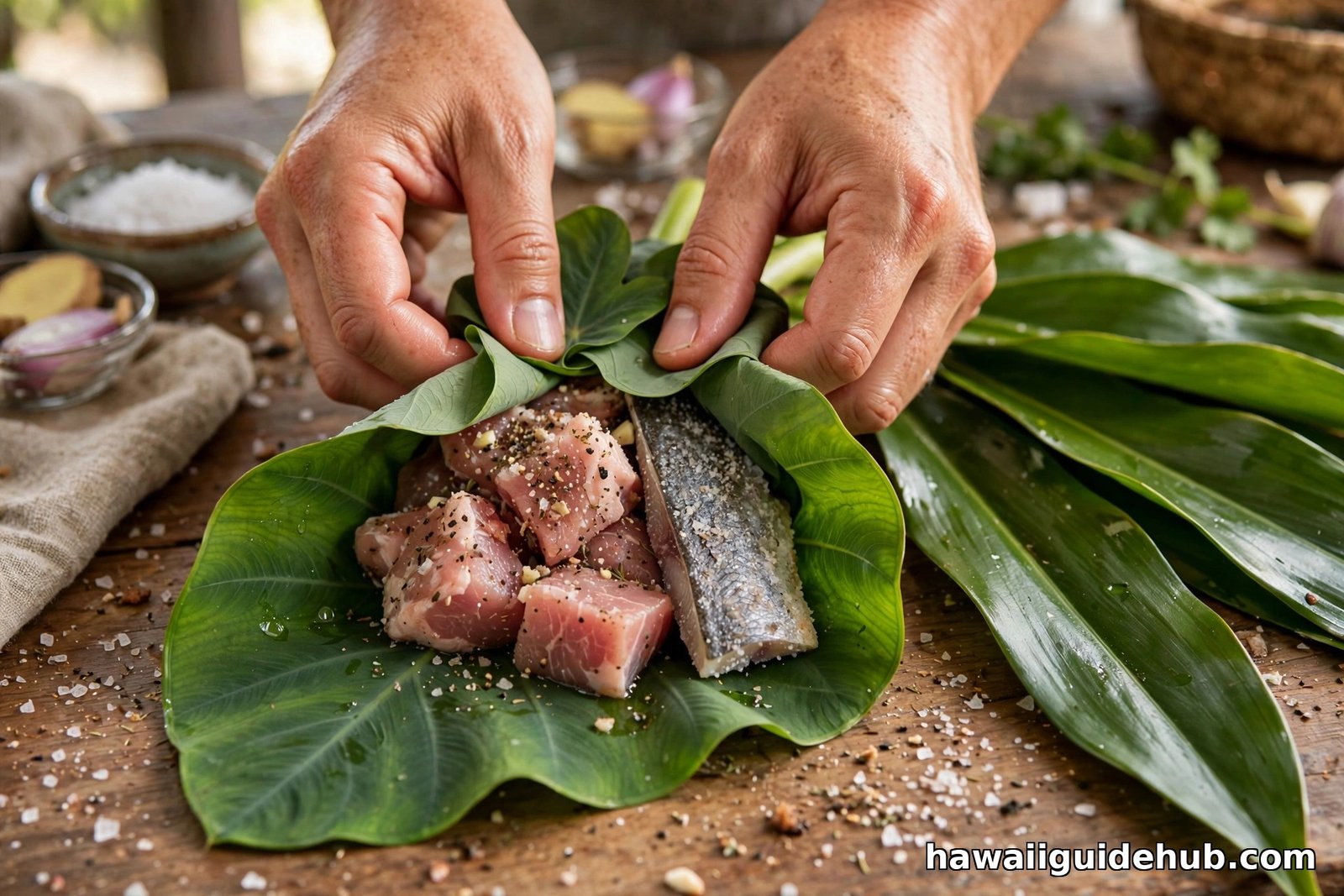
Making laulau is straightforward but unhurried. The wrapping takes practice; the cooking takes time. Here is the traditional method.
1. Prepare the pork. Cut pork butt into chunks about one and a half inches across, leaving the fat on. Season generously with Hawaiian salt and, if you like, a little shoyu. If you are using salted butterfish that tastes aggressively salty, soak it in cold water for a couple of hours first.
2. Prepare the leaves. Wash the taro leaves well and cut away the stems and the thickest part of the center veins. For the ti leaves, strip out the stiff rib by cutting partway through it and rolling the leaf over your finger to pull it free. Handle them gently so they wrap neatly.
3. Wrap the filling in taro leaves. Lay out five or six taro leaves, largest on the bottom, overlapping like shingles. Set a portion of pork in the center, a piece of butterfish or salted salmon on top of the pork, and a pinch more salt. Fold the leaves over the filling from the sides first, then roll it closed like a burrito, adding leaves to cover any tears. The bundle should be fully enclosed.
4. Wrap in ti leaves. Place the taro bundle near one end of a ti leaf and roll it up tightly, then wrap a second ti leaf around it in the opposite direction for a secure, flat package. Tie it with string or with a strip torn from a ti leaf stem. Wrap tightly: loose bundles cook unevenly and can fall apart.
5. Steam. Set the bundles on a rack above boiling water in a large steamer pot, cover tightly, and steam for four to six hours, adding water as needed so the pot never boils dry. The laulau is done when the taro leaves are uniformly dark green and completely soft, and the pork yields to a fork.
How Long to Steam Laulau
Time is the ingredient most people underestimate. Traditional stovetop steaming takes four to six hours for standard bundles. Larger bundles or ones packed with extra pork can push toward the longer end. There is no shortcut worth taking here, because the timing is about more than tenderness.
Taro leaves contain calcium oxalate, needle-shaped crystals that cause an itchy, scratchy sensation in the mouth and throat when the leaves are undercooked. The only fix is thorough cooking. The leaves need to go fully dark green and soft all the way through. Cooks who have tried to rush the process, including a widely shared four-hour slow cooker attempt, report the telltale mouth itch. When in doubt, give it another hour. An extra hour never hurt a laulau.
If you do not have a big steamer setup, a slow cooker works well. Line it with ti leaves, layer in the wrapped bundles, add a little water, and cook on low for six to eight hours. A pressure cooker or Instant Pot cuts the time dramatically and still produces a respectable laulau, which is how many busy families make it now. Reheating a pre-made laulau is much quicker: fifteen to twenty minutes in a steamer, until heated through.
Making Laulau at Home: A Simple Recipe
This recipe makes about six laulau using the traditional stovetop steaming method. Scale it up for a crowd; laulau freezes well and is a favorite fundraiser food for exactly that reason.
Ingredients:
- 3 pounds pork butt, cut into 1½-inch chunks (fat left on)
- ½ pound salted butterfish or salted salmon, cut into 6 pieces (soak in cold water 2 hours if very salty)
- 30 fresh taro (lūʻau) leaves, washed, stems and thick veins removed
- 12 large ti leaves, washed, stiff ribs removed
- 1½ tablespoons Hawaiian sea salt, plus more to taste
- 3 tablespoons shoyu (optional)
- Kitchen string
Instructions:
- Toss the pork chunks with the Hawaiian salt and shoyu until evenly coated. Set aside.
- For each laulau, layer 5 taro leaves on a work surface, largest leaf on the bottom. Place a sixth of the pork in the center and one piece of fish on top. Sprinkle with a small pinch of salt.
- Fold the taro leaves over the filling, sides first, then roll closed like a burrito. Add leaves over any tears so the filling is fully enclosed.
- Place the bundle near the end of a ti leaf and roll tightly. Wrap a second ti leaf around it in the opposite direction. Tie securely with string.
- Arrange the bundles in a single layer on a steamer rack above boiling water. Cover and steam 4 to 6 hours, replenishing the water as needed. The laulau are done when the taro leaves are dark green and completely tender and the pork is fork-soft.
- Unwrap, serve hot with steamed rice or poi. Do not eat the ti leaves.
One honest warning: outside of Hawaiʻi, fresh taro and ti leaves can be hard to find. Some mainland cooks substitute spinach or collard greens for the taro leaves and banana leaves or foil for the ti leaves. It makes an edible bundle, but it is not the same dish. The taro leaf flavor is irreplaceable.
Where to Eat Laulau in Hawaii
You do not have to make laulau to eat well in Hawaiʻi. The dish is everywhere once you know to look for it. Traditional Hawaiian restaurants serve it as a plate lunch staple, usually with rice or poi and sides like lomi salmon or haupia. Plate lunch shops across the islands keep it in the rotation. Farmers markets often have vendors selling fresh bundles to take home and steam. And at any traditional Hawaiian luau worth attending, laulau will be on the buffet next to the kalua pig.
Fundraisers deserve a special mention. In Hawaiʻi, laulau fundraisers are a genuine institution: families and teams wrap hundreds of bundles over a weekend to raise money for school trips, sports teams, and college funds. If you see a hand-lettered sign advertising laulau for sale, buy some. You will be eating the real thing and supporting the community at the same time.
For visitors staying in resort areas, the concierge or front desk can usually point you to the nearest Hawaiian restaurant. But the best laulau experiences tend to be low-key: a neighborhood spot with a steam table, a market stall, a family party you were lucky enough to get invited to.
Tips for First-Timers
A few things worth knowing before your first bundle. Do not eat the ti leaf wrapper; peel it back and set it aside. Do eat the taro leaves; they are the soul of the dish and packed with flavor from the pork and fish. Laulau is rich, so rice or poi alongside balances it. If the bundle includes a piece of sweet potato, considered a bonus by many, count yourself lucky. And if you are served laulau at a gathering, take a moment to appreciate the work in it. Somebody wrapped that by hand, and it steamed for half the day.
Laulau endures because it is honest food. Leaves, pork, fish, salt, steam, time. No shortcuts in the traditional version, no showing off, just a technique perfected over centuries and a flavor that tastes like the islands themselves, much like huli huli chicken with its own storied preparation. Whether you unwrap one at a beach potluck, a restaurant table, or your own kitchen after six hours of steaming, you are taking part in one of the oldest continuous food traditions in Hawaiʻi. That is a lot to fit inside a bundle of leaves.