La Niña: How Does It Affect Marine Life

The Pacific Ocean has secrets that affect everything from the weather to the fragile balance of marine ecosystems all over the world. La Niña is one of the most powerful oceanic phenomena affecting the marine environments on our planet, and scientists study it closely to understand its far-reaching effects.
Most people think of La Niña as a weather pattern that brings cooler temperatures and more rain to some areas. However, its effects on marine life are often overlooked. This cyclical climate pattern doesn’t just change the weather at the surface; it reshapes the habitats, food chains, and survival strategies of many marine species.
As extreme climate events become more frequent and intense, understanding how La Niña affects marine life becomes increasingly important. These changes in the ocean reach far beyond the surface of the water. They affect coastal communities, the fishing industry, and global food security — and can dramatically shift fish populations and stress coral reef ecosystems.
What is La Niña and what makes it so strong?
La Niña is the cool part of the El Niño-Southern Oscillation (ENSO), a climate pattern that goes back and forth between warm (El Niño) and cool (La Niña) conditions in the tropical Pacific Ocean. This natural cycle happens every two to seven years, and each phase lasts from nine months to three years.
The Science Behind How La Niña Forms
The trade winds that blow from east to west across the Pacific get stronger, which starts the process of La Niña. These stronger winds push warm surface waters toward Asia. This lets cold, nutrient-rich waters rise from the deep ocean along the coasts of Peru and Ecuador in a process called upwelling.
During La Niña years, sea surface temperatures in the central and eastern tropical Pacific drop significantly — often by about 1–2°C below average. This difference in temperature creates a feedback loop: cooler waters support stronger trade winds, which in turn strengthen the upwelling process and sustain La Niña conditions.
Is there a difference between La Niña and El Niño?
Scientists keep an eye on sea surface temperature anomalies and atmospheric pressure patterns to answer the question “are we in El Niño or La Niña?” El Niño makes the ocean warmer and usually weakens upwelling, but La Niña does the opposite: it makes the water cooler and increases nutrient circulation, which changes marine ecosystems in a big way.
The La Niña effect on marine environments is very different from the effect of its warm phase. Where El Niño often disrupts marine food chains by reducing nutrient availability, La Niña can create periods of abundance followed by challenging conditions as ecosystems adapt to rapidly changing conditions.
What La Niña Does to Ocean Temperatures and Currents
Surface Temperature Changes
The most immediate effect of La Niña on marine life is the sudden changes in sea surface temperature. Temperatures in the eastern Pacific drop by 1 to 2 degrees Celsius, while temperatures in the western Pacific may rise slightly above normal. These temperature shifts affect everything from plankton reproduction to fish migration patterns.
Marine species have evolved within particular temperature ranges, and even minor deviations can trigger significant behavioral and physiological changes. During La Niña events, cold-water species may expand their range, while warm-water species may shift location to find more suitable habitat.
Better Upwelling and Nutrient Distribution
During La Niña events, the trade winds get stronger, which makes upwelling stronger along the coasts of Peru, Ecuador, and Chile. This process brings deep, cold waters that are high in nitrates, phosphates, and other important nutrients to the surface. These waters are some of the most productive marine environments on Earth.
However, this increased productivity comes with trade-offs. As ocean currents change, some areas may have fewer nutrients available, while others may have more. Marine life must find their way around these changes, which make resources unevenly spread out.
Changes to Ocean Currents
La Niña alters the Equatorial Countercurrent and the California Current, two of the most important ocean currents. These shifts change how marine life is distributed across ocean basins and can separate species from their usual food sources or breeding grounds.
Responses of Marine Ecosystems: From Small to Huge
Primary Productivity and Phytoplankton Blooms
During La Niña events, the increased upwelling creates favorable conditions for phytoplankton blooms. These tiny organisms are the building blocks of marine food webs. When there are more of them during La Niña periods, fish and seabird populations can grow very quickly.
But not all types of phytoplankton react the same way to La Niña conditions. Some species do well in the cooler, nutrient-rich waters, while others have a hard time adjusting. This selective pressure can change the make-up of marine communities from the ground up.
The changing numbers of zooplankton
During La Niña events, the number of zooplankton, which are small animals that eat phytoplankton, changes a lot. In areas with more upwelling, populations of species like copepods and krill may grow quickly, giving fish, seabirds, and marine mammals a lot of food.
The timing of these changes in population is very important for the life cycles of marine animals. A lot of fish species time their breeding to coincide with when zooplankton is plentiful. Changes to these patterns can have long-lasting effects on fish populations.
Changes in the number of fish
Anchovy and Sardine Dynamics
The Peruvian anchoveta is one of the most important commercial fish species in the world. It shows how much La Niña changes marine life. When La Niña is strong, anchoveta populations often grow very quickly because there is more food available from stronger upwelling.
However, these population booms can be followed by crashes when La Niña conditions weaken or shift to El Niño. These boom-and-bust cycles favor short-lived, fast-reproducing fish species that can take advantage of good conditions quickly.
Adaptations of predatory fish
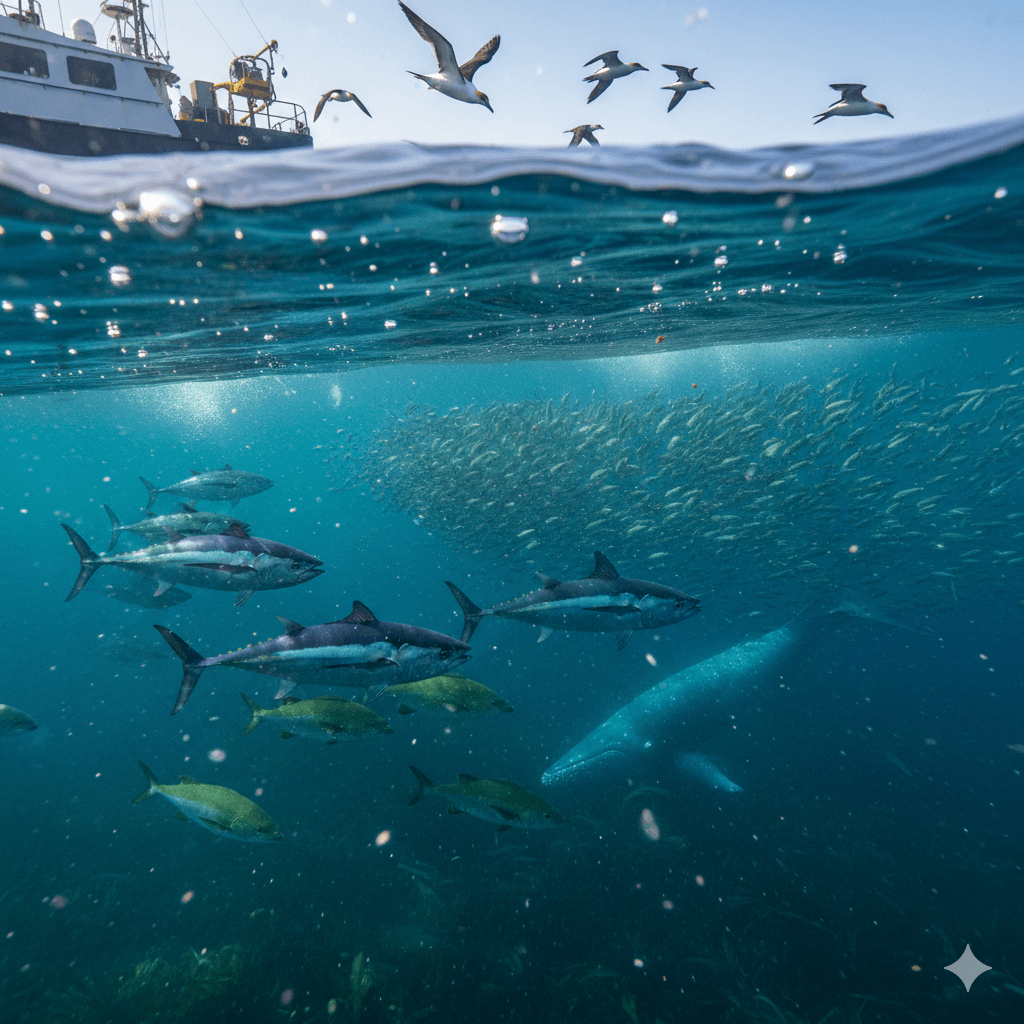
Large predatory fish like tuna, sharks, and billfish must adapt their behavior and distribution patterns during La Niña events. Some species follow their prey into new areas, while others may have a hard time if their favorite food sources are no longer available.
During La Niña years, the way prey is spread out can cause predatory fish to gather in certain areas. This can be good and bad for marine ecosystems and the fishing industry.
Regional Case Studies: La Niña’s Diverse Marine Impacts
Pacific Northwest: How Salmon and Seabirds React
La Niña strongly affects marine life in the Pacific Northwest. During La Niña years, cold-water species like salmon often do well. Juvenile fish that enter the ocean during cool conditions tend to have a better chance of surviving.
La Niña conditions have a big effect on seabird populations, especially common murres and Cassin’s auklets. These birds depend on small schooling fish that become more abundant during upwelling events, which can improve breeding success and support population growth.
California Current: Changes in the ecosystem
There are big changes to the California Current system when La Niña happens. Cold-water species move south, while warm-water species move back toward Baja California and beyond.
This change in the ecosystem affects everything from fish stocks that are used for business to the recovery of endangered species. Marine protected areas that were set up to protect certain types of animals may find that during La Niña events, those animals move outside of the protected areas.
Tropical Pacific: Coral Reef Responses
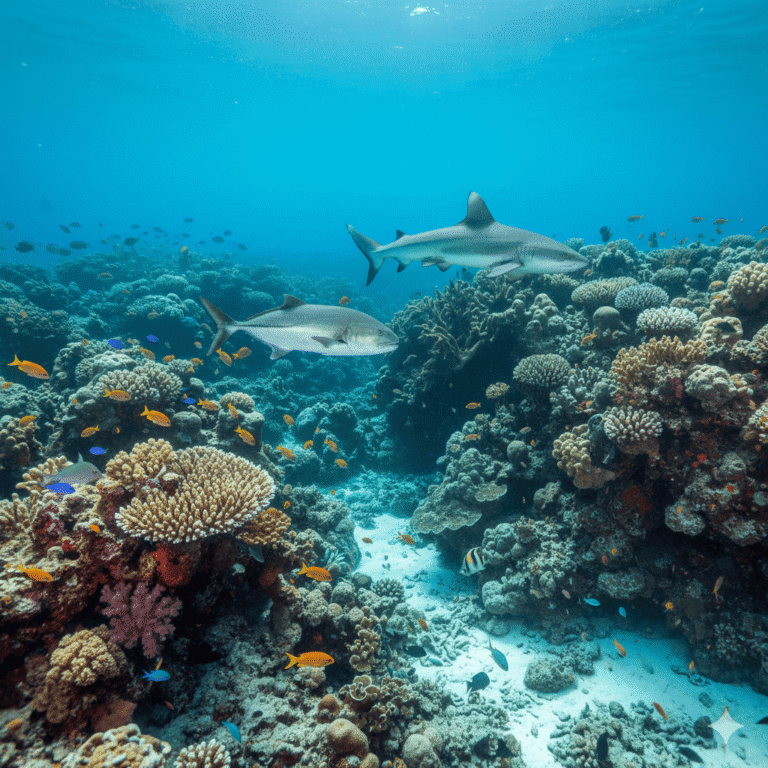
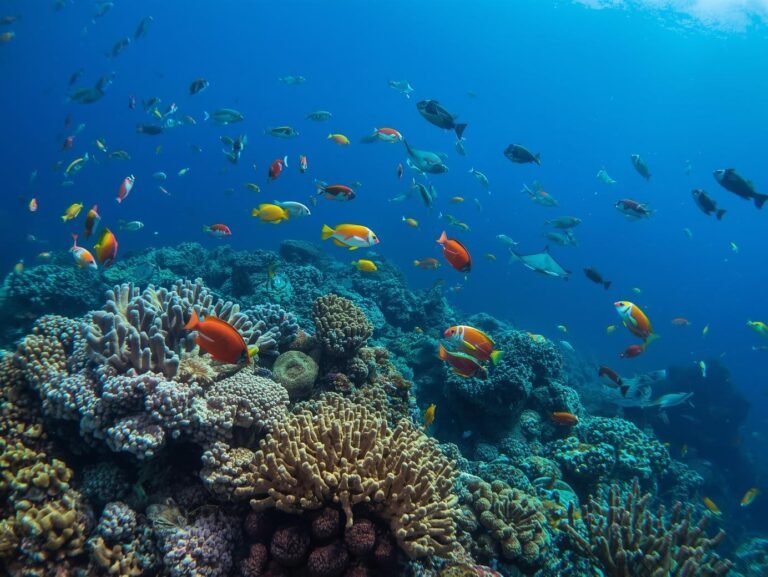
La Niña’s cooler waters can relieve heat stress on coral reefs, although its overall effect on tropical marine ecosystems is complex. The increased upwelling and changed current patterns can alter larval dispersal, which can affect coral reproduction and the connections between reefs. For a closer look at these habitats, see our guide to Hawaii’s marine ecosystems and coral reefs.
Some coral reefs benefit from the nutrients that arrive with La Niña upwelling. These reefs may grow faster and recover more quickly from previous bleaching events. But reef ecosystems accustomed to stable conditions can still be stressed by rapid environmental changes.
Marine Life in the Southern Ocean and Antarctica
The effects of La Niña reach as far as the waters around Antarctica, where changes in ocean circulation affect how ice forms and where krill live. Antarctic krill is a key species in Southern Ocean ecosystems, and when their numbers change, it affects the whole food web.
These changes in the krill population affect penguin colonies, whale populations, and fish communities. Some species benefit from having more food available, while others have trouble with the new distribution patterns.
Wider Effects: Fisheries and Coastal Communities
Effects on the Commercial Fishing Industry
Commercial fisheries can go through boom-and-bust cycles because of La Niña events. Upwelling zones may have record catches of fish like anchovies and sardines because they are more productive. However, these benefits often come with more variability and unpredictability.
Fishing communities must adapt their practices and expectations to these cyclical changes. Old fishing spots may stop producing fish, while new ones may suddenly become full of fish. This variability challenges both small-scale fishers and large commercial operations.
Effects on the economy
La Niña has a lot more effects on marine resources than just fishing revenues. Changes in fish populations and the health of marine ecosystems affect shipping, tourism, processing industries, and other related services.
Coastal communities dependent on specific fisheries may face economic hardship when La Niña shifts fish populations away from traditional fishing areas. On the other hand, some communities may see their economies grow when fish populations in their area rise.
Things to think about for food security
La Niña’s effects on marine life affect food security all over the world. La Niña can cause problems for local fisheries in some countries, which means that these countries may not have enough fish protein. In other countries, however, there may be plenty of fish.
Because fish markets around the world are connected, La Niña effects in one area can affect fish prices and availability everywhere. Understanding these connections becomes crucial for food security planning.
Strategies for conservation and ways to adapt
Taking care of marine protected areas
Marine protected areas (MPAs) have their own problems during La Niña events. As the environment changes, the ranges of species and the boundaries of ecosystems change too. Adaptive management strategies must account for these dynamic conditions.
Some ways to protect the environment focus on making networks of protected areas that can handle species movements during La Niña and El Niño cycles. These corridor approaches understand that fixed boundaries might not be the best way to protect marine species that move around.
Changes in Fisheries Management
During La Niña events, sustainable fisheries management needs flexible methods that can quickly adapt to new situations. Conventional management predicated on historical averages may be insufficient in addressing the extreme variability linked to La Niña cycles.
Management strategies that look at the whole food web instead of just one species may be better able to handle La Niña disruptions than those that only look at one species. These approaches recognize the interconnected nature of marine ecosystem responses.
Monitoring and Early Warning Systems
Advanced monitoring systems help scientists anticipate how La Niña will affect marine life, giving valuable time to plan conservation and management actions. Satellite observations, ocean buoys, and biological surveys all work together to give us a full picture of how marine conditions are changing.
Early warning systems help fisheries managers, conservationists, and coastal communities get ready for the effects of La Niña. This could help protect both marine ecosystems and human communities from harm.
Climate Change and La Niña Patterns in the Future
More severe effects of La Niña
Climate change might intensify La Niña’s effects on marine life in a number of ways. As the ocean’s baseline temperatures warm, the relative cooling of La Niña could become more pronounced. If wind patterns change, upwelling intensity could change too. (For more on this topic, see our article on the impact of climate change on Hawaii’s marine life.)
The gradual warming of the ocean could also change how marine animals react to La Niña cooling. Species already stressed by warm conditions might find La Niña events more beneficial, while those adapted to current temperature ranges might struggle with increased variability.
Changes in Frequency and Duration
Some climate models suggest that La Niña events could change in frequency or duration as global temperatures rise, though projections remain uncertain. Such changes could profoundly alter marine ecosystems that developed under historical La Niña patterns.
Longer La Niña events could push some marine ecosystems past their ability to adapt, while shorter, more frequent events could stop ecosystems from fully recovering between disturbances.
Getting ready for La Niña and beyond
Climate forecasts indicate that La Niña conditions will continue to occur in the coming years, so coastal communities and marine resource managers need to stay prepared for their effects. Planning for the future requires understanding past La Niña events while remaining open to the possibility that future events will look different.
The lessons learned from past La Niña events are helpful for planning, but the changing climate means that even experienced researchers and managers may be surprised by how things will change in the future. The best way to protect marine life during future La Niña events is to use management strategies that are flexible and responsive.
Keeping Our Ocean Safe for the Future in Uncertain Times
La Niña’s effects on marine life go beyond just changing the temperature. They cause a chain reaction of changes throughout ocean ecosystems. This strong climate event affects all ocean life, from tiny plankton to huge marine mammals.
To keep marine ecosystems safe during La Niña events, we need to understand these complex interactions and develop management plans that can adapt as conditions change. This knowledge becomes increasingly important as the climate grows less stable — helping us protect ocean biodiversity and support the human communities that rely on marine resources. By studying how La Niña reshapes ocean temperatures, currents, and food webs, scientists and coastal communities can better anticipate change and work to keep the ocean’s remarkable diversity thriving for generations to come.