Cultural Significance of Marine Life in Hawaiian Traditions and Practices

The ocean is often a beautiful backdrop for people who visit Hawaiʻi. It’s a place to have fun, be amazed, and take beautiful pictures. But for Native Hawaiians, the moana, or sea, is much more than that. The ocean is not just a place; it is a family member, a source of food, and the basis of Hawaiian culture and history. The people of these islands have a sacred connection to every creature that swims in these beautiful waters, from the tiniest fish to the biggest whale.
To really understand the spirit of Hawaiʻi, you need to understand this deep connection. It transforms a simple snorkeling trip into an encounter with ancestral guardians and a beachside meal into a ceremony of gratitude. This guide talks about how marine life has been important to Hawaiian culture for hundreds of years, shaping beliefs, practices, and values. You can connect with the islands on a deeper level by learning these stories. You can also understand why protecting this marine ecosystem is so important for keeping Native Hawaiian culture alive.
The Foundation: Kānaka Maoli and the Moana
The traditional Hawaiian way of looking at the world, which is based on what is sometimes called ʻike kupuna (ancestral knowledge), does not separate people from nature. Instead, it sees a complex, two-way relationship in which all life is connected. The Kumulipo, a sacred creation chant, says that the ocean is where all life began.
The Kumulipo tells the story of how life evolved, starting with simple sea creatures like the coral polyp and ending with more complex marine and land animals, and finally, the first humans. This chant makes a direct connection between Kānaka Maoli (Native Hawaiians) and the animals that live in the ocean. This connection is not just a symbol; it is a fundamental part of Hawaiian culture and history that sees the ocean and its creatures as revered ancestors.
The idea behind this relationship is mālama ʻāina, which means “caring for the land.” The ocean provides sustenance, and in return, it is the responsibility (kuleana) of the people to protect and respect it. Taking care of your family is not only an environmental duty, but also a spiritual one.
ʻAumākua: The Spiritual Guardians of the Sea
The idea of ʻaumākua is one of the most powerful examples of how Hawaiians are connected to marine life. These are family guardians who can show up in many different ways, such as animals, plants, or natural events. A lot of Hawaiian families have marine ʻaumākua, which are like protectors, guides, and messengers.
The Shark (Manō)
The shark, or manō, is one of the most powerful and respected ʻaumākua. In Hawaiian culture, sharks are seen as guardians of the sea and protectors of the families they are with. In Western culture, they are often seen as scary predators.
- Guardianship: There are many stories of manō guiding lost canoes to safety, keeping fishermen safe, and even saving swimmers from drowning. A family with a shark ʻaumakua would never hunt or eat shark, as it would be akin to harming an ancestor.
- Kamohoaliʻi: Kamohoaliʻi is a well-known character in Hawaiian mythology. He is the king of all sharks and the brother of the volcano goddess Pele. People respected him for his power to control the ocean’s currents and navigate the vast Pacific. He was known for being able to take on human form.
The Honu, or sea turtle
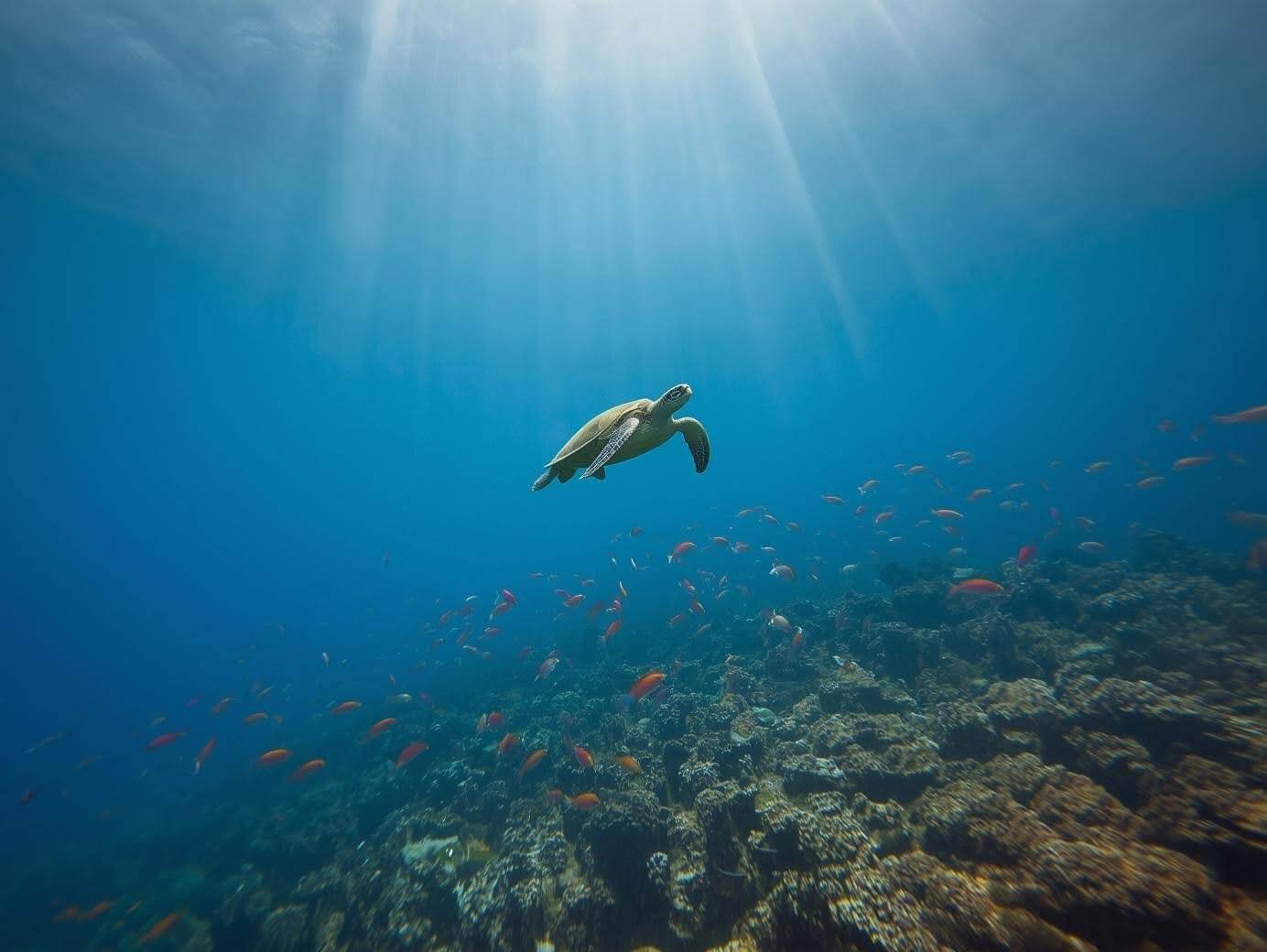
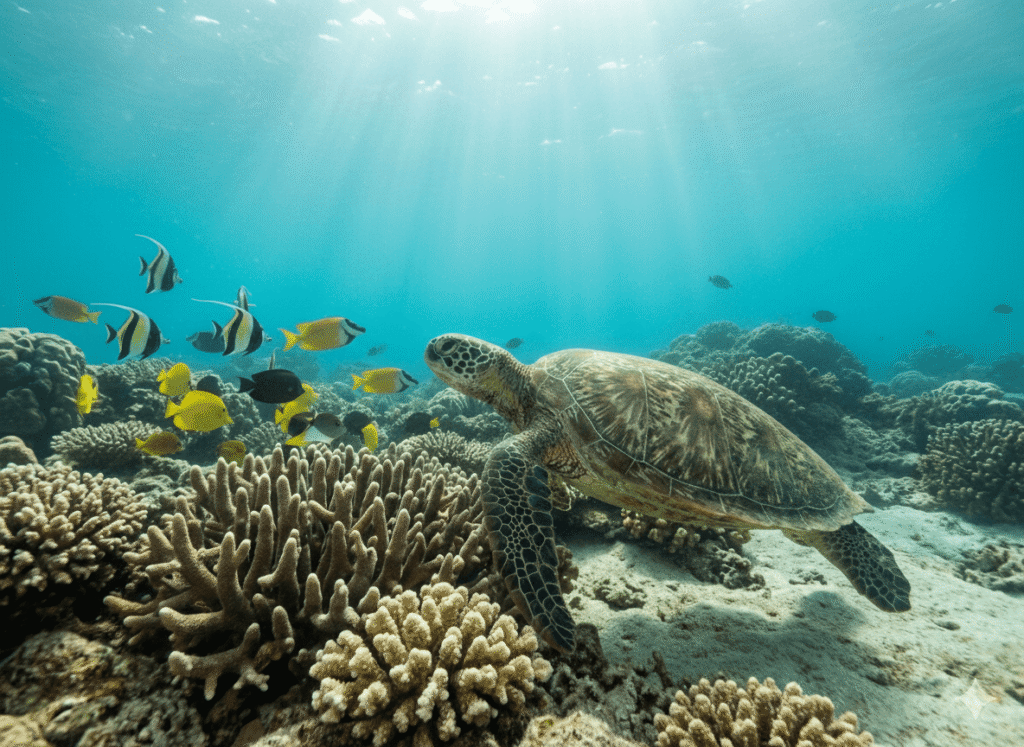
The green sea turtle, also called the honu, stands for long life, good luck, and wisdom. The honu is a calm and steady guide as a ʻaumakua.
- Navigators and Protectors: Legends tell of honu guiding the first Polynesian voyagers to the Hawaiian Islands. One well-known story is about an honu named Kauila who could change into a girl to keep an eye on the kids playing near Punaluʻu Beach on the Big Island.
- The honu connects the land and the sea by coming ashore to lay its eggs. This action shows how all the parts of the ecosystem are connected and represents the cycle of life. People think it’s a special blessing to see an honu basking on the sand.
Other Marine ʻAumākua
Many other marine animals are ʻaumākua, and each one has its own meaning:
- The Eel (Puhi): Eels are powerful protectors of fishponds and coastal areas, and they are often linked to gods like Kihawahine.
- The Octopus (Heʻe): Representing flexibility and intelligence, the heʻe is a revered ʻaumakua, sometimes linked to the ancient god Kanaloa.
- The Whale (Koholā): The whale, which is very big, stands for family, strength, and deep knowledge of the ocean. Every winter, people celebrate the return of the koholā (humpback whales) to Hawaiian waters.
Sustenance and Respect: Food and Culture in Hawaiʻi
The ocean has always been the main place where Hawaiians get their food. But traditional fishing wasn’t just about catching fish; it was a complex way of managing resources based on strong cultural values. The ahupuaʻa system made sure that the ocean stayed healthy for a long time.
The Ahupuaʻa System
The ahupuaʻa was a traditional land division that typically stretched from the mountains (mauka) to the sea (makai). Each ahupuaʻa was a self-sufficient unit, and the people who lived there were in charge of taking care of its resources. The health of the stream that flowed from the mountains had a direct effect on the health of the reefs and fishponds along the coast. This structure gave a full understanding of how ecosystems work.
Loko Iʻa: The Smart Way To Farm Fish In Hawaiʻi
Hawaiians built loko iʻa, or fishponds, which were very advanced aquaculture systems. These walled areas, which were built along the shore or inland, made it possible to grow fish like awa (milkfish) and amaʻama (mullet).
- Sustainable Farming: Loko iʻa were made to work with the flow of water in the environment. Gates called mākāhā let small fish from the ocean into the pond, but they kept bigger, older fish from getting out. This made a safe and long-lasting food source that took some of the stress off of wild fish populations.
- Spiritual Significance: Fishponds were more than just places to get food; they were sacred places watched over by a kiaʻi loko (fishpond guardian). People thought that a pond’s success showed how spiritually in tune and well-behaved the community was.
Kapu and the Environment
Traditional fishing was regulated by a system of kapu (taboos or laws). These were not arbitrary rules but carefully designed conservation measures based on generations of observation.
- Seasonal Restrictions: During their spawning seasons, some fish were kapu, which helped their populations grow again.
- Limits on Size and Species: They only took fish of a certain size, so the young could grow and the big, productive breeders could have babies.
- Respectful Harvest: Before and after fishing, fishermen would say prayers and thank yous. They only took what they needed for their family and community, so nothing went to waste.Pono, which means “righteousness and balance,” is a value embodied in Hawaiian culture.
Preserving a Legacy: Modern Conservation and Cultural Revival
These traditional systems were broken up in Native Hawaiian history. The overthrow of the Hawaiian Kingdom and the switch to a Western economic model caused many natural resources to become less useful, including the important marine ecosystem.
Today, there is a powerful movement to revive traditional Hawaiian practices and integrate ancestral knowledge with modern science for more effective conservation.
Bringing Loko Iʻa back to life
People on all the islands are working to fix up old fishponds. Groups like Paepae o Heʻeia on Oʻahu are bringing the Heʻeia fishpond back to life so that it can be used to grow food and teach people in the area about traditional resource management. These projects are like living classrooms that teach kids about their culture and why it’s important to be sustainable.
Community-Based Management
Many communities are taking back control of their marine resources based on the ahupuaʻa model. People in these areas, which are often called Community-Based Subsistence Fishing Areas (CBSFA), can work with the state to manage their nearshore waters. They do this by making rules based on traditional knowledge and conservation principles.
The Role of Visitors
As a visitor, you have a unique opportunity to support these efforts. Your choices can either make things harder or help solve the problems.
- Respect Marine Life: When you’re swimming, snorkeling, or diving, stay a respectful distance from all marine life. Never touch or chase animals like honu or monk seals. Coral can be hurt or killed by touching it.
- Pick Eco-Friendly Travel: Support tour companies and businesses that care about protecting the environment and Hawaiian culture. Look for companies that educate their guests about the local environment and cultural practices.
- Follow Local Advice: Read all the signs at the beach and listen to what lifeguards and locals have to say. Respect an area that is marked as kapu.
A Living Tradition: The Ocean in Hawaiian Life
Hawaiʻi is full of stories about the sea. Marine life is a big part of Hawaiian culture, which is a living, breathing tradition based on respect for the natural world. For example, the manō protects people spiritually and the loko iʻa is a sustainable genius.
To really experience Hawaiʻi, you have to look beyond the surface and connect with these deeper truths. When you see an honu swimming in the water, remember that it is a guide and a protector. As you eat your fresh fish, think about all the generations of fishermen who have learned how to catch fish in a way that is respectful.
Marine life in Hawaiʻi is more than a backdrop to island living — it is woven into genealogy, spirituality, and everyday practice. From the Kumulipo’s account of life beginning in the sea to the loko iʻa fishponds and the kapu that protected them, these traditions describe a relationship built on kinship and responsibility rather than extraction. That relationship continues today in fishpond restoration, community-based fisheries management, and the simple choice to give a resting honu space on the beach. Learning these stories does more than deepen a visit; it helps keep a living culture — and the ocean it depends on — thriving for the generations to come.