Cultural Experiences in Hawaii: Understanding the Rich Heritage and Traditions

Hawaii is known for its beautiful beaches, lush rainforests, and huge waves. But behind the picture-perfect scenery is a rich, deep, and nuanced culture waiting to be discovered. To truly understand Hawaii, you need to connect with its history, which is shaped by ancient customs, strong values, and a resilient spirit.
This guide invites you to look deeper and discover the islands’ true heart. You’ll learn about the strong traditions that shape everyday life, like the sacred art of hula and the fun of a lūʻau. Understanding these cultural aspects will turn your trip from a simple vacation into a meaningful journey that will help you connect with the land and its people.
What does Hawaiian culture mean?
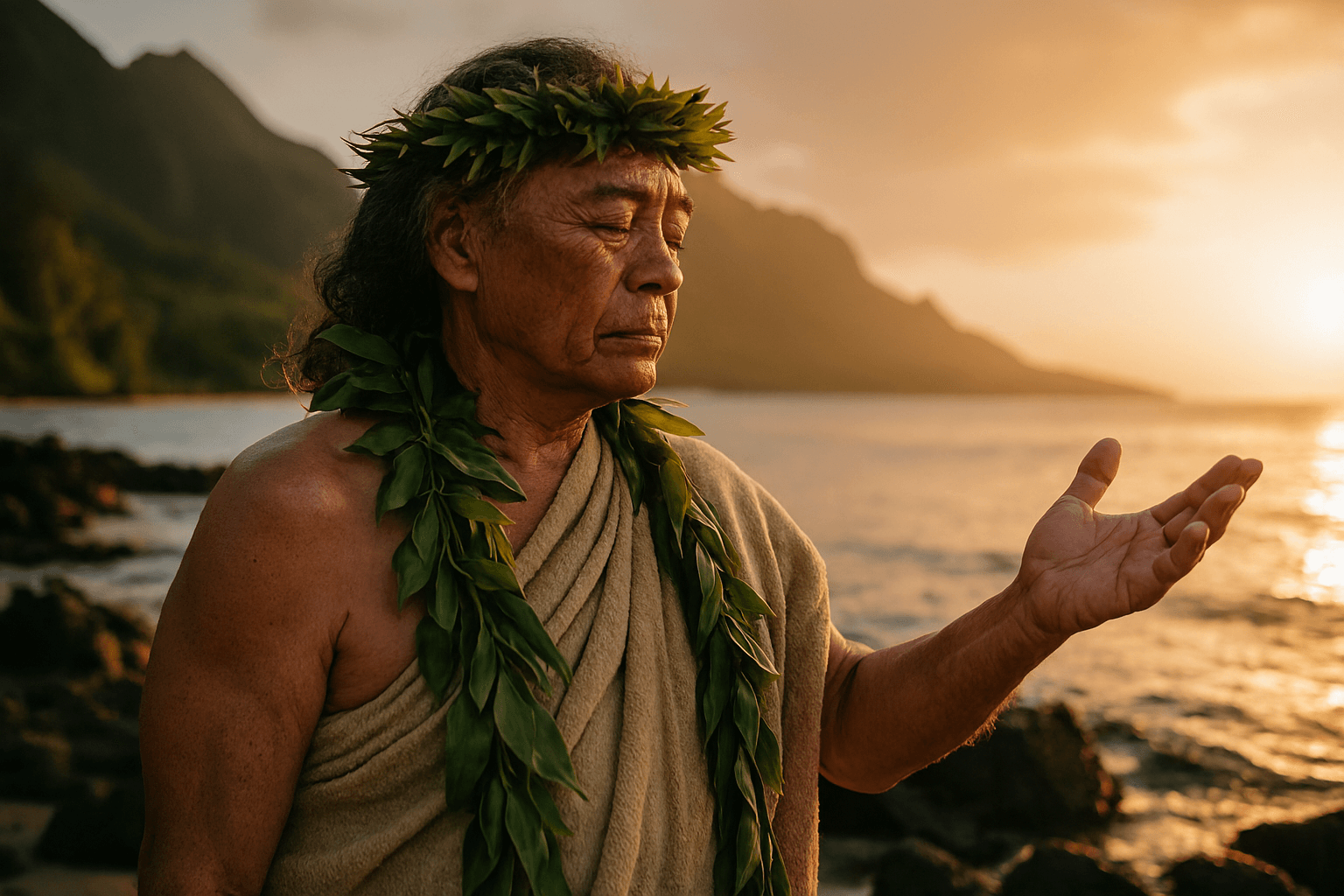
The Kanaka Maoli, or Native Hawaiian people, are at the heart of Hawaiian culture. It is a Polynesian culture that has developed its own identity over hundreds of years of living in peace on the islands. A strong sense of community (ʻohana), a deep spiritual connection to the land (ʻāina), and respect for ancestors (kūpuna) all make up this identity.
The culture is alive and breathing. It isn’t confined to museums or history books. You can see it in the way a hula dancer moves, hear it in the sound of the Hawaiian language, and taste it in the food of traditional Hawaiian cuisine. It is a culture built on stories, where ancient legends and family genealogies are passed down through music, dance, and chants (oli).
While Hawaii today is a multicultural melting pot—with significant influences from Asian, European, and American cultures—the foundational values and traditions of the Kanaka Maoli remain the heart and soul of the islands.
Core Hawaiian cultural values that shape the islands
To get to know the people of Hawaii, you need to know what values they hold dear. These aren’t just ideas; they’re rules that people follow every day.
Aloha: Not Just a Way to Say Hello
Aloha is one of the most well-known words in Hawaiian. It means more than just “hello” or “goodbye.” Aloha is a way of being that includes love, kindness, peace, and respect for others. It’s a way of life and a way of thinking that promotes kindness toward others and a strong connection to nature. When a local person shows you real warmth and hospitality, you are experiencing the spirit of Aloha.
ʻOhana: Family Is Everything
In Hawaiian culture, family, or ʻohana, is paramount. The idea goes beyond just blood relatives to include close friends, extended family, and the community as a whole. ʻOhana stresses that everyone is linked and has a duty to help one another. This value helps people feel like they belong and work together, which is a key part of Hawaiian society.
ʻĀina: A Strong Link To The Land
“Aloha ʻāina” means “love of the land.” For Native Hawaiians, the relationship with the land is sacred and reciprocal. The ʻāina is not something to be owned or exploited; it is an ancestor, a provider, and a source of spiritual and physical sustenance. This belief instills a deep sense of duty and responsibility to safeguard and nurture the natural world. This is one of the most important parts of Native Hawaiian beliefs and culture.
Pono: Doing What Is Right
Pono means being good, fair, and balanced. It means doing what is best for yourself, others, and the world around you. To live pono means to be honest, moral, and fair in everything you do. It is a guiding principle that encourages individuals to live in harmony with the world around them.
Learning about Hawaiian arts and traditions
Hawaii’s traditions are a living reflection of its history and values. Taking part in these activities, or respectfully observing them, offers a direct window into the heart of the islands.
The Hula: A Moving Story
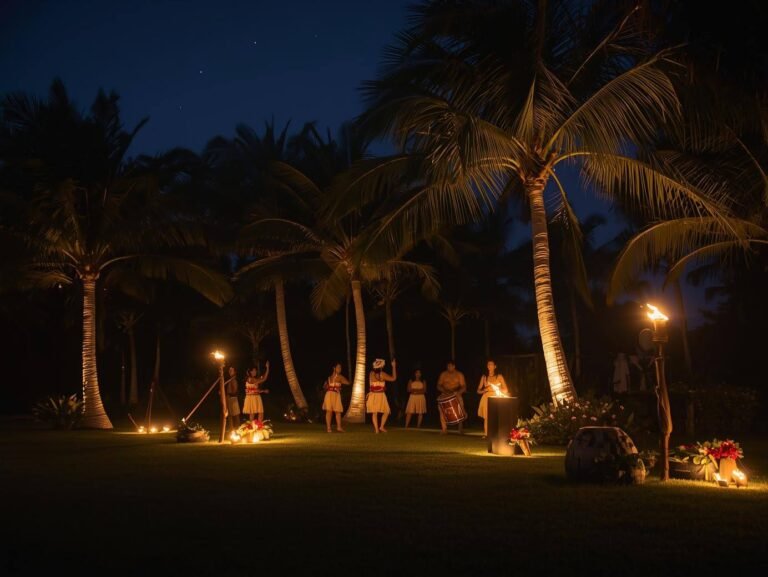
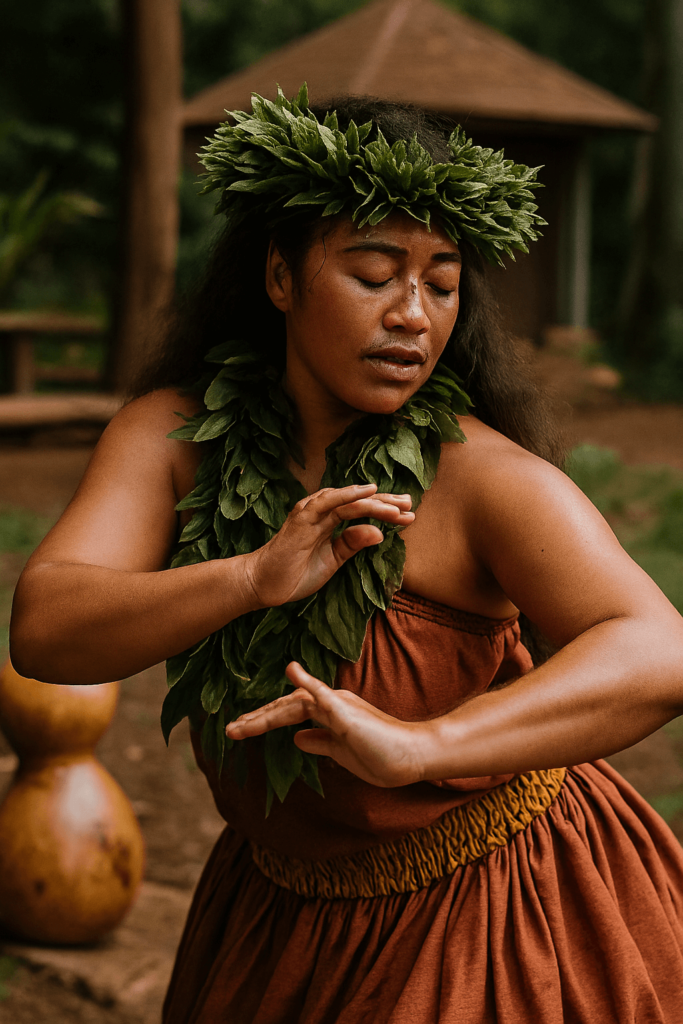
Hula is one of the most beautiful and misunderstood expressions of Hawaiian culture. It’s not just a dance; it’s a complex art form and a powerful way to tell stories through dance and chant. Every hand movement, hip sway, and facial expression carries meaning, telling stories of love, mythology, history, and creation.
- Hula Kahiko: This is the ancient, traditional style of hula. People chant (oli) and play percussion instruments like the gourd drum (ipu) and sharkskin drum (pahu) while they dance. The movements are strong and dramatic, reflecting a deep spiritual connection.
- Hula ʻAuana: This is the modern style of hula that developed in the 19th century with Western musical influence. It is more melodic and flowing, accompanied by instruments like the ʻukulele and guitar. Though the style differs, it still tells stories and expresses emotion.
It is important to watch a hula performance with respect. Many resorts and cultural centers put on genuine performances that honor the tradition.
The Lūʻau: A Party for Food and Friends
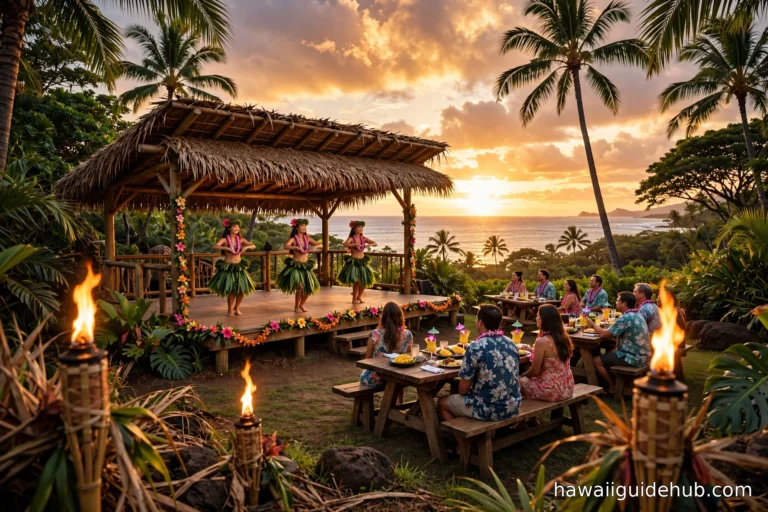
A lūʻau is a traditional Hawaiian feast that celebrates community, family, and important life events. There are many commercial lūʻau for tourists, but the main parts are still based on Hawaiian culture and traditions.
A real lūʻau is more than just a meal. There will be music, dancing, and cultural demonstrations at this fun event. Kālua puaʻa (roast pig) is often the main dish at the feast. It is cooked for hours in an imu, which is a traditional underground oven. Other staple Hawaiian culture foods you might find include:
- Poi: Starchy paste made from ground taro root. Hawaiians consider it to be an integral part of their diet.
- Laulau: Pork or fish wrapped in taro leaves and steamed.
- Lomi-lomi Salmon: A salad made with fresh salmon, tomatoes, and onions.
- Haupia: A sweet dessert made with coconut milk that has a jelly-like texture.
Attending a lūʻau is a fun and flavorful way to experience how deeply hospitality and community celebration are valued in Hawaii.
The Hawaiian Language: The People’s Voice
The Hawaiian language, or ʻŌlelo Hawaiʻi, is the language that the islands’ ancestors spoke. It has gone through a strong revival movement in the last few decades after being suppressed for a long time. Hawaiian is now an official language of the state of Hawaii, along with English.
You will hear the language everywhere, from street signs to greetings. If you want to show respect for the culture, learn a few simple words and phrases:
- Aloha: Hello, goodbye, and love
- Mahalo: Thank you
- ʻAe / ʻAʻole: Yes / No
- E komo mai: Welcome
- Mauka / Makai: To the mountains / To the ocean
Locals will really appreciate it if you try to use these words correctly.
How to Respectfully Interact with Hawaiian Culture
As a visitor, you have a special chance to help keep Hawaiian culture alive. Here’s how you can engage respectfully:
- Be an Observer First: Approach cultural sites and ceremonies with reverence. Remember that places like heiau (temples) and ancient fishponds are sacred. Unless you are specifically invited to join in, observe from a respectful distance.
- Support Local and Native Hawaiian Artisans: Support Hawaiian artisans by looking for “Made in Hawaii” items when you shop for souvenirs. Buy directly from local artists and craftspeople to make sure your money goes to the community and helps keep traditional arts alive.
- Before You Go, Learn: Learn about Hawaiian history and the challenges Native Hawaiians have faced, including the overthrow of the Hawaiian Kingdom. Visiting historic sites such as ʻIolani Palace adds valuable context. This background will deepen your appreciation for the culture’s resilience.
- Don’t Leave a Trace: Follow the principle of mālama ʻāina, which means “to care for the land.” Do not take rocks, sand, or coral from the beaches. Stay on marked trails and respect all signs and barriers.
- Hear What Local People Have to Say: Listen to local and Native Hawaiian tour guides, cultural practitioners, and community members. Their perspectives are invaluable.
Frequently Asked Questions about Hawaiian Culture
What are 3 things Hawaii is famous for?
Beyond its natural beauty, Hawaii is culturally famous for:
- Hula: The famous and sacred art of telling stories through dance.
- The Aloha Spirit: A way of thinking that includes love, respect, and hospitality. It is what makes up the islands’ social fabric.
- Surfing: Surfing is a sport invented by ancient Polynesians and now popular all over the world. It is an important part of Hawaiian culture.
What is the main culture in Hawaii?
While Hawaii is a diverse, multicultural society, the foundational and host culture is that of the Kanaka Maoli (Native Hawaiians). Their Polynesian traditions, language, and values remain the bedrock of Hawaii’s unique identity.
What are some cool things about Hawaiian culture?
- The Hawaiian alphabet consists of only 13 letters. Five are vowels (a, e, i, o, u) and eight are consonants (h, k, l, m, n, p, w, and the ʻokina, which is a glottal stop).
- Ancient Hawaiians were great at navigating. They used the stars, the sun, and the ocean swells to travel long distances across the Pacific in double-hulled canoes.
- The lei is much more than a floral necklace. It stands for love, honor, and respect. If someone offers you a lei, it is customary to accept it graciously.
Your Journey into Hawaiian Culture Starts Here
Learning about Hawaiian culture and traditions makes any trip there much more interesting. You can make a connection that lasts a lifetime by going off the beaten path and learning about the islands’ history. You begin to understand the true meaning of Aloha and the profound relationship between the people and the land.
Cultural experiences in Hawaii reward the curious and the respectful. Whether you are watching hula kahiko performed to ancient chants, tasting kālua puaʻa at a lūʻau, or greeting someone with a heartfelt aloha, each encounter deepens your connection to the islands and their people. Travel with an open mind, honor local customs, and carry the spirit of aloha with you long after you return home.