Ukulele History: How Hawaii’s Little Instrument Conquered the World

The ‘ukulele is Hawaii’s most famous export: four strings that conquered the world. But it wasn’t born in Hawaii: it arrived in 1879 with Portuguese immigrants, was rebuilt by cabinetmakers in Honolulu, crowned by a king, and carried worldwide by sailors, soldiers, and stars. This is the full history of the ‘ukulele: from Madeira’s braguinha to Jake Shimabukuro’s shredding.
This is the single complete guide to ‘ukulele history in Hawaii. It covers the Portuguese origins, the 1879 arrival, the three luthiers, King Kalakaua’s patronage, the name’s meaning, Kamaka and the makers, the sizes, the global fads, Iz and Jake, and FAQs. Everything about ‘ukulele history lives on this one page.
Madeira: Where It Started
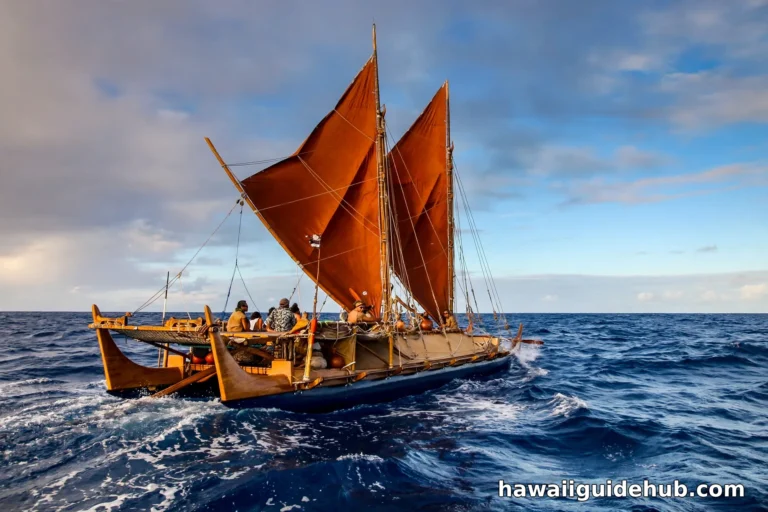
The ‘ukulele’s ancestors are Portuguese: the braguinha (machete) of Madeira, a small four-string guitar played at folk dances and gatherings. In the 1870s, Portuguese laborers from Madeira and the Azores sailed to Hawaii for plantation work, bringing their instruments. The braguinha’s bright tone and portable size were perfect for shipboard and campfire music. The ‘ukulele is, at root, a Madeiran folk instrument that emigrated.
1879: The Ravenscrag Arrives
In late August 1879, the ship Ravenscrag arrived in Honolulu Harbor from Madeira. Legend says a passenger named Joao Fernandez came ashore strumming his braguinha and singing Portuguese folk songs, and the Hawaiians were enchanted. Aboard were three cabinetmakers: Manuel Nunes, Augusto Dias, and Jose do Espirito Santo. They would become the fathers of the Hawaiian ‘ukulele: the first to build the instrument in its new island form.
The Three Luthiers
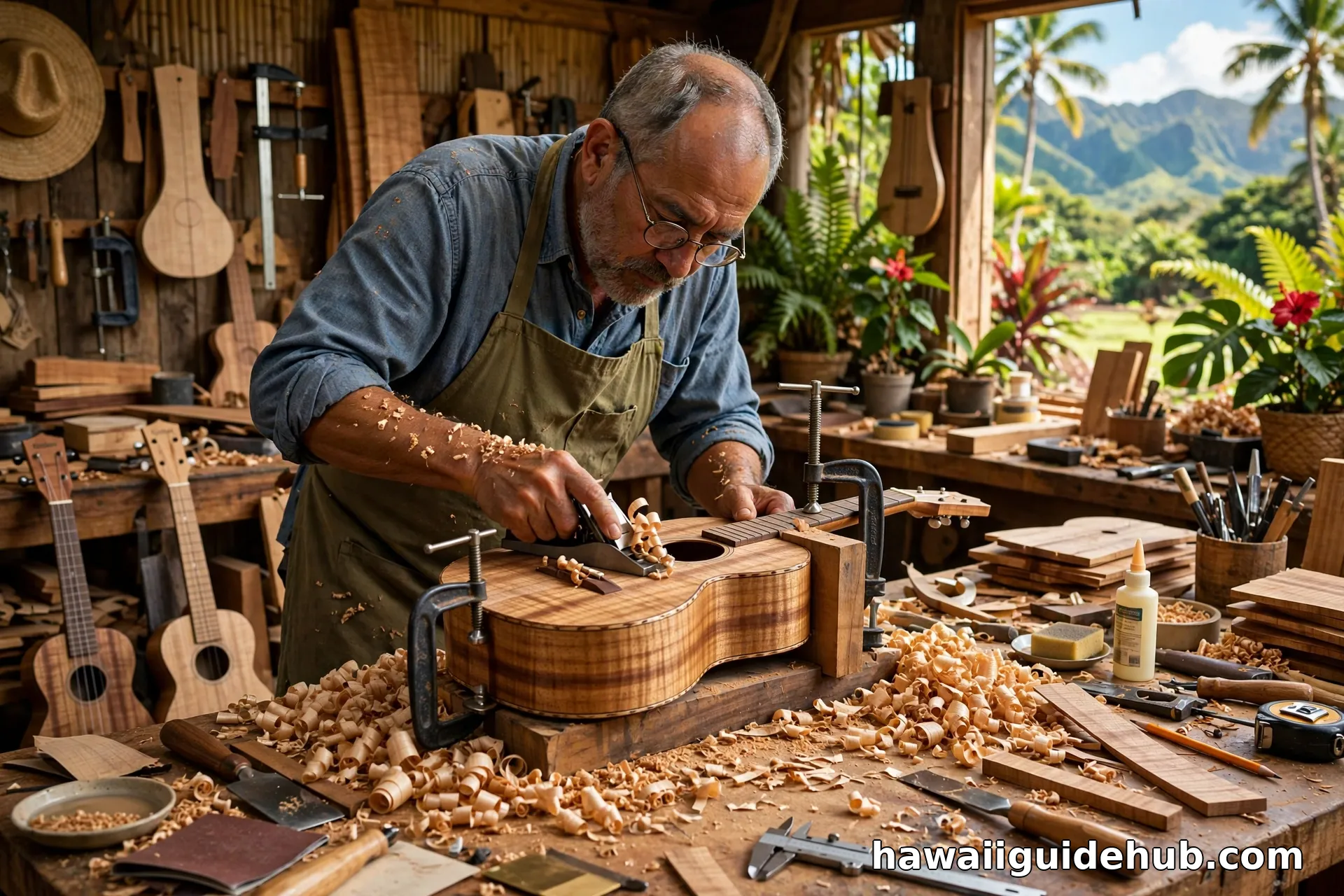
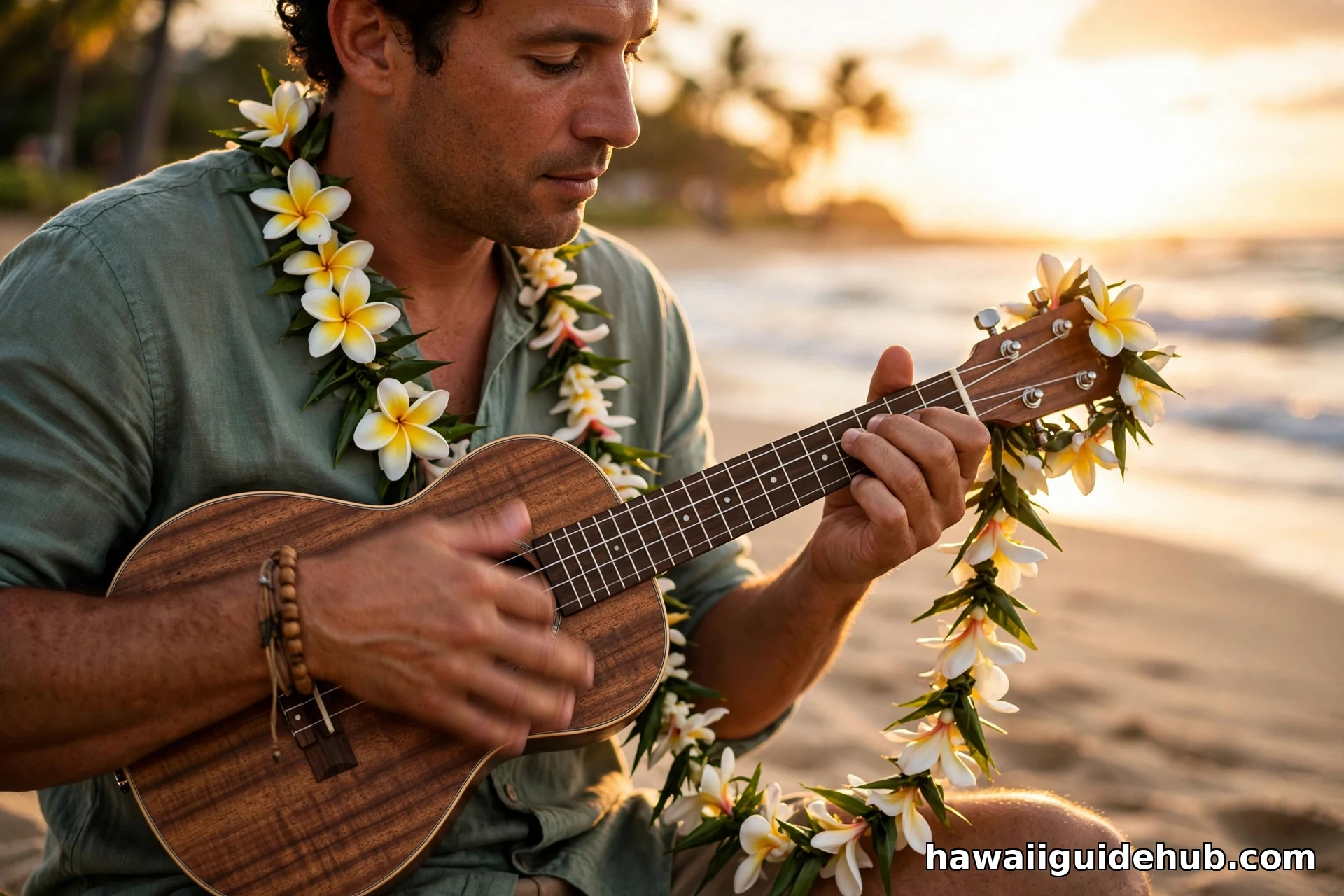
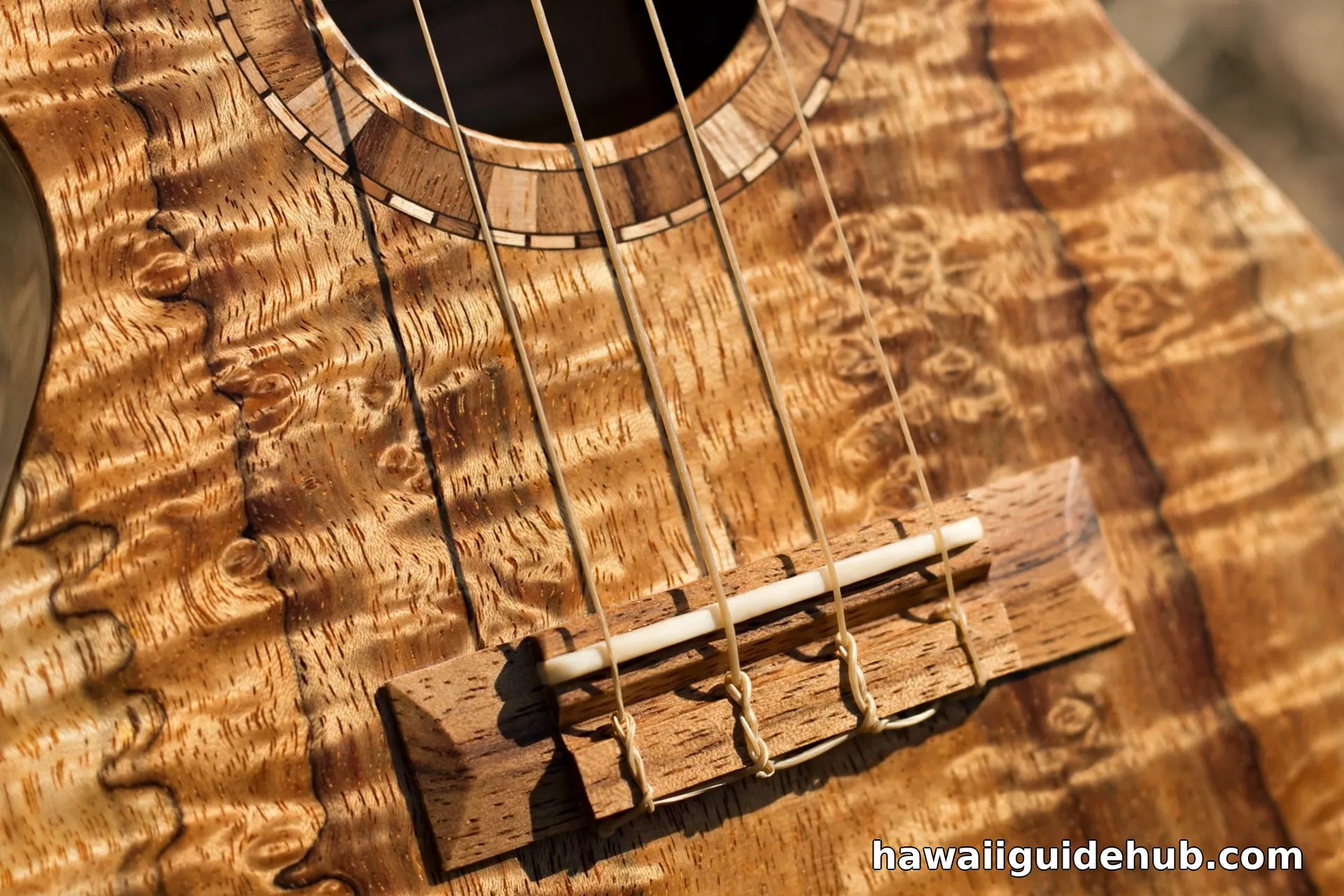
Nunes, Dias, and Santo set up shops in Honolulu and began making the small guitars for the local market, adapting the braguinha: refining the shape, adjusting the size, and building with Hawaiian koa wood, whose warm golden tone became the ‘ukulele’s signature voice. Their street performances doubled as advertising. Within a decade, the ‘ukulele was everywhere in Honolulu: the immigrant instrument had gone native.
Why “Jumping Flea”?
The name ‘ukulele (pronounced oo-koo-leh-leh) is usually translated “jumping flea”: ‘uku (flea) + lele (to jump), for the players’ dancing fingers. Another story credits Edward William Purvis, a nimble-fingered English officer at court nicknamed ‘ukulele. Queen Lili’uokalani herself reportedly suggested it means “the gift that came here” (‘uku lele as a different parsing). No one knows for sure; everyone loves the flea story. The name, like the instrument, is pure Hawaii: playful, musical, and slightly mysterious.
King Kalakaua’s Patronage
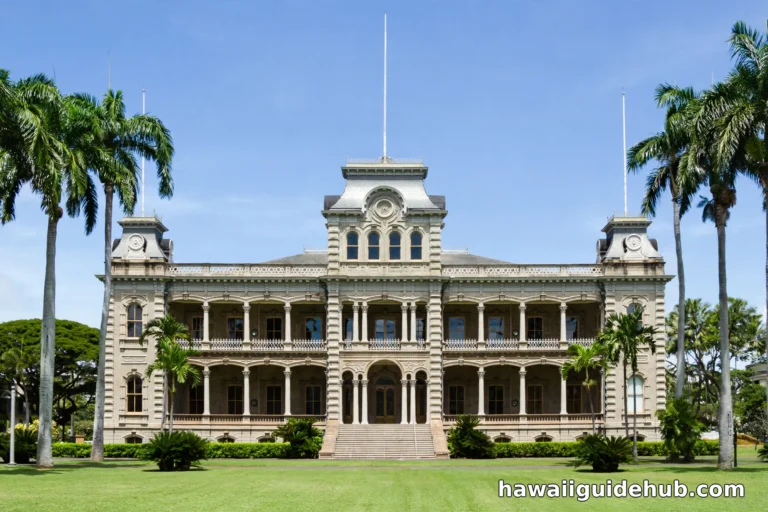
The ‘ukulele’s great patron was King David Kalakaua, the Merrie Monarch: an excellent musician who loved the little instrument and made it fashionable at court. Royal endorsement was everything in 1880s Honolulu: what the king played, the kingdom played. The ‘ukulele moved from the streets to the palace to the parlors: by the 1890s it was Hawaii’s national instrument. Kalakaua didn’t invent the ‘ukulele, but he crowned it.
Kamaka and the Makers
In 1916, Samuel Kamaka Sr. founded Kamaka ‘Ukulele in Honolulu: the company that defined quality, still family-run over a century later. Martin and other mainland makers joined the boom; Hawaiian makers like KoAloha and Kanile’a carry the craft today. The koa ‘ukulele is the gold standard: Hawaiian koa’s figure and tone are unmatched, and a fine koa uke is a treasure. The maker’s art is exacting: thin tops, precise bracing, and the patience to let wood become music.
‘Ukulele Sizes: Which to Choose
| Size | Scale | Best for |
| Soprano | ~13 inches | Traditional bright sound; small hands |
| Concert | ~15 inches | More volume; most versatile |
| Tenor | ~17 inches | Modern standard; performers’ choice |
| Baritone | ~19 inches | Deep, guitar-like tone |

The Global Fads
The ‘ukulele conquered the world in waves: the 1915 Panama-Pacific Exposition made it America’s craze; the 1920s vaudeville era put one in every parlor; Tiny Tim’s 1968 “Tiptoe Through the Tulips” made it a joke; Israel Kamakawiwo’ole’s “Over the Rainbow” made it immortal. Each fad left players behind: the instrument’s ease is its evangelism. Today it’s in classrooms worldwide: the ‘ukulele is the most-taught instrument on Earth.
Iz and Jake: The Modern Masters
Israel Kamakawiwo’ole proved the ‘ukulele could carry the world’s biggest song with just voice and four strings. Jake Shimabukuro proved it could do anything: his virtuoso playing, from Bach to rock, shattered every limit. Between them, they remade the instrument’s image: from novelty to serious art. The new generation, Taimane, Kalei Gamiao, and others, keeps pushing. The little flea keeps jumping higher.
The Braguinha vs the ‘Ukulele: What’s Different
The ‘ukulele isn’t just a renamed braguinha: the Hawaiian makers changed it. They refined the body shape, standardized the four nylon strings, developed the reentrant tuning (high G) that gives the ‘uke its bright bounce, and built with koa instead of European woods. The playing style changed too: the Hawaiian strum, with its rhythmic bounce and melodic picking, is its own art. Same ancestor, different instrument: the ‘ukulele is what happens when Madeira meets Honolulu and stays.
Plantation Life: The Music of the Camps
The ‘ukulele’s first Hawaiian home was the plantation camps: Portuguese, Hawaiian, Filipino, and Japanese workers sharing music after long days. The little instrument was cheap, portable, and loud enough for a camp gathering. Cross-cultural jams were the norm: the ‘ukulele learned new songs from every ethnicity. The plantation era made the ‘ukulele Hawaii’s true melting-pot instrument: everyone’s music, no one’s exclusive property.
The 1915 Exposition: America’s First Craze
The 1915 Panama-Pacific International Exposition in San Francisco featured a Hawaiian pavilion with ‘ukulele music: America fell hard. The ‘uke became the Jazz Age’s favorite instrument: portable, fun, and easy to learn. Sales exploded; mainland makers rushed in. The craze made the ‘ukulele a global icon but also a novelty: the serious Hawaiian tradition got buried under the fad. It would take decades to dig it out.
Vaudeville and Tin Pan Alley
Vaudeville carried the ‘ukulele across America: every act seemed to have one. Tin Pan Alley churned out ‘uke songs; the instrument became shorthand for fun. Hawaiian musicians toured the mainland circuits, spreading the real tradition alongside the novelty. The vaudeville era’s legacy is mixed: it made the ‘ukulele famous and frivolous at once. The Hawaiian masters kept the serious tradition alive underneath the showbiz.
The ‘Ukulele in Wartime
World War II soldiers took ‘ukuleles to the Pacific and brought them home: the instrument was the GI’s souvenir and sweetheart. Postwar Hawaii tourism boomed, and the ‘uke was its soundtrack: every visitor wanted one. The wartime and postwar eras cemented the ‘ukulele as America’s idea of Hawaii: cheerful, sunny, and slightly unserious. The renaissance would later reclaim its depth.
The Classroom Revolution
Today the ‘ukulele is the world’s most-taught instrument: cheap, durable, and playable in one lesson, it’s in classrooms from Honolulu to Helsinki. Hawaii’s schools teach it as heritage; mainland schools teach it as music education’s friendliest gateway. The classroom revolution is the ‘ukulele’s final vindication: the novelty instrument became the people’s instrument. Millions of first chords are strummed on ‘ukes every year.
Buying Your First ‘Uke: A Guide
Visiting Hawaii and want one? Buy from a Hawaiian maker if you can: Kamaka, KoAloha, Kanile’a for the serious; many shops carry fine instruments at every price. Avoid the toy-store ‘ukes: a real instrument, even a modest one, plays and stays in tune. Koa is the dream wood; mahogany and acacia are fine alternatives. Get it set up, learn three chords (C, F, G7), and you’re playing. The ‘ukulele is the only instrument that comes with a guarantee: you will smile.
The Reentrant Tuning: Why It Sounds Like That
The ‘ukulele’s signature bounce comes from reentrant tuning: the G string is tuned high, not low, so the strings go high-low-high-high instead of low to high. The result is that bright, close-voiced strum that sounds like sunshine. It’s a small technical detail with huge musical consequences: the reentrant tuning is why the ‘uke sounds like itself and nothing else. The Hawaiians figured this out early; the world has been imitating it since.
‘Ukulele Festivals: The Annual Gathering
Every July, Kapi’olani Park hosts the ‘Ukulele Festival Hawaii: the world’s largest ‘uke gathering, free, with thousands of players strumming together. Roy Sakuma founded it in 1971; it’s now a beloved institution. Festivals worldwide imitate it, but Honolulu’s is the original: masters and beginners, keiki and kupuna, all playing as one. If you love the ‘ukulele, plan around it.
The ‘Uke in Popular Culture
The ‘ukulele is pop culture’s shorthand for happiness: in films, ads, and cartoons, its strum means “good times.” Train’s “Hey Soul Sister” put it on modern radio; countless indie bands use it for texture. The instrument’s image has fully flipped: from vaudeville novelty to indie-cred cool. Through it all, Hawaii remains the source: every ‘uke player, knowingly or not, is playing Hawaiian music.
Watch: The History of the Hawaiian ‘Ukulele
‘Ukulele History FAQs
Where did the ‘ukulele come from?
Madeira, Portugal: immigrants brought the braguinha to Hawaii in 1879. Three cabinetmakers (Nunes, Dias, Santo) adapted it into the Hawaiian ‘ukulele using koa wood.
What does ‘ukulele mean?
Usually translated “jumping flea,” for the players’ dancing fingers. Alternative theories credit a court officer’s nickname or the Queen’s “gift that came here.”
When did the ‘ukulele arrive in Hawaii?
August 1879, aboard the Ravenscrag from Madeira. King Kalakaua’s patronage in the 1880s made it Hawaii’s national instrument.
What is the best ‘ukulele wood?
Hawaiian koa: its warm tone and beautiful figure are the gold standard. Kamaka, founded 1916 in Honolulu, is the most famous maker.
What size ‘ukulele should a beginner get?
Concert or tenor for most adults: more room and volume than the soprano. The soprano is the traditional size; the tenor is the modern performer For the wider musical tradition, explore hula, chanting, and storytelling in Hawaiian tradition.’s choice.
Four Strings, One World
The ‘ukulele’s journey is Hawaii’s journey: an immigrant arrival, remade by local hands, crowned by a king, and shared with the world. From a Madeiran folk instrument to the classrooms of the planet, it never lost its soul: joy, portability, and the invitation to play. Pick one up: three chords and you’re in the tradition. The flea is jumping; join the dance. Think about what this little instrument has done: it crossed an ocean in a ship’s hold, was rebuilt by immigrant cabinetmakers, was crowned by a king, survived vaudeville and Tiny Tim, carried the world’s most beloved song, and ended up in classrooms on every continent. No other instrument has a story like it: the ‘ukulele is proof that the smallest things travel farthest. It asks almost nothing: four strings, three chords, a willingness to smile. And it gives everything: joy, community, and a direct line to Hawaii’s heart. So learn it, play it, take it home. The ‘ukulele’s history isn’t over: every new player writes the next verse. Make yours a good one. And remember the deeper lesson the ‘ukulele teaches: that great things come from humble crossings. A Madeiran folk instrument, carried by laborers to plantation camps, rebuilt with island wood, crowned by a joyful king: that’s not just an instrument’s biography, it’s Hawaii’s biography. The islands have always taken what the world brought and made it sing. The ‘ukulele is the proof you can hold in your hands, strum with your fingers, and carry home in a backpack. Four strings. One world. Infinite aloha. So here’s the final chord: the next time you hear that bright little strum, whether on a Waikiki stage or a classroom across the sea, remember the Ravenscrag, the three cabinetmakers, the king who loved to play, and the flea that jumped across the world. That’s the ‘ukulele’s history. Now go make some of your own history with it, one joyful strum at a time, from the very first bright chord to the very last sweet note you will ever play on this beautiful little instrument from the islands of aloha and the jumping flea. Mahalo nui loa for reading all the way through. For more island culture, see our volcanoes guide and Kauai guide.