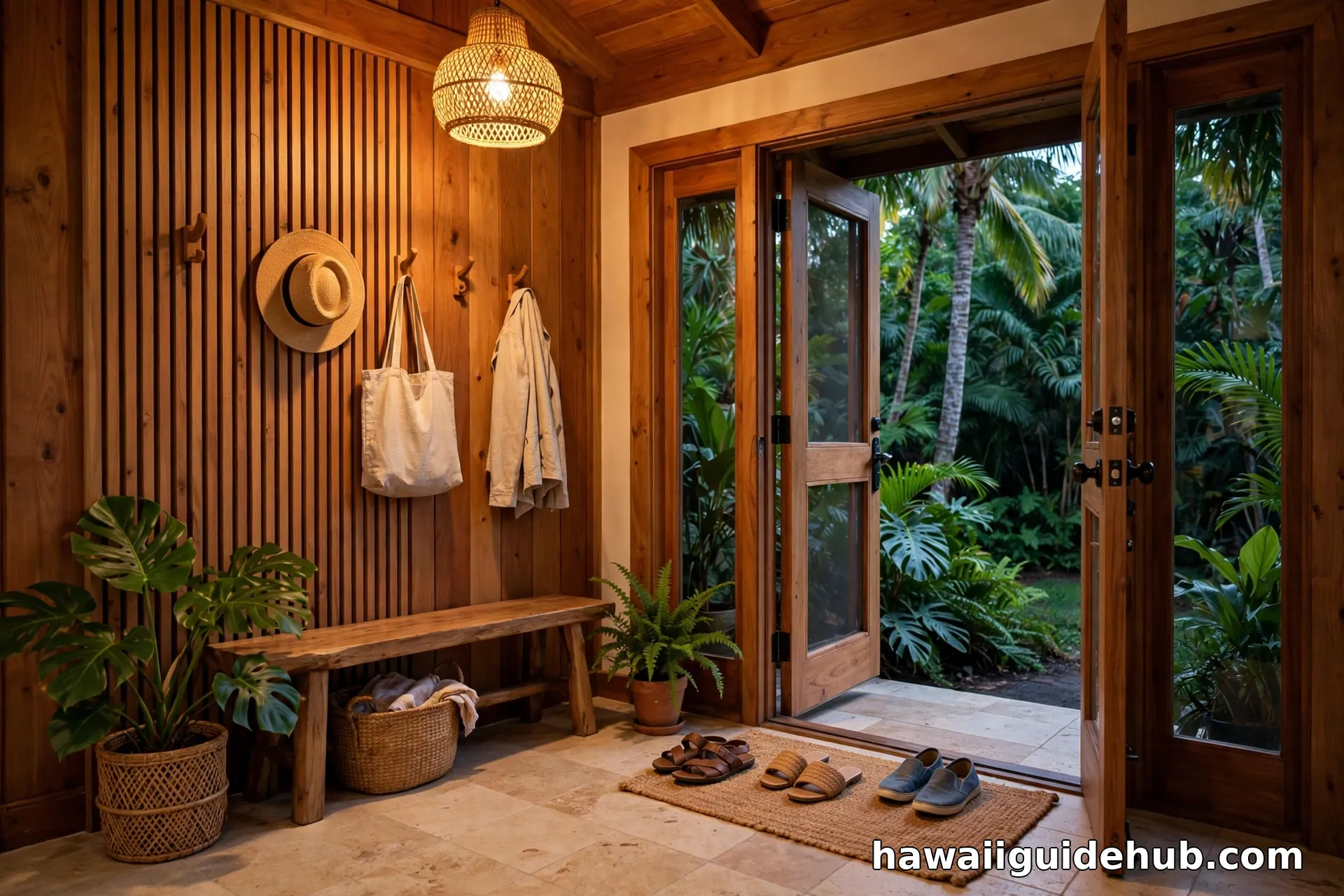
Why People Remove Shoes in Hawaii Homes: The Custom Explained

Walk up to any home in Hawaii and you’ll see the sign: a pile of slippers by the door. In Hawaii, shoes come off before you enter a house: no exceptions, no debates. But why? This guide explains the origins of Hawaii’s shoes-off custom, the cultural roots, the practical reasons, and exactly what to do when you visit someone’s home.
This is the single complete guide to why people remove shoes in Hawaii homes. It covers the custom, its Asian and Pacific roots, the practical reasons (sand, dirt, germs), the spiritual dimension, what visitors should do, indoor slippers, exceptions, and FAQs. Everything about Hawaii’s shoes-off custom lives on this one page.
The Custom: Shoes Off at the Door
In Hawaii, removing your shoes before entering a home is second nature: everyone does it, from every background. As one Honolulu local told folklore researchers, it’s just a thing we’ve always done: even longtime residents from shoe-wearing cultures automatically kick them off. Visitors who walk in with shoes on mark themselves instantly. The custom is so universal that the pile of slippers by the door is Hawaii’s unofficial welcome mat.
Where It Came From: Asian and Pacific Roots
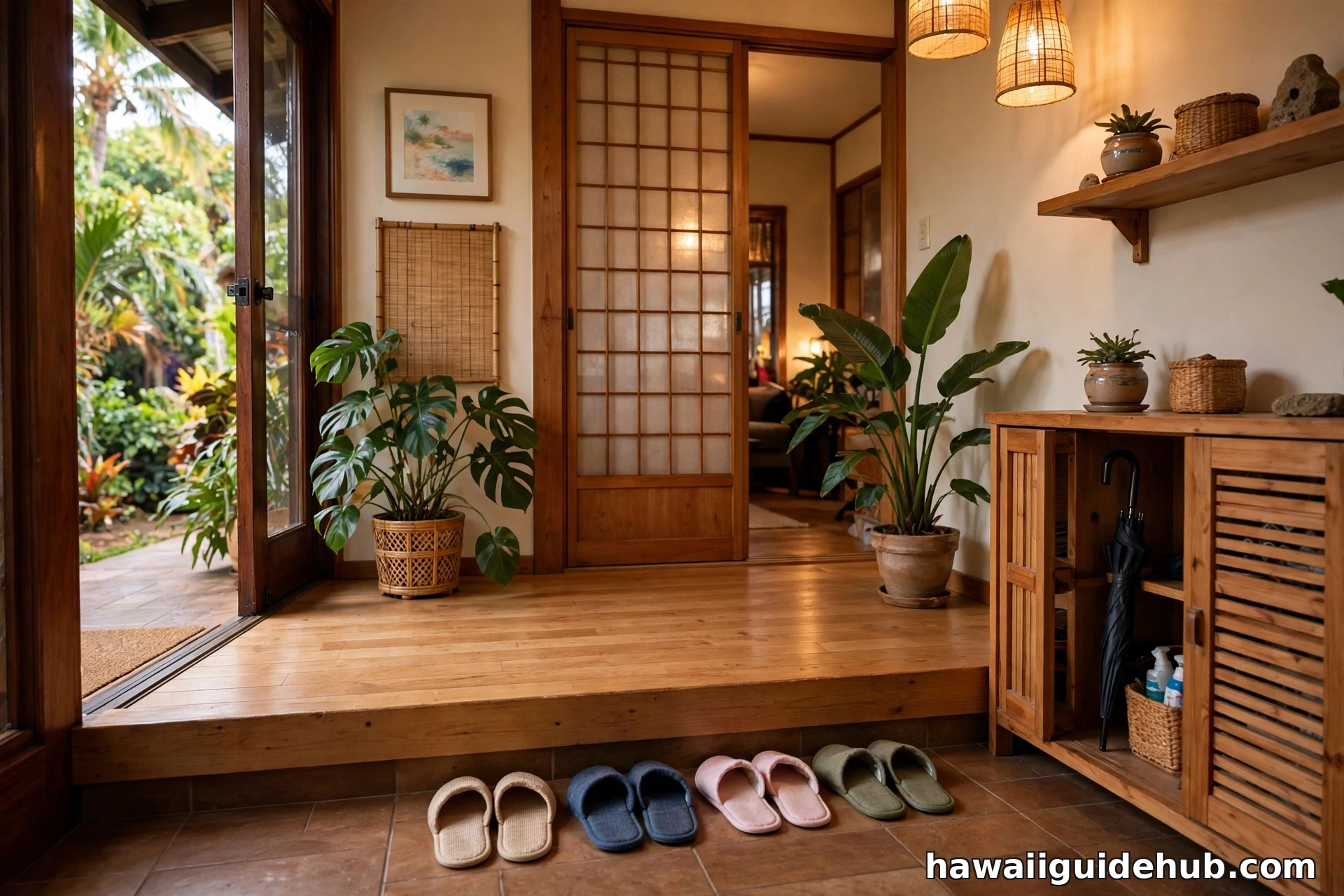
The custom came with the immigrants: Japanese, Chinese, Korean, and Filipino plantation workers all brought shoes-off traditions from home. In Japan, the genkan (entryway) marks the boundary between the outside world and the clean interior; the same logic runs through Chinese, Korean, and Southeast Asian cultures. As the plantation communities mixed, the custom became everyone’s: not just Asian households but all local homes. What started as immigrant tradition became island identity.
The Practical Reasons
Hawaii gives the custom extra logic: beach sand, red dirt, and volcanic dust get everywhere, and shoes track it all inside. Research backs the hygiene case too: studies have found shoe soles carry bacteria including E. coli and C. difficile, and flooring experts confirm outdoor footwear grinds dirt into floors. In a place where indoor-outdoor living is the norm and floors are often wood or tile, shoes-off keeps homes cleaner with less work. Practicality and culture agree: the shoes stay outside.
The Spiritual Dimension: The Home as Sacred
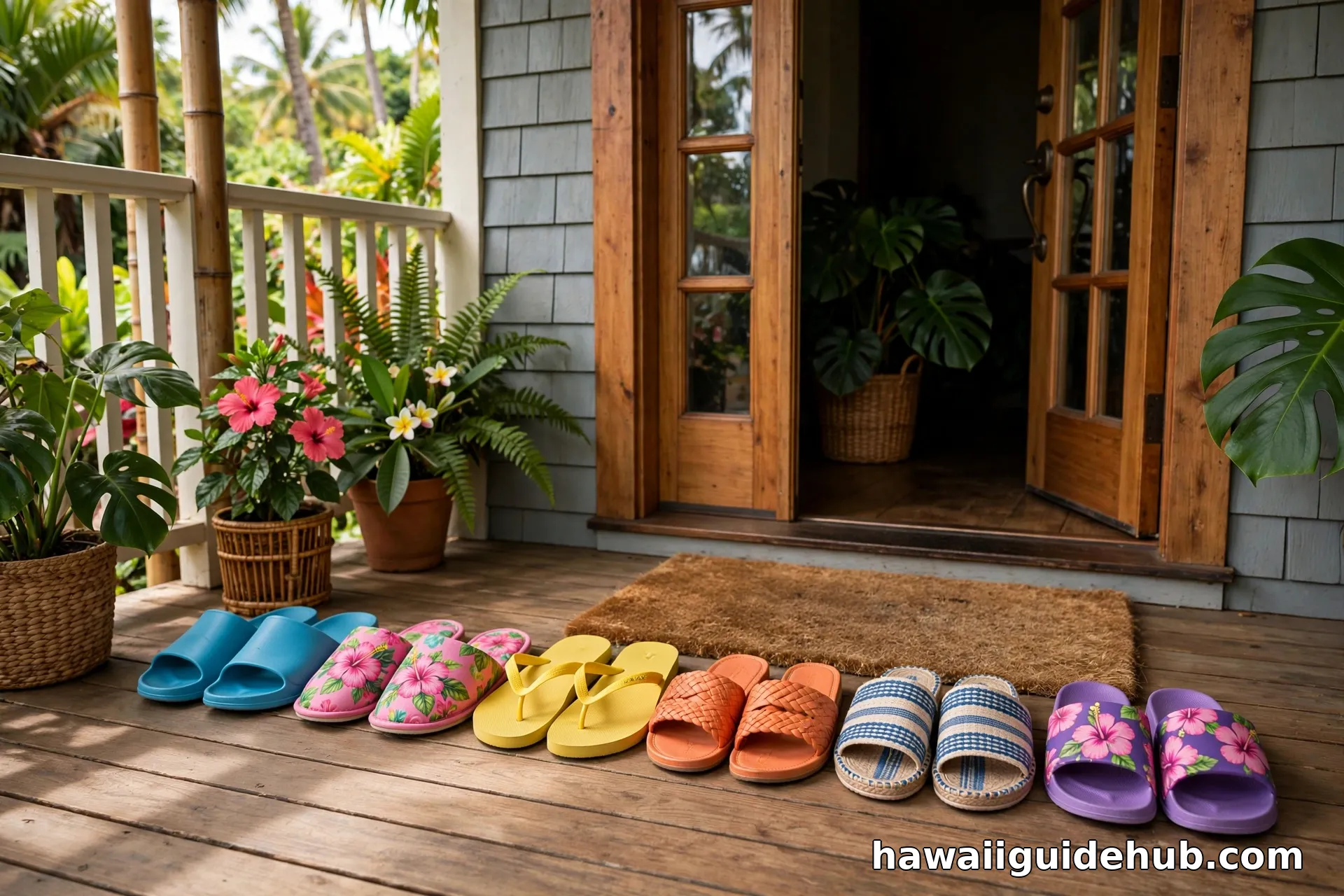
Beyond cleanliness, there’s respect: the home is a sacred space, and leaving the dirt of the outside world at the door honors it. In many of the cultures that built Hawaii, the threshold marks a spiritual boundary: you enter the home clean, leaving the road behind. For Native Hawaiians, the concept of kapu (sacred restriction) sanctifies spaces; the shoes-off custom harmonizes with it. Removing your shoes says: I respect this place and the people in it.
Shoe Situations: What to Do
| Place | Shoes? | Notes |
| Someone’s home | Off, always | Follow the slipper pile; no asking needed |
| Your vacation rental | Off | Hosts expect it; protects the floors |
| Temples and some churches | Off | Watch for signs or follow others |
| Beach parks and casual shops | Slippers fine | Slippers (flip-flops) are the island default |
| Upscale restaurants | On, usually | Closed shoes; when in doubt, ask |
What Visitors Should Do
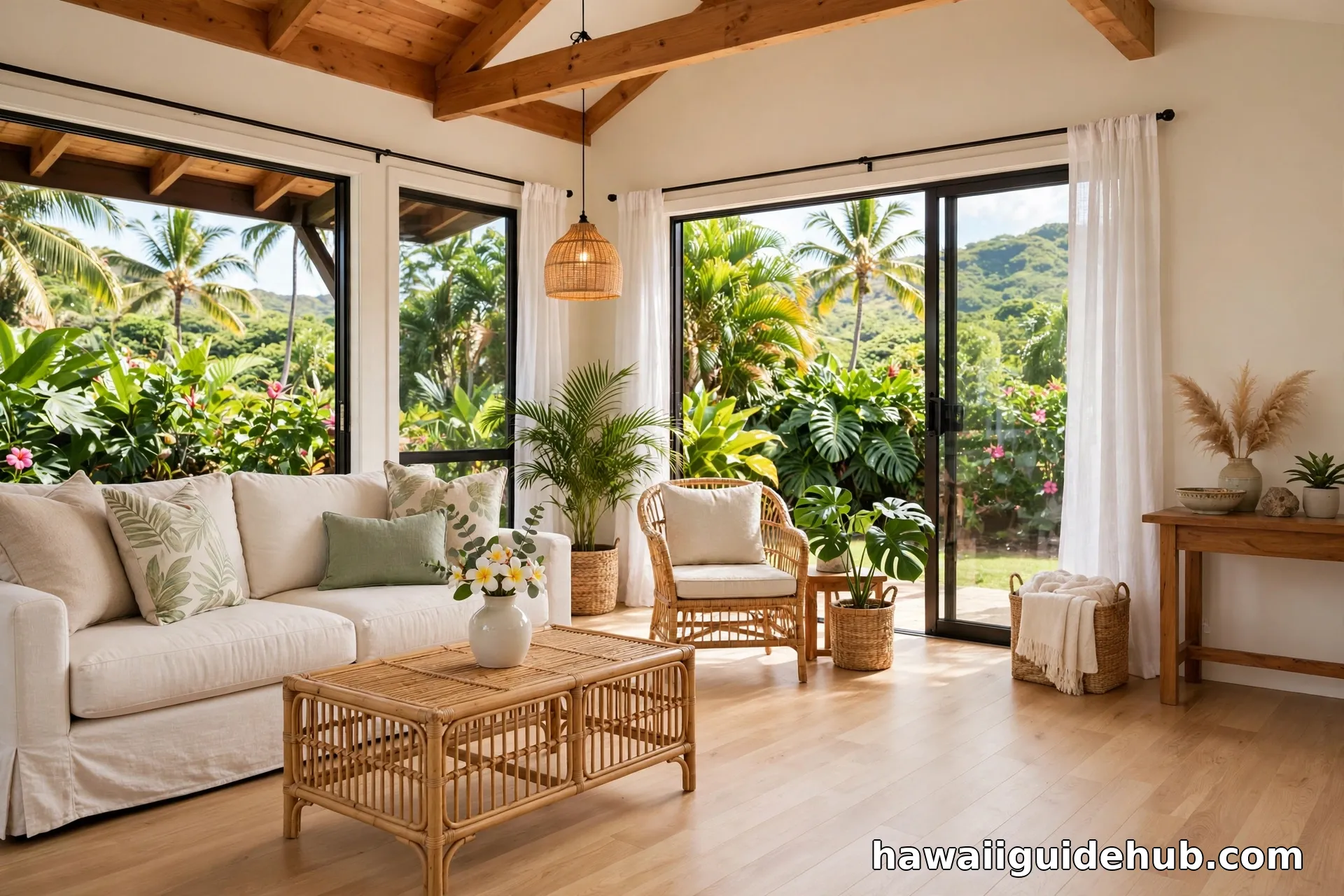
Simple: wear slip-ons. Hawaii runs on slippers (flip-flops), and easy-off footwear makes the custom effortless. When you arrive at a home, look for the shoes by the door and add yours to the pile: no one needs to tell you. If you’re unsure somewhere, ask: “Shoes off?” The answer is almost always yes, and asking shows respect. Some hosts offer indoor slippers; wear them or go barefoot, your choice. Never argue, never make a face: just kick ’em off.
Exceptions and Edge Cases
Are there exceptions? A few: some modern or mainland-transplant households are relaxed about it, and certain occasions (moving furniture, quick errands) get a pass. But the default is always off: assume shoes-off unless the host explicitly says otherwise. If you have a medical need for supportive footwear, mention it quietly: hosts understand. The rule is about respect, not rigidity.
The Genkan: Japan’s Entryway Tradition
To understand Hawaii’s custom, look to Japan’s genkan: the sunken entryway where outdoor shoes come off and indoor slippers go on. The genkan is an architectural boundary between the polluted outside and the pure inside, rooted in Shinto concepts of cleanliness. Japanese immigrants, who became Hawaii’s largest ethnic group, built genkan-style entries into their island homes, and the practice spread. The Hawaiian version is less formal: no sunken step, no ritual, just the pile by the door. But the logic is the same: the outside stays outside.
Slippers: Hawaii’s National Footwear
You can’t have a shoes-off culture without easy-off shoes: enter the slipper. In Hawaii, “slippers” means flip-flops, and they’re the default footwear for nearly everything short of a wedding or a hike. The slipper is the enabler of the custom: kick them off at the door, slide them on to leave. Visitors should buy a pair immediately: they’re cheap, they’re everywhere, and they’re the single most useful thing you’ll own in the islands. The tan lines on local feet tell the story: slipper-shaped, year-round.
The Science: What’s on Your Soles
The tradition has science on its side. University of Arizona microbiologist Charles Gerba’s research found shoe soles teeming with bacteria, including E. coli; University of Houston researchers found up to 40 percent of shoes carry C. difficile. Flooring experts confirm that outdoor grit grinds into floors, scratching wood and wearing carpet. Hawaii’s red dirt is famously staining: one walk across a muddy yard can mark floors for weeks. The aunties knew before the scientists: shoes bring the road inside, and the road doesn’t belong there.
Shoes-Off Around the World
Hawaii is not alone: shoes-off is the norm across Japan, Korea, China, much of Southeast Asia, Scandinavia, and Canada. What makes Hawaii distinctive is the melting: the custom arrived with multiple immigrant groups simultaneously and became universal across ethnicities, not just within them. A Portuguese-Hawaiian household, a haole local household, a Native Hawaiian household: all shoes-off. The custom transcended its origins to become simply local: that’s the plantation mixing at work, in footwear form.
Teaching Children the Custom
Hawaii’s children learn young: shoes off at the door, no one has to ask twice. It’s taught the way table manners are taught: by example, by correction, by the sheer universality of it. Kids visiting from the mainland get the lesson fast, usually from a local kid staring at their sneakers. The custom reproduces itself effortlessly: every child who grows up shoes-off becomes an adult who expects it. Traditions survive when they’re easy and everyone does them; this one is both.
What Hosts Notice
Ask a Hawaii host what they notice: the guest who kicks off their slippers without being asked gets full marks; the guest who hesitates at the door gets a gentle prompt; the guest who walks straight in gets remembered. It’s a small thing that signals big things: awareness, respect, willingness to adapt. Hosts rarely make a scene about it: the correction is usually a quiet “shoes off, yeah?” But the impression lasts. In a culture that values humility, the shoes-off custom is a daily test of it.
Bringing the Custom Home
Many visitors adopt the custom after Hawaii: the cleaner floors, the ritual of leaving the day at the door, the simple respect of it. It travels well: all you need is a mat by the door and the willingness to ask guests. The custom’s logic is universal, even if its roots are specific. Hawaii’s gift to your home: a small daily practice of mindfulness, one pair of shoes at a time. The islands teach; the wise visitor learns.
The Red Dirt Problem
Hawaii’s red dirt deserves its own mention: the iron-rich soil stains everything it touches, and it touches everything. Shoes that walk through red mud carry it inside, where it marks floors, carpets, and tatami with rust-colored reminders. Old-timers will tell you the custom hardened around the dirt: no one wants to mop red footprints daily. The dirt is beautiful on the trails and terrible on the floors: the shoes-off custom is the peace treaty between the two.
Indoor Slippers: The Host’s Touch
The gracious host provides: many Hawaii households keep a basket of indoor slippers or disposable socks for guests. It’s hospitality in footwear form: we know you’ll be barefoot, so here’s something clean. If offered, accept: it’s part of the welcome. If not offered, barefoot or socks are fine: no one expects you to pad around on cold tile unshod. The indoor slipper is a small kindness that says the custom is about comfort too, not just rules.
When the Custom Meets Modern Life
The custom adapts: work-from-home blurred the lines, with indoor shoes for home offices; athletes and elders with foot conditions keep supportive footwear, and hosts accommodate. Vacation rentals spell it out in house rules. What doesn’t change is the default: off unless stated otherwise. The custom is sturdy because it’s flexible: respect the principle, adapt the practice. That’s how a 19th-century immigrant tradition survives in 21st-century condos.
Watch: No Shoes in the House!
Shoes-Off FAQs
Why do people remove shoes in Hawaii homes?
A blend of Asian and Pacific cultural tradition, practical cleanliness (sand, dirt, germs), and respect for the home as a sacred space. The plantation immigrants brought it; the islands made it universal.
Do I really have to take my shoes off?
Yes: in local homes, it’s expected without asking. Follow the slipper pile at the door. It’s one of Hawaii’s most universal customs.
What shoes should I wear in Hawaii?
Slippers (flip-flops): they’re the island default and make the shoes-off custom effortless. Easy on, easy off, everywhere you go.
Is it rude to wear shoes inside in Hawaii?
In a local home, yes: it signals you don’t know or don’t respect the custom. When in doubt, take them off or ask.
Do businesses in Hawaii require shoes off?
Some do: temples, certain shops, and some offices. Watch for signs or follow what others do. Restaurants generally don’t.
Kick ‘Em Off
The shoes-off custom is Hawaii in a gesture: practical, respectful, and rooted in the cultures that built the islands. It costs nothing, takes two seconds, and says everything: I respect your home. So wear your slippers, watch for the pile, and kick ’em off at the door. The floors will be cleaner, the hosts will be happier, and you’ll be one step closer to local, literally. Think about what the custom teaches: that the home is sacred, that cleanliness is respect, that the outside world with its dirt and hurry can wait at the door. Every time you kick off your slippers, you’re practicing a small mindfulness: arriving, settling, belonging. The plantation workers who brought the custom knew something about thresholds: they’d crossed an ocean to get here, and the doorway of a home was a boundary worth honoring. So the next time you see the pile, smile and add yours. It’s the easiest aloha you’ll ever give. And here’s the deeper truth the custom carries: Hawaii’s cultures all agreed on this one thing, that the home deserves clean feet and a clean spirit. Japanese, Chinese, Filipino, Korean, Hawaiian: different languages, different gods, same doorway rule. If that many cultures can agree on something, it’s worth doing. The shoes come off; the respect goes on. That’s the whole philosophy, and it fits in a doorway. So buy the slippers, learn the step, and make it yours. Years from now, back home, you’ll still kick them off at your own door without thinking: and every time you do, you’ll be back in the islands for a second, standing at a doorway with the trade winds in the screen door and the whole beautiful custom making perfect sense at last. That’s what travel should do: leave you with a better habit than you arrived with, one doorway at a time, one kicked-off slipper at a time, every single blessed day, forever. For more local customs, see our volcanoes guide and Kauai guide.