Turtle Cave Hawaii: Where the Honu Rest

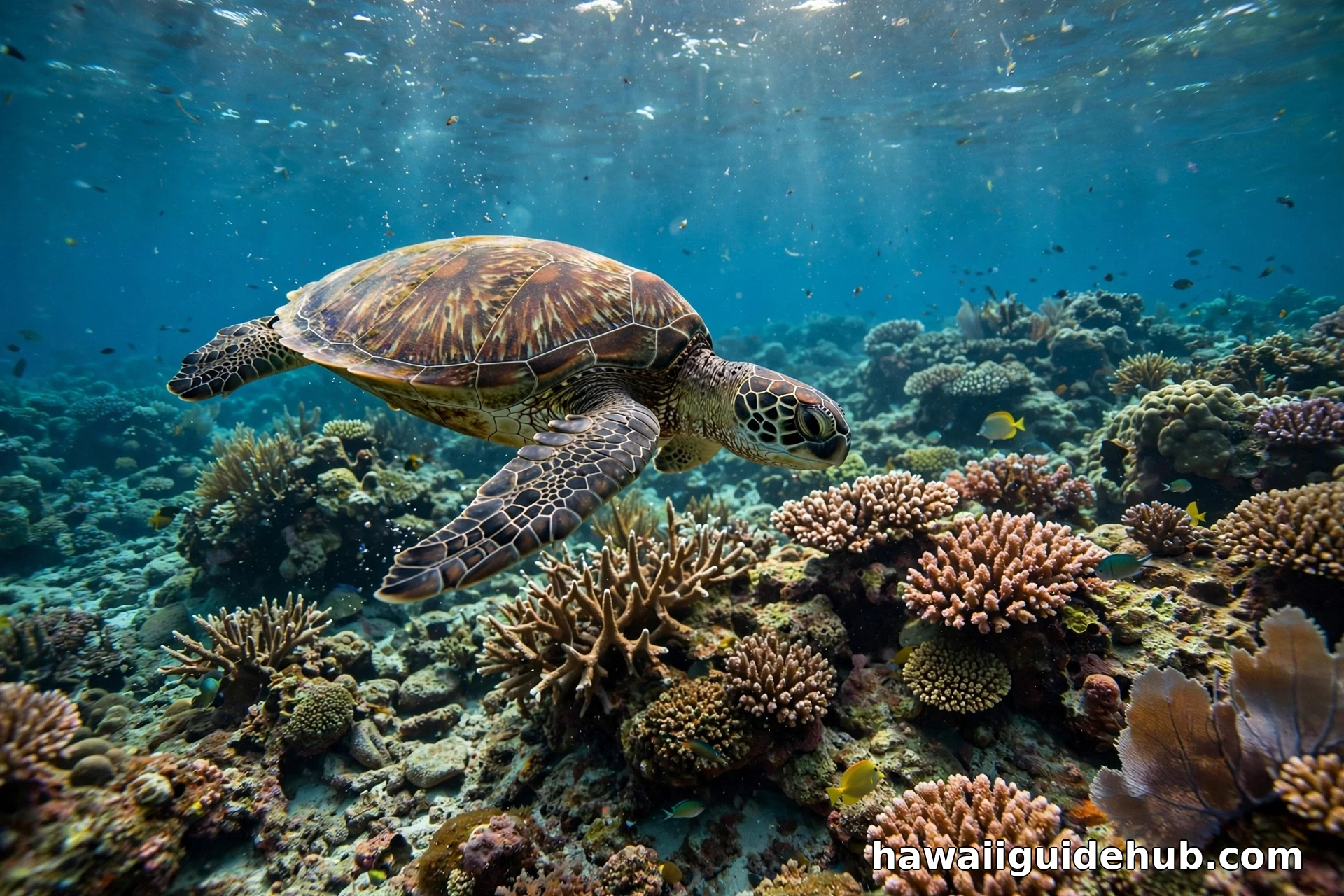
“Turtle cave” in Hawaii means the underwater lava tubes and reef caves where Hawaiian green sea turtles (honu) rest, sleep, and get cleaned by reef fish. The famous spots: Turtle Canyon off Waikiki, Turtle Town on Maui, and the turtle tunnel at Turtle Cove on Kauai. This guide covers where to find them, how to snorkel with honu responsibly, and the strict laws that protect them.
This page covers the turtle cave spots by island, the honu, the cleaning stations, the laws, and FAQs. Everything about Turtle Cave Hawaii is on this one page.
The Short Answer
Hawaii’s “turtle caves” are underwater lava tubes and reef overhangs where green sea turtles rest. Best spots: Turtle Canyon off Waikiki (Oahu), Turtle Town at Makena (Maui), and Turtle Cove’s tunnel (Kauai). Honu are protected by federal and state law: stay at least 10 feet (3 meters) away, never touch, never chase. Violations carry fines of $1,000 to $10,500 or jail time. Snorkel tours visit the main sites; mornings have the best visibility.
Turtle Cave Spots by Island
| Island | Spot | What you’ll see |
| Oahu | Turtle Canyon, off Waikiki | Cleaning station; ~40 ft deep; up to 7 turtles |
| Maui | Turtle Town, Makena | Lava caves with napping turtles |
| Kauai | Turtle Cove tunnel, Princeville | Swim-through tunnel; turtles; monk seals |
Turtle Canyon: Oahu’s Turtle Spa
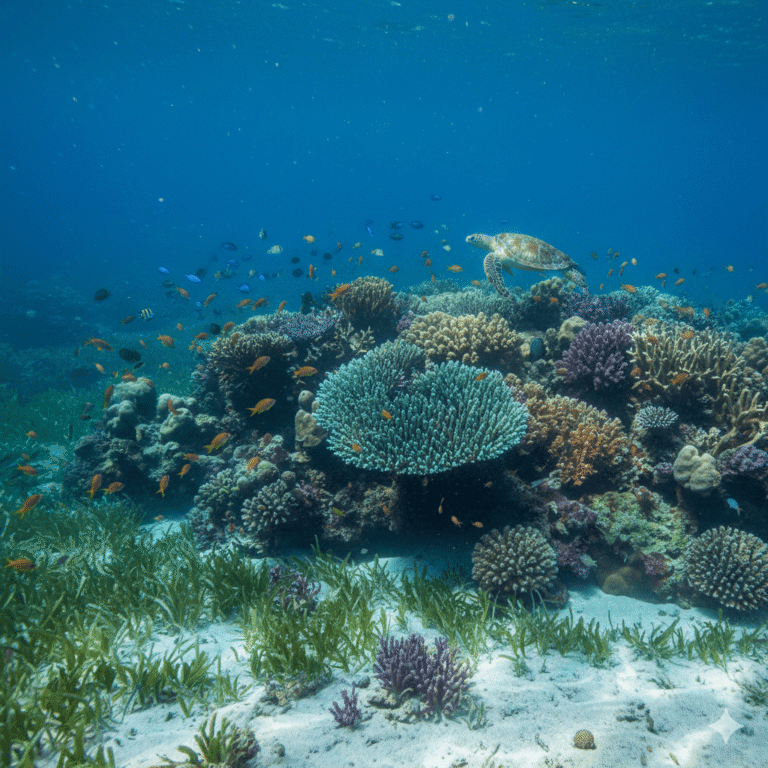
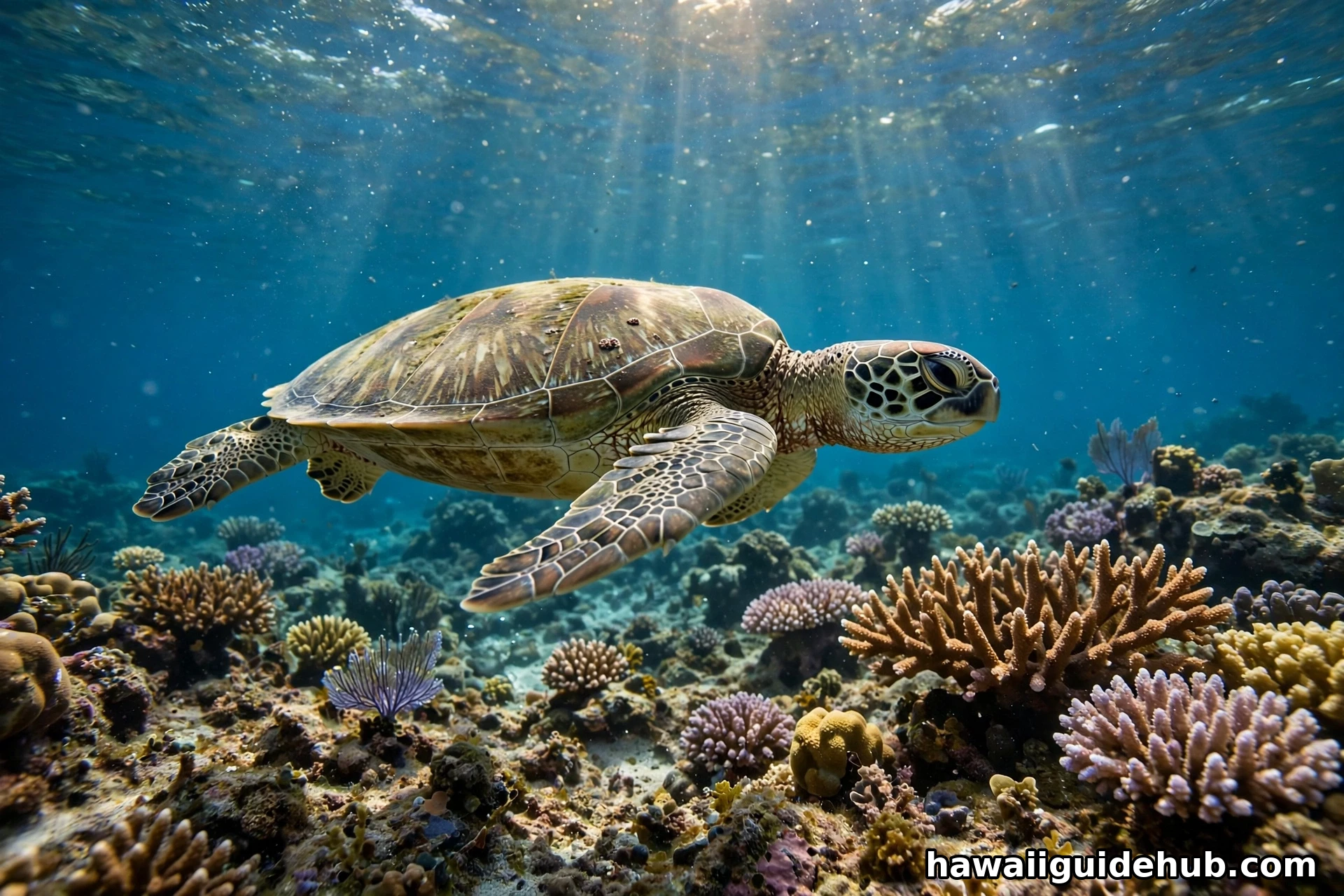
Turtle Canyon sits off Waikiki’s south shore, about 40 feet deep: a reef formation where green sea turtles come to be cleaned. Small reef fish pick parasites and algae off the turtles’ shells: a “cleaning station,” and the turtles line up for it like a spa. Snorkelers have reported seven turtles at once. It is reachable only by boat: snorkel tours depart from Kewalo Basin, about 15 minutes from Waikiki. Morning tours have the best visibility. This is the easiest, most reliable turtle encounter in Hawaii.
Turtle Town: Maui’s Napping Caves
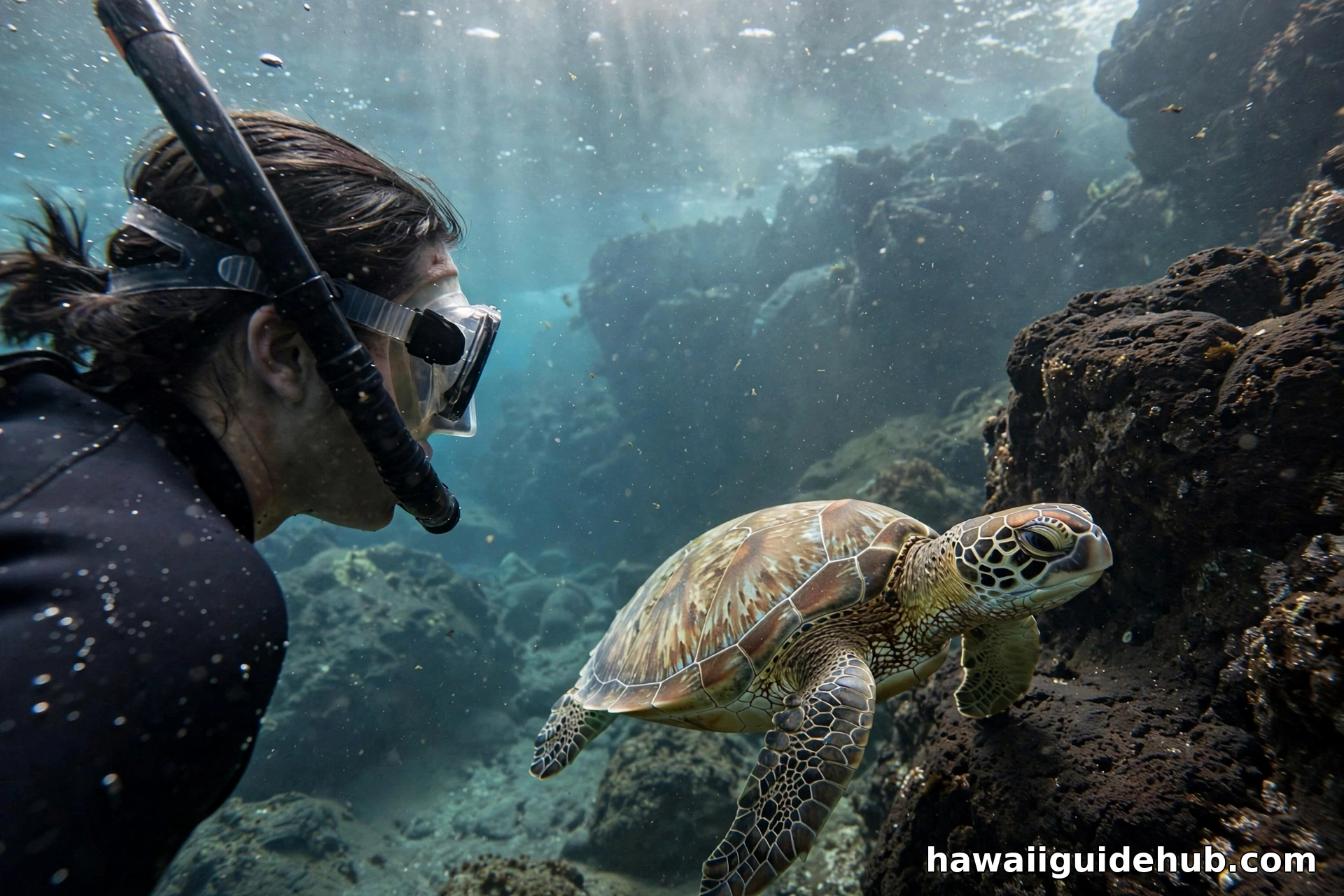
Turtle Town off Makena, Maui, is a series of lava formations and caves where turtles nap underwater: yes, sea turtles sleep underwater, wedged into caves and under ledges. Snorkelers and divers drift over the caves and spot the resting honu below. Nearby Makena Bay (Makena Landing) offers excellent shore snorkeling on both sides of the bay. The 5 Caves site up the road has lava arches and deeper caves for divers. Go in the morning before the wind picks up: south Maui is calmest early.
The Honu: Hawaii’s Sacred Turtle
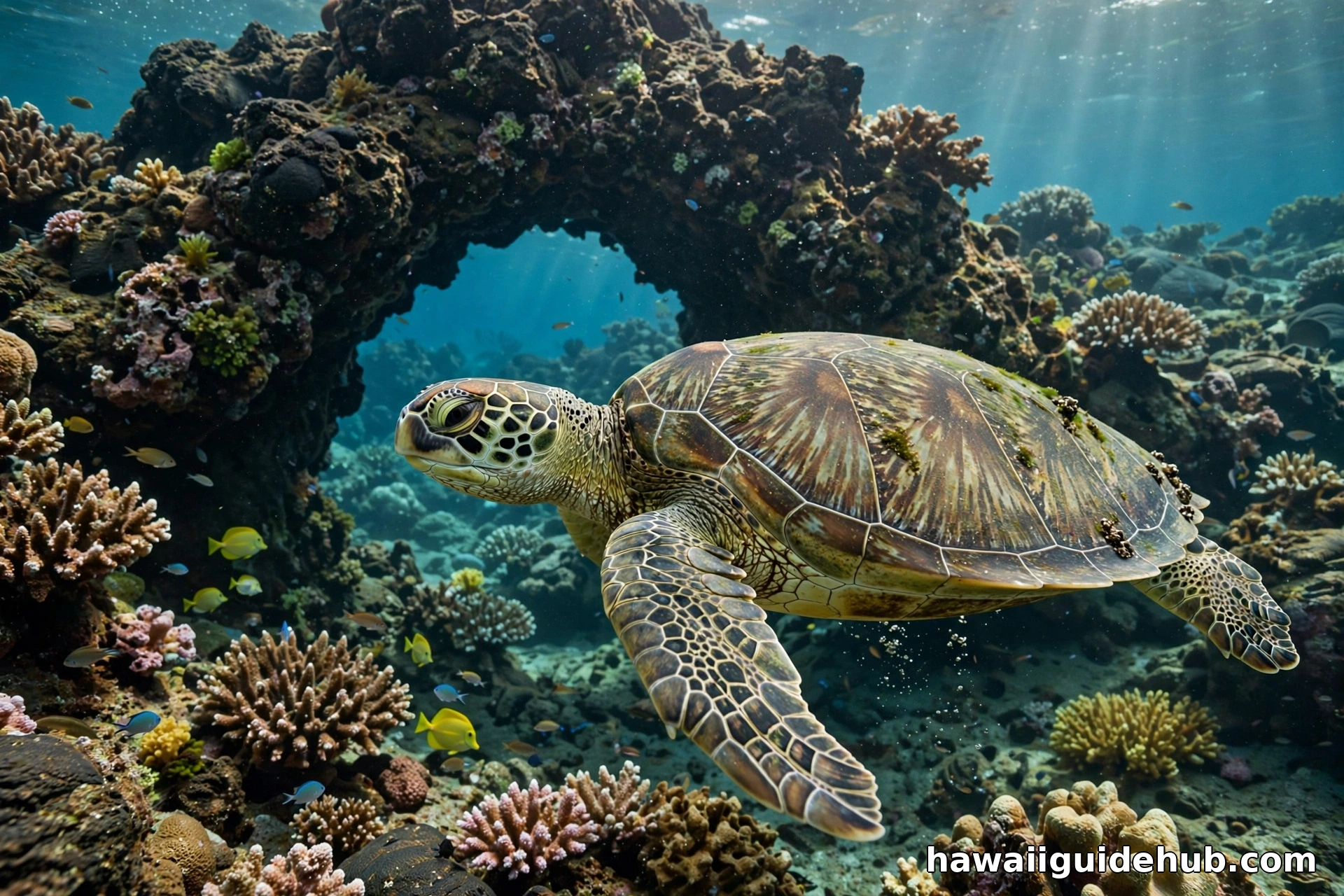
The Hawaiian green sea turtle (honu) is a symbol of longevity, peace, and navigation in Hawaiian culture: the ancient Polynesians followed turtles to find these islands. Honu can live 80+ years, grow to 300+ pounds, and migrate hundreds of miles between feeding and nesting grounds. They were hunted nearly to extinction; protection has brought a remarkable recovery. Seeing a honu is a privilege the Hawaiians consider a blessing (some say a turtle encounter means good luck). Treat it like one.
The Law: 10 Feet, No Touch, No Exceptions
Honu are protected under the federal Endangered Species Act and Hawaii state law. The rules: stay at least 10 feet (3 meters) away, never touch, never chase, never feed, never block their path to the surface. This applies on land too: basking turtles (like at Laniakea, “Turtle Beach” on Oahu’s North Shore) must not be disturbed. Fines run $1,000 to $10,500, plus possible jail time. The law is strict because it works: Hawaii’s honu population has rebounded dramatically under protection. Your compliance is part of the success story.
Snorkeling Tips
Book a morning tour for the calmest water and best visibility. Wear reef-safe sunscreen (required by Hawaii law). Do not stand on coral: it kills the reef. Float calmly and let the turtles come to you: chasing guarantees they leave. Bring an underwater camera, but no flash. If a turtle approaches you, stay still and enjoy it: you are the guest. The best turtle encounters are the quiet ones.
For more marine life, see Hanalei Beach: Kauai’s most beautiful beach, top 5 Kauai beaches for swimming, and Hawaii weather in December.
How Turtles Sleep Underwater
Sea turtles can hold their breath for hours while resting: they slow their heart rate and wedge themselves into caves and under ledges to sleep. A napping honu in a lava tube is one of the ocean’s most peaceful sights. Divers learn to spot the shells tucked into the reef’s shadows. Do not shine lights on sleeping turtles or poke them awake: a startled turtle burns precious energy. Watch, wonder, and move on quietly.
The Cleaning Station: Nature’s Spa
The cleaning station is one of nature’s great partnerships: the turtle gets parasites and algae removed; the small fish (like Hawaiian cleaner wrasse) get a meal. Turtles visit the same stations repeatedly and wait their turn: researchers have documented queues. At Turtle Canyon, the “spa” operates all day. It is symbiosis you can watch: the big reptile holding still while tiny fish work its shell. Evolution’s car wash.
Laniakea: Turtle Beach
Do not want to get wet? Laniakea Beach on Oahu’s North Shore (“Turtle Beach”) is where honu haul out to bask: one of the few places in the world where green turtles regularly sunbathe on land. Volunteers often rope off the basking area: stay behind the rope, keep quiet, no flash. It is the easiest turtle viewing in Hawaii and completely free. Combine it with a North Shore drive: turtles, shave ice, and sunset.
Monk Seals: The Other Resident
At Kauai’s Turtle Cove, visitors have reported Hawaiian monk seals sharing the tunnel area with turtles. The monk seal is one of the world’s most endangered marine mammals: about 1,600 remain. The rule is even stricter: stay 50 feet away, never approach. If you are lucky enough to see one, consider it the wildlife sighting of your trip. Report sightings to the monk seal hotline: your report helps the science.
The Recovery Story
The honu’s comeback is a conservation triumph. Hunted for meat and eggs, Hawaiian green turtles were in steep decline by the 1970s. Protection under the Endangered Species Act (1978) and Hawaii state law turned it around: nesting populations at French Frigate Shoals rebounded dramatically. It took decades of enforcement, research, and public education. The turtles you snorkel with today exist because the laws worked. Your compliance continues the story.
Diving vs Snorkeling
Snorkeling is enough for most turtle encounters: the cleaning stations and shallow caves are visible from the surface. Scuba diving gets you closer to the deeper caves (like the 5 Caves arches on Maui) and longer bottom time with the napping turtles. Divers must be certified; many shops offer discover dives. Either way, the rules are the same: distance, no touch, no chase. The turtles do not care about your certification card.
Photographing Honu
Underwater turtle photos are trip highlights. Tips: no flash (it startles them); shoot from the side, not head-on; include the reef for context; keep your distance and use zoom. The best shots come from patience: settle near a cleaning station and wait. The turtles ignore calm snorkelers: the good photos find you. And remember: the experience beats the photo. Put the camera down for a minute and just watch.
If You Find a Sick or Injured Turtle
Do not touch it. Note the location, take a photo from a distance, and call the NOAA sea turtle stranding hotline or the DLNR. Fibropapillomatosis (turtle tumors) affects some honu; entangled turtles need professional rescue. Your report, not your intervention, is the help. Hawaii’s stranding network is excellent: trained responders will come. The right action is the phone call.
The Honu in Hawaiian Culture
The honu is an ʻaumakua (family guardian) for many Hawaiian families: a spiritual ancestor and protector. Legends tell of turtles guiding lost canoes to land and carrying souls. The turtle’s image appears in petroglyphs, tattoos, and art across the islands. To harm a honu is not just illegal: it is a cultural offense. Understanding this deepens the encounter: you are not just seeing a reptile, you are meeting a being the Hawaiians have revered for a thousand years.
Turtle Nesting: French Frigate Shoals
Most Hawaiian honu nest at French Frigate Shoals in the remote Northwestern Hawaiian Islands: females migrate hundreds of miles to lay eggs on the same beaches where they hatched. A few nest on the main islands (often at night, on quiet beaches). If you encounter a nesting turtle or hatchlings: stay far away, no lights, no flash, call the authorities. Nesting is the most vulnerable moment of the turtle’s life. Witnessing it is rare and sacred: protect the moment.
Choosing a Responsible Tour
Not all turtle tours are equal. Choose operators who: brief you on the 10-foot rule, limit group sizes, use reef-safe sunscreen, and contribute to conservation (some donate per ticket to ocean funds). Avoid operators who chase turtles, feed wildlife, or crowd the animals. Read recent reviews: other snorkelers report bad behavior. Your ticket is a vote: spend it on the operators who protect what you came to see.
Kids and Turtles
A turtle encounter is the highlight of many kids’ Hawaii trips. Prepare them: explain the 10-foot rule as “the turtle’s personal space,” practice snorkeling in the pool first, and keep expectations realistic (wildlife is wild). The wonder on a child’s face at their first honu is unforgettable. Teach the respect early: the next generation of ocean stewards is made one turtle at a time.
The Best Time of Day
Morning wins for turtle snorkeling: the water is calmest, the visibility is best, and the turtles are active at the cleaning stations. Afternoon trade winds chop the surface and reduce visibility. Turtles rest in the caves midday: divers see the nappers, snorkelers see fewer. Dawn patrol at Turtle Canyon or Turtle Town is the move: glassy water, golden light, and honu going about their morning.
Beyond the Famous Spots
The famous sites are famous for a reason, but honu are everywhere: any healthy reef in Hawaii hosts turtles. Ask at the local dive shop for the quiet spots: the uncrowded reef with two turtles beats the famous canyon with twenty snorkelers. Shore diving at places like Shark’s Cove (summer) or Hanauma Bay regularly yields turtle encounters. The secret: healthy coral means turtles. Find the reef, find the honu.
The Quiet Encounter
The best turtle encounters share one quality: quiet. The snorkeler who floats still, breathes slowly, and waits is the one the turtle approaches. The chaser gets a fleeing shell; the waiter gets eye contact. This is true of all wildlife, but especially the honu: they can sense agitation in the water. Slow down, and the ocean opens up. The turtle cave is not a ride: it is a privilege, granted to the patient.
Video: Snorkeling Turtle Canyon, Oahu
Turtle Canyon: the turtle spa off Waikiki.
Frequently Asked Questions
Where is Turtle Cave in Hawaii?
The famous spots: Turtle Canyon off Waikiki (Oahu), Turtle Town at Makena (Maui), and the turtle tunnel at Turtle Cove (Kauai).
Can you swim with sea turtles in Hawaii?
Yes, by snorkel or dive tour. Stay 10+ feet away, never touch or chase them.
What is the fine for touching a sea turtle?
Fines range from $1,000 to $10,500, plus possible jail time, under federal and state law.
What is a turtle cleaning station?
A reef spot where small fish clean parasites off turtles’ shells. Turtles gather there regularly.
When is the best time to see turtles?
Morning: calmest water, best visibility. Turtles are present year-round.
Can you see turtles from the beach?
Yes: Laniakea (“Turtle Beach”) on Oahu’s North Shore is famous for basking turtles.
Turtle Cave Hawaii is not one place: it is a network of underwater sanctuaries where the honu rest, cleaned by tiny fish in the blue light of lava tubes. Go in the morning, keep your distance, and float quietly. The turtles have been here for millions of years; you are the visitor. Act like an honored guest, and the honu will show you why the Hawaiians call them a blessing.