Do I Need a Fishing License in Hawaii? The Complete Rules

Do you need a fishing license in Hawaii? It depends on who you are and where you fish. Residents fish the ocean free with no license at all. Visitors aged 15 and older need a marine fishing license for saltwater (a rule in effect since May 2, 2024). Freshwater fishing requires a license for everyone aged 9 and up. This guide breaks down exactly who needs what, what it costs, and how to stay legal.
This page covers the saltwater rules, the freshwater rules, fees, where to buy, and FAQs. Everything about Hawaii fishing licenses is on this one page.
The Short Answer
Hawaii residents: no license needed for saltwater fishing, ever. Non-residents 15 and older: yes, you need a Nonresident Recreational Marine Fishing License for ocean fishing (required since May 2, 2024, per Hawaii DLNR). Freshwater: everyone aged 9 and older needs a Freshwater Game Fishing License; kids under 9 fish free with a licensed adult; seniors 65+ fish freshwater free. Fees are set by the Hawaii DLNR and change: always confirm current prices before you buy.
Who Needs a License: The Rules at a Glance
| Situation | License needed? | Details, per Hawaii DLNR |
| Resident, saltwater | No | Never; fish free year-round |
| Non-resident 15+, saltwater | Yes | Required since May 2, 2024 |
| Non-resident under 15, saltwater | No | Exempt |
| Freshwater, age 9+ | Yes | Everyone; Freshwater Game Fishing License |
| Freshwater, under 9 | No | With a licensed adult |
| Freshwater, senior 65+ | No | Free |
Saltwater: Residents Free, Visitors Licensed
Hawaii is unusual: it has no saltwater fishing license for residents at all, a reflection of the islands’ deep subsistence-fishing tradition. That changed for visitors in 2024. Since May 2, 2024, non-residents aged 15 and older must hold a Nonresident Recreational Marine Fishing License to fish for marine life for recreational purposes, per Hawaii Administrative Rules section 13-74-11. Active-duty military members and their families are exempt. The license revenue funds fish aggregation devices, artificial reefs, and stock enhancement: your fee builds the fishery.
Freshwater: Everyone 9 and Up
Freshwater is stricter. Per Hawaii DLNR rules, no person may fish for introduced freshwater game fish without a Freshwater Game Fishing License, except children under 9 fishing with a licensed adult. This covers the reservoirs and streams of Oahu, Kauai, Maui, and the Big Island: bass, tucunare (peacock bass), catfish, and trout waters. Seniors 65 and older fish free. Note: the freshwater license is valid through June 30 of the issuing year regardless of purchase date, so time your purchase: buy in July for a full year.
Fees: What It Costs
Fees are set by the DLNR and change periodically: confirm current prices on the DLNR site before buying. Per the DLNR fee schedule in HAR §13-74-10: $5 for residents ages 15 to 64, $3 for minors 9 to 15, free for seniors 65 and older, $25 for non-residents annually, $10 for a 7-day tourist license, and $20 for a 30-day tourist license. Non-resident marine licenses: $20 for one day, $40 for seven days, $70 annual. Buy online through the DLNR portal for an instant digital license, or in person at DLNR Division of Aquatic Resources offices.
Where You Can and Cannot Fish
A license is not a blank check. Marine Life Conservation Districts (MLCDs) prohibit or restrict fishing: Hanauma Bay, for example, is no-take. The Waikiki-Diamond Head Shoreline Fisheries Management Area alternates open and closed years. Many shoreline areas are private property: get the landowner’s permission. Size and bag limits apply to reef species, ulua, and others. Spearfishing has its own rules (no spears 6pm-6am in some areas). Read the DLNR regulations booklet for your island before you go: ignorance is not a defense, and fines are real.
Charter Boats and Tourists
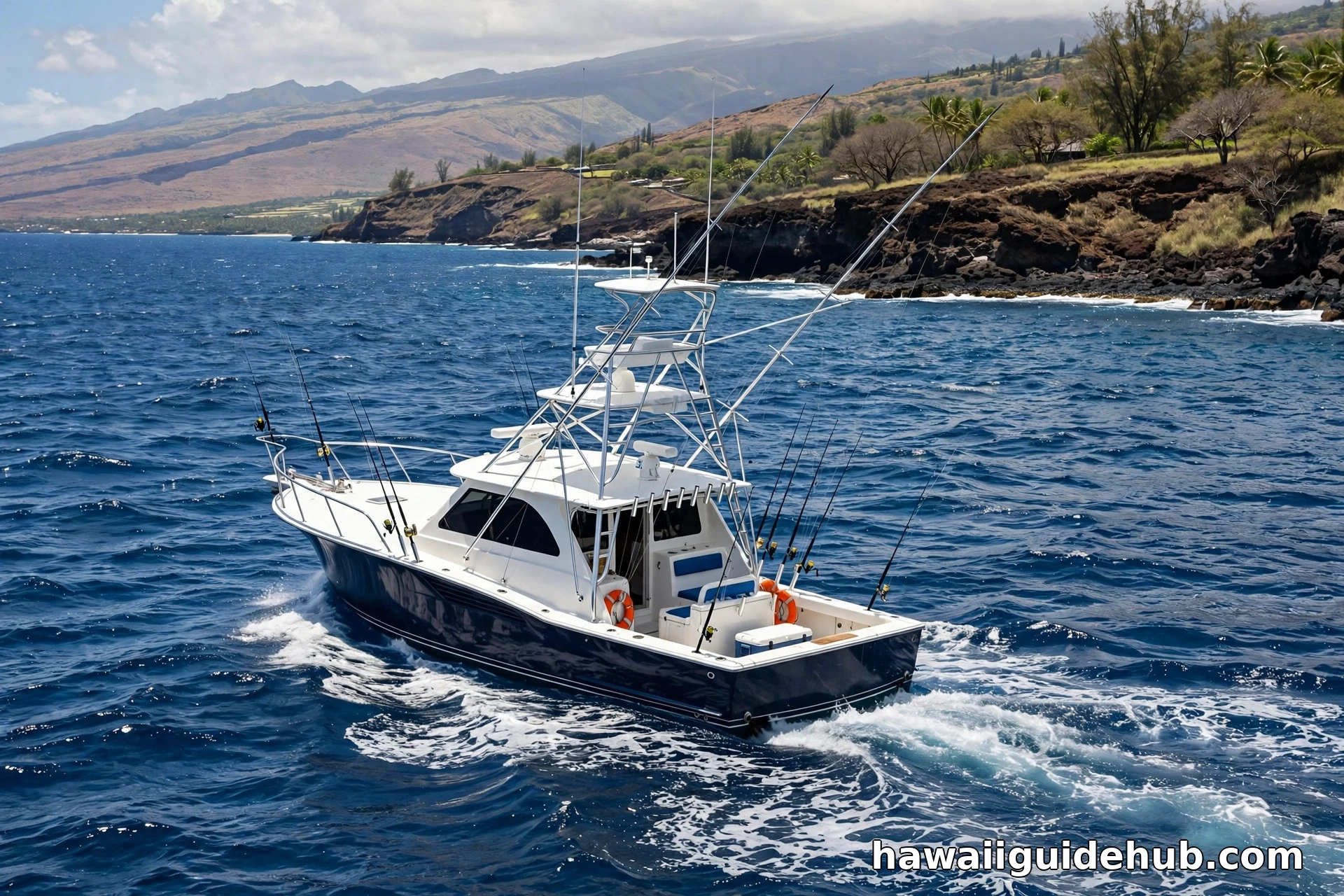
Going deep-sea fishing on a charter? Non-resident passengers aged 15+ need the marine license even on a charter boat: the boat’s license does not cover you. Ask the charter operator before booking: many sell or arrange licenses for clients. Resident passengers need nothing. This is the most common way visitors get cited: they assume the charter covers them. It does not. Get the license first.
For more ocean adventures, see Hanalei Beach: Kauai’s most beautiful beach, top 5 Kauai beaches for swimming, and Hawaii weather in December.
The 2024 Law: Why Visitors Now Need Licenses
For most of Hawaii’s history, nobody needed a saltwater license: fishing was a birthright. That changed in June 2021, when the legislature passed the non-resident marine license law, implemented in May 2024. The reasons: fairness (every other coastal state charges), data (licensed anglers can be surveyed for stock assessments), and money (an expected $1 million a year for the fishery). Hawaii was the last coastal state without one. The era of free visitor fishing is over, and the fishery is better funded for it.
Fishing as Culture: A Thousand Years
Fishing is not a hobby in Hawaii: it is a heritage. The ancient Hawaiians built fishponds (loko iʻa), engineered like aquaculture systems, that fed thousands. They fished by season, by moon, by kapu: conservation law before the word existed. The konohiki (resource managers) set the rules. Modern regulations descend directly from this tradition: size limits, seasons, and closed areas echo the kapu system. When you follow the rules, you are practicing the oldest conservation science in the Pacific.
What Your License Funds
License revenue goes exclusively to the fishery, per the DLNR: fish aggregation devices (FADs) that concentrate pelagic fish for anglers, artificial reefs, stock enhancement, and habitat restoration. Hawaii’s FAD system is one of the best in the world: anchored buoys miles offshore that hold tuna, mahi, and ono. Your $20 day license helps maintain the buoys you will fish around. It is the rare fee where you can see exactly what it buys.
Size and Bag Limits: The Basics
The headline limits every angler must know: many reef fish have minimum sizes; ulua (giant trevally) and other jacks have bag limits; certain species are closed in spawning season. Lobster, limu (seaweed), and opihi (limpet) have their own rules. The DLNR publishes a regulations booklet with the full tables: download it, and keep the relevant page on your phone. When in doubt, release it: a released fish is a future catch, and an undersized kept fish is a fine.
Spearfishing Rules
Spearfishing is huge in Hawaii and tightly regulated. The basics: no spears in the water from 6pm to 6am in managed areas; no spearfishing in Marine Life Conservation Districts; scuba spearfishing is restricted in some areas. Night diving for lobster has its own seasons. Visitors need the marine license to spearfish too. Spearfishing is the most selective, sustainable way to fish: you choose exactly your fish. Do it right, and it is the purest form of the sport.
The Best Fishing by Island
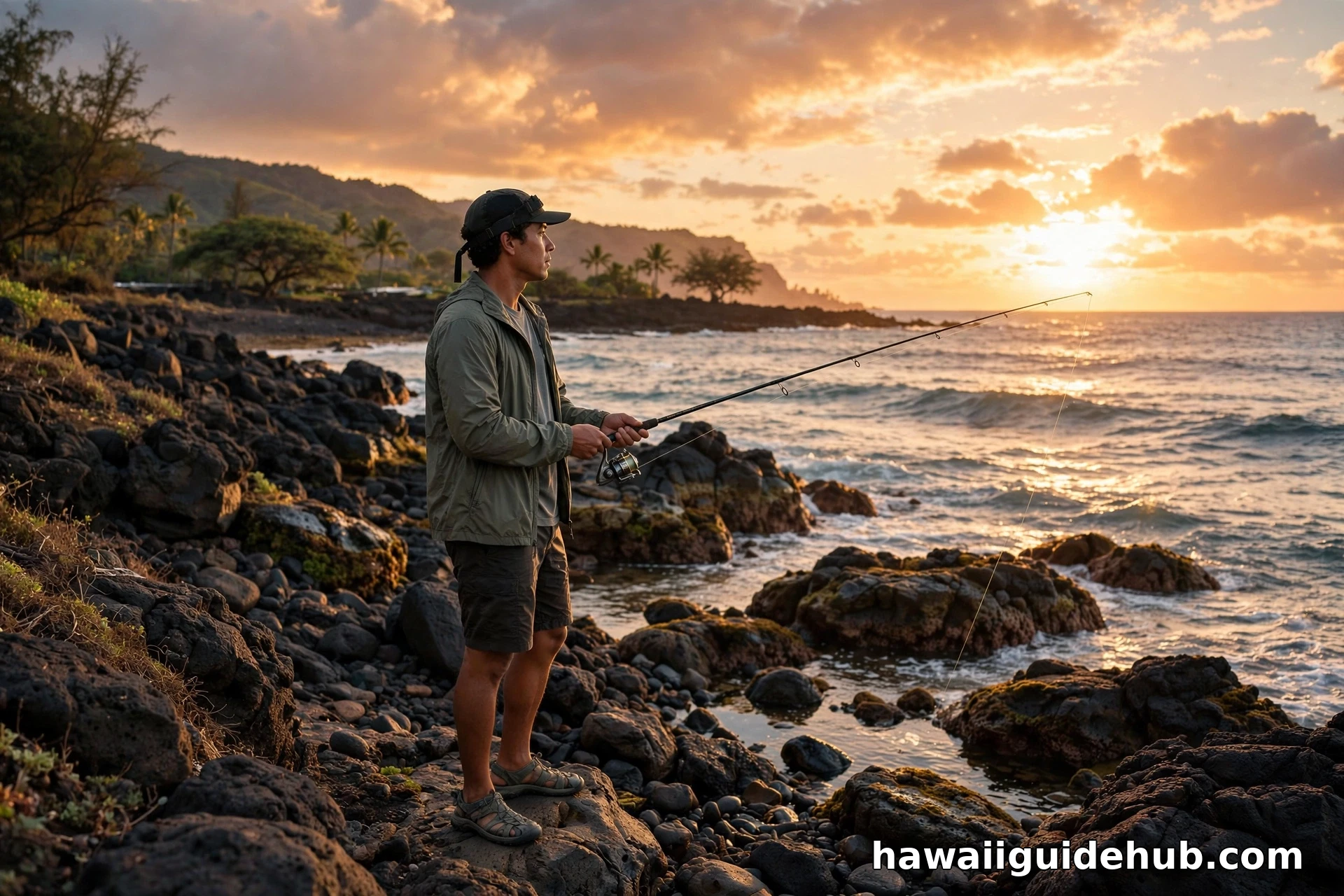
Oahu: shore whipping for papio at the reef edges; deep-sea charters from Kewalo Basin. Maui: kayak fishing the south shore; Lahaina charters for ono and mahi. Kauai: Hanalei Bay for surfcasting; charter boats from Port Allen. Big Island: Kona is the marlin capital of the world: the deep water is minutes from the harbor, and the summer marlin bite is legendary. Each island has its own fishery: ask at the local tackle shop, not the internet, for what is biting now.
Fishing with Kids
Hawaii is a wonderful place to teach kids to fish. Visitors under 15 need no license for saltwater; kids under 9 need no freshwater license with a licensed adult. Start simple: a bamboo pole or a light spinning rod off a calm beach, catching small reef fish. The excitement of the first catch is universal. Teach the rules early: measure, respect limits, release the small ones. The next generation of stewards starts with a kid and a pole.
Common Violations to Avoid
The citations DOCARE writes most: fishing without the required license (visitors), undersized fish, fishing in closed areas (MLCDs), and illegal gear (lay nets without permits, illegal traps). All are avoidable: buy the license, download the regulations, check the signs at the beach, and ask the tackle shop. The fines start in the hundreds and the gear seizure is real. The ocean is generous to those who follow the rules and expensive for those who do not.
The Freshwater Fishery: Bass in Paradise
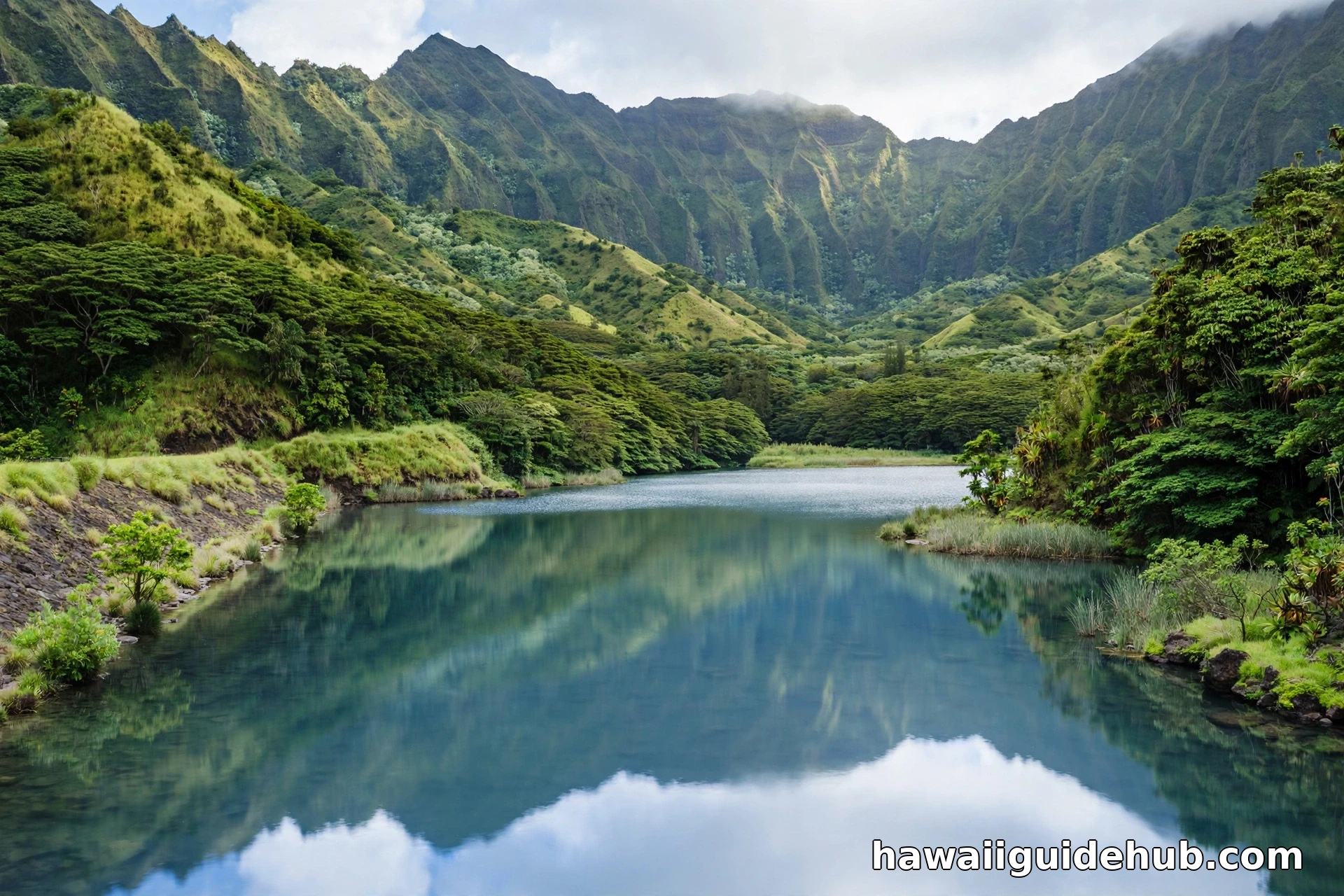
Hawaii’s freshwater fishing surprises everyone: largemouth bass, peacock bass (tucunare), channel catfish, and tilapia in reservoirs and streams. Wahiawā Reservoir on Oahu is the bass headquarters; Kauai and the Big Island have their own waters. The fish are introduced, the setting is tropical, and the experience is unique: casting for peacock bass with green mountains behind you. A $10 tourist license buys a week of something you cannot do anywhere else in America.
Trout Season
Yes, trout in Hawaii: rainbow trout are stocked in high-elevation streams on Kauai and the Big Island. Trout season requires an additional trout stamp ($5) on top of the freshwater license. The season is limited and the streams are beautiful: cool mountain water, native forest, and trout that fight like they mean it. It is the most unexpected fishing in the islands, and the stamp is the cheapest ticket to it.
Catch and Cook: Eating Your Catch
The reward: eating what you catch. Pelagic fish (mahi, ono, ahi) are world-class table fare: grill, sashimi, poke. Reef fish like uku (snapper) are excellent. Know the ciguatera risk: some reef fish in some areas carry the toxin; ask locals which fish and which areas are safe. Bleed and ice your fish immediately: the tropical sun is the enemy of freshness. A charter that cleans your catch, a grill at the rental, and a sunset: that is the Hawaii fishing dream, fully realized.
Before You Go: The Checklist
The pre-fishing checklist: (1) Buy the right license online and save the digital copy on your phone. (2) Download the DLNR regulations booklet for your island. (3) Check for closed areas and seasons. (4) Confirm your charter’s license arrangements if you are a visitor. (5) Bring reef-safe sunscreen, water, and a measuring device. (6) Tell someone where you are going. The paperwork takes ten minutes; the peace of mind lasts the whole trip. Fish legal, fish safe, fish happy.
The Digital License: Keep It on Your Phone
Hawaii’s licenses are digital-friendly: buy online through the DLNR portal and carry the license on your phone. Officers accept digital proof, but keep a screenshot as backup: cell service is spotty at remote fishing spots. A printed copy in a zip bag is the old-school insurance. Whatever the format, have it accessible: “it’s on my phone” only works if the phone is charged and the screen is readable.
Video: Shore Fishing in Hawaii
Shore fishing Hawaii: the surfcasting techniques the locals use.
Frequently Asked Questions
Do I need a fishing license in Hawaii?
Residents: no, for saltwater. Visitors 15+: yes, for saltwater since May 2024. Freshwater: yes, for everyone 9+.
Can you fish in Hawaii without a license?
Residents can fish saltwater without one. Visitors under 15 can. Everyone else needs the proper license.
How much is a Hawaii fishing license?
Non-resident marine: $20/1-day, $40/7-day, $70/annual. Freshwater: $5 resident, $25 non-resident annual, $10/7-day and $20/30-day tourist.
Where do I buy a Hawaii fishing license?
Online through the DLNR portal (instant digital license) or at DLNR Division of Aquatic Resources offices.
Do I need a license on a charter boat?
Non-residents 15+ do, even on charters. The boat’s license does not cover passengers.
What happens if I fish without a license?
Fines and possible seizure of gear. The DLNR’s enforcement division (DOCARE) patrols actively.
Do you need a fishing license in Hawaii? Now you know: residents fish free in the ocean, visitors need the marine license, and freshwater always requires one. The rules protect a fishery the Hawaiians have sustained for a thousand years, from the ancient fishponds to the modern FAD buoys. Get the right license, learn the local limits, and fish with respect: the ocean will reward you, and the tradition will continue.