Volcano on the Big Island of Hawaii: Kilauea, Mauna Loa & How to Visit

There is a volcano on the Big Island of Hawaii. In fact, there are several, and two of them rank among the most important volcanoes on Earth. Kīlauea, the youngest and most active, and Mauna Loa, the largest, have built the island grain by grain for hundreds of thousands of years, and they are still at it. This is the single complete guide to the volcano on Big Island Hawaii: which volcanoes are here, how they formed, what the science says about their current activity, the hazards to respect, and how to experience them safely.
This page sticks to established geology and official monitoring information rather than chasing eruption headlines. Volcanic activity changes, sometimes fast, so always check the USGS Hawaiian Volcano Observatory for current conditions before you visit. What does not change is the geology, the history, and the safety rules below.
Big Island Volcanoes at a Glance
| The Big Island’s volcanoes: the short version | The one-line story | Plan around this |
|---|---|---|
| Volcanoes forming the island | Five: Kohala, Mauna Kea, Hualālai, Mauna Loa, Kīlauea (oldest to youngest) | One island, five volcanoes, one hotspot |
| Active volcanoes | Kīlauea and Mauna Loa (erupted in recent decades); Hualālai is active but last erupted in 1801 | Two to watch; one to respect |
| Kīlauea | Youngest and most active; erupted almost continuously 1983 to 2018 | The star of the national park |
| Mauna Loa | Largest volcano on Earth; 34 eruptions since 1843, most recently in 2022 | The heavyweight; check its alert level too |
| Where to see them | Hawaiʻi Volcanoes National Park, on the island’s southeast side | One park, both active giants |
| Monitored by | USGS Hawaiian Volcano Observatory (HVO) | Check HVO alert levels before you go |
How the Big Island’s Volcanoes Formed
The Hawaiian Islands exist because of a hotspot, a plume of hot rock rising from deep inside the Earth. The Pacific Plate drifts slowly northwest over this fixed plume, and wherever the plate sits over the plume, magma rises and builds a volcano. Each island is born over the hotspot, grows, then rides away from it, goes quiet, and erodes. The Big Island sits over the hotspot right now, which is why it is the youngest island and the only one still growing.
Hawaiian volcanoes are shield volcanoes, broad, gently sloping mountains built by fluid basalt lava that flows easily and spreads wide rather than piling steeply. That fluidity is why Hawaiian eruptions are typically effusive, fountains and flows, rather than the explosive blasts of continental volcanoes. The island’s five volcanoes grew in sequence from northwest to southeast: Kohala is extinct, Mauna Kea is dormant, Hualālai is active but quiet since 1801, and Mauna Loa and Kīlauea do the current work.
Kīlauea: The World’s Most Active Volcano
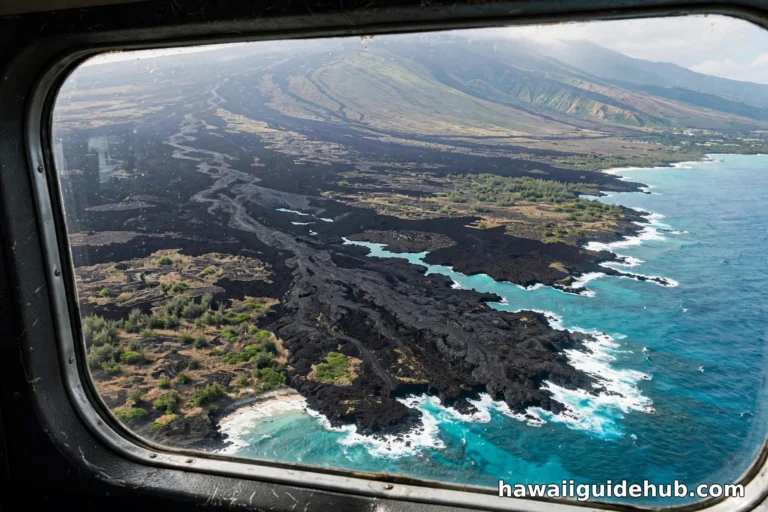
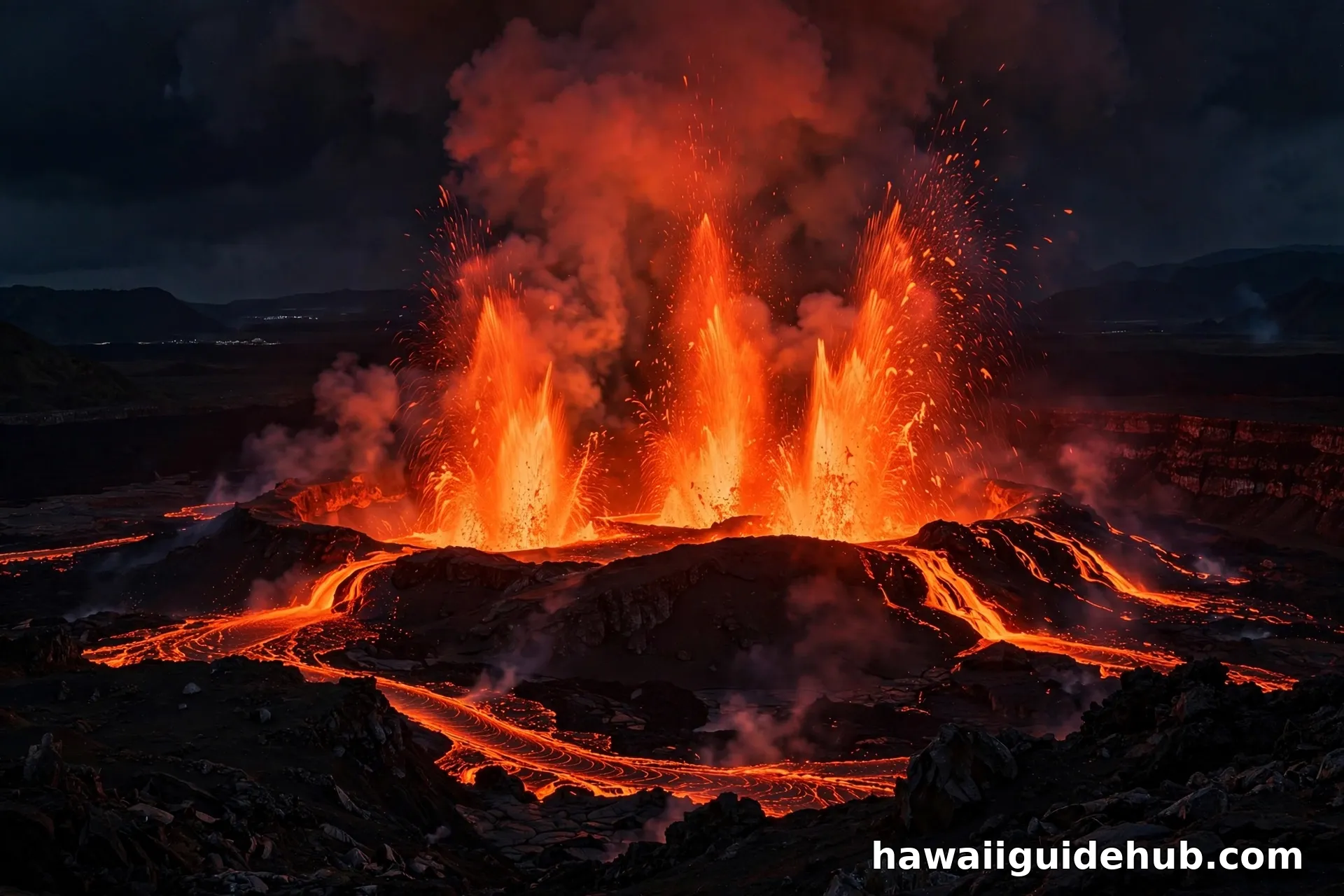
Kīlauea is the youngest volcano on the island and one of the most active volcanoes on the planet. About 90 percent of its surface is covered by lava flows less than 1,100 years old, which tells you how relentlessly it rebuilds itself. It erupted almost continuously from 1983 to 2018, first at Puʻuʻōʻō and other vents along the East Rift Zone, then with a lava lake inside Halemaʻumaʻu crater at the summit from 2008 to 2018.
In 2018, Kīlauea produced its largest lower East Rift Zone eruption and summit collapse in at least 200 years, destroying hundreds of homes in the Puna district and dramatically reshaping the summit caldera. Since December 2020, a series of summit eruptions has been slowly refilling the collapsed area with new lava lakes. Activity since then has come in episodes, with fountaining phases separated by pauses, all of it confined within Hawaiʻi Volcanoes National Park.
Kīlauea’s summit sits inside the national park, with overlooks, crater rim trails, and the famous Kīlauea Iki trail that crosses a solidified lava lake left by the 1959 eruption. When an eruption is underway, the glow can be visible for miles at night, drawing evening crowds to the overlooks. Our guide to things to do in Hawaiʻi Volcanoes National Park covers the essential stops.
Mauna Loa: The Largest Volcano on Earth
Mauna Loa is the largest volcano on Earth by volume and area, a shield so massive that its flanks cover about half the island. It has erupted 34 times since 1843. The 1984 eruption lasted 22 days and sent flows to within about four and a half miles of Hilo. After a 38-year quiet stretch, its longest on record, Mauna Loa erupted again in late 2022 for about two weeks, with flows stopping within 1.7 miles of the Daniel K. Inouye Highway, the Saddle Road that crosses the island.
Mauna Loa’s eruptions are less frequent than Kīlauea’s but potentially more hazardous, because the volcano produces enormous volumes of lava that can travel long distances quickly. Between eruptions, the USGS watches it closely: ground deformation shows the summit reservoir refilling, and the alert level reflects that quiet-but-alive status. Visitors see Mauna Loa mainly from the park’s Mauna Loa Road and from Saddle Road, where the 2022 flows are still stark black against the older landscape.
Hualālai, Mauna Kea, and Kohala: The Quieter Volcanoes
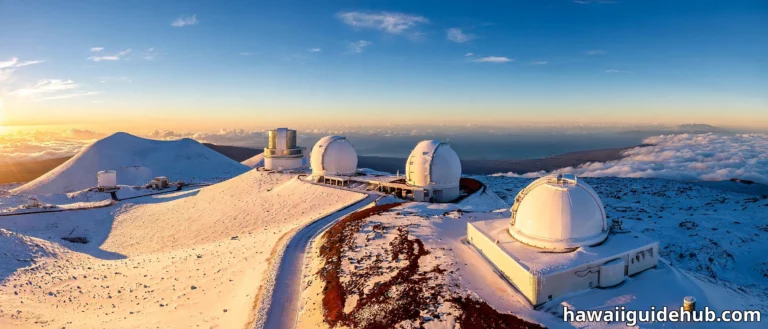
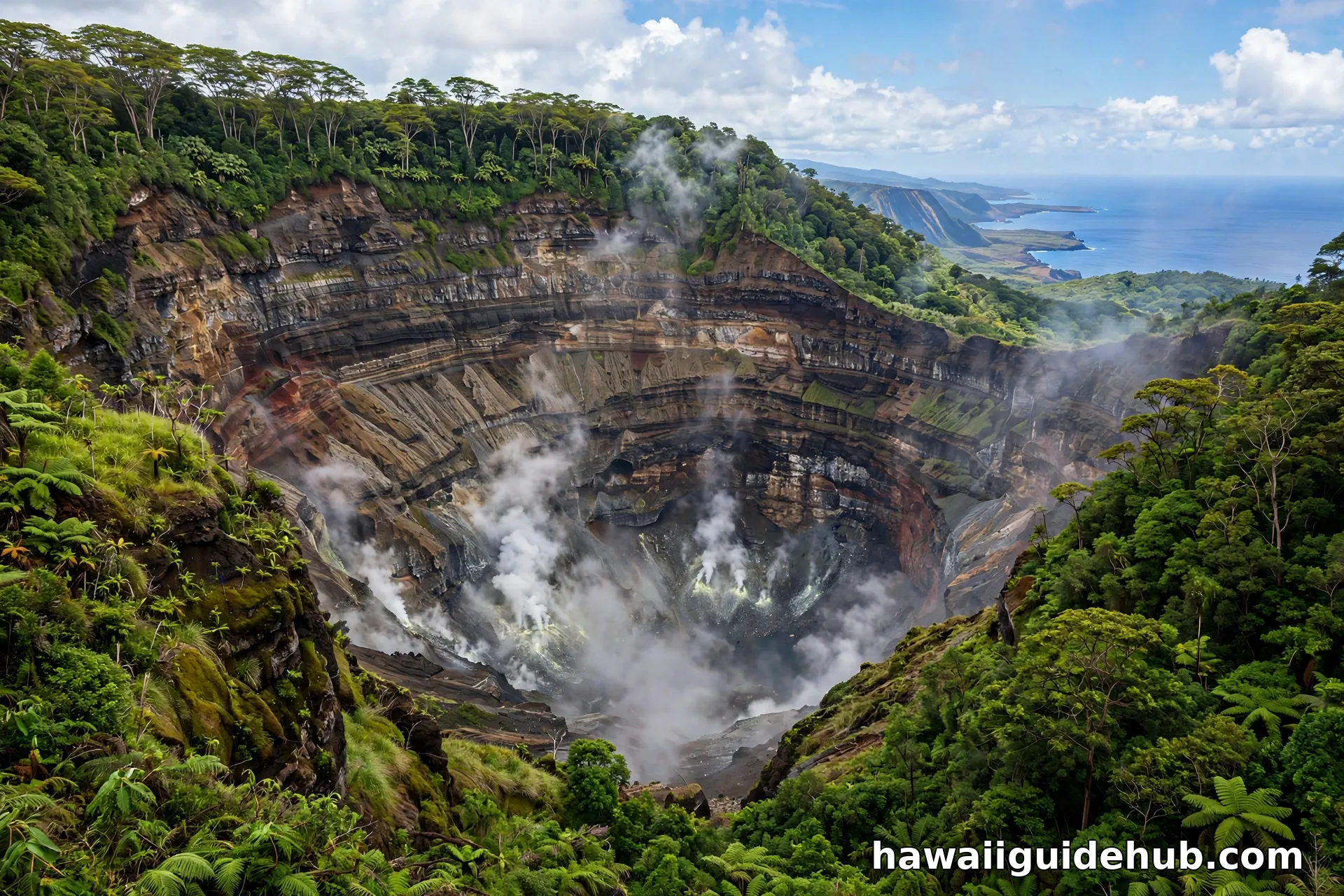
Hualālai, the volcano behind Kailua-Kona, is officially active. It last erupted in 1801, sending flows to the coast near what is now the Kona airport area. It erupts rarely, on timescales of centuries, but the USGS considers it potentially dangerous precisely because the Kona coast around it is now heavily developed. Mauna Kea, the island’s highest point at 13,803 feet, last erupted about 4,000 years ago and is considered dormant. Kohala, the oldest, is extinct. Most visitors experience these volcanoes as scenery, the mountain behind Kona, the snowy summit with observatories, the green valleys of Kohala, without realizing they are standing on volcanoes at all.
Volcano Terminology Worth Knowing
A few terms make the science and the park signage much clearer. Lava is molten rock above ground; magma is the same material underground. Pāhoehoe (pa-HOY-hoy) is smooth, ropey lava; ʻaʻā (ah-AH) is rough, jagged lava. A caldera is a large collapsed crater at a volcano’s summit; Kīlauea’s grew dramatically in 2018. A rift zone is a crack system where magma travels sideways from the summit, which is where the 2018 eruption broke out. Vog is volcanic smog, the hazy mix of sulfur dioxide and particles that drifts downwind during eruptions and can irritate eyes and lungs.
Two more terms come up in eruption news. An eruptive episode is a distinct phase of fountaining separated by pauses, which is how Kīlauea’s recent activity has behaved. An alert level is the USGS status for a volcano, ranging from NORMAL through ADVISORY and WATCH to WARNING, and it is the fastest way to gauge current conditions before a visit.
Hazards: What the Volcanoes Can Do
Hawaiian volcanoes are approachable, but they are not amusement rides. The real hazards are unglamorous. Volcanic gases, especially sulfur dioxide, concentrate near vents and can overwhelm people with asthma or heart conditions; the park closes areas when gas levels spike. Unstable ground at cliff edges and around steam vents can collapse without warning. Lava, when present, is around 2,100 degrees Fahrenheit, and new flows can advance faster than a person walks on slopes.
The rules are simple and non-negotiable. Stay on marked trails and behind barriers. Never approach lava flows or enter closed areas; closures exist because people have been hurt in exactly those spots. Check the park’s current conditions and the USGS alert levels before and during your visit. If you have respiratory issues, skip high-gas areas entirely. And leave the rocks where they are: beyond the park’s strict no-collecting rules, the tradition of Pele’s curse holds that taking lava rock brings bad luck, and the park is not the place to test it.
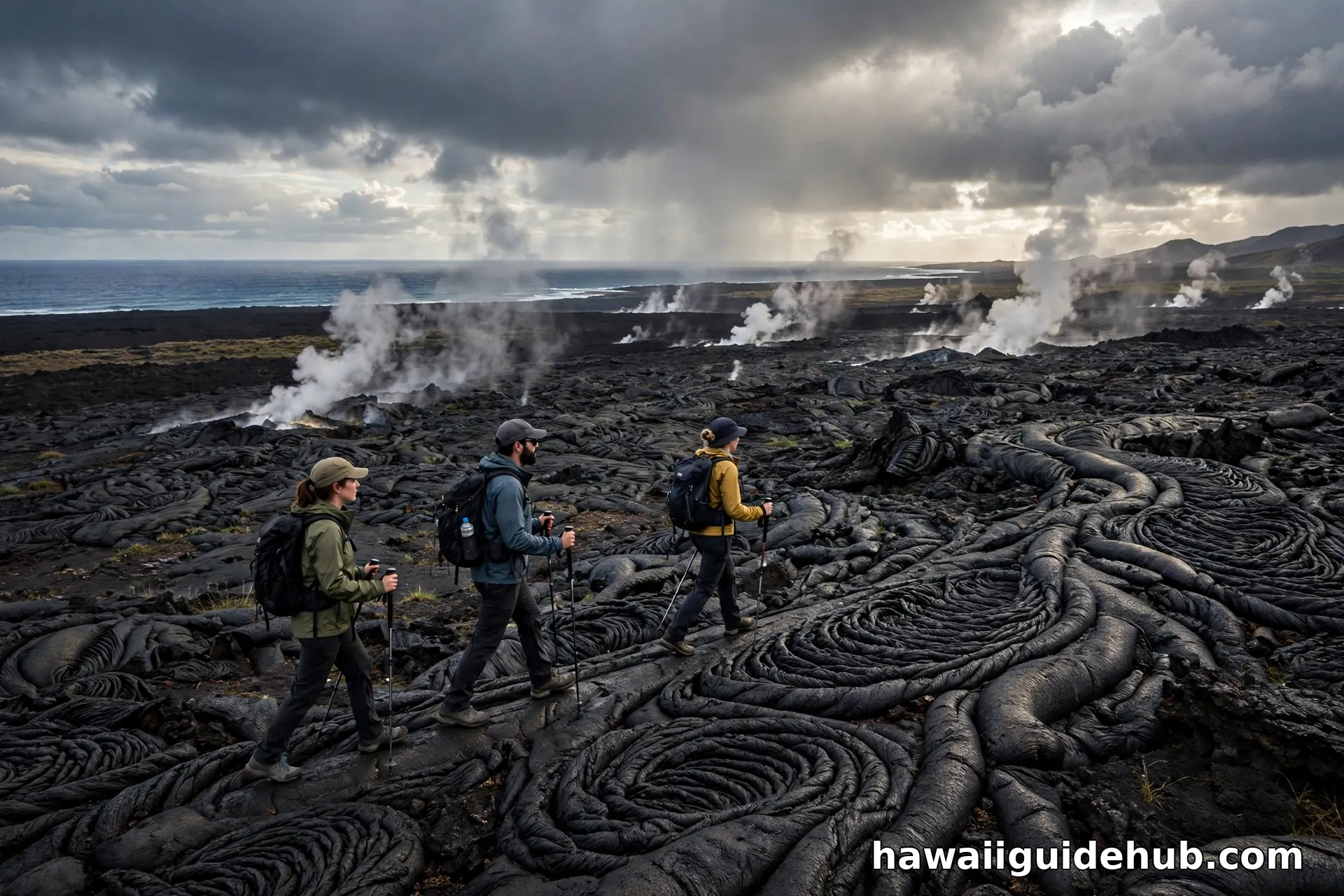
Visiting Hawaiʻi Volcanoes National Park
The national park is the only practical way to experience the volcanoes up close, and it deserves a full day. Start at the Kīlauea Visitor Center for the current eruption status and ranger advice, then drive Crater Rim Drive for the overlooks, walk the Sulphur Banks and Steam Vents boardwalk, and hike at least part of the Kīlauea Iki trail. Chain of Craters Road descends 20 miles to the coast through old flows, ending where lava once poured into the sea. Entrance is $30 per vehicle, valid for seven days.
Come prepared for two climates in one park. The summit sits at 4,000 feet, where temperatures run 15 to 20 degrees cooler than the coast and rain is frequent; the end of Chain of Craters Road is hot, dry coastal desert. Bring a rain jacket, layers, sturdy shoes, sun protection, and far more water than seems reasonable. There is minimal food inside the park, so eat before you arrive or pack a lunch. Pair the park with the island’s other regions using our Big Island highlights guide. Most visitors base the volcano day from the Kona side or the Kohala coast, so browse things to do in Kona and Waikoloa when building the rest of the itinerary, and stay in Volcano village or Hilo the night before for the shortest drive to the park entrance.
Pele and the Cultural Meaning of the Volcanoes
To Native Hawaiians, Kīlauea is the home of Pele, the goddess of volcanoes and fire, and eruptions are expressions of her presence. This is a living belief, not a quaint legend, and visitors are expected to treat the volcanoes with corresponding respect. Stay on trails, do not take rocks, keep noise down at sacred sites, and listen when cultural practitioners or rangers explain protocol. The volcanoes were sacred long before they were scenic, and that order still holds.
Video: How Kīlauea and Mauna Loa Work
A clear, science-based explanation of how the island’s two active volcanoes work and what their current activity means.
Frequently Asked Questions About Big Island Volcanoes
Which volcano is on the Big Island of Hawaii?
Five volcanoes form the island: Kīlauea, Mauna Loa, Hualālai, Mauna Kea, and Kohala. Kīlauea and Mauna Loa are the active ones that have erupted in recent decades. When people say “the volcano on the Big Island,” they almost always mean Kīlauea.
Is the Big Island volcano erupting right now?
Activity changes frequently. Kīlauea has erupted episodically in recent years, while Mauna Loa last erupted in 2022. Check the USGS Hawaiian Volcano Observatory website for the current alert level before you visit, since conditions can change with little warning.
Can you see lava on the Big Island?
Sometimes. During eruptive episodes, lava fountains and flows may be visible from park overlooks, and the nighttime glow can be spectacular. Between episodes there may be no surface lava at all, but the park’s craters, steam vents, and lava fields are impressive regardless. Never expect lava; treat it as a bonus.
Is it safe to visit Hawaii Volcanoes National Park?
Yes, when you follow the rules. Stay on marked trails, obey closures, avoid high-gas areas if you have breathing issues, and check current conditions first. The park manages millions of visits safely by keeping people away from the genuinely dangerous spots.
What is the difference between Kīlauea and Mauna Loa?
Kīlauea is smaller, younger, and erupts far more often, making it the volcano visitors experience most. Mauna Loa is the largest volcano on Earth, erupts less frequently, but produces vastly larger lava flows. They are separate volcanoes about 21 miles apart at their summits, sharing the same deep magma source.
How was the Big Island formed?
A hotspot of magma deep under the Pacific Plate built the island layer by layer over hundreds of thousands of years. The plate moves northwest while the hotspot stays fixed, so the Big Island is the current construction site and a future island is already growing underwater to the southeast.
The volcano on the Big Island of Hawaii is not one mountain but a family of them, still under construction. Kīlauea provides the drama, Mauna Loa provides the scale, and the three quieter volcanoes provide the scenery most visitors photograph without knowing what they are looking at. Go to the national park, check the current conditions, respect the closures and the culture, and you will witness geology happening in real time. Few places on Earth offer that.