Shave Ice: Hawaii’s Iconic Frozen Treat

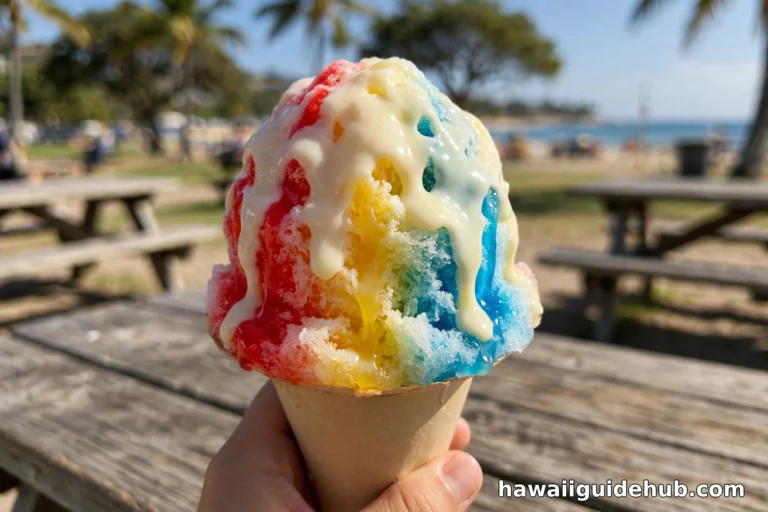
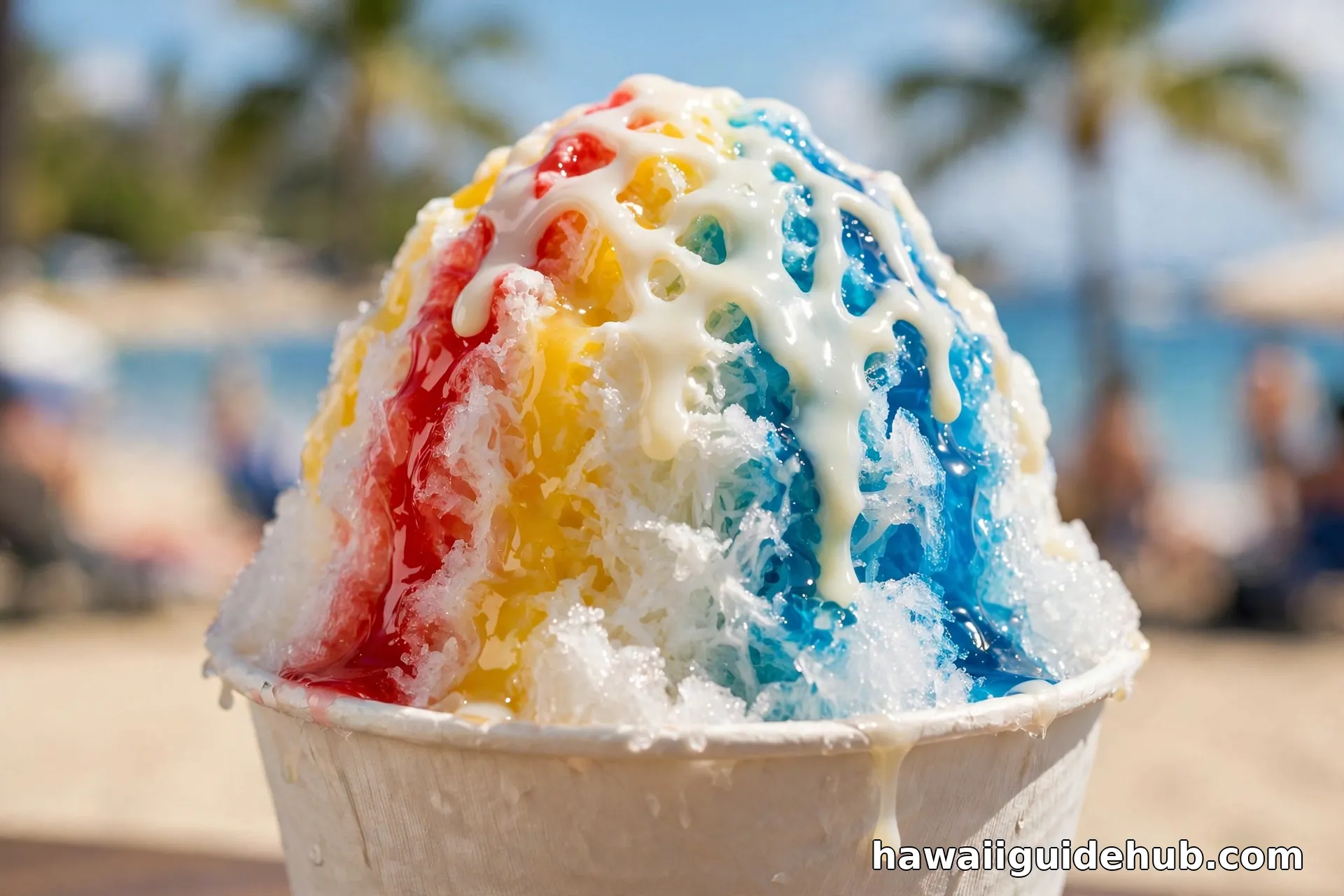
It arrives in a simple cup, a dome of ice so finely shaved it looks like fresh snow, striped with ribbons of color: red lilikoi, yellow pineapple, blue vanilla. A drizzle of sweetened condensed milk melts over the top. One spoonful is cold, sweet, and impossibly light, and the ice seems to vanish on your tongue. This is Hawaiian shave ice, and once you have had the real thing, no snow cone will ever satisfy you again.
This is the single complete guide to shave ice in Hawaii. It covers what shave ice actually is, how Japanese kakigori became a Hawaiian icon, why locals say “shave” instead of “shaved,” the classic flavors and add-ons, how it differs from a snow cone, and where to find the best cups across the islands. If you have been searching for anything about shave ice Hawaii, the answers are all here on this one page.
Shave Ice at a Glance
| Say it right | “Shave ice,” not “shaved ice,” in Hawaii pidgin |
| What it is | Finely shaved ice flavored with colorful syrups, a Hawaiian icon |
| The texture test | Fine and pillowy like fresh snow, absorbs syrup evenly |
| The classic order | Rainbow, lilikoi, coconut, mango, pineapple, guava, POG |
| Level it up | Snow cap (condensed milk), azuki beans, mochi balls, vanilla ice cream |
| The history | Japanese kakigori, brought by immigrants in the early 1900s |
| The old guard | Waiola Shave Ice (1940), Matsumoto Shave Ice (1951) |
| The busy-day record | Over 1,000 cups a day at Matsumoto’s on warm sunny days |
| Where to find it | Shave ice stands and shops statewide, especially Oʻahu’s North Shore |
| Best for | Hot afternoons, beach days, and North Shore road trips |
What Is Hawaiian Shave Ice?
Hawaiian shave ice is ice shaved into fine, snowlike flakes and flavored with sweet syrups. The shaving is everything. Because the ice is cut so thin, the syrup soaks into every flake instead of pooling at the bottom of the cup. The result eats like flavored snow: cold, light, and evenly sweet from the first spoonful to the last.
First, the name. In Hawaii it is “shave ice,” never “shaved ice.” The phrase comes from Hawaii pidgin, and using the local form marks you as someone who has done their homework. Order “shaved ice” and you will be gently corrected, usually with a smile.
A proper shave ice is built in layers. The server shaves the ice into a cup or cone, pours on your chosen syrups, and often adds extras. The most famous upgrade is the snow cap, a pour of sweetened condensed milk over the top that turns the whole thing rich and creamy. Tucked underneath, you might find a scoop of vanilla ice cream or a spoonful of azuki beans. Chewy mochi balls on top add a Japanese touch. Every stand has its own combinations, and regulars guard their orders like secrets.
From Japanese Kakigori to Hawaiian Icon
Shave ice began as kakigori, the Japanese shaved ice dessert with a history stretching back to the Heian period, roughly a thousand years ago. In Japan it was once a luxury for the elite, since ice had to be harvested and stored. Japanese immigrants carried the tradition across the Pacific in the late 1800s and early 1900s, when thousands came to work Hawaii’s sugar plantations.
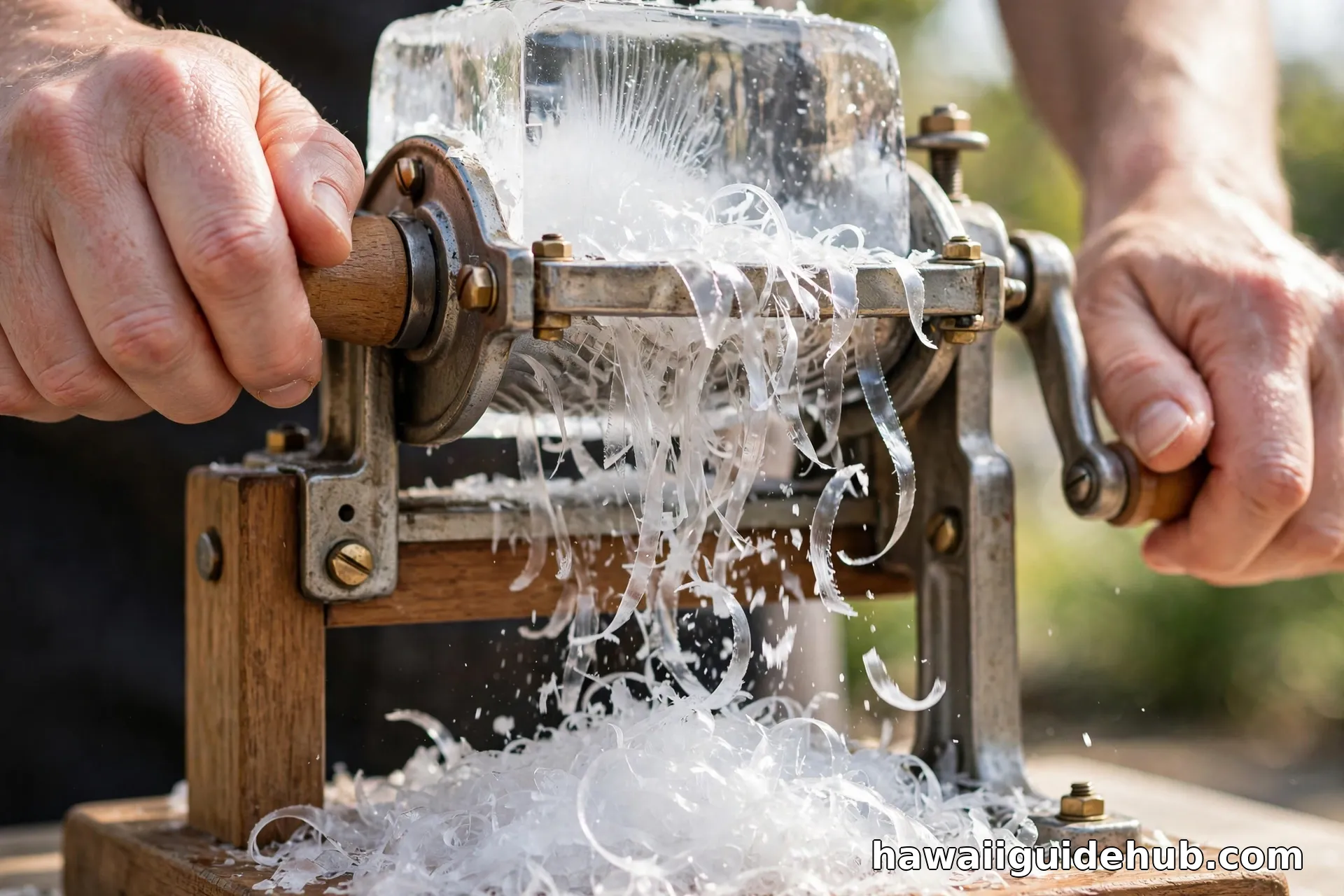
On the plantations, Japanese immigrants shaved flakes from large blocks of ice using blades and tools, then sweetened the ice with sugar or fruit juice to cool off in the tropical heat. They began selling it to fellow plantation workers in the early 1900s. By the 1950s, shave ice was a regular product in Japanese owned grocery stores across the islands, and the treat had crossed over to every ethnic group in Hawaii.
Two shops anchor the history. Waiola Shave Ice, founded in 1940, is one of Hawaii’s oldest shave ice shops and a Honolulu institution. Matsumoto Shave Ice began in 1951, when Mamoru and Helen Matsumoto opened a grocery store in Haleiwa on Oahu’s North Shore and started serving shave ice to lines of regulars. Generations of the Matsumoto family kept the tradition going, and the little store became world famous, featured on food and travel networks around the globe. On a warm sunny day it can sell more than 1,000 cups, adding up to over 300,000 in a year.
California surfers arriving in the 1950s and 1960s carried shave ice culture back to the mainland in stories and cravings, and by the 1990s the famous stands were drawing international visitors. Today shave ice is as much a symbol of Hawaii as the surfboard, and a North Shore road trip without a shave ice stop feels incomplete. Our North Shore Oahu guide plans the perfect day around it.
Shave Ice vs Snow Cone: What Is the Difference?
Visitors often assume shave ice is just a snow cone with better marketing. The difference is in the ice itself, and it changes everything.
| Hawaiian Shave Ice | Snow Cone | |
| Ice texture | Finely shaved, soft and pillowy like snow | Coarsely crushed, crunchy ice pebbles |
| Syrup | Absorbed evenly into the fine flakes | Drains to the bottom, leaving plain ice on top |
| Eating experience | Smooth, melts evenly, flavor in every bite | Crunchy, with a pool of syrup at the end |
| Add-ons | Snow cap, azuki, mochi balls, ice cream | Rarely any |
| Origin | Japanese kakigori via Hawaii plantations | American fairground treat |
Eat them side by side and there is no contest. The snow cone crunches. The shave ice melts.
Classic Shave Ice Flavors and Add-Ons
Every stand has its own syrup lineup, but the classics repeat across the islands. Rainbow is the postcard order: stripes of cherry, lemon lime, and blue raspberry or blue vanilla over one dome of ice. Lilikoi (passion fruit) is the local favorite, tart and tropical. Coconut, mango, pineapple, and guava cover the island fruit spectrum, and POG, the passion orange guava juice blend Hawaii loves, shows up as a syrup too.
Then come the upgrades that turn a good shave ice into a great one. The snow cap, sweetened condensed milk poured over the top, is the single most popular add-on and the one first timers should never skip. Azuki beans add earthy sweetness at the bottom of the cup. A scoop of vanilla ice cream hidden under the ice makes it a sundae in disguise. Mochi balls bring chewy contrast. Some stands offer li hing mui powder, the salty dried plum powder Hawaii puts on everything, for a sweet sour salty twist that locals swear by.
Ordering advice from experience: pick two or three flavors that go together rather than six that fight. Lilikoi, mango, and coconut is a flawless tropical trio. And always ask what the house special is. The best combinations are often the ones the stand invented.
How to Order Shave Ice Like a Local
Ordering shave ice is simple, but a few local habits will improve your cup. First, decide on size. Most stands offer keiki (kid), regular, and large. A regular is plenty for most appetites, and a large is a genuine commitment. If you are sharing, order one large with extra spoons rather than two smalls; the ice stays colder in a bigger mound.
Second, choose your flavors with intention. The classic move is three complementary flavors rather than a little of everything. Tropical combinations like lilikoi, mango, and coconut never miss. If you like it creamy, add the snow cap. If you want the full experience, get the works: ice cream on the bottom, azuki beans, and a snow cap on top. Tell the server it is your first time and ask for their recommendation. Shave ice people love this question, and their answer is usually the best thing on the menu.
Third, eat it immediately. Shave ice waits for no one, and Hawaii’s sun is undefeated. Find shade, grab napkins, and dig in while the dome is still tall. The bottom of the cup, where melted syrup and ice pool together, is considered the bonus round. Locals drink the last sweet melt rather than waste it.
One more tip for the road trip crowd: shave ice is the ideal North Shore pit stop food. It is light enough not to ruin your appetite for the next food truck, cold enough to reset you after the beach, and cheap enough to justify twice in one day. Nobody will judge you for going back.
Where to Get Shave Ice in Hawaii
On Oahu, the pilgrimage runs to Haleiwa on the North Shore, where Matsumoto Shave Ice has served its rainbow cups since 1951. Expect a line, especially on weekends, and consider it part of the experience. Right in town, Aoki’s Shave Ice offers its own loyal following. In Honolulu, Waiola Shave Ice pours some of the finest, softest ice on the island, and Uncle Clay’s House of Pure Aloha is beloved for its all natural syrups.
The neighbor islands hold their own. Maui, Kauai, and the Big Island all have beloved local stands, often as roadside stops near beaches and parks, which is exactly where shave ice tastes best. Ask your hotel or a local for the nearest favorite. Shave ice opinions run deep, and everyone is happy to share theirs.
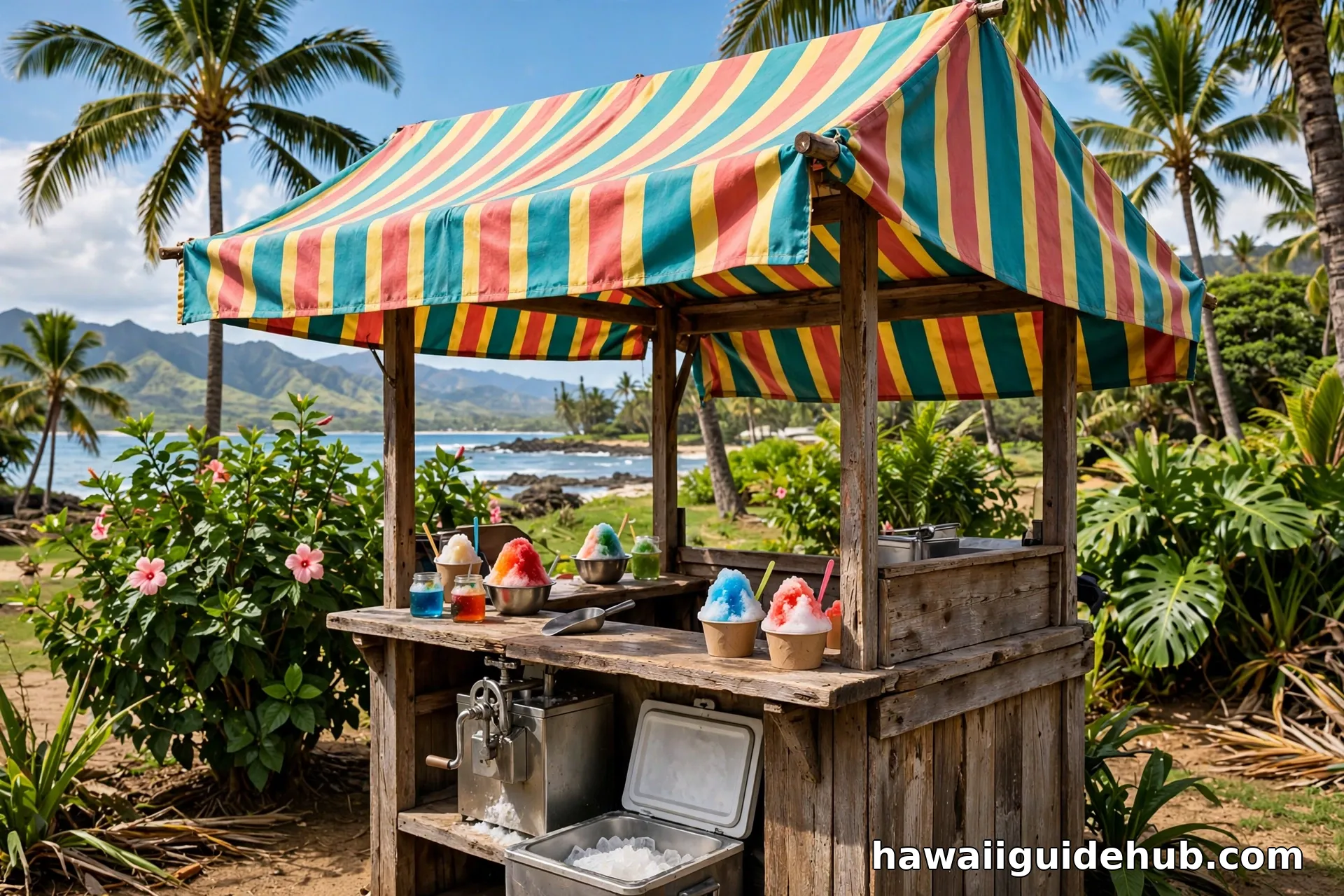
A few practical notes. Shave ice melts fast in Hawaii’s sun, so eat it promptly and grab extra napkins. Most stands are cash friendly and inexpensive, a few dollars for happiness in a cup. And if you are touring food spots, shave ice makes the perfect sweet finish after savory local plates in our must try local dishes guide.
Video: Matsumoto Shave Ice in Haleiwa
Watch the famous Haleiwa shave ice shop in action on Oahu’s North Shore.
Frequently Asked Questions
Why do Hawaiians say shave ice instead of shaved ice?
“Shave ice” comes from Hawaii pidgin, the local creole language. When Japanese kakigori became a local treat in the early 1900s, the pidgin name stuck. Saying “shave ice” is the local way, and using it shows respect for the culture.
What is the difference between shave ice and a snow cone?
Shave ice uses finely shaved ice that absorbs syrup evenly, giving a soft, snowlike texture with flavor in every bite. Snow cones use coarsely crushed ice, so the syrup drains to the bottom and the top stays plain and crunchy.
What is a snow cap on shave ice?
A snow cap is sweetened condensed milk poured over the top of shave ice. It adds rich creaminess and is the most popular add-on in Hawaii. Other classic add-ons include azuki beans, mochi balls, and a scoop of vanilla ice cream under the ice.
Where did Hawaiian shave ice originate?
Hawaiian shave ice comes from Japanese kakigori, a shaved ice dessert with roots in Japan’s Heian period. Japanese immigrants brought it to Hawaii’s sugar plantations in the early 1900s, where it evolved into the local treat known today.
What is the most famous shave ice shop in Hawaii?
Matsumoto Shave Ice in Haleiwa, Oahu, is the most famous, serving since 1951 and drawing lines of visitors daily. Waiola Shave Ice in Honolulu, founded in 1940, is the beloved local favorite. Both are worth the trip.
How much does shave ice cost in Hawaii?
A basic shave ice typically costs just a few dollars, with add-ons like snow cap, ice cream, or azuki beans adding a little more. It remains one of the cheapest and most satisfying treats in Hawaii. For more sweet island treats, see our guide to malasadas and their Portuguese roots.
Shave ice is proof that the simplest ideas travel farthest. A thousand years ago it cooled Japanese nobles. A century ago it cooled plantation workers. Today it cools everyone from surfers to honeymooners to kids with sticky blue smiles. Get the snow cap, eat it fast, and taste a thousand years of history in a paper cup. Few treats capture the spirit of the islands so completely.