Snorkeling at Makalawena Beach: The Big Island’s Hidden Reef

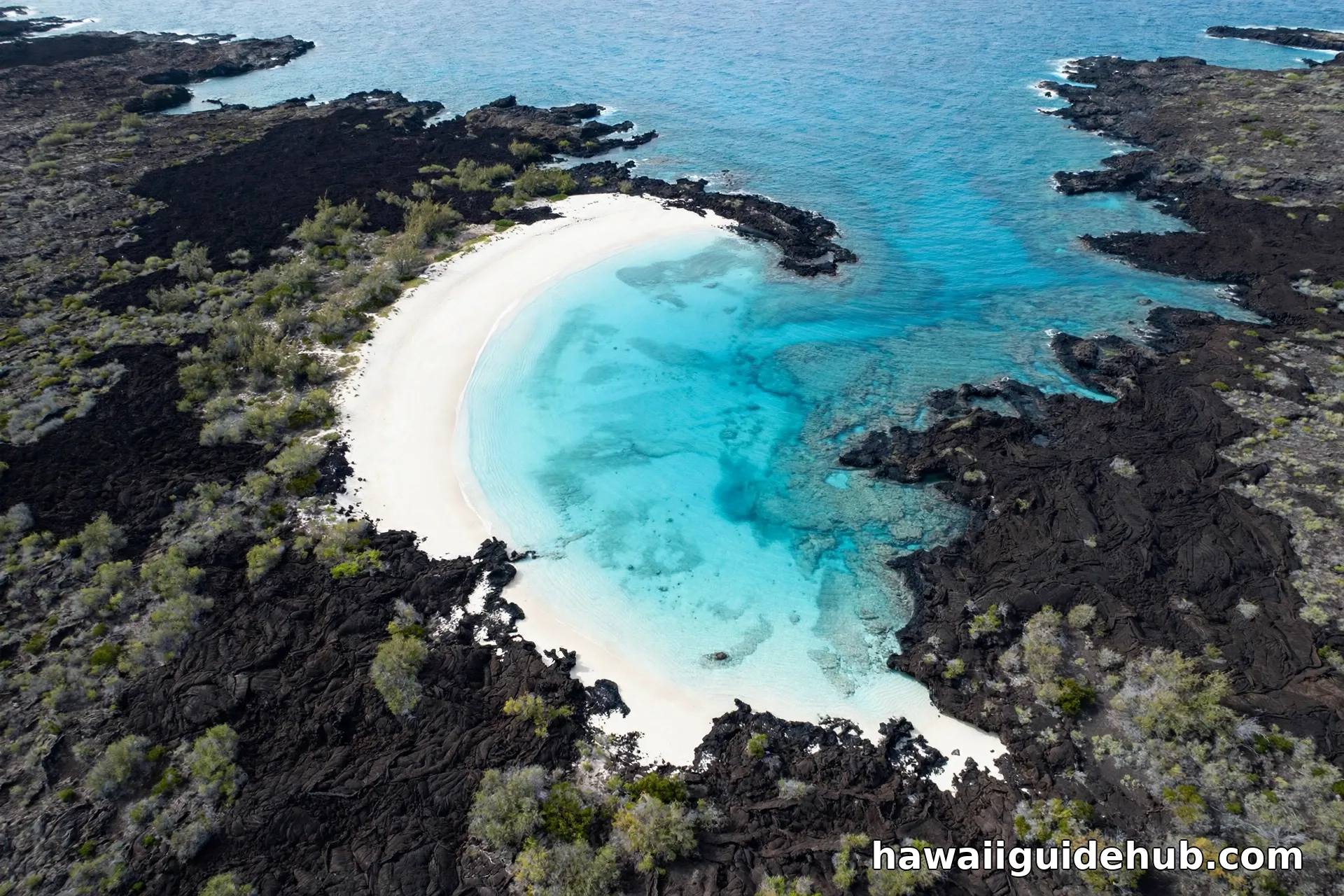
The best snorkeling beaches in Hawaiʻi are rarely the easiest ones to reach, and Makalawena is the proof. This white-sand beach on the Kona coast hides behind a rough unpaved road and a mile-long hike across a black lava field, which keeps the crowds thin and the reef healthy. Those who make the walk are rewarded with one of the Big Island’s finest snorkeling spots: clear turquoise water, coral heads full of reef fish, and green sea turtles gliding through the shallows.
This is the single complete guide to snorkeling at Makalawena Beach. It covers where the beach is, how to get there (the road and the hike), snorkeling conditions by season, what marine life you will see, safety, what to bring since there are no facilities, the best time to go, nearby alternatives, and answers to the questions visitors ask most. Everything about snorkeling at Makalawena Beach is right here on this one page.
Snorkeling at Makalawena Beach at a Glance
| Makalawena: the honest picture | The reality | Plan for it |
|---|---|---|
| The beach | Remote white-sand beach in Kekaha Kai State Park, Kona coast (also called Onouli Beach) | Same beach, two names; maps vary |
| What is here: the snorkeling | Excellent: coral heads, reef fish, green sea turtles | Bring your own gear; there are no rentals |
| What is here: calm water | Summer mornings; calmest water, lightest wind | Go early in the day, go in summer |
| What is not here: facilities | None: no restrooms, no showers, no drinking water, no trash cans | Pack out everything you pack in |
| What is not here: lifeguards | No lifeguard on duty | You are on your own; swim with a buddy |
| The price of admission | Rough unpaved road (4WD recommended), then a ~1-mile hike across the 1801 lava flow; no signs | Download the route offline before you go |
| What to bring | Everything: water, food, shade, snorkel gear, reef-safe sunscreen | There is nothing to buy or borrow out here |
| When not to go | Winter surf season; dangerous shorebreak and currents | If the surf is up, stay out of the water |
Where Makalawena Beach Is
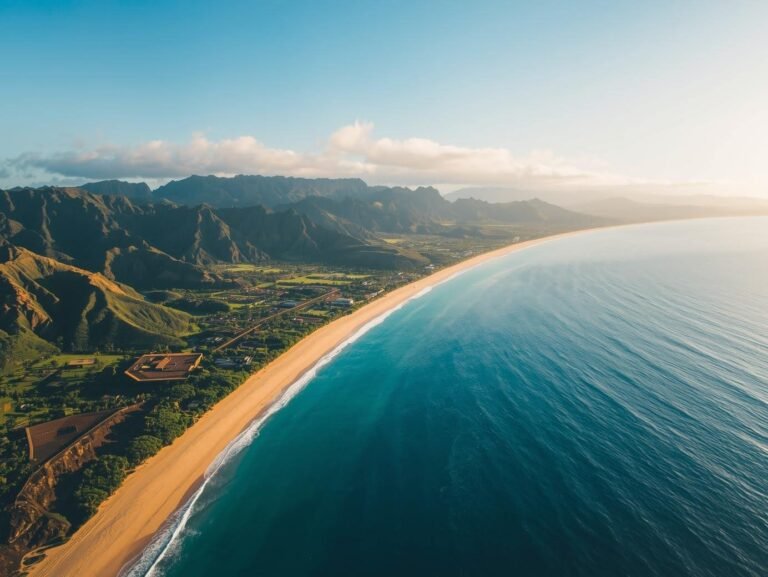
Makalawena Beach sits inside Kekaha Kai State Park on the north Kona coast of the Big Island, between the Kona airport and Kailua-Kona. The park’s coastline is a string of pocket beaches separated by old lava flows, and Makalawena (also called Onouli Beach) is the most secluded of the accessible ones. The turnoff is easy to miss and the beach is invisible from the road; most visitors arrive because someone told them exactly where to go.
Getting There: The Road and the Hike
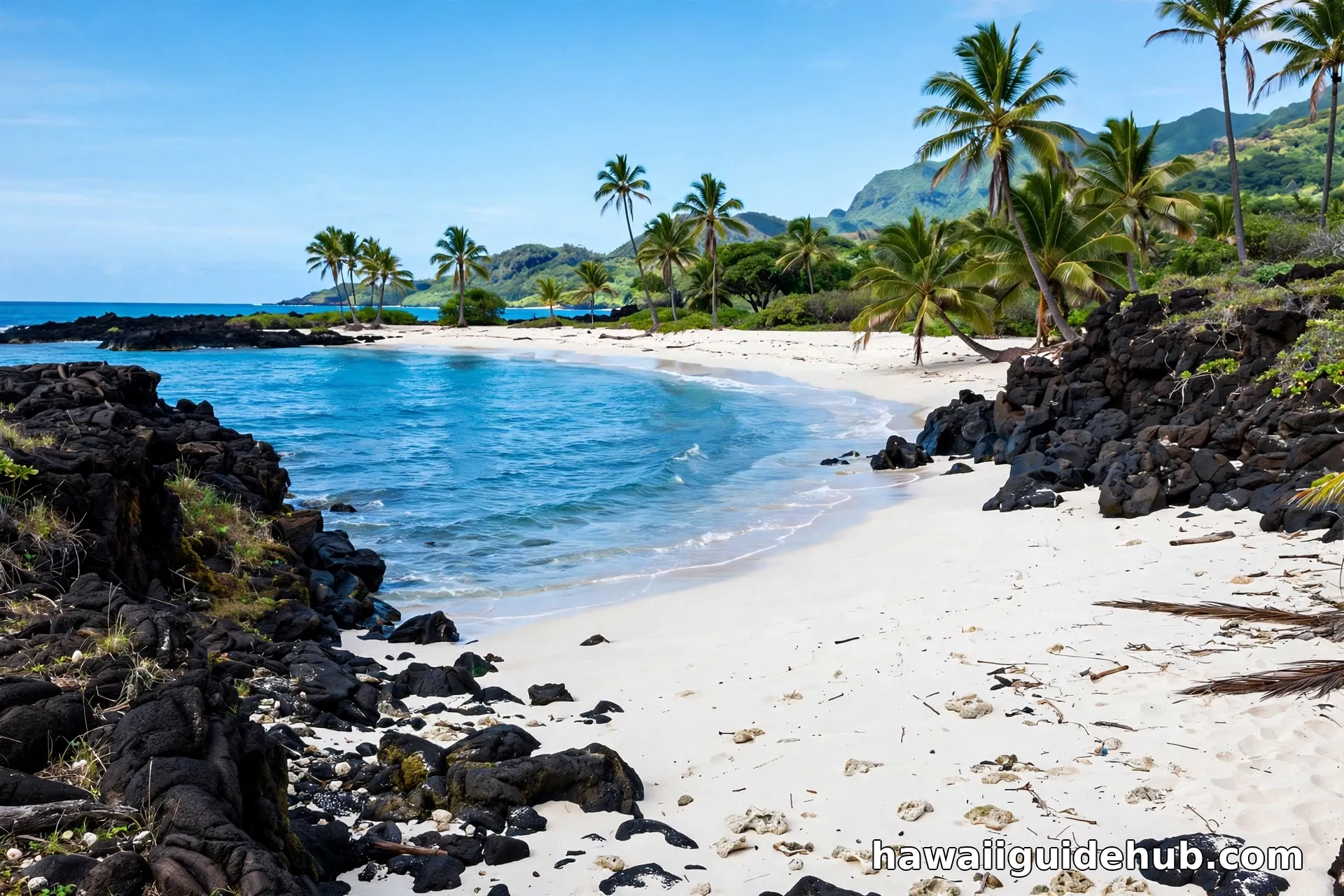
There are two stages, and both require honesty about your vehicle and your feet. First, the unpaved access road into the park is rough, rutted, and slow; four-wheel drive is strongly recommended, and many rental car agreements prohibit driving it, so check yours before you go. Sedans do attempt it and sometimes regret it. Second, park at the Mahaiʻula Beach section and hike roughly one mile to Makalawena across the 1801 lava flow. There are no signs, so follow the cairns (small stacked-rock markers) and the worn path, and download an offline map before you lose cell signal.
The hike itself takes most people 30 to 45 minutes each way. The lava rock is sharp, uneven, and hot in the midday sun; wear closed-toe shoes with good grip, not flip-flops. Carry more water than you think you need, because there is none at the beach and the black rock radiates heat. Start early: the trail is far more pleasant at 8 AM than at noon, and you will want the calm morning water anyway.
The Hike in Detail
The trail from Mahaiʻula to Makalawena crosses the 1801 lava flow from Hualalai volcano, and it looks like walking on the moon. The path is a mix of worn smooth sections and ankle-twisting ʻaʻā (rough, jagged lava), marked by cairns and the occasional faded trail marker. In the first ten minutes you will wonder if you are going the right way; by twenty minutes the white sand appears through the heat shimmer and every step feels worth it. There is almost no shade, so a hat and sunscreen are mandatory, and the black rock absorbs heat aggressively. In summer the ground can be genuinely hot underfoot, which is another reason for closed-toe shoes.
Navigation is straightforward if you prepare. Before leaving the highway, download an offline map of the area; cell signal fades on the trail. Follow the cairns rather than striking out on your own line, because the lava hides cracks and unstable edges. If you lose the path, stop, look for the next cairn, and backtrack rather than pushing forward. The hike is not dangerous for a prepared walker, but it is the kind of terrain that punishes flip-flops and empty water bottles. Give yourself 30 to 45 minutes each way and start early enough that you are not hiking out in the harshest afternoon heat.
The Snorkeling
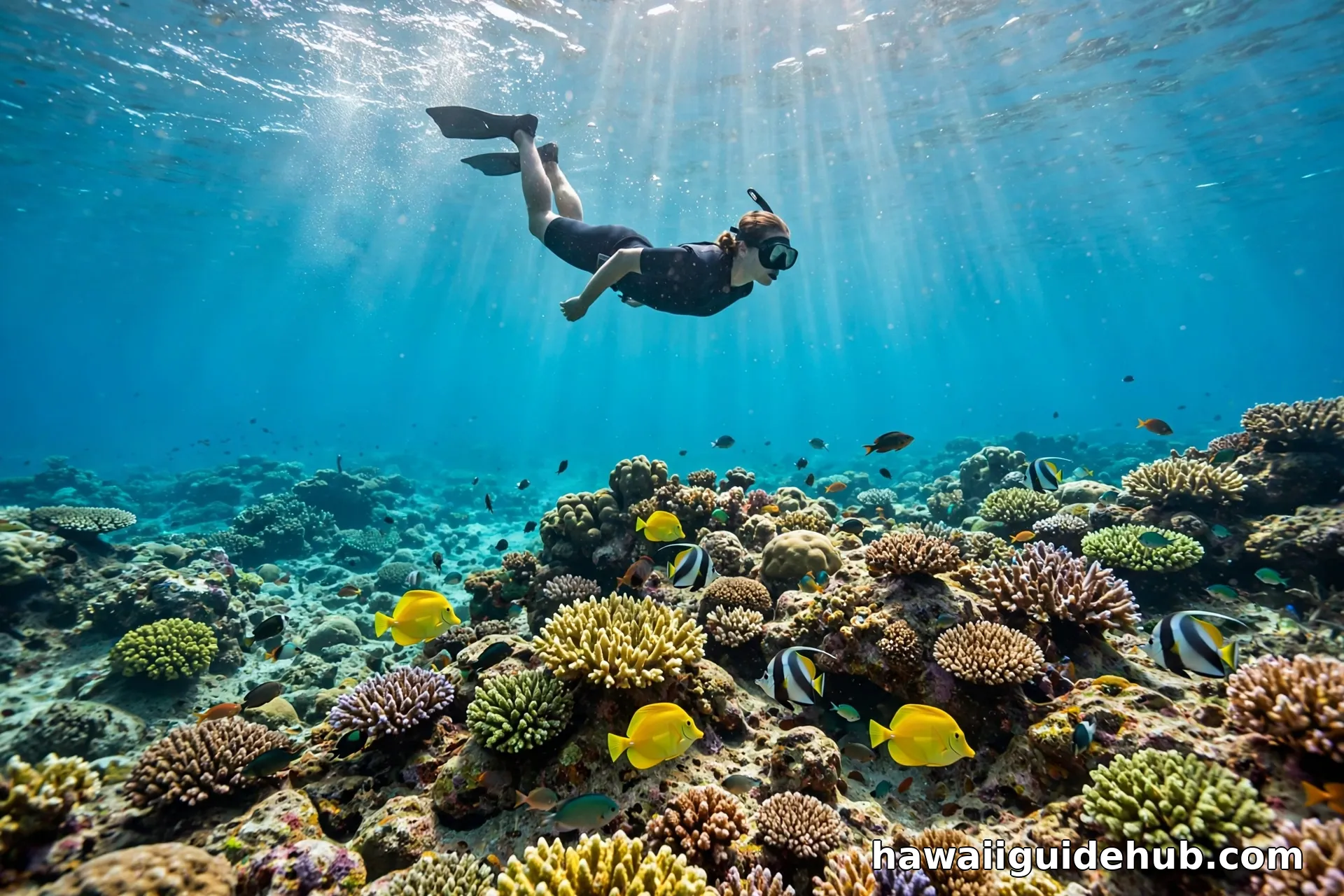
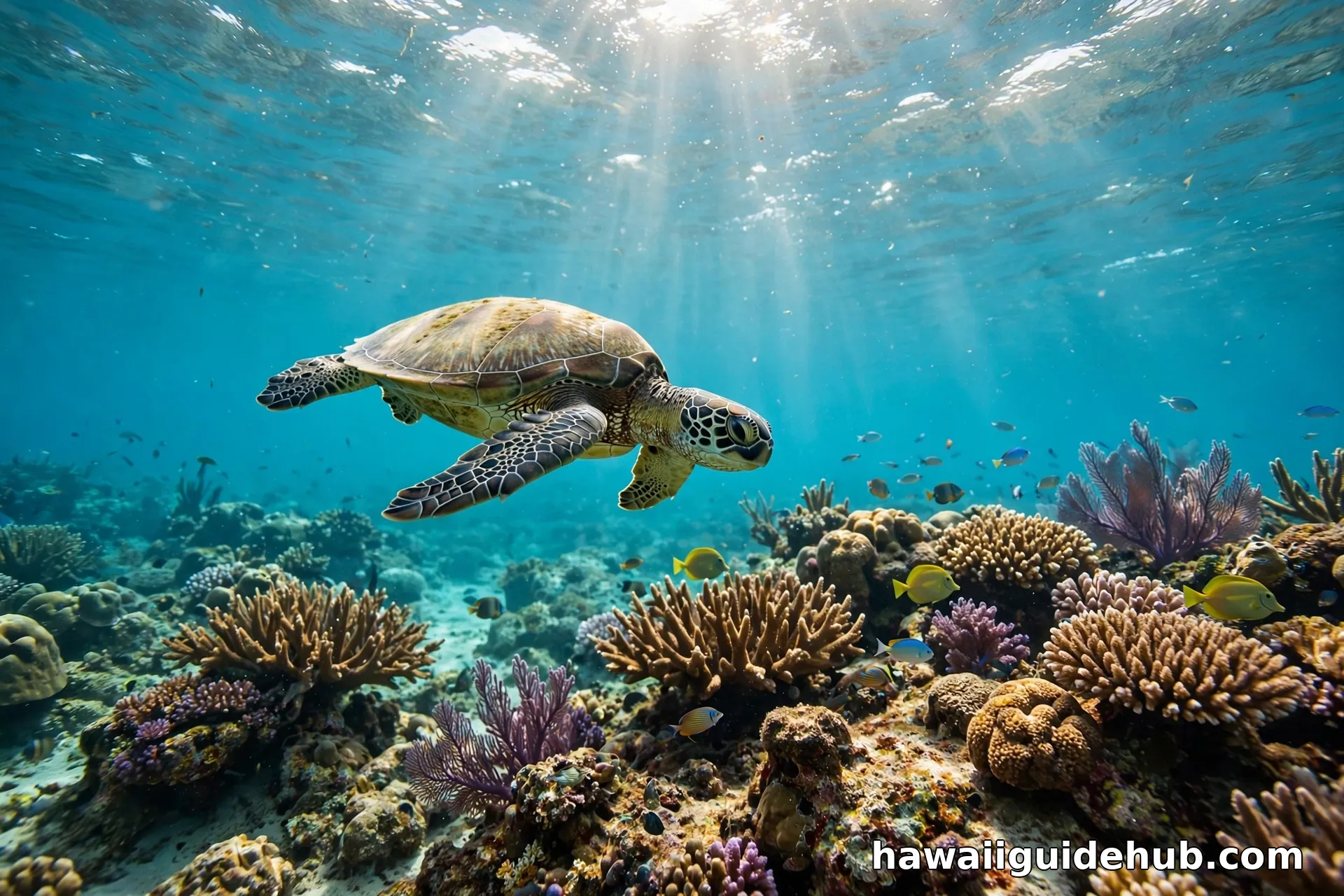
This is why you came. The water at Makalawena is routinely clear, with visibility that stretches far on calm mornings. Coral heads rise from the sandy bottom close to shore, holding clouds of reef fish: yellow tangs, parrotfish, butterflyfish, and the occasional moray eel tucked into the coral. Green sea turtles (honu) are regulars here, grazing and surfacing with unhurried confidence. Watch them from a respectful distance and never touch them; they are protected, and they were here first.
What you will actually see depends on the day, but the regulars include schools of yellow tang grazing the reef, parrotfish crunching coral, Moorish idols drifting in pairs, and clouds of damselfish over the coral heads. Octopus hide in the reef crevices if you look closely, and eagle rays occasionally cruise the sandy channels between coral heads. The green sea turtles are the stars: they rest on the bottom, surface for air with prehistoric calm, and sometimes nap on the sand at the water’s edge. Give every turtle at least ten feet of space, never block its path to the surface, and resist the urge to touch; besides being illegal, contact stresses the animal.
Enter from the sandy areas, not over the coral, and be careful where you stand; standing on coral kills it. The reef is healthiest precisely because this beach is hard to reach, so snorkel like you want to keep it that way. Fins help you move without touching bottom, and a flotation vest is smart for less confident swimmers since there is no lifeguard.
Conditions by Season
Summer, roughly May through September, is Makalawena at its best: calmer ocean, clearer water, and the most reliable snorkeling. Mornings are calmest everywhere on the Kona coast; by afternoon the trade winds pick up and the surface gets choppy. Winter brings northwest swells that can turn the shorebreak dangerous and the water murky. If surf is up, do not get in. There is no lifeguard to make the call for you, so make it yourself, conservatively.
What to Bring: There Are No Facilities
Makalawena has no restrooms, no showers, no drinking water, no shade structures, no trash cans, and no lifeguard. This is the deal, and it is non-negotiable: bring everything you need and pack out everything you bring. The list is water (more than you think), food, reef-safe sunscreen, a hat, a shade umbrella or tent, snorkel gear (mask, fins, and ideally a vest), water shoes for the hike, a dry bag for your phone and keys, and a trash bag. There is nowhere to buy anything once you leave the highway.
Packing Checklist
Run through this list the night before, because forgetting any of it means a hot, thirsty hike back to the car. Water: at least a liter per person more than you think you need. Food and snacks for a half day. Reef-safe sunscreen, a hat, and sunglasses. A shade umbrella or lightweight beach tent, since the only natural shade is under a few palms. Mask, snorkel, and fins, plus a flotation vest if you are not a strong swimmer. Closed-toe hiking shoes for the lava trail and water shoes or sandals for the beach. A dry bag for your phone, keys, and camera. A trash bag, because everything you bring in comes back out with you. And a small first-aid kit; lava rock cuts are the most common souvenir of the trail, and you want to clean them immediately.
Sample Morning Plan
Makalawena rewards an early start. Arrive at the trailhead by 8 AM, hike in during the coolest part of the day, and you will have the calmest water and the emptiest beach. Snorkel the morning, rest and eat during the midday heat, and hike out before the afternoon winds build. The whole outing runs about half a day.
Video: Makalawena Beach and Snorkeling
This video tour shows the hike in, the remote beach, and the clear water and snorkeling that make Makalawena special.
Best Time to Go
Go in summer, go in the morning, and go on a calm day. Check the surf forecast before you commit to the drive; a flat ocean makes Makalawena magical and a rough one makes it a place to admire from the sand. Weekdays are quieter than weekends, though “crowded” at Makalawena still means a fraction of the scene at the resort beaches.
The Other Beaches of Kekaha Kai State Park
Makalawena is one of three main beaches in Kekaha Kai State Park, and it helps to know its siblings. Mahaiʻula Beach, where the Makalawena trail begins, is the drive-up option: a long sandy beach with decent snorkeling at its northern end, far easier to reach and a fine destination in its own right. Maniniʻowali Beach, better known as Kua Bay, sits at the park’s northern end with powdery white sand, turquoise water, and full facilities, but it fills up fast on weekends and holidays. Makalawena is the middle child in location and the wildest in character: no road, no facilities, no crowds. If you visit more than one, you will understand why locals guard this coastline’s secrets.
Nearby Alternatives
If the road or the hike rules Makalawena out, the Kona coast has easier options. Mahaiʻula Beach, where the trail starts, offers decent snorkeling with drive-up access. Maniniʻowali Beach (Kua Bay) has excellent snorkeling and full facilities but gets crowded early. For a guided experience with no logistics, the manta ray night snorkel out of Honokohau Harbor is the coast’s signature after-dark adventure. But none of them feel like Makalawena, which is exactly the point.
Frequently Asked Questions
Do you need 4WD to get to Makalawena Beach?
Four-wheel drive is strongly recommended for the rough unpaved access road. Many rental agreements prohibit driving it, so check yours first.
How long is the hike to Makalawena Beach?
About one mile each way from the Mahaiʻula parking area across the 1801 lava flow, taking most people 30 to 45 minutes. There are no signs; follow the cairns.
Are there facilities at Makalawena Beach?
No. There are no restrooms, showers, drinking water, trash cans, shade, or lifeguards. Bring everything and pack it all out.
Is Makalawena Beach good for beginners?
The snorkeling itself is beginner-friendly on calm summer mornings, but the access is not: the rough road and hot lava hike make it a poor choice for small children, anyone with mobility issues, or travelers without a suitable vehicle.
Can you see turtles at Makalawena?
Yes, green sea turtles are commonly seen here. Watch from a distance and never touch or chase them.
Is Makalawena Beach safe in winter?
Winter surf can make the water dangerous. Check the surf forecast, and if waves are up, stay out of the water or choose another beach.
Why the Hike Is Worth It
Makalawena is the beach Hawaiʻi gives you only if you earn it: a rough road, a hot mile of lava, and not a single facility at the end. In exchange you get what the easy beaches cannot offer, which is solitude, a healthy reef, and water so clear it feels unreal. Pack carefully, start early, respect the turtles and the coral, and carry out everything you carried in. Few places in Hawaiʻi truly reward the effort as generously as this one. The best snorkeling on the Kona coast is waiting at the end of the lava field.