Big Island Hawaii with Kids: A Complete Family Guide

The Big Island of Hawaiʻi is the best Hawaiian island for a family trip with kids, and it is not particularly close. It is the only island where your children can build sandcastles in the morning, stand at the edge of a steaming volcanic crater after lunch, and fall asleep in a cool mountain town by nightfall. The island is enormous, nearly twice the size of all the other Hawaiian islands combined, which means family attractions are spread out. That size is the one real challenge, and this guide solves it.
This is the single complete guide to visiting the Big Island with kids. It covers the best kid-friendly beaches, how to do Hawaiʻi Volcanoes National Park with children of every age, the Hilo side family favorites, the strict rules about Mauna Kea and young kids, real costs, safety laws parents must know, and simple itineraries. If you have searched for anything about the big island hawaii with kids, family beaches, or kid-friendly activities on Hawaiʻi Island, the answers are all here on this one page. For a broader trip overview, see our guide to the best things to do on the Big Island of Hawaii.
Big Island with Kids at a Glance
| Parent question | The straight answer |
|---|---|
| What ages is it best for? | Families with kids ages 4 and up; teens love the volcano and snorkeling |
| Best beach for kids? | Hāpuna Beach: lifeguarded, half a mile of white sand |
| Best snorkel spot for kids? | Kahaluʻu Beach Park: calm shallow bay, lifeguarded |
| The must-do? | Hawaiʻi Volcanoes National Park, with the Junior Ranger program |
| What does the volcano park cost? | $30 per vehicle, good for 7 days; kids 15 and under free |
| What does Hāpuna cost? | $10 per vehicle parking plus $5 per person for nonresidents; kids 3 and under free |
| Where should we stay? | Kailua-Kona for beaches, Volcano Village for the park, Hilo for waterfalls |
| Any hard rules? | Children under 13 may not go above the Mauna Kea Visitor Information Station |
| Car seats? | Required by Hawaiʻi law: rear-facing under 2, harness seats 2 to 4, booster 4 to 10 |
| Do we need a rental car? | Yes; the island is far too big for buses with kids |
The Best Kid-Friendly Beaches on the Big Island
Beach choice matters more with kids than almost anything else on a Big Island trip. The Kona and Kohala coasts on the west side have the calmest, sunniest water. The east side around Hilo is lush and rainy with rougher surf. For swimming with children, stay on the west side.
Hāpuna Beach: The Best All-Around Family Beach
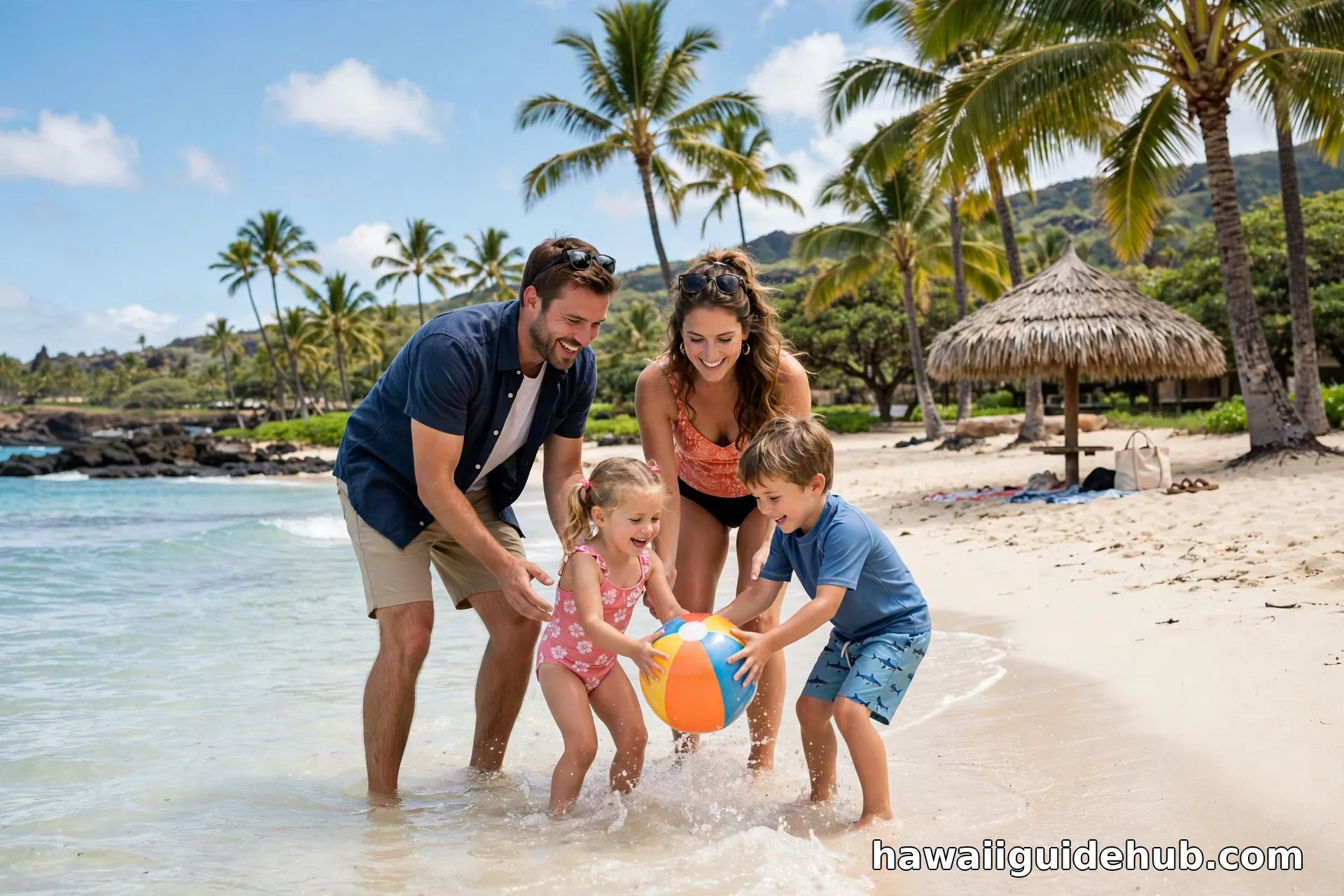
Hāpuna Beach State Recreation Area is the Big Island’s most famous family beach for good reason. It has a half mile of soft white sand, gentle entry, lifeguards, restrooms, outdoor showers, and picnic pavilions. The water is usually calm enough for young swimmers in summer, and the wide beach gives kids room to run. Arrive before 10 AM for easy parking and the calmest water.
Know the fees before you drive out. Nonresidents pay $10 per vehicle for parking plus $5 per person for entry, credit card only, and children 3 and under are free. Hawaiʻi residents enter free with a state ID. The park is open daily from 7 AM to 7:30 PM with gates closing at 8 PM. High surf warnings are posted when the shore break turns dangerous, so always check the lifeguard board and keep small kids at the water’s edge on rough days.
Kahaluʻu Beach Park: Snorkeling for Beginners
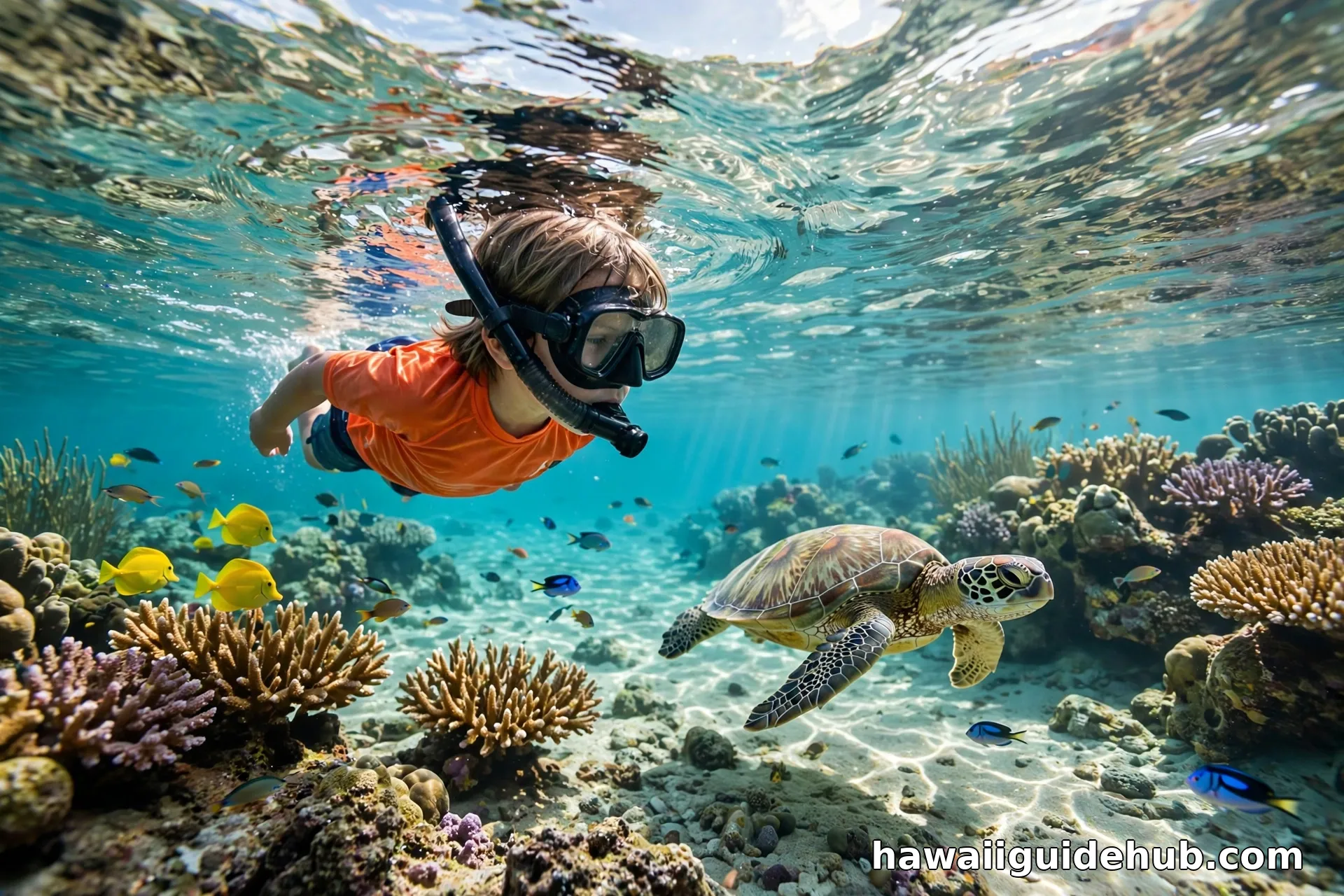
Kahaluʻu Beach Park, just south of Kailua-Kona on Aliʻi Drive, is where Big Island kids have their first snorkeling adventure. The shallow, protected bay is full of colorful reef fish and green sea turtles, called honu, that glide through the clear water. Lifeguards are on duty daily from 9:30 AM to 4:45 PM, and the calm conditions make it ideal for children who are comfortable swimmers.
Two cautions for parents. The entry over the reef rock is slippery, so water shoes help small feet. Winter months can bring bigger surf and stronger currents, so snorkel only on calm mornings and keep beginners in the shallow inner bay. Teach kids the reef rules before they get in: look but do not touch, never stand on coral, and give every turtle plenty of space.
Hawaiʻi Volcanoes National Park with Kids
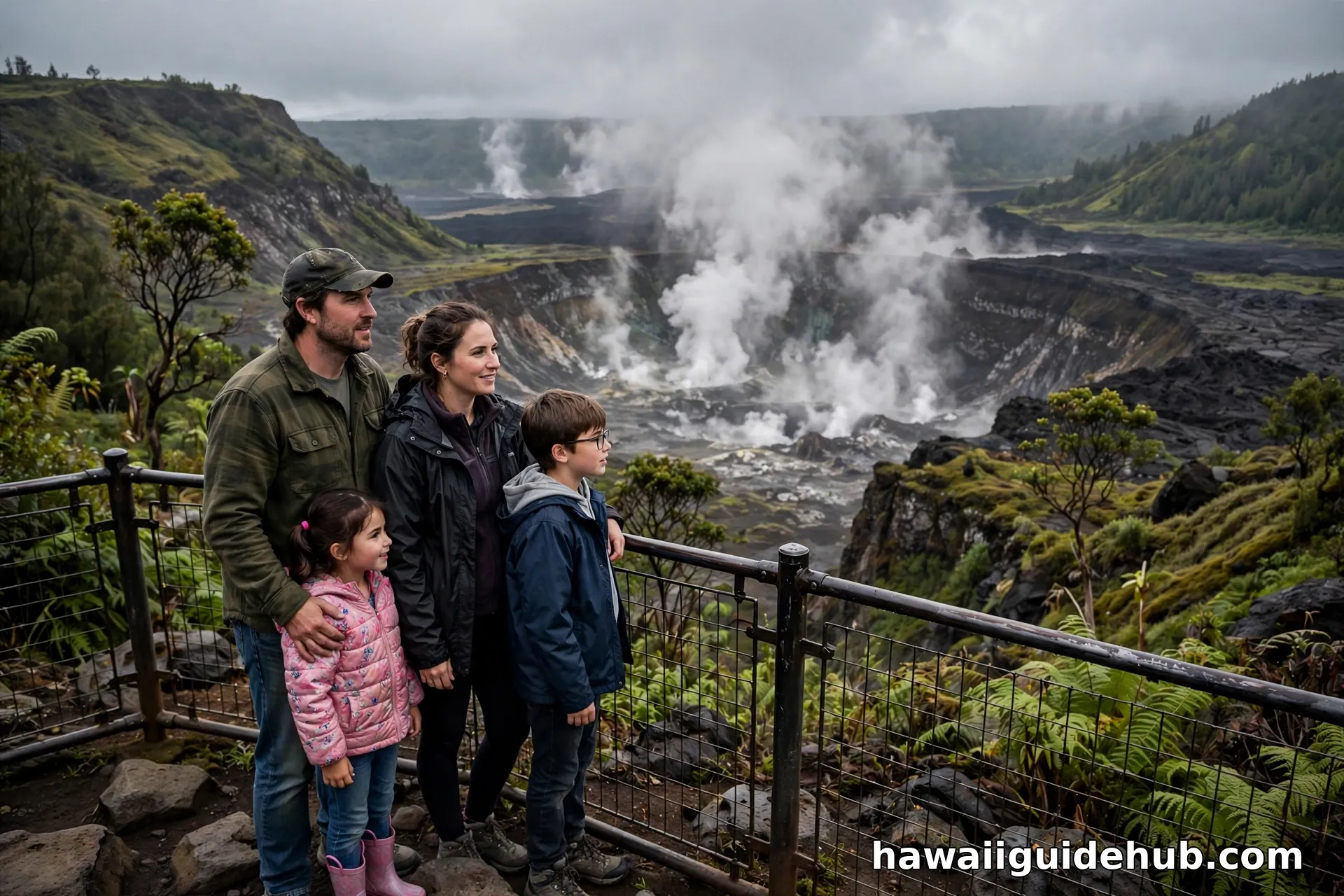
Hawaiʻi Volcanoes National Park is the single best family day trip on the Big Island. Kids who yawn at museums come alive here: steaming ground, a walk-through lava tube, and a crater you can peer into. Entry is $30 per private vehicle, valid for 7 days, and visitors 15 and under enter free. The Kīlauea Visitor Center is open daily from 9 AM to 5 PM, and that is where every family visit should start.
The Junior Ranger Program
Ask at the visitor center for the Junior Ranger booklet. Kids complete activities like spotting native birds and learning how lava forms new land, then earn a Junior Ranger badge from a ranger. It turns the whole park into a game and gives restless kids a mission. Fourth graders can also use the national Every Kid Outdoors program for free park access.
Easy Walks Kids Love
Three short walks deliver the biggest wow for the least effort. The Sulphur Banks boardwalk is a flat, stroller-friendly loop past steaming vents and colorful mineral deposits. The Steam Vents overlook gives a direct view into Kīlauea’s steaming crater. Thurston Lava Tube (Nāhuku) is a short walk through a real lava tube that feels like entering another planet. All three are doable with kids as young as 4, and our guide to the best things to do in Hawaiʻi Volcanoes National Park covers each in detail.
Skip the long crater hikes with young kids. Kīlauea Iki is spectacular but it is a steep 3-mile loop with no shade, and the caldera floor gets brutally hot. Save it for teens and strong hikers. Bring jackets for everyone: at 4,000 feet elevation the park is often 15 to 20 degrees cooler than the coast, and rain moves in fast.
Hilo Side: Waterfalls and a Rainforest Zoo
The Hilo side of the island is wetter, greener, and cheaper than Kona, and it has three attractions kids genuinely enjoy. Plan them as one day trip from the Kona side, or split your stay between coasts.
Rainbow Falls
Rainbow Falls in Wailuku River State Park is an 80-foot waterfall a two-minute walk from the parking lot, which makes it perfect for kids who will not hike for a view. Go in the morning, when sunlight hits the mist and the namesake rainbows appear. Nonresident entry and parking fees apply at this state park, so bring a credit card.
Panaʻewa Rainforest Zoo and Gardens
The Panaʻewa Rainforest Zoo and Gardens in Hilo is the only zoo in the United States set in a natural tropical rainforest. Kids love the two Bengal tigers, the giant anteater, the monkeys, and the petting zoo. Since September 2025 the zoo charges a small admission: nonresidents pay $12 for adults and $5 for children ages 3 to 17, with kids under 3 free. Plan two to three hours, and bring rain gear because Hilo lives up to its rainy reputation.
ʻImiloa Astronomy Center
Hilo’s ʻImiloa Astronomy Center mixes Hawaiian culture with space science in hands-on exhibits that kids actually touch and play with. It is the perfect rainy-day backup plan and a great warm-up if your family wants to visit the Mauna Kea Visitor Information Station later in the trip.
One Big Rule: Mauna Kea Is Not for Young Kids
Many families are tempted by a Mauna Kea sunset, but there is a strict health rule you must respect. The University of Hawaiʻi, which manages access, states that children under 13 must not travel above the Visitor Information Station at 9,200 feet. Prolonged high altitude exposure can cause permanent harm to young bodies. The same rule bars pregnant women, anyone with heart or respiratory conditions, and anyone who has gone scuba diving in the prior 24 hours.
Kids 13 and older can go to the 13,796-foot summit with precautions: acclimate at least 30 minutes at the Visitor Information Station, bring warm layers because summit temperatures average around freezing, and use a 4WD vehicle on the steep unpaved road above the station. Younger kids can still enjoy the free evening stargazing programs at the Visitor Information Station itself, which sits at 9,200 feet and stays within the rule.
Safety: Laws and Rules Parents Must Know
Hawaiʻi takes child safety seriously, and the car seat law surprises many visiting families. Under Hawaiʻi law, children under 2 must ride rear-facing, children 2 to under 4 must be in a harness car seat, and children 4 to under 10 must use a child safety seat or booster unless they are over 4 feet 9 inches tall. Rental car companies rent car seats, but the cleanest option is to bring your own or buy a cheap booster after landing.
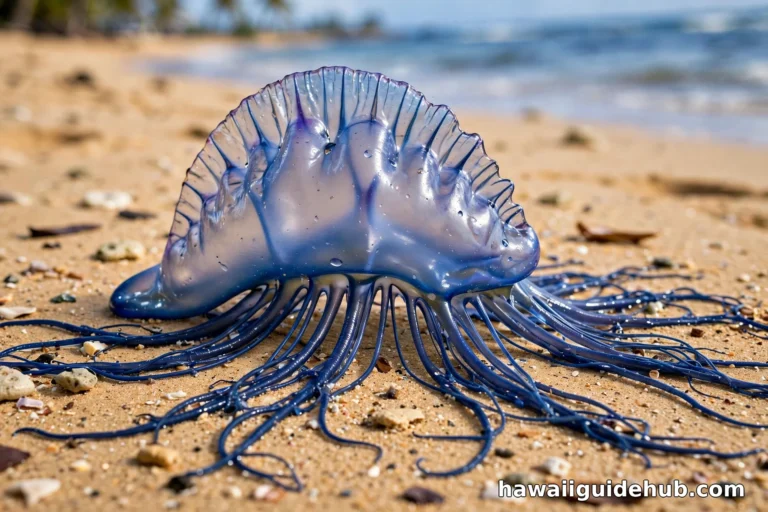
Ocean safety is the other big one. Never turn your back on the ocean, keep kids within arm’s reach in the water, and swim only at lifeguarded beaches during guard hours. Apply reef-safe mineral sunscreen 15 minutes before swimming, reapply often, and remember that the equatorial sun burns fast: hats and rash guards save the day for fair-skinned kids. Finally, volcanic vog (volcanic smog) sometimes drifts over the island when Kīlauea is active. If your child has asthma, check the vog forecast and keep a rest day flexible.
Parent tip box: the 5-minute beach safety check. Before the kids run in: 1) Read the lifeguard warning board. 2) Watch the waves for five minutes and note the sets. 3) Point out the lifeguard tower so kids know where to go. 4) Agree on a whistle or call word that means come back now. 5) Check that everyone has sunscreen on ears, feet, and the backs of knees, the three spots parents always miss.
Where to Stay with Kids: Kona, Waikoloa, or Hilo
Base choice shapes the whole trip. Kailua-Kona puts you near the calmest beaches, the most restaurants, and the walkable Aliʻi Drive waterfront. Kids can bodyboard at Magic Sands, snorkel at Kahaluʻu, and you are 15 minutes from the airport. Waikoloa, 20 minutes north of the airport, is the resort zone: big pools, lagoons, and the calmest swimming water on the island, at the cost of higher prices and a more manufactured feel.
Hilo is the budget pick and the waterfall gateway. It rains more, the ocean is rougher, and there are fewer resort pools, but you are close to Rainbow Falls, the zoo, and the volcano park (about 45 minutes to the park entrance versus two hours from Kona). Many families split the trip: four nights Kona side, two nights Volcano or Hilo, so nobody drives the Saddle Road twice in one day.
A Simple 5-Day Family Framework
You do not need a minute-by-minute itinerary with kids. This framework keeps driving sane and builds in rest.
Day 1: Land and settle. Arrive at Kona airport, grocery stop, easy afternoon at the beach near your base. Early bedtime beats fighting jet lag at dinner.
Day 2: Beach day. Morning at Hāpuna or Kahaluʻu, lunch back at the room, pool in the afternoon. One beach, no rushing.
Day 3: Volcano day. Drive to Hawaiʻi Volcanoes National Park early. Junior Ranger booklets, Sulphur Banks, Steam Vents, Thurston Lava Tube, and the visitor center. Stay for sunset at the crater overlook if the kids have energy.
Day 4: Hilo side. Rainbow Falls in the morning, Panaʻewa Zoo midday, shave ice in Hilo town. Drive back over Saddle Road in daylight.
Day 5: Snorkel and sail home. Morning snorkel at Kahaluʻu, souvenir stop on Aliʻi Drive, afternoon flight. Teens might prefer swapping a beach morning for the manta ray night snorkel in Kona, the most talked-about family experience on the island for older kids.
Video: A Kid’s-Eye View of the Big Island
Watch a 12-year-old’s honest review of two Big Island national historical parks, the kind of kid’s-eye view that helps families decide what is worth the drive.
Frequently Asked Questions
Is the Big Island good for kids?
Yes, it is arguably the best Hawaiian island for families. It has calm west-side beaches, an active volcano national park with a Junior Ranger program, easy waterfalls, a rainforest zoo, and snorkeling with sea turtles. The main challenge is driving distances, so base yourself well and keep to one region per day.
What is the best age to take kids to the Big Island?
Ages 4 to 12 are the sweet spot: old enough for snorkeling, lava tube walks, and the Junior Ranger booklet, young enough to be amazed by it all. Toddlers do fine at calm beaches and the zoo but will sit out the volcano hikes and the Mauna Kea area entirely. Teens love the volcano park, snorkeling, and the manta ray night experience.
Can kids go to the top of Mauna Kea?
No. Children under 13 must not travel above the Visitor Information Station at 9,200 feet because of the altitude danger. The whole family can still enjoy the free stargazing programs at the Visitor Information Station itself.
Do kids need to pay to enter Hawaiʻi Volcanoes National Park?
No. Visitors 15 and under enter free. The $30 per vehicle pass covers everyone in the car for 7 days, so a family pays once for the whole week.
Which side of the Big Island is best for families?
The Kona (west) side for first-time families: calmer beaches, more sun, more restaurants, and the airport. The Hilo (east) side works for waterfall and volcano focused trips and costs less. Many families split the stay between both.
Are there alligators or dangerous animals kids should worry about?
No. Hawaiʻi has no snakes, no alligators in the wild, and no large land predators. The real hazards are ocean conditions, sun, and hot lava rock. Teach kids to shuffle their feet over sandy entries to avoid stepping on anything sharp, and never let them climb on lava rock near the surf.
The Big Island rewards families who slow down. Pick one coast per day, build in pool time, and let the volcano do the entertaining. Kids will forget the resort pool within a week, but they will talk about the steaming crater and the turtle that swam past their mask for years. For more ideas across all ages, see our roundup of family-friendly activities in Hawaii.