Best Hawaiian Island for Kids: Which Island Fits Your Family

Ask ten families which Hawaiian island is best for kids and you will get ten different answers, usually whichever island they just visited. Here is the more useful truth: there is no single best island for kids. There is only the best island for your kids, at their ages, with your travel style. A family with a toddler who naps at noon needs a different island than a family with teenagers who want to snorkel with manta rays after dark.
This guide compares the four main islands honestly, beach by beach and attraction by attraction, so you can match the island to your family instead of guessing. If you are also weighing your first trip overall, our first-time visitors guide pairs well with what follows.
The Short Answer by Age
If you want the quick version before the details, here it is. Families with toddlers and preschoolers usually have the easiest trip on Oʻahu, where calm beaches, short drives, and walkable Waikīkī keep logistics simple. Families who want a slow resort vacation with plenty of pool time lean toward Maui. Kids around ages 5 to 12, old enough to snorkel, hike, and remember it all, thrive almost anywhere. Teenagers who crave adventure get the most out of the Big Island, with volcanoes, night snorkeling, and stargazing. And Kauaʻi rewards families who care more about waterfalls, canyons, and quiet beaches than packed attraction days.
Oʻahu: Best for First Trips and Toddlers
Oʻahu is the easiest Hawaiian island for most first-time family trips, and the reasons are practical, not poetic. The airport is the main gateway, Waikīkī keeps beaches, restaurants, and shops within walking distance, and the island packs more kid-friendly attractions into a small area than anywhere else in the state. Short drives mean shorter meltdowns.
Calm beaches for little swimmers
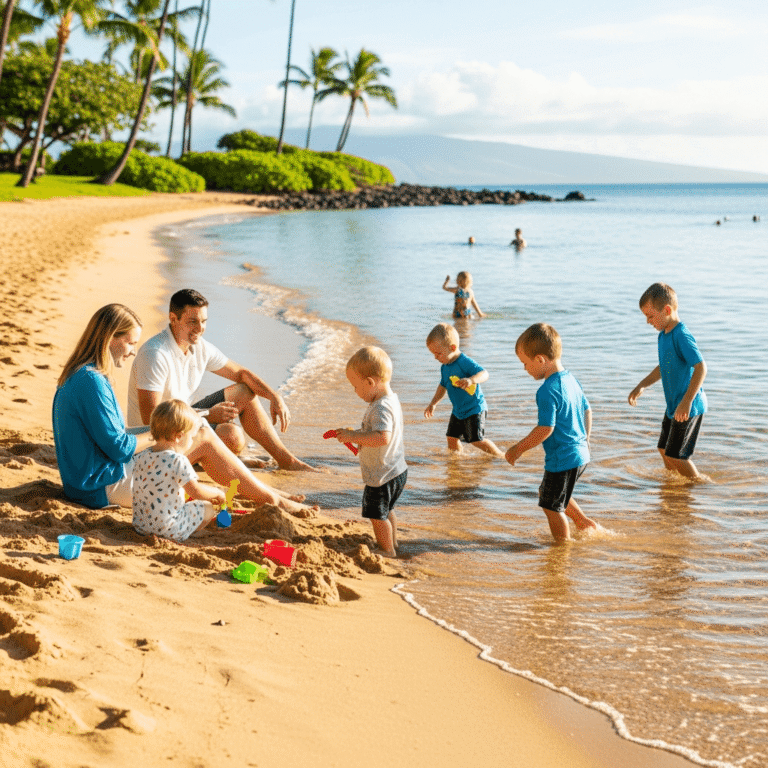
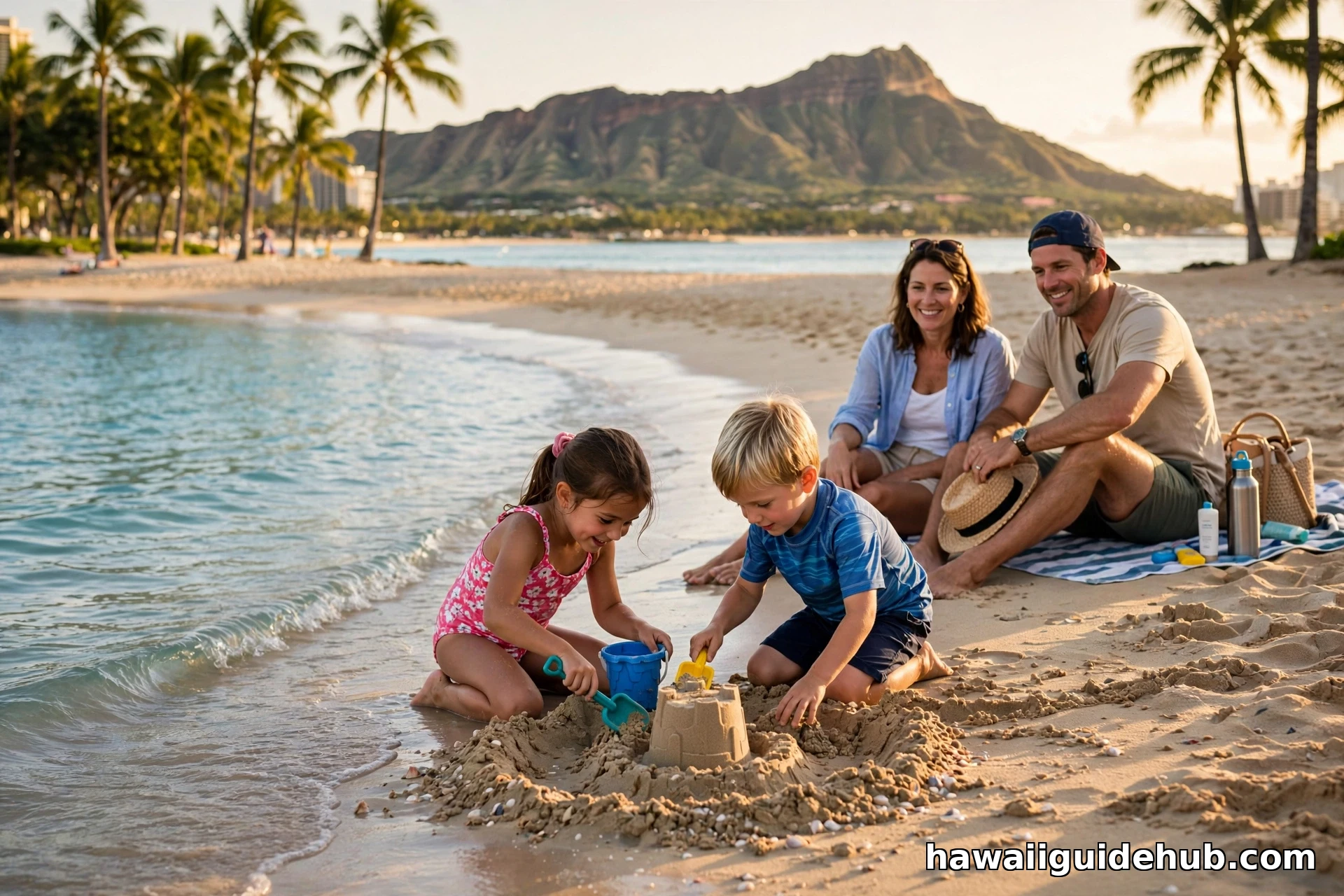
Not every Oʻahu beach is calm, but the ones families love most are. The protected sections of Waikīkī Beach have gentle, rolling waves that are perfect for beginning swimmers. The man-made lagoons at Ko Olina on the west side are even calmer, essentially giant saltwater swimming pools with sand. On the windward side, Lanikai and Kailua beaches offer shallow, clear water that stays gentle most of the year.
Attractions that fill whole days
Oʻahu’s lineup for kids is unmatched. The Honolulu Zoo and Waikīkī Aquarium sit near each other in Queen Kapiʻolani Park, an easy half day with shade and snack stands. Pearl Harbor’s USS Arizona Memorial is free and genuinely moving for older kids, though very young ones may find the solemn atmosphere hard to sit through. The Polynesian Cultural Center on the North Shore delivers a full day of island culture, and Kualoa Ranch lets kids ride ATVs, zipline, and walk through movie-set valleys. Diamond Head’s short summit hike rewards even small legs with a crater view.
Budget and logistics
Oʻahu also tends to be the most budget-friendly island for families, with the widest range of hotels and more affordable food options than the resort zones of Maui or Kauaʻi. Timing matters too: visiting in the cheapest time of year to visit Hawaiʻi can cut a family trip’s cost noticeably. The one real downside is crowds. Waikīkī is busy, traffic around Honolulu is real, and the island feels more urban than the others. For many families, though, the convenience outweighs the bustle.
Maui: Best for a Relaxed Resort Vacation
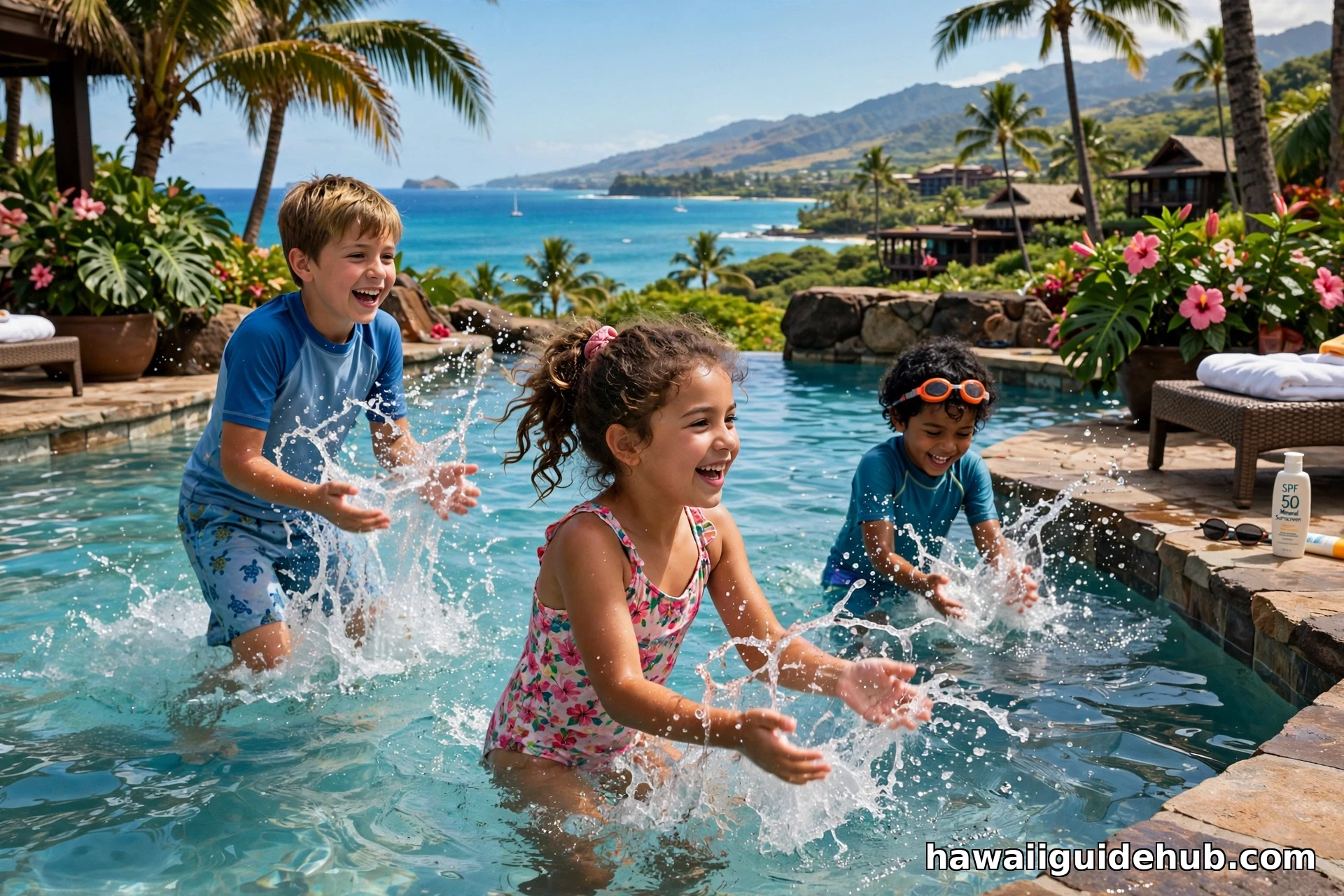
If your ideal family trip is beach mornings, pool afternoons, and sunsets from a lounge chair, Maui is your island. It has the prettiest concentration of resort beaches in the state, and the whole island runs at a slower pace than Oʻahu. This is the island for families who want to settle into one great home base, unpack once, and not think too hard.
Beaches built for families
South Maui’s Wailea beaches, like Ulua and Wailea Beach, slope gently into calm water that is kind to young swimmers. Kaanapali Beach on the west side offers long stretches of sand with lifeguards and easy snorkeling at Black Rock. The water here is consistently clear, and the surf stays mellow through most of the entire year.
Things kids remember
Maui shines for water activities. Snorkeling cruises to Molokini Crater or Turtle Town put kids face to face with green sea turtles. From December through April, whale watching boats head out to see humpbacks, and seeing a whale breach is the kind of memory kids talk about for years. The Road to Hana makes a great family day drive if you pack snacks and stop at waterfalls along the way, and sunrise at Haleakalā is unforgettable for older kids who can handle the early wake-up and the cold summit air.
The tradeoff
Maui is usually the priciest of the four islands for families, especially in the resort zones. You will also want a rental car, since public transportation is limited and the best beaches sit outside town centers. For families who budget for it, though, Maui delivers the classic Hawaiʻi postcard with the least effort.
Big Island: Best for Adventurous Kids and Teens
The Big Island is where Hawaiʻi gets weird in the best way, and kids old enough to appreciate it tend to love it. This is the island of active volcanoes, black sand beaches, manta rays the size of cars, and stars so bright they look fake. It rewards curious kids who would rather explore than sit still.
Beaches with a twist
The Kohala Coast on the west side holds the island’s best swimming beaches. Hapuna Beach State Recreation Area has a half mile of white sand with lifeguards. Spencer Beach Park is calm, shallow, and practically built for families, with picnic pavilions and shade. Kahaluu Beach Park near Kona lets kids snorkel with sea turtles in water barely over their heads. For older kids, the black sand of Punaluu and the green sand of Papakolea turn an ordinary beach day into an expedition. Our Big Island things to do guide covers these in more detail.
Adventures you cannot get anywhere else
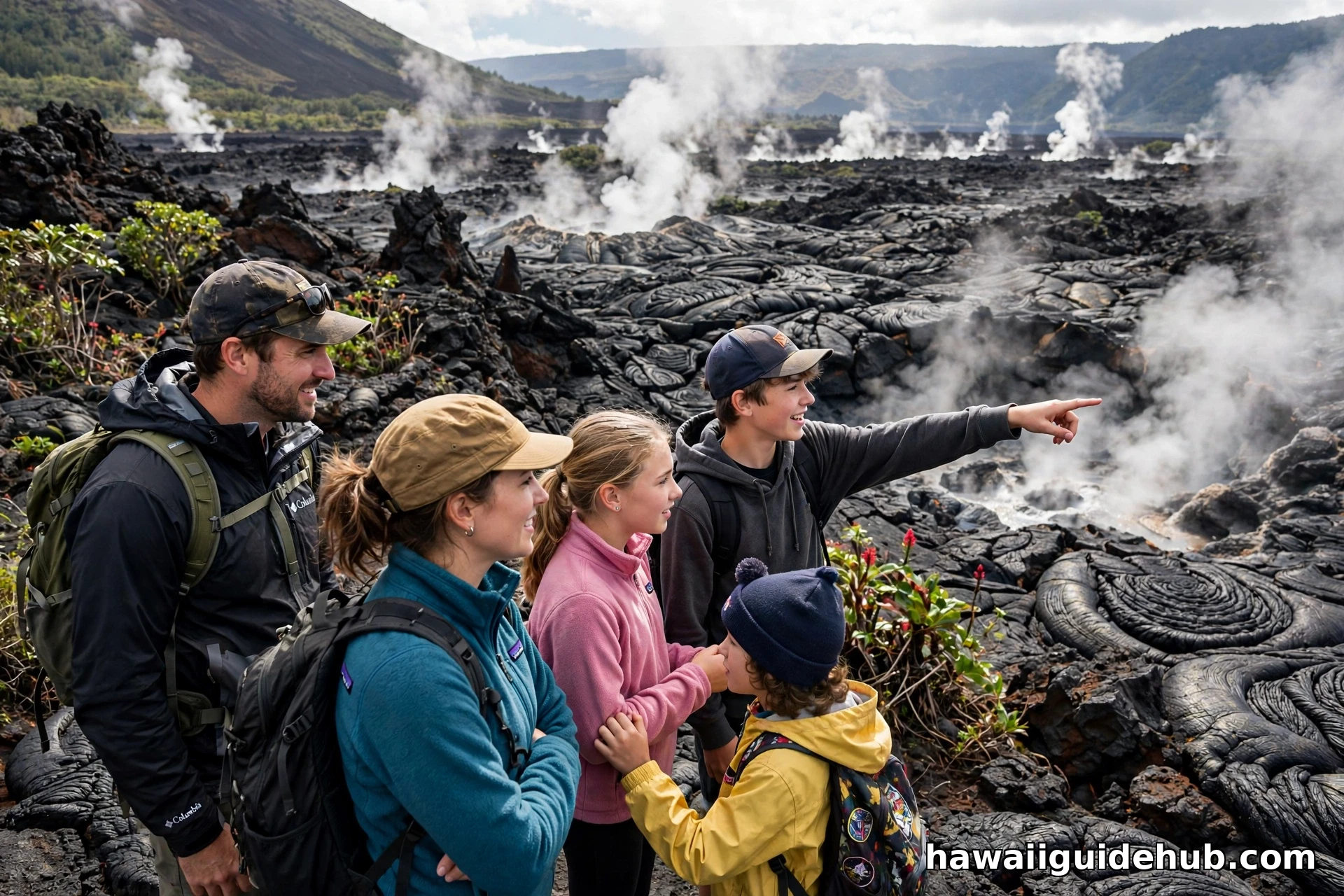
Hawaiʻi Volcanoes National Park is the headline act. Kids can walk through a lava tube, stand at the edge of a steaming crater, and learn geology by touching it. After dark, the summit of Mauna Kea offers some of the clearest stargazing on Earth, though the altitude and cold mean it suits older kids. The manta ray night snorkel off Kona is genuinely magical, but operators generally set minimum ages around 6 to 8, so check before promising it. In Kona itself, the calm morning water is made for first-time snorkelers.
The tradeoff
The Big Island is big, and that means driving. Getting from the Kona side to the volcano can take two hours each way, so families do best splitting their stay or planning around one long day. Some areas feel less developed than Oʻahu or Maui, which is either charming or inconvenient depending on your family.
Kauaʻi: Best for Nature-Loving Families
Kauaʻi is the island for families who would rather chase waterfalls than shop. It is quieter, greener, and slower than the other islands, with scenery that makes even the drive to the grocery store feel like an attraction. Kids who love the outdoors will be in heaven.
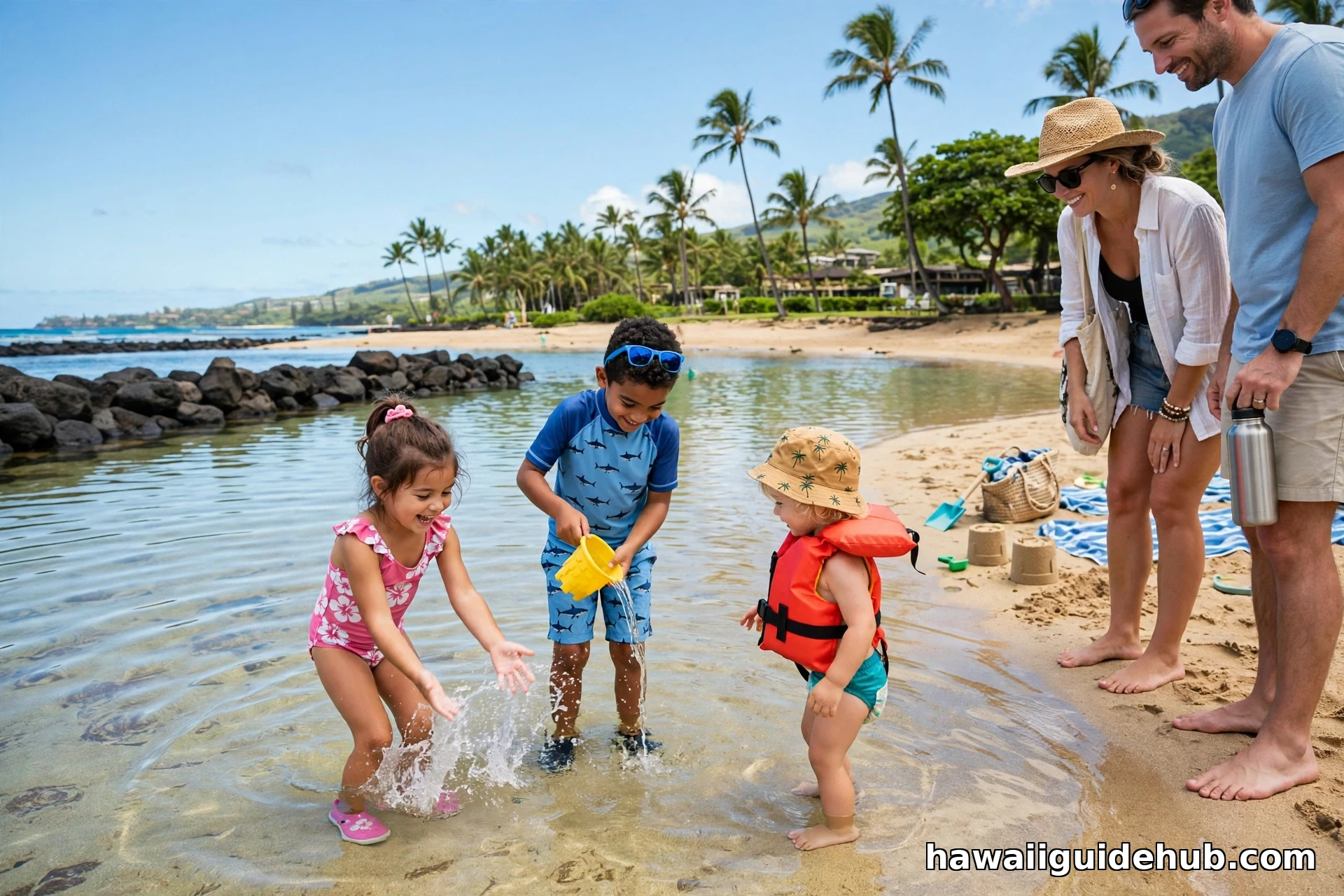
The safest little-kid beaches in Hawaiʻi
Poʻipū Beach on the south shore is arguably the best beach in Hawaiʻi for very young children. A natural rock barrier creates a shallow wading pool where toddlers can splash safely while older kids snorkel just beyond it, and lifeguards are on duty. Lydgate Beach Park on the east side goes further, with two fully enclosed lava-rock pools that turn the ocean into a swimming pool, plus a huge wooden playground. Anini Beach on the north shore has reef-protected calm water that is lovely in summer.
Outdoor adventures
Waimea Canyon, the Grand Canyon of the Pacific, wows kids with sheer red cliffs and waterfall views from easy roadside lookouts. The Wailua River is kayakable even for beginners, with a short hike to a waterfall at the end. Boat tours along the Na Pali Coast show sea caves and dolphins, though the open-ocean ride suits kids who do not get seasick. Older kids can try ziplining or tubing through old sugar plantation canals.
The tradeoff
Kauaʻi gets more rain than the other islands, especially on the north shore in winter, so pack flexibility along with the rain jackets. It has fewer direct flights and a quieter nightlife and dining scene, which most families with kids consider a feature rather than a bug.
What About Lanai and Molokai?
Families sometimes ask about the two smaller islands. Lanai is tiny, quiet, and luxurious, with just a couple of high-end resorts and very few activities aimed at kids. It works for a peaceful day trip from Maui but rarely as a family’s main island. Molokai is even quieter, with a strong local culture and almost no tourist infrastructure. It is a meaningful place to visit respectfully, but most families with young kids will have a better trip on one of the four main islands.
Where to Stay: A Few Practical Pointers
On Oʻahu, Waikīkī keeps everything walkable, while Ko Olina suits families who want calm lagoons and resorts away from the city buzz. Disney’s Aulani at Ko Olina is a full vacation in itself for Disney-loving kids. On Maui, Wailea and Kaanapali hold the top family resorts, and condo-style rentals in Kihei give families kitchens and space for less money. On the Big Island, Waikoloa and the Kohala Coast resorts cluster near the best beaches, while Volcano Village puts you minutes from the national park. On Kauaʻi, Poʻipū is the classic family base for calm water and sunshine, and Princeville works well in summer for north shore exploring. Wherever you stay, a condo or vacation rental with a kitchen saves real money on a family trip.
Practical Tips for Hawaiʻi with Kids
A few things make the difference between a great family trip and a stressful one. Fly with the time change in mind: Hawaiʻi is 3 to 6 hours behind the mainland, so plan easy first days while kids adjust. If you are visiting more than one island, keep interisland flights to a minimum with small children, since each hop eats half a day with packing, airports, and rental cars. Pack reef-safe mineral sunscreen, since Hawaiʻi law bans sunscreens containing oxybenzone and octinoxate, and reapply constantly because the tropical sun is stronger than it feels. Bring or rent snorkel gear in kids’ sizes rather than hoping the tour boat has them. Build a rest day into every week, because overtired kids and packed itineraries do not mix. And book luaus, popular tours, and interisland flights weeks ahead in peak season, not days.
Watch: Family Resorts Across the Islands
The Bottom Line
Most families cannot go wrong, because every Hawaiian island is good with kids in its own way. Choose Oʻahu for the easiest first trip, Maui for the most relaxing resort vacation, the Big Island for adventure with older kids, and Kauaʻi for nature and quiet beaches. Match the island to your kids’ ages and your energy level, keep one unscheduled day per week, and let your kids weigh in on what excites them most, whether that is sea turtles, volcanoes, or just a really good pool. Whatever island you pick, book flights and lodging early for school-break weeks, when family demand pushes prices up fast, and build in downtime so the trip feels like a vacation for the parents too. For a broader look at planning your days once you choose, our Oʻahu adventure guide is a good starting template for structuring any island itinerary.