Manta Rays in Kona: Night Feeding, Research and Responsible Viewing

Watching a manta ray feed beneath a dark Kona sky is one of Hawaii’s most memorable wildlife encounters. The manta ray night snorkel off the Kona coast offers a rare chance to watch these graceful animals feeding in their natural habitat, and it has become one of the signature after-dark activities on Hawaii Island.
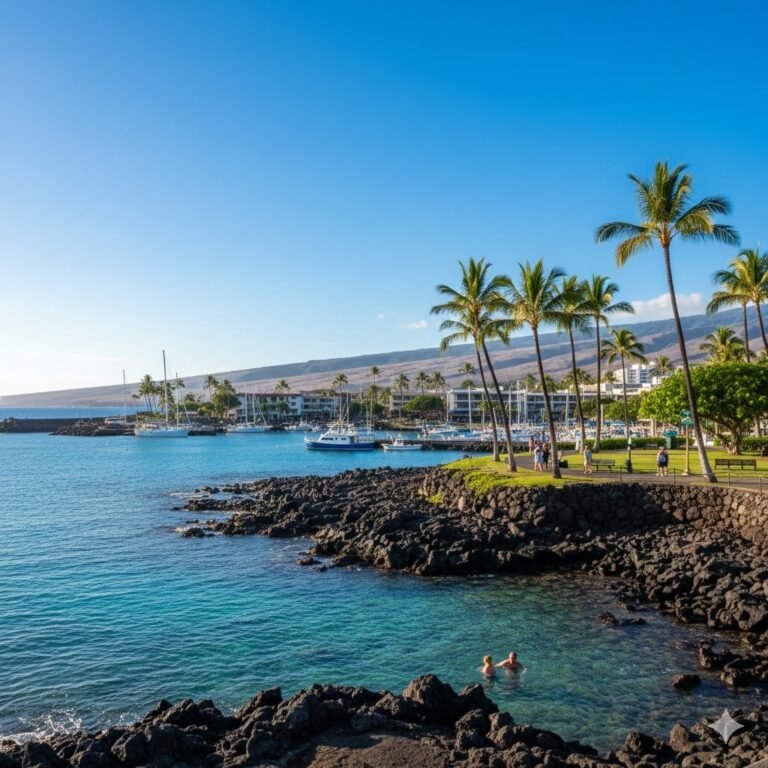
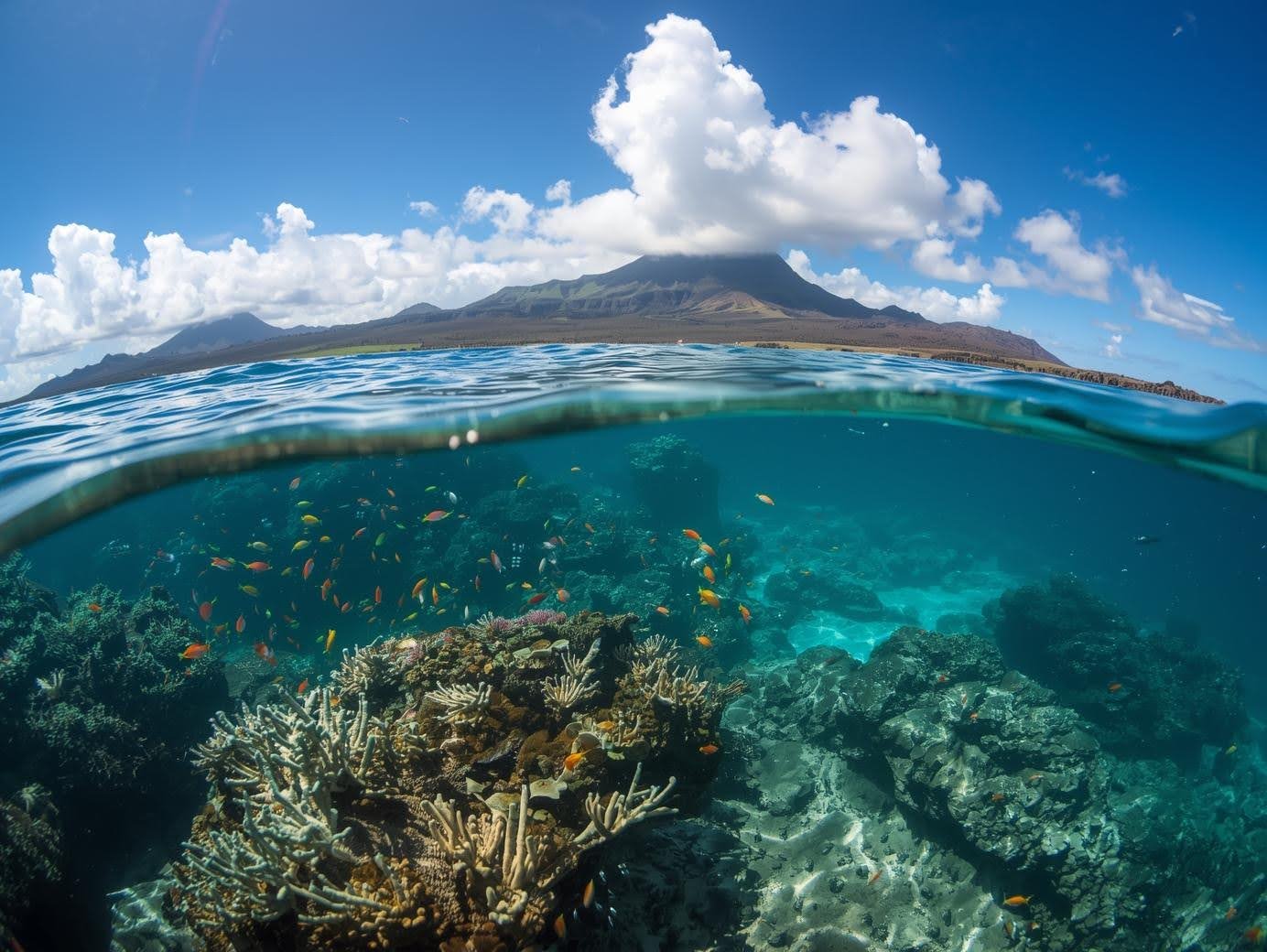
Kona sits on the west (leeward) coast of Hawaii Island, where calm, clear water and an unusual underwater landscape create reliable conditions for the encounter. After dark, operators position powerful lights in the water that draw in zooplankton – the mantas’ food – and the rays gather to feed inside the illuminated columns. If you are building a trip around this experience, it pairs well with the daytime ideas in this guide to things to do in Kona.
The animals that gather at these sites are reef manta rays (Mobula alfredi), the smaller of the world’s two manta species. Hawaiian reef mantas typically measure around 10 to 14 feet from wingtip to wingtip. They are often called gentle giants, but they are not the giant oceanic manta – a larger, separate species with a different conservation story. Knowing which animal you are actually watching makes the experience richer, and it matters for understanding what research has learned about them.
This guide explains what happens during a manta ray night snorkel in Kona, what science has revealed about the resident rays, and how to choose a responsible way to view them. It is written for travelers planning the experience, not as a substitute for an operator’s safety briefing – always confirm details with the company you choose.
Night-Feeding Reef Mantas: What Science Says
A Resident Population of Reef Mantas
The rays that feed off Kona are reef manta rays, Mobula alfredi, a species that genetic research has confirmed is distinct from the giant oceanic manta, Mobula birostris. Reef mantas are the coastal, reef-associated species. The giant manta – the world’s largest ray at up to 26 feet across – is listed as threatened under the U.S. Endangered Species Act and is generally found further offshore. The rays you will see at Kona’s night feeding sites are reef mantas.
Hawaiian reef mantas are unusually home-loving animals. A 2023 NOAA Fisheries study found that the reef manta populations around Hawaii Island and Maui Nui are each only a few hundred animals, genetically distinct from one another, and rarely cross the deep channels between islands. Researchers estimated roughly 104 breeding adults around Hawaii Island. For a slow-growing animal that produces few young, that is a small, vulnerable population – and one that could not be quickly replenished from neighboring islands if numbers around Kona declined.
Individual rays are tracked through photo-identification: each manta’s underside carries a unique pattern of spots, as individual as a fingerprint. The Manta Pacific Research Foundation has maintained a photo catalog of Kona’s mantas since 1991. Its first identified ray, a female named Lefty, was recognized by a damaged left cephalic fin and her distinctive spot pattern. Decades of resightings show that some individuals return to the same Kona feeding areas year after year – a strong site fidelity that helps explain why the night snorkel is so reliable.
How the Night Feeding Works
Manta rays are filter feeders. They swim with their mouths open, unfurling the two cephalic fins beside their mouths to funnel water – and the plankton suspended in it – over their gill plates, which strain out tiny organisms such as copepods and other small crustaceans. The filtered water exits through the gills while the food is diverted to the stomach.
The night snorkel works because light concentrates the food. Underwater lamps draw zooplankton into dense, glowing columns, and the mantas come to feed where the plankton is thickest. Feeding usually begins after sunset and can continue for a few hours. While feeding, the rays perform barrel rolls and loop-the-loops, turning somersaults to stay inside the densest patches of plankton – a spectacle that is rarely visible during the day, when the rays are more dispersed.
Behavior and Intelligence
Manta rays have the largest brain-to-body-mass ratio of any fish, according to Hawaii’s Division of Aquatic Resources, and they display complex social behavior. Snorkelers often see several rays feeding together in the light column, and individual rays sometimes show curiosity toward people in the water, gliding in for a closer look before turning away.
It is worth keeping expectations grounded alongside the wonder: mantas are wild animals with their own agenda, and researchers are still learning how they perceive their world. What is well documented is their memory for places – decades of photo-ID records confirm that individual rays return to the same feeding sites – and the value of each animal to a small resident population. For background on the broader cast of Hawaiian ocean life, see this guide to Hawaii’s iconic marine species for snorkelers and divers.
Planning a Manta Ray Night Snorkel in Kona
A little preparation goes a long way toward an enjoyable evening. The points below cover the practical basics; because every operator runs things a little differently, confirm the details that matter to you with the company you choose before you book.
Choosing an Experience
Most visitors join a guided boat tour, offered in both small-group and private-charter formats. Smaller groups generally mean more personal attention from the guides, while private charters offer flexibility and scheduling freedom at a higher price. Tours typically depart in the late afternoon or early evening so the boat ride out coincides with sunset.
Many tours leave from Honokohau Harbor, just north of Kailua-Kona, which puts the well-known feeding areas a short boat ride away – often around 15 to 20 minutes. When comparing options, look at what is included (wetsuit, flotation, drinks), the group size, and how seriously the company treats wildlife-viewing guidelines, since practices vary between operators.
Fitness and Comfort in the Water
You do not need to be an athlete to join a manta night snorkel. Participants float at the surface holding onto a flotation device or raft while the rays feed below, so the activity is less demanding than free swimming.
That said, this is the open ocean after dark, and comfort in the water matters more than fitness. Water temperatures off Kona run roughly 75 to 82 degrees Fahrenheit year-round, but you will be floating mostly still for an extended stretch, and night conditions can feel colder and more disorienting than daytime snorkeling. Operators set their own minimum age and swimming-ability requirements, so check the specific requirements of the company you are considering before you book – especially when traveling with children or anyone who is nervous in the water.
What to Bring and Wear
Most operators provide the core gear: mask, snorkel, flotation device, and often a wetsuit. Bringing your own well-fitting mask helps with fogging and leaks, and anyone who needs vision correction should plan accordingly, whether with a prescription mask or contacts.
What you wear depends on your cold tolerance, but most people are glad of a wetsuit for the night session. Operators commonly have wetsuits to borrow, though fit varies. Useful extras include reef-safe sunscreen (applied well before the afternoon departure, not at the dock), a light jacket for the boat ride back, a towel, and a waterproof camera. Leave jewelry and loose valuables behind – anything dropped into dark water is effectively gone.
The Night Snorkel Experience
Check-In, Briefing, and the Sunset Ride
Trips begin with check-in and a safety briefing. Guides cover how to use the gear, where to position yourself, and how to behave around the rays – typically: stay calm and still at the surface, keep your hands to yourself, and let the animals set the distance. These briefings protect both swimmers and mantas, and they are worth listening to carefully even if you have snorkeled before.
The ride to the site often coincides with sunset, and the slow transition from daylight to darkness builds anticipation. Crews use the travel time for the full briefing, so you arrive at the feeding area knowing exactly what to do.
Setting the Lights
At the site, the crew deploys the light system – typically a large floating raft with powerful lights shining down into the water, sometimes supplemented by lights placed lower down. The lights draw plankton into dense, glowing columns. Placement and brightness matter: the denser the plankton column, the more feeding activity it tends to attract.
Participants slip into the water and take positions around the raft, holding on and floating face-down so they can watch the water column below. Guides emphasize staying still and quiet, because sudden movements and splashing can scatter plankton and discourage the rays from feeding close.
Watching the Mantas Feed
Entering dark water for the first time can feel otherworldly, and the first manta often appears silently, gliding into the lit column as if from nowhere. Up close, the rays are startlingly large and quiet, and their white undersides – each with its unique spot pattern – become clearly visible as they roll beneath you.
Feeding mantas may pass within arm’s reach, though you should never reach out. Barrel rolls, somersaults, and the occasional close pass create the underwater ballet the experience is known for, and when several rays feed at once the effect is genuinely choreographed. In-water time is often around 45 to 60 minutes, though the exact duration depends on the operator and the conditions on the night.
Photography and Video
Low light and constant motion make night photography challenging. Underwater cameras and action cameras can capture the scene, but keep flash use restrained and never aim bright lights directly at a ray’s face – sudden bright light can startle feeding animals. Many operators offer professional photo or video packages, which let you keep your attention on the experience itself. However you record it, spend part of the time simply watching: the smooth, silent movement of a feeding manta is hard to capture fully on a screen.
Conservation and Responsible Viewing
A Small and Vulnerable Population
The reliability of Kona’s manta encounters is built on a small foundation. The NOAA-led genetic study estimated the Hawaii Island population at only a few hundred reef mantas, with about a hundred breeding adults – and females reproduce at the island where they were born, so a decline around Kona would not be quickly replenished from neighboring islands.
Hawaii’s mantas face documented threats. NOAA reports that about one in ten reef mantas shows evidence of fishing-line entanglement – amputated fins, lacerations, or embedded hooks. Boat strikes are a risk because mantas aggregate near the surface, and coastal development can degrade the reefs they depend on. Since 2009, Hawaii state law has made it illegal to knowingly kill or capture a manta ray in state waters – a baseline protection that the viewing industry’s research partnerships help support.
Responsible Viewing Guidelines
The rules of manta etiquette exist to protect the animals’ feeding, and following them also gives you a better encounter. Keep a respectful distance and let the rays approach you. Never touch, chase, or attempt to ride a manta – contact can injure the animal and disrupt feeding. The “look, don’t touch” principle applies to everything else in the water too, from coral to other fish.
NOAA’s wildlife-viewing guidance adds a useful rule of thumb: never try to entice a manta to approach you, and give the animals space to feed, rest, and socialize undisturbed. Operators that brief these rules clearly and enforce them in the water are the ones worth choosing.
How Visitors Support Manta Research
Kona’s viewing boats double as research platforms. The photo-identification catalogs maintained by the Manta Pacific Research Foundation and the Hawaii Association for Marine Education and Research depend on clear photos of manta undersides – the spot patterns that identify individuals. When snorkelers share usable belly shots with these organizations, they contribute to long-term records of residency, movement, and population health.
If you capture a clear photo of a manta’s underside, consider submitting it to a local manta research group’s sighting program – Hawaii’s Division of Aquatic Resources directs Big Island sighting reports to the Manta Pacific Research Foundation. It is a simple way for one evening’s sightseeing to contribute to conservation science.
Frequently Asked Questions
What time of year is best for a manta ray night snorkel in Kona?
Tours operate year-round, and mantas feed at the lighted sites throughout the year – there is no single “season” for the experience. Plankton density, weather, and ocean conditions vary from night to night, and because these are wild animals, sightings can never be promised on any given evening. That said, the established feeding sites off Kona produce encounters on most nights, which is why the activity has its strong reputation. If your dates are flexible, ask operators about recent sighting activity before you book.
Are there age limits?
There is no universal age rule – each operator sets its own minimum age and participation requirements, so check with the company you are considering. More important than the number is comfort: participants float in the open ocean after dark, which can be unsettling for young children or anyone uneasy in the water. Children generally must be accompanied by an adult, and everyone should be able to follow the guide’s safety instructions.
How likely am I to see manta rays?
The Kona night snorkel is known for frequent sightings, and many operators keep logs of recent manta activity that they will share honestly if you ask. But no operator can guarantee a wild animal’s appearance – plankton density, weather, water conditions, and the rays’ own movements all play a role. Treat published “success rates” with skepticism unless the operator explains how they are measured. A company that is candid about slow nights is usually a more trustworthy choice than one that promises certainties.
What happens if weather cancels the trip?
Safety comes first in ocean tourism, and operators cancel or reschedule when winds, surf, or other conditions make the trip unsafe – that decision rests with the captain. Cancellation, rebooking, and refund policies differ between companies, so read the terms before you book and ask specifically what happens if weather cancels. Booking early in your trip leaves room to reschedule if a night gets called off.
Can non-swimmers participate?
The activity is easier than free-swimming because you float with a flotation device rather than propelling yourself – but it still takes place in the open ocean at night, which demands basic water comfort: floating on the surface, breathing through a snorkel, and staying calm in the dark. Operators set their own swimming-ability requirements, and these vary. If you are a weak swimmer or nervous in deep water, contact the operator in advance to discuss whether the trip is a good fit rather than assuming it will be fine.
Why Kona’s Night Aggregation Matters
Kona’s manta night snorkel is unusual twice over: few places in the world offer such reliable close-up views of feeding manta rays, and few have been studied for as long. Decades of photo-identification have turned Kona’s feeding sites into one of the best-documented manta aggregations anywhere – a living dataset that showed researchers these rays are not passing through, but residents, returning to the same stretches of coast night after night, year after year.
That research is still unfolding. Genetic work continues to map how isolated Hawaii’s island populations are, and every clear belly photo from a visiting snorkeler adds to the record. The emerging picture is of a small, faithful community of animals whose lives are closely tied to a handful of feeding sites – which is exactly why how we watch them matters.
A responsible viewing choice is straightforward: pick an operator that keeps groups manageable, briefs and enforces no-touch wildlife etiquette, and contributes to local research or conservation. Then bring patience and realistic expectations – the ocean does not perform on schedule, but on the nights the plankton is thick and the mantas are hungry, there are few wildlife encounters anywhere that compare. If you are planning the rest of your time on the island, the Big Island guide rounds up the top experiences beyond the night snorkel.