The Significance Of ʻOhana In Hawaiian Society: Understanding Family And Community Bonds

A lot of people who don’t live in Hawaiʻi think of the famous line from a well-known animated movie when they hear the word “ʻohana”: “ʻOhana means family. Family means nobody gets left behind or forgotten.” Disney’s Lilo & Stitch brought this beautiful idea to a lot of people around the world, but the real meaning of “ʻohana” is a strong and deep-rooted idea in Hawaiian culture. It goes far beyond the nuclear family and affects the community, social structures, and even the way people live on the islands.
Learning the Hawaiian word for family, “ʻohana,” is not enough. You also need to understand a way of looking at the world that values connection, responsibility, and the well-being of the whole community. This guide looks at the deep meaning of “ʻohana,” from its ancient roots to how it is used today. Understanding this core value will help you see the Aloha State and its people in a new light.
What Does “ʻOhana” Really Mean?
To grasp the whole meaning of it, start with the word itself. The word comes from “ʻohā,” the young shoots or offshoots of the taro plant (kalo), a plant of deep cultural importance in Hawaiʻi. Hawaiian families are like branches of a single root, just as new shoots grow from the original corm to make a bigger, more connected plant system.
This farming metaphor is very important. It means that ʻohana is more than just a group of people; it is a living, breathing thing. It includes not only blood relatives, but also extended family, adopted members, and even close friends and neighbors who make up a close-knit, supportive community. This chosen family is held together by love (aloha), respect for each other (hōʻihi), and a sense of shared responsibility (kuleana).
In Hawaiian culture, you are part of a ʻohana, not just a member. This difference is very important. It changes the focus from individual identity to group identity, where the group’s well-being is the most important thing.
The ʻOhana System’s Pillars
Several values that are connected to each other make up the idea of “ʻohana,” which guides social structures and interactions in Hawaiʻi. These principles are not just ideals; they are practices woven into the daily life of the community.
Kuleana (Responsibility)
Kuleana is a Hawaiian idea that means that privilege and responsibility are connected. It’s not a burden; it’s an honor. Everyone in a ʻohana has a kuleana to help the family do well. This could mean taking care of the elderly (kupuna), teaching kids (keiki), providing food, or keeping the family home and land (ʻāina) in good shape. Everyone has a job to do, and doing that job well gives them a sense of pride and belonging. The ʻohana, in turn, has a kuleana to take care of and support each of its members.
Aloha (Love and Kindness)
Aloha is probably the most well-known Hawaiian word. It can mean “hello” or “goodbye.” But its meaning goes much deeper. Aloha is a feeling of love, compassion, and kindness that is given freely and without conditions. Aloha is the emotional glue that holds everyone in a ʻohana together. In Hawaiian, it means love for family, but it also means love for friends and the community. Being kind, forgiving, and generous to others is what it means to act with aloha.
Kōkua (Being helpful)
Kōkua means to give help. It is the spirit of working together without expecting anything in return. Members of a ʻohana help each other without expecting anything in return. The ʻohana comes together to help when a family member is sick, needs help with a harvest, or is building a home. This group effort makes sure that no one has to go through hard times alone. The saying “ʻohana means nobody gets left behind” is a great way to show what kōkua means.
Lōkahi (Unity)
Lōkahi means being in balance, harmony, and unity. The ʻohana wants to live in a state of lōkahi. This means being able to talk to each other, settle disagreements, and promise to work together. When there is conflict, the family tries to bring things back into balance by using hoʻoponopono, a traditional way of forgiving and mediating.
In Traditional Hawaiian Society, ʻOhana
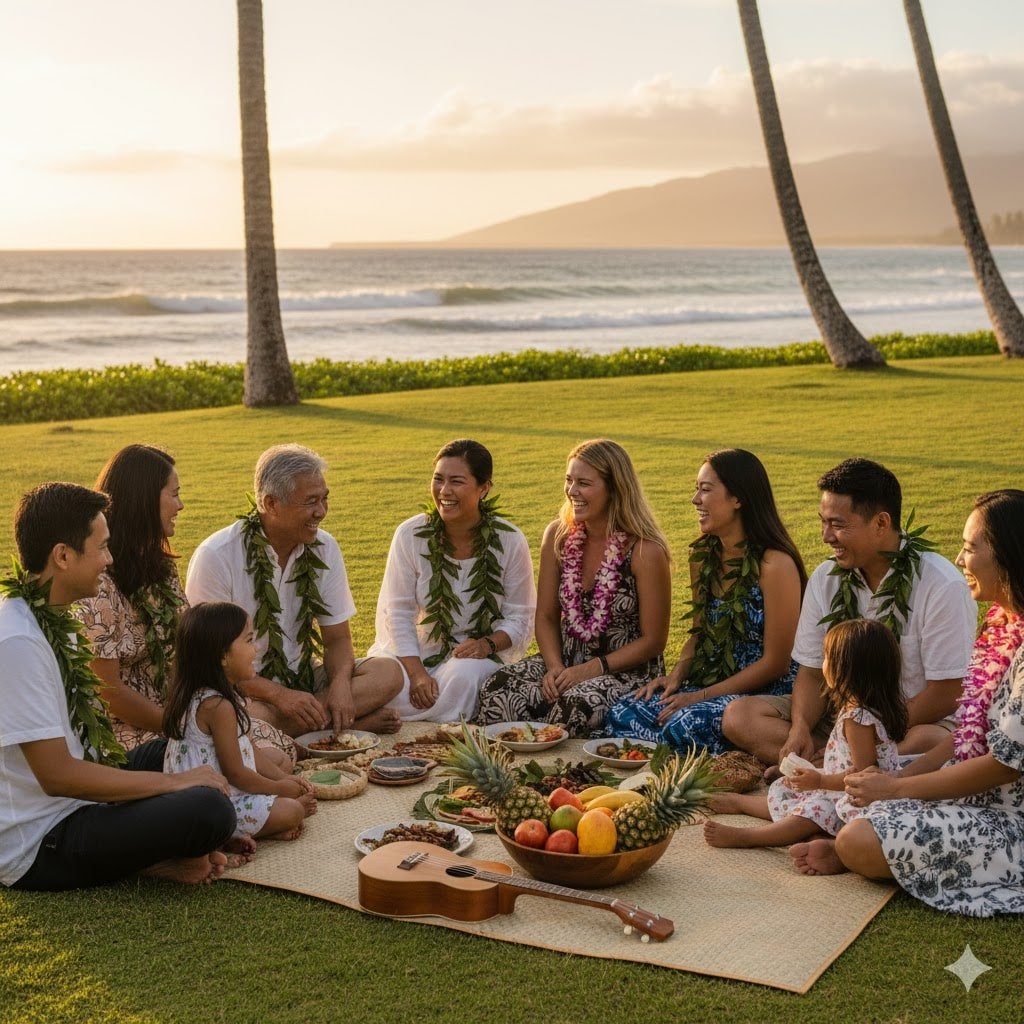
In the past, the ʻohana was the most important part of Hawaiian society. Kauhale were groups of households where families lived together. They were like small communities that could take care of themselves. These extended family groups shared resources, worked the land together, and raised their kids together.
The structure was usually made up of people from different generations, with kupuna (elders) at the top. They were the ones who knew things like genealogy (moʻokūʻauhau) and stories (moʻolelo). They taught the younger generations about their culture and how to do things, making sure that their family line would continue. People thought of kids as a gift to the whole ʻohana, and it was common for grandparents, aunts, and uncles to help raise them. Hānai is the name of this practice, which involved informally adopting a child from the extended family. This made the bonds between households stronger.
This system made a strong social safety net. The community was strong and able to grow because everyone helped and supported each other.
How “Lilo & Stitch” Made “ʻOhana” Famous
The Disney movie Lilo & Stitch from 2002 did a lot to spread the idea of “ʻohana” around the world. The story is about two sisters, Lilo and Nani, who are orphans and make an unusual family with an alien creature named Stitch. The movie’s main idea is summed up in the famous line, “ʻOhana means family. Family means nobody gets left behind or forgotten.”
This quote perfectly sums up the ʻohana spirit, which is all about being open, loyal, and always being there for each other. It shows that family isn’t just about blood; it’s also about love and commitment. Lilo, Nani, and Stitch create their own ʻohana, demonstrating that you can build a family through shared experiences and mutual care.
While the film simplifies a complex cultural concept, it does so with respect and heart. It has become a touchstone for many, giving them a simple but deep way to understand the Hawaiian value of strong, close family ties.
ʻOhana in the Modern World
The spirit of ʻohana is still very important in Hawaiian life today, even though society has changed a lot. It changes to meet the needs of the present while staying true to its core values.
- You can see “ʻohana” in action when people work together to clean a beach, fix a fishpond, or take care of a public space. People work together to help each other for the good of everyone.
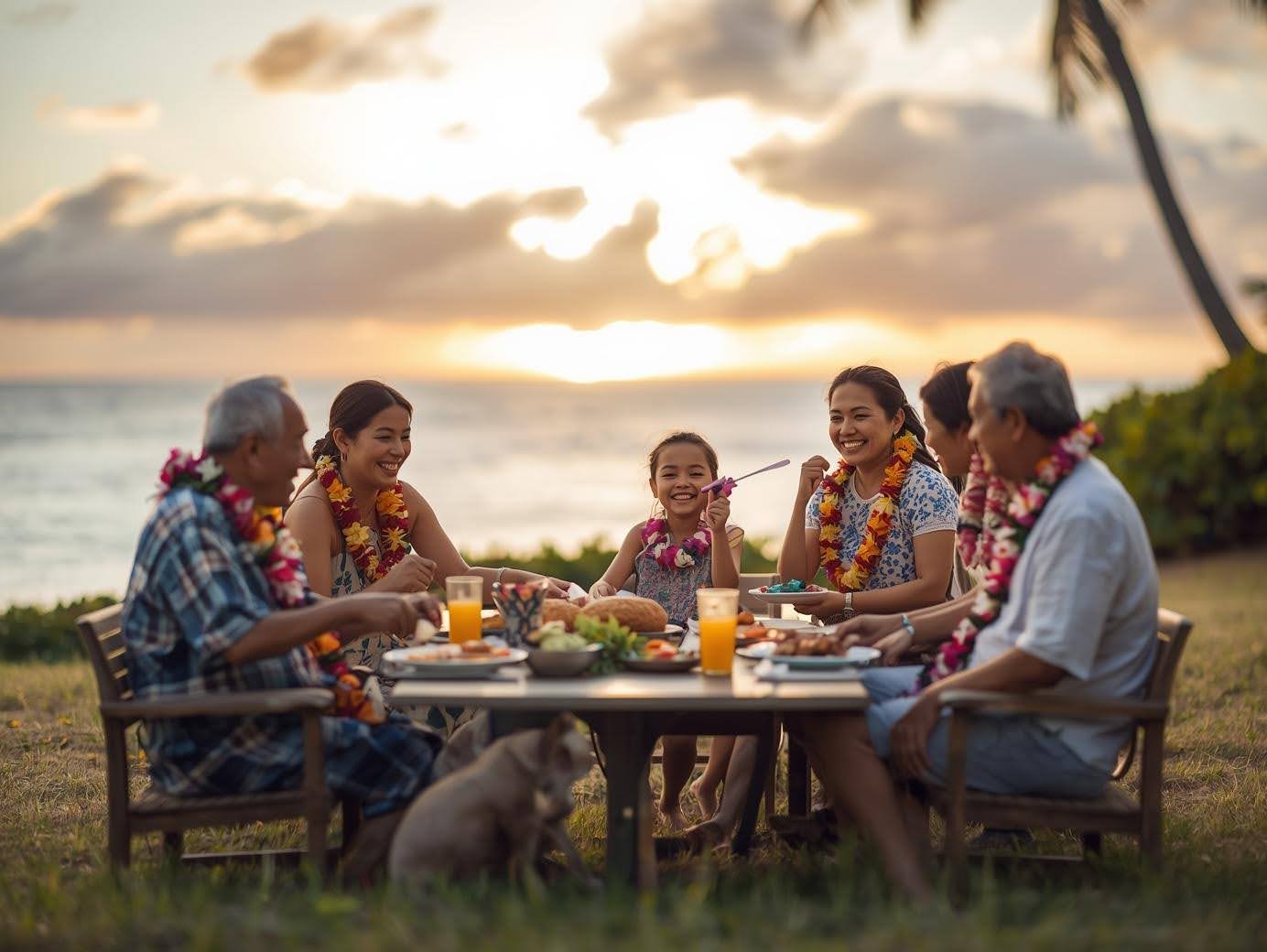
- Family Get-Togethers: Pāʻina, or big family gatherings, are a big part of modern ʻohana life. Family ties are strengthened by celebrating birthdays, holidays, and graduations with dozens or even hundreds of relatives and close friends.
- Workplace Culture: Many local businesses in Hawaiʻi foster a ʻohana-like atmosphere, treating employees like family. This makes the workplace a place where people can work together and help each other.
- Welcoming Newcomers: The spirit of ʻohana is often extended to newcomers who show respect for the local culture. When you move to Hawaiʻi, making an effort to learn and participate in the community can lead to being embraced by a local ʻohana.
Expanding the Meaning: ʻOhana in Other Contexts
The strong idea of “ʻohana” has spread around the world, making people curious about what it means in other languages.
- What does “ʻohana” mean in Japanese? Japan has a strong idea of family (kazoku), but it doesn’t have a single word that means “ʻohana” in the same broad, welcoming way. The most similar ideas might have to do with how people in a neighborhood are connected to each other.
- What does “ʻohana” mean in Hindi or Urdu? Hindi and Urdu, for example, have words for family (parivar and khandan), but these words usually only mean blood relatives.
The idea of a chosen, community-based family like ʻohana is not as clearly defined.
The search for the meaning of “ʻohana” in Urdu or Japanese shows what makes the Hawaiian idea so special. It is a cultural framework that officially recognizes and values chosen family and community ties in a way that many other cultures do not.
The phrase “mahalo ʻohana” is also commonly heard. “Mahalo” means “thank you,” so “mahalo ʻohana” is a simple and lovely way to say thank you to your family, whether they are biological or chosen. It’s a way to show gratitude for the love, help, and connection that the ʻohana gives.
Feel the Spirit of Hawaiʻi
When you learn about “ʻohana,” you will appreciate the rich culture of Hawaiʻi even more. It reminds us of how important community is, how we are responsible for each other, and how love can last forever. It is a value that makes the lives of those who practice it better and inspires people from all over the world.
Carrying the spirit of ʻohana with you can change your experience, whether you’re going on your first trip or going back to the islands you love. It encourages you to connect with people, respect the land, and appreciate the deep bonds that make Hawaiʻi so special.
Understanding ʻohana offers more than a definition; it offers a way of seeing how Hawaiian society holds itself together. From the shared kuleana of caring for kupuna and keiki to the everyday practice of kōkua among neighbors, ʻohana turns family from a private matter into a shared community responsibility. For visitors, carrying this understanding means listening before assuming, honoring local guidance, and recognizing that behind the islands’ beauty stands a living culture of mutual care. ʻOhana is a reminder that no one thrives alone — a lesson that reaches far beyond the islands.