Culinary Heritage of Hawaii: A Journey Through Local Flavors and Ingredients

Hawaiian food is a colorful mix of old traditions and different cultures that have come together over time. It’s a story told through taste, from the earthy smell of kālua pig cooked in an imu to the refreshing taste of a drink with lilikoi in it. To understand Hawaiian food, you need to know the islands’ history, which includes Polynesian voyagers, plantation-era immigrants, and a deep, spiritual connection to the land, or ‘āina.
This guide will take you through the rich history and flavors of Hawaiian food culture. We will look at the traditional foods that Native Hawaiians ate for hundreds of years, the famous dishes that make the islands what they are today, and even give you some recipes to try at home. By the end, you’ll have a list of foods you have to try on your next trip and a deep understanding of the history behind each one.
The Foundation: Food Before Colonization
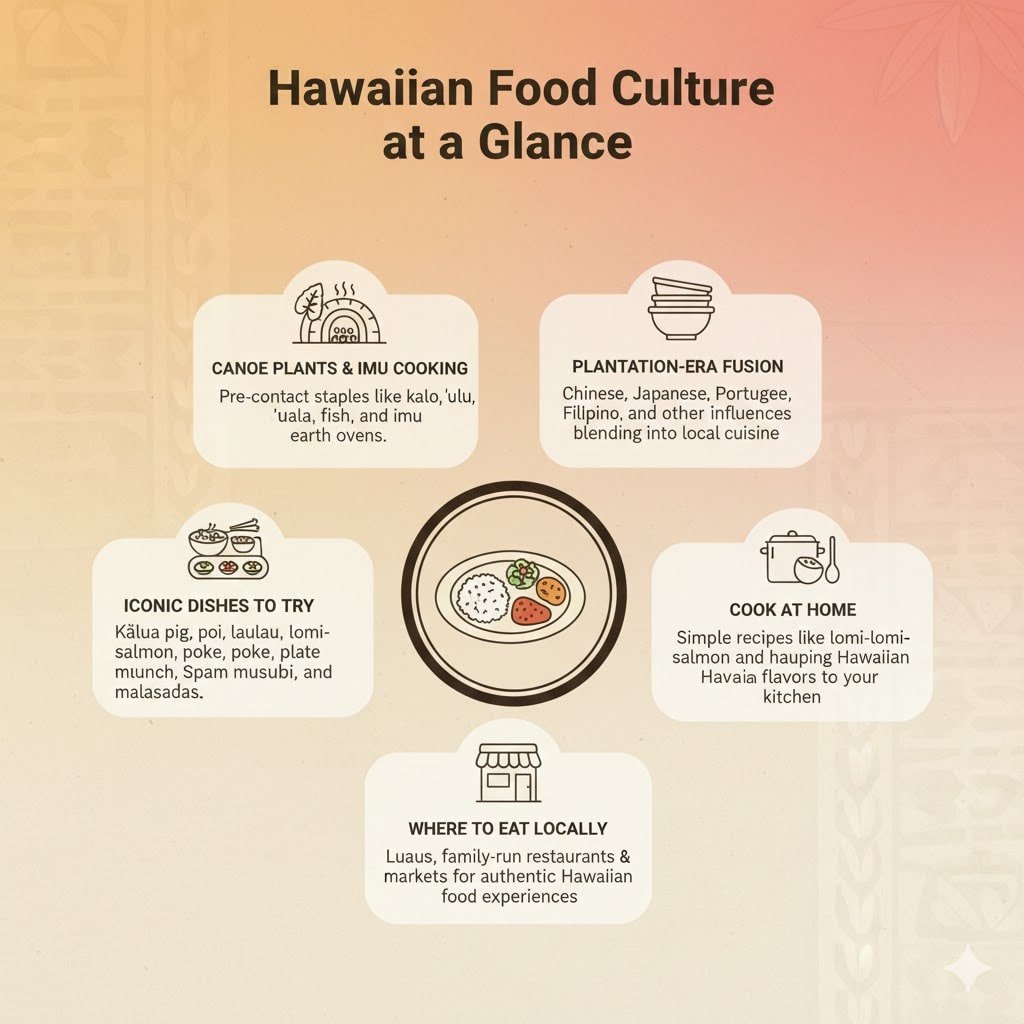
Native Hawaiians had a complex and long-lasting food system long before Captain Cook arrived in 1778. The first people to live on the islands were Polynesians who were very good at farming and sailing. They brought a group of important plants and animals with them in their canoes, which became the basis of traditional Hawaiian food. People often call these “canoe plants.”
The diet was mostly made up of starches, but it also included proteins from the sea and land.
- Kalo (Taro): This was the most important food. People used every part of the kalo plant. The corm (root) was steamed and then pounded into poi, a paste that could be fermented or not and was the main source of carbohydrates. The leaves, called lū’au, were cooked like spinach and were often used to wrap other foods for steaming.Ulu (Breadfruit): Another important plant for canoes, ‘ulu could be steamed, baked, or fermented. Its starchy texture and subtle flavor made it a versatile part of the diet. ‘Uala (Sweet Potato): This was an important crop that came in many colors and textures. It was typically steamed or baked in the imu.
- Fish and Seafood: The ocean was the main source of protein. Hawaiians were great fishermen and caught a lot of different kinds of fish. They ate them raw with sea salt (pa’akai), dried, or cooked.
- Pua’a (Pig) and Moa (Chicken): The canoes also carried pigs and chickens. People really liked these and often saved them for special events and feasts (‘aha’aina).
The main way to cook was in an imu, which is an oven that is built into the ground. They dug a pit, filled it with hot volcanic rocks, and lined it with banana leaves. Food was placed inside, covered with more leaves and cloth, and then buried under a layer of soil to steam for hours. This method of cooking food slowly made it very tender and tasty. It is still used today for special occasions.
The Evolution: How History Shaped Hawaiian Food Culture
The arrival of foreigners in the late 1700s and early 1800s was a big change for Hawaiian food culture. Missionaries, traders, and whalers brought new foods and ways of cooking.
The biggest shift came during the plantation era in the mid-1800s. To work on big sugar and pineapple plantations, a lot of people were needed. Immigrants came from China, Japan, Portugal, the Philippines, and Korea. Each group brought their own cooking styles, which started to mix with the food culture in the area.
- From China: Chinese laborers introduced rice, which quickly became a staple alongside poi. They taught people how to stir-fry and brought dishes like char siu, which turned into the teriyaki-style meats that are popular today.
- From Japan: Japanese immigrants introduced bento boxes, which inspired the “plate lunch.” They also brought soy sauce (shoyu) and tofu. Spam musubi came about because people thought it would be fun to wrap rice and other foods in seaweed.
- From Portugal: The Portuguese brought their love of bread and sweets with them. The sweet bread became the famous Hawaiian sweet bread. They also brought the forno, a stone oven, and the malasada, a fried doughnut that is very tasty.
- From the Philippines: Filipino workers brought dishes like adobo that were heavy on vinegar and garlic. You can taste their influence in a lot of savory stews and meals.
Modern Hawaiian food is all about mixing different flavors together. You can find shoyu used as a dipping sauce for kālua pig and macaroni salad served with lomi-lomi salmon at this fusion restaurant.
Ten Hawaiian Foods You Have to Try
This list includes both traditional Hawaiian dishes and local favorites that have changed over time because of Hawaii’s diverse history.
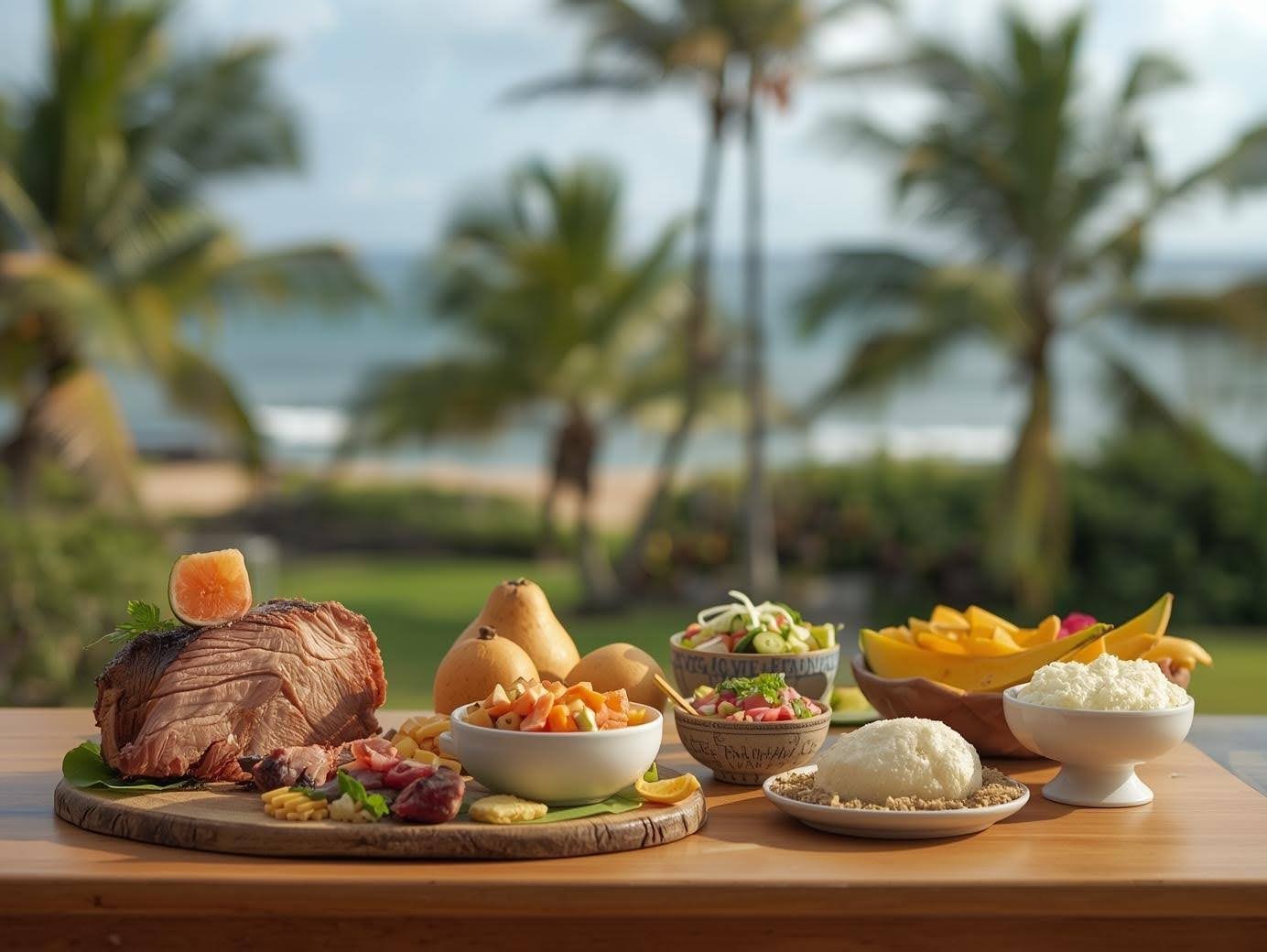
- Kālua Pig is the most important food for a luau. A whole pig is seasoned with sea salt, wrapped in ti and banana leaves, and cooked slowly in an imu for hours until it smells good, tastes salty, and falls apart.
- Poi: A staple of the traditional Hawaiian diet, poi is made from pounded kalo root. It can be thin or thick, and as it ferments, it gets a little tangy flavor. It’s an acquired taste for some, but a must-try for an authentic experience.
- Laulau is a traditional dish in which pork, chicken, or fish is wrapped in kalo (lū’au) leaves and then wrapped in ti leaves before being steamed for hours. The result is tender meat and greens that have a rich, earthy flavor.
- Lomi-Lomi Salmon: Hawaii’s version of salsa, this cool side dish was brought to the islands by early Western sailors. Salty salmon is “lomi-lomied” (massaged) or diced and mixed with fresh tomatoes, sweet Maui onions, and sometimes green onions to make this dish.
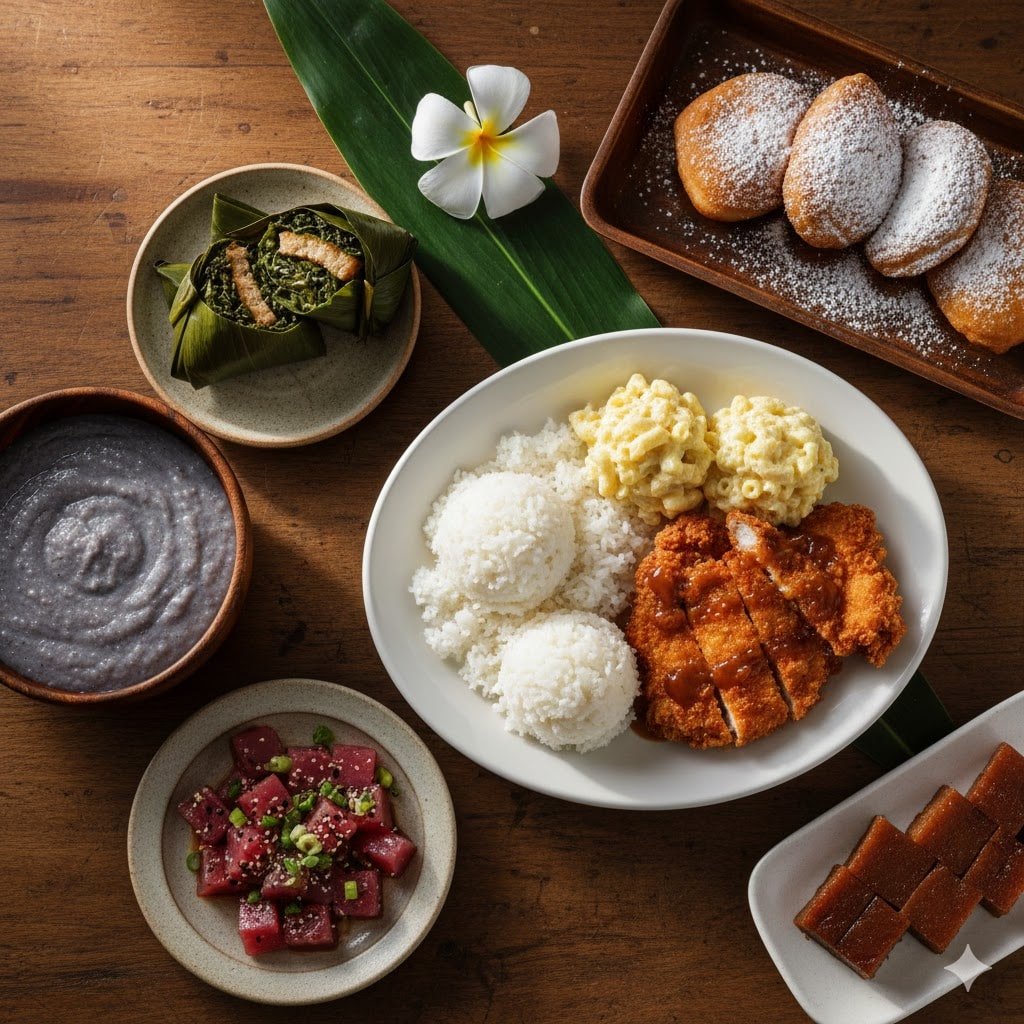
- Poke is a famous Hawaiian dish that has spread around the world, but it tastes best in Hawaii. Poke (meaning “to slice or cut”) is raw fish, typically ahi tuna, marinated with sea salt, soy sauce, sesame oil, and sweet onions. You can find countless variations across the islands.
- Plate Lunch: The quintessential meal for any local. A plate lunch usually has two scoops of white rice, a scoop of creamy macaroni salad, and a main dish. Teriyaki beef, chicken katsu, and kalbi ribs are all popular options.
- Spam Musubi is a simple and popular snack. A slice of grilled Spam is placed on a block of rice and wrapped in nori (seaweed). It shows how American and Japanese cultures can come together.
- Chicken Long Rice: Even though it has rice in the name, this dish is made with cellophane noodles. It’s a comforting soup with shredded chicken and ginger-infused broth, inspired by Chinese cuisine.
- Haupia is a traditional Hawaiian dessert made from coconut milk and has a firm, gelatin-like texture. It’s subtly sweet and incredibly refreshing. You’ll often find it cut into squares or as a topping on cakes and pies.
- Malasadas are Portuguese-style donuts that people in the area can’t get enough of. They are rolled in sugar and deep-fried until they are golden brown. They are often served plain, but they can also be filled with creams like coconut, macadamia nut, or lilikoi.
Hawaiian Food Recipes You Can Make at Home
You can enjoy the flavors of Hawaii even if you’re not there. Here are a few easy-to-follow recipes for classic dishes.
Easy Lomi-Lomi Salmon Ingredients:
- 1 pound of salted salmon (or a fresh salmon filet that has been salted)
- Diced two big ripe tomatoes
- 1 big diced sweet Maui onion (or any other sweet onion) 4 green onions, cut into thin slices
- Water with ice
Instructions: If using salted salmon, soak it in cold water for a few hours to remove excess salt, changing the water occasionally. If you’re using fresh salmon, cover it well with Hawaiian sea salt and put it in the fridge for at least 24 hours to let it cure.
- Once desalted or cured, rinse the salmon and finely dice it.
- Put the diced salmon, tomatoes, and sweet onion in a big bowl.
- Use your hands to gently “lomi” or massage the ingredients together for a minute or two. This helps meld the flavors.
- Add the green onions and mix.
- Put in the fridge for at least an hour before serving. Serve cold.
Simple Haupia (Coconut Pudding) Ingredients:
- One can of full-fat coconut milk that weighs 13.5 ounces
- 1/2 cup of sugar
- 1/2 cup of cornstarch
- 1 cup of water
Directions: Mix the cornstarch and water in a bowl until the cornstarch is completely dissolved and there are no lumps.
- In a saucepan, combine the coconut milk and sugar over medium heat. Keep stirring until the sugar is gone.
- As you pour the cornstarch mixture into the saucepan, keep whisking it to keep lumps from forming.
- Keep cooking and stirring until the mixture thickens to the point where it looks like pudding.
- Cool the mixture in an 8×8 inch pan.
- Put in the fridge for at least four hours, or until it is firm.
- Cut into squares and serve once they are set.
Refreshing Hawaiian Drinks from the Past
A meal isn’t complete without a cold drink. Water was the main drink in ancient Hawaii, but now the islands have a wide range of unique drinks.
- ‘Awa (Kava): A traditional ceremonial drink made from the roots of the ‘awa plant. It has calming effects and is known for its ability to help people relax.
- Wai Niu (Coconut Water): Straight from a fresh green coconut, this is nature’s electrolyte drink.
- POG Juice: A modern classic, this tropical juice is a blend of passionfruit (lilikoi), orange, and guava. It’s like drinking sunshine.
- Mai Tai: While its origins are debated, the Mai Tai has become the signature cocktail of Hawaii. A good one has good rum, lime juice, orgeat syrup, and a little orange liqueur.
Where to Get Real Hawaiian Food
You need to know where to look to really enjoy traditional Hawaiian food.
- Luaus: Even though they are mostly for tourists, a good luau is a great place to try a lot of traditional foods, like kālua pig, laulau, and poi.
- Restaurants in the area: Look for small, family-run businesses that aren’t in the main tourist areas. Look for restaurants that say they serve “Hawaiian food.” These restaurants often serve the most authentic and delicious plate lunches and traditional dishes.
- Markets for Farmers: These are great places to get fresh poke, local fruit, and snacks like spam musubi.
Your cooking journey is about to begin.
Hawaiian food is more than just food; it’s a way to honor history, culture, and community. Every meal tells a story, from the old-fashioned foods of the first Polynesians to the dishes from the plantation era that were made by people from many different cultures.
Are you ready to try the islands for yourself? Planning a culinary tour of Hawaii can be overwhelming with so many options. Hawaii Guide Hub is the best place to go if you want to make personalized travel plans that include the most authentic food experiences. Let us help you discover the hidden gems and local favorites that will make your trip unforgettable. Get in touch with us to start planning your tasty trip through Hawaii’s food history.