
Eco-Friendly Snorkeling: How to Respect Sea Turtles and Their Environment in Oahu

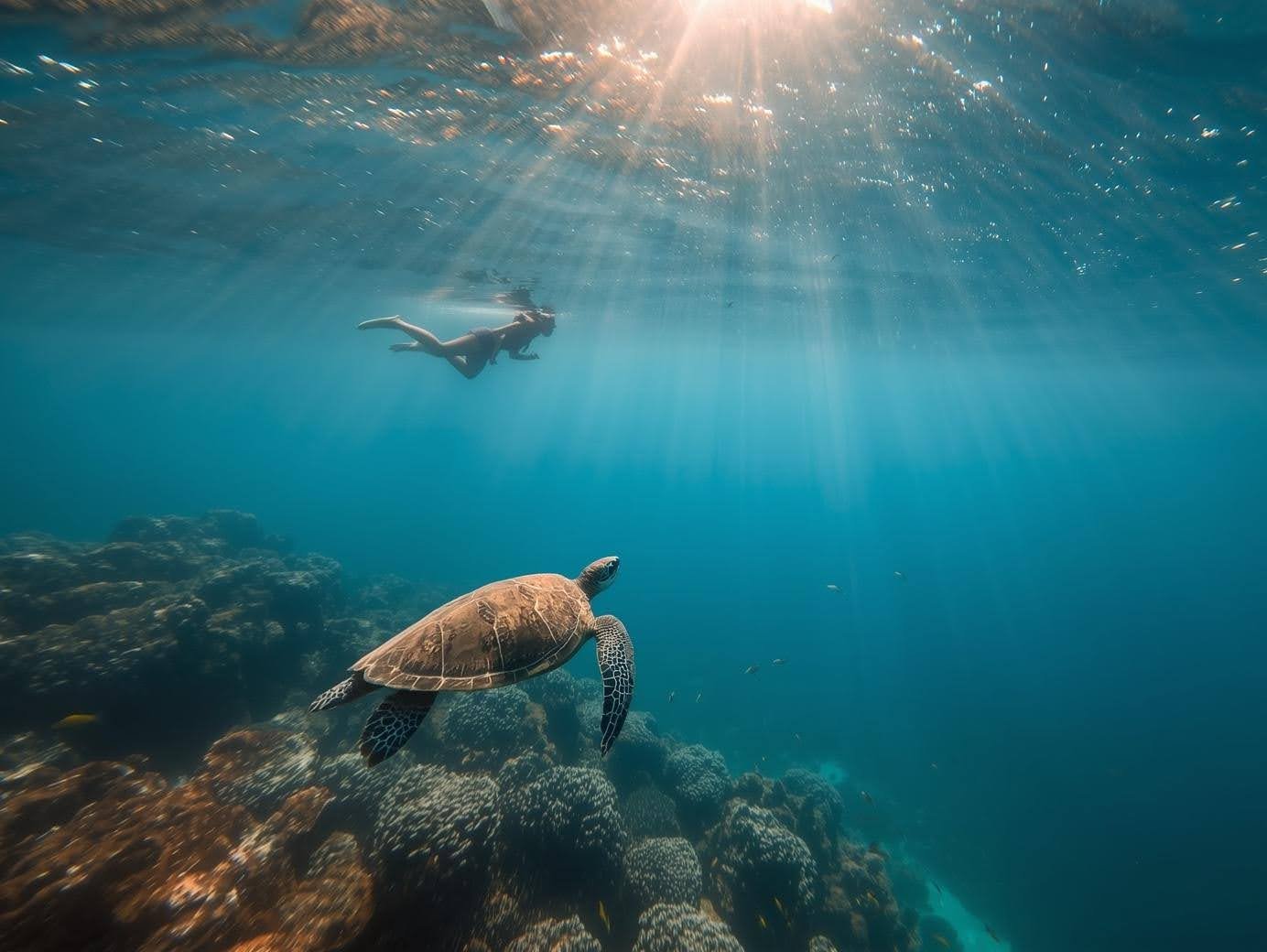
The turquoise waters of Oahu are a snorkeler’s dream. They are full of life and have a colorful underwater world. Swimming with the beautiful Hawaiian green sea turtle, or “honu,” is one of the best things that can happen to you. These gentle giants have been swimming in our oceans for millions of years and are very important to Hawaiian culture. However, their survival depends on our ability to explore their world respectfully and sustainably.
This guide will give you all the information you need to snorkel in Oahu in an environmentally friendly way. From learning about sea turtle behavior to picking the right gear and tour company, we’ll cover it all. Following these tips will make sure that your snorkeling trip is not only memorable, but also helps protect these amazing animals and their delicate habitat for future generations.
Understanding the Honu: A Symbol of Hawaii
The Hawaiian green sea turtle is not only a beautiful marine animal, but it is also an important part of Hawaiian culture and the marine ecosystem. The honu is a “ʻaumakua,” or ancestral spirit, that stands for good luck, strength, and long life. In the past, they were seen as guardians and guides.
Sadly, their numbers fell sharply because of overharvesting and loss of habitat. Thanks to federal protection under the Endangered Species Act and dedicated conservation efforts, the honu population is now recovering. This story of a comeback makes it even more important for us to be responsible when we go into their home.
Why We Need to Protect Sea Turtles
There are many threats to sea turtles, both natural and man-made. These are:
- Habitat Loss: Coastal development, pollution, and climate change are killing the coral reefs and seagrass beds that turtles need for food and shelter.
- Trash in the ocean: Turtles can get hurt or die when they mistake plastic bags, fishing lines, and other trash for food or get stuck in them.
- Human Disturbance: Getting too close to snorkelers and boats can stress animals out, stop them from doing things like eating and sleeping, and even hurt them.
- Fibropapillomatosis is a disease that makes tumors grow on turtles. It is more common in places with dirty water and pollution.
By snorkeling in an environmentally friendly way, you can help reduce these threats and help the honu live for a long time.
The Rules for Responsible Snorkeling
Eco-friendly snorkeling is about minimizing your impact on the marine environment. This way of thinking puts the health of sea life ahead of getting the perfect picture. These are the main rules to follow when you go underwater in Oahu.
Stay at a Respectful Distance
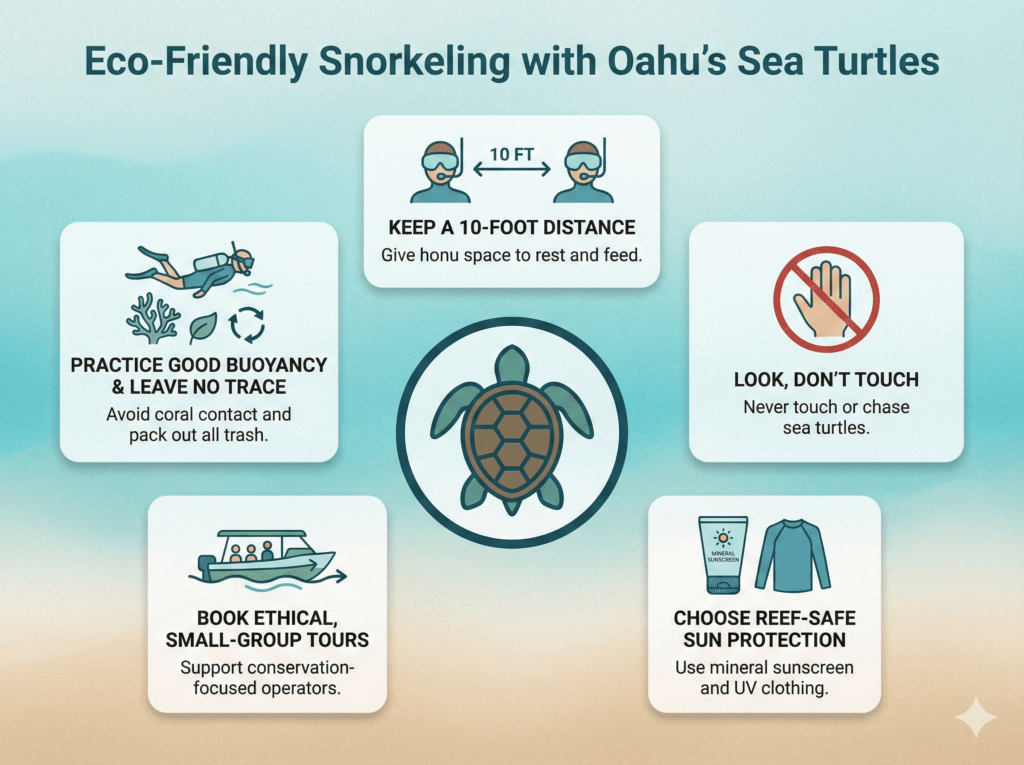
This is the most important rule for watching wildlife. Hawaiian law says that you must stay at least 10 feet (3 meters) away from sea turtles at all times, whether you are in the water or on land.
Why is this so important?
Getting too close can cause significant stress to turtles. They could feel scared and swim away, wasting energy that they need to eat and move around. It can also stop important actions from happening. A turtle that is resting on the beach or on the seafloor is either sleeping or saving energy. It has to use energy it doesn’t need when you wake it up.
It would be invasive and stressful if someone walked into your bedroom and stood over you while you slept. Give the honu the same courtesy.
Don’t ever touch a sea turtle.
It might be tempting to reach out and touch a turtle’s smooth shell, but doing so is harmful and illegal. The mucus on the skin and shell of sea turtles protects them from bacteria and parasites. If you touch them, bacteria from your hands can get on them and damage this protective film, making them more likely to get sick.
Also, touching can be seen as harassment, which makes the turtle feel stressed and defensive. Keep this in mind: Look, don’t touch.
Use sunscreen that is safe for reefs.
The sunscreen you choose has a direct effect on the health of coral reefs. Oxybenzone and octinoxate are two chemicals that are very bad for corals that are found in many common sunscreens. Coral bleaching, DNA damage, and problems with reproduction can all happen because of these chemicals.
The whole ecosystem is affected when coral reefs are hurt. Sea turtles need healthy reefs to eat and live. Always use a mineral-based sunscreen with zinc oxide or titanium dioxide to keep them safe. Look for labels that say “reef-safe” or “reef-friendly” in big letters. Put it on at least 20 minutes before you get in the water so it can soak in.
A Step-by-Step Guide to Being an Eco-Friendly Snorkeler
Following the rules in the water is only part of being a responsible snorkeler. It starts before you even get in the water.
Step 1: Choose an Ethical Tour Operator
Choosing the right snorkeling(turtle snoekeling) tour can make a big difference. A good company will put marine conservation first and make sure that their customers have a safe and educational experience.
What to look for in a highly rated, environmentally friendly tour:
- Small Groups: Smaller groups cause less trouble for animals and make the experience more personal and educational.
- Educational Briefing: Before you get in the water, a good guide will give you a full briefing on the local marine life, safety rules, and how to snorkel responsibly.
- Guides who are experienced and certified: Find guides who are certified in first aid and water rescue and know a lot about marine biology.
- Commitment to Conservation: Many of the best companies give some of their profits to local conservation groups or take part in reef cleanup events. Look for a sustainability statement or conservation partnerships on their website.
- Good Reviews on the Internet: Look for reviews that mention the company’s respect for wildlife and their educational approach. Words like “respectful,” “knowledgeable guides,” and “eco-conscious” are good signs.
Step 2: Get the Right Gear Ready
The gear you use for snorkeling can also harm the environment.
- Mask that fits well: If your mask leaks, it can be hard to focus and make you touch or stand on coral. Ensure your mask has a good seal before you go out.
- Get rid of the full-face mask: While sometimes marketed to beginners, full-face snorkel masks have been associated with safety risks, including CO2 buildup. Most people think that traditional masks and snorkels are safer and more reliable.
- Consider a Rash Guard: A long-sleeved rash guard protects you from the sun very well without the need for a lot of sunscreen. It also keeps you warm and protects you from small cuts and scrapes.
Step 3: Work on your skills
If you’ve never snorkeled before, try it out in a calm, sandy place or a pool first. You will be a more confident and aware snorkeler if you are comfortable with your gear and know how to float and swim. This makes it less likely that you’ll kick coral by mistake or get scared if you see a turtle.
Step 4: Get good at controlling buoyancy
An experienced snorkeler or diver has good buoyancy. It’s the ability to stay afloat in the water without kicking or using your hands.
- Stay horizontal: Keep your body parallel to the surface and the bottom of the ocean. This keeps your fins from kicking up sand or hitting coral below.
- Take your time and kick slowly: Don’t kick with your knees; instead, kick slowly and gently from your hips. Strong, frantic kicking stirs up sediment, which can cover coral and make it more likely that you’ll hit marine life by accident.
- Don’t Get Up: You should never stand on the ocean floor unless it is a big, sandy area with no life on it. Coral is a living thing, and stepping on it can kill something that has taken decades or even hundreds of years to grow.
Step 5: Watch and wait
Be aware of what’s going on around you. Always be aware of where you are in relation to the reef, other snorkelers, and marine animals.
- Before You Move, Look: Before you change direction or back up, make sure the way is clear by looking around.
- Anticipate the Turtle’s Path: If a turtle is swimming toward you, don’t move and let it pick its own path. Don’t swim right at it or try to get in its way. It’s our job to stay out of the way of turtles as they go where they want to go.
The Best Ways to Snorkel Alone
If you choose to snorkel without a guide, the responsibility for protecting the environment falls entirely on you.
- Find out more about where you are: Do some research on the exact site before you go. Find out about the currents, where to enter and exit, and the kinds of marine life you might see. Websites and guidebooks can offer top-rated spots that are suitable for your skill level. A lot of well-known places are free to visit.
- Don’t go alone: Always snorkel with a friend for safety.
- Look at the conditions: Before you leave, look at the weather and surf report. Big waves can make snorkeling unsafe and make it hard to see.
- Don’t leave any trace: Take everything you bring in with you. This includes all trash, such as food wrappers, bottles, and other things. If you see trash left by others, consider picking it up to leave the beach cleaner than you found it.
Your journey is about to begin.
When you snorkel with sea turtles in Oahu, you feel a deep connection to the ocean’s magic. By following these eco-friendly tips, you can help protect the honu and their world. Your responsible actions, along with those of others, make a difference that helps these ancient sailors stay healthy and strong.
Are you ready to plan your respectful meeting underwater? At Hawaii Guide Hub, we help travelers find exciting and eco-friendly things to do. We can help you find top-rated, eco-friendly snorkeling tours that align with your values. Make sure your trip helps protect Oahu’s valuable marine life by booking with us.


