Hawaii With Teenagers: The Parent’s Playbook

Teenagers in Hawaii present a unique parenting challenge: they are old enough for every adventure, cool enough to be unimpressed by all of them, and armed with phones that document parental uncoolness in real time. The secret is not fighting the teen operating system but hacking it: give them experiences with genuine bragging rights, build in the autonomy they crave, and let the islands do the heavy lifting.
This is the single complete guide to Hawaii with teenagers. It covers the teen activity cool-factor matrix, giving teens autonomy safely, the adventures that actually impress, food strategies, phone and social media dynamics, and realistic expectations. If you have been searching for anything about Hawaii with teenagers, the answers are all here on this one page.
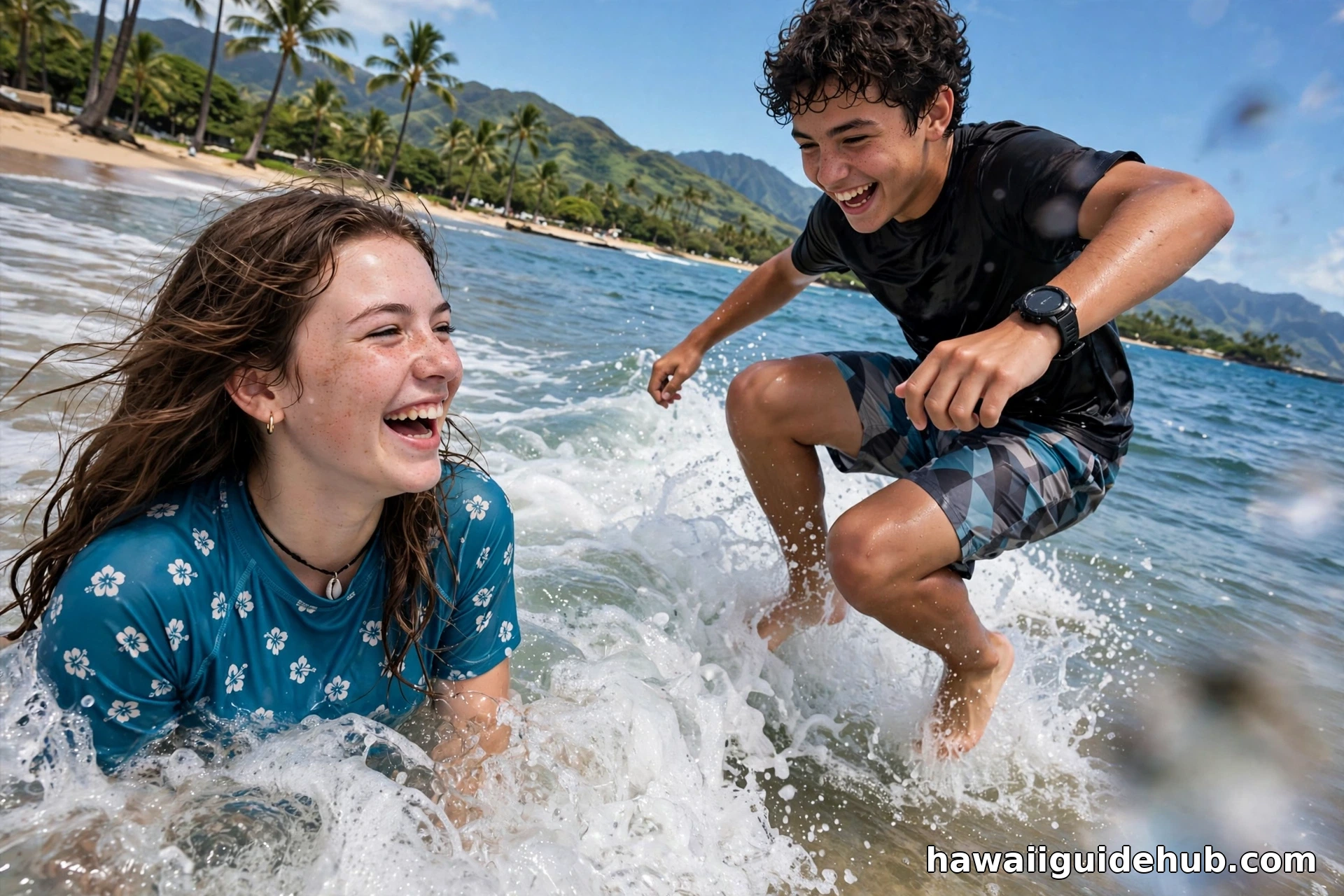
The teen dream, realized: four teenagers riding waves together at Waikiki, Diamond Head on the horizon, joy on every face. This is the Hawaii that converts even the most committed cynic: friends, surf, sunshine, and a backdrop no filter can improve. The phone is forgotten because the moment is better than the photo of the moment.
Why Teens Secretly Love Hawaii
The psychology of the teen in Hawaii. They will never admit it in the moment, but the islands hit every teen need: novelty for the boredom-prone brain, physical challenge for the restless body, social currency for the status-conscious mind, and beauty that even the most committed cynic cannot filter out. The teen who says “it’s fine” about the volcano at night is the same teen who will talk about it for years. The secret love is real; the parents just have to wait for the delayed review.
The Right Island for Your Teen
Match the island to the teen. The adventure teen: the Big Island, with its volcano, mantas, and black sand. The social teen: Oʻahu, with Waikiki’s energy, shopping, and people-watching. The chill teen: Maui or Kauaʻi, with the resort pools and the mellow pace. The sporty teen: wherever the surf is best that week. Ask the teen which sounds best; the buy-in from choosing pays off all trip. There is no wrong island, only wrong expectations.
The Volcano Night: Plan It Right
If there is one teen-unmissable experience in Hawaii, it is the volcano after dark: the glowing crater, the steam lit orange, the primal awe. Plan it: check the eruption status before promising, bring warm layers for the summit cold, arrive before full dark for the transition, and let the teen bring the camera. This is the moment that silences the phone, the complaints, and the cynicism all at once. Do not miss it.
Water Sports Progression
Structure the water week like a skill tree: start with the surf lesson, graduate to snorkeling, level up to the kayak or SUP, and cap it with the manta ray night snorkel or the surf session alone. Each day builds on the last, and the teen’s confidence compounds. By day five they are not tourists; they are watermen. The progression gives the week a narrative arc, and teens love a narrative arc, especially one where they are the protagonist.
The Friend Factor
The single biggest teen trip upgrade: bring a friend. Everything is more fun with a peer: the surf lesson becomes a competition, the meals become hangouts, the downtime becomes social time instead of sulking time. The cost of one extra plane ticket buys a transformed trip. If a friend is impossible, the teen programs at resorts and the social nature of group tours provide peer contact. Teens are pack animals; plan accordingly.
When the Phone Wins Anyway
Sometimes, despite everything, the teen spends the trip on the phone. Do not panic and do not escalate. The teen is still absorbing: the beauty is in the peripheral vision, the memories are forming despite the screen. Keep offering the experiences without pressure; the yes will come. And remember that the phone-absorbed teen on the beach in Hawaii is still on the beach in Hawaii, which beats the phone-absorbed teen at home by every measure.
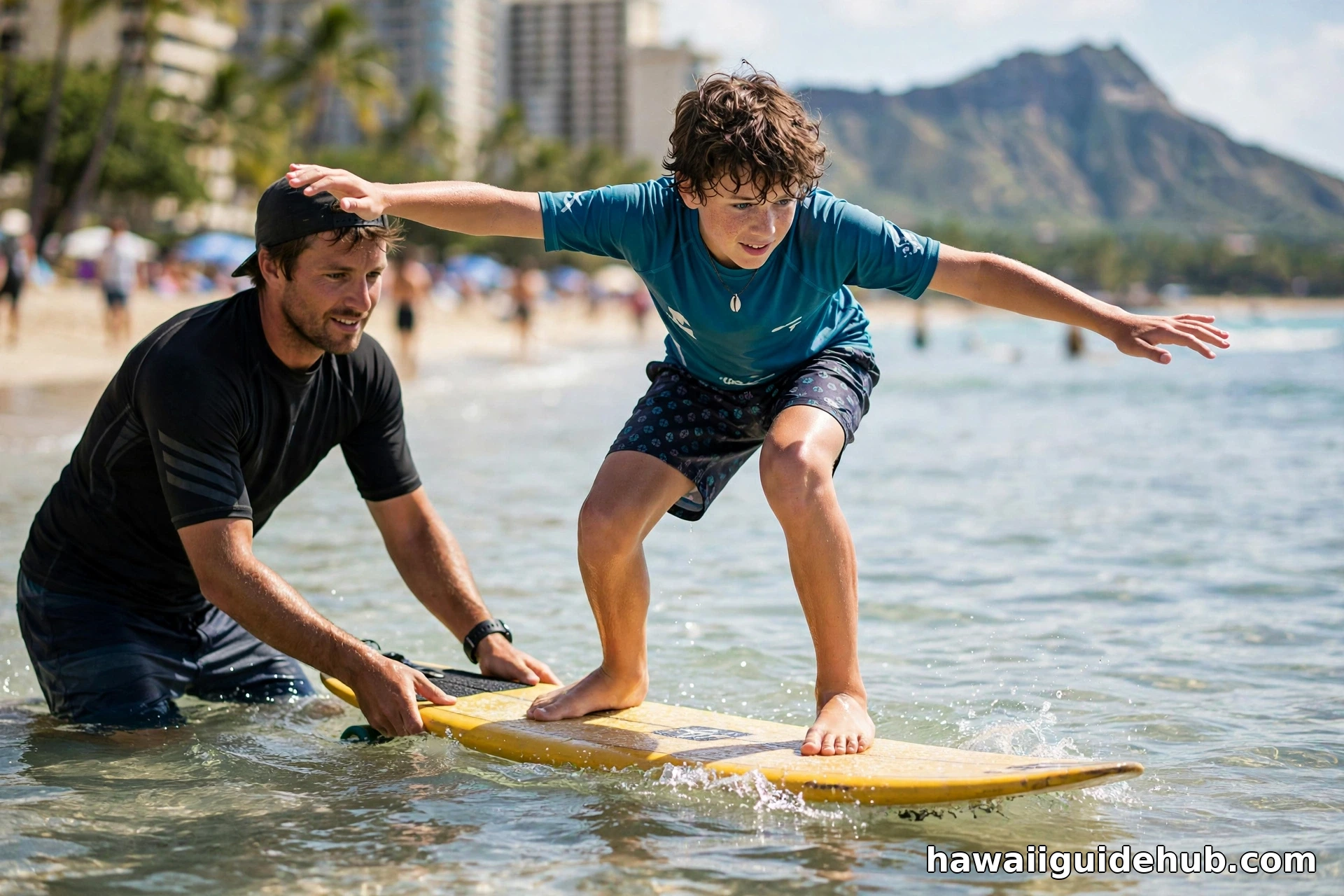
The lesson before the legend: an instructor coaching laughing teens at the water’s edge, boards ready, mountains behind. The surf lesson is the gateway drug of the teen Hawaii trip: two hours from never-surfed to standing, and the confidence carries into everything after. Book it early, laugh a lot, and let the instructor do the teaching.
The Teen Cool-Factor Matrix
The expert framework: every activity rated by teen approval odds and the hidden parent value. This table plans the trip.
| Activity | Teen approval odds | Parent stealth value | Verdict |
| Surf lessons | Very high | Exercise, ocean skills, confidence | Book day one |
| Volcano at night | Very high | Geology, awe, perspective | The trip’s peak moment |
| Snorkeling with turtles | High | Marine biology, conservation | Universal winner |
| Manta ray night snorkel | Very high | Once-in-a-lifetime nature | Worth the splurge |
| Zip line | High | Thrill, views | Great for the adrenaline teen |
| Museum / cultural site | Low-medium | History, depth, meaning | Pair with food after |
| Sunset sail | Medium | Relaxation, beauty | Works if teens bring friends |
| Shopping in Waikiki | High | None, and that’s fine | Give them the afternoon |
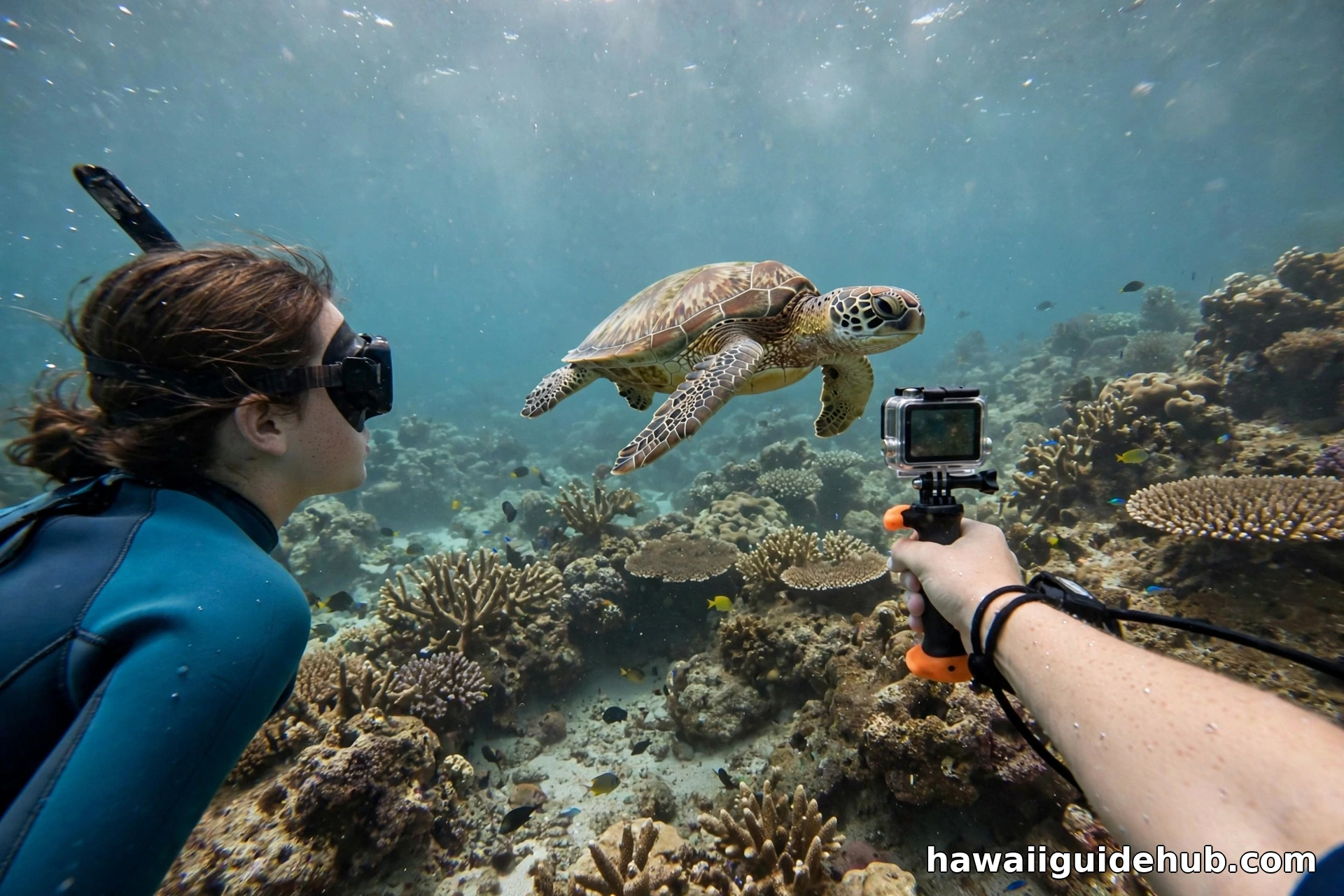
The moment that beats the phone: a teen snorkeler face-to-face with a green sea turtle, sunbeams through the water, the ancient and the young in perfect stillness. No screen can compete with this. The turtle does not care about followers, and the teen, for once, does not either. This is the experience that becomes the story told for decades.
Autonomy: The Teen Currency
Teenagers run on autonomy, and Hawaii is safe enough to grant it. Let them explore Waikiki alone, choose the restaurant, plan one full day themselves, or take the surf lesson while parents do something else. Set the safety rails: check-in times, location sharing, the buddy system, and clear boundaries. The teen who owns part of the trip enjoys all of it more; the one dragged through a parent-planned itinerary enjoys none of it. Give them the map and watch what happens.
The closing argument for the skeptical parent: the teen years are short, the window for family trips is closing, and Hawaii is the rare destination that meets teenagers on their own terms. The adventures are real, the bragging rights are earned, the memories are permanent. Years from now the complaints will be forgotten and the volcano at night will still be glowing in their memory. Book the surf lesson, grant the autonomy, and enjoy the last great family trips.
The Adventures That Actually Impress
Teens are unimpressed by scenery and deeply impressed by experience. What works: doing things, not seeing things. Surfing, snorkeling, kayaking, hiking to the waterfall you can jump into, the volcano at night, the manta rays in the dark water. The pattern: physical, slightly thrilling, genuinely unique, and photographable. The teen’s review of Hawaii will be based on what they did, so maximize the doing.
Food: The Teen Peace Treaty
Feed the teen and the trip survives. Hawaii’s food scene is a teen advantage: food trucks, shave ice, poke bowls, malasadas, and the endless novelty of new flavors. Let them choose restaurants; the food-obsessed teen becomes the trip’s culinary guide. Keep snacks in the car; hunger plus teen equals catastrophe. And the malasada run at 10 p.m. is not indulgence; it is diplomacy.
Phones and Social Media: The Truce
The phone is not the enemy; it is the teen’s memory system and social lifeline. Negotiate, don’t confiscate: phone-free meals, one unplugged morning activity, and otherwise let them document. Hawaii is the most Instagrammable place on earth, which means the phone actually enhances the trip. The teen filming the surf lesson is engaged, not distracted. And the photos they take become the family’s best souvenirs.
Realistic Expectations
They will complain. They will sleep in. They will say the waterfall was “fine.” This is normal teen behavior, not trip failure. The complaints are performative; the memories are real. Years later they will talk about this trip with genuine love, forgetting every eye-roll. Your job is not to extract gratitude in real time but to provide the experiences that become the stories. Plant the seeds; the harvest comes later.
For more trip planning, the guide to Hawaiian cultural traditions adds the cultural layer, while responsible travel practices and the guide to Hawaii’s natural environments help you travel well.
Watch: 10 Days in Hawaii With Teenagers
Frequently Asked Questions
Is Hawaii good for teenagers?
Excellent. Surfing, snorkeling, volcanoes, and adventure activities give teens genuine experiences with bragging rights.
What do teenagers like in Hawaii?
Doing things, not seeing things: surf lessons, snorkeling, zip lines, volcano night viewing, and food adventures.
Should teens get free time in Hawaii?
Yes. Autonomy is the teen currency; let them explore, choose restaurants, and plan a day. Set safety rails and check-ins.
How do you handle phones on a family trip?
Negotiate, don’t confiscate: phone-free meals and one unplugged activity, then let them document. Hawaii is made for it.
What is the best island for teenagers?
The Big Island for adventure (volcano, mantas), Oʻahu for variety and social life, Maui for the resort-plus-adventure mix.
Hawaii with teenagers is the trip where you stop managing their experience and start trusting it: the surf lesson, the volcano at night, the turtle under the snorkel mask, the malasada at 10 p.m. They will complain, they will sleep in, and they will remember it forever. Give them the doing, grant them the autonomy, feed them well, and let the islands make you the hero. The eye-rolls are temporary; the memories are permanent. And one day, impossibly soon, the teenager will be the one planning the return trip, because Hawaii got under their skin in exactly the way you hoped it would, which is the quiet victory of the parent who planned the trip right. The complaints were the price of admission; the love of the islands is the reward, paid out over a lifetime of return trips. So here is the final playbook: book the adventures, grant the freedom, feed them constantly, negotiate the phone truce, and let Hawaii do what it does to every teenager who ever stood up on a surfboard: make them feel, for the first time in years, like the world is bigger and better than they thought, which is the greatest gift any trip can give a teenager. The surf, the volcano, the turtle, the malasada at midnight: these are not just activities, they are the raw material of the adult the teenager is becoming. Give them the experiences, trust the process, and watch the cynic turn into the storyteller, because every teenager who has ever surfed at Waikiki has a story, and they will tell it for the rest of their lives, which is the whole point. The trip ends, the tan fades, the phone gets replaced, but the story of the wave, the volcano, the turtle in the blue water, that story is forever, and it started with a parent who refused to believe that teenagers cannot be impressed. They can be. Hawaii proves it, every single day, one wave at a time, which is why the parents who take teenagers to Hawaii always say the same thing afterward: the eye-rolls were worth it, the memories were priceless, and they would do it all again in a heartbeat, because the teenager who stood up on the surfboard at Waikiki is a memory no parent would trade for anything in the world, which is the final verdict on Hawaii with teenagers: hard, hilarious, unforgettable, and absolutely worth every single eye-roll, which the parents will laugh about later, preferably while planning the next trip, because there will be a next trip: the teenager will insist on it, loudly and repeatedly, until the flights are booked, which is the ultimate proof that the trip worked: the cynic converted, the adventurer awakened, the family closer than ever before, which was the whole beautiful point of the entire family trip all along.